Insecurity

DSS apprehends suspected arms dealer in Plateau State

By Hadiza Abdulkadir

The Department of State Services (DSS) has announced the arrest of Musa Abubakar, believed to be a major supplier of arms to criminal groups in Plateau State and northern Nigeria. The operation was based on intelligence reports leading to his detention on November 12, 2025.

A DSS source confirmed that Abubakar admitted to producing and distributing high-calibre weapons and ammunition used in violent attacks across Plateau and neighbouring regions.

The arrest followed a targeted raid on his weapons manufacturing facility in Mista Ali, Bassa Local Government Area, Plateau State. Authorities reportedly found Abubakar with IED components, chemicals, and manufacturing equipment, all seized by DSS operatives.

This development comes days after the recapture of Abdulazeez Obadaki, alias Bomboy, a prison escapee linked to the Owo and Deeper Life Church attacks. DSS headlined recent successes in counterterrorism efforts, including the detention of nine high-profile suspects involved in incidents in Plateau and Benue states.

Among those detained is Timna Manjol, 46, who pleaded guilty to firearms charges related to the attacks, according to court documents. Manjol is affiliated with First Baptist Church in Mangu, Plateau.

Security analysts view these arrests as part of the DSS’s ongoing crackdown on violent extremism in the region.

Phone snatchers tighten grip on Katsina metropolis — Authorities must respond swiftly

By Usman Salisu Gurbin Mikiya 

Katsina, as the name resonates, is widely regarded as a home of hospitality — a land where people live in harmony and mutual respect. It is a place of comfort where the warmth of its people makes life pleasant and fulfilling.

Recently, however, the long history of relative peace has begun to fade; an uncharacteristic catastrophe once thought distant has started unfolding, becoming a major concern for residents of Katsina Metropolis and beyond, especially as it adds to the decade-long insecurity bedevilling the state.

The issue of phone snatching in Nigeria originated from wristwatch snatching in Southern Nigeria, particularly in Lagos and other highly populated state capitals. It often occurred in strategic areas with heavy traffic, and over time, it evolved into a practice of phone snatching.

In Northwestern Nigeria, phone snatching started in Kaduna State about eight years ago. I vividly recall my visit to Kaduna in 2020, when I was on assignment for my media organisation. A Keke Napep rider warned me to hide my phone from criminals after noticing me pressing it through his mirror.

What began as an alarming trend in Kaduna escalated into a catastrophic issue, with phone snatching syndicates extending their activities into Kano, creating panic and undermining public safety.

During one of my visits to Kano, two of my brothers, on different occasions, warned me not to use my phone while on a tricycle in certain areas. They cautioned that I could lose my life over a phone, as snatchers were everywhere, and even advised me to choose the Keke Napep I boarded carefully.

Indeed, what started as an alarming wave in Kaduna has gradually spread like wildfire, creeping into Kano and now reaching Katsina. Once considered a distant menace, the problem has arrived at the very doorstep of Katsinawa, turning a basic necessity —the mobile phone — into a source of constant fear. This epidemic of criminality is no longer a local crisis but a regional catastrophe demanding urgent attention.

In Katsina Metropolis, residents of Sabuwar Unguwa are no strangers to this menace, as multiple reported cases of phone snatching have occurred, particularly targeting visitors and strangers in the area.

During Governor Ibrahim Shehu Shema’s administration, wayward youths, popularly known as Kauraye, emerged in Katsina. They crippled businesses and created tension in the metropolis, especially in areas such as Sabuwar Unguwa, Inwala, Sabon Layi, and Tudun Ƴan Lahidda.

Their reckless activities frustrated Governor Shema to the point where he took decisive measures that restored sanity and ended the menace.

Similarly, during Governor Aminu Bello Masari’s administration, persistent attacks by delinquent youths, suspected to be from Inwala in the ATC area, forced the government to establish a special Civil Defence outpost. This step drastically reduced the menace.

In his first year in office, Governor Dikko Umaru Radda also faced resurging activities of wayward youths in Sabuwar Unguwa. He personally led security agents in night operations, which eventually restored peace in the area.

However, with three different phone snatching incidents recorded within just three days on major roads, it is clear that social vices are escalating in the city. If not urgently addressed, they risk crippling businesses and threatening public safety.

The first incident occurred on 20th September, when Mrs Sada Shu’aibu was attacked near Sabuwar Dan Marna graveyard, and the attackers attempted to snatch her phone and inflicted serious injuries on her body. 

The following day, 21st September, during the grand finale of the Maulud procession, Usman Marwan was brutally attacked by phone snatchers at his business centre near the MTN office in Kofar Ƙaura.

Furthermore, on 26th September, another victim narrowly escaped death after being attacked by snatchers. This incident has heightened concerns among residents of the metropolis.

With insecurity already ravaging some local governments in Katsina State, the fact that the capital city is now battling phone snatching suggests that Katsina is increasingly under the control of thugs.

This menace has resurfaced under the leadership of Governor Radda, who had earlier recruited hundreds of youths to fight insecurity in the state. Many residents are now watching closely to see how he will respond to this rising threat.

Phone snatching can still be contained within a short period if several urgent measures are taken, including:

The government should initiate a law prescribing either the death penalty or life imprisonment for anyone convicted of phone snatching, alongside a shoot-on-sight order for fleeing offenders.

The government should declare a state of emergency on phone snatching so that the fight against this menace does not derail broader security efforts in the state.

Usman Salisu Gurbin Mikiya, M.Sc. student, Department of Mass Communication, Bayero University, Kano. He can be reached via his Email: usmangurbi@gmail.com.

Insecurity: Balancing kinetic and non-kinetic approaches

By Zayyad I. Muhammad

The insecurity challenges in Nigeria, particularly banditry, have defied simplistic solutions. While the kinetic approach, military and law enforcement operations, has achieved some notable successes, it has not produced the outcome of sustainable peace. Instead, it has often fueled a cycle of violence between state and non-state actors, while local communities continue to suffer. To break this cycle, there is a compelling need to complement kinetic measures with non-kinetic strategies such as dialogue, community engagement, education, intelligence-driven peacebuilding, and socio-economic empowerment.

The kinetic approach is necessary but insufficient. It weakens the operational strength of criminal groups but fails to address the root causes of insecurity, such as poverty, unemployment, social injustice, and a lack of community trust in the government. In some cases, heavy-handed operations or operational errors can create resentment among local populations, inadvertently attracting recruits to criminal networks.

The non-kinetic measures are designed to fill the gaps left by the actions of military and security forces, as well as to reduce unnecessary pressures on security forces. These include: building trust through dialogue with traditional rulers, religious leaders, and local influencers, including the actors themselves; creating opportunities for youth through education, vocational training, and employment; rehabilitation and reintegration, including providing pathways for repentant bandits or militants to rejoin society; intelligence gathering and strengthening human intelligence networks within communities to prevent attacks before they occur.

In combating insecurity, multi-stakeholder engagement is imperative, as national security cannot be achieved solely by the federal government. A sustainable strategy requires the active participation of state governments in tailoring responses to local realities. Support from local governments in intelligence gathering and community mobilisation is also essential. 

Engagement of traditional and religious institutions as custodians of local values and mediators in conflict resolution, as well as collaboration with civil society and development partners to address humanitarian and socio-economic needs, is equally important. The government should also introduce local language media programs through social media and other media, it will reach and enlighten the bandits and other insurgents

The current approach of adopting a hybrid security framework that blends military action with non-kinetic approaches to create both deterrence and reconciliation is commendable. This dialogue approach should be institutionalised through community dialogue platforms. Furthermore, establishing regular consultation forums where local leaders and security agencies exchange intelligence and build trust is also important. 

Investment in youth empowerment and the development of targeted programs for skills acquisition, entrepreneurship, and agricultural employment should be integrated into the non-kinetic approach to undercut the appeal of criminal networks. 

Another vital element is strengthening data-driven decision-making by basing security strategies on rigorous research, mapping conflict-prone areas, and conducting historical analyses of community dynamics. Fighting insecurity is a continuous process; any slack will have a negative impact. Therefore, creating measurable benchmarks and developing monitoring frameworks to evaluate the success of both kinetic and non-kinetic interventions over time will be beneficial.

No government can afford to sustain a security approach that fails to deliver positive outcomes. A purely kinetic strategy risks perpetuating violence, while a strictly non-kinetic approach may embolden criminal groups. The way forward lies in a carefully balanced model that applies force where necessary, while simultaneously addressing the root causes of insecurity through dialogue, trust-building, and socio-economic development. Only by harmonising both approaches can Nigeria break the cycle of violence and build a foundation for sustainable peace and security.

Zayyad I. Muhammad writes from Abuja via zaymohd@yahoo.com.

Buhari: Corruption hater, insecurity fighter, and agricultural transformer

By Sale Rusulana Yanguruza 

When a leader and loved one passes away, we often reflect on their legacy, the meaning of their life, the impact they made during their lifetime, and the significant contribution they made to society. Upon receiving the sad news about the demise of the immediate former President Muhammadu Buhari, what quickly came to mind was his honourable and distinguished efforts to end insecurity, eliminate corruption, and transform the agricultural sector in Nigeria.

His love for Nigerians prompted him to contest in three elections, and he lost the first two. The losses made him shed tears, but he still contested again. He didn’t give up and strived in 2015; he won and was declared the winner of the presidential election. On corruption, Buhari wasn’t just a fighter against corruption in Nigeria; he was a leader who despised untrustworthy individuals. A president who came to office with a unique energy aimed to end his enemy,”corruption”, and politicians who loot citizens’ property.

When Femi Adesina was granted an interview immediately after Buhari’s demise was announced, he boldly said, “Buhari was as clean as a whistle. Nobody can accuse him of anything that has the slightest affinity to corruption.” Adesina’s words imply that Buhari was incorruptible, as no one could accuse him of corruption; his life was a testament to his integrity. While Buhari saw corruption as a disease that was drastically hampering and tempering development in Nigeria, he stated, in his words during an anti-corruption speech in 2016, “If we don’t kill corruption, corruption will kill Nigeria.”

No one can doubt Buhari’s assertion that corruption must be eradicated before Nigeria can develop. However, unfortunately, during his first tenure, Buhari made significant efforts to ensure that all stolen assets by politicians were returned to Nigerians and implemented measures to prevent further occurrences. Yet, as time went on, Buhari was said to be poised, which led him to spend about three months abroad during his first tenure as the president of Nigeria. That story paved the way for a lot of rumours, which people spread, saying he had died, but with God’s grace, he was back and continued with his activities, finished his tenure, and sadly, today, he has met his maker.

Buhari has backed his commitment by putting in place some necessary measures, such as the Treasury Single Account (TSA), the Whistle-Blowing Policy, and the establishment of the Presidential Advisory Committee Against Corruption, to combat the systemic theft of public resources and, by extension, its pernicious effects on human rights and development. Yes, Buhari is known for Mai Gaskiya, which earned him votes in 2015. He was the first president who made leaders who had stolen the country’s finances fear him when he was declared president of the Federal Republic of Nigeria in 2015, beating the incumbent president, Goodluck Ebele Jonathan.

 Looked at Buhari and Boko Haram

When Buhari was elected, before his swearing-in as President of the Federal Republic of Nigeria on May 29, 2015, he met with the President of Chad, Idriss Déby, to discuss collaboration on ending insecurity, particularly from Boko Haram in Borno State. Buhari didn’t stop there; he took an official visit to Niger to discuss the issue with the president, aimed at addressing the Boko Haram problem. As Vanguard reported on June 1, 2015, the visit by the newly inaugurated Nigerian leader to Niamey was directed and aimed at decapitating the head of the group as a final solution to the insurgency that had wreaked havoc on the country’s North-East region.

Do you know that Buhari’s first trip as president of Nigeria to an outside country was about insecurity? 

Chad and Niger were Buhari’s first foreign visits outside Nigeria after he was sworn in as president, with the matter of insecurity bedevilling the region, particularly in the northeast. In his inaugural speech in 2015, Buhari said, “The most immediate challenge is Boko Haram insurgency. Progress has been made in recent weeks by our security forces, but victory cannot be achieved by basing the Command and Control Centre in Abuja. The command centre will be relocated to Maiduguri and remain until Boko Haram is completely subdued. But we cannot claim to have defeated Boko Haram without rescuing the Chibok girls and all other innocent persons held hostage by insurgents. This government will do all it can to rescue them alive.”

To support Buhari’s statement, when I attended the Town Hall Meeting organised by News Central Television in Maiduguri, Professor Babagana Umara stated that the Chibok Secondary School, where the girls were abducted, had reopened and is running actively, with Teaching and learning currently taking place in the school.

Undoubtedly, all this was part of the efforts put in by the former President of Nigeria, President Muhammadu, who gave his attention and good synergy to end it. Without a doubt, the long-standing insecurity in the region was drasticallyreduced. Though Boko Haram has carried out some recent attacks, one cannot deny the fact that the former President was at the forefront in reducing it in the region during his tenure.

Is Buhari an Agricultural Transformer? 

Buhari has always been a president who advocated for Nigerians to take agriculture very seriously. President Buhari stated this while delivering a lecture on Tuesday in Abuja at the launch of the National Young Farmers Scheme, a program designed by the National Agricultural Land Development Authority (NALDA). The program aims to spark greater interest among young people in farming.

According to the President, agriculture remains the backbone of the Nigerian economy, being the largest contributor to the nation’s Gross Domestic Product (GDP). Although the advice was intended for Nigerians, today our youth have largely accepted the President’s advice and returned to farming, which they were previously unable to do.

Legacy is not leaving something for people; it’s leaving something in people.” – Peter Strople

Rest in perfect peace, Baba.

Sale Rusulana Yanguruza wrote via salesaifullahi931@gmail.com.

Debunking the Claims: A closer look at governance and opposition in Katsina State

By Ahmed Abdulkadir

It was with a mix of curiosity and concern that I came across an article published by The Daily Reality on July 12, 2025, titled “How the Lack of Strong Opposition Masks the Government’s Failures in Katsina.” The write-up was emotionally charged, laced with sweeping generalisations and unverified claims against the administration of Governor Dikko Umar Radda. But beyond the passion and provocative headline lies the need for a more measured and fact-based perspective—one grounded in reality rather than rhetoric.

Let us take a closer look at the major allegations raised in the article and critically examine them with verifiable facts and thoughtful context.

The “Failure” of a PhD Holder? A Misplaced Premise

One of the more glaring assertions in the article is the idea that Governor Radda’s possession of a PhD was oversold during his campaign and that his government has since failed to meet expectations. But such a claim is not only simplistic—it is unfair.

Yes, Governor Radda holds a doctorate degree, a fact that underscores his academic pedigree. However, governance is not a matter of titles or certificates—it is about policies, programs, and political will. The proper question should be: What has he done since assuming office in May 2023?

So far, the Radda administration has rolled out programs in agriculture, healthcare, and security reform. For instance, his data-driven community development model now guides the distribution of fertiliser, agro-support, and loans, ensuring that those who truly need support get it. His collaboration with the Bank of Industry for interest-free loans to MSMEs is unprecedented in the state. His administration has also launched the Health Insurance Scheme for Retirees—the first of its kind in Katsina’s history.

If there are areas needing improvement, no doubt. But to write off the administration as a “failure” just two years into a four-year mandate without a balanced assessment is more political than logical.

Insecurity: Who Really Bears the Blame?

The article devotes significant attention to the security situation in Katsina State. It laments the rising tide of banditry and communal violence, laying the blame squarely on the state government’s shoulders.

There is no denying the pain and fear that many communities in Katsina face. Attacks in places like Yargoje and Faskari are fresh scars in our collective memory. But to understand the security challenge in Katsina, one must first recognise that it is a national crisis, not a localised failure.

Security in Nigeria is under the exclusive control of the Federal Government. The police, the military, and the intelligence agencies all answer to Abuja. Governors, including Dr. Radda, are often described as “chief security officers” in name only—they command no troops, control no weapons, and fund security operations from limited state budgets.

That said, the Radda administration has not folded its arms. It has recruited and trained community vigilantes, equipped local security outfits, and created a Directorate of Humanitarian and Social Support to cater to victims of banditry and displacement. These interventions may not be silver bullets, but they reflect proactive governance in a highly constrained security architecture.

Education: A Long Road, not a Quick Fix

Another issue raised in the article is the high number of out-of-school children in Katsina. On this point, the critics are absolutely right. Katsina ranks among the states with the highest rates of out-of-school children in Nigeria. But what they failed to mention is that this is not a new problem, nor one created by the Radda administration.

The roots of the educational crisis in Katsina go back decades. Years of underfunding, weak infrastructure, socio-cultural barriers, and insecurity have combined to undermine education in the state. What matters now is what the current government is doing to address it.

Governor Radda has begun the process of improving school enrollment, especially for girls. New schools are being built in underserved areas. He has introduced teacher recruitment and training initiatives. And there are plans underway to integrate Qur’anic education with formal curriculum to bridge the gap between Almajiri and Western education.

Is it enough? Not yet. But progress is being made—step by step.

Opposition Politics: Is There Really a Vacuum?

Perhaps the most politically charged claim in the article is that Katsina suffers from a lack of effective opposition, which allows the government to operate without scrutiny. This is an old and recurring lament in Nigerian politics, especially in states where the ruling party dominates.

Yes, the All Progressives Congress (APC) won the 2023 governorship with a comfortable margin. Yes, the party also secured all three Senate seats and most House of Assembly positions. But to interpret this dominance as the death of opposition politics is disingenuous.

The PDP remains active in Katsina. The SDP fields candidates. Civil society voices are alive and well. In fact, the very article in question—published without censorship—is evidence that dissenting voices are being heard.

If opposition parties are underperforming, the responsibility lies with them to reorganise, re-strategise, and connect meaningfully with the grassroots. Democracy is not sustained by the volume of complaints but by the quality of alternatives.

A Balanced View, not a Biased Verdict

In conclusion, while the concerns raised by Daily Reality are important and deserve public discourse, their presentation lacks balance and fails the test of objectivity. The article reads more like a political broadside than a serious critique of governance. It ignores nuance, omits progress, and assumes malice where complexity exists.

Katsina State, like much of Nigeria, is grappling with real challenges—security, education, healthcare, and youth unemployment. But it is also a place where honest efforts are being made to build a better future. The truth, as always, lies somewhere in the middle, not in the extremes of praise or condemnation.

Governor Radda may not have achieved everything yet, but his administration has not been idle, incompetent, or indifferent. Let us hold him accountable, yes—but let us also be fair, factual, and future-minded in our assessments.

Ahmed Abdulkadir is the Board Chairman of Katsina State Radio and Television Services.

The alarming rise of thug violence and phone snatching in Kano State 

By Alhassan Hassan Salihu

The shocking surge of thuggery and phone snatching in Kano State has evolved into a grave crisis. This escalating violence threatens the safety, security, and well-being of residents, particularly in the metropolitan areas.  

Despite the overwhelming fear gripping communities, remaining silent is not an option; silence could very well mean becoming the next victim of these ruthless gangs preying on innocent people.

Kano’s Youth Violence

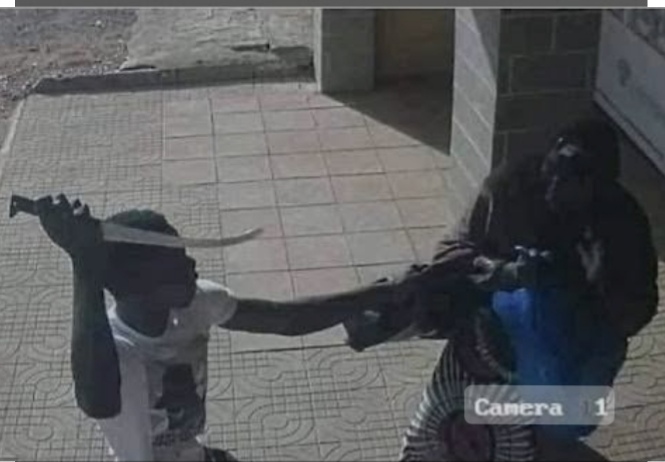
From the streets of Kurna to Dorayi, and Rijiyar Lemo to Gwagwarwa, chilling reports of violence have become commonplace. Street clashes, stabbings, daylight robberies, and innocent lives traumatised by gangs wielding machetes, stones, and knives have turned these areas into unsafe zones. 

The brutality of these gangs is more devastating. Social media platforms are inundated with graphic videos and images depicting these violent incidents. 

Terrified bystanders film young thugs attacking victims who resist having their phones snatched, with many victims bleeding from multiple stab wounds. 

These violent encounters are no longer isolated incidents but part of an alarming pattern that threatens the peace and stability of Kano.

A Personal Near-Miss in Dorayi

Just days ago, a student narrowly avoided becoming a victim during a routine trip from Zoo Road to Dorayi in a commercial tricycle (Keke Napep). 

Two young men suddenly jumped into the vehicle; one sat beside them, the other beside the rider. Despite explaining that it was a private drop-off, one of the youths became aggressive. 

Thankfully, the presence of a nearby police outpost likely deterred any violent intentions. They dropped off at a university gate without incident.

This encounter serves as a sobering reminder that violence can erupt anytime, anywhere. Such an incident was lucky, not guaranteed. For many others, it ends in tragedy.

Violence Spreads Beyond Kano

The wave of thuggery and phone snatching extends beyond Kano State. In neighbouring Kaduna, the tragic stabbing of a naval officer, Lieutenant Commander M. Buba, shocked the region. 

While changing a flat tyre in the Kawo area, he was attacked and stabbed in the chest after he refused to surrender his phone. Despite intervention by local vigilantes, he was pronounced dead on arrival at Manaal Hospital.

Authorities have since detained at least 13 suspects and initiated covert operations to dismantle gangs terrorising Kaduna’s streets. Yet the spread of this violence signals a regional issue that calls for coordinated responses beyond the borders of individual states.

 Tragic Loss of a Community Leader

Closer to home, Kano mourned the brutal murder of Alaramma Jabir Lawan Abdullahi, a respected Islamic teacher and tech expert. 

On the evening of May 17, 2025, near Gidan Sarki, he was attacked while travelling in a commercial tricycle amidst heavy traffic. When he resisted attempts to snatch his phone, he was stabbed multiple times by suspected thugs and left to die on the roadside.

This horrific act has ignited outrage across Kano. The fact that a well-known and respected educator could fall victim so brutally sends a clear message: no one is safe in the current climate of violence. 

Arrests Made, Yet Violence Continues

According to the Kano State Police Command, over 200 suspected thugs and phone snatchers have been arrested over the last six months. 

In March 2025 alone, the police paraded over 85 suspects from hotspots such as Kofar Ruwa, Dan’agundi, Zango, and Dorayi. Weapons, stolen phones, and illicit drugs were seized.

Despite these efforts, the menace persists, the gangs’ deep-rooted networks rapidly replenish lost members, highlighting the inadequacy of enforcement alone. 

Underlying socio-economic challenges, including high unemployment, widespread drug abuse, and poor educational opportunities, fuel the cycle of crime and violence.

Steps Taken, But More Must Be Done

The Kano State Government has made commendable strides in tackling this crisis. 

Rehabilitation centres in Kiru and Dorayi, alongside the National Drug Law Enforcement Agency’s (NDLEA) facility for addiction treatment, are important tools in combating the link between substance abuse and violent crime.

However, these centres require urgent expansion and increased funding to meet growing demand. With rising numbers of youths affected by drugs and crime, scaling rehabilitation services is essential, and more compulsory.

Need For Holistic Action

Security agencies cannot rely solely on arrests to solve such enduring crises, which require a community-based approach. 

Strengthening community policing, empowering neighbourhood vigilante groups, improving local surveillance, and fostering trust between residents and law enforcement are critical for restoring safety. Equally important is addressing the root causes of youth involvement in crime. 

The government must urgently invest in job creation schemes, vocational training centres, and youth empowerment initiatives such as sports and cultural programmes. 

Idle youth are more vulnerable to gang recruitment and drug addiction. Productive engagement is the key to prevention. Moreover, effective rehabilitation programmes and mental health support for addicted offenders must be prioritised. Without this, many youths will remain trapped in a vicious cycle of crime and incarceration.

Lastly, the justice system must be reformed to ensure quick and fair prosecution. Many arrested criminals return to the streets quickly due to weak legal follow-up, undermining deterrence and public confidence. Stronger, faster legal processes and appropriate sentencing are necessary to break the cycle, as it was previously demonstrated.

Conclusion

The menace of “fadan daba and phone snatching” in Kano has reached a tipping point. No one is immune, from students and traders to community leaders and law enforcement.

NLC threatens nationwide protests over poverty, insecurity

By Abdullahi Mukhtar Algasgaini

The Nigeria Labour Congress (NLC) has issued a stern warning of impending nationwide mass action, citing the crippling cost-of-living crisis, worsening insecurity, and systematic attacks on workers’ rights across the country.

Rising from its Central Working Committee (CWC) meeting held over the weekend in Abeokuta, Ogun State, the labour body declared that Nigerian workers can no longer remain passive as the nation’s economy falters and democratic foundations erode.

The NLC stated that the hardship endured by workers and the poor has reached “intolerable levels.”

It noted that immediate and decisive action is imperative to prevent a complete national breakdown, positioning the threatened protests as a necessary response to government inaction on these critical issues.

“Immediate action must be taken to avert a national breakdown,” the Congress asserted following the meeting at the June 12 Cultural Centre.

Feared bandit leader Yellow Danbokkolo dies from injuries after clash with security forces

By Muhammad Abubakar

Yellow Danbokkolo, the notorious bandit kingpin long feared across eastern Sokoto and parts of Zamfara State, has died from injuries sustained during a fierce confrontation with Nigerian security forces last week.

His death was confirmed by Abdulaziz Abdulaziz, Senior Special Assistant to President Bola Ahmed Tinubu on Print Media, via a post on his verified social media account. According to Abdulaziz, Danbokkolo succumbed to his wounds on Sunday.

Danbokkolo, widely considered even more dangerous than the infamous Bello Turji, was linked to numerous deadly attacks in the region. He was the mastermind of the gruesome December 2021 arson attack in Shinkafi, Zamfara State, where dozens of travellers were burned alive.

Security sources say the bandit leader’s reign of terror was sustained by a chronic addiction to pentazocine, a powerful opioid, which he reportedly abused in heavy doses.

Residents of the affected communities have expressed relief at the news, hoping it marks a turning point in the fight against rural banditry in Nigeria’s northwest.

The normalisation of atrocities on our roads: A call for accountability

By Kabiru Danladi Lawanti, PhD 

I cannot recall any incident where a vehicle or travellers were targeted simply because they were from Plateau State, in retaliation for the atrocities being committed by these savages.

Please, I challenge anyone to provide a single example—since 1914—where innocent travellers were attacked in Kebbi, Sokoto, Zamfara, Katsina, Niger, Kano, Jigawa, Bauchi, Gombe, Yobe, Adamawa, or Borno simply because they were seen as the “other.” 

Yet, we have countless documented cases from Tinno, Mambilla, Takum, etc., in Taraba; Riyom, Barikin Ladi, Jos, Mangu, etc., in Plateau; Agatu, Makurdi, etc., in Benue; and Gonin Gora, Koi, etc., in Kaduna, where innocent travellers were blocked, maimed, and killed—dismembered and buried or even burned alive—solely because of their identity as “others.”

These are normalised atrocities. The perpetrators are getting away with it because there have been no consequences. Only God knows how many lives have been lost in this manner between 2002 and 2025. 

Many of these crimes are well documented—some even recorded and posted by the criminals themselves, proudly sharing selfies while committing barbaric acts. Remember the Eid day massacre in Jos? Or the genocide in Mambilla? These incidents are documented by security agencies.

Tragically, these criminal gangs enjoy the backing of some politicians and community leaders. Take, for instance, the disturbing justification offered by the Chairman of Mangu Local Government Area regarding the killing of wedding-bound travellers from Zaria. Is that how a leader is supposed to speak?

Even more worrying is how these barbaric acts are celebrated on social media. Look at the screenshot of Kefas Gyang Pam that went viral yesterday, or the posts from a Facebook group in Bokkos openly celebrating the gruesome attack on the innocent Zaria travellers.

These individuals are not ghosts. They are known. And they can be easily traced.

Kabiru Danladi Lawanti, PhD, wrote from Ahmadu Bello University, Zaria.

Letter to President Tinubu on Yelwata and Jos massacres

Dear Mr President, 

1. I hope you had a safe return after the visit to Yelwata, Benue State, to assess the killing spree that occurred there last week. While people like Mr Peter Obi and Dele Farotimi criticised your trip as one lacking compassion, I believe your presence there meant something. It is better than not going there. It means you have first-hand knowledge of how defenceless Nigerians are killed, not just in Benue, but across Nigeria, especially in the North. 

2. I write to draw the urgent attention of Your Excellency to a fresh tragedy. This afternoon, several national newspapers reported the killing of 12 Muslim passengers travelling from Zaria to Qua’anpan Local Government Area of Plateau State. They were ambushed in the Manjul community, Mangu Local Government Area, Plateau State. These innocent Muslim travellers were killed, and subsequently burned in the bus conveying them. Nineteen others are now nursing various degrees of injuries.

3. A survivor among the victims of this dastardly act was interviewed, and he remarked that they lost direction. Upon stopping and asking for directions, the locals at Manjul remarked that these are Hausa people and that they should be killed. In their words, as reported, “These are Hausa people, let’s kill them!”. This chilling statement underscores where we are as a country. Anyway, they successfully killed 12 and injured 19. It is in today’s newspapers – Daily Nigerian, Daily Trust, The Daily Reality, Punch Newspapers. 

4. Mr. President, no citizen should be targeted for their ethnicity or religion. Whether in Yelwata or Yorro, Mangu or Malete, Nigerians must be free to travel safely. Nigeria has tolerated this barbarism for too long. If terrorists in the forests remain elusive, those living in communities and attacking travellers should not be. What excuse does the state have when killers who can be easily traced and apprehended go unpunished? This silence by the system sends one loud message: you can kill and walk away. 

5. This is not the first time such horror has unfolded in Plateau State. In 2021, 20 members of the Tijjaniyya sect were killed in Rukuba, Jos, on their way home from a religious event in Bauchi. It is now 4 years. No justice has been served yet. In 2018, General Idris Alkali (rtd), a senior military officer and Chief of Army Administration, was ambushed and killed. His body was thrown into a pond in Dura Du. Suspects were arrested, but 7 years later, justice is being delayed. 

6. These cases remain open wounds. Mr. President, your influence should not stop at sympathy and condolence visits. Nigerians will feel more confident if you direct a full, public, and timely investigation into these recent attacks in Yelwata and Mangu. The perpetrators should be found, prosecuted, and punished—not just for justice but as a deterrent. Otherwise, each incident becomes an invitation for the next mob to strike.

7. Your Excellency, the time to act is now. Nigerians are watching. We can, for once, surprise the world and Nigerians themselves to know that Nigeria is not a jungle where anyone kills at will and goes about their everyday business. Where is the sanctity of life in this country? If the government cannot break this wanton bloodshed, then who will? You can decide to break this bad culture of letting killers get away. You can choose to be different from your predecessors. You can decide to let Nigerians know that this can be curtailed. Let this be the turning point. We have to give justice some opportunity to speak louder than violence. At this time, let us give the killers an opportunity to know that Nigeria is not a lawless country. 

8. Thank you. 

Ibrahiym A. El-Caleel wrote from Zaria, Kaduna State.