Hollywood

Son, 32, charged in killing parents, Rob Reiner and Michele Reiner

By Hadiza Abdulkadir

Nick Reiner, 32, has been charged with two counts of first-degree murder following the deaths of his parents, filmmaker Rob Reiner and photographer Michele Singer Reiner, authorities said Sunday.

Police reported that the couple were found dead at their residence earlier in the day. Investigators have not released details about the circumstances of their deaths, citing the ongoing investigation.

Reiner was taken into custody without incident, according to law enforcement officials. He is expected to make an initial court appearance in the coming days.

Officials emphasised that the charges are allegations and that the investigation remains active. No further information was immediately available.

Netflix to acquire Warner Bros Discovery in $83bn mega deal

By Hadiza Abdulkadir

Netflix is set to acquire Warner Bros Discovery, including HBO Max and the company’s historic film studios, in a landmark deal valued at $83 billion, marking one of the most significant shake-ups in modern entertainment history.

The agreement brings together Netflix’s vast global streaming footprint with Warner Bros’ deep library of iconic franchises, from DC superheroes to the Wizarding World, and critically acclaimed HBO series such as Game of Thrones and Succession.

As part of the arrangement, Warner Bros Discovery will first spin off its cable networks — including CNN, TNT and TBS — into a separate entity before the sale is finalised. The merger still faces regulatory scrutiny in the U.S. and Europe, with critics warning that the consolidation could suppress competition and limit creative diversity.

If approved, the tie-up would create a powerhouse straddling both Hollywood tradition and streaming dominance, reshaping the future of global media.

The fans made you: A wake-up call for Kannywood stars

By Habibu Maaruf Abdu 

The social media in Northern Nigeria was recently abuzz with reports that Kannywood actress Fati Washa allegedly ignored and embarrassed some of her fans. This incident mirrors the infamy of certain Kannywood stars who are generally known for disrespecting their supporters. And that’s truly unfortunate!

Fans are the backbone of every entertainer’s success. Without their support, applause, and attention, there would be no fame, no endorsement deals, and no screen presence. So why do some Kannywood stars treat them with such indifference, even disdain?

Take a look at how global celebrities carry themselves. When Lionel Messi visited a restaurant in Argentina, he didn’t ignore the crowd of fans gathered outside. Despite being with his family, he waved, smiled, and acknowledged their love. 

In Bollywood, big stars like Salman Khan often stop for quick selfies or a simple wave to appreciate their fans. Even Hollywood legends like Keanu Reeves are celebrated not just for their talent but for their humility and approachability.

So, if celebrities from such massive industries, with far greater global fame on a scale Kannywood can only dream of, still find it important to respect their fans, what excuse do the local stars have?

I know for sure that not all Kannywood actors are like that. I met many of the industry’s A-listers, and my interactions with them have been nothing short of respectful. Perhaps it’s because I know how to read the room; when I sense a dismissive attitude, I simply stay away. But I’ve had some memorable encounters worth sharing.

Back in 2012, shortly after graduating from secondary school, a friend of mine wrote a film script. I suggested we visit Shy Plaza in Gadon Kaya, where, at that time, Kannywood filmmakers had a significant presence, to discuss it with a renowned producer. I was familiar with the area, having lived nearby.

We went there full of hope. The producer wasn’t around, so we waited. Then we saw Sadiq Sani Sadiq walk by. We decided not to approach him. But he came over and greeted us. He smiled, shook our hands, and made us feel seen. We were both under 20 at the time, nobodies, really, yet he showed us respect. From that day on, he earned my admiration and loyalty as a fan.

Over the years, my interest in Kannywood deepened. I attended many of their events and premieres. When Filmhouse Cinema opened at ShopRite in Kano, I was a regular attendee. I saw many Kannywood personnel there during movie promotions. Still, I rarely approached anyone—except Falalu Dorayi and Nazifi Asnanic, both of whom responded warmly and even posed for pictures with me.

There was also Aisha Humaira, the recent bride. I once saw her being approached by a young girl at the cinema premises asking for a photo. I was seated nearby when she turned to me and said, “If you don’t mind, please snap us.” I was amazed at her subtle show of humility.

Later, when I gained a bit of recognition as a film reviewer, I made the conscious decision to stop attending premieres, just to avoid being compromised by familiarity with filmmakers. I even turned down invites to special screenings, keeping my professional distance. At festivals and award events, I would often avoid conversations with actors altogether.

But something remarkable happened recently. It was at a UNICEF function, and thanks to our mentor Malam Habibu Aminu Lawan, I attended alongside Amina Bako and other social media influencers. We were seated right next to Kannywood veterans like Rabi’u Rikadawa, Umma Shehu, Umar M. Sharif, and others.

Because of actors’ reputation for snobbery, we decided to “maintain our steeze,” acting like we didn’t care. Interestingly, we ended up sharing laughs and engaging in light-hearted conversations. I even had an insightful discussion with Rikadawa about his acting prowess and the industry at large.

Therefore, based on my experience, I can confidently say that there are truly humble and grounded personalities in Kannywood, especially among the educated and veteran actors. The problem primarily lies with the naive, up-and-coming actors who mistakenly believe that arrogance equates to importance. And sadly, it doesn’t. It only exposes their insecurity.

In conclusion, Kannywood actors need a serious reality check. Fame is fleeting. The same fans you ignore today can forget you tomorrow. You have to respect your fans. They made you who you are.

Habibu Maaruf Abdu wrote from Kano via habibumaaruf11@gmail.com.

Impending collapse of Nollywood, Kannywood, and music industries due to the AI revolution

By Haruna Chiroma

Before the advent of the internal combustion engine, imaging two horses engaging in a conversation about the era of internal combustion engines. One of the horses envisions a transformative job landscape with new opportunities, while the other horse opposes the idea, seeing it as a potential threat to their relevance in transportation and a possible complete displacement from the realm of transportation. Horses have no position in the post internal combustion engine era. That is my prediction for the future of the movie and music industries in Nigeria.

The Nigerian movie industry is notably divided into two main sectors: Nollywood, primarily representing movies from the southern region and Kannywood, which focuses on movies from the northern region.

In the music industry, songs are typically sung in English, Hausa, Igbo, and Yoruba. Both the movie and music industries are currently confronting the looming threat of collapse due to the disruptive impact of AI innovations, inventions, and discoveries.

The process of writing movie scripts by scriptwriters is time-consuming and varies in duration depending on the complexity and proposed length of the film. It can take anywhere from two weeks to three months to complete the initial draft before further refinement. However, with the advent of AI tools like ChatGPT, scriptwriters can significantly enhance their productivity. By utilizing ChatGPT, writers can expedite the scriptwriting process, potentially reducing the time required from months to just one or two days for complex movie scripts.

The movie industry is on the verge of collapse in the near future with the emergence of generative AI tools capable of generating video from written text. In the near future, traditional methods of movie production may become obsolete. Instead of the laborious process of location shooting, hiring actors, coordinating camera movements, applying makeup, arranging logistics, etc. a movie script written by scriptwriter can simply be fed into a text-to-video tool converter. This innovative technology will then generate a movie video representation of the script, revolutionizing the way movies are created. The tool comes equipped with video editing features, enabling users to fine-tune the video to match their requirements. The process that involves many people with different expertise working from different perspective may likely require between 2 – 3 people instead of the large number of people required in the traditional process of movie production.

Recently, OpenAI unveiled Sora, a text-to-video conversion tool, garnering widespread attention from mainstream media. This development prompted a filmmaker in Hollywood, Tyler Perry to suspend his 4 years $800 million planned movie production studio expansion arguing that Sora will eventually impact every aspect of the movie industry and jobs in the entertainment industry.

In an intriguing development, yet another valuable AI tool for video translation has emerged. This tool enables users to translate their videos into different languages such as Dutch, French, Arabic, Swahili, Chinese, Malay, and more. By doing so, the movie video creators can extend their reach beyond Nigeria and cater to audiences across Africa, Europe, and Asia, thereby expanding their potential viewer base to a larger and more diverse audience.

A deepfake movie can be produced by using the faces of renowned movie stars from both Kannywood and Nollywood, eliminating the need for these actors to physically appear in any physical location. The movie developer only requires the consent of the actors to use their faces in the deepfake video, adhering strictly to ethical guidelines in the creation of deepfake content. With these permissions in place, a movie can be crafted featuring the prominent actor(s) as the central characters, offering new possibilities in cinematic storytelling.

These emerging concepts pose a significant challenge to the movie industry, making it increasingly difficult for the traditional model to sustain itself. This trend mirrors the significant decline or almost collapse witnessed in industries such as landline telephones, photo shops, and magnetic tape, suggesting that the movie industry may face a similar fate of eventual collapse to the changing landscape.

Already the adult content industry is facing tough competition from deepfake adult videos generated by AI tools. Recently, several dedicated platforms have emerged, exacerbating challenges for the traditional adult movie sector. These platforms are attracting millions of visitors, with one particularly renowned platform drawing over 17 million viewers monthly. Typically, the platform features short deepfake adult content videos as teasers, enticing viewers to access the full content elsewhere.

While the short videos span various platforms, the primary one serves primarily for advertising and provides links to other platforms where complete videos are available for purchase.

The proliferation of deepfake adult videos has led to a surprising revelation: these videos are not freely accessible but are instead sold in dollars, accepting payments via credit cards, debit cards, or cryptocurrency. This burgeoning industry has now become a multimillion-dollar enterprise. For anonymity and ethical reasons, I intentionally omitted specific platform names to prevent further traffic influx.

This discourse underscores a poignant observation: the inevitability of the movie industry’s potential decline due to the transformative impacts of AI research. In January of this year, a deepfake pornographic image featuring a celebrity, Taylor Swift surfaced on various social media platforms. The video quickly gained traction on X (formerly Twitter), spreading rapidly like wildfire and amassing over 47 million views in less than 24 hours. Despite ethical considerations, many X users shared the video extensively before it was eventually removed and searching for the image was blocked by X. I foresee the collapse of the adult content industry in the next 3 years with the deepfake videos taking over.

In the music industry, numerous AI tools for music generation are currently in various stages of development, testing, or initial release. For example, MusicLM, an AI tool developed by Google, is designed for composing music and has shown promising capabilities in generating music.

Currently, an advanced version called MusicFx is undergoing testing in Google’s test kitchen before its public release. Users can simply prompt ideas into the music tool, and it will automatically compose the music. This advancement suggests that the future of music composition may require fewer people, as one individual can prompt the tool with ideas to generate music without the need for multiple collaborators.

Another tool is Suno V3, it generates music from text easily. Therefore, the music industry is at the verge of facing stiff competition and eventual collapse of the industry from these revolutions from AI.

Haruna Chiroma, Ph.D. Artificial Intelligence University of Hafr Al Batin, Saudi Arabia, freedonchi@yahoo.com.

Five more women sue Bill Cosby for sexual assault

By Uzair Adam Imam

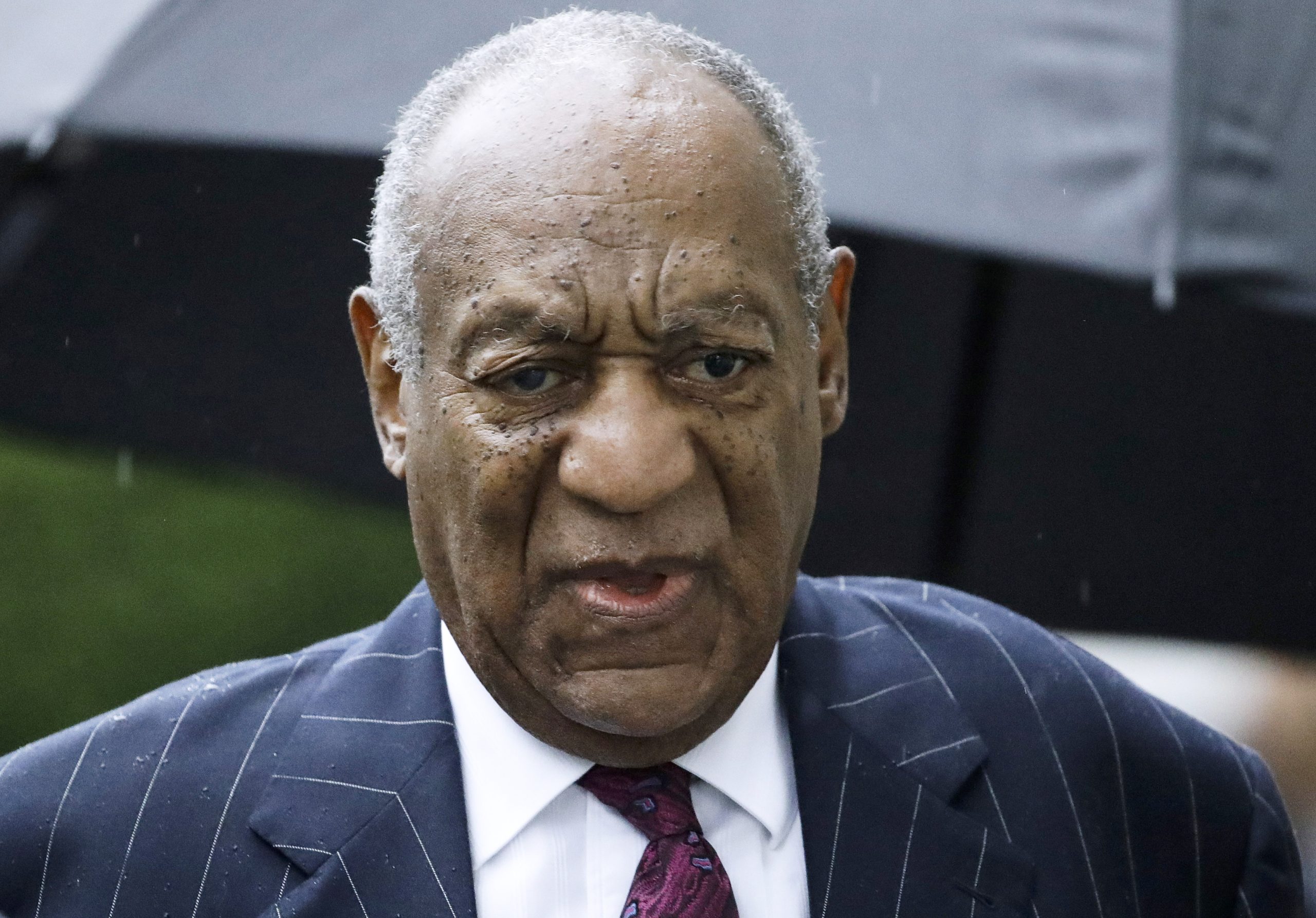
Bill Cosby, a renowned American stand-up comedian and actor, has been sued by five women over sexual assault during their early careers.

The 85-year-old Cosby has been dragged through the mud by numerous women over the allegation of rape throughout the years.

The Daily Reality recalls that back in 2018, the comedian bagged a 10-year jail term in Pennsylvania for indecent assault.

Several reports indicated that the majority of the women sued the actor for acting more like a predator than a mentor to them.

The victims were identified as Plaintiffs Lili Bernard, Eden Tirl, Jewel Gittens, Jennifer Thompson, and Cindra Ladd.

They alleged that the actor was able to take advantage of them because they were young and vulnerable.

Some time ago, the actor was also dragged to court by Mrs Minifield, who claimed Cosby drugged and abused her multiple times.

The victim recalled one incident in which she awoke during a rape to discover the actor trying to smother her with a pillow.

The film industry in Nigeria: A two-left-legged maiden

By Zailani Bappa

I read a post by someone who expressed his worry about the lack of unity of purpose (in fact, he said, unity of everything) among the Nigerian people. He was writing about the movie industry. He said Hollywood had been a household name for a country as vast as America. So also Bollywood for a country as big as India. Both countries are bigger and more economically prosperous than Nigeria.

However, despite the existence of Nollywood, we still have the Kannywood in Nigeria. He believes the existence and progression of Kannywood are retrogressive to the Unity of purpose in the industry in Nigeria. I reason with him. However, that is only when the matter is viewed from the surface. Scratch the surface a little, and you’ll see the bigger picture.

Both Nollywood and Kannywood emerged in prominence in the 1990s. Nollywood comes in English, pidgin, Igbo and Yoruba. The Kannywood comes mainly in Hausa and a few times in English. Looking at the Hollywood and Bollywood industries as both business and national projects, both Industries tend to project National Unity, National Pride and National dignity of their respective countries. And the business does not discriminate in the selection of protagonists.

However, in Nigeria, tribal, sectional and religious stereotypes continue to influence the industry, which makes it even more difficult to have a unified industry. To date, egg-heads of the Nollywood industry find it difficult to accept the fact that the industry needed to diversify and be all-inclusive in sourcing for their resource. For instance, African-Americans in the US are arguably the lowliest rated race in the US. However, the Hollywood industry does not believe so. The Industry became all-inclusive and explored for talents instead of being led by stereotypes. Now the negros are almost the best actors in the industry. That is how it grew to excellence.

In Nigeria, however, Nollywood, with the advantage of producing in English first, metamorphosed most of the vernacular protagonists into English productions but unwittingly limited the train to those from the South-East of the Country who saw themselves as the owners of the industry. For instance, the far Northern Nigerian does not deserve more than the role of a gateman in Nollywood films. If at all you hear the name Musa, Usman, or  Bala, then, it’s the guy employed to look after the gate or wash the cars of Obinna, Ifeanyi or Chibuzo. The Lagos-based Industry is not making any genuine efforts to integrate with the Kannywood industry, even as the latter continues to grow in influence and affluence in the North and elsewhere.

However, the Kannywood, with its vast audience across the Hausa-speaking communities across the globe, also failed to grow in its intellectual capacity. It instead gets stuck to its money-making trash productions in the name of soyayya themes, which, apart from the sheer entertainment it provides, literally promotes empty value to the morale, capacity and quality of lives of the audience, not to even talk of national value, pride and dignity.

In Nigeria, the film industry has no idea or focus on National project but purely exist for business reasons. Hollywood has developed over time to become an agenda setter for the United States policymakers and implementors. It has now become a platform and potent avenue for increasing the influence of the United States over other nations and peoples worldwide. The Indian Industry also helps that country placate the outside world with its numerous internal crises and contradictions by promoting a clean, prosperous and happy India.

In Nigeria, Nollywood promotes less national dignity and unity but corruption, indecency, cultism and disunity. It exposes more of the weak and bad sides of the country, its institutions, leaders and people instead of strengthening their good sides more. Why? Because they make better money doing that since their productions appeal more to the wrong side of humanity in us. The Kannywood, with its empty intellectual value, is simply vain. So, as the two continue to grow side by side like that, we may have to do with the fast growth of a two-left-legged maiden of an industry.

Zailani Bappa wrote from Bauchi State via zailanbappa@gmail.com.