Education

Boko Haram: Inspiring stories of two resilient girls who became registered midwives

By Lawan Bukar Maigana

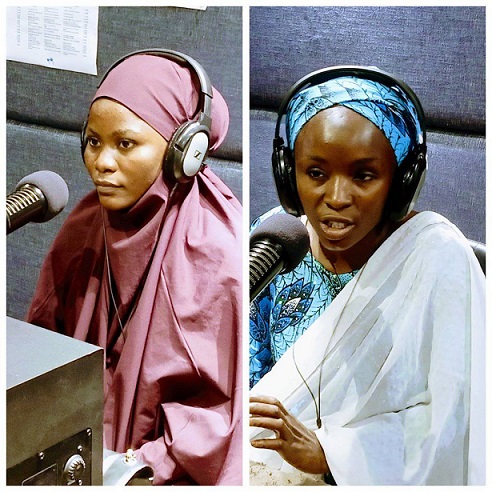
In the war-torn region of Gwoza, two remarkable girls, Mabruka Manu, and Maryam Abubakar Musa, emerged as beacons of hope and resilience. Despite the devastating impact of the Boko Haram insurgency on their lives and education, they defied the odds and became registered midwives. 

Their inspiring journeys from displacement and despair to fulfilling careers are a testament to their unwavering determination and the power of education.

Mabruka Manu was born and raised in Maiduguri, while Maryam was born in Katsina State but raised in Gwoza, Borno State. As with many thousands, both young ladies had their dreams of education shattered by the insurgency. However, an NGO called Girl Child Concerns, GCC, provided them with a lifeline, offering opportunities to realise their full potential. 

In 2018, GCC undertook a remarkable initiative in Borno State with support from MDS’s Merck for Mother selecting and training over 300 adolescent girls from various communities (primarily affected by the Boko Haram insurgency) to become Village Health Workers (VHW). The goal was to address the pressing maternal, newborn, and child health (MNCH) needs in these areas, where many health workers had left due to the Boko Haram insurgency, leaving women and children with limited access to healthcare. 

Among the trained VHWs were Maryam and Mubruka, whose dedication and resilience stood out. With support from Borno State Government, GCC further trained over 500 VHW and equipped them with essential skills, including training as Per Mother’s Support Groups for Infant and Young Children’s Feeding, serving as supportive supervisors, and encouraging them to pursue further studies, leading to their qualification for the Foundation Year Program (FYP) initiated by Women for Health. 

With the support of their loved ones and overcoming financial obstacles, Maryam and Mubruka’s journey eventually led them to gain admission to the prestigious College of Nursing and Midwifery in Maiduguri, where they began their inspiring path toward becoming Registered and Licensed Midwives.

In 2020, GCC continued its mission to empower women in rural communities by organising a training program for health workers, including Maryam and Mubruka, and nearly 100 others, to address the challenges rural women face in providing basic health screening, counselling, and managing common ailments.  

This training taught participants good infant and child feeding, promoted immunisation, and provided referral services. Maryam and Mubruka’s active involvement in this initiative showcased their commitment to their communities’ well-being as they diligently acquired the necessary skills to support and educate mothers on proper infant and child nutrition.

The stories of Maryam and Mubruka exemplify the transformative impact of GCC’s initiatives on the lives of young women and their communities in Borno State. Through their training as Village Health Workers and their subsequent journey to become Registered and Licensed Midwives, they have become invaluable assets to their communities, offering crucial healthcare services and expertise where it was previously lacking. 

Additionally, their involvement in the “Mother Support Group for Infant and Child Nutrition has furthered the cause of empowering rural women and enhancing the health and well-being of their children. 

GCC’s dedication to uplifting and supporting women in the healthcare sector continues to bring positive change to Borno State, fostering a brighter future for its women, children, and communities.

Maryam Abubakar Musa, who faced numerous challenges in her journey, including the horrors of the Boko Haram insurgency, displayed incredible determination and commitment to education. 

Despite setbacks and low exam scores, Maryam pursued her passion for healthcare, eventually graduating with a diploma in Chemistry Education. Her perseverance paid off, and she successfully graduated, landing a job in her chosen field.

These fantastic stories of Mabruka and Maryam are shining examples of resilience, determination, and the pursuit of education against all odds. Their unwavering spirit and commitment to their community exemplify the best of humanity. 

They highlight the importance of providing educational opportunities and support systems to individuals from marginalised areas affected by conflict, proving that resilience and dedication can overcome any obstacle to a brighter future.

The journey of Mabruka and Maryam is a source of inspiration for their community and countless others facing similar challenges. Their triumphs showcase the transformative power of education and the impact of collective efforts from NGOs like GCC and Women For Health. 

These stories remind us that even in the darkest times, hope can prevail, and with the proper support, individuals can overcome adversity and achieve their dreams. Recognition for their remarkable achievements arrived when Mabruka and Maryam were offered jobs at the Ultra Modern Police Hospital in Yobe State. 

Their inspiring narratives, shared through a Girls for Girls phone-in radio program initiated by Girl Child Concern in Collaboration with Education Cannot Wait and UNICEF, caught the attention of a good Samaritan. Their employment solidifies their career paths and serves as a testament to the power of their resilience and the impact of their stories on others.

Mabruka Manu and Maryam Abubakar Musa’s journeys from displacement and adversity to becoming registered midwives are tales of unwavering determination, resilience, and the transformative power of education. Their stories underscore the importance of providing support and opportunities to individuals in conflict-affected regions.

Mabruka and Maryam’s achievements inspire hope, demonstrating that with perseverance and the right support, anyone can overcome obstacles and forge a path toward a brighter future.

Lawan Bukar Maigana is the Communication Officer for Girl Child Concerns, GCC, Borno State, and can be reached via email: lawanbukarmaigana@gmail.com.

Reimagining education in Kano State: A call for visionary leadership

By Huzaifa Dokaji

Imagine a bustling city nestled in the heart of West Africa that radiated intellectual brilliance and creativity long before the Europeans reached the region. This is Kano, a city whose intellectual achievements have shone brightly throughout history, never hidden from the world’s gaze. A state North African merchants describe as “a city like a thousand city”. Allow me to paint a vivid picture of Kano’s intellectual past, a portrait that will captivate your imagination and unveil the greatness that lies within.

Centuries before the arrival of colonial powers, Kano was a thriving centre of learning, attracting scholars from far and wide. It was a place where minds converged, knowledge was cherished, and intellectual pursuits flourished thanks to state and privately-sponsored academic spaces. In the corridors of Kano’s renowned educational institutions, such as the intimidating Madabo centre, scholars delved into the depths of philosophy, science, literature, and Islamic studies. They engaged in intellectual debates, exchanged ideas, and produced works that left an indelible mark on the intellectual landscape of their time and beyond. This legacy, however, is at peril more than ever.

In a state that once boasted of kings and emirs renowned for their generous support of scholars and students, state scholarships are now only disbursed on the eve of elections, serving as mere tools for vote canvassing. Our schools are among the worse in the world. Although once a space where literary production was at its fines, schools in Kano lack access to any useful library resources. Lecturers resort to illegally downloading books online or relying on pirated copies to fulfil their teaching duties.

It is genuinely dismaying that a junior lecturer in our universities must spend nearly half their monthly wage to order an essential textbook on Amazon, while students at even the poorest universities in America have access to such materials through interlibrary loans. Adding to this bleak scenario, for example, over three years, Stony Brook University in New York spent about half of our 2023 budget for education to renovate its Student Union building. As worrying as this is, I believe Kano State still possesses the potential to emerge as a shining example of educational brilliance once again. My intervention is limited to institutions of higher learning.

To transform the Kwankwasiyya vision for education into a reality, we must transcend the mere provision of basic educational infrastructure and sponsoring students to study abroad. We must embrace a bold approach that surpasses the efforts of our Nigerian and West African counterparts. We need visionary leadership and innovative infrastructure. We need leaders who understand that education is not merely about constructing classrooms and dashing out scholarships; it is about providing qualitative and enduring infrastructure and creating an environment that fosters intellectual growth, critical thinking, and cutting-edge research. We need leaders who recognise that the quality of education is directly proportional to the quality of infrastructure provided and the system created.

Imagine a Kano State where universities boast state-of-the-art research laboratories with cutting-edge technology. Envision lecture halls that facilitate interactive and engaging teaching methods, equipped with the latest audiovisual tools and comfortable seating arrangements. Picture libraries filled with a vast array of books, journals, and digital resources, providing students and faculty with access to a world of knowledge at their fingertips. Imagine campuses adorned with green spaces, inspiring architecture, and modern facilities that foster an atmosphere conducive to learning and intellectual exploration. Imagine a Kano where lecturers are paid a decent wage.

We must transcend those dilapidated buildings that even counties are ashamed of building abroad. There is a critical need to dream beyond the limitations of what other Nigerian governors have failed to achieve. We must look to the examples set by leaders in more progressive societies and strive for such excellence. Let us aim to provide our students and faculty with infrastructure that not only meets their basic needs but also inspires them to reach new heights of knowledge and innovation. This should be the Kwankwasiyya vision.

The interventions

a. Infrastructure

To realise this vision, it is crucial to prioritise the modernisation and expansion of our universities’ infrastructure. Outdated facilities, overcrowded classrooms, and limited resources hinder the educational experience and impede the pursuit of cutting-edge research. It is time to break free from the shackles of mediocrity and invest in infrastructure that reflects our commitment to academic excellence. We need well-equipped laboratories, not just buildings with nothing to offer our science students. By allocating a significant portion of the state budget to education and ensuring the judicious utilisation of funds, we can establish a sustainable funding model that facilitates the development of world-class infrastructure.

The above investment will benefit our universities and attract renowned scholars and researchers from around the world. They will see Kano as a place where they can pursue their academic endeavours in an environment that supports and nurtures their intellectual growth. By looking at what governors in more advanced regions are doing, we can identify innovative approaches to infrastructure development. These leaders understand that modernising educational institutions goes beyond constructing buildings; it involves creating spaces that foster collaboration, critical thinking, and creativity. They invest in research facilities, technological resources, and student support services that enrich the educational experience and provide students with the skills needed to thrive in the global economy.

b. Wages and Allowances

There is a pressing need for Governor Abba Kabir Yusuf to reconsider the current remuneration package for lecturers in our state-owned higher institutions. It is essential to rise above the confines of the narrow mindset that accepts the prevailing notion of meagre salaries for lecturers on the selfish idea that it is what all states and the federal government are paying. In this era, marked by heightened awareness and accountability, there is no plausible justification for not paying a reasonable wage when politicians have continued to show ingenuity in sourcing money to fund their expensive and outrageous lifestyles. Paying lecturers a meagre salary of $200 a month undermines their professional dedication and the essence of a vibrant and dynamic education system. Recognising the invaluable contributions of these esteemed educators, Governor Yusuf must transcend the limitations of prevalent practices and champion a new paradigm of valuing and rewarding academic expertise. By offering a respectable and competitive wage, he can demonstrate his unwavering commitment to nurturing an environment that attracts and retains top-notch scholars, who, in turn, inspire students to reach new intellectual heights.

c. Grants and fellowships

The absence of grants in Kano universities is not only a concern for the institutions themselves but also a reflection of the broader condition of education in our beloved state. No society can truly develop its education system and produce graduates who can address the nation’s needs without ensuring access to basic resources, such as grants, which fuel academic progress and knowledge dissemination. To rectify this pressing issue, there is an urgent need to prioritise establishing grant programs that cater to the needs of faculty members and students across all universities in Kano State. It is imperative to allocate funds in the state budget specifically dedicated to supporting and rewarding research, innovation, and academic excellence.

For several reasons, grants and fellowships are crucial in developing academic research, especially in developing countries. First, they provide financial support to researchers who may not have the resources to pursue their studies. Second, they facilitate collaborations between researchers worldwide, enabling the exchange of ideas and knowledge. Third, grants and fellowships often come with opportunities for training and mentorship, which can enhance the skills and expertise of researchers. Finally, supporting academic research, grants, and fellowships can lead to the developing of new technologies, products, and services that can have significant social and economic benefits for developing countries.

The government should collaborate with private organisations, philanthropists, and international institutions to establish a successful fellowship and grant program in Kano. By working together, the government can leverage existing resources to create a sustainable program that supports research and innovation in academic institutions.

Grants, both for lecturers and students, are crucial lifelines that enable universities to flourish and produce graduates equipped with the skills necessary to thrive in today’s rapidly evolving world. They will provide financial support for research projects, allow for acquiring state-of-the-art equipment and resources, and facilitate collaboration with industry partners. Without grants, universities face a significant impediment to progress and risk falling behind in the global academic landscape. Establishing fellowships and grants in Kano can help bridge the gap between local and international education systems by attracting talented scholars and researchers worldwide. This will give students and scholars access to diverse ideas and perspectives, enabling them to compete globally.

Grant investments will demonstrate Abba Kabir Yusuf’s commitment to developing Kano’s education system. It will make him, perhaps, the only governor to establish such in the entire Northern region. Such a move will enhance the quality of education and attract renowned researchers, industry partnerships, and prestigious grants to our universities. The ripple effect of such investment will position Kano State as a hub for innovation, drive economic growth, and nurture a generation of graduates ready to tackle local and global challenges.

Denying students access to grants limits their potential and hampers their ability to engage in hands-on, practical research experiences that enrich their educational journey. By investing in grants, we empower our students to contribute meaningfully to their respective fields upon graduation. Moreover, these programs will create a culture of research and innovation in academic institutions, leading to increased productivity and competitiveness.

In conclusion, by embracing visionary leadership, investing in infrastructure, and establishing grant programs, Kano State can transcend the limitations of the past and emerge as a leader in educational excellence. Let us not settle for mediocrity but strive for greatness in our pursuit of knowledge and innovation. The future of Kano’s education system lies in our collective commitment to providing world-class infrastructure and nurturing a generation of scholars capable of making significant contributions to society. Together, we can transform Kano into an educational powerhouse that inspires and empowers future generations.

Huzaifa Dokaji is a PhD student and teaching assistant at the Department of History, State University of New York at Sony Brook. He can be reached via huzaifa.dokaji@stonybrook.edu.

Malam Saidu Jibrin Kwani: A case study of a strong man vs strong institution debate

By Nasiru Manga

Anytime Nigeria’s myriad problems and challenges are raised in a discussion which also involves how to turn around the country’s fortune, it more often than not leads to a fascinating argument among intellectuals as to which is more important between establishing a solid institution which produces successive good leadership or having a leadership of strong men to engender strong institutions. In that instant, I find myself vacillating between the two opinions. I find both of them valid and very difficult to be disputed. It’s a case of a chick and an egg dilemma regarding which must have existed first, the chick which laid the egg or the egg from which the chick was hatched.

Reasoning with either of the points, I reflected on my teenage experience in secondary school more than two decades ago. I then relate the arguments with the leadership of five or six successive principals in my secondary school, Government Arabic College, Gombe. How these principals managed the school was a practical example of the validity of the two arguments depending on the side one takes.

One of the principals, in particular, stood out. He is Malam Saidu Jibrin Kwami. His exemplary leadership during his stint as the school’s principal afforded me the feeling of what good leadership can do, even in a small school environment. Before him, his predecessors couldn’t make any difference. The principal who succeeded him couldn’t equally build on his achievements. It’s also proof that without a vital institution, a strong leader’s efforts come to nought if he leaves the stage and succeeds by a weakling. For my readers to deeply appreciate why Malam Saidu Jibrin Kwami’s exemplary leadership towered above the rest of the principals, let me take you down memory lane of what was obtainable in the school.

The system was, and until we left the boarding secondary school in 2002, the principal, in addition to the daily management of the school, was in charge of students feeding. I didn’t know whether the funds for the feeding were released to the principal directly from the state ministry of education or the ministry provided the school with all foodstuffs. It released some funds to the principal for the daily running of the school and buying groceries. But I did know that the school store was getting restocked regularly.

The three square meals day in and day out consisted of mostly pap with sometimes two pieces of ƙosai served as breakfast. The pap had no sugar, and perhaps, due to how it was prepared, it had a sedative effect on students during school hours. Black tea with rumpled tiny bread was served as breakfast once a week. The lunch and supper were either tuwo made from processed maize, mostly half-done, called gabza by students or eba made from gari, served alternately for lunch and supper. The soup for the gabza or eba, mostly miyar kuka, was prepared with little to no spices and bereft of any accompanying protein in the form of meat. Rice which one couldn’t tell whether it was a jollof rice or simply white rice without soup, was served on Thursdays. The meat was served only once in a blue moon.

It is needless to say that the rations were not enough for students. Worse of it, many students used to end up not having their rations as what was given to the cooks to prepare was barely enough to go around. The service was, therefore, on a first-come-first-served basis, excluding senior students who needed not join queues. If one missed his share, that was all, and he would be told “ka bi Yerima“, an expression meaning “you have missed, there is nothing for you.” It was said that the cliché “ka bi Yerima” has its historical origin in one of the Gombe princes who sought and lost his father’s throne to then Emir of Gombe, Alhaji Shehu Abubakar. So “ka bi Yerima” means one followed in the footsteps of the prince, a loser. Ask me not about its authenticity.

To be fair to the principals of my secondary school, the situation was almost the same in all boarding public secondary schools, at least in Gombe and Bauchi states, around that time and even some years before that, as confirmed by those who attended the boarding schools before us. There were, of course, slight differences here and there occasioned by changes of different school administrators depending on their level of prudence and management of resources.

One incident I can’t forget during my first year was a riot in the school. The then-principal was unbelievably niggardly. Students’ rations which were, to start with, too little, only enough to feed a three-year-old baby, became so frequently inadequate to go around. Kun bi Yerima became the order of the day as more and more students started missing their rations at the dining hall. This was exacerbated by the fact that it was towards the end of a term when the foodstuffs brought from home by students and some money given to them by their parents to complement the school feeding programme had finished, thereby forcing many to rely on the food provided by the school which was not enough. There was also a shortage of water in the school.

So, one morning, some senior students from SS 2 and 3 woke up and said they had had enough. They took to the school’s streets chanting slogans that the principal should go and that he was a thief. After gathering, they headed to the school’s staff houses, where the principal lived. They started pelting stones at his house. He escaped by a whisker, and the school got shut down for a few weeks.

Upon resumption, we met a new principal and were informed that about seven (7) students, leaders of the protest, were expelled from the school. But still, there was no significant improvement in school feeding or academics. We only had three to four subjects maximum, out of the nine subjects we were supposed to have daily. The only exception was when we had teaching practice students from the Federal College of Education. And during that time, permanent teachers virtually abdicated their responsibilities, leaving everything to the student-teachers. Another two principals we had afterwards couldn’t effect any change. Their priorities were neither students’ academic nor their nutritional well-being.

Then came the revolutionary principal, Malam Saidu Jibrin Kwami. We were in SS 3, about five years after that principal against whom students revolted, and the fourth in the succession of principals since we enrolled in JSS 1.

The first thing he undertook was an improvement in our academics. He frowned at some teachers habits of sitting and chit-chatting in staff rooms without attending classes. He declared that he wouldn’t condone their flagrant negligence of duty. He insisted that every teacher must not miss his lesson twice weekly without a genuine reason. We then started having completed nine lessons on an unprecedented day.

How did he achieve that? He gave all class monitors notebooks to use as registers where each teacher would write their name and append their signatures at the end of their period. At the end of the class every day, the class monitors would queue up at his office, where he checked the register of each class to see if there was an absentee teacher. He also told us in the assembly that we should report any teacher we observed wasting away their period of 30 minutes or 45 minutes blabbering instead of teaching.

Malam Jibrin Kwami also introduced extra evening classes (which we called prep) daily, save weekends. Before him, there was not much importance attached to it by his predecessors. Only junior students used to attend it, and it wasn’t daily. But during his time, he supervised the evening classes himself; and he would personally go around hostels to chase out stubborn senior students who would rather stay put in the hostels while the prep was ongoing. If he sighted a student loitering about, he would shout from afar, “Who is that gardi?” He also ensured that all the classrooms and all the streets from students’ dormitories leading to the classes were fully lit so that students wouldn’t complain of darkness. There were no Discos then, and NEPA was genuinely faithful. How he achieved that, beat me.

You may be wondering what happened to our food, right? Suffice it to say that during his short period as the school’s principal, we also saw what our parents enjoyed in public schools in the ‘70s and ‘80s. He told us that he also finished in the same school in 1982, and it was unfortunate that things had deteriorated to that level.

Most days of the week, our breakfast became tea (not just black tea, but with milk) and bread as against pap. And we started feeling the taste of sugar in our pap too. White rice and stew, tuwo and eba started competing as our lunch and supper, with rice winning most times. Pieces of meat suddenly appeared in our daily meals, and the soup started having condiments.

One day, he summoned us as the school’s prefects, informed us that we would notice a change in our meal the next day, and urged us to survey and feed him about the change.  He told us the meat price was high, so he decided to alternate the meat with fish. So he wanted us to sample students’ general opinions on the fish substitute as he knew some people didn’t like fish. Such a thoughtful leader!

Unfortunately, as they say, good things hardly last; his tenure as a principal was short-lived. No sooner had we started enjoying his good leadership than he got elevated and appointed as the secretary of our state’s pilgrim board. The school was literally thrown into mourning upon hearing the news.

The man who succeeded him couldn’t properly step into his shoes. Things started deteriorating very fast. Before you know it, we were back to square one. This is the case of having a strong man without a strong institution. And the strong institution doesn’t exist in a vacuum; it has to be built by strong men.

Nasiru Manga can be reached via nasmang@gmail.com.

Education crisis looms in Bauchi 

By Mukhtar Jarmajo 

The state of education in Bauchi state is in disarray as over 1.4 million children remain out of school, according to recent reports. This crisis manifests itself in the acute shortage of qualified teachers, inadequate infrastructure, and poor funding for education. The Gabchyari community in Darazo local government is a classic example of the sorry state of our education system.

The only primary and junior secondary school in this area, which has approximately 350 students, has just three teachers, as reported by The Nation Newspaper last Monday. This is a gross inadequacy, as it means that each teacher will be responsible for teaching over 100 students. This will invariably lead to overcrowding, poor quality of learning, and the inability of individual students to receive adequate attention and care.

The continual neglect and unwillingness of the government to provide quality education for our children is evident in the rising number of out-of-school children in the state. This growing trend should be of concern to well-meaning citizens of the state, as it poses a threat to our future and that of the nation.

The consequences of the education crisis in Bauchi state are far-reaching and multifaceted. The inability of these children to access quality education could lead to a high rate of poverty, unemployment, and a general lack of development in the state. We cannot continue to ignore the plight of these children, as they represent the future of our society, and their education is a fundamental human right.

It is, therefore, imperative that the government takes urgent steps to address this crisis. The government must invest more in education by providing adequate funding, training and recruiting qualified teachers and building more schools in rural areas where the majority of these children live.

The education crisis in Bauchi state is a ticking time bomb that needs to be diffused as soon as possible. As stakeholders and well-meaning citizens, we must continue to put pressure on the government at all levels to take education seriously as an essential tool for development and nation-building. The time to act is now before it is too late.

Jarmajo can be reached via dattuwamanga@gmail.com.

Teaching is not a cheap profession 

By Mustapha Dauda

People should be screened thoroughly before becoming certified teachers. Now, Colleges of Education are home to lazy and mainly copy-and-paste students. Although there are several academic gurus in the field, a higher percentage of educational students chose to be only there because of their inability to secure admissions in their various intended courses of study.

The alarming nature and downfall of the educational system in this country will be halfway associated with this very problem. So sad. Lack of potential and rigidly talented persons in the academic career is as dangerous as a fire outbreak is to wildlife in a bush to our society. Very dangerous and heart-breaking indeed. 

Teaching is the master of every profession, no doubt. Teachers nurture students in their preferred disciplines. Teachers head and guide and direct in every place of learning. They impact the character and learning of students: they play a vital role in inculcating good moral behaviours, knowledge impassion and impartation. How beautiful and nice of a profession. Moreso, they play a parental role during school hours. 

Though the responsibilities of teachers are beyond that which I have queued and listed here, even with the little above listed, we must agree that this is not a lazy profession. Hence, it should simply be handled by readily authentic, prepared, learned and responsible personalities. A kind of people that shun examination malpractice and any illegalities. Having fully reliable teachers guarantees the production of well-educated students from all levels of education. And, God forbid, vice versa. 

The only effective weapon that will end educational failures is the availability of qualified teachers. Steps in providing qualified teachers include: Demanding higher Unified Tertiary Matriculation Examination, UTME, scores before getting admission into any institution capable of certifying one as a teacher. It also comprises impromptu student-teacher supervision during their Teaching Practice, TP, periods.

And an important aspect is an instalment of a well-paid salary system to newly employed and already teaching teachers the government. This, for sure, will get the educational system many brilliant minds. Most students go for courses they expect can fetch them money. And for already teaching staff, a kind of test of qualification can be given, perhaps, through external bodies, thereby confirming their strength and teaching capabilities, and also changing the unqualified ones to the non-academic part of the institution, to at least help them maintain the source of income and from being unemployed.

A quack doctor can only kill or jeopardise one person at a time. A building engineer endangers a family or a building at a time. For teachers, it is a different case. An unqualified teacher cheats and misleads a whole generation. And the scary part is that what he wrongly misled the current generation is the same thing that will be passed and taught to the upcoming generation by the current ones, for they’re the leaders of tomorrow. And the problem, the misleading, the imperfection will go like that. The whole generation is in vain. Uncontrollably. Unknown to all, where it may stop, just perhaps. And all these, Just a single damage, by a single teacher. Just one person. Ohh! What will a class of unqualified teachers do to our society? Or what do we think all those quack teachers out there have been doing? 

Everything is just as straightforward as everyone can see it, yeah. Students sitting silently and helplessly listening to quack teachers are helpless and hapless and don’t know the misleading they’re in the middle of. The work is ours and the government’s. From our side, we don’t encourage and invite brilliant and vibrant students to teach. Ohh, sad; one will ask that, after graduating as a well-learned and certified teacher, what will I do, as much as a source of income? This question is too head shocking, and one may hardly get an answer to continue further convincing him to go for teaching.

How I wish and how beautiful to see teachers, too, being screened, being made to practice what they were taught, being made to face challenges that make them look every inch equal to their tasks like it’s usually done to qualified engineers and doctors and every other highly regarded course of study. It will make meaning this way. Indeed, there’s a huge need to look at and upgrade our educational system, of which teachers are the backbone.

Mustapha Dauda wrote from Azare, Bauchi State, via mustaphadauda399@gmail.com.

Power of “I think”

By Abdurrazak Muktar

Language is a powerful tool for communication, allowing us to express our thoughts, beliefs and opinions. One commonly used phrase that often sparks debate is “I think.” While some argue that it implies uncertainty, I believe that “I think” carries more significance than mere doubt. In this article, I will explore the multifaceted nature of “I think” and how it can convey conviction, personal perspective and respectful dialogue. Let’s delve into the power of “I think” beyond uncertainty.

Expressing Personal Perspective:
“I think” is frequently used to present a subjective viewpoint. By prefacing a statement with this phrase, individuals acknowledge that their opinion may differ from others. For instance; “I think pizza is the best food ever created.” And “I think the movie was captivating, but others might find it slow-paced.”
In the above examples, the use of “I think” allows for individual experiences and preferences to be expressed without imposing them on others. It fosters a climate of an open discussion where diverse viewpoints can coexist.

Conveying Conviction and Confidence:
While “I think” is often associated with uncertainty, it can also demonstrate confidence in one’s beliefs. Consider the following examples:
“I think renewable energy is the key to a sustainable future.” Or “I think education is the most powerful tool for societal progress.”
In these cases, the speaker uses “I think” to assert their convictions. The phrase is a way of emphasizing personal belief without assuming absolute authority or dismissing opposing viewpoints. It encourages respectful dialogue and invites others to share their perspectives.

Recognizing the Limitations of Knowledge:
“I think” can also be used to acknowledge the inherent limitations of human knowledge. It reflects an understanding that our comprehension of complex issues may be incomplete or subject to change. Examples include: “I think there might be life on other planets, but we haven’t found conclusive evidence yet.” And “I think the solution to poverty requires a multifaceted approach, but it’s a complex problem.”

In these instances, “I think” is a humble recognition of the complexities of the world. It encourages curiosity, open-mindedness, and a willingness to explore different ideas and possibilities.

In my conclusion, the phrase “I think” is a versatile linguistic tool that extends beyond expressing uncertainty. It allows individuals to share their opinions while acknowledging the subjective nature of their perspective. Whether it conveys personal beliefs, invites respectful discussion, or recognizes the limitations of knowledge, “I think” plays a crucial role in communication.

Next time you hear or use the phrase “I think,” remember its power to foster understanding, encourage dialogue, and bridge the gaps between diverse viewpoints. Embrace the potential for growth and learning that arises from the exchange of thoughts and opinions.

Learning crisis: TRCN remedies 7,000 quack teachers

By Uzair Adam Imam

Over 7,000 quack teachers were reported to have been remedied by the Teachers’ Registration Council of Nigeria (TRCN) in Adamawa, Borno and Yobe States. 

Prof. Josiah Ajiboye, the TRCN Chief Executive, made this disclosure to newsmen on Thursday at a workshop organised by the council.

At the workshop themed, “Strengthening Teachers Education: Challenges and Opportunities in Basic Sub-Sector in Nigeria”, Ajiboye lamented about the learning crisis in the country.

Ajiboye stated that the learning crisis in the country had always been attributed to poor teaching and the lack of qualified teachers.

However, he stated that the effort made by the council was to upscale the dignity of the teaching profession in the eyes of the public.

He stated, “The challenge with Nigerian education is largely attributed to poor teaching in which experienced, dedicated, committed and professional teachers were difficult to find in schools.

“The council, in order to upscale the dignity, rewards and recognition of the teaching profession, had developed a career path policy for the teaching profession,” he stated.

The Illogicalities in English Grammar

By Salisu Yusuf

As against the traditional definition of grammar, English grammar is a mixture of arbitrary and non-arbitrary, logical and illogical rules that are fused to form a language that was hitherto made up of some feuding tribal groups (Angles, Jutes and Saxons). It was around the 14th century, when the Renaissance started, that many linguistic and literary forms and areas were borrowed from Latin, Greek, Sanskrit, French, Spanish, etc, to swiftly form a language that would be used to conquer the world.

English grammar is full of arbitrary and illogicalities that are used as rules governing language use.

The inconsistency of English grammar is vivid in tense formations. For example, the three broad English tenses are further subclassed into 12. Each one delineates a form of the verb that allows you to express a specific time. But the English language has bizarrely many different ways of forming future references. While, for example, “he has…” and “he had…” express two incongruous tenses, the following 5 sentences express one thing, one idea and one tense:

1. The man will take off in 2 minutes.

2. The man will be taking off in 2 minutes.

3. The man is going to take off in 2 minutes.

4. The man is taking off in 2 minutes.

5. The man takes off in 2 minutes.

Has your language such bizarre ways of expressing the same idea from different tenses fused in one tense?

While the auxiliary verbs such as have, has, had, etc attract past form of a verb, the past modal auxiliaries such as could, would, should and might ironically attract the present forms of a verb:

 He had arrived before you came.

 He could arrive before you.

What an incongruity!

There’s no grammatical environment where the rules of agreements are flouted as in the use of idiomatic expressions. For example, the rule of specification in the use of definite and indefinite articles is sometimes dropped in favour of the arbitrary. For instance, nouns and adjectives take articles depending on the environment. But many idiomatic expressions do not leave rooms for articles:

 He is second to last.✔️

 He is second to the last.❌

 Moreover, idioms such as “it is high time..” and “it is time..” bizarrely take past forms of a verb whenever they are used though they express the present context:

 It is high time we spent the night there.✔️

 It is time he was jailed.✔️

 Sometimes, two similar idioms can be at variance with a slight change in an article. For example, the following sentences express two opposite meanings:

 1. Musa had been the shadow on Abdu’s shoulders during their undergraduate days.

 2. Musa is a shadow of his former self.

While the first means that Musa was so intelligent that he was Abdu’s rival at the university, the second one expresses that Musa is no longer as formidable as he was.

English grammar becomes arbitrary under the notional concord. Notional Concord refers to the agreement of verbs with their subjects on the basis of meaning rather than grammatical form. For example, each of the following quantifiers takes a different rule when it’s used: while “a number of..” takes a plural verb, “the number of..” arbitrarily takes a singular verb: 

 A number of students are missing.✔️

 The number of students is missing.✔️

Similarly, in the use of a “catenative verb”(denoting a verb that governs a series of verbs in a sentence), two or more verbs can appear in different forms. Another can follow a verb in past form in continuous or even base form:

 I saw her complain.✔️

 I saw her complaining.✔️

 I saw her complained.❌

 What a grammatical anomaly!

Conditional tenses clearly expose the incongruity of English grammar. For example, the first conditional tense looks more futuristic than present in their expressions, yet the “if ..” clause uses habitual tense(if you come..), and third person singular marker (if he comes..). But why should a future reference be used with elements of “s” inflexion exhibiting presentness?

The second conditional tense(which expresses unrealistic situations) daringly expresses the grammatical incongruity: “If you, we, he, she, they were..” is used in all the categories of pronouns and nouns. Here, classifications such as first, second and third-person singular and plural are immaterial! 

Under subject/verb concord, he, she, it, Musa, Binta is used in expressing habitual tense aspects using “s” or “es” inflection but I is not used in this pattern. He/she is used with “has” but I is used with “have”. He, she, it is used with “is” but I is used with “am”. You(second person plural), we, they are used with “are” yet “you”(second person singular) is also used with “are”. But you, we, they, he, she, it is used with “might have..”. Why not he, she, it ” might has..”? English grammar is so funny and complex! 

In plural/singular formations, the rule is sometimes arbitrary. For example, boy, girl, friend form their plural with an “s” inflection. Yet, ox(oxen), child (children), etc, are oddly different.

Why, then, is English so complex in its grammar, phonetics and phonology?

First, English is the child of partible paternity (many fathers)as Jute, Norman, Angle, and Saxon have all contributed their semen in the bearing and formation of what would later become English.

Secondly, English is the most subjugated language, with huge borrowing from Danish, Scandinavia, Latin, Greek, German, French, Arabic, Hindi, etc. No language enjoys huge borrowing as English does.

 Even the so-called 8 English Parts of Speech belonged to the Greek, not English grammar. This is why there are lots of incongruous rules. This is why “boy” is a noun but “beautiful” is not a noun but an adjective. Yet “beautiful” has all the qualifications of a noun. A table with a flat top and 4 legs is not called an adjective, but beautiful, an abstract quality is called an adjective.  This is why you have rules such as “he, she is..” but not “I is..” but “am”. These parts of speech are adopted from Greek grammar.

 The above and many more reasons are what make the English language have the hardest spelling system, pretty difficult pronunciation, a high number of sounds and sound shifts, etc.

The logic is that he is he, she is she, but I is not I, you is not you, but I am.. and you are… While she HAS the book, I ought also HAS the book. But it says I have… While we are we, they are they, but why you is not you, they say you are you not you is you.

 This grammar is illogical!

 Salisu Yusuf wrote from Katsina via salisuyusuf111@gmail.com.

Women who sacrifice for other’s education

By Hajara Jaoji

Kudos to my paternal uncle (a family man) who cared for ten of us, including my mom, after our dad died in 2010. He ensured we had a sound, good life as if our late father were on earth. 

This story is about me, a young beautiful, under thirty years old single intelligent lady. I am the third in my family, with two older brothers, two younger brothers and four younger sisters.  I graduated from university and finished my youth service in 2020. I got a temporary job appointment (still on it) before,  during,  and after my youth service.

I used to help and take care of my siblings. Regarding education, I helped my eldest brother pay his professional exam fees. I also help my immediate older brother in pursuing his education at university. In addition, I covered all the expenses for the two junior brothers in their secondary school days. One is now a student at Aminu Kano College of Legal Studies (second year); the youngest brother recently graduated from secondary school and is looking forward to securing admission into the university for him. 

For the sisters, I took over my immediate younger sister’s expenses from my uncle. She’s a student at Bayero University, Kano (BUK). The other junior sister recently got admission to the School of Hygiene, Kano, while the two younger ones are secondary school students, and I still care for them all. 

Maturity is not by age but rather by the number of responsibilities one is able to shoulder. The best investment in life is to invest in human beings. I would rather walk around with old clothes and an old-fashioned phone, knowing that my siblings are busy getting qualitative education (modern and religious).

I  pray that God will increase my heart and bless my income so that I will help other non-blood-related orphaned children worldwide.

Hajara can be contacted via hajaraibrahimjaoji2019@gmail.com.

Embracing 4th Industrial Revolution for socioeconomic growth in Nigeria

By Abba Ado

Investing in technology and the sciences will undoubtedly play a significant role in enhancing our socioeconomic development. The World Economic Forum reports that innovation is critical to the future well-being of society and the driving force of economic growth.

In the past, people used their energy, physique, and animals in different industries, such as agriculture, transportation, and communication, to attain economic growth. The emanation of the first industrial revolution (industry 1.0) came with a paradigm shift in various industries when people began to use steam engines instead of their bodies or animals. The second industrial revolution (industry 2.0) created a profound development with the discovery of electricity, unprecedentedly enhancing economic stability and growth.

Another remarkable achievement is the emergence of the Third Industrial Revolution 3.0; at this stage, digital computers were developed, which improved our communication sector and enabled people to store and share data. The Fourth Industrial Revolution (4.0) is an emerging epoch of industrialisation that will undoubtedly revolutionise every sector. Because industry 4.0 is a knowledge-based economy that requires manpower, creativity, and innovation, embracing industry 4.0 will significantly increase our economic development.

Despite some portable advancements in current technology, we desperately need to pertain to science and technology to be competitive and achieve a palpable objective in the outlook of the Fourth Industrial Revolution. The 4.0 Industry is an emerging technology that would revolutionise humanity in almost every aspect of our lives, including health care, agriculture, energy, and various industries. Moreover, the 4.0 industry uses the assortments of the physical, biological, and digital worlds to design and develop disruptive technologies to shape and alleviate numerous humanitarian crises. 

The fourth industrial revolution, otherwise called the “4.0 industry,” is a technological epoch encompassing artificial intelligence, automation, biotechnology, and the digital economy.

Artificial intelligence (AI) is a potential and multidisciplinary field that impacts various industries. According to Accenture’s estimation, clinical healthcare with AI applications will have a future increase of $150 billion in savings only in the healthcare sector by 2026. McKinsey reports that the global GDP of AI will be significantly boosted by 1.2% annually. Modern technology will emerge in the healthcare industry that can execute hospital services without human intervention. For example, timely automotive machines can accurately diagnose nefarious diseases like cancer and provide reliable treatment. Surgical robots are another AI approach that can effectively perform surgical tasks without medical doctors. 

Artificial intelligence in agriculture is another milestone development that will indisputably increase the rate of crop production. Innovative AI technology in agriculture can detect plant diseases, impoverished nutrients, and pests. In addition, automotive devices can be influential in quality harvesting. AI technology is a widespread approach applicable in numerous areas, such as renewable energy, climate change, and the financial sector. 

Biotechnology is another 4.0 industry with massive agriculture, biodiversity, and human diseases capabilities. Using a technique called “Clustered Regularly Interspaced Short Palindromic Repeats,” popularly known as “CRISPR Cas 9,” is a classical gene editing tool that paves the way for inserting or expelling genes of interest from an organism. This technological tool allows for rewriting plants’ “genetic composition” and disposing of unwanted genes from plants to improve plant growth. It produces genetically modified crops, thus addressing food security and production challenges. Also, CRISPR Cas 9 will probe into the human genome to decipher the onset of diseases and discover new treatments for different types of illness. Animal breeding is another integral part of biotechnology, with the aid of increasing biodiversity for economic growth. 

The digital economy will not only provide profits and economic growth, but it will also curtail the unemployment rate in Nigeria. Engaging the youth to leverage the digital economy will provide independent jobs to the citizens, and the gorgeous aspects of the digital economy are manageable, so an individual can start with zero capital and build a high-dividend startup. 

According to the International Business Machines (IBM) definition, “technology” is a field where human infusion is substantially reduced. Therefore, automation is an important part of economic growth and development. Automation machines can effectively perform a duty that humans can do; the era of automation will displace labour work in various industries. Self-driving cars are an example of automation that would help manage and prevent fatal car accidents. It can also be a substitute for vehicles or engines that require gasoline or diesel to tackle carbon dioxide emissions in the future. Automation will also play a role in business, climate change, and the energy industries. 

We must embrace “science and technology” as a significant economic growth and development source. Several studies have shown that R&D, incorporated into science and technology, is the primary driver of socioeconomic development. But, according to an essay written by Adamu Tilde titled “CBN’s Inconsistent Policies,” is this true? A quick response to Dr Sheriff Almuhajir. In this essay, he points out that “knowledge” is the ultimate goal for success in modern economic development.

Adamu adds, “There have to be deliberate, continuous efforts in producing and training skilled manpower with the required expertise to navigate the thorny terrain of the modern economy.” This would take decades.   But a journey of thousands of miles starts with a step. Let’s start with primary and secondary education. Until then, no amount of crying wolf about exclusion, unfair treatment, and harsh requirements would solve the sorry state of our economic development because the modern economy is not a respecter of sentiment. “You have to compete.” And the tool for the competition is knowledge.

Eventually, with the infatuation with the oil-based economy, the Nigerian government will neglect various other ways of economic growth. Therefore, the Nigerian government needs a paradigm shift in its economic policies. Capacity building in diverse sectors, such as artificial intelligence, agriculture, and the digital economy, can solve Nigeria’s economic problems and, at the same time, provide jobs for the youth. 

Accentuating science and technology programmes in our media and newspapers will entice the government to impose strategies that will hasten economic development and encourage the youth to engage in a knowledge-based economy. For the past centuries, when the world heavily relied on a material-based economy, war was the only way to gain wealth and economic development, and many countries invaded their neighbours to seize their resources. But we are in the 21st century, where knowledge cannot be halted. In his book Homo Deus: A Brief History of Tomorrow, Yuval Noah Harari asserts that “the current source of wealth is knowledge.” Bargaining on mineral resources such as gold, oil, and silver is no longer the best approach for economic growth; knowledge, which requires skills, creativity, and innovation, is one of the major sources of economic development. Therefore, our domestic media companies and newspapers should have a special programme or weekly column covering the importance of technology, research, and growth in economic diversification. 

Abba Ado wrote via abbaadomusa0@gmail.com.