Education

Why do we lack a reading culture?

By Aliyu Muhammad Aliyu

We often ask ourselves the question, “why do we lack reading culture in our contemporary society?” The answers we get are associated with our background and perspective on the issue. To a teacher, knowledge of all fields and disciplines is documented mainly in writing. We explore and acquire it by reading relevant resource materials of our interest for their information. We read enough literature persistently to acquire what is sufficient to be knowledgeable through either the education process or self-learning. To read and continue reading, the reading itself has to be easy, attractive and exciting to the reader. In this way, it becomes second nature and a hobby unwitting.

As a common saying, “the beginning of everything is the most important.” When a child learns how to read and comprehend the information, write what is understood by their readers, and express themselves verbally, effective communication skills manifest, hence reading culture and knowledge acquisition. This marks the beginning of intellectual independence achievable only through standard, sound and comprehensive primary education.

Children are taught to be literate in primary schools; they familiarize themselves with alphabets and numerals, words recognition, pronunciation, formation of sentence and paragraph and finally, the whole passage comprehension and composition in mother tongue and lingua franca. Reading begins by reading adventure stories in which the heroes get into difficulties. Then, using the suspense technique, the readers’ interest is held until they find how the heroes escape in the end. This boosts readers’ imagination and interests, which results in reading more stories searching for ways to be heroes themselves. With age, the readers grow older and develop an interest in how people think, talk, feel and handle situations and circumstances. That makes them critical in their thoughts and figuring out how to solve their problems through someone’s experience put in writing.

A society that adopts a reading culture will produce vibrant youth of revolutionary character that will be satisfied only with the best from anyone in all circumstances. On the contrary, anything one does with difficulty, the interest in that particular issue gradually fades away until one loses it completely, more so on the reading activity as energy and time consuming are immense. Those who are incapable of reading a quarter of the minimum words expected per minute of an average reader will certainly lose interest in reading since they are expending what isn’t worth it when they can use the same amount of effort that bear fruit in other activities comfortably. They have to abandon reading and then lose all its life-changing attributes.

The cascade of events that lead to poor reading culture begins with poor primary school back and forth. Pupils attend poor primary schools and leave without learning anything substantial. They move to secondary school still without learning much because of a lack of foundation to support the lessons taught. Somehow, they manage to pass the final exams by exam malpractice or otherwise. They get admissions to higher schools of learning and can sail through in different ways. Some do that by cheating, and others with great difficulty of mere rote learning due to inefficient lecturers that are probably victims of poor primary education or lazy in evaluating their students’ performances.

The poor products are the so-called qualified teachers that are given the available teaching job in primary school to continue the vicious cycle. It is common knowledge that one learns much less than one is taught. So, this indicates that a negligible amount of knowledge and motivation is to be learnt from incompetent teachers. Moreover, this results in the decline of knowledge in every generation.

The only way to correct this existing problem and prevent its future occurrence is to recruit enough competent primary school teachers. They should also be given sufficient orientation training that focuses on what they are to teach according to the syllabus and continuously retrain all existing teachers. Furthermore, educated parents and guardians are to monitor the ability of their children’s literacy and numeracy by themselves to ensure their performance since results are faked by teachers, especially those private schools to mislead parents.

Primary school leavers taught by competent primary school teachers don’t need to spend a dime on them in private secondary schools because they’re well equipped to muddle through and even be among the best in the current unsound state of public schools. A qualitative primary education that leads to unlimited reading culture and curiosity is what the first-generation students and their successors got and proved to be highly knowledgeable in virtually all fields of learning despite their lower certificates. Contrary to what is currently obtainable with those with all the degrees but never fails to hide their ignorance of general knowledge and simple basics that were not obtainable right from primary school.

To fix a society, fix education. To fix education, fix primary education, as simple as it sounds.

Aliyu Muhammad Aliyu wrote from Kano via amabaffa@yahoo.com.

A Snare

By Salma Yakubu

I sat on a bench under a neem tree behind the Faculty of Education lecture hall. I stared emptily at nothing in particular.

‘Hey! Karima!’ My classmate, Siyama, snapped me out of my thoughts.

‘What are you thinking?’ She scowled as she sat down.

‘The test, I hadn’t studied well.’ I complained.

‘You should have studied enough. You know that lecturer is very tough, he wouldn’t hesitate to fail you. Plus, you are not so good in his course.’ She blamed me.

‘Shut up!’ I roared in anger while already in remorse.

‘I should have studied.’  I murmured to myself.

I was still nursing the pain when Aliyu, the class rep, walked up to us. Aliyu is a young and vibrant student of average height and in his early twenties.

‘Oh, you guys are here; I have been looking for you.’ He said.

‘What’s up?’ I held my breath to hear if it was about another test, assignment, or attendance.

‘Mr. Bashir, statistics, asked me to call you.’ He said. My heart skipped a beat.

‘Why?’ I asked before I sprang to my feet. ‘Did I do anything wrong?’ I enquired.

‘I don’t know. He only said I should call you.’ He replied. I turned to Siyama, who was also in awe.

‘Okay, Aliyu, I’m right behind you.’ I threw my stuff inside the bag and started walking. Siyama followed me.

Two lecturers were leaving as we got to Mr Bashir’s office door. Immediately the door closed back, I knocked.

‘Come in’, Mr Bashir responded. So Siyama and I entered the office.

‘Karima only,’ he said without looking at either of us. Siyama and I exchanged a glance as she slammed the door behind her.

‘Sit down,’ he pointed at a sofa across the room. I sat anxiously and clutched tightly to my bag.

‘You…called…for me…sir.’ I stammered.

‘Yes, Karima.’ He removed his spec, dusted it off and placed it in the spec case. ‘You failed my statistics test, do you know that?’ He furrowed.

‘Yes,’ I nodded. He sighed.

‘You score seven out of twenty points. This is going to affect your grade. How do you plan to stop that from happening?’ He focused his eyes on me. I lowered my gaze in silence. ‘Study harder for exams?’ He asked.

‘Yes,’ I mumbled.

He chuckled. ‘You lost thirteen marks. That’s too much. You are most likely to fail the exam.’ He leaned forward. ‘But you have nothing to worry about. I will help you.’ He then retracted. I breathe in relief. ‘You know Karima; we have an unfinished business.’ He gave me a flirty stare. I felt chunks in my throat.

The very day Mr Bashir introduced himself as the statistics lecturer was the day he invited me for lunch, and that was in the first semester. I turned him down. And we never talked about it again. I have forgotten or almost forgotten we had such an encounter. Even the following morning, when we met in school, he didn’t say a word to me.

‘Are you with me?’ He lurched me out.

‘Yes, sir’

‘I still like you,’ he walked over to where I sat. I swallowed hard as he leaned in. ‘Karima, you are  beautiful and smart, but statistics break your egos.’ He laughed devilishly. ‘ In your last result, you got “E”. Do you know what comes after an “E” grade?

I was dumbfounded.

“Fail.” He said as if that means a well-deserved medal of honour. ‘You might repeat the same course.’ He squirmed. ‘Aren’t you worried about not graduating with your classmates?’ I lowered my gaze again. ‘I’m not only going to help you pass the exam but also provide you with a private tutor.’ He dropped his contact card beside me and returned to his chair. ‘Think about it.’ He said and sat down. ‘Oh! My bad! What will I offer you?’ He snapped out.

‘Nothing, I’m okay. Thank you.’ I faked a smile, and thankfully, just then, my phone buzzed.

‘What is vibrating?’ He asked.

‘My phone.’

Before I could answer it, the phone hung.

‘My friend is calling. We’re going home.’ I told him.

‘Oh, I am sorry to have kept you here.’ He slid out three thousand Naira notes from his pocket and forwarded them to me. ‘Please, fare with this,” he said.

‘I have transport fare, thank you.’ Then, in astonishment, he said okay, and I left.

By the time I got home, it was past six o’clock. My Abba was sitting in the parlour, his attention on the television when I entered. I greeted him and headed to my room.

‘Karima,’ Abba called out. I stopped halfway. ‘I’ll like  to talk to you later.’

‘Okayyyyyyyyyyyy,’ I said.

After a cold shower, I sat on the bedside drawer, towelling myself. My phone buzzed inside the handbag. While I was trying to locate the phone, Mr Bashir’s contact card fell off. I picked the contact card up and plugged my phone into charging while I threw on a long multicoloured chiffon gown and went to Abba. His focus was no longer on the television but a book on his hands. Edge of politics, I read the book title as I sat on the fur carpet by his side.

‘How are studies?’ Abba asked while his eyes were still searching on the book. How can I tell him the truth? Aren’t that studies fine?

‘Study’s fine,’ I lied. He shoved the book aside and turned to me.

‘Karima, you are doing well in a lot of things, especially your education. I’m proud of you.’ I smiled. He continued. ‘I want you to do whatever it takes to graduate with good grades. Don’t worry about a job; I am making arrangements for that. I don’t want you to fail, never.’ He said in a mixture of advice and threat.

This is the problem with Abba; he hates any excuse for failure. Did he know my academic challenges? No, he doesn’t. He consistently gives fare, feeds and if there is any need to buy, he gives the money. Abba thought he must have covered the basic problems in my studies. When I told him once about my difficulty in statistics, he laughed it off, saying that I was mumbling because I wasn’t paying attention and also hated the course. It was not true.

I also told Abba about my coursemate, who was willing to tutor me freely, but he rejected the idea. I know he hated to hear me call a male my friend.

‘You see this male tutor? They are fake. They will drive you into falling in love with them and end up messing with you. In the end, you will lose both love and tutoring. The same with girls, too. Don’t be too close; else, you will end up homosexual. You are just 19. Have you ever imagined what your life would look like when you let a boy or girl a mess with you?’ He would say, and I would squirm.

Since my Abba doesn’t like close relations with the same or opposite gender other than Siyama, who was his friend’s daughter, everyone is either a university mate, department mate, neighbour and nothing special.

‘Do you understand what I’m saying?’ His voice drew me back to our discussion.

‘Yes.’ I replied.

‘God bless you.’

‘Thank you, Abba. Can I join Umma in the kitchen?’

‘Yes, she’ll need you.’

‘Take this to your father.’ She served hot jollof rice and beans on a soleplate and arranged them on a tray.

I carried Abba’s food to the dining room, where he asked me to share the food with him. That was the most thing I derived joy from, eating with my father. I left the food halfway and told him I would observe Isha’i prayers.

I went to my room, performed ablution and observed my prayers. Still, on the prayer mat, I picked up a book from the bedside drawer to read; the thought of Abba’s words pinched me at heart. I nurse them deeply. My father might not be a rich Dad, but he was always on top of his responsibilities—a prestigious father. I would not want to either disappoint or do what he disapproved of me. But, the fear of statistics lingered at my heart and let blood flow on my face. I know or perhaps believe there is no way to pass the exam; worse, I scored so low on the test. Yet, my father saw the light and prospect in me, and I must keep that glittering.

Since I couldn’t disobey Abba to have a good tutor and Mr Bashir is offering to help me, I have no option but to take the first step. So I picked the card from my bedside drawer and typed the number on my phone. I managed to keep my breath steady and dial-up. It rang for few times before he answered.

‘Hello!’ I propped up. ‘Karima speaking.’ I listened to him ask which Karima, but he didn’t. Instead, he was awed.

‘How are you?’ He asked calmly.

‘Sir, I don’t want anything to delay my graduation, not even statistics.’ I mumbled. He chuckled and paused a bit.

‘Calm down. You shouldn’t fear. By the way, my birthday is tomorrow, and I’m inviting you. Will you come?’ He asked.

I mulled for a while before I answered him. ‘Yes’

‘I will send my address tomorrow.’ He said. I hung the phone and breathed in. By then, the sweat on my palms turned cold.

The following day, I woke up and, as usual, did chores. Then, I went to collect clothes from Umma’s tailor before  Kaduna’s hot sunset.

At 4 p.m., I sat in front of my mirror and applied cake powder, eye pencil and lip-gloss. Then wore a long black-stoned abaya and a yellow veil. Finally, I sprayed body perfume and picked my handbag.

I went to meet Umma, reading in her room.

‘Umma, I’m off to Siyama’s house.’ I said to her.

‘All this dressing for Siyama’s house?’ She asked. I knew she suspected nothing, but she always thought I sophisticated dressing for simple outings.

‘Siyama’s friend is having a birthday, so she invited me.’ She nodded and said, ‘Be careful. Return safely.’

‘Thank you, Umma.’ I smiled and left.

That is one thing my parents have for me: trust. They never question nor stop my outings. They believe I would never hurt them.

The cab drove me from Unguwan Rimi to Kigo road. We stopped at Balin hotel while I re-checked the address to ensure I was in the correct location. I brought out my phone and dialled Mr Bashir’s up.

‘I’m at Balin hotel.’ I said as he answered the phone.

‘I’m coming,’ he responded from the other end.

So, I paid and freed the tricycle rider.

After a few minutes of standing and clutching my handbag, a car hunk and stopped beside me, when I looked, it was Mr Bashir.

‘Salam Alaikum’, he greeted, winding the glass down. Without a word, I hurriedly sat in the car. I wouldn’t want anyone to recognize me, and thankfully, the car glass had a tint. He drove off to the end of the lane and cornered into the last street. It was two minutes drive into a three-bedroom flat. He parked the car at his garage, and we came out.

‘Welcome’, he said and led the way into the house. I was expecting to meet people, a lot of them. Thus, I arranged to shield myself to avoid running into somebody I knew.

‘Where are your guests? There isn’t seem to be anybody here.’ I rolled my eyeballs around.

‘On my birthday this year, I decide to invite only you.’ He smiled sheepishly. My heart skipped a beat.

‘Only me? No, I can’t stay with you in this building.’ I protested. He ended up reminding me of why I was there in the first place. My body chilled down instantly, and I followed him into the house. He walked me straight to the dining room. We sat down. Varieties of food and drinks were already served.

‘Is today truly your birthday?’ I asked doubtfully.

‘Yes,’ he replied without looking in my direction. ‘I only need both of us here. That’s why I invited only you.’

‘Happy birthday.’ I said.

‘Thank you. Shall we eat?’ He asked. I told him I was full, but he insisted I eat the food.

After the meal, I thanked him and stood to take my leave. I had expected him to see me out, but instead, he grabbed my wrist and yanked me to the sitting room.

‘I have something for you.’ He whispered. With his hands wrapped around my waist, lumps began to grow in my throat. One of his hands still held me while he used the other one to take a shopping bag from the centre table. We sat down while he unwrapped the stuff. It was a brand new phone, a wristwatch and shoes. I liked them, but I didn’t want to take them from him.

‘It is from my heart. You must go with them.’ He said. I had explained that my parent would kill me if I went home with the gifts. I started to leave, but he came behind and held me tightly. I went numb. Before I could bring myself to know what was happening, he threw me to the cushion and pinned me there. I tried to wriggle but couldn’t.

‘Stop!’ I barked, but he didn’t stop pulling my clothes.

When he finally loosened me, I ran home panting as if a dog chased me. Umma asked what was wrong, but I went to my room without a word. I could feel her eyes taking a step with me, but I cared less. I went straight to the bathroom, showered and lay on the bed.

‘Today, I broke my parent’s trust. I won’t be that same saint they had as a daughter.’ I wept the whole night.

I didn’t come out the following day, so Umma came to my room and asked why I hadn’t prepared for school. I quickly wiped my tears and sat up.

‘I can’t go for lectures today. My body aches; I have a fever, Umma.’ I explained even before she asked. She sat beside me on the bed and felt my temperature with the back of her hand.

‘Your temperature isn’t so bad. Anyway, get up and get some drugs and see if it subside, or else we go to the hospital. I’m going out right now.’ She dropped some money in my bedside drawer and left.

I breathed down in relief. It would be easy for Umma to decipher what was going on if I made any move. But, if she saw my gait, I’d be doomed because I haven’t been able to walk since I woke up that morning. My laps were sour and numb.

I could not talk to, text, or call Mr Bashir ever since the incident happened. And when he does, I never replied. 

A few weeks or about a month later, I  began to have itches around my lower abdomen. Then, it developed into a burning sensation, reddish rashes and lumps, and waist pain. Finally, it got worse that I couldn’t walk or urinate effortlessly without crying from the burning sensation. I told Umma about it.

‘How could you be so careless?’ She struck at me. ‘Let me see.’ She opened my legs, and I saw the situation by herself. She screamed out. ‘Is this what you have been living with?’

‘I’m sorry, Umma.’ I cried.

‘Let’s go to the hospital right now.’ She helped me walk down to her car and drive off.

We met a gynaecologist at the hospital. He immediately took a swap from me to the laboratory. After some time, he returned and asked Umma to follow him. Umma returned with tears. She sniffed and shook her head.

‘Umma, why are you crying?’ I asked.

‘Karima, you have gonorrhoea.’ She replied. My heart skipped a bit.

‘Mr. Bashir has finished me.’ I wailed.

Umma paused and faced me. ‘Who is Mr Bashir?’ She asked with curiosity. ‘What did you have with him?’

I narrated everything to her. I saw Umma weakened to her bones. But, even without a word from her, I knew she was pressing herself not to injure me.

‘Forgive me, Umma.’ I cried.

‘Where is he? Where is the dan iska [rascal]?’ She yelled.

‘He should be in the school.’ I said.

She stomped out of the ward.

By the time she came back, it was with my Abba. I almost peed on the bed. I threw my face away in shame.

‘Karima, I heard what you did.’ He turned his back to me. ‘I hope you know; I will never trust you?’ He said with all bitterness. ‘The so-called Mr Bashir whom you trust as your statistics god, the one who put you in this condition, has escaped my retribution.’

I was surprised but dared not ask him. Umma left the room as Abba set to say the final words. ‘He’s dead. The bastard is dead.’ He raged.

Cold ran down my spine.

‘What happen to him?’ I asked.

‘A tanker fell on his car yesterday as he was leaving the school.’ Abba said.

‘Noooooooo’ I screamed out. Abba’s heartbreak was boldly written in his eyes.

‘He can’t ruin me and die like that.’ I cried.

For the first time in my life, my parents were angry with me. Unfortunately, that would be the price for disobedience and too much fear. But, If Abba wasn’t too strict, I would have been tutored by my classmates, and things wouldn’t have been this way.

‘Abba, I was ready to do anything for you, to make you proud.’ I said while holding tightly unto his hand. That was when I saw tears roll down his cheeks.

‘I’m sorry, Karima. I cause this upon you.’ He held me, too.

‘Your exam is next week. I hope you will be able to read, okay?’ Abba said.

Salma Yakubu is the author of Behind The Moon. She can be reached via princessbeautynigeria111@gmail.com.

English Tenses I

By Nuru Aliyu Bauchi

Permit me a little space in your new but rapidly growing and widely read newspaper to contribute from my little knowledge of English on English Tenses. Tenses are among the most important but often neglected and poorly mastered topics, even among graduates of the English language. Two incidents involving two graduates of the English language from different universities recently made me dumbfounded.

The first incident was a Corp member posted to serve at one of the secondary schools in my home state. I asked her to list the twelve English tenses but could only provide five (not accordingly). She confessed that the last time she had a lesson on tenses was in secondary school. The second was another graduate of English seeking a teaching job. I was one of the interviewers. Again, I asked her to list and exemplify the twelve English tenses. Likewise, she could only supply four randomly. I always wonder what is so tricky in mastering English tenses, considering that one must use them whenever one writes or speaks. 

We have three (3) main tenses. These are 1. Present tense 2. Past tense 3. Future tense. Each of the three tenses has four (4) aspects, as can be seen below:

PRESENT TENSE

1. simple present tense

2. Present continuous tense

3. Present perfect tense

4. Present perfect continuous tense

SIMPLE PRESENT TENSE

This tense expresses habitual/repeated actions, general truth, sports commentary, or news heading. Infinite or ‘s form of a  verb is used alongside the subject (noun or pronoun). If the subject is either first person (I, we) or second person (you) or third person plural (they), use an infinitive form (go, wash, brush, fly, teach). But, if the subject is third person singular (he, she, it, Nuru, the boy, the teacher) or any singular indefinite pronoun (each, one of the…, everybody, someone etc.), use and ‘s form ( goes, washes, brushes, flies, teaches).

In other words, if the subject is singular, use a singular verb, while if the subject is plural, use a plural verb. REMEMBER that singular nouns do not have an ‘s (bag, boy, car, house), but singular verbs have an ‘s or ‘es( teaches, goes, cooks, sweeps, etc.). E.g., Subject + verb(s).

Example

1. Nuru goes to school every day.

2. The children play football every day.

3. Dogs bark.

4. I like ice cream.

5. Mr president presents the 2022 budget.

6. Everybody knows the answer.

COMMON MISTAKES

1. I goes to school (wrong)

2. He brush his teeth every day (wrong)

3. Musa teach English language (wrong)

PRESENT CONTINUOUS TENSE

This tense is a bit simple because it has only subject+auxiliary verb (is or are ) + verb in -ing form. This tense is used for ongoing activities.

Example

1. The boy is reading.

2. The girl is cooking.

3. The students are writing.

4. We are jumping

5. He is sleeping

COMMON MISTAKES

One should be careful to avoid using nouns and pronouns together as follows

1. Adamu he is reading. (wrong)

2. Zainab she is cooking. (wrong)

To be continued

Nuru Aliyu Bauchi teaches at Abubakar Tatari Ali Polu (ATAP), Bauchi State. He can be reached via nurubh2015@gmail.com.

The Almajirci Syndrome: A menace to our society

By Aisha Abdullahi Bello

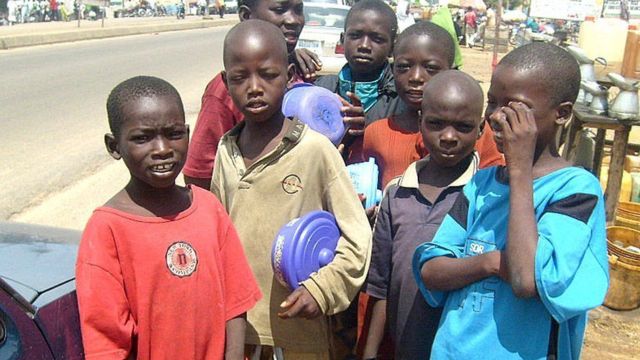
The word “Almajiri” is derived from the Arabic word “Almuhajir”, which means an immigrant or someone who migrates from one place to another. So, originally, Almajiri is an immigrant who leaves his place of birth at a very tender age to acquire Islamic education.

It was believed by the people then that if a child received Islamic education at a very young age, he was likely to retain it throughout his lifetime. This had made many parents enrol their male children in the system.

In the ancient days, the system was so organised, and the parents were much responsible that they didn’t just dump their children at the “allo [slate]” schools the way today’s parents do. They also made it mandatory upon themselves to provide necessary food items and other provisions for the children, which would be enough for them throughout their stay with the “malams [teachers]”.

At each interval, maybe a period of three to four months, the children were readied for a return to their various homes. So, you’ll find out that each Almajiri would at least visit his parents thrice or even four times a year.

Now, the system is no longer what it used to be. Everything seems to have changed completely; the system, the parents and the children have all turned into something else. If you call the name ‘almajiri’, instead of the title to ring the bell of a child who came from a distant land to acquire knowledge, a different bell will ring. The name suggests an unlucky child whose parents gave birth to and later abandoned on the streets to fend for himself by whatever means.

I am used to asking myself, what could be the cause of this disguised child abuse in the name of almajirci”? What is the essence of bringing a child to this world if you cannot cater to his basic needs such as food, clothing, shelter, and quality education? Could this problem (almajirci) be attributed to poverty, lack of parental care, or is it a lack of adequate measures to tackle the menace by the government? These are the series of questions that are yet to be answered.

The rate at which the syndrome is growing could be checked if the parents control their birth rate through family planning measures. The government should try to enlighten parents on the benefits of family planning and its impact on society as much as possible.

To sanitise the system, the government should create a committee that will focus on the issues by standardising it to suit the present time. This could be achieved by taking the statistics of all almajirai, providing them with uniforms and building classrooms for them to have a conducive learning atmosphere. This will go a long way in curbing the extent to which they wander over the city.

The government and well-to-do individuals in the society should join hands together to create skill acquisition programmes and sponsor programs on TV and radio to educate the almajirai on how to acquire skills and make use of them for survival.  These skills could be tailoring, dyeing, soap making, blacksmithing, shoemaking, etc.

With this, I believe the rate at which the almajirci syndrome grows will hopefully reduce to some considerable level and, if carefully sustained, will someday become history.

Aisha Abdullahi Bello sent this article via aishaabdullahibello@gmail.com.

Reading Culture: A dying treasure in Nigeria.

By Musa Ummihani Onize

Nothing pushes the human mind faster into obscurity than hatred to reading. A society that’s losing hold on good reading culture can be on a fast-track to ruins for reading is an essential soft tool that helps the mind work at its best. To be fully aware of oneself, one’s surroundings, and the world at large, there’s a need for one to be passionate about acquiring knowledge through mindful reading.

There will be no better time than now that calls for the redevelopment of reading culture in the minds of Nigerians because the lack of information, understanding, and enlightenment on vital issues is a big threat to national development and security. And, in Nigeria, critical observations of many academicians have it that good reading habits are on a decline, especially from young adults.

Nigeria faces devastating social problems rooted in tribalism, religious intolerance, opposing political views, extremism on different grounds, etc. But, aside from these social problems that destabilize the public good, some underlying toxic behavioural traits are foundational and contribute to social problems. These behavioural traits vary in one person from another.

So, to curb and manage man’s excesses and toxic traits -the ones known and unknown to him, there’s a need for equipping his mind with beneficial information through reading so to enable him to have a sense of understanding and tolerance towards people from different tribes, religion and nationality, and also to have the mental ability to differentiate the good from the bad in his personal activities and choices.

A study has it that people who have decent habits towards reading are less likely abusive and violent.

The revival of the dying reading culture in Nigeria can only be possible when concerned citizens put in collective efforts to educate and enlighten their loved ones and close associates on the importance of reading. It’s said that a journey of a thousand miles begins with a step. Therefore, it will be helpful and productive to educate our circles about the peace-enabling effects of good reading habits.

To ensure their growth, encourage them to read books.

Musa Ummihani Onize writes from Okene, Kogi, State via musauumiize@gmail.com.

Kano Commissioner of Education, Kiru, debunks rumour for school resumption extension

By Uzair Adam Imam

Kano State Commissioner of Education, Muhammad Sanusi Sa’id Kiru, has debunked the wide circulated rumour for the extention of first term resumption date.

Kiru said that the remour is baseless, adding that the resumption dates for Boarding Primary and Secondary Schools remain Sunday 9th January 2022 while that for the Day schools is 10th January 2022. The dismiss was in a release signed Saturday by Aliyu Yusuf, the CPRO Ministry of Education Kano State.

However, the commissioner also called on parents/guardians and the general public to disregard the rumour going round about extension of resumption date.

He added that the ministry has its estsblished means of dessiminating information to members of the public, therefore, if there is any new development, such medium will be used to reach members of the public accordingly. He then called on parents/guardians to ensure that their children return to their respective schools on the scheduled dates as penalties awaits defaulters.

Are persons with disabilities rightless? An open letter to Jigawa North-East politicians

By Abubakar Umar Gbs

Dear Sirs/Madams,

Let me start with these questions: Who among you has ever included people with disabilities in their empowerment programs? Who among you has ever offered a single person with a disability a job? Who among you has ever appointed a person with a disability as his aide? Finally, who among you has ever sponsored their basic diploma, NCE, or undergraduate program?

Since the 2015 election, Persons with Disabilities (PwDs) in the said region have suffered negligence from you even though they voted for you like everyone else. You do not consider them for empowerment, job provisions, educational supports, and so on. For basic education, many of their parents cannot take them to the only deaf school in Hadejia because of their physical location. There is no school for the blinds in the region, making it difficult for parents of blind children to take their children to school. The cripples, too, suffer going to school because of the absence of tricycles or other accessibility measures.

Please note that their defects made them require special needs, which means they should be given ‘special’ consideration in all aspects. Their needs should equitably be granted. They require inclusion, equal treatment, but this is not the case in the region as “those not in need are given more than those in need” or “those not in need are given what those in need needed the most.”

At this time, we have many PwDs from all over the region who have qualifications doing some handwork and are expecting jobs because their impairment may affect them doing other self-employed jobs. Some want to start a business but do not have the capital to kickstart. Some have hidden talents but do not dare to put them into practice or are being discriminated against in government and private companies, making them wait for government jobs which you (politicians) have the opportunity to offer them. 

There is one disabled lady who completed her NCE 5 years ago, but until now, she hasn’t secured any job or any seed capital to start a business as she complained.

Where are all those offers you are giving your people? Where are all those empowerment packs you are giving to your people? Did you know how it feels to have a defect in any body part? What if one of your children has a defect?

Imagine the son of less privileged parents with physical defects. They are citizens who have equal rights to education, health, and human rights. Sometimes, you will ask for what belongs to you from a serving leader like you, but you will be labelled a beggar. How can someone beg for what belongs to him? You begged them for votes that don’t belong to you but themselves and took them for granted after that. Their exclusion in campaigns has reasons as we can’t expect crippled men to take their bikes or join campaigners to go far and campaign. In the meantime, you can expect a blind man to do so too, so the deaf has his limitations.

Every citizen, irrespective of disability, race, tribe, or religion, deserves to be treated equally as per the constitution. Also, traditionally, persons with disabilities have equal rights, even if not constitutional. They have 100% rights, and that should be respected.

We know how well you perform, but the ‘well’ is not enough until you put PwDs’ rights on top of the agenda because society needs them. If they are neglected, they retort to some odd jobs to survive life which I don’t see their mistakes.

Thank you

Abubakar Umar Gbs sent the letter via abubakargbs@gmail.com.

NBAIS to release 2019/2020 Examinations Results for Kano students

By Abdurrahman Muhammad

The Kano State Government and the National Board for Arabic and Islamic Studies (NBAIS) have reached an agreement over the release of the state students’ 2019/2020 examination results. This was made known in a press release on Thursday, December 9, 2021.

The release, signed by Aliyu Yusuf of the Education Ministry, states that the Kano State government paid over Seventy Million Naira (N70,000,000) to the board for the results.

Kano State Commissioner of Education, Muhammad Sanusi Sa’id Kiru, explained that “the results will be ready for Kano students to download and print latest by 4 pm today.

“The Commissioner expressed appreciation for the patience and understanding exhibited by the students and their parents, further assured that the state government will not relent in its effort towards sorting out problems in the sector and proffer appropriate solutions in solving them.

“The Commissioners also commended the intervention of His Excellency, Dr. Abdullahi Umar Ganduje and the role played by the Ministry for LG and the chairmen of 44 LG in this regard.”

KASU VC: The battle for Prof. Tanko’s successor thickens

By Sumayyah Auwal Usman

With time racing down to the end of the administration of the incumbent Vice-Chancellor of the Kaduna State University, Professor Muhammad Tanko, schemings have begun by many academics who have indicated an interest in clinching the highest executive but challenging position in the university.

Indications emerged recently that there are strong contenders within the university who are out to slug it out to succeed Prof. Tanko, as the 6th Vice-Chancellor of the University. Even though the names of the candidates have remained top secret up to the time of filing this report, there are contestants that are believed to have applied.

One of the leading contenders in the race, who many believe should have naturally been the successor to Professor Tanko is the incumbent Deputy Vice-Chancellor in charge of Academic matters, Professor Abdullahi Musa Ashafa. Before his appointment as the DVC, Academic, Professor Ashafa served as Head, Department of History, Dean, Faculty of Arts, a member of the 2nd Governing Council of the university led by Professor Idris Abdulkadir, and also Dean, School of Postgraduate Studies on two occasions. Ashafa and the outgoing VC were the first set of KASU to become Professors by promotion over ten years ago.

Another contender is Professor Yusha’u Ango, the Dean School of Postgraduate Studies. Although he was only promoted to the rank of professor last year, Ango is seen as a force to reckon with based on his political standing. He is believed to be supported by the one commissioner in Governor Nasiru El-Rufa’i cabinet, and he also held some administrative positions in the university as a Head of Department and Director.

It has also been gathered that Professor Bala Dogo, Department of Geography who was the first to be appointed a Professor from NDA Kaduna where he was an Associate Professor, is seriously in the race. Dogo has been a regular customer in applying for the post even outside KASU, but his low rating may likely see his ambition fly to anywhere. Others who are said to be in the race include Prof. John Laah, Department of Geography, Prof. Ahmed Kofa Babajo, Department of English and Drama, Prof. Hauwa Evelyn Yusuf, Department of Sociology, Prof Zainab Dabo of the Department of Business Administration & current Director of KASU Global Consult among others.

However, a source in the university said there are many Professors outside the university that have also indicated an interest in becoming the next VC. Other academics within KASU eyeing the position but are not from Kaduna State include Professor Ibrahim Malumfashi, Department of Nigerian Languages.

The major controversy in the process were the two contradictory advertisements made for the position. The first advertisement, signed by the then Commissioner of Education, Hon. Dr Shehu Usman Makarfi, instead of the University Registrar, stipulated the major criteria as a candidate must be a Professor of at least ten standing. But the second advertisement came out a week to the expiration of the deadline. In the new advertisement, the ten years standing for a professorship was removed. Contradictorily, it was signed by the same Commissioner Makarfi who had by then been redeployed to the Ministry for Local Government. This was said to have been made neither with the knowledge of the current Hon. Commissioner of Education nor her input.

The most controversial aspect of the second advert is that it did not indicate if it supersedes the previous one or not. The question interested parties thus asked is which of the advertisements would be used for the selection process of the new VC for KASU?

Another issue is that there is no Governing Council currently in the University to take charge of the process as stipulated in the University laws. It was reliably gathered that the academic union, ASUU, Kaduna State University Chapter have written to the Visitor of its opposition to the process outside the Council mandate. Though the Visitor was said to have directed for the collation of names for the constitution of a Council, how soon would it come out? If the Council is eventually constituted, observers expressed the likelihood of doing another advertisement without controversy. This, they also observed, will further delay the process. If this should happen until the incumbent Vice-Chancellor vacates office in January 2022, this will mean leaving the University with an Acting VC.

What pundits argue on this matter is why should a serious government like that of Governor El-Rufai who has another excellent and brilliant personality like Emir Muhammad Sanusi II as Chancellor allowed KASU’s excellent academic and administrative reputation tainted. The tenure of the current VC, Prof. Tanko is expiring on January 22, 2022.

Kaduna to dismiss 233 teachers, vow to conduct competency test

By Sumayyah Auwal Ishaq

The Kaduna State Universal Basic Education Board (KADSUBEB) will dismiss 233 teachers who presented fake certificates. According to the board chairman, Mr Tijjani Abdullahi, “the Board has verified 451 certificates by contacting the institutions that awarded the certificates.”

“The responses from the institutions show that 233 teachers presented fake certificates. This represents 51% of the 451 certificates on which responses have been received from the awarding institutions. One institution disowned 212 of these 233 fake certificates,” Abdullahi said.

A statement by the Board further added that it “will follow up the competency test with series of training programmes, organized in batches for teachers. This will begin in January 2022 for 12,254 teachers.

The Board has signed MoUs with the National Teachers Institute, the College of Education, Gidan Waya, and the Federal College of Education, Zaria, to conduct the training exercise.”