Budget

2026 budget appropriation bill, Abuja Accord, and the future of Nigeria’s health sector

By Ali Tijjani Hassan 

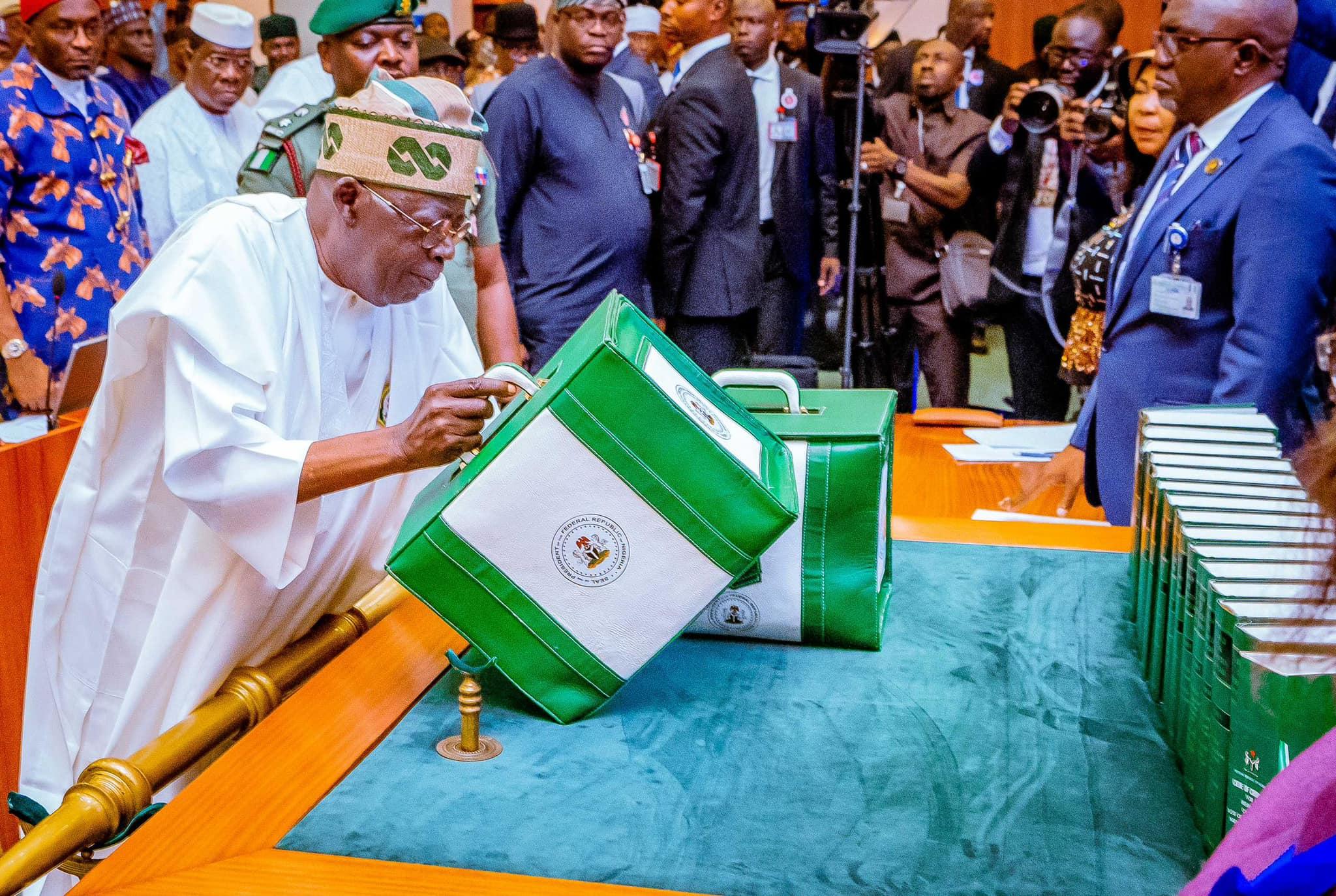
On December 19, 2025, President Bola Tinubu presented Nigeria’s 2026 budget to the National Assembly. As a health advocate, I was curious about sector allocations, especially in health, aligned with his Renewed Hope Agenda to revitalise Nigeria’s healthcare system. I hope the administration commits to the 2001 Abuja Declaration, in which African leaders pledged to allocate at least 15% of their budgets to health to address chronic underfunding and improve health sector outcomes. Nigeria proposed spending 2.82 trillion naira, only 4.26% of its 2026 budget.

 I was nearly buried in shame when I heard the president repeating that “this health allocation represents approximately 6% of the total budget net of liabilities.” Meaning that, excluding the net liabilities, the health sector’s take-home after deduction of debt servicing of almost 15 trillion Naira from the gross budget will be only 4.26%. Which makes me pause and ask myself, “Is this allocation holistic toward changing the narrative of the dilapidated healthcare system in Nigeria?” 4.26% against the 15% is relatively less than one-third of the Abuja Declaration—a beacon of hope to combat the ravages of HIV/AIDS, tuberculosis, malaria, and other scourges plaguing our continent.

Yet here we are in 2025, over two decades later, and Nigeria, the self-proclaimed Giant of Africa, continues to stumble in the darkness of illusion, allocating a paltry 4-6% to health in the just-presented 2026 budget. How can a nation so rich in oil, talent, and potential treat its people’s health like an afterthought?

This is not just negligence; it is a disappointment that endangers millions, especially as the United States government slashes its global health aid, leaving citizens exposed to infectious diseases, non-communicable ailments like chronic kidney disease (CKD), and a rapid population boom that threatens to overwhelm our fragile systems. The Abuja Declaration was no mere rhetoric; it was a collective vow by African Union members to prioritise health financing, recognising that without robust funding, diseases would continue to feast on our people like vultures on carrion.  Nigeria is a party to this decree, but history shows we’ve never come close to honouring it. From 2001 to now, our health allocations have hovered below 10%, peaking at around 5.95% in recent years before dipping again in the 2026 proposal of ₦2.48 trillion out of ₦58.18 trillion—a measly 4.26% when liabilities are included.

Our leaders always cite debt servicing, infrastructure, and security as excuses, but I want to ask a single question: “Is the life of a Nigerian child not worth more than another flyover or armoured vehicle?”

Although they are relatively important, one thing is certain: no nation can grow beyond the quality of its people. Apology to President Tinubu.

I can’t comprehend how we can parade ourselves as Africa’s economic powerhouse yet fund health like beggars at the roadside. In comparison to our African brothers, who have shown what true commitment looks like. Rwanda, rising from the ashes of genocide, consistently meets or exceeds the 15% mark, allocating up to 18% in recent budgets, which has built a universal health coverage system envied across the continent. 

In Botswana, with its prudent diamond revenues, which hit 15-17%, investing in HIV programs that have slashed infection rates. On the other hand, the Côte d’Ivoire joined this elite club, channelling funds into preventive care that keeps NCDs at bay. Even Tanzania briefly touched the target in 2011. While we proclaimed the giant of Africa’s band, these nations have long proved it’s possible by prioritising health as a national security issue, not an optional charity. The Giant of Africa lags behind most West African peers, where allocations average below 10%. 

We boast the largest GDP in Africa, yet our per capita health spending is a shameful $15-20 annually, far below Rwanda’s more than $50. This comparative disgrace isn’t just numbers; they represent the lives lost. While Rwanda’s life expectancy climbs to 69 years, ours stagnates at 55, a gap widened by our funding failures. The consequences are alarming, starting with the relentless burden of infectious diseases that stalk our land like ghosts in the night. 

Nigeria bears the heaviest malaria load globally, with millions infected annually and economic losses of $1.1 billion each year from treatment and lost productivity. In 2025 alone, Lassa fever has claimed 195 lives, with over 1,069 confirmed cases amid 9,041 suspected—a fatality rate hovering at 18.5%, higher than previous years. Cholera surges during rains, diphtheria ravages unvaccinated children, and HIV/AIDS affects millions, with Nigeria hosting the second-largest HIV population worldwide. These figures aren’t abstract statistics; they are the number of our brothers dying in rural clinics without drugs and mothers burying infants from preventable fevers.

Underfunded surveillance systems mean outbreaks explode before a response, as seen in the 2025 Lassa resurgence, which cost billions in emergency measures. If we met the 15% pledge, we could bolster primary health centres, stockpile vaccines, and train more community health workers—turning defence into offence against these microbial invaders. But wait, the horror deepens with non-communicable diseases (NCDs), silent killers creeping up as our lifestyles urbanise. Chronic kidney disease (CKD) exemplifies this scourge, with prevalence rates of 10-19% among adults, yet awareness is abysmally low. 

In Lagos alone, hypertension affects 29% of adults, fueling CKD and cardiovascular woes.  NCDs now cause 73.6% of deaths in developing nations like ours, surpassing infectious ones. Diabetes and cancer add to the tally, with households spending fortunes on out-of-pocket care—up to ₦384 billion annually, pushing families into poverty. The double burden is real: As we fight malaria, the CKD dialysis costs bankrupt families, while public facilities are overwhelmed. In armed conflict zones of Northern Nigeria, NCD prevalence hits 15% for hypertension and diabetes, compounding the trauma of insurgency. Without the pledged funding, proper disease-screening programs remain dreams, and preventive education is scarce. 

Compared to Botswana, where 15% allocation funds are for NCD clinics, reducing mortality by 20% in a decade. Exacerbating Nigeria’s demographic tsunami. Our population stands at 237.5 million in 2025, growing at 2.5-3% annually, and is projected to hit 380 million by 2043 and 440 million by 2050. Nearly half are under 15, a youthful bulge that could be a dividend but risks becoming a curse without health investment. More mouths mean more disease vectors: crowded slums breed cholera, and rapid urbanisation spikes NCDs driven by poor diets and pollution. By 2050, we’ll add 130 million souls, straining hospitals already at breaking point.

Rwanda, with controlled growth and high health spending, harnesses its youth; we risk a generation crippled by untreated ailments. And now, the dagger twist: US funding cuts. In early 2025, the Trump administration froze billions in global aid, slashing USAID programs by 23-40%. Nigeria lost over $600 million—a fifth of our health budget—crippling HIV treatment for millions, dropping coverage from 1.1 million to 350,000. Malaria and TB programs falter, with NGOs downsizing and lives lost estimated in the thousands.

We’ve long relied on foreign donors for 30-40% of health funding; now, with cuts, the gap yawns wider. Botswana and Rwanda, self-reliant through domestic pledges, weather this storm; we scramble with supplements like ₦4.8 billion for HIV packs, mere band-aids.

To redeem ourselves, the government must urgently ramp up to 15% by redirecting funds from wasteful subsidies, tax evasion loopholes, and corruption black holes. Invest in primary care: build 10,000 more health centres and train 50,000 midwives and doctors annually. Prioritise prevention: free CKD screenings, anti-malaria campaigns, and NCD education in schools. Forge public-private partnerships, like Rwanda’s with tech firms for telemedicine. Address demographic needs through family planning integrated into health services. And hold leaders accountable—civil society, demand audits; lawmakers, reject budgets below 10% as a start.

My compatriots, the clock ticks. It’s high time to hold our leaders accountable for their words and actions. If we sleep on this, infectious outbreaks will merge with NCD epidemics amid population surges, turning Nigeria into a health wasteland.

But with resolve, we can honour the spirit of the Abuja Declaration, outshine our peers, and build a nation where health is a right, not a lottery.

Arise, O Nigerians—demand better, for our future’s sake!

Ali Tijjani Hassan is a public health enthusiast, civil society actor, and public affairs analyst. He writes from Potiskum, Yobe State, and can be reached at alitijjani.health@gmail.com.

NASS approves Nigeria’s largest budget ever at N54.99 trillion

By Abdullahi Mukhtar Algasgaini

The Nigerian National Assembly has approved the 2025 budget of N54.99 trillion, the largest ever in February, contrary to the usual approval time between January and December in previous years.

The budget includes additional revenue that President Bola Ahmad Tinubu announced from various sectors following the presentation of the national budget in December.

On February 5, President Bola Tinubu increased the 2025 budget presented earlier from N49.7 trillion to N54.2 trillion, justifying the increase with the additional revenue generated by key government agencies.

The President sent a message about the budget revision in various letters directed to the Senate and the House of Representatives, which were read by Senate President Godswill Akpabio in the session today.

The additional budget is a result of increased revenues, including N1.4 trillion from the Federal Inland Revenue Service (FIRS), N1.2 trillion from the Nigerian Customs Service (NCS), and N1.8 trillion from other government agencies.

2025 Jigawa State Appropriation Bill: Where Governor Namadi got it wrong

By Isah Dahiru

On Friday, December 6, 2024, while skywatchers marvelled at the serene night sky adorned with celestial wonders, a different spectacle unfolded in Jigawa State. Governor Namadi, alongside his entourage of government officials, presented the much-anticipated 2025 Appropriation Bill to the State Assembly. Tagged the “Budget of Innovation & Transformation for Greater Jigawa”, the document was intended to embody progress and forward-thinking leadership.

At first glance, the title seems aspirational, promising groundbreaking initiatives to propel Jigawa into an era of sustainable development. However, a closer examination of the budget reveals glaring contradictions, misplaced priorities, and a lack of the innovation and transformation it proclaims.

A Misleading Budget Title

Though grammatically correct, the ambitious budget title seems to serve as a deceptive marketing strategy rather than an accurate reflection of its contents. Far from being innovative or transformational, the budget largely perpetuates conventional methods of governance, burdening the state with debt while ignoring pressing human capital development needs. A more suitable title could have highlighted its illogical allocation and amateurish approach, as the document fails to address critical issues facing the state.

Unrealistic Revenue Projections

The proposed total budget stands at a staggering NGN698.3 billion, with expected revenues broken down as follows:

  • Federation Account Allocation: NGN34 billion
  • VAT Share: NGN80 billion
  • Other Federal Government Contributions: NGN134.1 billion
  • Internally Generated Revenue (IGR): NGN130.6825 billion

Governor Namadi’s administration has estimated NGN219.517 billion in loans to finance the deficit, an amount alarmingly higher than the state’s entire IGR. This reliance on borrowing raises significant concerns about the sustainability of the state’s fiscal policy. Borrowing such colossal sums without substantial revenue-generation mechanisms is reckless and poses long-term risks to Jigawa’s economic stability.

The governor’s failure to leverage Jigawa’s rich agricultural resources, untapped natural wealth, and the potential of smart farming to bolster IGR demonstrates a lack of foresight. Instead of pursuing innovative strategies to grow revenue, the administration has opted for unsustainable borrowing, leaving future generations to bear the burden.


Misplaced Capital Expenditure Priorities

A whopping 76% of the budget (NGN536.750 billion) is allocated for capital projects, including the construction of 45 new roads spanning 830 kilometres. While infrastructure is essential, this allocation overlooks the state’s urgent needs in human capital development, education, and healthcare.

Recent tragedies highlight the misplaced priorities of this budget. From the Majia tanker explosion, which claimed over 200 lives, to the tragic road accidents in Adiyani (Guri LGA) and Auyo LGA, which resulted in the deaths of women, children, and youth, road safety remains a pressing issue. Constructing new roads without addressing the underlying factors contributing to road traffic accidents is counterproductive. Jigawa needs safer transportation systems, not a roadmap to more tragedies.

Furthermore, questions about the NGN30 billion mobilisation payment for these road projects linger. It is unclear whether this payment adheres to constitutional provisions or represents the notorious 10% kickback culture often associated with government contracts. Transparency in budget execution is non-negotiable, and the state deserves clarity on these expenditures.

A Failing Healthcare System

Jigawa’s healthcare sector is in crisis, yet the budget allocates insufficient resources to address the challenges. Since June 2024, over 25 professional healthcare providers have resigned due to poor remuneration and working conditions. This mass exodus has left hospitals understaffed and unable to deliver quality care, pushing Jigawa’s residents into greater health risks.

Governor Namadi’s “J-Health” initiative—designed to improve healthcare delivery—has proven ineffective. The program is plagued by untrained personnel and a lack of infrastructure, turning hospitals into death traps rather than centres of healing. Ironically, the governor does not rely on “J-Health” workers for his medical care, further exposing the inadequacies of the initiative.

Neglecting Education Amid a Crisis

The BBC recently reported that Jigawa has one of the highest numbers of out-of-school children in Nigeria. Yet, the budget’s allocation to education falls woefully short of addressing this crisis. With thousands of children lacking access to quality education, the future of Jigawa’s youth hangs in the balance. Instead of investing in human capital through education and skill development, the government prioritises infrastructure projects that offer minimal long-term benefits to the people.

Leadership Is About Priorities

Leadership is not about laying asphalt or unveiling ambitious-sounding projects but about using available resources to deliver well-tailored programs that directly impact citizens’ lives. Governor Namadi’s budget fails to address the core challenges facing Jigawa State, including:

  • The alarming rate of out-of-school children
  • The exodus of healthcare professionals
  • The rising tide of road traffic accidents
  • The lack of sustainable revenue-generation mechanisms

Jigawa needs a government that prioritises its people—one that invests in human capital, builds safe and functional infrastructure, and ensures fiscal responsibility. The 2025 Appropriation Bill, as it stands, is far from being the “Budget of Innovation & Transformation for Greater Jigawa.” It is a missed opportunity to create meaningful change and lay a solid foundation for the state’s future.

Governor Namadi must rethink his approach, listen to the cries of his people, and refocus on what truly matters: the well-being, education, and prosperity of Jigawa’s citizens. Only then can the state genuinely embark on a path of innovation and transformation.

Isah Dahiru, B. Pharm. MPSN, wrote via easerdahiru@gmail.com.

BREAKING: Tinubu set to present 2025 budget Tuesday

By Anwar Usman

The president of Nigeria, Bola Tinubu, will present the 2025 Appropriation Bill to the National Assembly on Tuesday.

Akpabio made this known during the announcement at the Thursday plenary on the floor of the Senate.

He said, “The president has made his intention known to the National Assembly to present the 2025 budget to the joint session of the National Assembly on the 17th of December, 2024.”

Akpabio said that the budget presentation will take place at the House of Representatives Chamber.

Tinubu had earlier submitted the Medium-Term Expenditure Framework and Fiscal Strategy Paper for 2025–2027 to both the Senate and the House of Representatives last Tuesday.

Akpabio instructed the Senate Committee on Finance, National Planning, and Economic Affairs to consider the MTEF/FSP documents and report within one week.

Key parameters in the MTEF/FSP include a $75 oil price benchmark per barrel, daily oil production of 2.06 million barrels, an exchange rate of N1,400 to $1, and a targeted GDP growth rate of 6.4%.

These figures form the basis for consideration and approval of the proposed N47.9tn 2025 budget.

Niger State allocates N1.2 billion to celebrations despite security, developmental challenges

By Uzair Adam 

A review of Niger State’s budget performance report has revealed that the state government allocated N1.2 billion to celebrations and special occasions in the first nine months of 2024. 

This expenditure represents about 4% of the state’s internally generated revenue (IGR), which totalled N29.2 billion from January to September.

The spending has raised concerns, particularly as the state grapples with severe developmental and security issues. 

Recently, Niger State has faced violent attacks by bandits, resulting in the deaths of ten residents and the destruction of homes. 

Additionally, widespread flooding has devastated over 300 communities, with reports indicating eleven lives lost and 245 schools damaged.

Despite these challenges, the budget shows zero allocation for capital expenditures within the Ministry of Rural Development and the Rural Water and Sanitation Agency. 

This lack of investment comes at a time when a cholera outbreak has claimed sixteen lives and left 165 others infected. 

Due to the absence of potable water, many residents have resorted to using stagnant water sources shared with livestock.

In contrast, the Ministry of Basic and Secondary Education received only N196 million in capital funds, while the state’s basic healthcare sector saw no allocation for critical infrastructure improvements. 

Reports indicate that 71% of households in Niger lack adequate sanitary facilities, and half the population lacks access to clean drinking water, underscoring the pressing need for investment in essential services.

Amid claims of limited resources, Niger State’s spending priorities have sparked concern. 

The state currently has 1.6 million people living in poverty and an unemployment rate of 38.8%.

Northern senators accuse Akpabio of padding N4 trillion into budget

By Sabiu Abdullahi 

Northern senators have raised alarm over alleged budget padding amounting to N4 trillion, orchestrated by Minister of Niger Delta Affairs, Mr. Akpabio, and his associates.

The senators, expressing concern over what they deem self-enrichment projects, called for transparency and accountability in budgetary processes. 

Under the leadership of Chairman Abdul Ningi (PDP, Bauchi), members of the 58-member Forum convened a meeting with Mr. Akpabio at his Guest House in the Maitama District of Abuja on Thursday to address the issue. 

In an interview with BBC Hausa Service, Senator Ningi highlighted the discovery of two separate federal budgets being implemented.

He revealed, “For the last three months, we have employed private financial auditors to extensively examine the 2024 budget. We have uncovered significant unauthorized changes and additions in the budget that would have a widespread negative impact on the nation as a whole.” 

Senator Ningi stated the need for accountability, stating, “We are supposed to meet with the senate president and show him the irregularities we saw in the budget and let him know our concerns. We will not agree and support spending money on what we are not aware of.” 

Citing discrepancies in budget figures, he questioned, “We had a budget of N28 trillion but after our thorough checks we found out that it was a budget of N25 trillion. How and where did we get the additional N3 trillion from, what are we spending it for?” 

The senator pledged to seek clarification from President Bola Tinubu, stating, “We are going to meet with the president and show him, we will ask him if he is aware of all these things that are happening. We will show him and ask him if he is aware of it, and what he intends to do to those who partake in the whole manipulations and inclusions.” 

As the controversy unfolds, Nigerians await responses from relevant authorities and demand transparency in budget implementation to uphold the integrity of governance processes.

Budget and National Planning

By Bilyamin Abdulmumin

Last week, during the FEC meeting, the Minister of Budget and National Planning, Senator Abubakar Atiku Bagudu, made a groundbreaking announcement by revealing the budget forecast for 2024. It sent shockwaves through the nation, and understandably so, as the projected budget of 26 trillion naira was unprecedented; it was a staggering  4 trillion compared to the previous year.

Nigerians have consistently expressed concerns about the ever-increasing budget forecasts year after year. Regrettably, this budget inflation trend has persisted. For instance, the budget started at 299 billion during the Obasanjo government in 1999 but ballooned to 2.3 trillion when he left office. Yar’adua handed over a 4.4 trillion budget to Jonathan, who returned the exact figure in 2015 (despite presenting a 4.9 trillion budget in three previous years). The budget increase went wild during President Muhammad Buhari’s tenure, reaching a staggering 21 trillion in 2023 when he left office.

Although I am not an expert on budget matters, it’s apparent that every budget must consider factors such as market dynamics, inflation, and the growth of the national population and its demographics.

Rather than fixating solely on the budget figures, we, as citizens, should focus on the prudent and effective utilisation of these budgets. If the Nigerian budget had been prepared and executed more efficiently, we might have already achieved the promised Eldorado.

For example, 43 years have passed since the Shagari and Gowon green revolution, 33 years since Vision 2000, and a decade since Jonathan’s Agricultural Transformation Agenda. However, the majority of Nigerians still lack access to quality housing and healthcare, and we continue to struggle to feed ourselves. Similar ambitious visions have come and gone, including IBB’s structural adjustments, Abacha’s Vision 2010, Obasanjo’s Vision 2020, Yar’adua’s seven-point agenda, and PMB’s Vision 2050.

One crucial issue highlighted by BudgIT, a civic organisation monitoring the Nigerian budget, is the disconnect between our budget and national planning, hindering the realisation of the promised utopia. Our budget is not aligned with our national planning, and it seems that from the beginning, Nigeria has not been drawing the budget structure from national planning.

In the words of Oluseun Onigbinde, Global Director of BudgIT, “The Nigerian budget has delivered sub-optimal results because it has not been linked with national strategic plans written for the medium or short term. The current President has a public manifesto, and the Federal Government recently, at a significant cost, also delivered strategic plans that terminate in 2025 and 2050. It does not make sense if the national budget is not linked to these documents. The budget needs to stop just being a contract vending machine stuffed with varied interests but a thorough planning document.”

If the masses can redirect their attention to this issue rather than merely reacting to budget forecasts, expecting more effective and desirable results is plausible.

Interestingly, the Minister of Budget and National Planning, Senator Atiku Bagudu, has pledged to address this issue and reached out to the public for understanding and engagement. This outreach occurred during an official visit by the House of Representatives Committee on Alternative Education. The minister reaffirmed the government’s commitment to the APC comprehensive plans, particularly Agenda 2050 and the 5-year development plan.

Dear Nigerians, it’s time to refocus our priorities and stop chasing after the shadows.