Boko Haram

Road to 2023: A race to inherit a weak system

By Nusaiba Ibrahim Na’abba

As Northern Nigeria continues to be engulfed by violent activities of terrorists by the day, the thoughts of dreadful terror acts of the famous Sunni Ali of Songhai who conquered the old, widely acknowledged historic city of Timbuktu keeps reappearing on my mind. The likes of late Muhammad Yusuf, late Abubakar Shekau and most recently Bello Turji and Dogo Gide, including some of the ‘unknown’ alleged sponsors of these activities, are no different than Sunni Ali – ‘tyrannical, cruel and merciless’.

The only probable difference is that the miniature Sunni Ali’s of our time live under the protection of a democratically elected government that vowed to protect our lives. This system we all thought would salvage us from the brink of destruction. With all the high hopes for this salvation purposely adopted to elect President Buhari into office, it is under his watch that in 2018, the Nigerian army gave an order to halt the near-arrest of late Abubakar Shekau in the depths of Sambisa Forest.

While at secondary school, it used to be quite fascinating to read and learn about the legends of some of the most powerful kings in Africa. Timbuktu’s Mensah Musa, Usmanu Bin Fodio of Sokoto, the rulers of Ghana’s Asante Kingdom and their powers on their followers, especially their strength, have always remained interesting references for their followers, especially history scholars and political leaders around the world. From leadership structure, means of sustenance, warfare and particularly military strength devoid of politicking have remained exemplary and worthy of emulation as legends have primarily documented.

Inherent in today’s Nigeria, a ravaging systemic corruption, unambitious leadership, lack of education prospects contributing to a staggering number of unemployed youths (some even throwing their hats in the ring and retiring from the state of being called youths), poor security apparatuses and myopic economic vision that continues to increase our foreign debt figures without pans of paying back. Not even the vibrancy of our historic leadership structure is being inculcated in the ‘democratic system’ we (African countries) borrowed from our colonial bosses.

Nigerians are already hopeless as the nation races towards the 2023 general elections. About two months back, I went shopping in Abubakar Rimi market (alias Sabon Gari market). All I could hear filling up the sky were words of hopelessness about the state of our dear Nigeria. “I would rather lose my voter’s card than to elect anyone in 2023”, “Our leaders will not make heaven, I tell you,” and “I’m just hoping to make it to next year alive; we are not celebrating anything” among many unending agonies. 

It is no coincidence that the President himself vindicated these agonies in an interview NTA aired on January 8, 2022. He warned his political party that “the opposition Peoples Democratic Party (PDP) could win the 2023 presidential election and return to power, if the All Progressives Congress (APC), does not settle crises that have stymied the party”. Of course, a speech of such nature and coming from the President is subject to multiple interpretations from analysts, experts, particularly politicians and lay-Nigerians. However, the President has undoubtedly depicted a lack of confidence in his party to exacerbate an already hopeless situation. His first thought is PDP winning elections to continue from where they stopped – over a decade of misrule.

Indeed, it is pretty late that Nigerians realize that both APC and PDP are birds of a feather that flock together. During an interview with Talk to Aljazeera on February 15 2015, then-presidential candidate General Buhari highlighted the weakness of PDP’s 16-year-misrule. He, specifically, lamented on the rising insecurity and the deteriorating economy as oil prices dropped significantly. A year later, when he had a similar discussion with the same Aljazeera on his visit to Qatar in early 2016, he tried to admit that he hasn’t failed Nigerians – as Boko Haram held some strategic places in the outskirts of Maiduguri. Over the years of his administration, we now fully understand who has failed Nigerians the most.

Like every race to a general election in Nigeria, we all scale through hurdles and hitches. However, what is particular about the 2023 general elections is that it showcases the real wielders of the entire Nigerian system – the elites. Indeed aspiring candidates are fully aware of problems they will undoubtedly inherit from their predecessors. They also know that they may worsen existing situations in most cases. Thus, they shall race through rising insecurity than ever before, calls for secession from the Eastern part of the country, deteriorating economy, a staggering number of unemployed youths and out of school children, dilapidated schools, bloodshed, brain drain of medical personnel, weak security apparatuses, widely acknowledged electoral violence and, to cap it all, systemic corruption.

Since Nigeria’s return to democracy in 1999, every political aspirant has been fully aware of the problems ahead of them, but they always divert followers’ attention by being optimistic. This is why it was pretty easy for most Nigerians to succumb to President Buhari’s change agenda.

Be it as it may and with almost nothing to redeem ourselves, expectations are meagre as the race to 2023 heats up. It’s no longer news that the country’s entire political economy continues to suffer in the hands of the few ‘powerful’. The masses do not wield enormous influence in the system that steers the affairs of Nigeria. So, we absolutely cannot change the country’s political structure without owning the system. Therefore, there is no confidence or trust in the election processes with ‘inconclusive elections’ that have come to stay with us since they favour the wielders of the system. 

Nonetheless, we will remain optimistic that Nigeria will prosper as a united and incorruptible country no matter what it takes. This storm shall pass. Borrowing from the words of South Africa’s Apartheid icon Nelson Mandela, “I am fundamentally an optimist. Whether that comes from nature or nurture, I cannot say. Part of being optimistic is keeping one’s head pointed towards the sun, one’s feet moving forward. There were many dark moments when my faith in humanity was sorely tested, but I could not give myself up to despair. That way lays defeat and death”.

Nusaiba Ibrahim Na’abba is a master’s student from the Department of Mass Communication, BUK. She is a freelance writer and researcher. She can be reached via nusaibaibrahim66@gmail.com.                                     
Addressing the menace of insecurity for a better Nigeria

By Yaseera Muhammad Bello 

Given the indisputable fact that Nigeria is currently trekking on the part of degeneration due to the menace of insecurity that grows daily, some questions have been scalding my tongue, seeking honest answers. What perpetuates insecurity in Nigeria? What machinery drives the brutal car of insecurity that has been killing innocent people in my fatherland? Who is to blame?

An undeniable, albeit unfortunate, fact about Nigeria today is that we read news of devastation on our national dailies for over seven years. The reports we hear on our radio stations and televisions revolve around the menace of terrorism. And it’s an inevitable fact that until we unearth the indices that hamper insecurity in Nigeria, we cannot live a life full of happiness and serenity. That being said, what are the factors that ignited the flame of insecurity in Nigeria?

Despite our portions of blame, our leaders are to be counted as the bedrock of igniting insecurity in the country. This is because we have long been electing incompetent leaders who cannot render their services effectively for the nation’s good. And this is because of the affinity we share with them when they are put into the offices. And at the end, when things fall apart, we’ll be barking like dogs seeking a peaceful society.

On the other hand, unemployment is another worrisome factor that vigorously plays a role in watering Nigeria’s black tree of insecurity. Most of our youths today in Nigeria have nothing to do but join groups that commit despicable acts. And this is mainly due to their state of unemployment perpetuated by the virulent animosity among our tribes. This is strictly said, having seen how tribalism has been hindering youths from getting job opportunities in the count. And at the end of the day, the youths have no choice but to join the horrific menace of insecurity that bedevilled our nation.

Furthermore, corruption in Nigeria, like all the other potent factors dittoed responsible for Nigeria’s insecurity, has its portions of blame. It’s now becoming rampant and our daily meal in the country. Corruption ignites numerous perplexities impeding us, including the threatening menace of insecurity. When leaders become corrupt, they fail to give security personnel adequate arms and support to fight terrorist groups and other factors that might threaten the safety of the citizens. 

Undoubtedly, until we put competent leaders into the offices irrespective of one’s tribe, religion or any affiliation, alleviate unemployment and stamp out corruption in the country, we will still wallow in the muddy water of insecurity. 

Yaseera Muhammad Bello writes from Gombe state is a student of Science Laboratory Technology (SLT), Gombe State University (GSU). She can be reached via misseerahbello@gmail.com.

Governor Masari: Right decision, wrong approach

By Ahmadu Shehu, PhD.

The comments by the Governor of Katsina State, Rt. Hon. Aminu Bello Masari encouraging local populations to rise and defend themselves have mixed reactions. Governor Masari’s comments betray the frustration of state governments in curbing the incessant killings, kidnappings and wanton terrorism that has overtaken most parts of northern Nigeria, especially the northwest. This also portrays the disgustingly shameful inability of the current administration to secure the lives and properties of its citizens.  

In my opinion, Masari’s call to self-defence is the only option left for defenceless citizens who their governments leave at the mercy of terrorists. After many years of terror and horror, it is now apparent that Nigerians can no longer rely on the government for security and protection. As a result, Nigerians are in constant fear and uncertainty at home, on the road, in hotels, awake or asleep.

For one, the Nigerian police are grossly understaffed, ill-equipped and unmotivated to deal with the least of crimes in our society. Secondly, our last line of defence, the Nigerian armed forces, are overwhelmed. Despite its historical doggedness and glory, the Nigerian army has fallen victim to the Nigerian endemic corruption, nepotism and malfunction.

This, coupled with the fact that the country has been continuously militarized for decades, has oversaturated and weakened the numerical, financial and material strength of the armed forces. From Baga to Yenagoa, Seme to Mubi, Port Harcourt to Sokoto, the Nigerian military struggles with one threat or another within our borders.

Facing serious national threats such as IPOB and Oduduwa separatists, terrorist organizations such as Boko Haram, ISWAP, Ansaru, etc., rampant and rampaging bandits and kidnappers, have disorganized, disoriented and crippled the efficiency and efficacy of the Nigerian armed forces. There is certainly a limit to strength and power.

The Nigerian judiciary, which should have been a deterrent to criminals and the last resort for the masses and the poor, has been an easy, cheap tool for the wealthy. The weak, vulnerable citizens have mostly been on their own. They have resigned to fate and forsaken the course of justice, hoping only to get justice in the hereafter.

While the above is an absolute truth, Gov. Masari’s call is misplaced, ill-timed and counterproductive. My disagreement is not in the principle of what he said but in the approach and implementation. Masari is simply calling for absolute anarchy.

Now that the nation cannot deal with a few unorganized armed zealots, how do we imagine a situation where citizens are armed to the teeth? America, the world superpower, is consumed by this law of necessity. How much more of a country which cannot prosecute the smallest of its criminals?   

How would Gov. Masari deal with thousands of unemployed, illiterate, impoverished youth with arms and ammunition at their disposal? If all communities are armed as the Governor envisages, who will be the law in the state? Does Masari think that people with uncontrolled access to firepower equate to an organized police force? Does he understand that the only difference between the current bandits and yet-to-be-bandit youth is access to weapons and freedom from the law? 

I do not know who is responsible for educating our political leaders about the relationship between poverty, illiteracy and poor governance with the current situation in the north. But, still, whoever it is, they must be doing an awful job.

The simple truth is that most of our youth populations are idle, uneducated and miserably poor. Another fact is that the alternatives to gainful employment, hope and prosperity is despair, criminality and social crises.

There is still Katsina government house where the Governor lives in peace because the majority have no access to lethal weaponry. That scarcity is because of the restraint ensured by the law and order that is still in place.

While I disagree with Masari’s approach to this solution, I still believe that this is our only option to ending this madness in the short term. But, to succeed in this, there must be a workable framework.

First, the federal government must decentralize our police force. Secondly, each community must be led by the officials of our security forces to establish a community-based security outfit responsible for securing the immediate and broader community. Finally, all weapons must be registered and deployed through the security personnel in each community.

All participating community members must be registered with biometrics accessible to all Nigerian security agencies. In addition, all participating individuals must be given a short training on the use of firearms. The local and state authorities must provide ammunition, and all participating individuals must be assessed and be accessible to security and local authorities.

When this collaborative network of locals and state security forms a cohesive, functional security outfit, these devils will doubtlessly be defeated in no time.

However, the essential requirement for this to happen is a national leadership capable of mobilizing the citizens to confront local and national threats. Until this is achieved, all solutions are hanging on the balance. The Fulani say “hoore nastii hooraare, Allah yidoo gite”.

Dr Ahmadu Shehu is a herdsman, a social commentator, and passionate about the Nigerian project. He can be reached via ahmadsheehu@gmail.com.

Have we not reverted to the ugly old days?

By Abba Muhammad Tawfik

The prime priority of every government is always to ensure the safety of its people by providing adequate food and security and other necessities of life to make a pleasant bustling of it (life). However, the inability to reach that satisfactorily had made Nigerians call it an anathema on President Goodluck Jonathan’s stewardship and pinned him with the harsh tags of incompetence and murderer in northern Nigeria. For that, we prayed consistently and did everything practically possible within the sphere of our human influence until we had him ejected from power.


General Muhammadu Buhari is very well acquainted with his antique military stature of rational thoughts. And, of course, zero tolerance to nonsense and his political confederates in APC wooed us by the “change” cliche. They strategized their political expedition by accentuating majorly on Jonathan’s incompetence to ensure the security of life and property in the Northeastern states of the nation.


As hapless and helpless as we were with our lives at the grabs and pangs of insurgents, we put our complete trust in Buhari and APC, with the expectation and hope of fulfilling their promises of strengthening security setbacks and restoring peace in the nation. As a result, APC attained the peak of our love and succeeded with the power of our lives and thumbs.


Early in their (APC) administration, as they vowed before God and the good people of Nigeria of addressing the security challenges, we can honestly say that the waterloo of Nigerian enemies was celebrated. Normalcy was restored in most Northeastern states like Adamawa, Gombe, Bauchi, Yobe, and Borno, which were then wrecked by detonations and eruptions of improvised explosive devices.


Expectations often fail, and most often, most of their promises fail. The accomplishment of the war being waged furiously against insurgents turned out to be a mirage. It was short-lived, and insurgence spread its tentacles ubiquitously across the nation.


Up to now, a two hour thirty minutes drive from Damaturu to the once known “Home of peace” is like penetrating through the boundaries of the “Bermuda triangle” despite having an airforce base that is well equipped with military fighter jets in Maiduguri. The road will be barricaded for hours, and people would be wantonly slaughtered like animals in abattoir by insensate humanlike beasts without any intervention.

Sadly, the enormity of the matter is that even those who have taken the solemn oath and are saddled with the heavy responsibility of protecting the lives of innocent Nigerians are not spared.


Moreover, the country’s Northwest and the Northcentral segments have also responded to the topsy-turvydom of insecurity and have become a furnace hell on earth. The Kaduna–Abuja road remains a highway of death where people are daily being mercilessly forced to breathe in death and exhale life and stripped of their chattels by kidnappers. 


One of the worst tribulations that betide one in today’s Nigeria is being a resident of Zamfara, Sokoto, or Katsina. The daily news reaching us from the region is that of kidnappings. Bandit terrorists bathe in the bloodstream of innocent souls, turning wives into widows and children into orphans.

Despite the economic hardship in the country,  one has to struggle to fulfil Darwin’s law of survival. But, unfortunately, only our vital forces dearly pay the cost of so doing. May Allah, in His infinite mercy, restore peace to our dear nation. Amen. 


Abba Muhammad Tawfiq is a 500L Medical Rehabilitation student at the University of Maiduguri. He can be reached via abbamuhammadtawfiq@gmail.com.

Boko Haram: How hunger converts children orphaned by insurgency to Christianity

By Uzair Adam Imam

The 12-year-old Boko Haram insurgency in North-Eastern Nigeria, especially Borno State, has led to a vast humanitarian disaster as it claimed more than 35,000 lives and displaced millions of people, according to local and international reports.

But one side of this catastrophe that is neglected is how hunger forced children orphaned by the insurgency and neglected by the Muslim community to be converted to Christianity.

Some of those children had witnessed how insurgents gruesomely killed their parents, leaving in them the hands of the helpless mothers.

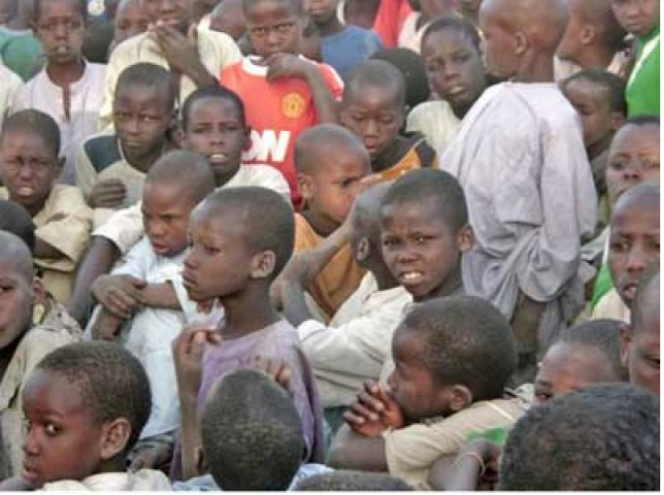
The victims roam the silent streets of the suburb of Maiduguri bare-footed and are poorly and raggedly dressed, with nobody to even voice their frustration to. A large percentage of them have nowhere to call home or someone to brother or sister.

Such children were abandoned or taken to IDP camps to face other forms of abuse, torture, including sexual harassment for girlchild.

Giving an eyewitness account of this tragedy, a Borno-based scholar, Sheikh Muhammad Mustapha, narrated that after the mass killing of people by Boko Haram in Maiduguri, some Christian organizations came and took some of these orphans to their respective states.

Sheikh Muhammad Mustapha, who spoke on Sunday, December 26, 2021, during the graduation of 20 orphans trained and empowered by Khairat Islamic Trust (KIT), said the situation is unimaginable.

The foundation brought the orphans to Kano from Borno to help them open a new chapter in their lives.

He said if Muslim communities fail to take care of their [orphans] responsibilities, they will wake up and see all these orphans converted to Christianity one day.

He said, “Some of these orphans witnessed how their parents were merciless being killed by Boko Haram militant. As a result, they are left with no family – no one to call a brother or sister.

“After the mass killing by Boko Haram in Maiduguri, some Christian organizations came and took some of these orphans to their respective states.”

“Their aim is to convert them to Christianity and send them back to destabilize us in future because they look like us and speak our language. So we should try to stop this from happening.

Speaking also, the former Vice-Chancellor of Bayero University, Kano, who commended the foundation, decried how the orphans were.

Prof. Yahuza Bello lamented that many people do not consider helping orphans as something important.

“That is why Khairat Islamic Trust came up with this idea of supporting these orphans financially and also worked hard to ensure that they acquire moral, spiritual, skilful and academic training which would enable them to progress further,” he said.

Orphans recount ordeal

“I was growing up as an orphan. There was a time I came to my mother crying that I didn’t have new clothes to wear on a Sallah [Eid] day.”

“Pity was my mother who also burst into tears saying had it been my father was alive; I will not have cried for Sallah clothes.”

Many of them recalled how their life became hard after the demise of their parents and how they roamed streets endlessly until the foundation decided to give them a helping hand.

Foundation empowers 20 children orphaned by Boko Haram

By Uzair Adam Imam

The Kano based non-governmental organization, Khairat Islamic Trust (KIT), has trained and empowered 20 children who lost their parents to the insurgency in the North East, Nigeria.

At the event titled: “Graduation, Empowerment and Re-integration of Orphans” held at Bayero University, Kano, on Sunday, December 26, 2021, the foundation donated a sewing machine worth N70,000 to each of the orphans.

Also, the foundation offered the students, who have completed their Qur’anic education, admission into western schools to complete their secondary schools.

Speaking at the event, the Emir of Kano, His Highness, Alh. Aminu Ado Bayero, represented by Alh. Aliyu Harazimi, Dan Amal, called on the general public to put hands together in helping orphans.

Bayero said that the reward for those who help orphans is Paradise.

Speaking also, the former Vice-Chancellor of Bayero University, Kano, and Chairman KIT Board of Trustees, Prof. Yahuza Bello, said the foundation is a safe haven for orphans.

He added that KIT’s activities are purely humanitarian and has brought many orphans whose parents were killed by Boko Haram insurgents from Borno to Kano.

Prof. Yahuza Bello lamented that many people do not consider helping orphans important.

He added that many Christian organizations went to Borno and took these orphans to their respective states, converting them to Christianity.

“That is why Khairat Islamic Trust came up with this idea of supporting these orphans financially and also worked hard to ensure that they acquire moral, spiritual, skilful and academic training which would enable them to progress further,” he said.

Orphans voice out their excitement

The orphans who looked very excited said that they could not thank Khairat Islamic Trust enough.

“To be honest, I am very much happy today. I couldn’t have expected more than this even if my parents were alive,” one of the orphans Isma’il Salisu, said.

He added, “I call upon Muslim Ummah to join such a foundation in helping those who lost their parents. If good education is not provided for us, our thought [for a better future] might be lost.

“But now, what most of us wish to be are doctors, engineers, lawyers and the like. We think differently.”

While expressing his gratitude, Mustapha Muhammad Ibrahim said, “Not only me, all of us are extremely excited today.”

“We cannot actually thank this foundation enough. People should, en masse, join programs of this kind.”

On her part, Fatima Usman Hassan expressed how happy she was, saying that: “I pray that we will also do the same to other orphans in the future.”

Restraining the illegal circulation of firearms in Nigeria

By Mukhtar Ya’u Madobi

The proliferation of Small Arms and Light Weapons (SALWs), occasioned by illegal and porous national borders and a booming business of gun-running, are the main factors fuelling Nigeria’s security challenges, giving rise to criminal activities across the country.

The proliferation of SALWs is a global phenomenon arising from global conflicts. According to a study conducted by the Geneva-based Small Arms Survey (SBM), it is estimated that more than 857 million SALWs are currently in circulation aside from twelve billion rounds of ammunition produced annually. An estimated ten million SALWs are in Africa, with one million in Nigeria.

This is connected with previous and ongoing conflicts in West and North African countries such as Liberia, Sierra Leone, Cote d’Ivoire, Chad, Niger, Mali and Libya. The proliferation of SALWs aid non-state actors, including Boko Haram/ISWAP terrorists, bandits, militants etc., while undermining the state monopoly of instruments of coercion. The threats posed by the proliferation of SALWs are of such magnitude that a security strategy that contemplates monitoring their flow and use is required.

Another report by SBM Intelligence noted that about 6145000 SALWs are illegally circulating among civilian non-state actors and criminals in Nigeria. Meanwhile, the country’s security institutions have a paltry 586600 firearms in their possession.  Indeed, the proliferation of arms across borders along with human trafficking and drug trafficking, especially in the Sahel region, ranks high on the chart of criminal activities constituting threats to national and regional stability in Africa.

Experts had identified a lack of effective legislation and enforcement mechanisms as a major reason SALW proliferation has a significant impact on crises both within and across many national borders.

To stem the rising tide of illegal weapons circulation, the federal government has established the National Centre for the Control of the Small Arms and Light Weapons (NCCSALW). The centre is under the Office of the National Security Adviser (ONSA), Major General Babagana Monguno, with retired Major General AM Dikko as the Pioneer Coordinator. The National Security Adviser said the centre would operate similarly to the counter-terrorism and cybersecurity centres, both under his office.

The NCCSALW was established to replace the defunct Presidential Committee on Small Arms and Light Weapons and is expected to serve as the institutional mechanism for policy guidance, research, and monitoring of all aspects of SALWs in Nigeria. Apparently, the federal government believes that the transition from PRESCOM to NCCSALW would provide more effective coordination and monitoring of progress regarding the proliferation of small arms and light weapons. When fully operational, the NCCSALW would have six regional offices that will work closely with security and intelligence agencies to prevent and control proliferated arms and track weapons in the hands of non-state actors.

Among several functions, the National Centre will be responsible for controlling the proliferation of SALWs in Nigeria, implementing strategies, plans, and policies for eradicating SALWs, and supervising the implementation of same by relevant government bodies. It will also create and maintain small arms and light weapons register and a national database, receive reports on firearms registration from the Nigeria Police, and update the database with such information.

In addition, it will also register, store and destroy firearms and ammunition possessed illegally by security agencies, criminals and other non-state actors, maintain a database of registered firearms dealers in Nigeria, among others. Furthermore, the centre will be responsible for updating and transmitting the national database to the United Nations (UN), the African Union (AU) and the Economic Community of West African States (ECOWAS).

In its relations with these inter-governmental bodies, the National Centre will identify legitimate national defence and security needs and obtain the required exemptions from specific international protocols to meet these needs. The National Centre is also empowered to carry out public education and awareness at national, state and local levels, to involve Nigerians in the efforts to control the proliferation of small arms and light weapons.

No doubt, the establishment of the NCCSALW is a move in the right direction. Still, to achieve maximum impact, it is expected to open up new regional and international cooperation and strengthen existing efforts.

In 2001, UN countries adopted the Programme of Action to Prevent, Combat and Eradicate the Illicit Trade in Small Arms and Light Weapons in All Its Aspects.

In the instrument, member states agreed to, among others, improve national small arms regulations, strengthen stockpile management, ensure that weapons are properly and reliably marked, improve cooperation in weapons tracing and engage in regional and international cooperation and assistance.

According to the UN, one of the most critical components in the fight against SALWs proliferation is weapons tracing. Hopefully, when the centre discharges its mandate fully, it will undoubtedly lead to a drastic reduction in national, sub-regional and regional illegal possession of SALWs, which will be crucial in mitigating the rising level of armed violence.

The NSA has recently declared that the government is preparing to constitute a security outfit responsible for safeguarding the nation’s porous borders. The move is very apt because it will curb transnational organized crimes, thereby reducing the level of security challenges currently facing the country.

Mukhtar wrote from Kano via ymukhtar944@gmail.com.

ISWAP Commander Abou Maryam, other fighters killed in Nigerian military airstrikes

By Muhammad Sabiu

In airstrikes orchestrated around the shores of Lake Chad in Borno State, the Nigerian military killed an ISWAP Commander, Modu Kime, also known as Abou Maryam, and his militants, PRNigeria reports.

The senior ISWAP Commanding Officer met his death in airstrikes carried out on the river banks of Bisko and Tumbum Tawaye in the Abadam Local Government Area.

The operation was carried out after intelligence, surveillance, and reconnaissance (ISR) missions revealed the terror Kingpin’s position while coordinating strikes.

According to reports from the ground, scores of terrorists and the commander were killed due to the air interdiction.

An intelligence officer told PRNigeria that Abou Maryam, who has the phone number +22788036182, was on intelligence services’ radar.

The officer was quoted as saying, “For some times we had been intercepting his communication and his coordination of attacks by his terror group, mostly in Borno State.

“He had operated around the axis of Tumbum Tawaye, Bisko, Garere, Arkumma and Dumbawa, Zari and Gundumbali LGA.

“Abou Maryam coordinated attacks on military troops and soft-targets mostly around Damasak, Nganzai and Gajiram and sometimes on [the] outskirts of Maiduguri.”

Boko Haram attacks Maiduguri as Buhari visits

By Uzair Adam Imam

Reports from Maiduguri, the capital of Borno State, have disclosed how Boko Haram fighters hit Maiduguri ahead of the visit of President Muhammadu Buhari.

Three communities at Ngomari airport general area in Maiduguri were reported to have been attacked.

The militant group was believed to have targetted the airport a few minutes before the president’s arrival.

According to a source, the communities were attacked with rocket launchers.

He added that the attack has killed a few people and destroyed residential areas and properties.

One of the residents confirmed the happening, saying: “One of the rockets landed close to an office, and two landed in the Ngomari Ayashe community, killing four children, one in Moranti.”

“I can confirm that a 16-year-old child, Walida, was affected in the attack. She died instantly; she was cooking when her head got destroyed by the rocket,” he added.

Although the authorities have not commented, at least 25 people reportedly sustained injuries from the attack.

Bandits terrorisms is a 5-dimensional issue

By Zayyad I. Muhammad

Firstly, the military has been stretched doing other ‘peoples’ jobs’  the military is tackling the terrorist bandits at the ‘surface’- see and kill, while the root causes still remain. The military is not a policing institution. The Nigerian Army is under intense pressure to fill security gaps. Security experts say, globally military involvement in crime-fighting is problematic practically because they are not trained to do so.

Secondly, the police which are trained to uproot the causes of this kind of criminality, deal with it at the surface & seal the seals, are handicapped beyond tolerance level- the police are underfunded, ill-motivated, under-equipped, and neglected. If the Nigerian police can get half of what it needs, they will tackle the bandit terrorists from end to finish. The police are superb in gathering intelligence from primary sources because the police are everywhere and trained to do so.

Thirdly, it seems, President Muhammadu Buhari is so much relying on a bulk information-first line of information ( service chiefs) he should also get information from the second and third levels- field commanders and local communities dwellers. If he is doing it, he should seek more. Though, the presidency on December 12th, 2021 said “Alongside military force, the government is seeking to address the violence at its economic source. Massive infrastructure projects like the coastal rail and new train from the southern coast through the north-east to our neighbour Niger, aim to expand employment and opportunity across the country, bringing hope to our more remote and poorer regions where bandits and terrorists thrive”

Fourthly, Governors, security votes and benefits- some officials of government who in one way or another benefit from the opaque security vote system will always work hard to make sure bandits’ Terrorisms continue- it’s a business. some state governors are doing their best, but some of their officials may be sabotaging their efforts.

Fifthly,  communities social disorder- abject poverty, the death of community-living, everybody for his own has also contributed in oiling recruitments into the banditry business- this problem was as a result of one thing- the hijack of the local government system by the governors and state legislators. LGAs are the best sources to cater to the need of local people- when this source is no more, local people start searching for new sources to survive. Though, sheer criminality and materialism among some Fulbe including the international proliferation of small arms are also factors

According to a report by American Security Report (ASP)-  ‘Banditry in northwest Nigeria has become an appealing method of income in the region where weak governance, youth unemployment, poverty, and inequality have left people with depleted options for livelihood. Security services are often understaffed and lack the proper resources to effectively combat banditry. Vast areas of unregulated forests allow for easy concealment, and police and military forces have difficulty penetrating the rough terrain. In addition, under-policed borders have aided the proliferation of small arms and light weapons’ amongst bandit groups’

Bandits Terrorisms have reached the red level- the problem now requires a holistic approach – new and already established effective methods must be implemented to tackle the problem from the root causes. For example, academics and security experts have done some excellent research on the cause of banditry in the northwest and other regions, the intelligence community can use it for early warning and intelligence gathering.  Furthermore, the firing angle must be backed by more funding of the police by the federal government. Intelligence, accountability, selflessness, and national interest must also be a priority as well.

 We are in a war against ourselves.
Zayyad I. Muhammad writes from Abuja, zaymohd@yahoo.com.