Bayero University Kano

My deafness: A blessing in disguise

By Ibrahim Tukur

Becoming a doctor was my childhood dream. When I was a child, I had an overwhelming desire to save as many lives as possible. The dream was nurtured by my elder sister Maryam Tukur. But back in school, I never performed well in class. More often, I scored low in the exams. That was what principally irritated my father. Although my father couldn’t read nor write, he more often than not flogged me for performing poorly in the examinations.

When I was in primary two, my father employed a tutor to teach us at home but sadly, it never worked on me. Like a dumb, I never grasped anything the tutor taught me. That even made my father angrier.

While we were in the second term, I suddenly fell seriously ill and lost my hearing sense to meningitis. In my parents’ strenuous efforts to restore my hearing, they took me to different doctors and herbalists who prescribed me some medicines that never worked. Finally, after many abortive treatments, my parents gave up the struggles and left everything to Allah, the Exalted of all.

Life became very challenging for me when I became deaf. My friends gradually avoided me. I was often lonely in school and at home. My father became hopeless about my education. Even my dream of becoming a doctor scattered itself like broken glass. 

When my academic performance worsened, which my teachers constantly complained about, my father withdrew me from school and kept me at home doing nothing.

A year later, upon recommendation, my father admitted me into Government School for the Deaf, Malumfashi. That was where I began to thrive. It was there that I learned to write my name, nay, perceived life from extraordinary angles.

I’m currently a 400 level student at Bayero University, Kano (BUK). Unfortunately, due to some problems, I could not realize my dream of becoming a doctor. But Alhamdulillah. Deafness is not a barrier to greatness.

Baba Jalingo: A loving memory of an inspirational personality 

By Aisha Ahamd Jalingo

I barely have many memories of him beyond his signature, white clothes and red cap because I was a child when he passed away, but my husband insisted that I write a tribute for him today, being 11 years since his demise. All I know is Baba was an inspirational personality which means different things to different people. A father with a great sense of humour, a mentor that gave his all irrespective of differences in ideology or creed, and a unionist who fought to protect all till his last breath.

Everyone who knows him at Bayero University will always say how he jokes around with everyone. Whether you were his students, who I heard would rush to M block for his lectures because of how educative and entertaining his classes were, or his colleagues who always ran to him to seek support, morally or otherwise. He treated everyone equally with respect.

During his lecture, he would have the theatre filled with some students not because they registered for the course but only to listen to him speak.  Baba Jalingo was very religious. It is his norm to go to the BUK Central mosque for Magrib prayer and wait till after Ishaa before returning home. A pillar in the mosque is called ‘fillar Jalingo,’ meaning Jalino’s pillar. He would sit there from Magrib till Ishaa. I once saw someone write on Twitter that no one even dares sit in that spot, as when he arrives, he jokingly asks the person to get up. 

His kindness knows no bounds. One memory of his that keeps coming to mind is that whenever we travel home to Jalingo, we normally stop at Gombe to stretch our legs, pray, and eat at a particular filling station. Baba would sit with the people there and chat. He would buy what they are selling, most of which we don’t need. I heard an incident when Baba and our Mom were returning to Kano. Unfortunately, they had a flat tire in a village, Durbunde, just after Gwaram. He met a man who helped them fix the tire. Since then, he always stops at the village to see him, till date that man still visits our family. He named his son after Baba Jalingo when he passed away, named his daughter after mother and recently named another daughter after me.

The same thing happens around Dakatsalle just before Kano. When returning from Kaduna or Abuja, Baba would stop and sit with all those selling chickens, vegetables, fish and whatnot. He usually tells them, “kaima kawo abin da kake sayarwa” (“you too bring what you sell”). He will come home with so many things. 

When it comes to supporting family, I have never seen anyone who supports his family like Baba Jalingo. I know he helped my mother up to the rank of Professor, which she earned shortly after his death.  I heard he often travelled with her to Usman Danfodiyo University, Sokoto, when pursuing her PhD. He was her biggest cheerleader through it all.

I can remember the last incident when she was the HOD of the Economics Department, Bayero University, Kano. A conference was organised in the department, and he was then the vice-chancellor of Taraba state University. I remember him coming to Kano to attend the conference, and he was among the first to arrive, sitting in front with his signature white clothes and red cap.

He often travelled back from Taraba State for the termly visits to our school. Baba never got tired. I remember his last visit passionately during our Qur’anic graduation ceremony. In the picture, I can never forget smiling when he was called to give a speech all over the place. I could not remember what the speech was all about. All I know was he talked for a while, returned to his seat at the front row, walked back on the stage, and took a group picture with all of us when we were called for our recitation.

It was after his death we realised how much he had been sponsoring and taking care of other families without the knowledge of anyone. That is the kind of man Baba was. He made all of my siblings, and I feel special, that every one of us considers ourselves to be his favourite, though I firmly believe it is me because he calls me “kingin Baba.”

Late Prof. Ahmadu Usman Jalingo, fondly called “Baba Jalingo” by everyone close to him, was a UK-trained political scientist, a veteran, a renowned scholar, a great man who played it all around. A veteran unionist and academic per excellence who raised through the rank and became one of the earliest political science professors in Northern Nigeria. Baba was the secretary to the State Government old Gongola and Vice-Chancellor of Taraba State University, a position he held until his death.

Baba was very close to Malam Aminu Kano. He was, precisely, Malam’s personal secretary. I can remember loads of Malam Aminu Kano’s personal diaries we found in his estate when he passed, which my Mom officially wrote and handed them over to the centre for Democratic Research, Mambayya house. In the tribute written by one of his students, Onoja, I read that Baba Jalingo confided in him that the one thing Malam Aminu Kano had in excess was socks. He says he never wore the same socks twice.

He was among the 49 men committee under the able leadership of Chief Rotimi Williams, Alhaji Idris Gidado, secretary, established in September 1975. This committee was the brains behind the creations of ‘CLUB NINETEEN MOVEMENT’ and the ‘NATIONAL MOVEMENT’. Malam Aminu Kano and many northern representatives created the ‘’National movement in Lagos. They later changed its face to become a political party named the National Party of Nigeria (NPN). The National Movement launched recently was originated from the work of this committee. 

Baba Jalingo was a man of the people, loved and respected by all. He passed away peacefully in his sleep on March 1, 2011. March 1, 2022, marked 11 years since his death, but his memories are still very much fresh in our hearts. We will forever live in his image and will in sha Allah continue with his legacy. 

Rest on Baba, till we meet in Jannah….where we will be reunited forever in sha Allah

Aisha Ahamd Jalingo (Mrs) sent this article via jalingoaysha@gmail.com.

How to make the month-long ASUU strike a win-win situation – Don

By Uzair Adam Imam

A senior lecturer with the Department of Mass Communication, Bayero University, Kano (BUK), Dr Ibrahim Siraj, has described the four-week strike of the Academic Staff Union of Universities (ASUU) as a necessary evil Nigerians must learn to live with.

Siraj said that as we could not stop the strike, we could do whatever we could to minimize the ‘losses’ that come with it while anticipating the benefit.

The academic who disclosed this on his social media platform stated that if only we could use some formulas, we are all winners – driving many benefits from the strike.

The writing he titled, “How to Make the Month-Long ASUU Strike a Win-Win Situation”, provided some formulas which he married them up with the benefits worth driving if put into practice.

Dr Siraj wrote, “Federal Government is given an ample opportunity to study ASUU demands, engage in serious and sincere negotiation and finally seal a deal. This will save the system from further disruption and damage.

“And with the countdown to 2023 general elections just starting and political activities expected to reach their peak later in the year, no better time than now to do it. They can resolve this one and concentrate on their politicking. Win.”

He added that “for lecturers, this is a time to sort out all issues relating to continuous assessment (CA), have some rest, finish writing that paper, gain some renewed energy and hope for the best from the struggle. In-sha-Allah it will usher into a better university system: better teaching and learning conditions, better remuneration, and more productive scholarship. Win.”

Moreover, Siraj stated that this is also an opportunity for the students to prepare for the coming exams “eat up the notes, ‘cram’ the handouts and do additional reading and consultation on the topics. This could translate into better performance and ultimately higher grades. Win”.

“Final year students could use the window to invest more time in writing their projects. So, in addition to aiding timely completion, it could also enhance the quality of the output. Win,” he stated.

The lecturer stated that the adjustment in the calendar means that BUK students will spend a better part of the blessed month of Ramadan at home. Thus, he said, “this means students and teachers will have more time to devote to seeking Allah’s pleasure in the holy month. Win.”

Shaaban Sharada hammers “politicians” for nurturing thuggery, calls for investment in education 

By Uzair Adam Imam 

The member representing Kano municipal in the House of Representatives, Sha’aban Ibrahim Sharada, has reiterated the need to invest more in education.

Sharada also accused some politicians of supplying drugs and dangerous weapons for the youth for some selfish reason.

The rep was speaking on Saturday during the 40th Anniversary of Mass Communication Alumni Association (BUMCAA) at Bayero University, Kano. 

He said that there was no better investment in any society than the provision of the right atmosphere through education.

 Sharada argued that societal development has a direct link with people’s educational attainment, saying education and development cannot be separated. 

He said, “Education is the key that unlocks everything. And for this, I would like to call on politicians, philanthropists, businessmen and other well-meaning Nigerians to heavily invest in education. 

“For politicians, there is no better investment than providing the right atmosphere and an enabling environment for our children to forge ahead educationally. 

“Instead of supplying drugs and dangerous weapons to the so-called political thugs, politicians should instead choose to sponsor them and make their lives better,” he added.

The events, which took place on Friday and Saturday at BUK, aimed at commemorating the 40th anniversary of the Department of Mass Communication of the institution.

On Buni’s 100 computer donation to Bayero University

By Kasim Isa Muhammad

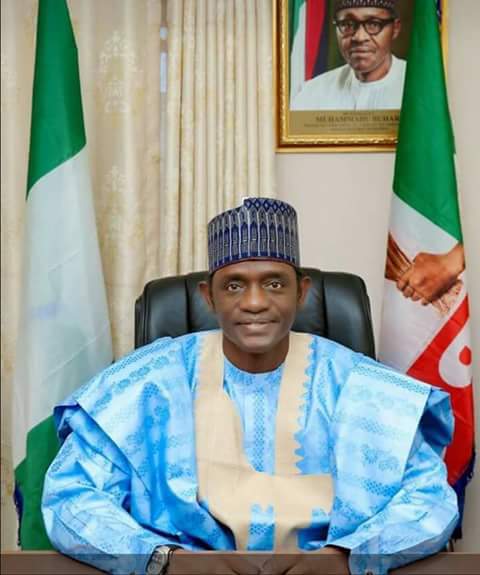
The donation of 100 computers to Bayero University Kano (BUK) by the Yobe State Governor, Mai Mala Buni, is politically uncalled-for. He should consider the poor institutional standards of his state—millions of indigenous students that voted for him battle a lack of various technologies. The donations to a well-furnished and developed Bayero University Kano could never yield a good result for the governor and the entire students of Yobe State.

However, while this may appear good news for Bayero University, it must be tempered by thoroughly examining Yobe State institutional standards and their critical administrative, social, and academic considerations to resurrect active education in Yobe State higher education institutions.

Yobe State University is among the recently initiated universities in Nigeria and is currently experiencing low student enrollment. Their sources are weak due to a lack of advanced facilities for carrying out academic activities and insufficiently advanced technology to train their thousands of students properly. Meanwhile, BUK is one of the top-ranked and accredited universities by the federal government of Nigeria. The university spends years running enough budgets and acquiring modern techniques with a large student enrollment every year. The university’s library is well advanced, and the federal government continues to meet its demand for achieving standard academic excellence in the country. 

There is something to ask the Yobe state governor. Did he ever visit the Yobe State University library and witness how old it looks? The whole Yobe State University building demands a proper renovation from the lecture rooms to the library, theatres, roads, other practical equipment for the medical and environmental science students to acquire knowledge.

There are similar institutions around the local government areas of Yobe that almost collapsed in infrastructure, while others have been struggling with instructional materials for decades without any state intervention. Such institutions are the College of Administration and Management Technology (CAMTECH), Potiskum, and the College of Health and Technology, Nguru, alongside others with poor infrastructure. The institutions spent years under the state government. Still, neither the governor nor the ministry of education attends to them for regular check-ups to monitor what changed those institutional needs to keep existing. 

In conclusion, it is not a bad idea to donate computers to other universities or limit the governor’s desire on where or who to contribute something to. Instead, it is a call of attention to share with the governor that institutions under his places of primary political responsibilities are structurally and academically collapsing to a great extent. The key factor to saving them lies in the hand of Governor Mai Mala Buni.

Kasim Isa Muhammad, Department of Mass Communication, University of Maiduguri.

Book Review: “Kwaraption”

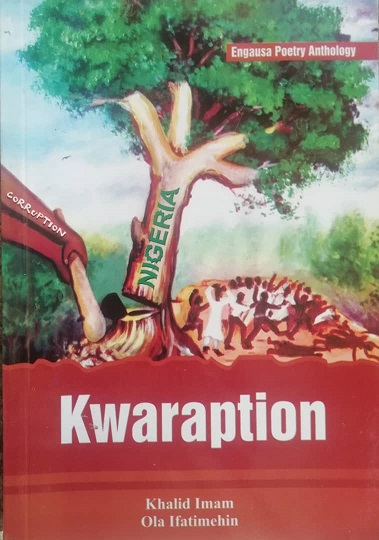
Book Title: Kwaraption

Editors: Khalid Imam and Ola Ifatimehin                                                                                   

Type: Anthology of poetry written in Engausa

Publisher: Whetstone Art and Information Service

Pages: 72

Year of publication: 2021

Introduction:

Although not simple to define, corruption is a major impediment and barrier to Nigeria’s progress. For many years the country suffers a lack of infrastructure and poor condition of living because of corruption, which not only stagnates the nation but also derails it from the path of progress. Although more endemic now than ever before, the story of corruption in Nigeria is at least very old.

A missionary teacher in Kano, Madam Ethel Daniel Miller (who came to Kano in 1917) in her book The change here in Kano complained of a prince from the emirate that gifted her a set of clothes for the simple reason that she is a sister to Dr Walter Miller, thinking that she could influence his choice as a successor to the throne.

Other examples can be found in fictional works such as Magana Jari Ce (1937), where Dan’iya bribed a police officer to deceive his friend, Daudu, in a story titled “An ƙi cin biri an ci dila.” The case of Obi Okonkwo in Achebe’s No longer at ease (1960) and that of The Incorruptible Judge (1962) by Olu Olagoke were just a few out of many similar cases. These are clear indications of how writers used their pen to expose and sometimes fight corruption since the beginning of Nigeria formation.

This anthology of poetry edited by indefatigable Khalid Imam and awesome Ola Ifatimehin contains 51 poems contributed by 45 poets. Nearly half of the contributors are female writers, which is a clear indication that females have come of age in terms of literature in northern Nigeria.

The title of the book “Kwaraption” is a Hausa and English attempt at pronouncing corruption. While the first, “kwara” part is just the Hausa sound of the first four letters, “corru” (in a word corruption), the second part was derived from the last for letters (ption) of the original word. In other words, kwaraption is a corrupt way of saying corruption. Instead of the editors using Hausa translation of the word corruption which is loosely translated as Cin-hanci or Rashawa, or just writing Hausa variant of corruption as kwarafshin, they decided to retain part of the original English words. This is to portray the uniqueness of the work as an anthology of poems written using Engausa which involves coding switch or mixing of languages (English and Hausa) with a view to achieving artistical beauty and increasing richness of literature.

An Appreciation of Some of the Poems in the Collection

Looking at the anthology, one can understand that the poems covered a wide range of issues of interest as far as corruption in Nigeria is concerned. Some of the issues covered are:

  1. Recognizing Nigeria as a rich country which is very blessed with both human and material resources, but whose citizens are poor because of corruption and other social vices.

ƙasa mai albarka da albarkatu,

mai attajirai, masu ilmi da yan siyasa Hafsa Ja’afar in a poem titled Rashawa (p. 30). 

  • The state of the country as far as corruption is concern. For example, Ameer Nasir in Cutar Zamani described the country as one having expertise in corruption to the extent that it is difficult to separate us from corruption “tamkar jini da hanta” (p.17). Basheer Adam Gobir assumes that ‘almost everyone’ in the country is corrupt (p.23). Similarly, Farida Mohammed Shehuin Abin Takaice (p.24)and Khalid Imam (p.37) see corruption as a hazard whose impact is everywhere; mosque, church and in all places, and Khalid particularly described corruption as ‘flood’ that destroys (Corruption Everywhere, p.39). Khadija Hanga in her poem titled Despicable Diseases sees corruption as marriageable girl, however dubious whose main goal is to deceive “a fool”. In fact, as captured by Ola in his allegory, “Kukan Kurciya”, corruption is now “new education”. Because we are so accustomed to corruption that we are given it good names and the corrupt person were assumed to be philanthropist as captured in a poem Philanthropist na gangan (p.26) “barazanar ɗan ta’adda ba ta mayar da shi gwarzo”. Also, YZ Ya’u corroborates this in his “Sai Mai Taimako”. Umma Aliyu educates us on different forms of corruption that we don’t see as such due to level of societal decay.
  • Looking at corruption as a cause to many problems this country witnesses.  For example, in a poem “Tick” byAbubakar Isah Baba, corruption is responsible for poverty and insecurity;

It causes abubuwa masu yawa,

Poverty mai kashe gwiwa,

Insecurity mai karkatse rayuwa,

Ga misalan scandals nan da yawa.

In “Lamentations for a Country,” Adesina Ajala blamed corruption for dividing the country along many social layers “Corruption is the common denominator that divides this land without fractions.” The division is along religious, ethnic, regional and even occupational strata. In “Gobarar Daji” Yahaya Abubakar sees corruption as “alpha and Omega”, hence, the chance of getting out of the current quagmire is very slim,

“ta yaya za mu yi rayuwa sustainable,

tattalin arziƙinmu disabled.”

Bashir Umar blames corruption for bankrolling the country such that it cannot meet its basic needs, he sees it as embarrassing that the country now relies on foreign aid for its development “wai yau ni ke neman aid from foreign organization”. The writers believed that Nigeria has taken a poisonous venom, whose effect transmitted to the children, making them engaged in killing one another “mun ɗauki kansakali, maimakon magani.” Ajuji in his “Bragging da Kayan Sata” captures an attribute of a corrupt person.

“there stand akimbo…

carrying pot belly,

like expected mother.”

  • Trying to understand the dynamism and causes of corruption is one other focus of the poets in the anthology. Amatullah Saulawa in her “We shall not be afraid” boldly says:

“yes, it is our faults,

if dictators shift gears,

we bring them back” (p.15).

This is a similar submission of Maryam Baffer in the poem “Har da ni”. However, the politicians are most blamed in the collection because they stand for it

“ko da tsiya ko da tsiya tsiya

sun kasa

sun tsare,

sun raka,

sun rabe”

as stated by Hafsa Ja’afar in Rashawa (p. 30). Lynda Mustapha in her two poems “Write it down” and “Buhu-buhun Iskanc”i blamed politicians for perpetrating corruption in the country. Moses Odozie writes on corrupt civil servants whom he nicknamed “Ɓarawo mai Biro”. Murtala Uba Mohammed, in his poem “Corrupt Nation”, believed that corruption is not limited to politicians, there is also the police, court and parents (p.51).  

  • The writers are tense of corruption and eagerly want it to end. Adesina Ajala said;

“Yaushe zamu warke daga wannan ciwon ne?

Wa zai haska fitilar gaskiya cikin wannan duhun baƙi?.

Corruption is here seen as a wound that needs to be cured and darkness of a night that should be put in the light. In “The Oak Tree”, Aliyu voices out; “yet we hope for betterment”

  • The authors not only lamented over the problem, they also recommended some solutions to the problem. Madinah Abdussalam in his “Yours and Mine” sees the solution as public, that every person should do it himself.  He says “who will end corruption in ba mu ba”.

In “Soyyayar Corruption” by Elizabeth Zephaniah, the public is seen as a solution, she metaphorically states “yaushe za mu ga eagle na fighting corruption”. Musa Adam was also having a similar view in his “My father’s 61st Rebirth”. Some of the poets expressed unity as an important factor in the fight against corruption, “dole we have to be united” as stated by Haneefa Musa Isah in her poem “Mu haɗa kai” (p 31). Also, Sani Abdullahi Salisu in his Kwarapshin (p.61).      

Engausa

It was not surprising when I saw this anthology. This is because of my prior knowledge of the debate that started on the page of APNETi when Dr Ola began to release his poems in a fashion of code switch, mixing English with the Hausa language which Khalid and some other members called ENGAUSA and opined that it is new and welcomed development. Some members of the group, most especially Professor Yusuf Adamu objected to that saying that language blend and code switch is not new in poetry particularly among Hausa poets citing a popular line of late Nai’ibi Sulaiman Wali in his poem Damina

“… su yi kasuwa su yi kantuna,

kowa busy sai su damina.

Yaran gari ko sai bal suke,

kowa ka duba very happy…”.

Khalid and his likes were not convinced arguing that the example given is INGAUSA, different from ENGAUSA. They said INGAUSA is a Hausa poem where words and phrases are used to complement the writer’s inability to come up with the right words based on context or meaning as opposed to ENGAUSA which is a poem written specifically with two languages blending and it is purely artistical. In the introduction of this book, the editors maintained this view indicating that they had not shifted their position, more so, in an interview conducted by Ola stated that this Engausa is almost his own daughter.

While this anthology may certainly be the first collection on the ENGAUSA poem, the view that the ‘new ENGAUSA’ is different from the ‘conventional INGAUSA’ is very weak. This is because language swap in Hausa poetry is not just triggered by weakness or inability to come up with the right phrase or word in a context, it is equally deliberate. Also, when we look at recent popular Hausa songs we can see Engausa. In particular hip-hop singers such as Billy’o in his song “Rainy Season” wherein he said:

Mosoyiya, farkon ganinki na yo confusing,

sai da zuciyata tai ta squeezing,

sai da temperature ta tai rising,

jiri nake sai ka ce na sha poising,

ni ko so nake a san ina da reason”

is a good example of Engausa. In recent, northern Nigeria’s film series such as “Son of the Caliphate” and “Gidan Danja” are also full of Engausa. In addition, Aliyu Idris aka Abdurabbihi is another example, whose poems are in a mix of Hausa, English and Arabic languages even before seeing Ola’s “Sarauniyata” which appeared first in APNETi platform. Agreed, Ola and to some extent. Khalid can take the accolades of popularizing the Engausa and APNETi for holding the first workshop to teach it. It is another issue as to whether the new Engausa has a rule or not. But it is important to state that Engausa is an attempt to mimic how we (particularly the educated elite among us) talk at home and other places.

Finally, I wish to congratulate the editors for the first Engausa anthology and the All Poet Network International (APNETi) and Centre for Information Technology and Development (CITAD) for sponsoring the publication of important literary work that can help in Nigeria’s corruption crusade. The text is truly a noble of a kind. While wishing to see more literary work of this format, I wish the editors will do more in editing the Hausa language in the subsequent publications. I noticed many orthographic errors with respect to the Hausa language, which our indefatigable Imam will share the larger blame for his expertise in the area. I also conclude with the following lines:

Mai biɗar gane corruption,

To ya ɗau wannan collection,

Hausa tare da Englishin,

Sandwich kuma conjugation,

An zubo concatenation,

Kar ku ce contamination,

An yi ne don education,

Tun da Ola ya yi motion,

Ka ga Khalid zai yi action,

An yi  don inganta nation,

Yau kwaraption mun rejection.

The reviewer, Dr Murtala Uba Mohammed, is with Geography Department, Bayero University Kano, and can be reached via murtalamuhammadu@gmail.com.

Islam speaks about everything, including environmental protection – Dr Bashir

By Hussaina Sufyan Ahmed


The Imam of Al-Furqan Mosque of Nassarawa G.R.A, Kano, Sheikh Dr Bashir Aliyu Umar, said that during a lecture at the Faculty of Arts and Environmental Sciences, Bayero University, Kano, today, January 19, 2022. 

Dr Bashir lectured on “Islamic perspective on the drivers and ways to mitigate global environmental change”. He further explained the basis of maintaining environmental cleanliness as Muslims, citing Quranic verses and hadith. 

He said: “Islam asserts itself as a universal religion – through reaching people, geographical spheres and historical applicability.”

The former chairman of Kano State Council of Ulama, Sheikh Ibrahim Khalil, was among other scholars who attended the event. He also contributed to the seminar.

He added, “The upholding of environmental protection and maintenance of one’s environment leads to healthy wellbeing and sanity. On the other hand, a lack of environmental protection and maintenance leads to sickness, irrational thinking and poor focus by the people around such environment.”

The lecture was part of the Talking Environment Seminar Series organised by the Faculty periodically.

The fallen heroes of Adamawa: Tributes to Prof. Gidado Tahir

Ahmadu Shehu, PhD.

Like any other place around the world, 2021 has not been easy, and 2022 does not seem to promise anything better. Great people have been lost all over, but Adamawa State has seen its worst for a very long time.

On one of those cold mornings, the world learnt about the transition of one of the bedrocks of the modern Nigerian university system, Dr Mahmud Tukur, the pioneer Vice-Chancellor of what has become Nigeria’s centre of academic excellence, Bayero University, Kano.

Not many weeks passed before death struck again, this time at the heart of the Nigerian civil service veterans, taking away one of the best black-boxes, our father, Baba Ahmed Joda. As if that was not enough loss already, one of the leading public servants, a silent achiever and an erudite scholar, Alh. Abdullahi Danburam Jada left a vast vacuum that cannot be filled in the foreseeable future.

These were first class, first-generation Nigerians who fought for and served this nation in different and various capacities. They built the nation’s civil service, education, military, politics and economy. These were among the people without whom there wouldn’t have been Nigeria. They were the best Adamawa could offer to the world.   

But, today, I have not been as sad for a very long time because the reality of losing an icon, a mentor, has come to a step closer. A piece of unbelievable news surfaced on various platforms that one of the best of the bests in brain and character, a glittering light, a joint of unity among many, an icon of devotion and commitment, one of the most selfless souls, whose humility, sacrifice and gentility are immeasurable has gone to rest.

 Professor Gidado Tahir? No! I couldn’t believe it, for we have so much in stock waiting to be accomplished, none of which was for him or any single soul. Everything has been for his society, Nigeria, humanity. Although already 74, I couldn’t fathom the reality that Prof. has left without seeing some of these things happen.

However, the will of Allah is sacrosanct. Therefore, I accept it. I have come to terms with the reality that Professor Gidado Tahirhas left for good, but not without leaving us behind with the heavy responsibility of actualizing beautiful plans for our society and humanity.    

My relationship with Professor Gidado is a 24-year-old journey full of fascinating stories, exciting experiences and unforgettable lessons. In 1997, my father, Shehu Isa, took me alongside the headmaster of our nomadic primary school, Mamukan, Mal. Ahmed Musa Nyibango, to visit the head of the National Commission for Nomadic Education.

Before the visit, my father had organized a well-attended first graduation ceremony to celebrate the first graduands of the school. Professor Gidado was ably represented but asked that my father visit him for familiarization. I was 12 years old, fresh from primary into junior secondary.

My headmaster introduced me to him as the school prefect and the first in class position during that occasion. Prof. shook my tiny hands and said, “sannu maa Professor”, and while stirring deep into my eyes, he added, “do not leave school because you are the future”.

He then asked my father to “please keep in touch” and not relent in his pursuit for the education of the nomads, who he persuades to settle down with him and enrol their children into school. Indeed, my father kept to these words until the final moment.

The subsequent encounter was when Prof. handed me my Grade II certificate, which I earned from a DFID-sponsored nomadic teacher training program anchored by F.C.E., Yola and NCNE. Once again, Prof. followed this by saying to me, “move on, this is not the bus stop”, and that there is so much ahead to achieve. I heeded this advice and returned to school immediately after completing the two-year mandatory service at my nomadic school of origin. 

In 2004, the year I obtained an N.C.E., someone from the college who knew my modest academic activities had the cause to discuss me with him. I didn’t have a phone at the time, but Prof. ensured that his message got to me. It says, “please further your education to the university and let me know if you need my help. You can reach me on….” I immediately walked to my mentor at the college, Dr Salihi Atiku, and asked him to facilitate my results and application to the university.

There was a slight communication gap since I joined the University of Maiduguri until Dr Nafisatu D. Muhammed – who was instrumental to the survival of the entire nomadic education and my personal progress – mentioned me to him, highlighting my modest first-class degree and seeking his intervention in my application for a teaching job.

As the usual father that he was, Prof. immediately asked to see me, spoke to me regularly, mentored, engaged and supported me during my good and bad times. My last moments with him are unforgettable. He invited me to his house in the Villa on a Friday evening, where I met him undergoing physiotherapy with his doctor. I asked to excuse them, but he said to me, “sit here close to me, my son because you [plural] are our pride.”

More like a pre-planned episode, Prof narrated their struggle at and for NCNE, UBEC and how they helped establish the American University of Nigeria. Among many things, I would like to share his last words with all the young people out there: These legacies are for you to sustain and build upon. I gave him my words and left around 05:50 P.M. Allahu akbar!

Thank you for everything, Professor. May Allah grant you Jannah – until we come.

Dr Ahmadu Shehu writes from Kaduna. He can be reached on ahmadsheehu@gmail.com

A Daidaita Sahu Strike: BUK suspends CAs

By Uzair Adam Imam


Following the strike embarked upon by the Commercial Tricycle Riders (alias A Daidaita Sahu or Keke Napep), the management of Bayero University, Kano, has directed the university lecturers to suspend all continuous assessments (CAs) that were to be conducted this week.


The directive was on a social media post which the Bayero University Spokesman, Malam Lamara Garba, has confirmed to The Daily Reality. 


It said all planned continue assessments that were to be conducted by the lecturers this week had been suspended pending the strike’s outcome.


The A Daidaita Sahu Riders commenced a seven-day warning strike on Monday, January 10, 2021.


It was gathered that the riders are protesting against the Kano Road Traffic Agency (KAROTA) registration fee.


The agency is charging new registrants N18,000, while renewal is N8,000 annually.

Reminiscences of Dr Ahmad Bamba BUK

Professor Salisu Shehu

حَدَّثَنَا إِسْمَاعِيلُ بْنُ أَبِي أُوَيْسٍ، قَالَ حَدَّثَنِي مَالِكٌ، عَنْ هِشَامِ بْنِ عُرْوَةَ، عَنْ أَبِيهِ، عَنْ عَبْدِ اللَّهِ بْنِ عَمْرِو بْنِ الْعَاصِ، قَالَ سَمِعْتُ رَسُولَ اللَّهِ صلى الله عليه وسلم يَقُولُ  ” إِنَّ اللَّهَ لاَ يَقْبِضُ الْعِلْمَ انْتِزَاعًا، يَنْتَزِعُهُ مِنَ الْعِبَادِ، وَلَكِنْ يَقْبِضُ الْعِلْمَ بِقَبْضِ الْعُلَمَاءِ، حَتَّى إِذَا لَمْ يُبْقِ عَالِمًا، اتَّخَذَ النَّاسُ رُءُوسًا جُهَّالاً فَسُئِلُوا، فَأَفْتَوْا بِغَيْرِ عِلْمٍ، فَضَلُّوا وَأَضَلُّوا “‏. قَالَ الْفِرَبْرِيُّ حَدَّثَنَا عَبَّاسٌ قَالَ حَدَّثَنَا قُتَيْبَةُ حَدَّثَنَا جَرِيرٌ عَنْ هِشَامٍ نَحْوَهُ.

Narrated `Abdullah bin `Amr bin Al-`As:

“I heard Allah’s Apostle saying, “Allah does not take away the knowledge, by taking it away from (the hearts of) the people, but takes it away by the death of the religious learned men till when none of the (religious learned men) remains, people will take as their leaders ignorant persons who when consulted will give their verdict without knowledge. So they will go astray and will lead the people astray.”

My first sight of Dr. Ahmad Bamba was 37 years ago in 1984 in the UMMAH MOSQUE at the Old Campus, Bayero University, Kano where I just got registered as a pre-degree student and had begun to familiarize and acclimatize with the people, routines, events and the environment in the University. Although the Central Mosque in Bayero University, Kano would always be the first sight of any visitor or newly arriving student to the University, having been strategically located near the Main Gate, the Ummah Mosque may be the first place of worship for the new resident (on-campus) student because, in its own case, it is sandwiched between the hostels and the two major and oldest Faculties of the University- The Faculty of Arts and Islamic Studies ( FAIS) and the Faculty of Education. Because of its lively nature and vibrancy-series of nasihas, ta’alims, Qur’anic study circles and Tajweed, Arabic classes and even sometimes, very hot intra-faith dialogues and debates that may sometimes prolong from Isha to Fajr Prayer time, the Ummah Mosque, therefore, would always easily capture every newly arriving young Muslim student who might have arrived the University full of curiosity as well as,  enthusiasm and zeal to learn. We, therefore, easily got hooked up to the Ummah Mosque. We would only be seen at the Central Mosque, most surely on Fridays for the Jumu’ah prayer.

It was quite rare to see non-students’ faces at the Ummah Mosque except during Zuhr and Asr prayers when some visitors and some lecturers might be around to join the congregation. There was, however, a non-student face that was very familiar in the Ummah Mosque most especially, during Zuhr prayer and seldom during Maghrib. That was Dr. Ahmad Muhammad Ibrahim Bamba. He would certainly be the first lecturer students that used to regularly attend congregational prayer in the Ummah Mosque would be familiar with because of his regular presence. Of course, another very regular face was Professor M. D.Sulaiman of the History Department. As it were, and as earlier stated, the Mosque was very close to the Faculty of Arts and Islamic Studies where Dr. Ahmad belonged. He would easily come down to join the students’ prayer congregation and there was never an instance that he made any attempt or overtures to lead the prayer or say a word. The nasihas, the ta’alims, and sometimes the debates would be taking place in his presence and to his hearing but he would not utter a word. The situation in the Mosque could actually sometimes be rancorous but it would never stop him from coming. He would, certainly, however, observe his nawafil, and would make his way out. I had a feeling but was unable to ask him, that perhaps his regularity in the Ummah Mosque was not just for the purpose of observing the regular prayer but also to keep close contact and relationship with the students for the purposes of Tarbiyyah h. It was later when I became an Imam in the mosque that I realized that he used to invite or approach imams/leaders in the Mosque to make corrections politely or offer some advice/suggestions, as the case may be.

My first countenance of Dr. Ahmad in the Ummah Mosque reminded me of my first IRK Teacher in the Teachers’ College -Sheikh Yahya Abdul’Azeez, a fully bearded Pakistani Sheikh who was to teach me again –Kitab al -Tauheed, Bulugh al-Maram and Al-Nahwu al-Wadhih in Gwallaga Mosque in Bauchi in 1984, after he transferred his services to Bauchi College of Arts and Science (BACAS). That was shortly before I got admission into Bayero University, Kano. The two were the two fully bearded Sheikhs I first met in life. On my first sight of Sheikh Dr. Ahmad in the Ummah Mosque, the memories of Sheikh Yahya Abdul’Azeez suddenly came back to my mind. At that time, Sheikh Dr. Ahmad was certainly in his late 40s while I was just beginning the third decade (early twenties) of my life as a young undergrad. More strikingly, however, the sights of the two gentlemen present to the heart a mien of piety that sometimes made you think of the countenances of the Sahaba, or so we used to think as young people that still had some elements of naivety in our thoughts.

Our admiration of Sheikh Dr. Ahmad was ceaseless whenever he came and prayed with us in the Ummah Mosque and left. But our interaction with him was no more than the Salam and typically, he would wave at you and made his way out or extend his hand for a shake when you happened to be very close to him. The first time I ever had a conversation with him or heard him spoke to me was when I was appointed as an Imam in the Mosque, which was later to become my class where I taught Tajweed for about three years up to graduation in 1988. I was certainly the youngest of the Imams, a second deputy after Sheikh Sani from Zaria. With the benefit of early background in Qur’anic learning from home, one’s mastery, so to say,  of reading the Qur’an could easily be discovered. So, right from my first year I got appointed as one of the deputy Imams. The substantive Imam then, was the late  Malam Usman Muhammad, the Chief Imam of Laranto, Jos, who was undergoing the Diploma in Arabic, Hausa and Islamic Studies.

Still, with the vestiges of adolescent exuberance and obsession for a fashionable and smart appearance, my wardrobe had more of the fashionable shirts and trousers of the time (TOBI shirts/jeans and HARA trousers) than kaftans. Invariably, therefore, the Imam in me would most of the time lead prayers in the said kinds of fashionable shirts and trousers in the Ummah Mosque. I led the Maghrib prayer one day. After the prayer, Sheikh Dr. Ahmad Bamba called me and held my hand to the outside of the Mosque. In his typical gentle manner and way he said, “Liman, yaya kokari”. I replied, “Alhamdulillah”, with a mix of exciting and nervous mien. He then said to me, “Toh liman ga karatu mai kyau, amma kuma kullum ana mana sallah kai babu hula?”. With a sigh of relief, I said , ” Na Gode Mallam, in sha Allah, za a gyara.”. It was both an awesome and joyful moment for me. But what was most instructive was the fact that that simple and gentle counsel not only made me appreciate that I was no longer just an ordinary student on campus but I was treading the path of spiritual leaders, it also changed my life in terms of personal dispositions and appearance on campus and beyond.

A second experience with Sheikh  Dr. Ahmad Bamba made me a witness to his magnanimity. It was in the case of attending his Hadith class for students offering  Islamic Studies as Special Honours. I was not one, so I could not register for that course. I offered Islamic Studies as a subsidiary course, but I was interested in attending his Special or rather advanced Hadith class. All my friends and classmates- Professor Salihu Lawal Malumfashi (present Dean of the School of Continuing Education and one of the Darul Hadith Imams), Alhaji Bashir Sheshe (now a Permanent Secretary, Ministry of the Federal Capital Territory, Abuja), Dr. Ahmad Maigari Dutisin -ma (Department of Islamic Studies, Usmanu Dan Fodiyo University, Sokoto), Professor Usman Sani Abbas (Department of Islamic Studies, BUK) to mention just a few were all encouraging me to just enter the class and that they were sure Malam would not send me out. On the second or third lecture day, I joined some of these mates while being very scary. I  sat in the class with some bit of nervousness. Sheikh entered the class, conducted his lesson and alhamdulillah, he did not send me out. He definitely saw me, and he definitely knew that I was not duly registered for that course because it was a small class of fewer than 15 students. Later, I want to believe that one of those classmates of mine approached him and spoke to him about me, and Malam graciously permitted. By virtue of my Imamship in Ummah Mosque, I was already a familiar face to him. With a deep sense of appreciation, I must say that that opportunity was my first experience with not only some of the basic and essential rudiments of Ilm al-Hadith but was also the greatest inspiration for deeper and more advanced study of the field.

After graduation in 1988 and having left for the national youth service scheme to far away Bendel State (now Edo and Delta) I did not only cease to benefit from the Special Hadith class of Sheikh Dr. Ahmad but also lost sight of him for about a couple of years. I got intellectually and personally reconnected with him when I returned to Bayero University, Kano in 1991. I came back to pursue Masters in Educational Psychology. Graciously, that presented yet another opportunity for, in a way, to continue to drink from the fountain of the knowledge of Hadith that Sheikh Dr. Ahmad Bamba personified. That was the year Sheikh Dr. Ahmad Bamba started his very awesome, weekly/weekend Hadith Ta’alim Sessions, beginning with Sahih al-Bukhari in the BUK Central Mosque and subsequently Darul Hadith Mosque, a teaching cum admonishment exercise that he continued to conduct uninterruptedly with a great sense of passion, vigour, consistency and rare faith and commitment for THIRTY (30) SOLID YEARS up to the end of his life. Although I was not chanced to be present at the first and second sessions, I would want to remember that I was there in the third session.

In the Hadith Ta’alim Sessions, we did not only learn the texts of the Hadiths and elements of Mastalahul Hadith but we also learnt to be much more committed to Sunnah in terms of faith and practice. Quite instructively also, we learnt lots and lots and lots of the Aqwal ( wise or sayings) of the salafs, many aspects of Usul al-Fiqh (Islamic Jurisprudence), Qaw’id al-Fiqh (Jurisprudential principles and maxims) and many Islamic religious and Jahiliyyah poetries (Qasa’id and Shu’ara’ al-Jahiliyyah). I would not, therefore, end this paragraph without recalling one stanza of a poem that Sheikh Dr. Bamba used to quote very frequently, in his constant admonishment on the obligation to hold and cling tenaciously to the Sunnah of the Prophet (صلي الله عليه وسلم). That is: “دعوا كل قول عند قول محمد فما ءامن في دينه كمغامر

It would be pertinent to mention here, perhaps also to inform those who might not know that Sheikh Dr. Ahmad Bamba did not only contribute to the knowledge of Hadith through the Ta’alim Sessions. He also  contributed to it through authorship. Within the first three years after the commencement  of the Sahih al Bukhari lessons one of his very scholarly Hadith works was released. That was his Takhreej and Tahqeeq work on Imam al-Bukhari’s “Juz al-Qira’ah Khalf al-Imam. It was a book that I unhesitatingly bought a personal copy and ‘voraciously’ read cover to cover within a couple of days.

For Sheikh Dr. Ahmad Bamba, it was a life well spent. Thirty solid years of uninterrupted teaching the Hadiths of the Prophet (s.a.w) was not just a monumental intellectual and scholarly contribution but was evidence of true love of and for our Beloved Prophet Muhammad صلي الله عليه وسلم. This reminds me of the saying of one of the Hadith scholars, quoted by the late Sheikh Muhammad Nasiruddeen alAlbani in his Sifat Salat al-Nabiyy that: اهل الحديث هم اهل الرسول وان: لم يصحبوا نفسه أنفاسه صحبوا.

The death of our most honourable Sheikh Dr. Ahmad Muhammad Ibrahim Bamba is certainly a tragic loss to the world of knowledge and Da’awah as rightly and as clearly alluded to in the Hadith above, with which we opened this tribute. Our closing words would only be fervent and sincere and hearty prayers for him.

إنا لله وإنا إليه راجعون

 إنَّ للهِ ما أخذ وله ما أعطى وكلُّ شيءٍ عنده بأجلٍ مسمًّى.

اللهم اغفر لدكتور احمد، وارفع درجتَه في المهديين، واخلفه في عقبه في الغابرين، واغفر لنا وله يا ربّ العالمين، وافسح له في قبره، ونوّر له فيه

وآخر دعوانا ان الحمد لله رب العالمين

All praise is due to Allah, Lord of the Worlds. May His Peace and Blessings be upon our Beloved Prophet Muhammad صلي الله عليه وسلم.