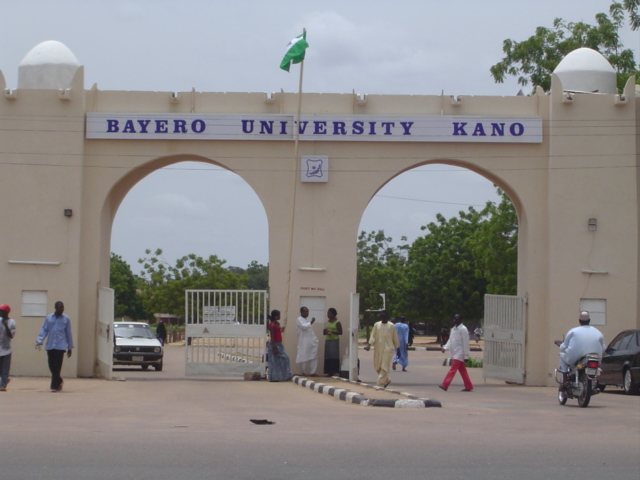
Bayero University Kano

Journey of three friends: Overcoming with resilience

By Abdullahi Kabiru Muhammed

Life as a student is rarely easy, and for three close friends at Bayero University, Kano, the journey has been both tough and inspiring.

Their journey, which began in Level 100 and is now in Level 400, serves as a powerful testament to faith, friendship, sacrifice, and perseverance.

From the very start, the three friends knew the odds were stacked against them. Two of them were students of Mass Communications, while the third was studying Law, a five-year program. They began their academic journey with no sponsor, relying solely on faith in God and a strong will to succeed. 

Despite the uncertainties, their bond grew stronger. There was no conflict, no hatred, only unity. They shared everything and supported one another with love and understanding.

Their first year was marked by some struggles, but they managed to survive. The hardships were there, but not as overwhelming as what was to come. 

In their second year, things became even tougher. The school fees were increased from ₦37,000 to ₦100,000, causing panic and fear. They started Level 200 without paying their fees, holding on to hope as Bayero University, Kano,continued to extend the registration deadlines. They rarely ate more than once a day, dinner only. Many nights, they went to bed on empty stomachs, and in the morning, they would head to class without breakfast. But through it all, they never gave up. They could only afford ₦40,000 for a single bed space, yet all three of them managed to squeeze into the room.

Just when it seemed impossible, help came. Governor Abba Kabir Yusuf’s administration intervened and covered the school fees for Kano State indigenes. It was a moment of relief and joy. May Allah (S.W.T) guide and protect him, and may He grant him his heart’s desires, amin.

Level 300 came with fewer school fee issues, as NELFUND covered their tuition. However, the cost of living increased, and they struggled to afford food. Two of the friends took on labour jobs, and the third, a tailor, tried to support himself with his handwork.

Among the labourers, one could travel out every weekend for work, while the other could only leave during holidays. The tailor worked under someone and had a few customers. Income was unstable. 

Even though they received a monthly ₦20,000 upkeep allowance from NELFUND, it was often delayed. They sometimes had to borrow money and were usually refused, as people doubted their ability to repay.

Their families supported them too, but the assistance barely covers 10% of their needs. They didn’t desire luxury, just enough to eat and survive.

Now in Level 400, nothing much has changed materially. The hunger, the hustle, the struggles—they remain. But the friends remain grateful, and more than ever, they are hopeful.

They continue to share, encourage, and support one another, believing that tough times don’t last forever. Their academic performance is commendable, and they are determined not to let poverty or hardship define their future.

Their story is a reminder that Allah is always in control. Through all the pain, hunger, and financial stress, they have continued to pray, to trust, and to push forward. Without divine intervention, they believe they would have dropped out, despite their passion to learn.

So, they say “Life is full of ups and downs, but we believe good things will surely come our way. Just be prayerful. Allah knows, and He will surely answer your prayers. All you have to do is believe in Him”

Abdullahi Kabiru Muhammed wrote via khaybhee006@gmail.com.

One of the kindest has gone: A tribute to Prof. Hafizu Miko Yakasai

Dr. Muhammad Sulaiman Abdullahi

Innalillahi wa inna ilaihi raji’un. May Allah have mercy on Professor Hafizu Miko Yakasai. He was such a wonderful man that he never held any grudges against anyone. 

I met Prof. Hafizu as far back as 2003/2004, and by 2007/2008, he had supervised my B.A. project on Hausa translation. While writing the project, Malam pushed me so hard that it later transformed my life for the better.

Malam was hardworking, friendly, calm and always gentle. You can even say that Malam was the nicest of them all. Malam was always smiling, and he spoke to us as if he were talking to his friends or even his bosses. Malam always looked down when he spoke to you. So kind and loving. We will genuinely miss his charming smile, especially when he wants to make a point or respond to an interesting topic.

To have known Malam was to have known a rare and gentle light in this world. The always smiling gentleman. Today, that light feels dimmed, the smiles have left us, and our hearts are heavy with a grief that words can scarcely hold. Yet, even in this time of mourning, we are compelled to celebrate the extraordinary person he was —a teacher, a mentor, and one of the kindest souls to have graced our lives at Bayero University, Kano.

Prof. Hafizu was a teacher in the truest sense of the word. His classrooms were not just a place of learning, but a sanctuary of encouragement and support. He didn’t just teach Semantics; he taught us how to think, how to wonder and how to believe in ourselves even when we doubted our own capabilities.

The professor saw potential in the quietest student and brilliance in the most struggling mind. His greatest lessons were not found only in the textbooks, but in his unwavering patience, smiles and profound belief that every one of us had something unique and valuable to offer the world.

When Malam became the President of Nigeria’s Institute of Translators and Interpreters, he called me and asked me to participate in a high-level process of evaluating new intakes. I felt as if Malam was elevating me to a position for which I wasn’t qualified, but Malam sat by my side while I put the records in order and smoothed out the process, and together, we made it a success.

Wallahi Malam was a very great gentleman to the core. A peace-loving fellow. A man of charisma and calibre. I never saw him become angry. Perhaps he has a unique way of swallowing all the anger and reveals only soothing smiles.

There was a time when Malam invited us to a project that he had obtained from his good friend, Barrister Dasin. It was a project of translation. We really enjoyed ourselves and have our pockets filled up.

One day, we sat at the Centre for Research in Nigerian Languages, Translation & Folklore. All of a sudden, Malam asked Muhammad, ‘How can we translate…’ He then mentioned a particular word. I was amazed that this was my teacher, who had taught me for years, now asking me for something. This is to show you how simple and easy-going Malam was.

Besides teaching us, Malam took us as his own children, always drawing us nearer. He never acted like a boss; he was a guide who walked beside us, and with us, not ahead of us. He offered counsel without judgment, wisdom without arrogance, and a listening ear that made even our most minor problems feel important. He shaped not only our intellect but our character, leading always by the quiet example of his own integrity, compassion, and grace.

And yet, what we will carry with us most indelibly, what is etched into our memory with the warmth of a permanent sun, is his utmost kindness and smile. That ever-present, genuine, and kind smile. It was a beacon of welcome in the morning, a signal of understanding during a difficult lesson, and a silent celebration of our successes. In a world that can often be too serious and too harsh, his smiles were a constant reminder that joy is a choice, and kindness is a language everyone understands. It was the purest reflection of his beautiful spirit.

Thank you for everything. Your syllabus for a life well-lived is complete, and you earned an A+ in humanity, wisdom, dedication and kindness. We will miss you more than words can say, but we will never forget your lessons and your magnificent smiles.

Malam was an HOD many years ago; he was a Dean, a Professor, and a pioneer Provost of the College of Arts, and he died in active service. He came and worked in the university even in the last days of his life. Above all, he was a very kind gentleman, a devout servant of Allah.

The best part of Malam’s life was that not many people knew he was an A-grade student and teacher of the Qur’an. Coincidentally, the last events he attended in his academic life were on the glorious Qur’an. The Centre organised the last for Qur’anic Studies under the leadership of Sheikh Prof. Ahmad Murtala. May the almighty Allah raise you among the Qur’anic reciters on the Day of Judgement, amen.

Prof. Hafizu has done his part and left. It is now time to reflect on his life and build on the good legacies he left. I extend my condolences to his family, friends, students, Bayero University, Kano, and the entire academic community.

May Allah forgive your shortcomings, Malam. May Allah make Jannatul Firdaus your final home. You have done wonderfully, Malam, with endless gratitude and love. Insha’Allah, you will continue to smile in Jannah, sir. Ameen!

Tribute to Malam Mu’azu Muhammad Yusif

By Ibrahim Lawal Ahmed

On September 9th, 2023, friends, colleagues and students of Malam Mu’azu Muhammad Yusif, more popularly called M.M. Yusif, gathered to honour and celebrate his long academic service at the Centre for Information Technology and Development (CITAD), Kano, by remembering the old days and reflecting on the transformation the academia has been going through in Nigeria. Malam M.M. Yusif recently retired from the Department of Political Science, Bayero University, Kano, and the occasion was a kind of send-off party.

It was indeed a robust discussion that involved personalities such as Mal. Ibrahim Mu’azzam, Dr. Y.Z. Ya’u, Dr. Nasir Fagge, Prof. Ibrahim Bello-Kano (IBK), among others. As expected, the debate spiralled from eulogising the celebrant to discussion on the character of students and teachers in the universities in Nigeria, the current system of running the university, the struggles of and in the Academic Staff Union of Universities (ASUU), and the neoliberal world order and its effects in Nigeria, particularly on the universities. 

In short, the discussion is a dialectical cross-examination of factors within the university and how their interrelationship is influencing the university education in Nigeria; the relationship between the university and the society (town and gown relationship); and the relationship between the university and the state. The relationship between the university and the state is at the centre of the ASUU issue.

University has been the life of Malam, and as one of the longest-serving chairmen of ASUU, BUK Chapter, ASUU is a union very close to Malam. Therefore, I can imagine his feelings as he witnesses and reflects on the last two battles between ASUU and the government (2020 and 2022) that almost destroyed the public universities in Nigeria. The fundamental issue of ASUU-FGN conflict, in my view, is not the non-payment of allowances but the reductionist approach to governance by the government, which entails decreasing concern for the institutions that provide welfare to the people and total neglect of the idea of ‘public good.’ The result is the systematic collapse of the social contract (and compact) and rising political cleavages, a pre-bendel form of primitive accumulation and rentierism (or sycophancy) which results in the concentration of wealth in the hands of a few. 

Consequently, as the rich get richer and the poor get poorer in Nigeria, commodity fetishism becomes the defining feature of the social relations in Nigeria. In other words, money is now the moral compass in Nigeria. The needs and wants of the average Nigerian are reduced to his stomach – you have to eat for you to think, for when you speak to a hungry man, he answers you with his stomach – as such, ASUU is faced with an enormous challenge of mobilising the society to back its course on its battles with the state. 

Moreover, people are tired of the classical tactics of strikes always taken by ASUU, which, in the last two years, have hurt the university education system more than they have salvaged it. Thus, one key takeaway from the gathering is that ASUU needs to reinvent itself. While remaining steadfast to its goals that are of public interest, it has to change tactics.

Similarly, government at all levels has to pay more attention to the educational sector. To improve education, efforts should focus more on qualitative development rather than the current quantitative development, which prioritises establishing tertiary institutions in remote areas primarily due to trivial political reasons. This is not right. Situating schools and tertiary institutions has to take comprehensive cognisance of the environment. The questions such as how the town will support the gown at its embryonic stage and how the gown will support the city at maturity have to be asked. Answering these kinds of questions requires a comprehensive analysis of the infrastructure (both hard and soft), human and physical factors in the environment where the school or tertiary institution is to be situated. The late Sir Ahmadu Bello set a notable example in establishing Ahmadu Bello University in Zaria. He could have stayed in Sokoto or Maiduguri. However, considering several factors, Zaria is strategically better suited to host the university. Such was a good leader who has vision that transcends personal and primordial interest.

Indeed, the issue of education in Nigeria cannot be left to the government alone. It is a social issue; therefore, it requires an All-of-Society-Approach – from parents, to community leaders, traditional rulers, commercial and industrial enterprises, all have to be involved, especially regarding financing the education. The policy of student loans will not work because the socioeconomic condition of Nigeria is not prosperous enough to favour such a policy. In fact, in some advanced countries, the policy is problematic and an obstacle to social mobility, thereby facing harsh criticisms. The students need grants, not loans. And the wealthy Nigerians have to be philanthropic towards our educational institutions, especially the tertiary institutions. There is no more rewarding investment than investment in education,though it takes time to ripen. There is no better way to empower the youth in Nigeria than through education. The proper education enhances the ability of citizens to think. And unless one can think and understand the complexity of the present world, one can not address one’s personal problems, let alone those of society.

The courses taught by Malam M.M. Yusif aim to help students understand this complex world by interrogating the institutions that hold it up. To teach such courses requires a special personality. Therefore, as his recent student, the gathering was an opportunity for me to know more about my teacher. I listened attentively as his friends and colleagues kept mentioning his academic contribution to social issues that include gender studies, labour studies, and military studies, among many. But one standing quality and lasting legacy of Malam is mentorship. Malam put a lot of his energy into guiding his students. 

He utilised his resources to acquire high-quality materials and provide practical work for his students. He is a teacher who loves questioning and never penalises you for your inability to answer a question. For him, the most important thing is for the students to attempt to answer the question brilliantly. He always has time for his students. 

One day, I visited his office to discuss some concepts I didn’t understand. After explaining the concepts to him, I complained, “Sir, I am confused.” He responded, “Do not worry, Ibrahim. This means you are learning.” It was on that day that I learnt that learning is full of confusion. If you are finding learning easy, then you are probably not learning anything new.

It will take time to fill the gap that Malam M.M. Yusif is leaving in the academia, particularly in the Department of Political Science at Bayero University. I am glad and proud that he has had an accomplished academic career. We, his students, cherish the memory and are thankful for the way he has taught and mentored us. May it please Allah that Malam has a peaceful and happy retired life.

Varsity students voice concerns over delayed upkeep allowances amidst economic strain

By Anas Abbas

In recent weeks, Nigerian students across various universities have expressed growing frustration over the delayed disbursement of their upkeep allowances, a situation that has exacerbated the financial challenges many face amidst a struggling economy.

The Daily reality gathered that the upkeep allowance which is intended to support students with living expenses, has become a critical lifeline for those relying on it to cover basic needs such as food and transportation.

The Situation on Campus

Reports from Bayero university, Kano indicates that students are increasingly vocal about their plight.

On social media platforms,the students are commenting that the nelfund should disburse their stipend on a regular release.

“The NELFUND upkeep issue has become increasingly concerning, raising doubts about the program’s sustainability due to poor scheduling and inconsistency. Many students rely heavily on these allowances for their food and transportation, and the delays have caused significant hardship,” expressed Yusuf Aminu, a final-year student.

Adamu Muhammad expressed to the Daily Reality that NELFUND should disburse stipends to students on a monthly basis, rather than at arbitrary intervals.

Since it is intended as a monthly allowance, payments should not be made at the discretion of the program.

The current method of distributing student upkeep funds falls short of acceptable standards. “How can upkeep be paid two months or more after it’s due? This is an issue that officials must address urgently.Many students rely entirely on NELFUND, using the stipend to cover essential needs,” he said.

Economic Context

The concerns raised by students come against the backdrop of Nigeria’s ongoing economic challenges. Inflation rates have soared, leading to increased prices for food and other essentials within the compusMany students report having to skip meals or rely on loans from friends to make ends meet while waiting for their allwances.

Nelfund Response

The Daily Reality reached out to the NELFUND office via email and phone but has yet to receive a response.Looking AheadAs students continue to voice their concerns, there are calls for greater accountability and transparency. Student Union government is urging students to be patient.

In a short interview, the Student Union Government (SUG) of Bayero University Kano (BUK) assured the Daily Reality that students should remain patient as the union is actively working to ensure the timely disbursement of their stipends.

“Last week, several universities received their monthly allowances, and we anticipate that Bayero University will receive their upkeep this week,” the SUG representative stated.

“If the allowances are not released by the end of the week, we will send a delegation from the SUG to the NELFUND office in Abuja to address the issue directly,” he added.

As the situation develops, it is clear that addressing these concerns will be crucial not only for the well-being of Nigerian students but also for the future of education in the country.

Nigerian physicist appointed to UN scientific panel on nuclear war

By Hadiza Abdulkadir

KANO — Nigeria has earned international recognition following the appointment of Professor Rabia Sa’id, a renowned physicist from Bayero University Kano, to a newly established United Nations independent scientific panel tasked with assessing the impacts of nuclear war.

The 21-member panel, constituted under UN Resolution 79/238, will provide a comprehensive scientific report on the consequences of nuclear conflict by 2027. The panel is part of a broader global initiative aimed at strengthening nuclear disarmament efforts and promoting peace through evidence-based research.

Professor Sa’id’s inclusion in the panel underscores Nigeria’s increasing influence in global peacebuilding, science diplomacy, and advocacy for nuclear non-proliferation. Her appointment is being hailed as a significant milestone for Nigerian science and for women in STEM across Africa.

A respected scholar and advocate for science education and sustainable development, Professor Sa’id brings to the panel a wealth of academic experience and a strong commitment to global security.

Her appointment has been widely celebrated within Nigeria’s academic and diplomatic communities as a positive step toward the country’s deeper engagement in global scientific and humanitarian initiatives.

Prof. Haruna Musa emerges most popular candidate in BUK vice-chancellor selection process

By Muhammad Sulaiman

Professor Haruna Musa, Deputy Vice-Chancellor (Academics) at Bayero University, Kano (BUK), has emerged as the most widely accepted candidate in the university’s Vice-Chancellor selection process, following a keenly observed congregation vote held on Tuesday, July 1, 2025.

Prof. Musa, a Professor of Polymer Chemistry, secured a commanding 853 votes, far ahead of his four contenders in a process described as transparent and credible by participants and observers.

The vote, part of BUK’s Vice-Chancellor appointment procedure, serves as an indicator of community acceptability, contributing 20% to the final selection by the Governing Council.

Other contenders included Professors Mahmoud Umar Sani (367 votes), Sani Muhammad Gumel (364 votes), Adamu Idris Tanko (161 votes), and Bashir Fagge (18 votes).

Presiding over the session, Vice-Chancellor Prof. Sagir Adamu Abbas applauded the maturity and democratic spirit shown during the process, describing the outcome as a “collective victory” for the university.

“The result showcases our institutional commitment to transparency and unity,” he said, urging all candidates to support the eventual appointee.

Electoral Committee Chairman Prof. Muhtari Ali Hajara announced that 1,784 staff members were accredited to vote, with 17 votes deemed invalid and four unaccounted for.

Commending the process, Prof. Gumel, one of the candidates, stated: “The election was fair and credible. The result shows the community’s direction.”

Former Minister of Education, Prof. Rukayyatu Ahmed Rufa’i, and ex-VC of NOUN, Prof. Abdalla Uba Adamu, also praised the outgoing VC and the electoral process, urging continued cooperation for the university’s development.

The final appointment now rests with BUK’s Governing Council.

BUK don, Prof Hassana, presents Hausa translation of The Ideal Muslimah

By Uzair Adam

A professor of Special Education at Bayero University, Kano (BUK), Hassana Darma, has unveiled her Hausa translation of the globally acclaimed Islamic book The Ideal Muslimah, originally written in Arabic by Dr. Muhammad Ali Al-Hashimi and later translated into English by Nasiruddin Al-Khattab.

The book, now titled Musulma Ta Gari in Hausa, was presented during the monthly seminar organised by the International Institute of Islamic Thought (IIIT) at Bayero University, Kano, on Sunday.

Speaking at the event, Professor Darma narrated how the translation journey began with a single chapter she found in a folder of Islamic texts shared by a friend.

“I came across a chapter titled “The Muslim Woman and Her Husband”. I felt it was something that could benefit married women if translated into Hausa,” she said.

She later discovered that the chapter was part of a larger book while visiting a relative. “That’s when it dawned on me that I could translate the entire book, even if it would take years,” she added.

The project, which spanned nearly 15 years, was completed with guidance and review from Professor Ahmed Murtala of the Department of Islamic Studies and Sharia.

“It wasn’t an academic assignment; I did it during holidays, strikes, and personal time,” Darma explained.

Highlighting the book’s relevance, she noted that the content guides Muslim women through various aspects of life, ranging from their relationship with Allah to their interactions with parents, spouses, children, and the broader society.

“It’s a recipe for life. If you follow the content like you follow a cooking recipe, it can cleanse and guide your soul,” she noted.

Professor Darma also encouraged other women to take up translation projects, especially in areas that can benefit society.

“Many people don’t have access to knowledge because of language barriers. If we who understand more than one language translate, we will bridge that gap,” she said.

She further called on media houses to consider disseminating such works through radio, citing that “our people are better listeners than readers.”

Also speaking at the event, Dr. Furuk Umar Usman, husband to Professor Hassana Darma, commended her dedication to the translation project, stating that she was often seen working tirelessly at her computer.

He expressed gratitude to all those who supported the successful completion of the book, including their children, her sisters, and other family members.

Dr. Furuk acknowledged that the task was rigorous and time-consuming, but noted that the work received commendations from several respected individuals.

He narrated how Professor Ahmad Murtala provided support during the translation process and how the book was well received by the Vice Chancellor of Bayero University, Professor Sagir Adamu Abbas.

He added that the book was also presented to Professor Sani Umar Rijiyar Lemo, who equally praised the quality of the translation.

Also speaking, Professor Aishatu Abdu Isma’il of the Department of Political Science, BUK, and a director at IIIT, described the book as “a powerful guide” that helps Muslim women understand their purpose in life and their roles in building moral societies.

“She has not missed the message of the original Arabic or English versions. The book reminds women of who they are, who they worship, and how they relate with others,” she said.

She added that the values in the book address pressing societal issues such as gender-based violence, poor parenting, and moral decay.

“Chapter 10 alone talks about a woman’s relationship with her community — which is critical today,” she stressed.

Also commenting, Dr. Saida Ahmad Dukawa, the National Coordinator of the International Institute of Islamic Thought (IIIT), noted that the event was organised as part of the institute’s monthly intellectual engagement series.

He explained that the gathering was aimed at reviewing the Hausa translation of The Ideal Muslimah, titled Musulma Ta Gari, rendered by Professor Hassana Darma.

According to him, IIIT regularly hosts scholarly presentations to foster intellectual discourse and knowledge sharing.

Dr. Dukawa emphasised the significant but often undervalued contributions of women to societal development, stating that the influence of women—especially mothers—plays a foundational role in shaping individuals long before formal education begins.

“Almost every renowned individual begins life with the tarbiyya, or moral training, provided by their mother.

“Women are the first educators, shaping the values and manners of future generations,” he said, stressing that behind every successful man, there is often a strong and nurturing woman.

The official launch of Musulma Ta Gari is scheduled for July 26 at the Convocation Arena of Bayero University, Kano.

Governor Abba Kabir Yusuf adopts ailing law graduate, pledges full support

By Hadiza Abdulkadir

In a touching act of compassion, Governor Abba Kabir Yusuf of Kano State has adopted Hauwa Yusuf (popularly known as Ummi), a 31-year-old woman battling a rare and debilitating illness known as muscular dystrophy.

Ummi, a law graduate of Bayero University Kano (BUK), has been living with the incurable condition for 18 years. Despite her severe physical limitations and financial hardship, she defied the odds to complete her university education. Today, she can barely walk without support.

Social media personality and academic, Dr. Muhsin Ibrahim, who has followed Ummi’s story for two years, revealed that she had previously received some assistance from Air Peace CEO, Allen Onyema, who sponsored a short medical trip to India. However, her condition remained unmanaged until a turning point came on the night of May 18, 2025.

In a desperate bid for help, Ummi reached out to Governor Abba Kabir Yusuf via text message. The Governor responded promptly and compassionately. According to Dr. Ibrahim, Governor Abba promised to take full responsibility for her well-being, saying he would do “everything a father would do for a daughter.”

In a symbolic gesture of solidarity, the Governor connected Ummi with his own daughter, also a law student, fostering a personal friendship to provide emotional support. Additionally, he directed that Ummi’s family be provided with adequate food supplies and pledged to make her upcoming Sallah celebration “memorable.”

In a further show of generosity, the Governor ordered that Amina, a lady who has spent years caring for Ummi, be placed on the Government House’s casual staff payroll with immediate effect.

The Governor’s actions have drawn widespread praise, with many Nigerians taking to social media to commend his empathy and swift intervention.

“May Allah make it easy for Ummi and reward Governor Abba Kabir Yusuf handsomely,” Dr. Ibrahim concluded in his heartfelt tribute.

Tax reforms in Nigeria: Expectations and realities discussed at BUK symposium

By Anas Abbas

The Centre for Democratic Studies at Bayero University Kano held its 23rd Annual Symposium on Thursday morning, honouring the 42nd memorial anniversary of the esteemed Mallam Aminu Kano. 

The event, which took place at the Aminu Kano Centre for Democratic Studies, was centred on the theme “The Politics of Tax Reforms in Nigeria: Expectations and Realities.”

Prominent figures from the political and academic spheres graced the symposium, including Professor Abubakar Adamu Rashed, who delivered the opening remarks, and Professor Badayi, who served as a co-discussant. Other notable attendees included Alhaji Abba Kabir Yusuf, represented by Comrade Aminu Abdulssalam, and Senator Abdurrahman Kawu Sumaila.

In his address, Professor Rashed underscored Mallam Aminu Kano’s legacy, describing him as “not just a politician from Kano, but a revolutionary figure for Nigeria and Africa.” He highlighted Mallam Aminu’s strong opposition to colonial taxation and his belief that the lumpen proletariat should be exempt from taxation.

The guest speaker, Professor Kabiru Isa Dandago, a distinguished professor of accounting at Bayero University, presented a thought-provoking paper titled “The Politics of Tax Reforms in Nigeria: Expectations and Realities.” He advocated for the acceptance of a proposed development levy included in the tax reforms bill, suggesting a uniform rate of 4% across the board.

Professor Dandago proposed allocating 50% of the development revenue to the Tertiary Education Trust Fund (TETFund), with 20% directed towards the National Economic Recovery Fund (NELFund). The remaining 30% would be distributed among various initiatives, including NITDA, NASENI, cybersecurity projects, and police trust funds.

He expressed concern over multinational companies’ inadequate contributions to the tax reforms outlined in the bill. Professor Dandago called for substantial enhancements in the bill’s content to ensure that the renewed tax system effectively delivers the intended benefits for Nigeria.

The symposium served as a vital platform for discussing pressing issues surrounding tax reforms in Nigeria, echoing Mallam Aminu Kano’s enduring legacy in advocating for social justice and equity.

BUK dismisses admission scandal reports, reaffirms commitment to integrity

By Uzair Adam 

Bayero University, Kano (BUK), has refuted reports on some online platforms alleging irregularities in its admission process, describing them as false and misleading.

The clarification was made in a statement issued on Sunday by the Deputy Registrar and Head of Public Affairs Directorate, Lamara Garba, who said the allegations relate to the 2021/2022 Direct Entry admissions conducted over two years ago.

According to the statement, BUK’s thorough screening process at the time uncovered several applications backed by fake results. 

The university stressed that it rejected all such applications in line with its zero-tolerance policy on academic fraud.

“This was not a scandal but rather a testament to our due diligence, which earned us commendation from the Joint Admissions and Matriculation Board (JAMB),” the statement read.

It added that in 2023, BUK was honoured with an Award of Excellence and Due Diligence by JAMB, becoming the first university in Nigeria to receive such a distinction.

BUK therefore urged the public to disregard the circulating misinformation, affirming its continued commitment to fairness, transparency, and high standards in its academic processes.