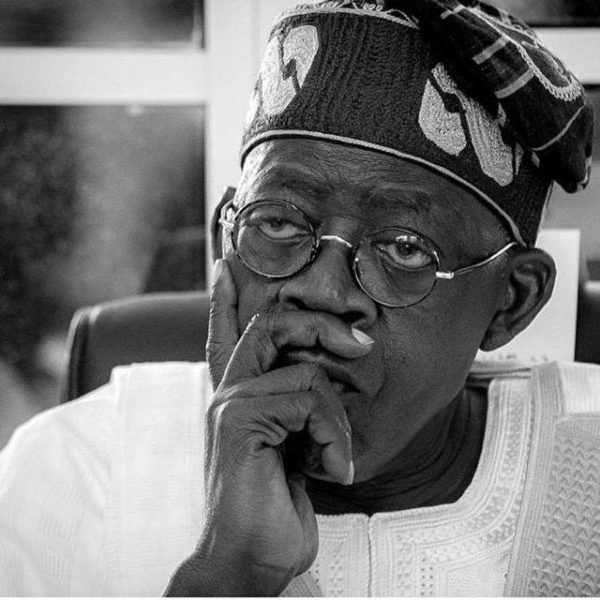
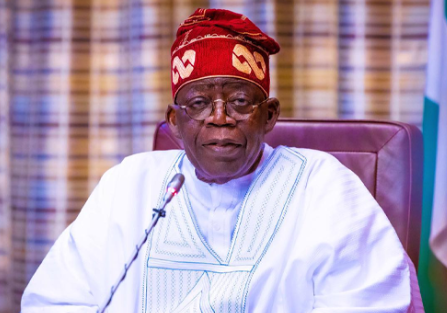
Asiwaju Bola Ahmed Tinubu

April Fools? Not for Nigerians—A stark glimpse into security and anti-graft realities

By Haroon Aremu Abiodun

April is traditionally a month of pranks and laughter. But in Nigeria, the joke was on no one except, perhaps, on a nation whose security architecture is under siege from terrorists, bandits, and kidnappers.

Far from fearing our security operatives, criminal elements across the country displayed shocking audacity, reminding us that the battle for Nigeria’s soul remains bloody and unresolved.

In a horrific display of lawlessness, notorious bandit leader Bello Turji celebrated Eid in Sokoto by executing kidnapped victims, recording and broadcasting the gruesome act without fear of consequences. Across parts of Katsina, Kaduna, and Zamfara, bandits not only continued their reign of terror but have begun levying taxes and operating parallel governments in areas still supposedly under state control.

Compounding public anxiety, National Security Adviser Nuhu Ribadu made headlines when he advised families of kidnapped victims to “stop paying ransom.” While theoretically sound, the reality is far more brutal. Without swift and credible government intervention, desperate families have no option but to finance their tragedies. Until state forces can decisively rescue captives, this vicious cycle will continue.

In just one month, attacks escalated across Plateau, Kwara, and Benue States, leaving communities in mourning. Boko Haram and ISWAP insurgents resurfaced with deadly ambushes, signalling their continued relevance in Nigeria’s security equation.

April’s bloodshed has revealed operational lapses and a deep strategic and moral crisis. The Office of the National Security Adviser (ONSA) must urgently intensify efforts, especially by working discreetly with rescued victims to extract intelligence, boost surveillance systems, and dismantle criminal networks worldwide.

While commendable successes by security operatives, such as rescuing hostages and recovering illegal arms, were recorded, they were dwarfed by the scale of atrocities witnessed within just 30 days.

The Department of State Services (DSS), often criticised and even facing calls for disbandment, must seize this moment to redeem itself. Encouragingly, recent commendations from the Plateau State Government and Governor Uba Sani of Kaduna for the DSS’s contributions to curbing insecurity suggest a glimmer of institutional reliability. Their successful arrests of gunrunners and dismantling of kidnapping syndicates are steps in the right direction.

Notably, the DSS also intercepted a British Army Major in Delta State attempting to smuggle 50 AK-47 rifles and ammunition—a major bust, and a signal that the service can perform under pressure. Their ability to withstand calls for the suspect’s release further strengthens public confidence.

Going forward, DSS and ONSA must strengthen collaboration through real-time joint operations, intelligence sharing, and visible outcomes. The Nigerian Intelligence Agency (NIA) also must integrate its overseas capabilities with ONSA’s domestic strategies. Today’s criminals are sophisticated—our response must be smarter.

Beyond the battlefield, Nigeria’s fight against corruption also demands attention. The Economic and Financial Crimes Commission (EFCC) must intensify efforts with ongoing arrests of internet fraudsters and by pursuing justice in high-profile cases involving figures like Betta Edu and Sadiya Umar Farouq.

Regarding Aisha Achimugu’s case, the EFCC must adhere to due process and uphold its promise to act with diligence and integrity. Recent arrests, including that of Bauchi State Accountant General Sirajo Muhammad Jaja, show the commission is active, but visibility and transparency are critical.

Despite receiving accolades, such as the Government Spokesperson Award and the Courage in Justice and Transparency Award from the Nigerian Human Rights Community, EFCC must do more to recover funds stolen through schemes like CBEX. Collaborating with Interpol to dismantle international fraud networks and prevent future scams using forged EFCC certificates will reinforce the commission’s credibility locally and abroad.

Transparency is the only antidote to growing public cynicism about the Commission’s integrity.

The Independent Corrupt Practices and Other Related Offences Commission (ICPC), though laudably organising programs like its stakeholders’ meeting on accountability in local government, must now transition from talk to action. Corruption within Ministries, Departments, and Agencies (MDAs) remains rampant. A recent ICPC report showed that over 60% of corruption cases involved diverting healthcare funds—a scandal demanding decisive intervention.

April has ended, but the wounds it inflicted are still fresh. If we’ve learned anything, it is that the fear of the Nigerian state must be restored—not with hollow rhetoric, but through coordinated, courageous, and relentless action.

The enemies of Nigeria no longer fear our uniforms, our institutions, or the name “government.”

The time to act was yesterday. Today is already a dangerous gamble. Tomorrow may be too late.

Haroon Aremu Abiodun is a PRNigeria Fellow and author. He can be reached via exponentumera@gmail.com.

President Tinubu approves key appointments across federal agencies

By Abdullahi Mukhtar Algasgaini

President Bola Tinubu has approved the appointments of several prominent Nigerians to head key federal agencies and institutions. The appointments, which reflect a mix of political, professional, and regional considerations, aim to strengthen governance and service delivery across sectors.  

Among the notable appointees are former Senate President Sen. Ken Nnamani (Enugu) as Chairman of the Nigerian Institute for Policy and Strategic Studies (NIPSS), and former Edo Deputy Governor H.E. Philip Shaibu as Director-General of the Nigerian Institute of Sports.

Other appointments include Omobolanle Akinyemi Obe (Ondo) as DG of the National Senior Citizens Centre, Dr. Segun Aina (Osun) as DG of the Academic Staff College of Nigeria,

and former Senate President Sen. Anyim Pius Anyim (Ebonyi) as Chairman of the National Merit Award Committee. 

Additionally, Hon. (Dr.) Asabe Vilita Bashir (Borno) was named DG of the National Centre for Women Development, while Sen. Jalo Zarami (Yobe) and Hon. Dr. Joseph Haruna Kigbu (Nasarawa) were appointed as Federal Commissioners in the National Population Commission

The President expects the new appointees to bring their expertise and commitment to advancing Nigeria’s developmental goals in their respective roles.

The misdiagnosis of a nation

By Oladoja M.O

 There is a sickness far graver than malaria, deeper than cancer, and deadlier than an undiagnosed pandemic: it is the sickness of perception. A tragic, self-inflicted malaise where men and women, intoxicated by their bitterness, misread the vital signs of a nation and call it death. 

Nigeria, that African giant, that phoenix that has refused to be buried by dust or drowned by storms, stands misdiagnosed not by its enemies, but by its sons and daughters. They call for good governance, a sacred right, yet in the same breath, they auction the dignity of their fatherland for applause from foreign balconies. Climbing the stages of international conferences not as ambassadors of hope, but as broadcasters of decay, believing that to light their ambitions, the whole house must first be burned.

Yes, there are wounds, visible scars of leadership missteps and bureaucratic fatigue. Yes, the body occasionally limps, gasping for cleaner governance, for a fresher breath of accountability. But to declare her terminally ill? To parade her on global platforms like a festering corpse before she has even sneezed her last? This is malpractice of the highest order.

And yet, even as they wail, Nigeria births victories so luminous they should blind the eyes of every doubter.

In 2024, while cynics sharpened their tongues, Nigeria quietly pulled off the Dangote Refinery miracle. The largest single-train refinery in human history roared into operation. Built on African soil, by African hands, it shattered the historic curse of crude export dependency. Now, Nigeria refines for itself, and soon, for much of Africa. That is not a dying breath. That is the heartbeat of an empire in rebirth.

Even as global markets shook and economies shrank, Nigeria executed one of the most daring economic surgeries in modern African history: unifying its foreign exchange market in 2023, consolidating multiple exchange rates into a single one. The International Monetary Fund, the World Bank, and even the Wall Street Journal stood still in reluctant applause. The Nigerian naira, which was once battered by artificial valuations, finally had its freedom to fight fair. It stumbled at first, as all warriors do. However, today, stabilisation is becoming a new reality, not a distant hope.

In health, the same nation that armchair critics mock has scored historic breakthroughs. Under the leadership of Professor Muhammad Ali Pate, Nigeria has launched one of the world’s first national rollouts of the Oxford R21 malaria vaccine, a game-changing move in a country that accounts for the highest malaria deaths globally. 

Again, Nigeria has turned pain into policy. The federal government, under this administration, declared a Health Sector Renewal Compact in late 2023 (PVAC), marshalling partnerships with global giants like the World Bank and Bill and Melinda Gates Foundation, channelling billions into revamping healthcare delivery, local vaccine production, and training health workers at an unprecedented scale. No more is health an afterthought; it is now a frontline battle Nigeria is visibly winning. While others talk, Nigeria saves lives. While others point fingers, Nigeria vaccinates its future. 

Infrastructure? While “first-world” cities debate electric railways, Nigeria’s megacity, Lagos, launched its Blue Line Rail in late 2023, the country’s first electric-powered intra-city rail system. A steel artery now pulsing through a once-choked metropolis, easing congestion, breathing new possibilities. In Kano, Rivers, Abuja, and Ebonyi States, massive roads, bridges, airports, and industrial parks rose from the dust — monuments to silent nation-building.

Policy? Courageous policies thundered through governance corridors: the subsidy removal in 2023, ending decades-old economic black hole that bled over $10 billion annually. In its place: strategic investments in health insurance for the vulnerable, transport subsidies for the poorest, and agricultural revolution initiatives. The world’s harshest critics acknowledged it, but the nation’s sons spat on it, too drunk on their self-righteous venom.

In education? Nigeria has ripped the old rulebook. In 2023, the Student Loan Act was signed into law—an audacious leap toward democratising education. For the first time, children of farmers, traders, and artisans now have a gateway into universities, polytechnics, and colleges of education without fear of crushing tuition fees. 

As of 2024, the first batch of beneficiaries has received their loans under the Nigerian Education Loan Fund (NELFUND), breathing hope into homes where education once felt like a broken dream. Now, a total of 525,936 students have registered on the loan platform, with 445,015 applicants successfully applying for financial assistance, representing an 84% success rate for student loan applications under the scheme.

Meanwhile, the accreditation of degrees has also been digitised, with Nigeria becoming the first in Africa to automate this critical gatekeeping process fully. New private universities have sprouted like fresh shoots, expanding access and excellence, whilst Nigerian universities are climbing global ranks. 

They call for “change” yet campaign on the ruins of hope itself. They drape themselves in victimhood, seeking pity instead of respect. The so-called “obedient” torch-bearers, the tribe of Peter Obi, shout of patriotism while waltzing through global forums, slandering their homeland, reducing Nigeria, a giant stirring from slumber to the caricature of a failed state, just to score a few cheap political points.

Calling out leadership is democracy; Denigrating your nation is betrayal.

One builds; the other burns.

Nigeria does not need saviours who love her only when she shines. She needs sons and daughters who hold the line when the storms rage, who sing her greatness even when she falters, who plant seeds of hope, not thorns of despair, into her soil.

To those who mistake criticism for patriotism, remember:

The world does not respect nations that cannot respect themselves.

Call out your leaders.

Demand reform.

March for justice.

But never sell your mother for the price of your pride.

Because when the dust of time settles, and history opens her immortal ledger, it will not be your complaints she remembers, it will be your loyalty.

Oladoja M.O writes from Abuja and can be reached via mayokunmark@gmail.com.

Nigeria’s security budget and the reality on the ground

By Abdulhamid Abdullahi Aliyu 

To many Nigerians, the security allocations in national budgets often appear inflated. Year after year, billions are allocated to the military, defence procurement, intelligence operations, and internal security initiatives.

Yet, the level of insecurity across the country continues to raise eyebrows. The common question remains: “Where is all this money going?” It is a valid concern.

However, beyond the budget lines and official pronouncements lies a more complex reality—one that is often overlooked by the average citizen. The actual cost of warfare and intelligence operations is not just steep—it is staggering.

Take air operations as an example. Military insiders have long noted that flying an Alpha Jet for a single mission can gulp up to a million naira in aviation fuel alone.

This figure excludes routine maintenance, spare parts, logistics, or crew allowances. Multiply these flights across days and theatres of operation, and it becomes easier to understand why security efforts are financially demanding.

On the ground, the story is similar. Armoured vehicles, patrol vans, and tanks require constant fuelling, often idling for hours during missions. Soldiers deployed to remote areas require food, clothing, and equipment.

Medical support must be on standby, and when fatalities occur, families of the fallen deserve compensation. These are not occasional expenses—they are daily operational necessities.

Yet, beyond the financial weight of military engagement lies an even more fragile dimension: intelligence gathering. In parts of the country, particularly the North East, North Central, and North West, attacks by insurgents and bandits continue with frightening regularity.

People often ask: Why aren’t these attacks being preempted? Where is the intelligence? These questions are justified. Comparisons are frequently drawn to agencies like the FBI or Israel’s Mossad, known for preemptive actions.

But intelligence is no miracle tool. It relies on actionable information—gathered, processed, and relayed with accuracy. In many of Nigeria’s conflict zones, such information is scarce.

Locals often fear reprisals and refuse to share what they know. Rural and forested areas remain difficult to monitor due to the absence of surveillance infrastructure.

Moreover, intelligence work is not the sole burden of the military. It requires seamless coordination among the police, DSS, NSCDC, and even vigilante groups. Where this collaboration falters, intelligence fails.

That is not to absolve our agencies of their failings. Reports of negligence, delayed responses, and poor communication abound. However, these shortcomings, while real, are not insurmountable.

Nigeria urgently needs to rethink its approach to intelligence. There must be fresh investment in surveillance tools, inter-agency communication systems, and the training of personnel in modern techniques.

Citizens, too, must become active partners by volunteering timely and truthful information. This war cannot be won solely by the military. It requires collaboration, from the government to the grassroots.

Technology, including drone surveillance and satellite imagery, must be embraced. But more than anything else, there must be political will to treat intelligence not as a side note, but as the beating heart of our national security strategy.

Balanced expectations are also important. While it is tempting to measure Nigeria’s intelligence systems against those of global powers, such comparisons can be misleading.

Nations like the US and Israel have built theirs over decades with enormous financial commitment. Nigeria, by contrast, is still building its base. Still, quiet victories exist—many of them deliberately kept from the public domain for strategic reasons.

Terror plots have been foiled, camps dismantled, and lives saved through intelligence-led operations. These successes rarely make headlines. What are the failures, the losses, and the anguish they leave behind?

That is why we must keep asking questions—but with an understanding of the context. Accountability, yes. But also support, reform, and renewed trust. National security is not a spectator sport. It is a shared duty.

And if Nigeria is to triumph over its many threats, it must first accept that intelligence, not just guns, is its most potent weapon.

Abdulhamid Abdullahi Aliyu writes from the Centre for Crisis Communication (CCC) in Abuja.

President Tinubu and his disappointing Muslim/Muslim presidency

By Prof. Abdussamad Umar Jibia

Sometime in 2023, after the APC presidential primaries, I wrote to advise the flag-bearer of APC, Alhaji Bola Ahmad Tinubu, on the need to appoint a Muslim as his running mate. The reason I gave is still valid. Northern Christians (read opportunists) are a tiny minority compared to their Muslim counterparts. 

Additionally, northern Nigerian Christians are known to unleash violence against Muslims in the few areas where they form a majority. Any presidential ticket with a Northern Christian was thus dead on arrival.

Taking Nigeria as a whole, Christians are fewer than Muslims. A Muslim-Muslim ticket is thus a winning ticket. A Christian-Christian ticket will always lose. If it could win, Nigerian Christians would never allow us access to even the most insignificant positions in Government. 

But even as we were talking about Islam and Christianity, we ignored a statement credited to former President Olusegun Obasanjo that to the Yoruba man, Yoruba culture is more important than religion. We also ignored notes from other Muslims that Tinubu was married to a pastor who had an excessive influence on him. Whereas, going by the teaching of Islam, Bola Ahmed, a Muslim male, did nothing wrong by marrying a Christian woman, the undue influence of his wife had not been established. Hence, we ignored those notes.

Now, with a Muslim as the head and another Muslim as his deputy, what are the expectations? 

Since democracy is a game of numbers in which the majority have the way, it is highly unexpected that a minority will populate a government that came to power with the votes of the majority. That is what President Tinubu has done. 

Tinubu, a Muslim who came to power with the votes of the Muslim majority, travelled to the Vatican “with a bragging right of 62% Christian appointees”. This figure was shamelessly released by the Presidency, according to the Thisdaynewspaper. 

The presidential entourage itself is Christian. There is no single Muslim name in it except the President himself. If I may ask, is the president still a Muslim? Is he practising double religion? 

Islam doesn’t allow a person to practice two religions. You are either a Muslim or something else.  Is President Tinubu going there to worship? Of course, the Vatican is a Catholic city with no single Muslim. Why can’t he send the president of the senate, if at all, Nigeria has to honour the “Pope’s invitation”?

But appointment to public offices is only secondary. What is fundamental is the right of every Nigerian Muslim to practice their religion without let or hindrance and without another religion being imposed on them. A Muslim-Muslim presidency is useless if it cannot remove, or at worst attempt to remove, the aspects of Christianity imposed on non-Christian Nigerians in our national life. 

Only a few weeks ago, the Christian Association of Nigeria (CAN) protested the closure of schools by some Northern states during Ramadan, claiming an attempt to “Islamize” the country. Instead of the Tinubu/Shettima government seizing the opportunity to conduct a total review of the influence of the colonial Christian religion in our national life, this government, like some cowards, succumbed to CAN’s position and asked the Federal Ministry of Education to “discuss” with the Muslim states that closed schools. 

A simple review of our working and work-free days would reveal that we are being forced to observe Christian holy days of Saturdays and Sundays as weekends, a total of 104 days per year. Again, our schools close twice a year for Christmas and Easter Christian celebrations. Yet, the Muslim-Muslim Government is not even looking in that direction. Is it timidity or deception? Either way, the disappointment is stinking.

Out of laughable ignorance, Nigerian Christians consider Israel a Christian country and Israelis as their brothers. Yes, the same Jews who proudly claim the murder of Jesus and consider his mother a whore. This ignorance is what led Pastor Adeboye to pray for Israel against the occupied Palestine. At the point the entire freedom-fighting nations like our own South Africa were filing a petition at the International Criminal Court, we saw the President’s wife receiving the Israeli ambassador at the state house.

Assuming the land and blood of Gazans were lawful for Israel, which is what Mrs. Tinubu seems to believe, what of the valid claim that Israel has a hand in the failure of our internal security by giving military training to Christian militia in the North Central? Why can’t President Tinubu launch an honest investigation into it? 

Mr. President, have we not made the wrong choice? 

On a final note, I still believe that it could have been worse if Tinubu had chosen a Northern Christian as his running mate. Of course, he would have lost the presidential election. 

Professor Abdussamad Umar Jibia wrote via aujibia@gmail.com.

The new ASUU president and the body language of the political class

By Prof. Abdelghaffar Amoka

Breaking news yesterday was that Consultant Psychiatrist Comrade Chris Piwuna has been elected as the new president of the Academic Staff Union of Universities (ASUU) for a two-year term. The fact that he is a psychiatrist is unsettling to the political class, who, rather than injecting the necessary funds to improve our education sector, choose to embezzle money they do not need.

The post on the Facebook page of Mahmud Jega, a media aide to President Bola Ahmed Tinubu during the campaign for the 2023 election, is an indication that the news of the newly elected president is unsettling. He said Chris should examine the heads of ASUU members for choosing a strike as an option to make the government perform its responsibility to the university they willingly established and are still establishing. Earlier today, someone was thanking his Senator on Facebook for his bill to establish the Federal University of Agriculture, Kura in Kano State. 

Whose head needs to be checked by a psychiatrist? The one fighting for the survival of public universities or the one who makes all the promises, then gets to the office, but chooses to steal public funds, an amount they can’t spend for the rest of their life. In the 21st century, we have one of the worst education and health sectors. Our people now travel to Ghana, as well as to Niger and Sudan, to study. Hunger is now a pride. One of them recently acknowledged that they are aware we are hungry and referred to it as “Hunger for Change.”

Who should we take to Prof. Piwuna’s psychiatric clinic for a mental health evaluation? As people wonder about the cause of the massive and mindless corruption in the country, as we watch public institutions collapse, they feel that corruption within the political class may be a mental issue. According to Punch of 16th December 2016, the first person who made this recommendation over 30 years ago was Prof. Adeoye Lambo, a famous psychiatrist and a former Vice-Chairman of the World Health Organisation. He was astounded by the level of corruption at the time. 

Well, the corruption was child’s play then compared with what we have now. Mrs. Farida Waziri, the former EFCC boss, was reported to have also recommended psychiatric examination for politicians, citing the reason that the grand corruption we see in our public life is a hackneyed recommendation. So, the psychiatric test recommendation for politicians is not a new call. 

Despite the justification for the strike over the last two years and the members’ vote in a referendum, the ASUU leadership has attempted to apply diplomacy to avoid the strike. That has produced a strike-free 2 years. They have been lobbying and begging for the last 2 years. But what have academics got? Many people can’t afford to fuel their cars to go to work. So, what’s the alternative to the strike? Maybe instead of striking to force the government to fund tertiary institutions they willingly established, we should just manage what we have like that till they are no longer manageable, like our public primary schools? Please educate us on a practical alternative to strike. 

The Nigerian university system was once a beacon in West Africa. If corruption is the reason why there are not enough funds to make our universities what they used to be, who needs to queue in their Agbada to see a psychiatrist? The people (political class) who have kept the universities in their present state, or the people (ASUU) whose fight over the years gave our universities a semblance of a university? 

Irrespective of our political affiliation, I think we need to set our sentiment and hatred for ASUU aside and sit back to reflect on the state of education. As a former academic, journalist, and associate of the political class, Mahmud Jega should join hands with ASUU to urge the government to take the necessary steps for the education sector. The North is the worst hit, and coincidentally, Mahmoud Jega is from the North. We need public education institutions at all levels that are of high quality for their students. As the immediate past president of ASUU stated during the ASUU NDC in Benin a few days ago, we cannot build a knowledge-based economy without a sound education system.

We can’t continue this way. The status quo is unsustainable. The most powerful weapon against poverty, extremism, and ignorance is not the bullet, but the book. The time to act is now. Nigeria must return to the classroom—rebuild it, empower it, and invest in it—for therein lies the salvation of the nation.

I don’t like strikes, Mahmud Jega doesn’t like strikes, but I was left with no other options aside from a strike. And a strike is the only thing that has kept our universities functional to date. So, can Mahmud propose an alternative that will work even better than a strike? 

The test I think we need to do for ASUU members is to find out why they are fighting very hard to ensure that public universities do not collapse. They could have chosen to be like our refinery workers who watch the collapse of the refineries and earn a fat salary without refining a drop of crude oil. 

In conclusion, no matter the hatred, Mahmud Jega cannot pretend that he does not understand the situation of our educational institutions. I would like to encourage him to utilise his influence and pen to help facilitate an education summit by this government. As Prof Attahiru Jega proposed at ASUU NDC at the University of Benin a few days ago, the stakeholders of the Nigerian project need to meet and discuss the sort of tertiary education system they want and then agree on the funding model. 

Prof. Amoka wrote from Ahmadu Bello University (ABU), Zaria.

Security: The Nuhu Ribadu Formula

By Zayyad I. Muhammad 

Before the emergence of President Bola Ahmed Tinubu’s administration, Nigeria’s security architecture was grappling with deeply entrenched challenges, particularly in the Northwest and Southeast regions. The situation had deteriorated to alarming levels, with criminal elements and secessionist movements establishing a disturbing level of control in certain areas.

In the Northwest, banditry had evolved from sporadic attacks to the full-scale occupation of territories. Vast stretches of land, especially in states like Kaduna, Zamfara, and Niger, fell under the influence of heavily armed groups. The Abuja-Kaduna highway, which was once a vital economic and commuter route, became a perilous stretch, notorious for frequent kidnappings and ambushes. 

The Northwestern security threats extended further, with the Kaduna–Birnin Gwari–Lagos road effectively shut down due to sustained bandit activity. Even commercial life suffered significantly; the Birnin Gwari cattle market, a major hub for livestock trade, was forced to cease operations under the pressure of violence and extortion.

Meanwhile, in the Southeast, the situation was compounded by the secessionist agitation led by the Indigenous People of Biafra (IPOB). Through fear and coercion, IPOB succeeded in enforcing a weekly sit-at-home directive across several states in the region, paralysing economic activities every Monday. Businesses were shuttered, schools closed, and the freedom of movement was severely curtailed, undermining both governance and development efforts.

This was the grim reality that the Tinubu administration inherited. However, at the heart of the renewed fight against insecurity stands a strategic recalibration: what many now refer to as the “Nuhu Ribadu Formula.” As National Security Adviser, Ribadu brought a fresh, intelligence-driven approach to tackling Nigeria’s security woes. With an emphasis on coordination among security agencies, restoration of public confidence, and targeted offensives against criminal enclaves, his methods have begun yielding tangible results.

While challenges persist, especially in remote and hard-to-reach areas, the difference in tone and trajectory is becoming increasingly evident. The Ribadu-led security strategy has not only focused on reclaiming territory but also on addressing the root causes of unrest, be it poverty, weak governance, or community grievances. It is this multidimensional and proactive approach that may well define Nigeria’s path to lasting peace and stability.

Mallam Nuhu Ribadu, the National Security Adviser, has been pivotal in reshaping Nigeria’s national security framework through a clear and strategic vision built on three foundational pillars.

The first is the carrot-and-stick approach, which balances kinetic (military force) and non-kinetic (dialogue, reconciliation, and development) strategies. This dual-pronged approach acknowledges that not all security threats can be addressed solely through force. By combining targeted military operations with community engagement and deradicalisation efforts, the approach aims to neutralise threats while addressing the root causes of violence.

The second strategy is a shift from rhetoric to action, a deliberate move away from endless briefings and political grandstanding towards concrete, measurable outcomes. Under Ribadu’s watch, security interventions are now judged not by promises, but by performance. The focus is on restoring peace, reclaiming lost territories, and enabling displaced persons to return to their communities.

Third is the promotion of synergy and intelligence sharing among security agencies. Previously plagued by inter-agency rivalry and fragmented operations, Nigeria’s security forces are now operating with improved coordination. Through unified command structures and shared intelligence platforms, responses have become faster, more precise, and increasingly proactive.

These strategies have already begun to yield visible results. The recent resurgence of attacks in Plateau and Benue States, as well as isolated Boko Haram assaults on soft targets in Borno and Adamawa, were swiftly countered using the same framework. Rapid deployment of forces, community-based intelligence, and coordinated operations prevented escalation and restored calm.

Still, the road to full recovery is a gradual one. While the machinery of state security has been retooled, the average citizen may not immediately perceive these gains. Part of the challenge lies in the persistence of outdated or unverified reports in some sections of the media, which can paint a distorted picture of the current realities. Nevertheless, those on the ground, especially in previously hard-hit areas, are beginning to sense a shift.

The “Nuhu Ribadu Formula” is proving to be more than just a tactical adjustment; it is an evolving doctrine that prioritises effectiveness, accountability, and collaboration. With sustained implementation and public support, it could well become the blueprint for enduring peace in Nigeria.

Zayyad I. Muhammad writes from Abuja, zaymohd@yahoo.com.

Buhari loyalists reaffirm support for Tinubu, pledge to remain in APC

By Uzair Adam 

Amid speculations of discontent within the ruling All Progressives Congress (APC), key loyalists of former President Muhammadu Buhari have reaffirmed their support for President Bola Tinubu and pledged to remain in the party.

The group, operating under the Forum of the defunct Congress for Progressive Change (CPC), made the declaration in Abuja on Thursday, countering reports that some Buhari allies were planning to exit the APC.

Those present at the meeting included Katsina State Governor Dikko Radda, Niger State Governor Umar Bago’s representative, former Nasarawa State Governor Senator Tanko Al-Makura, former Katsina State Governor Aminu Bello Masari, and Chairman of the National Drug Law Enforcement Agency (NDLEA), Gen. Buba Marwa (retd).

Other notable figures in attendance were former Voice of Nigeria Director General Osita Okechukwu, former presidential aide Okoi Obono Obla, former APC National Secretary Waziri Bulama, ex-lawmaker Farouk Adamu, a representative of Speaker Tajudeen Abbas, and Foreign Affairs Minister Maitama Tuggar.

The forum emphasised that although individuals are free to pursue personal political interests, they should not do so under the guise of representing former CPC members.

Responding to whether the bloc would support Tinubu beyond the current administration, Hon. Farouk Adamu expressed confidence, saying, “We are with Tinubu just like our leader (Buhari), and it is our hope that Tinubu continues to remain our leader.”

Nigeria clears IMF debt, exits debtor list

By Muhammad Abubakar

Nigeria has officially cleared its outstanding debt to the International Monetary Fund (IMF), marking a significant milestone in the country’s economic recovery efforts. This development follows a series of substantial repayments totalling $1.22 billion between the fourth quarter of 2023 and the second quarter of 2024, reducing Nigeria’s IMF debt from $3.26 billion in June 2023 to $1.16 billion by June 2024.

The IMF has acknowledged Nigeria’s commitment to meeting its financial obligations, noting that the country has no overdue payments as of April 30, 2024. This achievement reflects the government’s dedication to fiscal responsibility and economic reform.

In a statement, IMF First Deputy Managing Director Gita Gopinath commended Nigeria’s efforts, stating that the country’s debt level is “moderate and not high risk,” provided that sound economic policies are maintained. She emphasised the importance of continued domestic revenue mobilisation and targeted social interventions to sustain this progress.

Nigeria’s Finance Minister, Wale Edun, highlighted the government’s initiatives to enhance social investment programmes and strengthen domestic resource mobilisation through tax reforms and digitalisation. He also noted increased crude oil production, significantly boosting national revenue.

This financial turnaround positions Nigeria to engage more robustly with international financial institutions and investors, potentially attracting increased foreign investment and fostering economic growth.

The successful clearance of IMF debt underscores Nigeria’s commitment to economic stability and sets a positive precedent for other nations facing similar challenges.

President Tinubu vows to crush terrorism, boosts military welfare 

By Abdullahi Mukhtar Algasgaini

President Bola Ahmed Tinubu has issued a strong charge to the Nigerian military, urging them to intensify efforts in ending terrorism and banditry while promising improved welfare for troops.  

Speaking to soldiers of the 17 Brigade in Katsina on Friday, Tinubu described the security crisis as a pivotal moment in Nigeria’s history. He called for unwavering resolve in defending the nation’s sovereignty and restoring peace.  

“This is a defining moment,” Tinubu declared. “Nigerians are counting on you to reclaim every inch of our territory. Let the enemies of Nigeria know—their time is up.”  

The President assured troops of better housing, healthcare, timely allowances, and family support. He praised their bravery in combating banditry in Katsina and beyond, stating, “You are the shields of Nigeria, standing between our people and terror.”  

Tinubu’s visit included inaugurating a 24km dual-carriage road and an agricultural mechanisation centre. His message was clear: Nigeria will not surrender to terrorists, and the military will receive full backing to end insecurity.  

“To those who seek to destabilise us,” he warned, “Nigeria will not bow.”