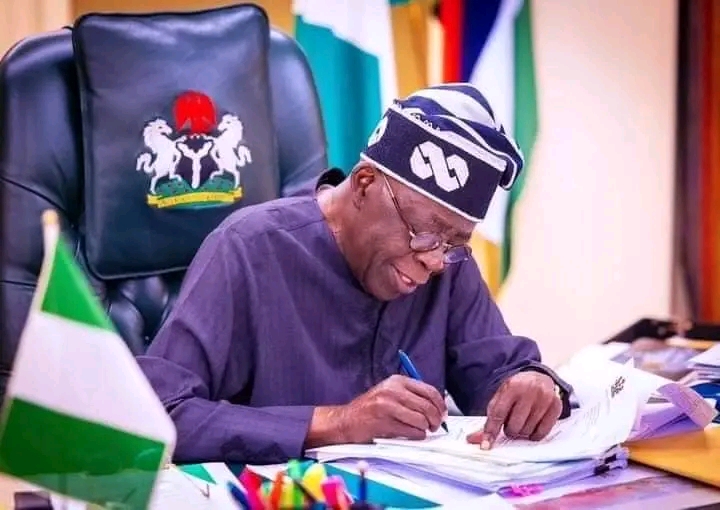
Asiwaju Bola Ahmed Tinubu

FG seeks fresh $1.75bn World Bank loan

By Muhammad Abubakar

The Federal Government of Nigeria has approached the World Bank for a fresh loan of $1.75 billion to support its economic reform agenda.

Minister of Finance and Coordinating Minister of the Economy, Wale Edun, disclosed that the facility would help cushion the impact of recent policy adjustments, including the removal of fuel subsidy and the unification of the exchange rate, which have placed significant strain on households and businesses.

He explained that the request, if approved, would provide critical budgetary support, strengthen fiscal sustainability, and help address the nation’s infrastructural and developmental challenges.

Nigeria’s President, Bola Ahmed Tinubu, has repeatedly defended his administration’s reforms, insisting they are necessary to revive the economy and attract foreign investment.

World Bank Country Director for Nigeria, Shubham Chaudhuri, confirmed that discussions are ongoing, although no official approval has been given yet.

Nigeria, Africa’s largest economy, has in recent years relied on multilateral loans to bridge financing gaps amid rising debt obligations and dwindling revenues.

I have to create state police to tackle insecurity — Tinubu

By Uzair 

President Bola Tinubu has reiterated that the creation of state police is inevitable in addressing Nigeria’s worsening insecurity.

Speaking at the Presidential Villa in Abuja on Tuesday during a courtesy visit by prominent Katsina indigenes led by Governor Dikko Radda, Tinubu assured that his administration is determined to confront the menace of banditry and other security threats.

He directed security agencies to review their strategies in Katsina, which has recently witnessed a surge in banditry, and announced plans to deploy advanced military equipment and surveillance technology. 

The president also disclosed that newly recruited forest guards in the state would receive enhanced training and support.

Tinubu acknowledged Nigeria’s security challenges, including porous borders and long-standing weaknesses, but stressed that with determination and a strategic approach, they could be overcome.

“The security challenges we are facing are surmountable. Yes, we have porous borders. We inherited weaknesses that could have been addressed earlier. It is a challenge that we must fix, and we are facing it,” he said.

He revealed that the federal government had approved the acquisition of additional drones and instructed him to receive daily updates on security operations in Katsina.

“I am reviewing all aspects of security; I have to create a state police. We are looking at that holistically,” Tinubu added.

The president reassured Nigerians that insecurity would be defeated, emphasising the need to protect children, places of worship, and livelihoods from criminal intimidation.

He reminded the delegation that in February 2024, the federal government established a committee to develop a framework for state policing, which has since garnered widespread support. 

However, by March, 20 states were yet to submit their reports, according to Vice-President Kashim Shettima.

Tinubu also paid tribute to former President Muhammadu Buhari, praising him for leaving behind a legacy of success.

Governor Radda and other members of the delegation, including former Governor Aminu Masari and Ibrahim Ida, the Wazirin of Katsina, commended Tinubu for his commitment to security and infrastructural development in the state. 

Ida urged the federal government to prioritise upgrading the Umaru Musa Yar’Adua International Airport and bolstering security in southern Katsina.

Atiku slams Tinubu administration on insecurity

By Muhammad Abubakar

Former Vice President Atiku Abubakar has launched a sharp attack on President Bola Tinubu’s administration, accusing it of failing to secure the North-Central region of Nigeria. 

Abubakar’s statement claims that the government has abandoned the area, resulting in a “monumental failure” in protecting its citizens.

Abubakar highlighted a dramatic rise in violence, citing Kwara State’s new status as a hotspot for kidnappings and bandit attacks. He also noted continued bloodshed in Niger, Plateau, and Benue states, where thousands have been killed in just two years.

The former Vice President went on to accuse the ruling APC of using thugs to disrupt opposition meetings, with security forces allegedly failing to act.

He warned that violence “is a vicious circle” that will harm those who use it, and called on the Nigeria Police Force to remain neutral and fair, reminding them that taxpayers, not the APC, fund them.

Ulama Forum rejects Nigeria-Israel security pact

By Muhammad Sulaiman

The Ulama Forum in Nigeria has condemned the reported Memorandum of Understanding (MoU) between the Federal Government and the State of Israel on security cooperation, describing it as “a dangerous and insensitive diplomatic move.”

In a statement signed by its Convener, Aminu Inuwa Muhammad, and Secretary, Engr. Basheer Adamu Aliyu, the Forum accused the Minister of State for Foreign Affairs, Mrs. Bianca Ojukwu, of unilaterally engaging Israel despite global outrage over its alleged genocide against Palestinians.

“At a time when the world of conscience is against Israel, Nigeria should be at the forefront of supporting South Africa’s genocide case at the International Court of Justice, not courting a state increasingly isolated for human rights violations,” the statement read.

The Forum warned that involving Israel in Nigeria’s internal security would erode national sovereignty, risk human rights abuses, and entrench dependence on foreign powers. It argued that “internal security issues require homegrown solutions that prioritise community engagement, social cohesion, and inclusive governance.”

Instead of seeking external assistance, the group urged the government to strengthen security institutions, address poverty and corruption, and ensure justice for offenders. It further called on President Bola Ahmed Tinubu to “call the erring minister to order” in the interest of national unity and public sensitivity.

The Forum reaffirmed its confidence in Nigeria’s security personnel and pledged continued prayers for “Allah’s guidance and support to our gallant forces.”

APC North-Central urges Tinubu to retain Shettima as VP

By Anwar Usman

The All Progressive Congress Forum North-Central has advised President Bola Tinubu to retain Vice President Kashim Shettima as his running mate for the 2027 presidential election.

The statement was made by the forum’s Chairman, Alhaji Saleh Zazzaga, in Abuja on Saturday.

In a recent appearance on Channels Television’s Politics Today, the Northern Ethnic Nationality Forum, led by Dominic Alancha, warned Tinubu against a repeat of the Muslim-Muslim ticket, noting that it cost the APC several northern states like Nasarawa, Plateau and the Federal Capital Territory in the 2023 presidential poll.

Alancha further warned that the APC would lose more ground in the North, particularly in the Middle Belt, if the party repeats the Muslim-Muslim ticket in the next presidential election.

However, according to the group, calls for the President to drop the Muslim-Muslim ticket in the next election are unnecessary, insisting that the combination worked for the APC in 2023.

Zazzaga explained that the choice of running mate was a political strategy aimed at ensuring victory for the party and should not be seen as an attempt to sideline any religious group.

He further argued that with key positions in government already occupied by prominent Christians from the Middle Belt, including the APC National Chairman, Prof. Nentawe Yilwatda, and the Secretary to the Government of the Federation, Senator George Akume, the region remains well represented.

 The statement in part read, “The Muslim-Muslim ticket will not affect President Bola Tinubu’s chances in the Middle Belt, which is part of the North-Central, and this is because of the key positions held by Middle Belt Christians in the APC government.

“We can guarantee that Tinubu will get 90 per cent of the votes from the North-Central. Tinubu’s achievements in office will guarantee his reelection, and as a result, there is no need to take the needless risk of changing a winning team.

“Those who are calling on President Bola Tinubu to change Vice President Kashim Shettima, basing their agitation on the Muslim-Muslim ticket, if you check, you will notice that in 2023, most of their communities voted for Peter Obi of the Labour Party.

“Now, if Peter Obi is to come out again in 2027, as expected, what is the guarantee that they will vote for Tinubu even if he drops Shettima and replaces him with a Christian? Does it mean that these people will now leave Peter Obi and vote for Tinubu?”

The Forum maintained that Tinubu’s performance in office would play a decisive role in determining his chances of re-election, adding that the President should focus on consolidating his achievements rather than altering the political structure that brought him victory in 2023.

 The statement concluded, “We advise Mr President not to change what worked in the last election. Maintaining the same team will further strengthen the chances of the APC in 2027″.

FG imposes 7-year ban on establishment of new federal tertiary institutions

By Abdullahi Mukhtar Algasgaini

The Federal Executive Council (FEC) has approved a seven-year moratorium on the establishment of new federal universities, polytechnics, and colleges of education across the country.

The decision, announced by the Minister of Education, Dr. Tunji Alausa, on Wednesday, aims to address declining standards and infrastructure challenges in Nigeria’s tertiary education sector.

The ban, which takes immediate effect, is intended to curb duplication, optimize resources, and improve existing institutions.

Alausa stated that Nigeria currently has 72 federal universities, 42 polytechnics, and 28 colleges of education, yet many struggle with low enrollment and inadequate facilities.

“Access to tertiary education is no longer the problem—quality is,” Alausa said.

He cited alarming statistics, including 199 universities with fewer than 100 applicants in the 2024/2025 academic session and 34 institutions with zero applicants.

Similar trends were observed in polytechnics and colleges of education.

The minister emphasized that the moratorium will allow the government to focus on upgrading infrastructure, enhancing staff capacity, and expanding the carrying capacities of current institutions.

He also warned that unchecked expansion risks producing unemployable graduates. Meanwhile, FEC approved nine new private universities, clarifying that these were long-pending applications.

Alausa noted that stricter guidelines would soon apply to private institutions to prevent unchecked growth at the expense of quality.

Falcons, D’Tigress receive millions — Northern world champions snubbed by Tinubu, rescued by Atiku

By Salisu Uba Kofar-Wambai 

There is no doubt that football remains one of the strongest unifying forces for Nigerians, especially during major tournaments when our national teams fly the green-white-green flag at continental or global competitions. The story was no different recently.

The nation erupted in joy when the Super Falcons delivered a stellar performance at the recently concluded African Women’s Championship, coming out victorious in style. For their success, the players were rewarded with ₦160 million, luxury apartments in Abuja, and national honours of Officer of the Order of the Niger (OON).

Before the cheers died down, another shock arrived from the basketball court. Nigeria’s women’s basketball team, D’Tigress, achieved victory in Africa for the fifth time — an unprecedented milestone in the continent’s history. They also received ₦160 million, national honours, and additional perks from the Tinubu administration as recognition for making the country proud.

These are well-deserved accolades, and we congratulate them wholeheartedly. But in the backdrop of Nigeria’s biting economic hardship — worsened by currency devaluation and the removal of fuel subsidy — one cannot ignore that the families of these women are now among the lucky few.

It is also not lost on observers that all these celebrated athletes hail from southern Nigeria, where culture and religion give more room for women to thrive in such sports. For northern women, however, social norms and religious considerations largely shut the door on similar opportunities.

The resentment deepens when we recall another recent achievement — this time not on the field, but in the arena of intellect. A group of Nigerian students from the North travelled to London and conquered the world, emerging champions at the prestigious English-Speaking and Debate Competition. Unlike the Falcons and D’Tigress, these young women did not just defeat African teams; they beat the entire world.

Yet, to the disappointment of many, the president’s response was a mere congratulatory statement issued through his media aides. No grand reception, no cash reward, no national honours. To some in the North, this is another example of what they perceive as a lopsided and selective reward system — a reflection of the same imbalance they accuse the administration of in project allocations. This, despite the North delivering 64.5% of the votes that secured the president’s 2023 electoral victory.

Thankfully, there was a silver lining. Former Vice President Atiku Abubakar stepped in, awarding the victorious students scholarships to pursue their education to any level they desire. This gesture is commendable and serves as a reminder that recognition and reward should not depend on geography or political convenience.

Why sermons won’t save President Tinubu’s re-election

By Malam Aminu Wase

As 2027 approaches, political activities are beginning to intensify, and the ruling party appears to be doubling down on a familiar strategy, leveraging religious platforms to soften public perception and garner support. Prominent scholars, respected within their communities and beyond, have begun to echo the call for the re-election of President Bola Ahmed Tinubu (PBAT). However, no matter how persuasive or well-intentioned their sermons may be, they are unlikely to succeed. The real barriers to re-election lie not in public misunderstanding, but in harsh realities, widespread economic hardship and perceived religious marginalisation.

For millions of Nigerians, the daily struggle for survival has reached unbearable levels. The cost of living has skyrocketed, inflation is biting, and essential commodities have become luxuries. Unemployment, insecurity, and a declining naira have added to the misery. No sermon can explain away the pain of a father who cannot feed his family or a mother who must choose between school fees and food.

These issues are not simply the result of global economic trends; they are widely seen as the direct consequence of poor policy decisions and failed leadership. The fuel subsidy removal, naira redesign, and other policies implemented under the administration of PBAT have plunged the nation into deeper poverty. The promises made have not matched the lived experiences of ordinary Nigerians.

But the issue runs deeper than economic pain. From the outset, the PBAT ticket was mired in controversy due to its Muslim-Muslim composition, a bold and, to many, insensitive political gamble in a nation as religiously diverse as Nigeria. While religion should not define leadership capability, the symbolic message of that choice alienated a significant portion of the population, particularly Christians in the North and across the north central, who felt unrepresented and sidelined.

Now, as sermons and appeals emerge urging the faithful to give PBAT another chance, they appear tone-deaf to these deeper grievances. Nigerians are not voting out of loyalty to religious leaders; they are voting out of lived reality, one marked by pain, exclusion, and hopelessness. Religious endorsements may have once carried weight, but today, the electorate is more discerning and less forgiving.

The nation is yearning not for sermons, but for solutions. Not for promises, but for results. Not for symbolic gestures, but for genuine leadership that reflects the diversity and aspirations of its people. Trying to wrap political desperation in religious robes will only deepen the resentment.

In 2027, the real campaign message will not be on posters or pulpits; it will be in the stomachs of the hungry, the frustration of the jobless, and the prayers of those seeking justice and inclusion. If the ruling party fails to address these concerns directly, no endorsement, religious or otherwise, can rescue what is already a sinking ship.

Malam Aminu Wase is a political analyst and advocate for good governance and Youth inclusion. He can be reached at aminusaniusman3@gmail.com.

D’Tigress clinch fifth straight afroBasket title, president Tinubu hails victory

By Abdullahi Mukhtar Algasgaini

Nigeria’s national women’s basketball team, D’Tigress, made history by securing their fifth consecutive FIBA Women’s AfroBasket championship after defeating Mali 78-64 in a thrilling final on Sunday night in Abidjan, Côte d’Ivoire.

President Bola Ahmed Tinubu praised the team for their exceptional skill, resilience, and teamwork, which led to their seventh continental title.

Despite a slow start in the match, the Coach Rena Wakama-led squad fought back to dominate and claim victory.

In a statement, President Tinubu commended the players for inspiring the nation and upholding Nigeria’s sporting excellence.

“Your superb performance has made Nigeria proud. Like the Super Falcons, you have shown the world the strength and talent of Nigerian women,” he said.

The President also applauded Coach Wakama and the Nigeria Basketball Federation for their dedication, assuring continued support as the team prepares for the FIBA Women’s World Cup qualifiers next year.

Tinubu expressed his eagerness to receive the team and the trophy in Abuja, wishing them a safe return.

The victory cements D’Tigress’ dominance in African basketball and reinforces Nigeria’s reputation as a powerhouse in women’s sports.

Green numbers, red realities

By Oladoja M.O

The Bola Ahmed Tinubu administration has unarguably embarked on a bold and unapologetic mission to retool Nigeria’s economy. From the abrupt removal of petrol subsidies to the floating of the naira, the unification of multiple FX windows, and most recently, the signing of the landmark Tax Reform and Fiscal Policy Bill, there is no denying that the government has chosen a macro-to-micro economic approach. That is, fix the big picture first, then let the gains gradually filter to the people.

And indeed, the “green lights” are beginning to blink. Global credit rating agencies such as Fitch and Moody’s have upgraded Nigeria’s outlook. Foreign investors are expressing renewed interest. Oil production is improving, FX liquidity is easing, and fiscal buffers are being rebuilt. From a purely macroeconomic standpoint, Nigeria appears to be reclaiming its place as a serious economy with a reform-minded leadership.

But there’s a contradiction that cannot be ignored: on the streets of Agege, Aba, Makurdi, and beyond, the economy is still red; red markets, red household budgets, red transport fares, and red faces of frustration. Prices have tripled in some cases. Wages have barely moved. Many can no longer afford their children’s school fees. Traders are losing capital to inflation. Food is fast becoming a luxury. Amid this hardship, Nigerians are asking the most honest, piercing question of the moment:

“If the economy is growing, why am I still shrinking?” “If the economy is growing, where is the growth in my pocket?”

This is not a question born out of ignorance. It is a legitimate cry that speaks to the disconnect between macroeconomic progress and microeconomic relief. Yes, the big numbers are looking better, but the lived realities of the majority are deteriorating. To understand this discrepancy, we must first understand the difference between macroeconomics and microeconomics. 

Macroeconomics concerns itself with the national economy, including factors such as GDP growth, inflation rates, budget deficits, and foreign exchange reserves. These are the indicators investors, multilateral organisations, and economic analysts watch. Microeconomics, on the other hand, deals with everyday realities: how much you earn, what you can buy with that income, whether your small business can survive, and whether prices of food, fuel, and medicine are manageable. In theory, macroeconomic stability should, over time, trickle down and improve microeconomic conditions. But in practice, especially in a country like Nigeria, that process is rarely smooth or automatic.

The truth is that reforms, especially big, structural reforms create what economists call a “lag effect.” That is, the pain comes first; the relief comes much later. Floating the naira made the exchange rate more transparent and investor-friendly, but it also instantly raised the price of imported goods. Removing fuel subsidy fixed a long-standing fiscal leak, but it also sent transport and food prices soaring. And because Nigeria imports a significant share of its consumption, inflation spiked, with devastating effects on the poor. Salaries have not caught up. Social safety nets are thin. Informal workers who make up over 60% of Nigeria’s labour force are primarily left to fend for themselves.

Yet, this is the path the government has chosen. And it is important to say this clearly: choosing a macro-first approach is not inherently wrong. In fact, for a country like Nigeria, plagued by decades of financial mismanagement, it is even necessary. Fixing subsidies, unifying the exchange rate, and rebuilding fiscal credibility are long overdue. Every administration must work with the strategy it believes in, and this government has opted to “stabilise the roof before fixing the foundation.” That, in itself, is a policy choice one with clear upsides.

However, macroeconomic success without a visible microeconomic impact is a hard sell to a hungry population. People don’t live in GDP. They live on garri, transport fares, and electricity bills. While international investors applaud the courage of reforms, local citizens are asking: Where is the evidence that my own life is getting better?

The administration is not blind to this concern. The recently signed Tax Reform and Fiscal Policy Bill is part of a broader effort to expand the tax net and capture the informal sector, both to raise revenue and bring more economic players into visibility. But again, for the everyday Nigerian, these reforms are abstract. What matters is how they translate into food on the table, money in the pocket, and hope in the future.

So, how do we build a bridge between this macro-level retooling and the micro-level reality of the people?

First, we must move beyond tokenistic interventions like cash transfers and instead design innovative relief tools that tie micro-support to long-term productivity. For example, introducing community-based digital vouchers that support food or fuel purchases but are redeemable only when tied to school attendance, digital payments, or participation in a training program would ease the current pressure while also boosting the country’s long-term human capital.

Second, the government must decentralise economic adaptation. Nigeria is too diverse for a one-size-fits-all economic playbook. Establishing “Local Reform Chambers” committees made up of state governments, market leaders, and community associations can help interpret macro policies at a local level and propose area-specific interventions. If subsidy removal causes a shock in Zaria or Owerri, let those communities co-design their response, be it cooperative transport schemes or communal food banks, funded partially by the government and partially by local actors.

Thirdly, data must become a feedback tool, not just a planning tool. The government should publish a monthly Macro-to-Micro Progress Report that clearly shows how reforms are improving incomes, lowering costs, or reaching underserved communities. Let people see the path of change, even if it’s still under construction.

Finally, the government must actively invest in skills, tools, and local infrastructure. Don’t just train youths to code; train them to fix machines, install solar panels, manage cooperatives, and build homes. Make markets more productive with solar lighting, shared storage, and access to water. These are the enablers that convert national growth into grassroots empowerment.

Conclusively, it is fair to acknowledge that the current administration is taking steps that previous governments only danced around. The reforms are not without merit and frankly, not without courage. But reforms are not complete until they reach the people.

The Nigerian people are not impatient; they are simply in pain. And when they ask, “If the economy is growing, why is my pocket not?” they are not being unreasonable. They are asking for what every citizen deserves: a place in the progress. Now is the time to move beyond balancing spreadsheets and begin balancing lives because growth is only real when it is felt.

And no reform is complete until the people rise with the numbers.

Oladoja M.O writes from Abuja and can be reached at: mayokunmark@gmail.com