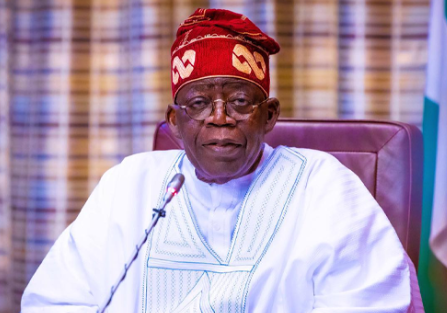
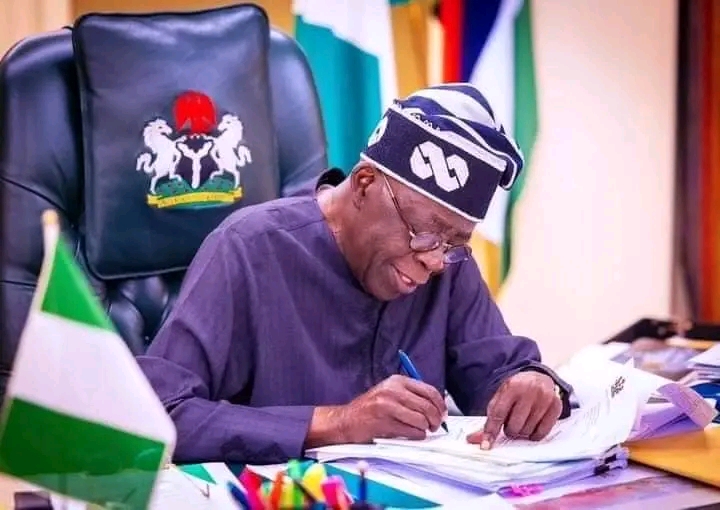
Asiwaju Bola Ahmed Tinubu

Tinubu signs North West Development Commission bill into law

By Uzair Adam Imam

President Bola Ahmed Tinubu has officially signed the North West Development Commission Bill into law.

The Daily Reality reports that the Deputy Senate President, Barau Jibrin, announced this to journalists on Tuesday during a meeting at his office in the National Assembly Complex in Abuja.

As the sponsor of the bill, Senator Barau expressed his gratitude to the President for recognizing the challenges faced by the people of the Northwest zone and enacting the bill into law.

Sen. Barau said, “Mr President has signed the North West Development Commission Bill into law. It is a body that is going to assist the development of the zone.

“Today is the happiest day of our lives. We have been praying that this commission be established. Now is the time to enhance the wellbeing and development of the North West zone.

“This means that the President has the political will to develop this country. I call on Nigerians to be patient with the President.

“He has done well for us and we appreciate what he has done. This means that he is a leader to trust,” he stated.

Open letter to President Bola Tinubu

Your Excellency Sir,

Northern Nigeria has been enmeshed in two major crises for about a decade and a half. The first was Boko Haram, born and bred in the North East. From their confrontation with the police to the execution of their leader, Boko Haram grew to become a terror group unprecedented in Nigeria’s history. The most unfortunate thing is that Boko Haram associated themselves with Islam even though most of their heinous attacks were targeted at Muslims.

The failure of Goodluck Jonathan’s government to end the Boko Haram insurgency led to a consensus among Nigerians to disallow him from getting a second shot at the presidency. He lost the 2015 election to your friend and party member, General Muhammadu Buhari. 

Throughout his campaign for the presidency, Buhari promised to end the scourge of Boko Haram and return normalcy to the North East. What he ignored, but he was not supposed to ignore, given his security background, was another crisis rearing its ugly head in the North West. 

Non-Fulani Nigerians were setting up cattle farms in city suburbs and gradually establishing themselves in the cattle farming business, which the Fulani were known for. This did not go down well with some Fulani, who began to form groups to attack such farms and rustle the cows. Anyone who resisted was killed. Since such non-Fulani cattle farmers were relatively small in number, it was soon over with them, and cattle rustling was extended to fellow Fulani, most of whom were law-abiding.

In no time, cattle rustling turned into banditry and kidnapping. Armed chair analysts with little knowledge of what was on the ground began to create conspiracy theories. Some blamed it on Niger Delta militants. Others said it was foreigners from sister West African countries. 

As of 2015, when President Buhari assumed office, the crisis could easily be nipped in the bud. A handful of cattle rustlers/bandits could easily be identified, arrested and punished. Unfortunately, Buhari did not do it either because he was not being correctly briefed or because he was out of sympathy for his kinsmen, who were the culprits.

In October 2016, some governors, notably of Zamfara and Katsina, invited the bandits’ leaders for a peace agreement. That was after they had killed countless numbers of innocent citizens. The villagers in the two states were told to accept the criminals as their brothers or face the wrath of the state. They had no choice.

The peace accord did not last long before the bandits resumed their crimes, which worsened by the day. Banditry continued to thrive under the Buhari administration, and in 2019, he directed the Governors of the affected states to dialogue with the bandits. The governor of my state of Katsina, looking vividly frustrated, told the bandits before press cameras that he was meeting them at the directive of Mr. President. 

A few months after the 2019 accord, Masari told the world that the bandits had reneged on the peace pact. According to him, they were not people to be trusted.

A point of note in the peace accords of 2016 and 2019 was that none of the bandit leaders were citizens of any foreign country. They were all Nigerians, and all of them were Fulani. This invalidates the false belief that the bandits are foreigners or were from another tribe in the south. Most of those hardened criminal lords are still moving about unscathed in villages and forests of Katsina, Zamfara, Kaduna, Sokoto and Niger states. They have been granting press interviews and meeting people like Sheikh Ahmad Gummi, which proves that the government is very aware of their locations and identities. 

I cannot speak for other Nigerians. But for me as a person, I voted for you in the 2023 elections for two reasons. One. You are a Muslim. A Muslim is just as a leader and nice as a companion. If all Muslim leaders were to rule according to the teachings of Islam, even their enemies would beg Muslims to stand for elections, so they vote them to power. Two. Neither you nor your running mate are Fulani. With this, some of us believe Buhari’s sympathy for his kinsmen would not be there.

You are entering your second year, and banditry is only worsening. What struck me most about your approach to banditry are the latest revelations by a young Islamic scholar, Sheikh Munir Adam Koza. According to Sheikh Koza, he was among the many young influential Islamic scholars invited for a meeting by some defence officials of your government. With financial reward, they were requested to propagate the following in their preachings.

1. That banditry by Fulani groups is justified because Fulani people have been subjected to neglect and injustice over a long period.

2. Call on the government to dialogue with bandits and give them political appointments.

3. That the current Governors of Zamfara and Katsina are wrong to have set up security outfits to confront bandits.

Sheikh Koza, who expressed his disagreement at the first meeting, was not invited to subsequent meetings.

The fact that Islamic scholars are actively preaching the above items testifies to the veracity of Sheikh Koza’s statements.

The first question I raised when I saw the video clip was whether you are aware of this action taken by your appointees. It would be a monumental mistake to say since the insecurity is taking place in the North, you have now appointed Northerners to solve “their” own problem.  Nigerians voted for you, not Ribadu, Badaru, Matawalle or any of those. You are thus accountable to Nigerians, and before God for any action your government takes.

With all the due respect of a loyal citizen, I would like to call on your Excellency to come clean about this action allegedly taken by officials of your government. Taking appropriate action against the said Government officials would go a long way toward consolidating the confidence ordinary citizens like me have in your government. 

Most importantly, we want an end to banditry. It can be ended, Mr. President.

Prof. Abdussamad Umar Jibia wrote via aujibia@gmail.com.

Tinubu and efforts at addressing insecurity

By Kabir Fagge Ali

Sir, Nigeria has been plagued by various security challenges for over a decade, including insurgency, banditry, kidnapping, and separatist agitations. Despite high expectations from President Bola Ahmed Tinubu’s administration, the situation has deteriorated further, with increased abductions and ransom demands. According to a recent report, 3,707 citizens have been killed and 3,238 abducted between May 2023 and now.

The worsening security situation can be attributed to several factors, including under-resourced and poorly equipped security forces, corruption, high unemployment, poverty, weak governance structures, and a lack of political will.

However, it is encouraging to note that President Tinubu’s administration is adopting a comprehensive approach to address insecurity through the Office of the National Security Adviser (ONSA), Mallam Nuhu Ribadu. The strategy focuses on strengthening security forces, enhancing intelligence capabilities, and fostering regional and international collaboration.

According to the feeler from ONSA, the administration has increased funding and provided modern equipment and comprehensive training programs to enhance the operational capacity of the military, police, and other security forces.

Additionally, we were told that the administration has prioritised addressing economic factors contributing to insecurity, investing in education, healthcare, and job creation to mitigate the underlying causes of crime and violence. Efforts to combat corruption within the security sector have also been intensified, and regional security cooperation has been enhanced through diplomatic engagements with neighbouring countries.

I strongly believe that a comprehensive and multifaceted approach is required to effectively address Nigeria’s security challenges. This includes reforming and adequately equipping security agencies, enhancing accountability, investing in economic development programs, building trust between security forces and local communities, establishing effective mechanisms for resolving disputes, and implementing judicial reforms.

The government must also demonstrate strong political will, consistent policies, adequate funding, and transparency. Citizens must also recognise that security is a collective responsibility, not just the responsibility of security forces.

It is indisputable that President Tinubu’s administration has shown a commitment to addressing insecurity. Still, more must be done to restore public trust and confidence in the government’s ability to protect the nation. With a comprehensive approach and collective effort, Nigeria can overcome its security challenges and ensure peace and stability for its citizens.

Kabir Fagge Ali, a youth corps member with PRNigeria Centre, wrote via faggekabir29@gmail.com.

Economic woes may lead to national collapse – Coalition of Northern Groups warns Tinubu 

By Uzair Adam Imam

The Coalition of Northern Groups (CNG) has expressed concern over the severe economic hardship currently affecting Nigeria and has cautioned President Bola Ahmed Tinubu about the potential collapse of the nation. 

Comrade Jamilu Aliyu Charanchi, the National Coordinator of CNG, voiced these concerns during a press briefing in Abuja, warning that the situation “portends imminent danger.”

Charanchi emphasized the importance of addressing the escalating hardship that has permeated every segment of Nigerian society, noting that life has become highly unbearable for the majority of citizens. 

He stressed that the CNG felt obligated to bring this alarming danger to President Tinubu’s attention, pointing to the potential for a massive revolt against the government.

Charanchi also criticized former President Muhammadu Buhari and President Tinubu for worsening the country’s economic situation, making life even more difficult for the vast majority of Nigerians, especially the poor.

He stated, “The suffering of Nigerians is palpable across every stratum. The CNG holds the present and previous governments responsible for creating this dire situation for Nigerians.”

He stated that the current economic indices and data from the Nigeria Bureau of Statistics (NBS) indicate that 133 million Nigerians are living in multidimensional poverty, with 20 million people, mostly young and within the productive age bracket, either completely unemployed or underemployed. 

Charanchi highlighted the growing disillusionment among the populace with the government’s economic policies and institutions, which poses a significant danger to the country.

He noted that inflation has had severe economic consequences, including substantial investment losses, business disruptions, increased poverty, and unemployment. 

He added that the insecurity has led to displacement, loss of lives and properties, and psychological trauma, adding, “The widespread hardship has eroded trust in the current government and threatens national unity, peace, and security.”

Charanchi pointed out that overall inflation has risen to 34.19% from 22.41%, a 52.6% increase, while food inflation has surged from 24.82% to 40.66%, a 64% increase within a year—the highest recorded in decades. 

He also criticized the significant rise in electricity tariffs, despite no improvement in power supply, noting that the electricity tariff has increased by an average of ₦71.59 to ₦225, a rise of over 200% for band A. Nigeria has experienced multiple national power grid collapses in the past six months, including the most recent on July 6, 2024. 

Charanchi also criticized the government’s recent announcement to distribute 880,020 bags of rice nationwide to alleviate hardship, stating that these measures are inadequate to address mass hunger affecting millions of Nigerians. 

He added that the president’s cosmetic measures are insufficient to contain the anger of the people, particularly when they are faced with economic hardships, massive hunger, and rampant poverty, while the political class lives in opulence.

Lawmakers slash salaries to address high cost of food

By Uzair Adam Imam

The House of Representatives has resolved to support the Federal Government by cutting down its salaries by 50% for six months to address the high cost of food and support food sufficiency across the country.

This decision was made on Thursday during the plenary session in Abuja, and the lawmakers also appealed to Nigerians to exercise patience with President Ahmed Tinubu’s administration as it addresses the challenges and hardships faced by citizens.

The House mandated its Committee on Appropriation, Humanitarian Affairs, Finance, and Budget to ensure compliance with the resolution. The motion was moved by Hon. Ibrahim Isiaka (APC-Ogun State) and adopted by the House.

Additionally, the House of Representatives has pledged to support the Federal Government with ₦648 million for six months to address food sufficiency and the high cost of food.

Details later….

President Tinubu appoints Dantsoho, Adebayo as MD, chairman of NPA

By Abdullahi Mukhtar Algasgaini

President Bola Tinubu has approved the appointment of Dr. Abubakar Dantsoho as the Managing Director of the Nigerian Ports Authority (NPA).

The President has also approved the appointment of Senator Adedayo Adeyeye as the Chairman of the Board of the Nigerian Ports Authority (NPA).

Dr. Dantsoho holds a doctorate degree in maritime technology from Liverpool John Moores University, United Kingdom, and a master’s degree in international transport from Cardiff University, Wales, United Kingdom.

Before his appointment, he had served in various roles in the Nigerian Ports Authority as Assistant General Manager; Technical Assistant to the Managing Director; Port Manager, Onne Port; and Principal Manager, Tariff & Billing.

Senator Adeyeye, the Board Chairman, is a seasoned lawyer, journalist, and politician.

He is a former Minister of State for Works and former Senator representing Ekiti South Senatorial District.

The President expects the new leadership of this pivotal agency to demonstrate excellence in the discharge of their duties to facilitate efficient port services and improved industry outcomes.

No institution can stop Nigerians from voting out present government — Bashir El-Rufai

By Abdullahi Mukhtar Algasgaini

Bashir El-Rufai, the son of former Kaduna State Governor Nasir El-Rufai, has sent a cryptic message to President Bola Tinubu, warning that even the backing of the IMF and World Bank will not save him from being voted out of office after his first term.

El-Rufai asserts that no institution can prevent the people from voting out an incumbent government and that Tinubu’s governance has been an “utter failure” disguised as a “useless, dangerous, ethnocentric political strategy.”

The message comes amid tensions between Tinubu and El-Rufai’s camp after the former governor’s name was excluded from the ministerial list. Uba Sani, El-Rufai’s successor in Kaduna, has also lamented the enormous debts inherited from the previous administration, saying the state has limited funds to pay salaries.

Despite the World Bank and IMF lauding Tinubu’s economic reforms and offering support, El-Rufai’s son believes these institutions will not be able to prevent the president from being voted out if the people are dissatisfied with his performance.

The cryptic message serves as a warning to Tinubu of what the camp of El-Rufai and other disgruntled APC members have in store for 2027, which has been discussed privately but is now being made public.

LGBTQ+ bill and the magic of word choice

By Isma’il Hashim Abubakar 

I was prompted to pen this essay by two writeups of prominent newspaper columnists: Mr Gimba Kakanda and Professor Farouk Kperogi. The latter is one of the people I have been following due to their mastery of using his pen to communicate ideas. Both Kakanda and Kperogi have painstakingly struggled to deodorise the infamous Samoa (perhaps it’s more suitable to call it Tamoa) Agreement and exculpate it of its meticulously wrapped pro-LGBTQ+ substances. 

Maybe the authors of the document containing details of this agreement are so cunningly sagacious to beat the conscience and intelligence of the Atlanta word master who, as far I know him, is so wide-eyed to read things between the line and discern and decode messages from even unarticulated and not well coughed or well-lettered communications. Farouk Kperogi is not at all that simplistic type of a person that one could hoodwink by suggesting to him that a week is different from seven days or a year is anything else but twelve months. 

The 12-page document explicating different stages of agreements entered into by the EU and African, Caribbean and Pacific states is so clear in the very first paragraph that “the multiple negotiation levels, the coronavirus crisis and difficulties in reaching agreement on sensitive issues, such as migration management and sexual and reproductive health and rights, …”. A witty reader would not even wait to be told that sexual rights emphasised in the quote would never mean the existing sexual customs prevailing in the beneficiary states just as no one will argue that sexual rights in this sense refer to what the West conceives of as new normal, acceptable sexual culture.

All the dull, lengthy noise and regular references to vague resolutions and procedures in the document, beating around the bush in most instances, reflect strategies meant just to propagate the incongruous norms the West is relentlessly hellbent on imposing on third-world countries. It may also sound controversial if one claims that the so-called autonomous countries like ours are, in real and practical terms, undergoing another form of colonialism in the modern day, of course, heavily pretentious, more diplomatic, possibly negotiable, and less confrontational.

Daily Trust, the newspaper outlet that took centre stage in unravelling Nigeria’s role in this agreement, should be commended for quickly alerting Nigerians to what our increasingly gluttonous, money-hungry leaders who could not resist a dubious multimillion-dollar loan are up to. 

The document being circulated currently seems not to be the only manual laying guidelines and terms of the negotiations. It refers to a monitoring group under the Committee on Development (DEVE) set up by the European Parliament, whose consent was crucial in the approval of the negotiations. In the report submitted to the  EU through the DEVE committee, several recommendations were adopted, including a particular “chapter on human rights” which “should explicitly list the forms of discrimination that should be combated (such as sexual, ethnic, or religious discriminations) and mention sexual and reproductive rights”.  

It appears that while the available document now within public reach may remain implicit and brief about the nature of rights this bill wants to get protected, there are appendixes which may be at the domains of leaders and top representatives of concerned countries and which explain in greater details and specify perhaps in exact terms the list of kinds of the so-called discriminations that must be stopped once the agreement is entered into. 

Admittance that there are divergences in positions on sexual orientation and gender identity (LGBTI rights) among EU Member States is not a definite declaration or solemn undertaking that this agreement will not pursue that goal. It doesn’t require any mental labour to know where this agreement is heading, even if it does not now literally endorse LGBTQ+. The reference in the agreement document about scepticism and misgivings nurtured by some affected countries is nothing but a deceptive pretence of objectivity and balancing, such that later it will be presented as a mere debate and leaning toward the LGBTQ+ as a mere result of in-house voting among donor institutions, vetoing the concerns of and leaving affected countries like our own with no option but to accept and be committed to the terms based on which we are handsomely paid. 

In fact, without any further denial, disclaimer or clarification, the document observes that “prior to the signing of the agreement in Samoa, several African and Caribbean CSOs called on their governments not to sign the agreement, fearing that it might lead to modifying domestic laws, in particular, to endorse LGBTI rights”. The authors do not attempt to deny the allegation above or make any further comments that will allay existing fears, thereby reminding us tacitly that to be forewarned is to be forearmed.

Both Kakanda and Kperogi capitalise on the lack of literal mention to promote Lesbian, Gay, Bisexual, Transgender, and Queer (LGBTQ+) in the document, thereby accusing the Daily Trust of misguided reporting but also rubbishing the understanding of the majority of Nigerians who interpreted the clauses emphasising the need to protect sexual rights and orientation as another way of reintroducing LGBTQ+ using the power of juicy loans. 

Since Kakanda is in government, we have no difficulty forming the proper framework to read his intervention. As a former activist now enjoying dividends of democracy, one should either keep quiet if one cannot defend the truth or at least not pretend to be ignorant of how Nigeria is run and what are the ulterior motives and hidden goals behind all loans that the third world is lured into accepting.

Kakanda’s points revolve around the absence of explicit devotion and literal commitment to LGBTQ+. Kakanda reiterates the insignificance of the anxiety this new agreement saga is generating by referring to the anti-gay law signed during the Jonathan administration, and he thinks that is absolutely enough to guarantee our safety and to suggest that the money could be collected and consumed without serious implications and disastrous consequences. If Kakanda is sincere, let him advise the government in which he now serves to institute operational frameworks that will deploy the same anti-gay laws enacted about a decade ago to end the LGBTQ+ movement that already practically exists and is being rigorously promoted and advertised via social media platforms.

Meanwhile, Kperogi, who has built a reputation of siding with the masses always against different government antisocial policies, has fallen so low this time around to fail to discern that sexual rights and other terminologies used in the document are not even so vague to think they are different from all those bizarre rights and queer sexual orientation freedoms. We are all not oblivious to how highly sophisticated and cunning heirs of former colonialists are and not as gullible to declare support for the scary LGBTQ+ catchphrase glaringly in their proposal, given that they faced resistance in earlier phases of their project. We ought to be mature enough and vociferously critical to detect proposals to institute LGBTQ+ even by mere mention of key phrases like “gender violence”, “women’s and girl’s empowerment”, “fight against discrimination”, “right of self-determination”, and so on, not to talk of sexual and reproductive health rights.

Kperogi is merely angry that people have been, for operational reasons, refusing to kowtow to his admonition to rise and execute his yet esoteric, misunderstood and almost ‘impracticable’ revolution. Now that people seem to be once again united and appear determined to fight this dubious bill which is at our doorstep, which, to him perhaps, is innocuous or at least less harmful, Kperogi is tactically venting his anger on people and accusing them of misplacing priority. 

In other words, people in Kperogi’s theory should better fight anti-masses policies which institutions like the IMF and World Bank are forcing Nigeria to implement than jawbreaking and investing unnecessary energy on sexual rights issues, which, after all, is what he encounters in the U.S day in day out, unlike the excruciating poverty and bad governance that bedevil Nigeria. 

At any rate, within a decade or something like that, even as LGBTQ+ right was successfully illegalised and the law to fight it constitutionally still exists, there has been a proliferation of growing LGBTQ+ movements, largely operating without any hitch in the virtual world and particularly on the social media cyberspace. Who knows if institutions behind bills and agreements like the Samoa agreement do not sponsor those movements and groups? Why is there little or no evidence at all to show and establish that those breaking anti-gay laws and other unusual customs have been made to face the wrath of the law? 

Sexual rights agents, manifesting in many forms, have now become celebrities and operate freely on the media while clandestinely running ventures that everybody knows are nationally outlawed. Sponsors of these agreements might have been convinced that it is now the right time to secure legal frameworks for protecting their representatives, having taken some years to experiment and implement their projects successfully. 

We should not be deceived by any government defence on this matter—either by a government official or a likely bribed or even gagged scholar. We all know well what some powerful elements in the Western world are after when they set goals they want to achieve at all costs, deploying short—and long-term plans, even if the latter will span a century. As things go this way, let us ponder what will happen in the next 50 years for those who will live to see that period.

 As people are now sinking into excessive materialism, suffering from a lack of focus and shortsightedness,  and unduly obsessed with imitating the Western lifestyle, it is so hard to suggest that posterity could effectively challenge and fight bills like LGBTQ+.  Therefore, there is a need to start thinking of ways and techniques to instil zeal and introduce mechanisms for combatting moves like this in future. If they have not succeeded now, they have patience; they could wait and hope to see their plan triumph within less than a century from now. One better way to start tackling LGBTQ+ is to begin addressing the decline of morality that has been mainstreamed on social media now. Otherwise, once the law succeeds one day, God forbid, it will consume us unimaginably.

Isma’il writes from AERC, Rabat and can be reached via iahashim@fugusau.edu.ng.

Effect of electricity tariff increment on Nigerian business environment

By Abdulrahman salihu

Electricity is one of the most crucial factors in the development of every industrial country, which factories, financial hubs, and technological companies rely heavily upon for their operations.

In Nigeria, on 1st April 2024, the Nigerian Electricity Regulatory Commission (NERC) increased the price of Kilowatt per hour by 300% from N68 Naira to N225 Naira to urban Customers popularly known as “Band A” customers, who are 15% of the total number of Electricity Consumers in the country.

The electricity tariff increment comes after President Bola Ahmed Tinubu removed the fuel subsidy in his inauguration speech on 29 May 2023, which triggered massive hyperinflation in Nigeria that resulted in hikes on almost every commodity and inflicted severe suffering among Nigerians.

The Nigerian Electricity Regulatory Commission (NERC) has claimed that the hike in the electricity tariff will only affect the “Band A” customers. Therefore, the remaining 75% of customers (Band B-C-D-E) who get less than 20 hours daily will not be affected.

However, the multiplier effect of the tariff increment dramatically influences the cost of production of foodstuff processing companies, manufacturers and other producers of goods that the masses use, thereby affecting the price of commodities.

Moreover, some artisans and small business owners have been put out of business because the financial institutions will increase the interest rate to meet the electricity tariff hike, making it unaffordable to businesses that take loans from them, rendering the artisans jobless. Businesses will collapse in the long run.

On the other hand, the government may not be able to generate revenue from the businesses that shut down, so also the artisans and craftsmen will not get customers as a result of lack of adequate electricity in their “Band”, which will make them unable to pay taxes to the government. 

Therefore, as a matter of urgency, the federal government and the stakeholders in the power sector should suspend the electricity tariff increment and invest in modern solar power plants. This will generate more power for the country and will go a long way in mitigating global warming and climate change.

The federal government should also find ways to improve the electricity supply, as the current supply is insufficient to make things work effectively. 

The governors of hydroelectric power-producing states should initiate policies and partner with international investors to boost power generation for their states and the country. At the same time, the other states should also render support where necessary.

This will encourage foreign investors to troop to Nigeria for investment, bringing job opportunities and facilitating unprecedented revenue flow into the accounts of both the federal and state governments.

Abdulrahman Salihu wrote via abutalatu72@gmail.com.

President Tinubu appoints eight new permanent secretaries

By Abdullahi Mukhtar Algasgaini

President Bola Tinubu has approved the appointment of eight new Federal Permanent Secretaries to fill in existing and impending vacancies in some states and geo-political zones in the top administrative cadre of the Civil Service of the Federation.

The new Federal Permanent Secretaries appointed after a diligent selection process by the Office of the Head of the Civil Service of the Federation are:

Dr. Emanso Umobong Okop – Akwa-Ibom 

Obi Emeka Vitalis – Anambra 

Mahmood Fatima Sugra Tabi’a – Bauchi 

Danjuma Mohammed Sanusi – Jigawa  

Olusanya Olubunmi – Ondo 

Dr. Keshinro Maryam Ismaila – Zamfara 

Akujobi Chinyere Ijeoma (South-East)

Isokpunwu Christopher Osaruwanmwen (South-South)

The President anticipates that the new Federal Permanent Secretaries will exercise absolute dedication, diligence, and fidelity to the nation in discharging their functions and ensuring optimum service delivery to the Nigerian people.