APC

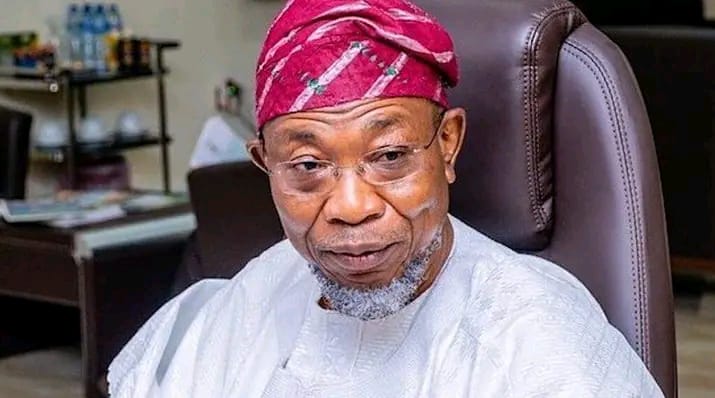
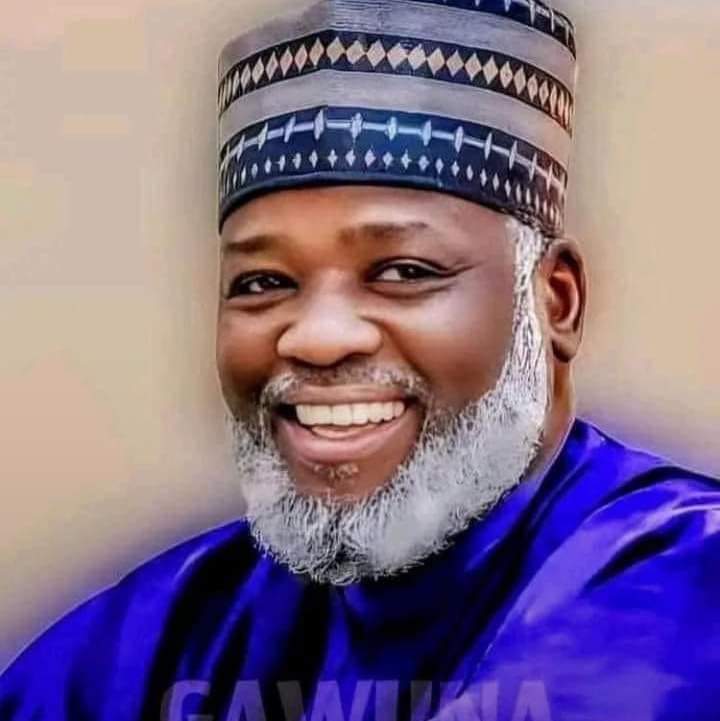
Dr Nasiru Yusuf Gawuna has paid his dues

By Ibrahim Siraj Adhama, Ph.D.

The governorship election in Kano has come and gone. The battle has finally been won and lost. No doubt it will go down as one of the most keenly contested guber elections in our State in recent history. At the end of it, a winner emerged in the person of NNPP’s Abba Kabir Yusuf, alias Abba Gida-Gida. While congratulating him, his party and his teeming supporters, it is our collective prayer that Almighty Allah will give him the courage, wisdom, guidance and tenacity to lead Kano to greater heights.

Not unexpectedly, the March 18th election has left in its wake several talking points that will continue to dominate public discussion and intrigues that may take years to unravel. Its outcome will go a long way in shaping the future of Kano politics for a long time to come. Questions will continue to be raised about the legality or otherwise of the returning officer’s result declaration when it appeared there were more registered voters affected by cancellations than the margin of lead between the two candidates with the highest number of votes against the provisions of the 2022 Electoral Act and INEC election guidelines. Not a few people will be tempted to suggest a spectre of legitimacy haunting governor-elect Abba’s declaration arising from that controversy until all doubts are justifiably cleared.

The purpose of this piece, however, is to x-ray the governorship contest vis-a-vis the heroic performance of His Excellency Nasiru Yusuf Gawuna, candidate of the ruling APC, who, despite not winning the big prize, has given a very good account of himself as a great and promising young leader and politician with immense rich and potential. All fair analysts will give it to him that he had fought a good fight.

It is safe to argue that no candidate of a ruling party has gone into an election with many odds working against him as Gawuna in the just-concluded election. From his living under the burdensome shadow of Governor Abdullahi Umar Ganduje to widespread disillusionment against his party, APC, across the levels, from Kwankwasiyya’s massive followership and unflinching determination to effect a change to highly biased and unfriendly media, Gawuna’s task of winning could not be more daunting.

Gawuna contested the election as Ganduje’s backed candidate and a possible successor. One needs to understand how unpopular Ganduje’s government has become to appreciate how much of a liability that was. Ganduje had been practically on a mission to cultivate as many enemies as possible for himself, his administration, his party, his family and everything associated with him. Ganduje had, for a better part of his administration, pressed the self-destruct button.

Ganduje’s controversial land grab and conversion policy, his poor handling of education and students’ welfare, the falling standard of healthcare and poor state of hospitals in the State, his mismanagement of A Daidaita Sahu cyclists, his apparent lack of empathy towards such vulnerable groups as junior workers, pensioners and retirees, his failure to provide leadership towards resolving his party’s internal wranglings thereby causing the defection of key members to opposition parties, among other terrible blunders and unforced errors, Governor Ganduje has made things a lot easier for the opposition NNPP.

With Ganduje, you needed no enemy; he was his government’s number one detractor and his party’s foremost de-campaigner. His largely self-inflicted injury had overshadowed his modest achievements, especially in peace and security, urban renewal, expansion of economic opportunities and general infrastructural development. Hardly do people take note of these achievements.

Consequently, the opposition succeeded in making every declaration of support for Nasiru Gawuna as an endorsement of Ganduje’s litany of “atrocities”. Efforts to prove that the Deputy Governor might not himself be happy with Ganduje’s ways and will almost certainly correct those mistakes, given a chance, were taken with a pinch of salt. Many who campaigned for him faced the daunting challenge of convincing other voters that he would act differently. It’s that difficult!

As the ruling party in control of the centre, the APC did not help matters either. In a move that had the potential of jeopardizing the chances of the party’s candidates nationwide, the Federal Government announced a plan to redesign the country’s currency ostensibly to curb vote-buying and payment of ransom to bandits and kidnappers. This policy, coming on the eve of general elections, fueled speculations within the ruling party itself that certain fifth columnists close to President Muhammadu Buhari were part of a plot to rock the ship of the APC, considering how unprecedented cash crunch riled up already suffering Nigerian masses against the ruling party. Though APC has somehow managed to win the Presidential election and maintain control in most States, the damage done by this ill-advised policy to the party’s electoral fortune could just be imagined.

That His Excellency, Deputy Governor Nasiru Yusuf Gawuna, was able to score nearly nine hundred thousand votes is no mean feat given these circumstances. For me, he should be grateful to Almighty Allah, who made it possible for him to harvest this massive figure in spite of all attempts to rubbish him or undermine his chances using Ganduje’s failures. This feat is majorly attributable to his ability to connect well with some key segments of society who stood by him.

In appreciating Gawuna’s performance, though, I pay little heed to reports of widespread vote-buying. This is due to the realization that both NNPP and APC were culprits; available evidence has shown that the two major parties had tried different tricks at voter inducement. And as experts would say, vote-buying itself works on nothing, and it mostly targets undecided voters.

Since his foray into politics 20 or so years ago, Gawuna has been rising and rising. The outcome of this election represents a temporary setback which does not in any way signify his downfall as naysayers would want to believe. For careful observers of his trajectory in politics, it’s just a matter of time before he recovers and continues to rise higher and higher. Let his detractors know that the man is not going down anytime soon.

With the highest number of votes obtained by an APC gubernatorial candidate anywhere in Nigeria, Gawuna looks set for something very great, especially with an APC federal government of Asiwaju Bola Tinubu in place. No doubt, Gawuna will be an invaluable asset in Jagaban’s cabinet, going by experience. After serving for 20 years as Local Government chairman, commissioner and deputy governor, who knows if Allah is preparing him for national service? Only time will tell, and our prayers are with him now and always!

Dr Ibrahim Siraj Adhama is a Senior Lecturer from the Department of Mass Communication, Bayero University, Kano and can be reached through isiraj.mac@buk.edu.ng.

Stop construction in public places – Kano Gov-elect warns residents

By Uzair Adam Imam

The Kano State Governor-elect, His Excellency, Engr. Abba Kabir Yusuf, has warned residents to stop any ongoing building in public places in the state.

The Govenor-elect also strongly cautioned that anyone who contravenes this warning is doing it at his or her own risk.

He made this warning in a statement Thursday by his Chief Press Secretary, Sanusi Bature Dawakin-Tofa.

There have been popular outrages by the citizens in the state over the selling of some parts of schools and hospitals by Govenor Abdullahi Umar Ganduje.

The statement read, “You are advised to discontinue any construction work on public land within and around the following: All schools in the State, all religious and cultural sites in the State, all hospitals in the State, all graveyards in the State, and along the city walls of Kano.

“You are also advised to discontinue the demolition of, and the construction on, all existing public buildings belonging to the government and people of Kano State.

This Advisory is issued in the public interest, effective from today Thursday 30th March, 2023 till further notice. Any contravener does so at his/her on risk, please,” the statement concluded.

An open letter to the President-elect and APC’s National Working Community

By Mu’azu Ibn Abdallah

Firstly, I would like to begin by congratulating you on the success of the APC in the recently concluded national elections in which the party won the presidency and majority of seats in both the upper and lower chambers of the national assembly, and also the majority of the governorships and state assembly seats in the country. This is indeed a remarkable achievement which, if adequately sustained, would continue to position the party as the ruling party in the country and the largest political party in Africa.

It is obvious that Nigerians voted for the party because they believed in the messages of RENEWED HOPE which our party promised them. They hope for a better life and a prosperous future, which we can only deliver as a party if we adhere to the principles of social justice, equity and social inclusion.

As the party is set to make a formal announcement with regards to the zoning of political leadership in the country and with the President-elect and Vice President-elect already coming from the South-West and North-East geopolitical zones, respectively, I am strongly drawing the attention of the members of the National Working Committee (NWC) of the party, President Muhammad Buhari, the President-elect Asiwaju Bola Ahmad Tinubu and all other critical stakeholders in the party to consider, as a matter of necessity and in the best interest of the party and the spirit of equity and social justice, zoning the Presidency of the 10th Senate to the North-West especially taking into consideration of the following reasons.

First, there is a need for the party to demonstrate clearly that it always appreciates and rewards members’ confidence, support and loyalty by zoning the senate presidency to the North-West where it got the highest votes from. This will pave the way for the emergence of a competitive race among the zones as to who will produce the highest votes for the party in the subsequent elections, which will, in turn, leads to more and more votes for the party.

Moreover, this has been the tradition in the political arrangement of Nigeria since the return of democracy in 1999, where the region that gives the ruling party the highest votes is favoured for such a position. For instance, during the era of President Olusegun Obasanjo, PDP zoned the senate presidency to the South-East fact that the zone overwhelmingly voted for the PDP. Also, during the tenures of Late President Yar Adua and President Jonathan Senate Presidency was zoned to North-Central Zone for the same reason. Therefore, in the present circumstance, the North-West zone, due to its significant contribution to the victory of APC in the presidential election (the highest votes of 2.7 million among the geopolitical zones in the country), deserved to be rewarded with the senate presidency, especially, looking at the fact that the zone has never produced a senate president despite its strategic relevance in the Nigerian politics.

Secondly, as the largest political party in Africa, the party is expected to draw lessons and experiences from the just concluded 2023 general elections and embark on early preparations and strategic planning towards the 2027 elections so as to address some of the challenges faced in the recent elections and to make sure that RENEWED HOPE is extended to 2031 and beyond. The party should do everything humanly possible to avoid the costly mistakes of losing Kano, Kaduna and Katsina, which ideally should have cost the party its success (if not for the disorganisation of the opposition and the confidence of the Nigerians in the party’s candidates).

Historically, these three states are strategic in Nigerian politics just like California in American politics, and the time to start planning for the recovery of the 3Ks (and the entire north-west and Nigeria in general) is now, specifically by zoning the senate presidency to the zone and ensuring a competent and high-profile politician with a record of effective political strategy and the confidence of the electorates is elected into the coveted position. This would help APC to address the existential threats posed by Sen Rabi’u Kwankwaso’s NNPP, which caused the APC significant harm in the recent elections.

Thirdly, the Senate presidency is a sine qua non to the success of every democratic administration, a sensitive office that may make or mar the realisation of the APC’s much anticipated RENEWED HOPE, and the party should try as much as possible to avoid the repeat the circumstances similar to what transpired in the build-up to the inauguration of the 8th senate which subsequently led to the emergence of the leadership against the party aspiration (including some positions going to the opposition party). To avoid this, the party should, as a matter of national interest and social justice, zone the presidency to the North-West zone due to the fact that the zone is still the stronghold of the APC (with the highest number of registered voters, the highest number of APC card-carrying members, five state Governors and many members of the National Assembly). Also, the zone is blessed with high-profile politicians who can network and canvass the support of senators-elect from across the geopolitical zones for whoever emerges as the candidate from the zone.

Coincidentally, the North-West zone is blessed with a wide range of high-ranking law-makers with effective legislative and administrative experience to fit into the job and, if elected and can efficiently and excellently provide the president-elect with the requisite collaboration and support required for synergy and complementarity to deliver his mission of RENEWED HOPE to the Nigerians. Top on this list is Senator Barau I. Jibrin CON, representing Kano North Senatorial district, who recently declared his interest in running for the post.

Senator Jibrin, a third-term law-maker who has demonstrated his political capability by winning the Kano North senatorial seat continuously for three consecutive elections, and more importantly, in the most recent election, despite the threats of annihilation faced by APC he was able to strategically endure the NNPP’s onslaught and return his senatorial district to the APC and as well large proportion of votes for the presidential candidates. Senator Jibrin is a politician with solid experience and impeccable pedigree, a track record of success working both as a lawmaker and administrator but one who has never been involved in any scandal or incidents any corrupt practices by any of the federal government anti-corruption bodies.

Finally, there is no doubt in the fact that the success or otherwise of the president-elect’s administration and its ability to deliver the much celebrated RENEWED HOPE depends largely on the type of legislative leadership he will work with, as such, for the success of his administration, the president-elect needs no other person as the president of the senate than Senator Barau Jibrin.

Barau is a soft-spoken, laid-back, highly motivated and experienced legislator who has the respect and cooperation of his colleagues and has been responsible and successful in every position he has held due to his approachability and humbleness. An experienced law-maker who has held the position of the appropriations committees in both the House of Representatives and the Senate and has been successful in discharging his duties and guaranteeing thorough budget oversight. Senator Barau has also served as the vice-chairman of the Senate’s committee on Petroleum Resources (Downstream) and later as chairperson of the same committee. He has previously held various positions, such as the chairman of the Kano state Investment and Properties Ltd, Kano state commissioner of Science and Technology and a member of a committee Budgetary procedure.

Conclusively, the just concluded elections have further indicated that Nigerians have higher hope for a better Nigeria, they have spoken with their votes on the direction they want the country to advance, and the elections have indicated that Nigerians have confidence in APC. And from his acceptance speech when INEC issued him with the certificate of return, the President-Elect has clearly demonstrated his commitment and motivation to embark on the renewal journey which he promised Nigerians during the campaigns. As such, he needs a committed and motivated President of the Senate with whom they can deliver effectively to Nigerians the better life and prosperity promised in the RENEWED HOPE messages. To achieve this, the President-Elect must work with an equally motivated, experienced and committed President of the Senate. Among all those who are capable and eligible to contest for the senate presidency, no candidate befits such an exalted position more than Senator Barau Jibrin.

Muazu ibn Abdallah wrote from the Department of Sociology, Federal University Dutse and can be reached via muazuabdullahi29@gmail.com.   

Why Binani may not win Adamawa governorship election

By Mohammed Kabir Ibrahim

The March 18, 2023, governorship election in Adamawa State was unarguably the tightest-ever contested race in the history of the state. The incumbent governor, Ahmadu Fintiri, was up against a formidable challenger, Aishatu Dahiru Ahmed (popularly known as Binani), a former member of the House of Representatives and the current senator representing Adamawa Central Senatorial District.

The election was shaped to a large extent by ethnoreligious sentiment. While most Christians and ethnic minorities voted for the governor, most Hausa-Fulani/Muslims voted for Binani. Although the election was declared inconclusive, Binani committed avoidable mistakes that denied her the chance for a landslide victory.

Disrespect for elders was Binani’s first mistake. Shortly after the APC primaries that saw her defeat prominent politicians, including a former governor, Jibrilla Bindow, and former EFCC chairman, Nuhu Ribadu, some concerned Adamawa elders prevailed on Binani to reach out to those who lost the primaries for their cooperation and support towards winning the general election. Rather than heeding their elderly sound counsel, Binani was said to have exhibited a high level of arrogance and dismissed them as “Ribadu’s errand boys”. The elders took offence and refrained from making any further reconciliatory efforts. This singular display of hubris emboldened her opponents to teach her political lessons. While former Governor Bindow, alongside thousands of his supporters, dumped the APC for PDP, the former EFCC boss, Ribadu, opted to challenge the nomination process at the court.

Binani’s second mistake was populating her strategic campaign team with an army of incompetent, immature and belligerent youth under the aegis of “Binani Ambassadors”. These young people, some of whom are still fresh students in universities and colleges, have become her veritable political strategists. They dished out spurious propaganda and disparaged anyone who challenged Binani’s politics. The brazen manner in which the Binani Ambassadors demonised and denigrated Binani’s challengers on various social media platforms without restraint contributed to anti-party activities, particularly among thousands of Ribadu supporters during the governorship elections.

The Binani Ambassadors also misled her into believing that she had sufficient grassroots support and, as such, she didn’t need the backing of APC stalwarts in the state. The case of Fufore Local Government Area is a glaring example where Binani and her incompetent strategists bypassed and excluded renowned APC stalwarts and appointed lightweight politicians to coordinate her campaign.

Preference for political vendetta against perceived political opponents over reconciliation and cooperation preparatory to the all-important general election was Binani’s third political mistake. Perhaps acting on the ill-advised strategy of the insecure Binani Ambassadors, Binani initiated and pursued indiscriminate infighting between her loyalists and anybody loyal to Bindow or Ribadu within the Adamawa APC. The obsequiousness of the former state chairman of the party, Alhaji Ibrahim Bilal, further aggravated the intra-party conflicts. It had reached a point where the party leadership in the state got fed up and showed Alhaji Bilal the exit door.

Binani’s seemingly conceited and domineering nature is another mistake that cost her a sweeping victory at the end of the March 18 election and may likely work against her at the forthcoming supplementary polls. Those who know her say she always insists on having her way at all costs, even when her actions are supposedly unreasonable. For example, she allegedly stormed Ribadu Ward in Fufore Local Government Area and unilaterally sacked duly elected ward officials of the party. A senior ward official made several pleas for reconciliation and cooperation, but Binani was said to have dismissed his overtures and challenged him to go to court. A cursory look at the results from IREV shows that she narrowly won the Ribadu Ward, a largely Hausa-Fulani domain that could have given her an edged advantage.

Binani also shot herself in the foot when she started an unwarranted battle against the party officials at her Ward in Yola South Local Government Area. She was alleged to have orchestrated the suspension of some key party officials loyal to Ribadu, although her antics were not successful. Binani’s relentless pursuit of political vendetta did not stop at the state level. She was also said to be clandestinely fighting with the loyalists of the first lady, Aisha Buhari and Secretary to the Government of the Federation, Boss Mustapha. Perhaps that explains why Mrs. Buhari’s brother, Mahmood Halilu, was seen alongside Governor Fintiri at the residence of former Vice President Atiku Abubakar during a press conference calling for the declaration of the election results after several delays. Even most recently, there are speculations that Binani is behind the suspension of the SGF.

Regardless of the outcome of the yet-to-be-scheduled supplementary election, Binani has succeeded in creating the impression that she is an authoritarian who will give no room for the opposition if, by the rarest coincidence, she becomes Nigeria’s first democratically elected female governor.

On the other hand, her philanthropic initiatives, massive support of women voters, ethnoreligious sentiment, and the fact that she hails from the central zone, which has the highest concentration of voters in the state, contributed in large measures to her impressive performance at the March 18, 2023 polls. Winning the cooperation and support of her party stalwarts would have closed the insignificant margin and propelled her to a landslide victory. As it stands now, Binani would need a miracle to win over 35,000 votes from the mere 37,000 available to defeat Governor Fintiri and become Nigeria’s first elected female governor.

Mohammed Kabir Ibrahim wrote from Kaduna and can be reached via mohammedkabir.ibrahim@gmail.com.

We need more of Binani

By Aliyu Idris

It’s undeniable that Sen. Aisha Dahiru Ahmed Binani’s name has travelled in the ears of many Nigerians. Her emergence as the flagbearer of the Adamawa State Governorship Candidate of APC grasped and arrested the attention of the country’s populace. With these, she received massive support and countless prayers from the people in the country and even the diaspora. Without a doubt, she’s a notable personality in this year’s election.

Binani might win or lose the election, but she won the people’s hearts. She has become influential and has set a pace for people to follow in the country’s politics. Among her influence is making the incumbent governor (Ahmadu Umar Fintiri) substitute his male running mate (Crowther Seth) with a female (Prof Keleptawa Farauta). This remarkably uplifts the status of women’s participation in politics and dismantles the common sense of some people that women don’t have a role to play in politics.

Binani’s bravery is incomparable; her audacity and capacity have shaken and made the sitting governor shiver and quiver. She made him initiate last-minute empowerment and execute some projects at the election deadline. Similarly, how she defeated strong male candidates during the party’s primary election is encouraging.

Binani will now be leaving the red chamber. Her four years as a senator representing Adamawa Central Senatorial Zone birthed legacies that will live on forever. Her projects in different sectors such as education, health, poverty alleviation programs, the establishment of Federal Medical Centre Mubi, upgrading Federal Medical Centre Yola to a Teaching Hospital and Modibbo Adama University Yola (MAU Yola) from a technology University to a conventional university, solar power lights supplies, unending and unbiased empowerment of hand workers, donations to religious organisations, youths association, and other life touching projects during her single tenure as senator will remain a testimony of making her the best-elected representative in the state.

Binani’s attracted even the opposition and proved to the present administration that their chanting and ranting of no opposition in the state is merely an illusion and a mirage but fortunate enough. They have now realised her intense display of spirit towards achieving a goal can never be underestimated, like Shakespeare’s lady Macbeth still gives them sleepless nights. Binani is a beacon of steadfastness that motivate the two genders, and her political career is now a fad, and she remains vivacious.

We need more Binani in us, around us and with us. The pavement of strong female participation in contemporary Nigeria has been set and revived by Binani. 

Binani is energetic, and the declaration of inconclusive is not the end of the journey but rather a fresh beginning to return and positively impact people’s lives. May Adamawa State and Nigeria succeed.

Aliyu Idris writes from Jimeta (Yola North) and can be reached via aliyuidreesali@gmail.com.

Musa Majakura, 29, defeats Yobe Speaker

By Muhammad Suleiman Yobe

Speaker Yobe State House of Assembly, Hon. Ahmed Lawan Mirwa of the ruling All Progressive Congress, APC, has lost his seat in the just concluded governorship and state house of assembly elections held yesterday, Saturday, March 18, 2023.

Lawan Mirwa, representing Nguru outside constituency in the Yobe State House of Assembly since 2003, has lost his seat to People’s Democratic Party, PDP, candidate Musa Lawan Majakura.

Majakura got 6,648 votes, Mirwa got 6,466 votes, Bukar Jatau of New Nigeria People’s Party got 23 votes, while Mai Zare Idriss Idriss of APM Party got 14 votes followed by Isah Sa’idu Shehu of the ADC party who got 30 votes.

While declaring the election results, the Independent National Electoral Commission INEC’s returning officer, Nguru Outside state Constituency, Alhaji Mahdi Damaturu, announced Lawan Musa Majakura of the PDP as the winner.

“Musa Lawan Majakura of People’s Democratic Party, PDP, having satisfied the requirement of the law, is hereby declared the winner and return elected”, he added.

Musa Lawan Majakura, who is 29 years old, obtained a diploma from Atiku Abubakar College of Legal and Islamic Studies Nguru, Yobe state. Before winning this election, the ruling party APC did its best to force him to withdraw his candidacy, but he refused.

Recalled that the Speaker, Ahmed Lawan Mirwa, first came to the Yobe State House of Assembly in 2003 and became the Speaker of the House in 2019.

APC debunks social media reports on zoning of key National Assembly positions

By Muhammadu Sabiu 
 
The All Progressives Congress (APC) has described as false online reports that the party had zoned some important positions in the upcoming 10th National Assembly.
 
The National Publicity Secretary of the APC, Barr. Felix Morka, debunked the report in a statement released on Friday.
 
He said: “The attention of the All Progressives Congress (APC) has been drawn to a report circulating on social media on the purported zoning of key positions in the incoming 10th National Assembly.
 
“The report is false and misleading, and should be disregarded in its entirety. The party has not made any decision on zoning of positions or offices of the 10th Assembly.
 
“As soon as a decision is made on zoning, it will be made public through the party’s official communications channel.”
 
Recall that the President-elect, Bola Tinubu, disclosed that he has no favourite candidates for the leadership of both chambers who would make up the 10th National Assembly during the meeting with incoming National Assembly members-elect.
 
Senator Abdulahi Adamu, the party’s national chairman, also stated during the meeting that Tinubu and the party leadership would have the necessary consultations to come up with a plan for sharing the National Assembly’s offices.

Yobe: The fall or success of Mai Mala Buni 

By Muhammad Suleiman Yobe

Yobe has been called a one-party state since the return of the fourth republic. Firstly, in 1999, after the return of democracy, the All People’s Party, APP, won the governorship election, where former Governor Bukar Abba Ibrahim won the election and was re-elected in 2003.

After ruling the state for eight years, the late Mamman B. Ali won the state governorship election held in 2007 also in the same party APP, after the party’s name was changed to All Nigeria People’s Party (ANPP).

After spending two years in power, God took over the life of Mamman B Ali and later, his deputy Ibrahim Geidam at that time, became the governor of Yobe state.

Ibrahim Geidam continued to lead the state for ten years in power. The ANNP continued ruling the state until 2014, when the coalition of opposition parties united and created a new party, the All Progressive Party (APC).

This means that since the return of democracy in 1999, only one party has been ruling the state up to 2019 when Mai Mala Buni emerged as the governor of the state under the banner of the APC party.

The most surprising thing in Yobe state is that there has never been a victory over the ruling party in the presidential election until this year’s elections. Even in 2011, when the ANPP nominated Malam Ibrahim Shekarau as a presidential candidate, the ANPP party won the state in the presidential election by a wide margin.

The question here is, what caused the ruling party’s failure in this year’s presidential election?

 How will the presidential election affect the success of Governor Mai Mala Buni?

Of course, the election held on February 25 scared the leaders of the APC in Yobe state, especially the way the opposition party PDP won by a considerable margin.

In the election held, Professor Umaru Pate, the returning officer of the state in the just concluded presidential and national assembly elections, declared the PDP party as the winner of the election as follows; APC 151,459, LP 2,406, NNPP 18,270 and PDP with 198,567.

This means that the PDP won by a margin of 47,108 votes, even though elections were cancelled in some polling units with large crowds in Fika, Bade, Fune and Jakusko local governments, which are expected to be won by the PDP.

What is more surprising and interesting is how the ruling party failed to win in the major local governments with the most registered voters as follows:

(1) Potiskum 181,091 registration voters

(2)Damatura 122,197 registered voters

(3) Fune 121,900 registered voters

(4) Bade. 113,716 registered voters

(5) Nguru. 101,044 registered voters

Total = 639,948 registered voters.

Surely! If the people of the towns mentioned above will vote massively for the PDP again, there is no doubt that governor Mai Mala Buni will fail because the total number of registered voters in the state is 1,485,146. As we saw in the presidential election, only less than 400,000 cast their votes.

The presidential election may not signify Mai Mala’s future, but there is a threat to the ruling party. Because many years ago in Yobe state, it was not possible to oppose the state government because of the threat of firing a person from a job or confiscating a person’s farm if he did not support the ruling party, but now because of the emergence of social media, there has been a change in society’s awareness and opposition.

Further, the change in the presidential election happened because Mai Mala Buni failed to meet the situation of the top politicians helping the state’s poor people.

Similarly, the emergence of Bola Tinubu in the APC presidential elections contributed to the downfall of the APC because the people of the state did not accept him. And the governor failed to help the rural residents, so the government lost the presidential election in his local government of origin (Gujba).

With this, I think if the state residents will be allowed to vote for their prepared candidates without buying votes, without compulsion on the people, both APC and PDP will all be able to win the gubernatorial election on March 18, 2023.

Muhammad Suleiman Yobe wrote via muhammadsuleiman190@gmail.com.

Tinubu: Savouring the triumph of an ageless political colossus 

By Lawan Bukar Maigana

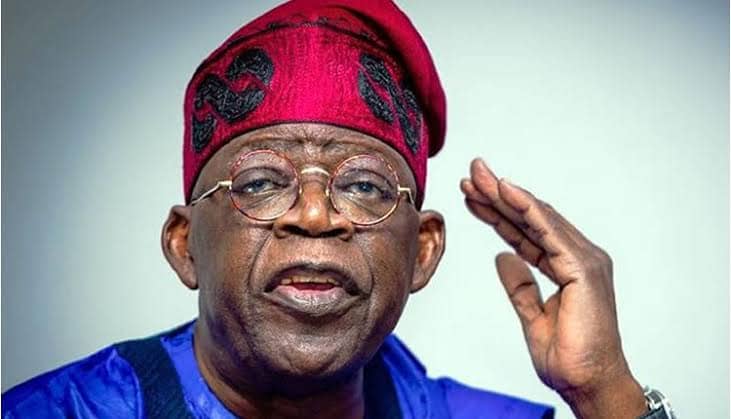
It is now an open secret that the former Governor of Lagos State, Bola Ahmed Tinubu, is now Nigeria’s president-elect. For many who may not know, the erstwhile Lagos Chief Executive is not the typical run-of-the-mill Nigerian politician. 

A master political strategist of no mean repute, Tinubu has never lost an election since he started appearing on the ballot. The lessons in his political journey are enormous and worth studying by contemporary politicians, especially young people who aspire to be leaders of tomorrow. 

Tinubu’s political trajectory depicts the importance of building people regardless of any differences. He built builders, and the builders built him. 

Most people, including some members of his party, had thought that he was not going to win the February 25th presidential election because of some varying factors.

But Tinubu, for a minute, never lost hope. He consistently told people that he was going to win. He candidly said, “it is my turn, and I will win.” These were the songs he sang until he won. 

It is a fact known that most politicians fear the “enemies within”, but the reverse is the case with Tinubu as the Aso Rock cabals in President Muhammadu Buhari’s government fear him. He tackled them and moved on. 

The contribution of the people he built in politics to his emergence as president-elect cannot be overemphasized. 

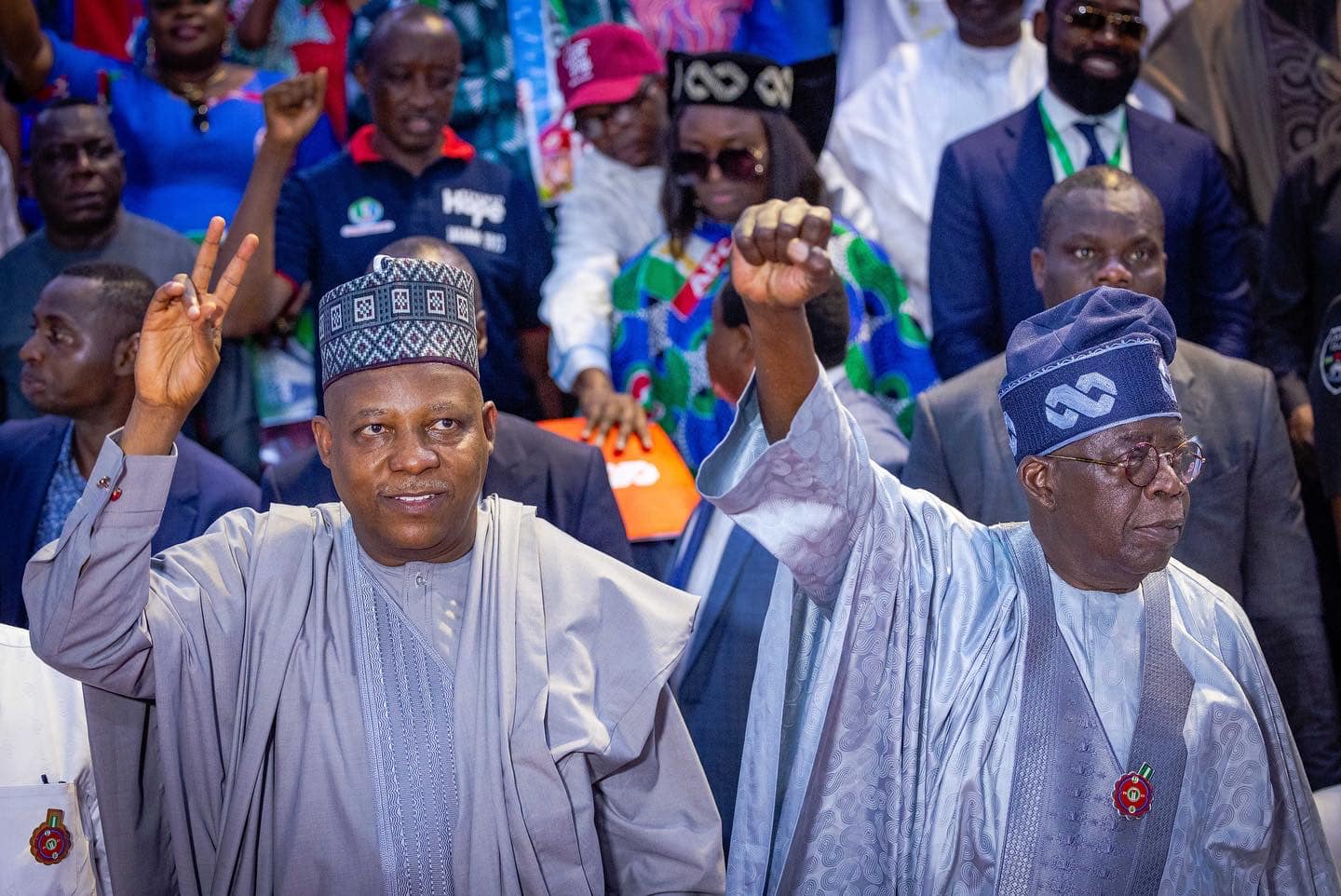
Hours after he was announced as the winner of the keenly-contested election, he first extended his heartfelt appreciation to the Vice President-elect, Senator Kashim Shettima, and the entire northern governors who gave their best to his ascension to the presidency. 

One of the qualities of a resounding leader is his ability to unite people and carry everybody along. That is what Tinubu started with. He called on all presidential contestants to join him in building a new Nigeria for the betterment of all and sundry. Who has ever done that in the history of our nascent democracy? 

Tinubu’s track record as governor of Lagos is a testimony of his effort for the unity and development of Nigeria. He brought capacity hands outside Lagos for the betterment of his people. He has national spread, unlike his Labor Party rival, Peter Obi, who was largely voted by people of the east and a few from the west. 

Obi, being the governor of Anambra, does not take his state as his permanent residence. He lives in Lagos—a state developed by Asiwaju Bola Ahmed Tinubu. I expect him to calm down his supporters, conceit defeat and join hands with the president-elect to steer the Nigerian project. 

One of the best ways to advocate peaceful coexistence and give people a sense of belonging is by giving protection to the people you govern, regardless of any differences. Tinubu’s house is a good example. He’s a Muslim. His wife and children are Christians. 

Teeming Nigerians have joined Tinubu to savour his electoral victory in the penultimate Saturday’s presidential election. But the President-Elect knows, more than anyone else, that the journey ahead will be rough, bumpy tortuous. 

He, however, should do all that it takes to actualize the visions of his ‘Renewed Hope’ campaign slogan. It is not for anything that many, including his armchair critics, regard him as a political colossus who has greatly paid his dues in helping to entrench democratic governance in Africa’s Giant.

Lawan Bukar Maigana writes from Abuja and can be reached via email: lawanbukarmaigana@gmail.com.

Gawuna plans to grant local government autonomy if elected – Bashir Ahmad

By Ahmad Deedat Zakari

Bashir Ahmad, the Special Assistant to President Muhammadu Buhari on Digital Communication, has disclosed that the Deputy Governor of Kano State and Gubernatorial Candidate of the All Progressives Congress, APC, Dr Nasir Yusuf Gawuna, pledged to grant autonomy to local governments in Kano State if elected governor. 

 Ahmad stated this in a tweet on his verified Twitter handle on Thursday. 

According to Ahmad, this is one of the many reasons why Kano electorates should vote for Gawuna. He noted that Gawuna would govern and operate differently.

“Dr. Nasiru Yusuf Gawuna, the Kano State APC Gubernatorial Candidate, has pledge [sic] to give local governments in the State autonomy to operate if elected as Governor. This is one of many reasons why we will vote for Gawuna as our next governor, he will govern and operate differently.” He tweeted.