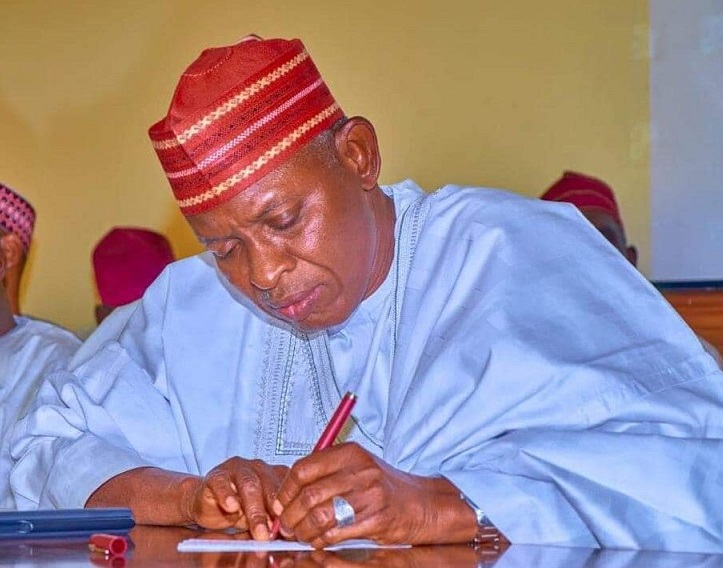
Abba Kabir Yusuf (Gida-Gida)

Governor Yusuf makes key appointments, revitalises Kano Line to enhance public service

By Muhammad Sulaiman

In a significant move to strengthen governance and improve public service delivery, Governor Abba Kabir Yusuf of Kano State has unveiled a series of strategic appointments and initiatives. This announcement was made through a press statement issued by his spokesperson, Sanusi Bature Dawakin Tofa, on Monday.

The governor’s actions are directed toward ensuring that skilled professionals occupy key positions within the state’s administration. He emphasizes the need for improved financial management and the overall efficiency of services provided to Kano’s citizens.

The statement noted several key appointments, including Jamila Magaji Abdullahi, the new Accountant General of Kano State. With over 16 years of experience in financial compliance and risk management, Abdullahi, a Bayero University graduate, is expected to bring integrity and transparency to the state’s financial operations. Previously, she held prominent roles in the Federal Inland Revenue Service and the Kano State Ministry of Finance.

Additionally, Muhammad Yahaya Liman has been appointed as the Director of the Treasury. Liman is a seasoned banker with extensive experience in financial reporting and regulatory compliance. He holds multiple degrees from Bayero University, including an MBA in Finance and Investment. His leadership is anticipated to significantly strengthen the state’s treasury operations.

In administration, Akibu Isa Murtala has been promoted to Special Adviser on Administration, a role that highlights his effectiveness in ensuring smooth governance processes. 

Furthermore, Governor Yusuf has reassigned Engr. Abubakar Sadiq has been appointed Deputy Managing Director of the Rural Water Supply and Sanitation Agency (RUWASA). This strategic move aims to enhance the quality of life in rural communities by addressing critical infrastructure needs.

A major highlight of the announcement was the revival of the Kano State Transport Authority, colloquially known as Kano Line. Governor Yusuf has established a strategic committee, chaired by Sa’idu Abdullahi Shu’aibu, to oversee the operation of Kano Line over the next six months. This initiative seeks to improve public transportation efficiency and align it with the state’s broader developmental goals.

The committee includes representatives from various ministries and sectors, reflecting a collaborative approach to enhancing transportation services in the state.

In his message to the newly appointed officials, Governor Yusuf highlighted the importance of innovation, dedication, and accountability in their roles. He urged them to work diligently and stressed that their contributions are vital to achieving the administration’s vision of improved governance and service delivery.

These appointments and initiatives are seen as a clear commitment from Governor Yusuf’s administration to foster development and position Kano State as a model of effective governance. 

Governor Yusuf’s silent revolution in healthcare sector

By Hussaini Ibrahim Sulaiman

In the bustling city-state of Kano, a silent revolution is taking place – one that may not capture the headlines every day, but which is certainly transforming the lives of countless residents.

At the heart of this change is the state governor, Alhaji Abba Kabir Yusuf, whose tireless focus on the health and welfare of Kano’s most vulnerable population has started to yield tangible, life-saving results.

When Governor Yusuf assumed office in May 2023, one of the first areas he addressed was the health sector, which had been severely neglected in the previous administration. Topmost among his priorities was the reinstatement of routine immunization services that had been abandoned for 18 months under the previous leadership.

This was not just a bureaucratic fix, but a critical step towards safeguarding the lives of newborns, pregnant women and other vulnerable groups who had been left exposed to preventable diseases.

The restoration of immunization services was, therefore, an immediate response to a looming crisis and a clear signal of the governor’s commitment to maternal and child health.

In addition to reviving routine healthcare services, Governor Yusuf also recognized the need for more infrastructure to support the state’s health system.

For instance, during the re-commissioning of the 86-bed Hasiya Bayero Paediatric Hospital, he declared free maternal healthcare services across the state.

The Hasiya Bayero Hospital, named after the mother of the late Emir of Kano, had been allegedly sold under the previous administration, despite consistent denials from the former government. Governor Yusuf lamented the hardship caused by the hospital’s closure, noting that it had forced Kano residents to seek paediatric care elsewhere at unaffordable costs.

Moreover, Governor Yusuf made it clear that his administration was committed to restoring the hospital’s services. “Our administration is dedicated to providing all the necessary support for a quality healthcare system in the state, including free maternal healthcare services,” he declared while commissioning the hospital.

Additionally, he emphasized that the hospital would offer nutritional services, immunization, research and training, and two-way referral services.

This commitment forms part of his broader plan to reduce high neonatal and infant morbidity and mortality rates, an issue that has plagued the state for years.

Furthermore, he underscored the importance of redeploying skilled medical personnel to run the hospital efficiently, reinforcing his government’s focus on health worker dedication and professional ethics.

In terms of healthcare infrastructure, Governor Yusuf’s focus is not limited to hospitals alone. As part of his digitalization agenda, he recently distributed 484 computers to the Apex Primary Healthcare Centres across all 44 local government areas.

This move is part of a larger initiative to ensure the efficient operation of healthcare facilities through technological upgrades, as well as a commitment to renovating several major hospitals, including Sir Muhammadu Sanusi, Hasiya Bayero, and Murtala Muhammad Specialist Hospital. Additionally, solar facilities were provided to key offices to ensure uninterrupted services.

This comprehensive upgrade of the healthcare infrastructure aims to ensure that every resident, regardless of their socio-economic status, has access to affordable and quality healthcare.

As a result, Governor Yusuf’s administration has allocated substantial funds in the 2025 budget to continue this renovation work, targeting hundreds of secondary and primary healthcare facilities across the state.

Furthermore, Governor Yusuf’s health-focused vision also tackles another major issue facing Kano State: malnutrition. As part of his efforts to improve maternal and child health, the Governor committed N500 million in counterpart funding to UNICEF for nutrition initiatives. Furthermore, during the flag-off of the second Maternal, Newborn and Child Health (MNCH) Week, he announced an additional N170 million to renovate and upgrade malnutrition treatment and referral centres.

These funds, alongside other initiatives such as the provision of essential healthcare services during MNCH Week, are part of the Governor’s broader strategy to combat child killer diseases and improve access to life-saving healthcare services.

In addition, Governor Yusuf’s commitment to improving the health of Kano’s children is also reflected in his efforts to reduce maternal and child mortality, foster sustainable development, and ensure equitable access to healthcare for all residents.

This continued investment in the health sector highlights the state government’s dedication to addressing critical health challenges and enhancing the quality of life for its citizens.

Beyond infrastructure and immediate healthcare services, Governor Yusuf’s administration has launched the Abba Care Initiative, a free health insurance program aimed at over 300,000 vulnerable residents, including pregnant women, the elderly, and people living with sickle cell anaemia.

This bold program is a key component of his effort to achieve universal healthcare coverage and make quality health services available to all citizens, regardless of their socio-economic status. In this regard, the Abba Care Initiative, backed by the Kano State Contributory Health Management Agency, represents a transformative step towards creating a more equitable and accessible healthcare system for the people of Kano.

Governor Abba Kabir Yusuf’s quiet yet powerful leadership is remaking the health landscape of Kano.

His administration’s unwavering commitment to improving healthcare access for the state’s most vulnerable populations underscores a deep understanding of what it means to govern with compassion, vision and urgency.

Notably, the Governor’s efforts in addressing health issues such as immunization, sickle cell anaemia, malnutrition, and maternal and child health not only respond to immediate challenges but also lay the foundation for a healthier and more prosperous future for all residents of Kano State. His legacy of service to the people, with a focus on healthcare, will undoubtedly leave a lasting impact for generations to come.

Governor Yusuf’s work represents more than just reforms – it marks a true revolution in the healthcare sector that will resonate across the state, benefiting not just the current generation, but future generations as well. Ultimately, his leadership offers a model of governance that prioritizes the well-being of the people and is poised to transform Kano into a healthier, more equitable society.

#AbbaIsWorking

Ibrahim is with the Triumph and can be reached at Hussainiibrahim470@gmail.com

Calls for Governor Abba Yusuf to prioritise local scholarships

By Bilal Muhammad Bello (BMB)

The Kano State Government, under the leadership of Governor Abba Kabir Yusuf, has made commendable strides in supporting education. Among these initiatives is the foreign scholarship program for postgraduate studies, a legacy dating back to the second tenure of former Governor Engr. Rabiu Musa Kwankwaso. While this policy has benefited many, addressing the growing need to prioritise local scholarships for Kano State students studying in Nigerian institutions is crucial.

Since the 2019/2020 academic year, there has been a noticeable gap in the distribution of local scholarships in Kano State. Regrettably, since Governor Yusuf assumed office, no official scholarships have been disbursed to students in tertiary institutions nationwide. 

While it is laudable that the state government recently paid the fees of students affected by tuition hikes at federal universities such as Bayero University Kano, Federal University Dutse, Federal University Dutsin-Ma, and the University of Maiduguri, this initiative has excluded students from state universities, polytechnics, and colleges of education. Many of these students face severe financial hardships, and some even drop out due to a lack of support.

With utmost respect, I urge His Excellency Governor Abba Kabir Yusuf to reconsider the state’s scholarship policy. The government must prioritise local students struggling to fund their education amidst the country’s economic challenges. Local scholarships would provide a lifeline to these students, ensuring they complete their education and contribute meaningfully to the state’s development.

Similarly, states like Katsina, Jigawa, Borno, and Kaduna support students with local scholarships every year for those studying at various institutions in the country. These local scholarships provided by respective state governments help alleviate the challenges students face on campuses.

During your 2019 and 2023 campaigns, Sir, you pledged to prioritise education. While the foreign scholarship program for postgraduate studies is admirable, the pressing needs of local students studying on Nigerian campuses cannot be overlooked. I respectfully call on His Excellency to direct the State Scholarship Board to open its portal and ensure that students in Kano benefit from the state government’s scholarship program.

Investing in local scholarships is not just a fulfilment of campaign promises but a commitment to building a brighter future for Kano State. Students are the backbone of any society, and supporting their education is an investment in the prosperity of the state. Governor Yusuf, this is an opportunity to cement your legacy as a leader who prioritises education for all Kano students at home and abroad.

Bilal Muhammad Bello Department of Mass Communication Bayero University, Kano.

Governor Yusuf swears in new commissioners

By Sulaiman Abdullahi

Kano State Governor Abba Kabir Yusuf has inaugurated a new set of commissioners to lead key ministries in the state. The swearing-in ceremony took place on Monday at the Ante-Chamber of the Kano Government House.  

Governor Yusuf emphasised his administration’s commitment to fostering development through a capable team, noting that the appointments are strategic to achieving the state’s development goals.  

The newly sworn-in commissioners are:

1. Dr. Ismail Danmaraya – Commissioner for Finance and Economic Development  

2. Dr. Gaddafi Sani Shehu – Commissioner for Power and Renewable Energy

3. Dr. Dahir M. Hashim – Commissioner for Environment and Climate Change

4. Alhaji Shehu Wada Sagagi – Commissioner for Commerce and Industry  

5. Comrade Ibrahim Abdullahi Wayya – Commissioner for Information  

6. Abdulkadir Abdulsalam – Commissioner for Rural Development  

7. Comrade Nura Iro Ma’aji – Commissioner for Public Procurement and Project Monitoring  

8. Adamu Aliyu Kibiya – Commissioner for Humanitarian Affairs (reassigned)  

Governor Yusuf expressed confidence in the appointees’ ability to deliver on their mandates and urged them to prioritise service delivery and the welfare of Kano residents. 

Kano extends service periods of top civil servants for efficiency 

By Uzair Adam  

Kano State Governor Alhaji Abba Kabir Yusuf has approved a two-year service extension for the Head of Civil Service, select Permanent Secretaries, and senior civil servants, effective December 31, 2024.  

This decision, formalised through an Executive Order signed by the Governor, is rooted in the Doctrine of Necessity and aligns with Section 5(2) and Section 208 of the 1999 Constitution of Nigeria (as amended).  

A statement from Aliyu Yusuf, Director of Public Enlightenment, Office of the Head of Civil Service, highlighted the beneficiaries of the extension. 

They include Alhaji Abdullahi Musa as the Head of Civil Service and Permanent Secretaries Umar Muhammad Jalo, Bilkisu Shehu Maimota, Mu’azatu Isa Dutse, Abdulmuminu Musa, and Tijjani Muhammad Sharif. Bashir Idris Diso, the Clerk to the State House of Assembly, was also listed.  

The extension applies to civil servants who were due for retirement by December 31, 2024, under the Civil Service Rules and Kano State Pension Trustees Fund Law. 

According to the Executive Order, these individuals have demonstrated exceptional competence, dedication, and responsibility in their roles, making their retention critical to ensuring efficient service delivery.  

Senior civil servants granted the same extension include Comrades Kabiru Ado Minjibir, Marwan Mustapha, Tajuddeen Bashir Baba, Hashim A. Sule, and Kabiru Inuwa. Additionally, critical healthcare professionals, including Amina Idris (Psychiatric Nurse), Ahmad Lawan (Peri-Operative Nurse), Hussaini Nuhu (Pediatric Nurse), Salisu H. Nadosun (Peri-Operative Nurse), and Larai Ahmadu (Critical Care Nurse), also benefited from the extension.  

The statement emphasised the importance of these personnel in maintaining the functionality of the state’s civil service and directed the beneficiaries to continue their duties according to the Civil Service Rules.

Why do we underestimate science, technology, and innovation in Nigeria? 

By Abba Ado

I believe the Ministry for Science, Technology and Innovation is not a graveyard ministry where no development or policies will bring positive and sustainable achievement to our state or country. I learned that many people think science and technology are not among the portfolios that can contribute immensely to economic development and growth. 

The Ministry is designed to promote education, scientific research, and development at the state and national levels and evaluate their impact on society. Science, Technology, and Innovation (STI) play a significant role in addressing issues such as agriculture, sustainability, food security, climate change, healthcare, and education. 

Recently,  Kano State Governor Engineer Abba Kabir Yusuf announced his cabinet reshuffle, changing the commissioner for Higher Education to the Ministry for Science and Technology. Some people were mildly upset, while others mocked the commissioner and even underestimated the ministry for political reasons. 

Nigeria has a massive gap in STI policy, and we need to address it to achieve sustainable economic growth. We alsoneed to start relying on technological innovations to solve our existing problems. 

We need an effective policy to help our scientists, technologists, and entrepreneurs develop and commercialise their products. With this, we can start exporting our products, and at the same time, our currency will add value.

I hope the newly assigned commissioner for the Ministry for STI will work hard and implement the “Triple Helix” concept, a collaborative model between industries, academia, and government to promote technological innovations and economic growth. As a commissioner, his duties are to facilitate knowledge from the universities to the industries and eventually to progress it to the society for commercialisation. 

Since 1949, China has focused on Science and Technology, and its economic development has been remarkable. The country has implemented effective policies to exploit local innovation and facilitate its commercialisation. 

Domestic companies like Moonlight Communication should not be taken for granted. We urgently need to optimise their efforts, and the government needs to engage heavily and provide strong networking, which can transform our sustainable development. 

Afri Venture Capital is another opportunity to leverage as a commissioner for STI to establish networking and investment; interestingly, this company has launched its funding opportunities in Kano State.  

I advise the newly appointed commissioner to ignore any discouragement from the naysayers who think his assignment to the Ministry for STI has downgraded him. He should focus on providing a suitable platform for huge investment in research and development in our domestic institutions in Kano State and translating this research into a usable product. 

It might not be easy, but it is possible with hard work and perseverance. As an economist who can think critically, I believe he can easily integrate STI with economic development to help Kano State. This new role will undoubtedly contribute to solving the state problems of energy, climate change, agriculture, and healthcare.

Abba Ado wrote via abbaadomusa0@gmail.com.

Kano launches comprehensive anti-corruption strategies

By Uzair Adam

The Kano State Government has implemented a series of measures to strengthen its anti-corruption framework and improve governance.

Speaking during the commemoration of the 2024 International Anti-Corruption Day and Human Rights Day on Tuesday, Governor Abba Kabir Yusuf unveiled the Kano Integrated Governance Accountability System.

The system, to be implemented across all 44 local government areas, will utilize an e-portal to enhance transparency in contract awards and public administration.

Governor Yusuf highlighted the state’s progress in developing a Central Criminal Register Software designed to streamline the criminal justice process, ensure fairness, and combat corruption effectively.

“To bolster our anti-corruption efforts, we have proposed amendments to the Kano State Public Complaints and Anti-Corruption Law and are working on a Proceeds of Crime Bill to ensure transparent management of recovered assets,” Yusuf stated.

He described the significance of eradicating corruption as a “cancer that erodes trust and undermines institutions.”

He also linked anti-corruption efforts to protecting human rights, stressing the administration’s commitment to justice, equity, and accountability.

The event featured a symposium and an evening musical concert to engage stakeholders, particularly youth, in the fight against corruption, human rights abuses, and gender-based violence.

The Governor commended the Kano State Public Complaints and Anti-Corruption Commission, which is led by Barrister Muhuyi Magaji Rimingado, for its dedication to promoting transparency and accountability.

He also extended appreciation to federal anti-corruption agencies, including the EFCC, ICPC, and the National Human Rights Commission, as well as development partners like the MacArthur Foundation and ROLAC, for their collaborative efforts.

In his address, Barrister Rimingado reiterated the Commission’s commitment to tackling corruption and urged young Nigerians to participate in the fight actively.

The state’s Attorney General, Haruna Isa-Dederi, also praised the Governor for providing an enabling environment and revealed that the Ministry of Justice now has an Anti-Corruption Unit empowered to investigate and prosecute cases.

Representing the ICPC Chairman, Ibrahim Garba-Kagara highlighted the challenges of combating corruption, citing insufficient political will and public awareness as key obstacles.

However, he commended Kano State’s proactive approach and encouraged youth participation.

The symposium drew participants from various sectors, including representatives from primary, secondary, and tertiary institutions and officials from the EFCC, DSS, Code of Conduct Bureau, civil society organizations, and the Kano State Police Command.

The initiatives unveiled underscore the state’s commitment to fostering transparency, accountability, and inclusive governance.

Navigating Kano’s complex politics and challenges 

By Abubakar Hassan Muhammad BUK 

Kano State politics has been a subject of interest in Nigeria, especially since the Supreme Court judgment restored Abba Kabir Yusuf as the governor of Kano State. Yusuf, a member of the New Nigeria Peoples Party (NNPP), had his election initially nullified by lower courts, but the Supreme Court unanimously upheld his victory in the March 2023 election.

The State has a rich history of leadership, dating back to the Kingdom of Kano, which existed from 1000 AD to 1349. The state’s capital and largest city, Kano, is Nigeria’s second most populous city after Lagos. The incumbent governor, Abba Kabir Yusuf, was sworn in on 29 May 2023.

Kano State faces several challenges, including attacks by Islamist terrorist groups, inter-religious violence, and extreme poverty. The state operates under Sharia law within the legal framework of the Nigerian constitution. The Supreme Court’s decision to restore Yusuf as governor has received mixed reactions from Nigerians, with some praising the judgement and others expressing concerns.

The State has a diverse economy with a strong focus on industry, agriculture, and Islamic banking. The state is home to several large markets, including Kurmi Market and Kantin Kwari Market, which specialise in textiles and grains. Agriculture is also a significant sector, with crops such as millet, cowpeas, and sorghum being cultivated for local consumption.

Kano State politics are complex and multifaceted, reflecting the state’s rich history and cultural diversity. Under Governor Yusuf’s leadership, the state faces significant challenges and opportunities for growth and development. But he has been trying his best to overcome these challenges.

Abubakar Hassan Muhammad wrote via abubakarsadik2023@gmail.com.

Rabi’u Kwankwaso Bilingual College, Niamey, PTA requests Governor Yusuf to return their children to school

By Abdullahi Sulaiman

The Parents Teachers Association of Rabiu Musa Kwankwaso Bilingual College, Niamey, Niger Republic, has appealed to His Excellency, Governor Abba Kabir Yusuf, to honour the promise made by the former Governor of Kano, Dr Rabiu Musa Kwankwaso to return their children to their school in Niger Republic. 

The students have not been in school for over a year now, while their peers in the Niger Republic have already resumed classes in the new session five weeks ago.

Dr. Ibrahim Habu, Chairman of the PTA, commends Governor Yusuf for prioritising education with substantial budget allocations. However, he urges him to address the unresolved issues of Bilingual College students in Kano from the last academic session. He calls for immediate action to ensure no child from the college is left idle at home.

The PTA Chairman urges all stakeholders to work collaboratively to fulfil Rabiu Musa Kwankwaso’s vision of establishing a Bilingual college, emphasising the importance of equipping students with bilingual skills in French and English to enhance self-reliance and global competitiveness among Kano’s next generation of citizens.

The Chairman also calls on the people of Kano State to continue supporting Governor Yusuf’s educational initiatives. These initiatives will ensure sustainable development in the education sector and contribute to the overall development of Kano State.

Open Letter to the Governor of Kano State: There is a need for a balanced executive council composition

Your Excellency, sir, I want to use this opportunity to draw your attention to the trend followed by your predecessors: forming a composition of the state executive council that is not all-inclusive and fails to address the need for every local government to be well-represented in accordance with the principle of federal character establishment. 

The negligence or oversight of this administrative arrangement has become a typical setback, leading to the marginalisation of Warawa L.G.A. since its establishment by law in 1991. This undermining of not only its human capacity development but also the general welfare of its indigenes is evident in the few developmental projects the state has executed so far.

Sir, none of your predecessors on record has ever given us fair representation or equal opportunity through appointment to serve as a state executive council member, either as Commissioner or Special Adviser, since the establishment of Warawa Local Government. Your Excellency, your administration’s adoption of a similar trend is a significant setback to your performance indicators for good governance and fulfilling your campaign promises.

Among the twenty-four (24) Commissioners and about thirty-two (32) Special Advisers you appointed and cleared before the State Assembly, none is an indigene of Warawa L.G.A. Not only that, Your Excellency Sir, so far, all of your political appointments for the various positions of heads of respective Ministries Departments and Agencies (MDAs) ranging from about (7) Director General DGs, (44) Managing Directors MDs and Deputies, Executive Directors EDs, (5) Executive Secretary ES, and even Project Coordinators none is an indigene of Warawa L.G.A. 

Your Excellency Sir, only if you imagine having a similar composition of Federal Executive Council members at the Federal level without Kano State having any ministerial position designated (not even minister of state). 

At the same time, another state gets two or more. It appears disheartening that this recurring marginalisation is so severe that a ward from another L.G.A. will have two or more appointees and even an additional appointment as head of some MDAs. In contrast, Warawa ends up with none as a constitutionally recognised L.G.A.

Except for state constituency allocation and the ongoing 5 km entrance road projects, road developmental projects are not sponsored by the state as obtainable in other L.G.A that are well represented in the Council and beyond. Warawa L.G.A is autonomous like every other Local Government Area. The constitution and electoral act made it mandatory that no single election into the office of the executive governor of Kano state would be declared conclusive without the votes of this administratively neglected local government area.

For this reason and beyond, in the principle of justice, fairness, and equity, we call upon you to address the issue by giving us a fair and equal opportunity to develop this resourceful local government area. Our interest is to be part of this administration’s history written in gold, as we were part of the struggle that brought it on board.

Thank You.

Yours Sincerely,

Engr. Ismail Abdu Garba

Engr. Ismail is a lecturer, research scholar, and member of the Kwankwasiyya Scholars Assembly (KSA). He is also the Chairman of the Warawa Education Election Campaign Committee for 2019 and 2023. He can be contacted via madaarie@gmail.com.