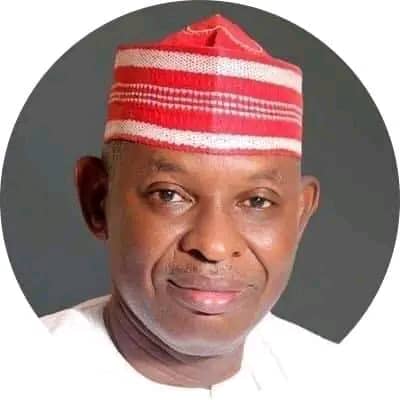
Abba Kabir Yusuf (Gida-Gida)

Kano govt sets up committee to regulate NGOs, donor organizations

By Hadiza Abdulkadir

Kano State Government has inaugurated a High-Powered Committee to profile and regulate Non-Governmental Organizations (NGOs) and donor organizations operating within the state. The move aims to ensure transparency, accountability, and alignment with the state’s development priorities.

Speaking at the inauguration, the Secretary to the State Government (SSG), Umar Faruk Ibrahim, emphasized the crucial role of NGOs in sectors such as health, education, and governance. However, he noted growing concerns about unregulated activities, necessitating a structured oversight framework.

The committee has been mandated to profile all NGOs and donor organizations, investigate their funding sources, assess their activities, and recommend a regulatory framework. It has also been granted the authority to suspend or shut down any organization found engaging in suspicious or unauthorized activities. Additionally, it can escalate cases to security agencies for further investigation and prosecution if necessary.

The committee is chaired by Comrade Ibrahim Abdullahi Waiya, the Commissioner for Information and Internal Affairs, with Mallam Tijjani Auwal, the Commissioner for Religious Affairs, serving as Vice Chairman. Other members include key government officials, security agencies, civil society representatives, and religious groups.

In his remarks, Waiya assured that the committee would carry out its mandate with diligence and fairness to ensure NGOs operate within legal and ethical boundaries while contributing to Kano’s development agenda.

The committee is expected to work closely with stakeholders to enhance transparency and accountability in the operations of NGOs and donor organizations in the state.

Kannywood actor Nabraska dumps NNPP for APC

By Hadiza Abdulkadir

Popular Kannywood actor Mustapha Badamasi Nabraska has defected from the New Nigeria People’s Party (NNPP) and the Kwankwasiyya Movement to the All Progressives Congress (APC).

Senator Barau Jibril, representing Kano North, announced the defection on social media, revealing that Nabraska visited his residence in Abuja, where he symbolically discarded his red cap—an emblem of the Kwankwasiyya Movement. Senator Ibrahim Lamido (Sokoto East) and Political Adviser Hon. Yusuf Tumfafi were also present to receive him.

Nabraska, known for his shifting political allegiances, previously worked under the APC-led government of former Kano governor Dr. Abdullahi Umar Ganduje. However, after the NNPP’s victory in the 2023 Kano governorship election, he switched sides, only to return to APC now.

The actor’s latest move has drawn mixed reactions. Many social media users mock his frequent party changes, suggesting they are motivated by personal gain rather than ideology.

Transforming Kano’s education: Governor Abba Kabir Yusuf’s vision for a brighter future

By Hussaini Ibrahim Sulaiman

Education is the bedrock of any progressive society, and in Kano State, a quiet revolution is unfolding under the leadership of Governor Abba Kabir Yusuf.

 Since assuming office, the governor has taken every step to rejuvenate the state’s education sector. 

His administration’s commitment to education is evident in its words and concrete actions, which continue to change lives. His administration has prioritised key reforms in infrastructure, teacher welfare, school enrollment, and vocational training. 

These initiatives have solidified his reputation as a leader who truly understands that Kano’s future rests on the shoulders of its young population.

Recognising the deep-rooted challenges facing Kano’s education system, Governor Yusuf declared a state of emergency in education. 

His administration swiftly addressed the dilapidated state of public schools, teacher shortages, and declining student enrollment. With a clear vision, the governor initiated reforms that have already begun yielding remarkable results.

Budgetary allocations reflect a leader’s priorities. In the 2024 budget, 29.9% of the total allocation was dedicated to education, far surpassing UNESCO’s recommended benchmark of 26%. 

Further demonstrating his unwavering commitment, the state has allocated 31% of its total 2025 budget to the education sector. 

With this substantial funding, the government has embarked on large-scale school renovations, procured essential learning materials, and paid outstanding teacher salaries. 

These initiatives restore public confidence in the education system and ensure that Kano’s children have the resources they need to succeed.

Public schools in Kano needed rehabilitation. The administration launched a massive school renovation project to upgradethousands of classrooms across the state. 

Over 80,000 three-seater desks have been provided, ensuring that 240,000 students no longer have to sit on bare floors. 

New classrooms have been built to tackle the issue of overcrowding. Schools that once faced challenges with insufficient facilities are now reaping the benefits of modern learning environments, enhancing the accessibility and effectiveness of education.

Kano State has long faced the challenge of out-of-school children. To tackle this, the government is constructing 130 new boys’ and girls’ schools to boost enrollment in the next academic session. 

Governor Yusuf’s administration has also launched an initiative to distribute 789,000 school uniforms to pupils in 7,092 public schools. 

At the flag-off of the distribution of over two million education materials—including textbooks, mats, and uniforms—the governor reiterated his administration’s commitment to ensuring that every child in Kano has access to quality education.

The state government is providing a monthly stipend of N20,000 to 40,000 needy girls to promote school enrolment, retention, and completion. 

This initiative specifically aims to ensure that more girls receive formal education, lower the dropout rate, and promote gender inclusivity in education.

A well-trained and motivated teacher is at the heart of any successful education system. Governor Yusuf has approved the permanent employment of 5,500 volunteer teachers under the Better Education Services Delivery for All (BESDA) initiative. 

He has also approved the promotion of over 20,500 primary and junior secondary school teachers.

This move boosts morale and is a strategic step toward retaining and attracting quality educators. By improving teacher welfare and providing capacity-building opportunities, the governor ensures that Kano’s students receive education from highly skilled and dedicated professionals. 

The administration has also cleared backlogs of unpaid teacher salaries and allowances, significantly boosting teacher motivation and improving classroom engagement and student performance.

To further support education, the government has spent N1.3 billion on paying National Examination Council (NECO) and National Board for Technical Education (NBTE) registration fees for 57,000 indigent students. 

This intervention has lifted a huge financial burden off struggling families and ensured that no student is denied access to secondary and technical education due to economic hardship.

Education extends beyond the classroom. The administration has revived 26 vocational and skills acquisition schools across the state. Institutions such as the Kano School of Informatics, Kano State Driving School, and Aliko Dangote Skills Acquisition Centre have been revamped to equip young people with practical skills.

The government plans to create over 63,000 jobs annually through the garment industry. By reopening garment manufacturing clusters in Kano’s 44 local government areas, thousands of young people will be empowered with tailoring and fashion design skills. This approach will provide an alternative pathway for youths who may not pursue conventional higher education.

Governor Abba Kabir Yusuf’s remarkable efforts in education have not gone unnoticed. During the 2024 World Teachers’ Day celebrations, the Nigeria Union of Teachers honored him with the Golden Award for Outstanding Performance in Education Reform. 

This accolade recognises his dedication to improving Kano’s education sector.

Under his leadership, Kano State is experiencing an educational renaissance. His administration’s policies, strategic investments, and people-centered approach have laid a strong foundation for a brighter future. 

The real impact of his reforms can be seen in the smiles of students who now have desks to sit on, the joy of teachers whose hard work is being rewarded, and the hope of parents who can now dream of a better future for their children.

Aiki Sai Me Shi—only the committed can achieve the task. Governor Abba Kabir Yusuf has not only shown commitment but has also demonstrated visionary leadership, courage, and an unrelenting passion for education. Kano’s education sector is on an unstoppable trajectory of growth, and if the momentum is sustained, the state will soon be a shining example of educational excellence in Nigeria.

Kano State delegation visits Lagos to explore transportation advancements

By Hadiza Abdulkadir

A delegation led by Hon. Ibrahim Namadi, the state’s Commissioner of Transportation, recently embarked on a fact-finding mission to Lagos State. This initiative, endorsed by His Excellency Gov. Abba K. Yusuf, aims to learn from Lagos’s notable achievements in transportation.

The delegation comprised several key officials, including Hon. Aliyu Isa (Permanent Secretary), Bashir Ado Gaya (Director of Admin and General Services, Ministry of Transportation), Dr. Nura Ibrahim Hassan (Technical Advisor for Transport Policy and Planning), and Najeeb Mahmoud Abdussalam (Transport Specialist Consultant).

The team toured prominent facilities, including the Ikeja Bus Terminal, the Red Line Ikeja Station, and the Blue Line, to gain insights into their operations and management.

During the visit, Hon. Namadi praised Lagos State for its exemplary transportation system and expressed a strong desire to replicate similar successes in Kano, particularly through the establishment of a Bus Rapid Transit (BRT) system.

Hon. Namadi emphasised the importance of collaboration and pledged to work closely with the Lagos State government and the Lagos State Transport Management Authority (LAMATA) to achieve this ambitious goal.

Kano: Governor Yusuf appoints Umar Farouk Ibrahim as new SSG

By Muhammad Sulaiman

Kano State Governor, Abba Kabir Yusuf, has appointed Umar Farouk Ibrahim as the new Secretary to the State Government (SSG). The appointment was announced in a statement by the governor’s spokesperson, Sunusi Bature Dawakin Tofa, on Saturday.

Ibrahim, a seasoned administrator with over three decades of public service experience, will officially assume office on Monday, February 10, 2025. His selection is expected to strengthen the administrative framework of the current government and enhance policy implementation.

Throughout his career, Ibrahim has held key leadership positions, including serving as Permanent Secretary for Research, Evaluation, and Political Affairs from 2001 to 2015. He also briefly acted as SSG in 2013 and 2014, reflecting the trust placed in him by past administrations.

Ibrahim holds a Bachelor of Science (B.Sc.) in Political Science from Ahmadu Bello University, earned in 1985. He has also obtained several professional certificates that have further enriched his expertise in governance and administration.

Governor Yusuf expressed confidence in Ibrahim’s ability to contribute to the state’s development agenda, emphasizing the importance of experienced leadership in achieving sustainable progress.

Kano Govt seeks postgraduate partnership with Al-Qalam University

By Muhammad Sulaiman

The Kano State Government has expressed interest in partnering with Al-Qalam University, Katsina, to sponsor students for postgraduate studies at the institution.

A government delegation, led by Professor Auwalu Halliru Arzai, visited the university on Monday, February 3, 2025, where they were received by the Deputy Vice-Chancellor, Dr. Armaya’u Umar Zango.

Speaking during the visit, Prof. Arzai highlighted the state government’s commitment under Governor Engr. Abba Kabir Yusuf to advancing education by providing opportunities for indigenes to pursue higher degrees.

Prof. Arzai noted that Al-Qalam University’s reputation for academic excellence and holistic education made it a suitable choice for the partnership.

Discussions between both parties are ongoing, with plans to formalize the collaboration through a Memorandum of Understanding (MoU).

Kano govt pledges reforms in Qur’anic education system

By Uzair Adam

The Kano State Government has reiterated its commitment to enhancing the Qur’anic education system in the state.

In a statement on Tuesday, the Director of Public Enlightenment at the Ministry of Education, Balarabe Abdullahi Kiru, said the government remains committed to improving Qur’anic education and creating a conducive learning environment for students across the state.

The State Commissioner of Education, Gwani Dr. Ali Haruna Makoda, gave the assurance while receiving executive members of the Parent-Teacher Association of Government Tahfeezul Qur’an Secondary School, Kiru, during a courtesy visit to his office.

Makoda, represented by the Permanent Secretary of the ministry, Alhaji Bashir Baffa Muhammad, underscored the significance of Qur’anic education in promoting peace and stability among the Muslim Ummah.

He assured that the government would continue supporting the system to build a better society.

“This administration has done a lot in terms of providing infrastructure in schools and integrating Islamiyya, Qur’anic, and Tsangaya education to ensure access to quality Islamic and Western education in the state,” he said.

Speaking on the upcoming Qur’anic graduation of Government Tahfeezul Qur’an Secondary School, Kiru, the commissioner described the event as timely and pledged the ministry’s support.

Special Adviser to the Governor on Education, Alhaji Tajuddeen Gambo, lauded the school’s contribution to Qur’anic and Islamic education in Kano and beyond.

“The Kano State Government is very proud of Kiru Tahfeezul Qur’an, considering its role in propagating Qur’anic and Islamic education, not only in Kano but across the country,” he said.

He added that the government would ensure the renovation of dilapidated buildings in the school to provide a better learning environment.

The Chairman of the school’s Parent-Teacher Association, Alhaji Umar Natagunda Gezawa, said they visited the commissioner to brief him on preparations for the Qur’anic graduation ceremony scheduled for Sunday, February 9, 2025.

“The graduation covers students from 2019 to 2024, with a total of 1,643 students who have memorized the Holy Qur’an,” he said.

He also noted that the school has produced many graduates who have become prominent figures across the country.

“The school has played a vital role in shaping future leaders, and Kano is proud of them,” he added.

The school’s principal, Alhaji Mamuda, applauded the government’s decision to include the school in the first batch of renovation projects.

“The bill of quantity has already been assessed by the ministry under the governor’s directive to facilitate the project,” he said.

Kano’s ₦2.5 billion wedding: A misallocation of resources for development

By El-Yassar Ahmad

Kano State’s recent ₦2.5 billion expenditure on a mass wedding initiative has sparked widespread criticism for being a poor use of public funds. At a time when the state faces significant challenges in sectors such as power supply, education, healthcare, and transportation, many believe this substantial sum could have been better invested in addressing these critical needs.

While states like Lagos prioritise infrastructure and sustainable growth—evidenced by Governor Babajide Sanwo-Olu’s ₦3.5 billion investment in power generation—Kano’s leadership is drawing attention to what is seen as frivolous taxpayer spending. 

Many people, especially on social media, argue that such spending represents a missed opportunity to improve the lives of Kano’s citizens through long-term, impactful development.

This underscores a concerning trend of mismanagement and a lack of transparency that hinders progress in the state. Public resources ought to be invested in projects that meet the fundamental needs of the populace—healthcare, education, and essential services—rather than wasted on short-term initiatives that provide minimal enduring benefit.

It is high time for Kano’s leadership to reassess its priorities and ensure that public funds are used responsibly for the betterment of its citizens. Only through strategic investment in infrastructure and services can the state attain meaningful progress and enhance the quality of life for its people.

Kano gov’t vows tougher measures against sanitation violators

By Uzair Adam 

The Kano State Government has expressed strong dissatisfaction with the movement of vehicles and the operation of motor parks during environmental sanitation hours, warning that violators will face strict penalties.  

The Commissioner for Environment and Climate Change, Dr Dahiru Muhammad Hashim, issued the warning on Saturday while overseeing the end-of-month sanitation exercise across motor parks, markets, and major roads in the state.  

He announced plans to block key roads to prevent travellers from entering Kano during designated sanitation hours. 

The commissioner also highlighted gaps in waste management, emphasising the need for immediate intervention.  

“The issue of vehicle movement during sanitation hours will not be taken lightly, especially for those coming from outside Kano who continue to violate our regulations. 

In the next exercise, we will deploy adequate security and block some roads leading into the state,” he said.  

Dr Hashim also criticised motor parks that remained operational during the sanitation period, stressing that such actions would not be tolerated. 

“Some motor parks continue their business activities in defiance of the law, which is unacceptable. We will take decisive steps to ensure compliance,” he added.  

He urged residents and travellers to respect the restrictions and adjust their travel plans to avoid disruptions. 

He reiterated that any individual or transport operator caught violating the directive would face strict penalties.  

“I want to express my displeasure over the continuous movement of vehicles during sanitation hours. This is a clear violation of existing regulations, and anyone who fails to comply will face appropriate sanctions,” he warned.  

Meanwhile, Dr. Hashim commended the residents of the Kauyen Alu community in the Tarauni Local Government Area for actively cleaning their environment, including cemeteries, drainage channels, and surrounding areas.  

The Chairman of Tarauni Local Government, Alhaji Ahmad Muhammad, lauded the commissioner’s commitment to environmental cleanliness, assuring him of the local government’s ongoing efforts to eliminate open defecation and enhance sanitation standards.  

During the exercise, the task force arrested 28 offenders and imposed fines totalling N78,000 on those who violated sanitation laws.

Solar-powered progress: Governor Yusuf’s vision for a safer, thriving Kano

By Hussaini Ibrahim Sulaiman 

Kano State has experienced a remarkable transformation under the leadership of the state governor, Alhaji Abba Kabir Yusuf.

Thus, the scenario has continued to earn the governor more commendations. The achievement followed his administration’s outstanding progress in key areas, such as infrastructure, safety and economic growth. 

In fact, among his administration’s most notable achievements is the widespread installation of solar street lights on major roads and key areas in the state.

This initiative, which has enhanced the aesthetic appeal of the state’s urban environment, has had far-reaching positive effects on the safety, economy and overall well-being of its residents.

Since taking office, Governor Yusuf has prioritized the provision of solar-powered street lights. This bold initiative is part of a larger vision to enhance the state’s infrastructure, improve public safety, and promote sustainable development. 

Solar energy, being both cost-effective and eco-friendly, has proven to be an excellent alternative to traditional street lighting, which previously depended heavily on expensive diesel generators. 

Not only has this shift saved the state substantial amounts of money, but it has also ensured that major roads and urban streets remain illuminated throughout the night, significantly boosting security for residents and businesses alike.

Governor Yusuf’s pioneering solar street lighting project aligns seamlessly with the global push to increase the adoption of renewable energy sources to mitigate climate change.

Beyond merely brightening streets and residential areas, the solar lighting initiative has extended the hours businesses can operate. 

This has stimulated economic activity in the evenings, benefiting both large corporations and small enterprises.

The improved street lighting has fostered a sense of security and normalcy, particularly in areas notorious for crime due to poor visibility. The state’s once-limited night economy is now flourishing, with businesses staying open later, providing more opportunities for local traders, artisans, and entrepreneurs.

A notable outcome of the solar street lighting project has been significantly reduced criminal activity, especially crimes such as phone snatching, drug trafficking and other petty offences. According to a report from the state police command, the installation of solar streetlights has led to a noticeable decline in crime rates, particularly in urban zones and densely populated areas. 

Before the solar lights were installed, the state’s city faced mounting challenges with night-time criminal activities. Criminals frequently took advantage of the poorly lit streets to commit offences, including phone snatching, robberies, and the smuggling of illegal drugs.

However, the increased visibility brought about by the solar lights in previously notorious areas, such as Kofar Dan Agundi, Zoo Road, Sabon Gari, Sharada and Tudun Maliki, has resulted in a sharp drop in criminal activities, with phone snatching being notably reduced. Local authorities have noted that these areas, once plagued by insecurity, are now safer and more secure.

Kano, one of the nation’s most populous and economically significant city-states, has long struggled with unreliable power supply and limited infrastructure. 

Under Governor Yusuf’s leadership, however, the state’s economy—particularly in urban areas—has revitalized, largely thanks to the solar street light initiative.

The improved lighting has created a more conducive environment for businesses, especially those that depend on evening hours to generate revenue.

For instance, street hawkers, small-scale traders and night market vendors have greatly benefited from the extended hours of operation. 

With more reliable lighting, these businesses now have the opportunity to thrive after dark, contributing to increased sales and revenue. 

This transformation in the state’s economic landscape is evident in the resurgence of night markets and retail businesses catering to residents long after sunset. 

Moreover, the move away from expensive diesel generators, once used to power streetlights and business premises during power outages, has significantly reduced operational costs for many businesses.

The financial savings generated by the solar street light project have been substantial. These savings have freed up valuable resources that the state government can reallocate to other critical sectors, such as healthcare, education and further infrastructure development.

Governor Yusuf’s decision to invest in solar energy reflects a broader global trend of transitioning to more sustainable and cost-efficient energy solutions. This underlines his commitment to modernising the state’s infrastructure while being mindful of its environmental impact.

In addition to improving infrastructure, Governor Yusuf’s administration has taken decisive steps to address state unemployment. 

A key initiative to support local entrepreneurs has been the distribution of N50,000 to 465 street hawkers across the state’s 44 local government areas. 

Vendors have widely celebrated this gesture, which they see as a direct effort to empower small businesses and reduce unemployment.

The N23.2 million provided to the street hawkers has enabled many to expand their businesses, purchase goods in bulk and even invest in new ventures. 

This financial assistance has proved to be a lifeline for numerous hawkers, helping them become more self-sufficient and less reliant on informal employment.  The initiative has been met with widespread praise from the public, particularly from the hawkers themselves, who now have the capital to reinvest in their businesses, boosting the local economy.

Governor Yusuf’s administration has set a new benchmark for regional governance. His focus on solar street lighting, crime reduction, economic revitalisation and youth empowerment has created a model of leadership for other states to emulate. 

The positive outcomes of these initiatives, particularly in terms of enhanced security, economic vibrancy, and infrastructural development, have reinvigorated the state and instilled a renewed sense of optimism and purpose among its residents.

Looking ahead, the continued expansion of solar street lighting and ongoing support for small businesses and local entrepreneurs demonstrate that Governor Yusuf’s vision for the state is one of sustained growth, security and prosperity.

His leadership has shown that even in the face of significant challenges, innovative solutions can uplift communities and lay the foundation for a brighter, more prosperous future.

In summary, the changes in the state under Governor Yusuf’s guidance exemplify the impact of considerate and inclusive leadership. 

Governor Yusuf has set the state on a path toward long-term success by investing in infrastructure, empowering the people, and prioritising security.

Residents, from street vendors to entrepreneurs, are experiencing the benefits of these initiatives, positioning the state to become one of the most vibrant and prosperous areas in the country.

Suleiman covers activities of the state Deputy Governor’s office for The Triumph.