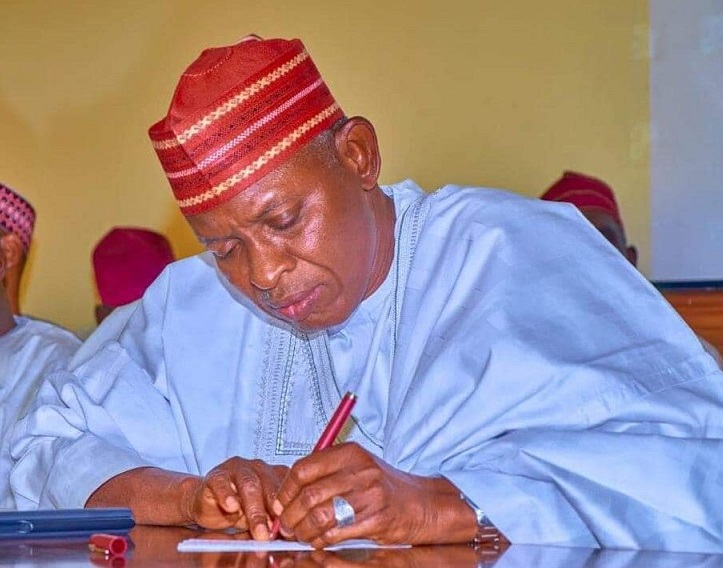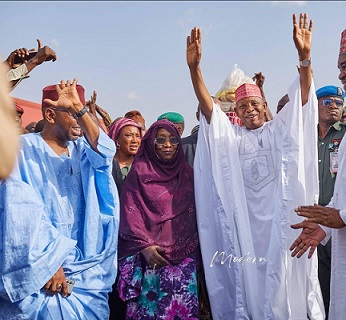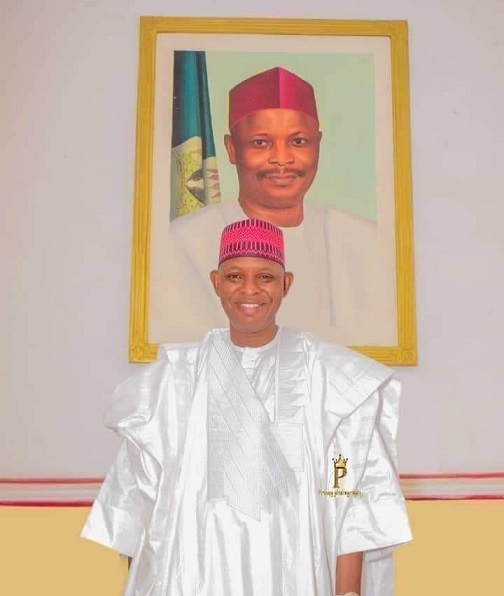
Abba Kabir Yusuf (Gida-Gida)

Reimagining education in Kano State: A call for visionary leadership

By Huzaifa Dokaji

Imagine a bustling city nestled in the heart of West Africa that radiated intellectual brilliance and creativity long before the Europeans reached the region. This is Kano, a city whose intellectual achievements have shone brightly throughout history, never hidden from the world’s gaze. A state North African merchants describe as “a city like a thousand city”. Allow me to paint a vivid picture of Kano’s intellectual past, a portrait that will captivate your imagination and unveil the greatness that lies within.

Centuries before the arrival of colonial powers, Kano was a thriving centre of learning, attracting scholars from far and wide. It was a place where minds converged, knowledge was cherished, and intellectual pursuits flourished thanks to state and privately-sponsored academic spaces. In the corridors of Kano’s renowned educational institutions, such as the intimidating Madabo centre, scholars delved into the depths of philosophy, science, literature, and Islamic studies. They engaged in intellectual debates, exchanged ideas, and produced works that left an indelible mark on the intellectual landscape of their time and beyond. This legacy, however, is at peril more than ever.

In a state that once boasted of kings and emirs renowned for their generous support of scholars and students, state scholarships are now only disbursed on the eve of elections, serving as mere tools for vote canvassing. Our schools are among the worse in the world. Although once a space where literary production was at its fines, schools in Kano lack access to any useful library resources. Lecturers resort to illegally downloading books online or relying on pirated copies to fulfil their teaching duties.

It is genuinely dismaying that a junior lecturer in our universities must spend nearly half their monthly wage to order an essential textbook on Amazon, while students at even the poorest universities in America have access to such materials through interlibrary loans. Adding to this bleak scenario, for example, over three years, Stony Brook University in New York spent about half of our 2023 budget for education to renovate its Student Union building. As worrying as this is, I believe Kano State still possesses the potential to emerge as a shining example of educational brilliance once again. My intervention is limited to institutions of higher learning.

To transform the Kwankwasiyya vision for education into a reality, we must transcend the mere provision of basic educational infrastructure and sponsoring students to study abroad. We must embrace a bold approach that surpasses the efforts of our Nigerian and West African counterparts. We need visionary leadership and innovative infrastructure. We need leaders who understand that education is not merely about constructing classrooms and dashing out scholarships; it is about providing qualitative and enduring infrastructure and creating an environment that fosters intellectual growth, critical thinking, and cutting-edge research. We need leaders who recognise that the quality of education is directly proportional to the quality of infrastructure provided and the system created.

Imagine a Kano State where universities boast state-of-the-art research laboratories with cutting-edge technology. Envision lecture halls that facilitate interactive and engaging teaching methods, equipped with the latest audiovisual tools and comfortable seating arrangements. Picture libraries filled with a vast array of books, journals, and digital resources, providing students and faculty with access to a world of knowledge at their fingertips. Imagine campuses adorned with green spaces, inspiring architecture, and modern facilities that foster an atmosphere conducive to learning and intellectual exploration. Imagine a Kano where lecturers are paid a decent wage.

We must transcend those dilapidated buildings that even counties are ashamed of building abroad. There is a critical need to dream beyond the limitations of what other Nigerian governors have failed to achieve. We must look to the examples set by leaders in more progressive societies and strive for such excellence. Let us aim to provide our students and faculty with infrastructure that not only meets their basic needs but also inspires them to reach new heights of knowledge and innovation. This should be the Kwankwasiyya vision.

The interventions

a. Infrastructure

To realise this vision, it is crucial to prioritise the modernisation and expansion of our universities’ infrastructure. Outdated facilities, overcrowded classrooms, and limited resources hinder the educational experience and impede the pursuit of cutting-edge research. It is time to break free from the shackles of mediocrity and invest in infrastructure that reflects our commitment to academic excellence. We need well-equipped laboratories, not just buildings with nothing to offer our science students. By allocating a significant portion of the state budget to education and ensuring the judicious utilisation of funds, we can establish a sustainable funding model that facilitates the development of world-class infrastructure.

The above investment will benefit our universities and attract renowned scholars and researchers from around the world. They will see Kano as a place where they can pursue their academic endeavours in an environment that supports and nurtures their intellectual growth. By looking at what governors in more advanced regions are doing, we can identify innovative approaches to infrastructure development. These leaders understand that modernising educational institutions goes beyond constructing buildings; it involves creating spaces that foster collaboration, critical thinking, and creativity. They invest in research facilities, technological resources, and student support services that enrich the educational experience and provide students with the skills needed to thrive in the global economy.

b. Wages and Allowances

There is a pressing need for Governor Abba Kabir Yusuf to reconsider the current remuneration package for lecturers in our state-owned higher institutions. It is essential to rise above the confines of the narrow mindset that accepts the prevailing notion of meagre salaries for lecturers on the selfish idea that it is what all states and the federal government are paying. In this era, marked by heightened awareness and accountability, there is no plausible justification for not paying a reasonable wage when politicians have continued to show ingenuity in sourcing money to fund their expensive and outrageous lifestyles. Paying lecturers a meagre salary of $200 a month undermines their professional dedication and the essence of a vibrant and dynamic education system. Recognising the invaluable contributions of these esteemed educators, Governor Yusuf must transcend the limitations of prevalent practices and champion a new paradigm of valuing and rewarding academic expertise. By offering a respectable and competitive wage, he can demonstrate his unwavering commitment to nurturing an environment that attracts and retains top-notch scholars, who, in turn, inspire students to reach new intellectual heights.

c. Grants and fellowships

The absence of grants in Kano universities is not only a concern for the institutions themselves but also a reflection of the broader condition of education in our beloved state. No society can truly develop its education system and produce graduates who can address the nation’s needs without ensuring access to basic resources, such as grants, which fuel academic progress and knowledge dissemination. To rectify this pressing issue, there is an urgent need to prioritise establishing grant programs that cater to the needs of faculty members and students across all universities in Kano State. It is imperative to allocate funds in the state budget specifically dedicated to supporting and rewarding research, innovation, and academic excellence.

For several reasons, grants and fellowships are crucial in developing academic research, especially in developing countries. First, they provide financial support to researchers who may not have the resources to pursue their studies. Second, they facilitate collaborations between researchers worldwide, enabling the exchange of ideas and knowledge. Third, grants and fellowships often come with opportunities for training and mentorship, which can enhance the skills and expertise of researchers. Finally, supporting academic research, grants, and fellowships can lead to the developing of new technologies, products, and services that can have significant social and economic benefits for developing countries.

The government should collaborate with private organisations, philanthropists, and international institutions to establish a successful fellowship and grant program in Kano. By working together, the government can leverage existing resources to create a sustainable program that supports research and innovation in academic institutions.

Grants, both for lecturers and students, are crucial lifelines that enable universities to flourish and produce graduates equipped with the skills necessary to thrive in today’s rapidly evolving world. They will provide financial support for research projects, allow for acquiring state-of-the-art equipment and resources, and facilitate collaboration with industry partners. Without grants, universities face a significant impediment to progress and risk falling behind in the global academic landscape. Establishing fellowships and grants in Kano can help bridge the gap between local and international education systems by attracting talented scholars and researchers worldwide. This will give students and scholars access to diverse ideas and perspectives, enabling them to compete globally.

Grant investments will demonstrate Abba Kabir Yusuf’s commitment to developing Kano’s education system. It will make him, perhaps, the only governor to establish such in the entire Northern region. Such a move will enhance the quality of education and attract renowned researchers, industry partnerships, and prestigious grants to our universities. The ripple effect of such investment will position Kano State as a hub for innovation, drive economic growth, and nurture a generation of graduates ready to tackle local and global challenges.

Denying students access to grants limits their potential and hampers their ability to engage in hands-on, practical research experiences that enrich their educational journey. By investing in grants, we empower our students to contribute meaningfully to their respective fields upon graduation. Moreover, these programs will create a culture of research and innovation in academic institutions, leading to increased productivity and competitiveness.

In conclusion, by embracing visionary leadership, investing in infrastructure, and establishing grant programs, Kano State can transcend the limitations of the past and emerge as a leader in educational excellence. Let us not settle for mediocrity but strive for greatness in our pursuit of knowledge and innovation. The future of Kano’s education system lies in our collective commitment to providing world-class infrastructure and nurturing a generation of scholars capable of making significant contributions to society. Together, we can transform Kano into an educational powerhouse that inspires and empowers future generations.

Huzaifa Dokaji is a PhD student and teaching assistant at the Department of History, State University of New York at Sony Brook. He can be reached via huzaifa.dokaji@stonybrook.edu.

Restoring Muhammadu Sanusi II

By Dr. Aliyu U. Tilde

History repeats itself, they say. However, that recurrence was less frequent in the history of rulers of Northern Nigeria. While historians can remember two, we may be at a point of witnessing the third.  

Sometime in December 1652, Muhammadu Kakuna, the 33rd Sultan of Kano, was ousted under the influence of the powerful Maidaki Auwa, who installed her son, Soyaki. Kakuna retreated to Zaria and, within days, fought back his way to the throne just before the year ran out. That was the only time a ruler of Kano was restored.

In 1901, the British colonialists occupied Kontagora—tudu makwantar rikici—and deposed its 3rd Emir, Ibrahim Nagwamatse, for his notorious slave expeditions. They installed his son. For some reason, after just two years, the British returned Ibrahim from exile in 1903 and made him the Sarkin Sudan, and he reigned until he died in 1929.  

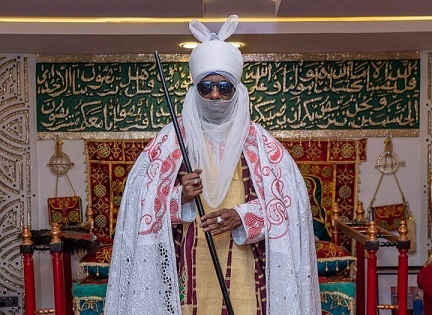
Muhammadu Sanusi II, the 14th Emir of Kano, may soon be the third. Like in the case of Kakuna, many saw his removal by Governor Abdullahi Umar Ganduje on the grounds of insubordination as a live specimen of highhandedness, intolerance, and vengeance. The Emir was arrested and banished to Loko, Nassarawa State, for confinement, an action which he successfully fought against before a federal high court in Abuja. On 30th November 2020, the court declared the internment and the Emirate Council Law under which it was undertaken unconstitutional. It restored the fundamental rights of the deposed Emir to human dignity and personal liberty.  

In contrast to Maidaki Auwa of 1652, Governor Ganduje went beyond the Emir and balkanised the Emirate. He divided it into five independent emirates to prevent the emergence of any strong Emir of Kano in the future. This act of downgrading the system, the first of its kind since Bagauda founded Kano 1,025 years ago, is understandably repugnant to the Kano ruling family and many of its subjects. If the malware, they argue, had only changed the driver file—in this case, the Emir—the system could tolerate that and continue with the same speed. But corrupting the entire system files and downgrading its performance to a status of a photocopier cannot be tolerated. A ‘system restore’ is necessary.  

Restoring the Kano Emirate system to its 9 March 2020 date is now on the fingers of the new administration in the State. It will undoubtedly be greeted with mixed feelings in the next few days, especially as it will portend restoring its unified disk configuration and the deleted driver file.  

History is about to witness that restoration if the feelers from Kano are accurate. How the ancient city would absorb the heat of the operation and bounce back as one of the most important emirates in the region is a matter of immediate concern to its citizens. As Nigerians, we can only hope that it does so without boiling.

Dr Aliyu is a former Bauchi State Commissioner of Education. He can be reached via Twitter @Dr_AliyuTilde.

Uproar over demolition exercise in Kano

By Bilkisu Kabir Ibrahim (Mrs)

It is often said, “Destruction is easy, but rebuilding takes more time to achieve.” 

Politics and governance are two sides of the same coin, as they are often used interchangeably even though they differ in veracity. In modern democratic societies, citizens (and leaders, by extension) fail to understand the difference between the two concepts in terms of meaning and operation. 

Barely less than two weeks after the swearing-in of the newly democratically elected governors and members of the states’ assemblies across the states of the federation, several governors focus on so many engagements as part of the fulfilment of their campaign promises, ranging from suspension and removing many top heads of the state’s ministries, departments and agencies alongside forwarding of new nominees to their respective state house of assemblies for various positions.  

However, the reverse is the case in Kano State as the new governor fulfils his campaign promises where demolishing illegal structures is part. In his inaugural speech, his Excellency Abba Kabir Yusif revoked all sold public places and assets by his predecessor by ordering security agencies to take over such sites. A few days later, he began a demolition exercise with a 3-story building with 90No. Shops along Racecourse Road Nassarawa GRA which were reportedly owned by the son of the outgoing governor of the state, followed by another multi-billion Naira project via Public Private Partnership (PPP) arrangement initiated by his predecessor, situated at old Daula Hotel (state’s property) on Murtala Muhammad Way, Kano.

Nevertheless, several structures have been marked and knocked down as illegal buildings, which include; Eid-Ground Shops (Masallacin Idi), shops detached from Sani Abacha Stadium Kofar Mata and Buildings at GGSS Dukawuya Goron Dutse as well as some structures at Kano Hajj Camp among others. 

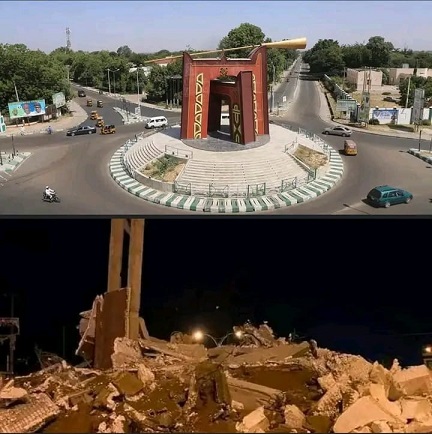
Subsequently, mayhem erupted in the state capital and neighbourhood when the governor ordered the demolition of the historic Kano roundabout structure in the early hours of Wednesday, 14th June 2023. The roundabout, known as Kano Golden Jubilee Monument, was erected in 2017 and conceived and designed by a young female architect to commemorate Kano’s 50-year attainment as a state.

While several indigenes and residents have condemned in totality the demolition of the monument, the press secretary to the governor, Sunusi Bature D/Tofa, in his reaction, revealed that the roundabout was demolished for security and safety reasons, “it also poses traffic challenges around the area due to its size blocking the view of drivers accessing all routes linked through the roundabout”. 

Nonetheless, mixed reactions become the order of the day; some residents are hailing the governor for staying firmly to his campaign promises, while many traders lament the demolition exercise as it truly affects their commercial activities by creating a hostile business environment forcing many of their customers from within and outside the state to stay away. During my interview sessions, a respondent feared the ongoing action as “it scared away private investments in the state, which is the time needed for a successful administration”. Another respondent (a victim) revealed that, on Saturday, he supplied aluminium and other equipment for a window project at Old Daula Hotel worth N30,000,000.00 but were all looted in the night immediately after the demolition, which the looters termed as “GANIMA” in Hausa. 

Similarly, it was reported that, in the heart-wrenching incident, a young boy lost his life after being struck by a truck during the demolition of a structure. The unfortunate event occurred amidst the efforts to clear the unauthorised constructions. The boy was not the only one affected, but also several individuals sustained severe injuries as they attempted to take advantage of the demolition exercise and loot multimillion items.

Some critical questions were asked about this light exercise. This government is supposed to concentrate on critical infrastructure and human development to overshadow its predecessors instead engaged in revenge and self-centred aggrandisement. 

His Excellency Abba Kabir may wish to remember that some projects need maintenance and sustenance to suit the rising demands of the good people of the state. Instead, the government should have to determine the legality or otherwise of the allocated lands by constituting high-powered technical committees to, among other things, investigate the following: 

a. Whether the due process for land allocation is followed;

b. Whether all building codes and regulations have been complied with;

c. The rationale behind the building purpose;

d. Was the land sold at market price, and whose account was the money deposited into or allocated as enshrined in the Land Use Act?

e. Was the land allocated to the rightful applicant? 

f. Was the roundabout demolition in the interest of most of the populace? Etc.

g. The committee to proffer some recommendations to the government for a proper solution. 

To crown it all, the governor may further wish to recall the Oath of Office taken during the swearing-in session, that “….I will not allow my personal interest to influence my official conducts or my official decisions …” Surely, Almighty God will ask for such utterances. 

Bilkisu Kabir Ibrahim (Mrs) wrote from Kano state, Nigeria. She can be reached via bilkisukabir1@gmail.com.

Kano Demolition: Doctor who built house with overseas loan begs Abba

By Uzair Adam Imam

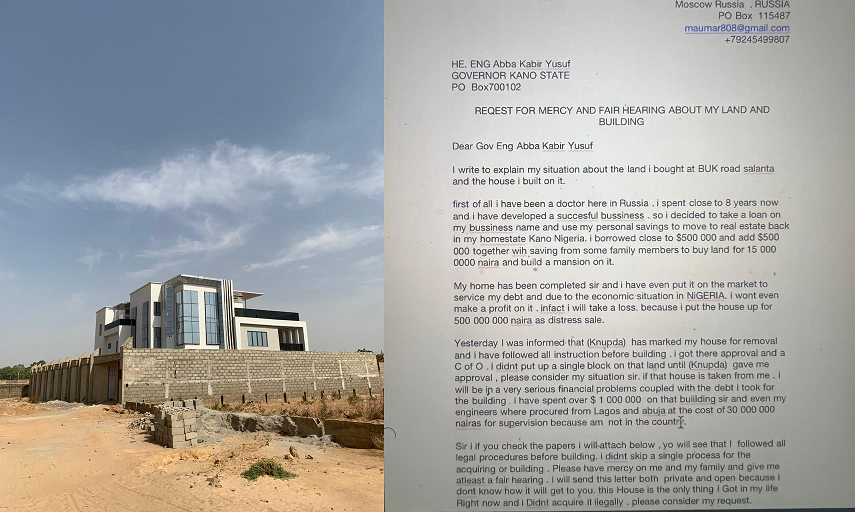
A Nigerian doctor based in Russia has pleaded with the Kano State Governor, Engr. Abba Kabir Yusuf, to spare his newly built house from demolition.

The doctor, whose name is withheld, told Kano Chronicle that he borrowed almost $500,000 and added his savings of $500,000 to build the house.

The passionate plea to the governor was in a letter written by the doctor, which Kano Chronicle shared on its verified Twitter handle.

Recall that the governor had decided not to back down on demolishing illegal structures built by his predecessor.

Abba’s administration had torn down a three-storey shopping complex located at Race Course Road, Nasarawa GRA, with 90 shops, Daula Hotel and other buildings at Hajj Camp, to mention but a few.

However, the doctor, who insisted that he put the house up for N500,000,000, pleaded with the governor to spare his home, adding that he would be at a loss if the house is demolished.

He stated, “I spent close to 8 years working in Russia now, and I have developed a successful business. So I decided to take a loan on my business name and use my savings to move to real estate back in my home state Kano Nigeria. I borrowed close to $500,000 and added $500,000 together with saving from some family members to buy land for 15,000,000 nairas and build a mansion on it.

“My home has been completed, sir, and I have even put it on the market to service my debt due to the economic situation in Nigeria. I won’t even make a profit on it. I will take a loss because I put the house up for 500,000,000 Naira as a distress sale.”

“Yesterday, I was informed that (Knupda)  has marked my house for removal, and I followed all instructions before building. I got their approval and a C of O . I didn’t put up a single block on that land until (Knupda)  gave me approval. Please consider my situation, sir. 

“If that house is taken from me. I will be in very serious financial problems coupled with the debt I took for the building,” he added.

Kano reopens applications for foreign, local scholarships for indigenes

By Ahmad Deedat Zakari 

The Kano State Government has resumed awarding local and foreign postgraduate scholarships to indigenes of the state. 

This was made public on Friday through a statement signed by the Secretary to the Kano State Government, Dr Abdullahi Baffa Bichi.

Dr Bichi called for entreaties from qualified Kano graduates. Graduates with first-class honours who are from the state and are medically fit to travel abroad are eligible to apply. 

He also noted that the last time the state awarded scholarships of this kind was in 2025, during the administration of Senator Rabiu Musa Kwankwaso.

Part of the statement reads: 

”Applications are invited from suitably qualified graduates for Kano State postgraduate foreign and local scholarships for the 2023/2024 Academic Session.

Recall that the last scholarship was offered in 2015 by Sen. Rabiu Musa Kwankwaso’s Administration which sponsored the third batch of 503 first-class graduates to 14 different countries.

After eight years without postgraduate foreign scholarship by the last administration, H.E. Engr. Abba Kabir Yusuf, The Executive Governor of Kano State, has approved the resumption of the postgraduate foreign and local scholarship with effect from the 2023/2024 Academic Session.”

Applicants are called on to fill out relevant application forms obtainable for free from www.kanostate.gov.ng/scholarship_application.

The state concludes that:

“Eligible applicants would be invited for a screening interview.

Completed application forms together with copies of credentials (indigene certificate, medical certificate, birth certificate, Primary School Certificate, WASC/GCE/SSCE certificate, Degree certificate etc) should be submitted to the secretariate of the screening committee, Old Conference Room, Office of the Secretary to the State Government, Cabinet Office, 1 Wudil Road, Kano within two weeks of this advertisement.”

Counting the cost of Kano demolitions

By Mohammad Qaddam Sidq Isa (Daddy) 

Notwithstanding the appropriateness or otherwise of the recent and unprecedented wave of demolitions in Kano by the newly inaugurated governor, Abba Kabir Yusuf, it may have triggered a vicious circle of the incumbent governors and their predecessors taking turns revoking, converting and reallocating public land and facilities in the state. 

Though purportedly guided by relevant legislation and overriding public interest, successive Kano state governors have been involved, to various extents, in controversial public land and facility-related scandals. However, the immediate past governor, Abdullahi Umar Ganduje, having literally overdone it, has been particularly notorious in this regard. 

Now with the recent demolitions, Governor Abba has proven that it’s indeed his turn. The way they were conducted, which made the operation look more like mob action, has been effectively set as a precedent for future similar operations in the state. 

So, unless this looming vicious circle is averted, Kano may, after every four or eight-year tenure, witness similar operations with persistently worsening intensity and impacts.   

Having monitored the situation from afar, thanks to the viral video clips on social media, I felt not only sad but extremely embarrassed watching helplessly how my city, a supposedly aspiring mega city, was being systematically bastardized.

I watched in shocked dismay how the lives of innocent traders, who simply happened to be tenets in the targeted buildings, were being turned to, perhaps, perpetual misery overnight by crowds of sadist creatures feigning being human looting their (traders) merchandise. Some buildings had already been looted even before the demolition team got there. There are verified heartbreaking stories about the plights of many victims. In a particular instance, one was reliably reported to have gone mad out of frustration. 

The sheer ferocity with which the mob plundered traders’ goods suggests deep-seated populist sadism and sheer envy in a society where tacit gloating over the misfortune of any real or perceived wealthy person has become normal. I have also observed tacit attempts on social media by many otherwise reasonable people to underestimate the plights of the victims and even put the blame on them for their ‘failure’ to evacuate their goods in time. 

Meanwhile, the cumulative impacts of this vicious circle on the state’s economy and other strategic interests cannot be overestimated. It’s already seriously affecting local investor confidence, for no one will consider the viability of any significant investment, especially in, say, real estate development and other related sectors, knowing that the land allocation is prone to arbitrary revocation and the structures are subject to impulsive demolition at any time. 

Equally, banks and other financial institutions will have to discontinue recognizing Kano government-issued certificates of property ownership as collateral, knowing that they may at any time be rendered as worthless as takardar tsire. 

Likewise, the state’s attractiveness to direct foreign investment (if there is currently any) will be hit even harder, for no prospective foreign investor, being typically particularly sensitive to any red flag suggesting policy inconsistency, will consider investing in Kano knowing that whatever policy or incentive attracted him can be impulsively terminated at any time. 

Now, obviously, Governor Abba is aware deep down that that wasn’t how he was supposed to handle the situation in the first place. His approach is enough to vindicate those who insist that he is simply on a vengeance mission with a premeditated resolve to settle scores with political opponents and their associates on behalf of his political godfather, Rabi’u Kwankwaso. 

He can address whatever land use abuses his predecessor committed, which are so many, by the way, but he should do it in a civilized way through due process leading to the demolishing of what indeed deserves to be demolished and sparing what deserves to be spared for the purpose of reclaiming and converting it into a public facility. 

Mohammad Qaddam Sidq Isa (Daddy) wrote from Dubai, UAE, and can be contacted via mohammadsidq@gmail.com.

Company seeks N10bn in compensation from Kano gov’t for demolishing property

By Muhammad Abdurrahman

Lamash Properties Limited demands N10 billion in compensation from the Kano state government for demolishing its property.

The firm said it entered into a public-private partnership (PPP) with the government of Kano to redevelop the Daula Hotel.

On assuming office, Abba Yusuf, governor of Kano, ordered the demolition of “illegal property” built by the former administration of Abdullahi Ganduje.

In a statement on Sunday, Hassan Yusuf Baba, the firm’s executive director, said it was a “gross injustice” because they were not notified of the demolition exercise.

“Our bid, like every other bid submitted, went through all the processes including going before the state executive council after which we won the bid,” Baba said.

“We were issued the letter of award and we signed a PPP contract agreement with the Kano state government after which we began work on the project.

“The value of the land being the equity contribution of the Kano state government into the project plus the agreed profit share of the state government all in the sum N2,297,016,622.89 only was converted into the hotel and its ownership was given to the Kano state government as its share into the project under the PPP arrangement.

“On May 27, 2023, the immediate past governor of the state, Abdullahi Umar Ganduje, performed the commissioning ceremony of the hotel and it was handed over to the state government as its share in the project.

“To our utmost surprise, we received a call around 2am on Sunday June 4, 2023, that officials of the state government led by the new governor Abba Kabir Yusuf, have mobilized to the site of the project with bulldozers and were tearing down all the buildings on the land including the already completed 90-room 5-star Daula Boutique Hotel, the 90 percent completed commercial area (malls) as well as the ongoing residential apartments.

“We have instructed our legal team to institute legal actions against the state government to claim compensation to the tune of N10 billion already invested in the project and to stop the state government from further taking actions that will negatively affect us based on the PPP contract agreement we signed with it.”

Seeking sustainable solutions in Kano

By Mukhtar Jarmajo

The new administration in Kano has embarked on a commendable mission to reclaim the lands around schools that were allegedly wrongly sold out by the past government. Such action is important for the protection of public resources and the promotion of quality education. However, demolishing the shops built around the schools may not be the best approach to solving the environmental crisis created by the encroachment.

While it is understandable that the new government wants to send a strong message to potential land grabbers and illegal developers, demolishing the shops may cause unintended consequences that could hurt both the affected traders and the government. For example, many shops were legally acquired by small business owners who may have invested their life savings and borrowed money from banks to establish their businesses. Destroying their livelihoods without proper compensation or alternatives could lead to social and economic unrest.

Furthermore, destroying the shops may not solve the problem of encroachment. Once the shops are gone, the empty spaces may attract new forms of illegal settlements or waste dumping, further depleting the environment and posing health hazards to students and residents. Therefore, a more strategic and holistic approach to Kano’s environmental and economic challenges is needed.

One possible solution is to engage architectural and environmental experts to design sustainable solutions that could improve the safety, aesthetics, and functionality of the schools and the commercial spaces around them. For example, the shops could be redesigned to allow more natural ventilation, lighting, and greenery, enhancing the microclimate and reducing the need for air conditioning and artificial lighting. The shops could also be integrated with the schools’ curricula and activities to promote entrepreneurship and civic engagement among students and teachers.

Another solution is for the government to acquire the shops and lease them out to qualified and responsible entrepreneurs who could operate them under certain conditions, such as payment of rent, taxes, and adherence to environmental and safety standards. Such an approach could generate revenue for the government, support small businesses, and foster a culture of responsible commercial activity in Kano.

Preserving our schools and small businesses requires a collaborative and creative effort from all stakeholders, including government officials, planners, architects, investors, traders, and residents. We must resist the temptation to resort to destructive means of solving complex problems and instead seek sustainable and inclusive solutions that benefit our communities and environment.

The demolition of shops around schools in Kano may seem like a quick fix to the encroachment problem, but it is not a wise or ethical solution. Instead, we should explore innovative and sustainable ways to protect our public resources, promote quality education, and support responsible entrepreneurship. Let us preserve our schools, our small businesses, and our dignity.

Jarmajo wrote from Wuse, Zone 2, Abuja. 

Open letter to Governor Abba Kabir Yusuf

Dear Sir,

First and foremost, I must offer my humble congratulations on your election victory. By electing you into this exalted office, the people of my dear Kano State have no doubt placed their tomorrow’s trust in you to lead us with compassion and dedication towards a better, prosperous future, and we are hopeful that you will rise to the occasion.

Dear Abba Gida-Gida, as you take on this vital role, we urge you to prioritise the needs of the good people of Kano above all else. 

Kano faces numerous challenges, including economic inequalities, healthcare disparities, educational deficiencies, traffic congestion, and dilapidated roads, which become hazardous for drivers, pedestrians, and cyclists: increased crime rates, environmental degradation and strain on public services like schools and hospitals. We require a leader committed to tackling these issues head-on and finding lasting solutions that benefit all residents, regardless of their background or socioeconomic status.

During your campaigns, you have had the opportunity to mingle and connect with many individuals, giving you a deeper understanding of their struggles and challenges. Therefore I urge you to know their worth and show concern for their well-being.

I must also encourage you to prioritise transparency and accountability in your administration. The people have a right to know how their paid taxes are spent and whatever decisions are made on their behalf. Open communication and free accessibility to your office will go a long way in building trust with the general public.

Finally, we ask that you lead with compassion and empathise with the needs of your people. Our State is diverse, with unique, distinctive opportunities and perspectives that make us stronger and shoulder above our peers.

As Governor, you are responsible for ensuring that all residents feel seen, heard, cherished and valued. By working together, we can create a brighter future for all.

Once again, congratulations on your election. We look forward to working with you to make our state the best.

Abbas Datti wrote from Kano via abbasdattibashir@gmail.com.

Kano Governor-elect declares assets ahead of inauguration

By Muhammad Abdurrahman

The declaration was made known on Friday 26, 2023, via a pess statement signed by Sunusi Bature Dawakin Tofa, the chief press secretary to the Kano State Governor-elect, H.E. Abba Kabir Yusuf.

The statement describes how the Governor-elect declared the assets and liabilities ahead of his inauguration on Monday 29, 2023. In accordance with the law, Engr. Yusuf submitted a completed form to the Code of Conduct Bureau, CCB, Kano office.

Engr. Abba, who was received by the CCB State Director, Hajia Hadiza Larai Ibrahim, said his earnest declaration of assets is a demonstration of transparency and accountability that will form the bedrock of the incoming administration in Kano State.

He said: ”Today, I have fulfilled the constitutional obligation of declaring my assets before assuming the office, May 29.”

The Governor-elect, told his host that public service is a calling; it is a service to humanity and I am always ready to serve having won the confidence of the good people of Kano State.

Further, Engr. Abba declared that the coast is now clear for the journey of restoration of sustainable development in all the sectors, where every Kobo of the public fund spent will not only be justifiable but accountable in Kano State under his watch.

He assured that all the public officials including political appointees that will serve in his administration will be mandated to follow suit of asset declaration as required by the Law.