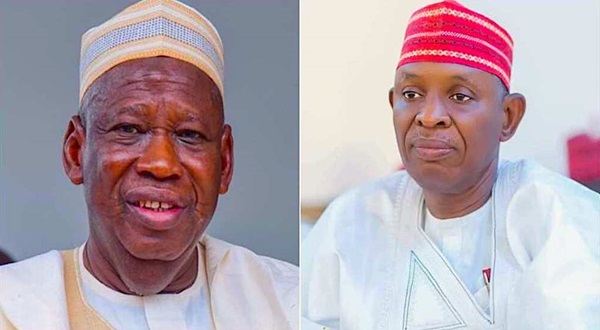
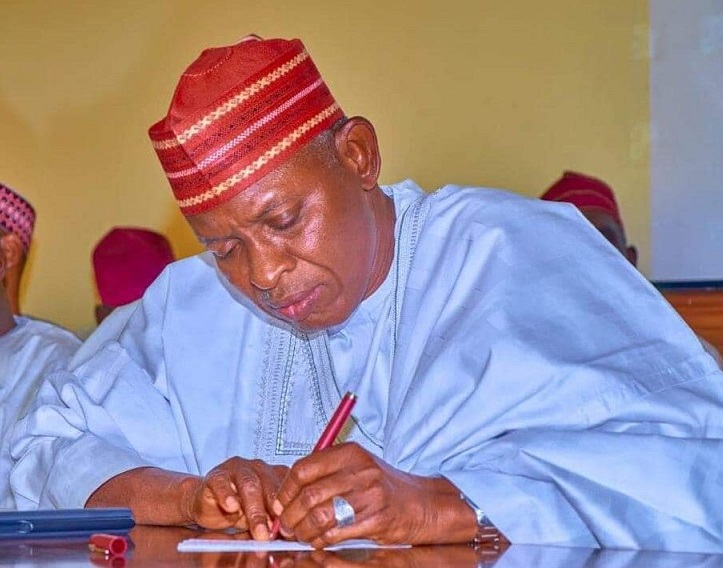
Abba Kabir Yusuf (Gida-Gida)

On the Kano Coalition of Ulamas’ giant efforts in promoting sanity and peace in the state

By Salihi Adamu Takai

Kano State Coalition of Ulama comprises the great Islamic clerics of Kano from different sects to promote sanity and peace. The coalition is headed by Sheikh Abdulwahab Abdullah (Imam Ahlussunnah). The clerics, who grouped themselves in the religious effort of making the work of Almighty Allah effective in the state, are very important scholars of impeccable characters.

Kano State happens to be the ancient city in the northern part of Nigeria that is very popular for its religiosity. It is one of the first states in Africa to receive the light of Islam. Many scholars have revealed that Islam was received in the state through Wangarawa and Arab merchants.

The spread of the Islamic religion in the state has made it a very religious city—and the religious aspect has become very sensitive in the state. After some years of the spread of the Islamic religion in the city, there has been the existence of Sufism and other sects of beliefs.

The Islamic reformers played very vital roles in sanitizing the aspects of the religion. They focused vehemently on the teachings. They gave more emphasis to the seeking of knowledge of Islam. This aided the reformation in the religious activities of the State.

The spread of Sunnah came and knocked on every door. The objective of the Kano State Coalition of Ulama is to reform religious teachings to accommodate morality. Despite people having embraced religious knowledge and Western education, there is also a need to reform teaching activities and their adoption.

Sometimes, people have the knowledge, but they need to be guided on how to apply it to their teaching and learning. So, the reformation needs a coalition for its success. It is for the Muslims.

The Coalition of the Ulamas has been intervening in matters of religion. They are very keen on promoting sanity in religious activities. They call for peace—and peace signifies the best way of depicting Islam.

To also achieve the aim of their activities, they refer to themselves as the Coalition of Ulama of Kano. This means they comprise different Ulamas from different sects; from Izala, Qadiriyya, and Tijjaniyya.

The Coalition could also be the source of understanding one’s teachings amongst the Ulamas. The Tijjaniyya Clerics in the Coalition could understand some aspects from those Sunni Scholars.

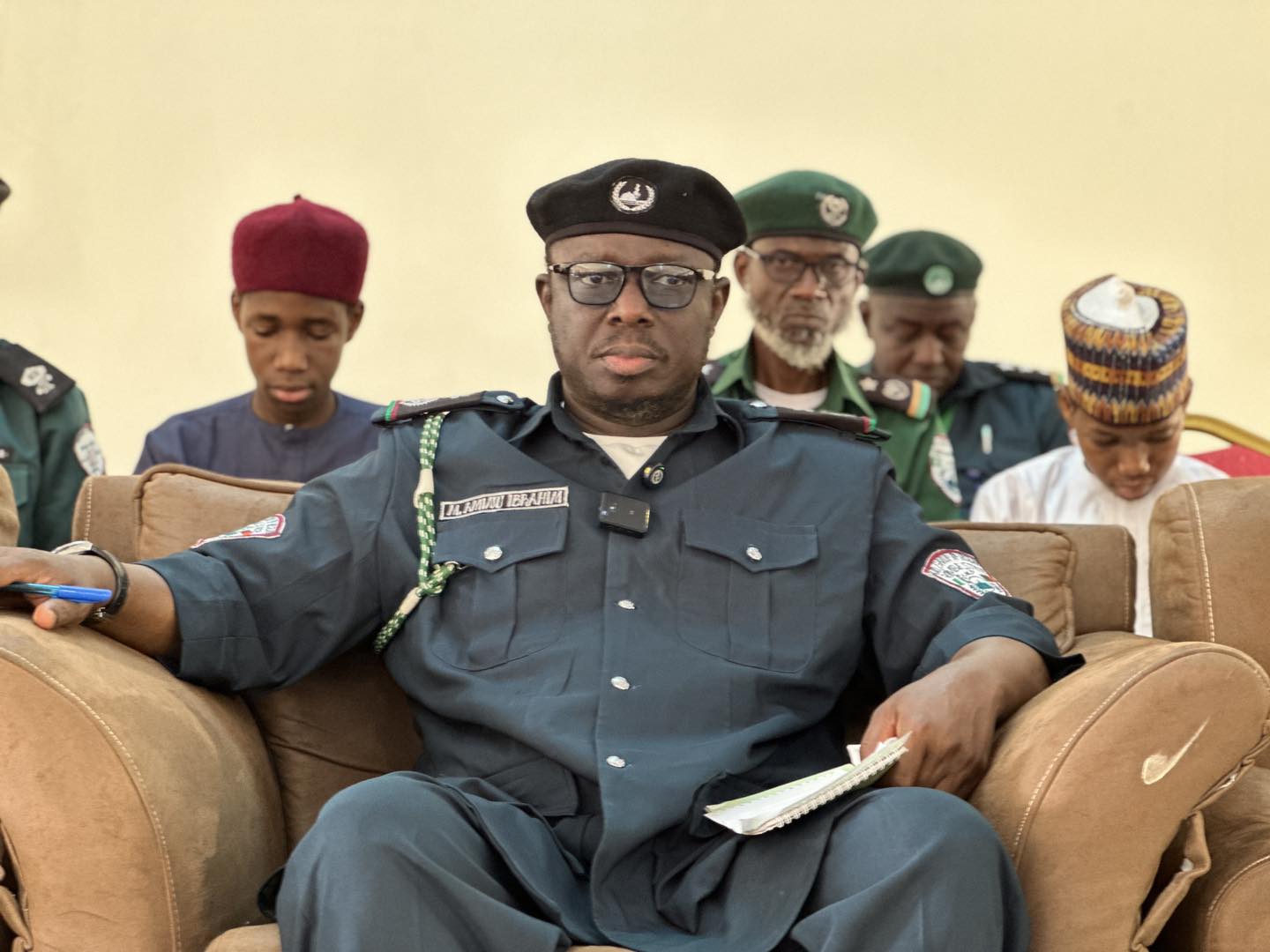
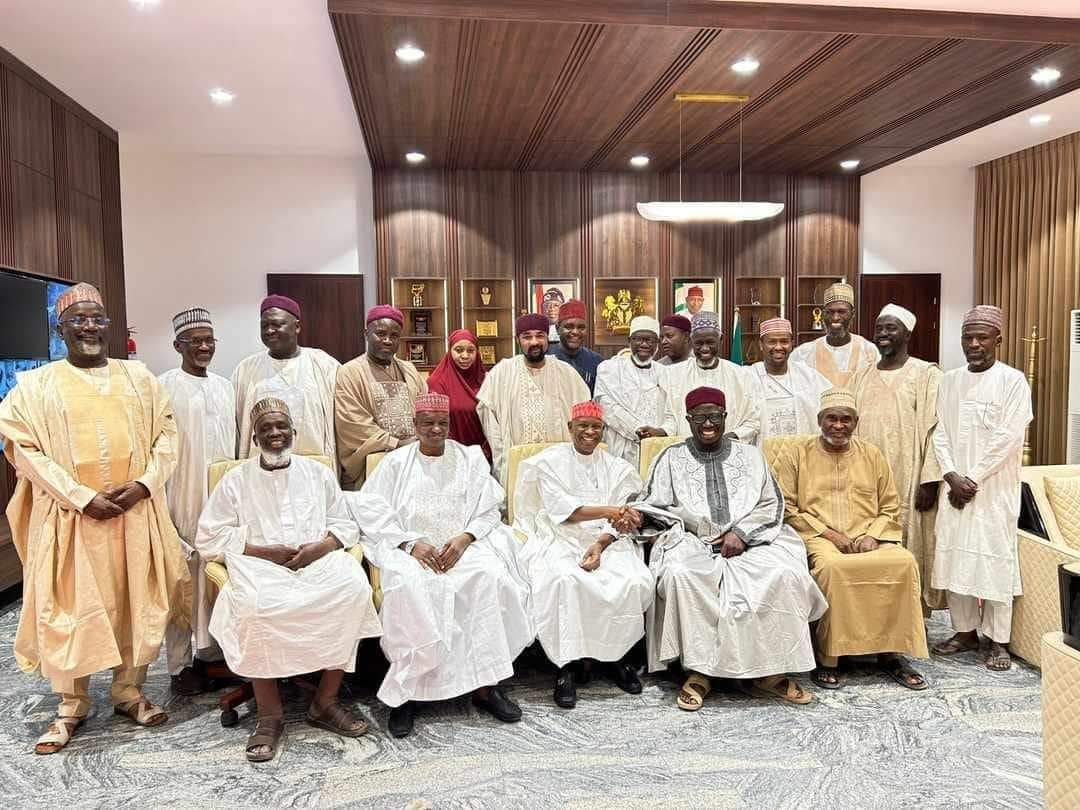
Moreover, the Coalition led by Sheikh Abdulwahab Abdullah reconciled Sheikh Aminu Daurawa with Governor Abba Kabir Yusuf following their misunderstanding about the conduct of the Hisbah corps. Today, Daurawa has resumed his position as the Hisbah Commandant. This is one of the thousands of achievements of the Coalition. They intervene in every matter that affects the public.

May Almighty Allah continue to support the Coalition in achieving their goals, and may He reward them, amin.

Salihi Adamu Takai wrote via salihiadamu8888@gmail.com.

Malam Daurawa’s exit and return

By Abdurrazak Muktar Makarfi

The recent departure of Malam Aminu Ibrahim Daurawa from his role as the commandant of the Kano State Hisbah Board left many people reflecting on the complexities of human relationships and the power of forgiveness. However, what followed was a heartwarming tale of redemption and reconciliation that touched the hearts of all who witnessed it.

Malam Daurawa’s decision to step down initially came as a surprise to the community. Known for his unwavering dedication to upholding justice and righteousness, his absence was keenly felt. Yet, amidst the uncertainty, a beacon of hope emerged in the form of a coalition of Kano Ulamas, who saw beyond the surface and recognised the genuine intentions of both parties involved.

The intervention of the Ulamas was a poignant reminder of the strength of the human spirit and the capacity for forgiveness. In a world often characterised by division and discord, their actions served as a powerful demonstration of the transformative potential of empathy and understanding.

For Malam Daurawa, the journey back to his role within Hizba was a humbling experience. Faced with the opportunity to return, he embraced it with an open heart, guided by the principles of integrity and compassion that had always been the cornerstone of his leadership.

As he resumed his duties, the outpouring of support from the people of Kano was overwhelming. Their unwavering belief in his ability to effect positive change was a source of strength and inspiration, propelling him forward on his mission to create a better future for all.

The bond between Malam Daurawa and the people of Kano and the Kano State governor, Engr. Abba Kabir Yusuf, grew stronger through this experience. Their shared journey of redemption and reconciliation deepened their connection, transcending the boundaries of leadership and community.

Looking ahead, Malam Daurawa’s story reminds us of the enduring values of integrity, compassion, and empathy that bind us together as a community. His journey is a testament to the power of forgiveness to heal wounds and the resilience of the human spirit in overcoming challenges.

Ultimately, Malam Daurawa’s story is not just about leadership or politics – it’s about the triumph of the human spirit and the enduring power of forgiveness to bring us together, even in the most challenging times.

Abdurrazak Muktar Makarfi wrote via prof4true1@gmail.com.

Kano: Sheikh Daurawa reconciles with Governor Yusuf, resumes work as Hisbah chief

By Muhammad Abdurrahman

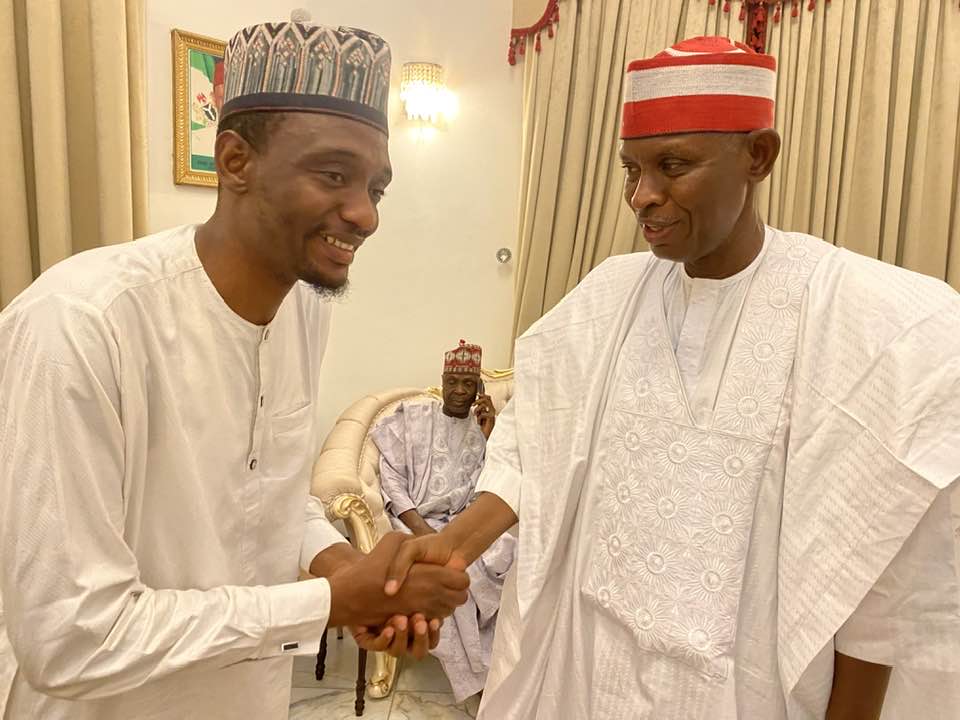
Kano State Governor, Abba Kabir Yusuf, has reconciled with the Commander General of the State Hisbah Board, Sheikh Aminu Daurawa, who had resigned his appointment last week.

Daurawa, who resigned from his position through a video that went viral while attending a retreat organized in Kaduna, stated that his decision was influenced by the public’s criticism of the Hisbah operatives and their actions.

Speaking to journalists about the development, the spokesperson to the governor, Sanusi Bature Dawakin Tofa, confirmed the reconciliation on Monday.

Dawakin Tofa said the reconciliation was achieved through the intervention of respected Islamic clerics and a meeting with the governor that lasted for hours.

Some of the people in attendance include Prof. Salisu Shehu, Dr. Saidu Dukawa, Sheikh Abdulwahab Abdallah, among others.

Hisbah Arrest: Law and morality

By Aliyu Zangina

The people of Kano State woke up to the news of the resignation of the Commander-General of the Kano State Hisbah Board (Hisbah). This came after criticisms directed at some of the activities of the Hisbah Corps by His Excellency, AbbaKabirYusuf, the governor of the state.

The Hisbah Board is a creation of the Kano State Hisbah Law 2003. Its primary responsibility is to advise on and enforce religious morality within the state. Despite this mandate, the corps has been criticized for violating moral codes and secular laws of the land by making illegal arrests, which are a damning affront to human dignity. It is on this premise that I seek to explore law and morality vis-à-vis the arrest in controversy.

THE INTERSECTION BETWEEEN LAW AND MORALITY

Arguments on the relationship between law and morality in the jurisprudential sense have lasted for ages and still rage on. The controversy surrounding Hisbah brings it to the fore.

Laws are loosely defined as enactments by a state, with binding and coercive force on individuals and institutions throughout the state.

While morality can be loosely defined as a proper behaviour in differentiation of what is right and wrong.

The major difference between them is while a breach of law attracts sanction, A breach of morality can only attract moral reprehension. The long age principle of law is that law and morality are poles apart. However, in the celebrated case of R v. Dudley & Stephens (1884)14 QDB 273 DC it was states that

“Though law and morality are not the same, and many things may be immoral which are not necessarily illegal, yet absolute divorce of law from morality would be of fatal consequence.”

In practice, morality complements the law, as many enactments were propelled by the moral demands of the people. For example, laws prohibiting theft and murder are rooted in the moral consciousness of the fact that taking other people’s property or life is morally wrong. Many laws embody moral principles within them, protecting and guaranteeing fundamental moral values. At the same time, the fundamental force is given by its moral obligation.

ACTIVITIES OF HISBAH

The term Hisbah in Kano has always been associated with controversy from its inception to date. When it is not President Obasanjo accusing the institution of jihadist tendencies, then it is people from the southern part of the country attacking the institution for destroying trucks of alcoholic drinks. The body has always been (in)famous for enforcing morality despite its efforts in curbing social and moral vices.

In November of last year, the Hisbah corps came under attack after raiding several hotels. A video of their operation surfaced on the internet, evidencing male officers harassing and apprehending female suspects and grabbing them in a commando style. Indeed, it was an affront to Islamic moral values. The actions of the Hisbah corps could be qualified as degrading treatment and, hence, unconstitutional. Allusions made to the video by the governor of Kano state prompted the commander-general’s retirement on March 1, 2024.

ARE LAWS REGULATING ARRESTS IN NIGERIA AT CONVERGENCE WITH OUR MORAL VALUES?

Unlike laws regulating search where the search is to be conducted by “persons of the same sex with strict regard to decency” and “reasonable time to withdraw” which must be given to a woman in purdah before a search is conducted on a premise she occupies, the laws regulating arrests in Nigeria have less regards to our moral values and culture as they do not have similar provisions regarding arrests to be conducted by persons of same-sex.

Therefore, the arrest carried out by the Hisbah corps is illegal only to the extent that it was done without a warrant, and their conduct violates the dignity of the suspect. However, the confinement of the female suspects by the male officers with excessive restraint cannot be faulted legally if there was a reasonable apprehension of violence, as our law does not mandate that the arrest of a woman be carried out only by a woman. This is not to serve as a justification for the degrading treatment meted out to suspects by the Hisbah corps during the arrest. They are suspects, not convicts, and even convicts are only deprived of their liberty, not their dignity.

CONCLUSION

“It is tempting to speak of law and morality as if they constitute two completely normative system whose prescriptions sometimes coincide and sometimes conflict. Maybe it is much more exact to consider law and morality as complementary. The complementarity of law and morality belies their separateness even though the two are not parallel streams whose water never mixed at any time.” UZOUKWU V. IDIKA (2022)3NWLR, (PT1818) (P, 462, paras G-H)

Many laws overlap with moral codes in Nigeria. Some laws were enacted to uphold our morality, but where the law does not contemplate our morals, it is our duty to call upon our senses of right and wrong. The Hisbah male officers should not have carried out the arrest of women, even though that alone cannot make the arrest illegal. It is their moral duty to have sent in their female officers to handle the entire scenario with a modicum of professionalism.

It is therefore put forward to our legislators that our Administration of Criminal Justice laws be amended to accommodate the model of arrest that will reflect our morals, culture, and dignity, just like the provisions on search.

Aliyu Zangina is a lawyer, and can be contacted via zanginaaliyu96@gmail.com.

Day Science College: Sustainability in Interventions 

By Mahmud Aminu Dambazau

The renewed interest in the state of infrastructure at Day Science College, Kano, by its alumni is highly commendable. When I was admitted thirteen years back, the school was one of the best in Kano State. No student sat on the ground; teaching materials were adequate; the library was full of books; the Physics, Chemistry, Biology and  Agric laboratories were well-equipped and functional. There was a Technical drawing studio, a weather station and even a computer lab provided by MTN. 

A large generator and school bus provided by the Malam Ibrahim Shekarau administration were well-maintained and functional. The toilets were clean and accessible. We even had a mini farm utilised by the agricultural students; water was never scarce. The school mosque had enough mats. That was then!

The academics, discipline and respect were topnotch. We wouldn’t have been one of the best if we had not been so lucky to have some of the best teachers across all disciplines. The current intervention proposed by the school’s old students might solve or at least reduce the present infrastructural gap. Below are  suggestions I think would help in sustaining or maintaining such and future interventions. 

A report by the 2012 chapter of The Old Students in 2021 revealed that there wasn’t even one classroom fully equipped with infrastructure and several classes without a single seat! The situation is worse at the moment. This is despite the interventions by corporate bodies, NGOs, CBOs, alumni, individuals and probably even the government. Maintaining infrastructure and equipment is impossible without funding. This decay might have been contributed by the pronouncement of free education by the government without providing alternative funding for these maintenances and other costs. 

I, therefore, propose a meeting with parents, teachers and representatives of chapters of the old students. Parents should be made to understand the importance of quality education and the present state of the schools in the absence of a stable funding option. The parents should, therefore, pay the sum of just five hundred naira (500) per student each term, which will, of course, not be school fees but meant for the provision and maintenance of physical and learning infrastructure. The individual chapters from the alumni should similarly pledge and contribute an annual fee of ten thousand naira (10,000) to be utilised for the same purpose.  

A friend of mine, Engr. Mustapha Tukur founded an initiative initially meant to consist of one hundred individuals in the Gadon kaya area of Kano who contribute the sum of one thousand naira monthly. I still can’t believe the number of interventions we have made through the voluntary contributions, which now involve other friends of his, even outside Gadon Kaya. With thousands of us as old students of Day Science College, if we could get just one thousand volunteers who could contribute one thousand naira per term (3-4 months),  we would be getting a million naira each term, which will go a long way in solving these issues raised in both short and long term.  

These funds can be managed by a committee with representatives from the parents, teachers,  school management, the school’s alumni and a representative of the KASSOSA national body.  The committee could be named Day Science Development Fund with clear guidelines, objectives, terms, timelines and deliverables.  

The above recommendations should not stop future government,  individual, chapter, or corporation interventions.  

While interventions have almost always been focused on physical infrastructure, there is a need to pay similar attention to the quality of education rendered. I was present at a debate organised by the pioneer administration of the KASSOSA BUK chapter among science school students. Day Science emerged second to the last, even though it was among sister science schools. The school, KASSOSA, or any respective chapter did not care to collect, analyse and report students’ performances at SSCE or similar examinations. While it is possible to excel academically without infrastructure,  it is impossible without quality education, even with the best infrastructure.  

On this note, I suggest an assessment be conducted to determine the number of teachers currently available for each course. Where the teachers are inadequate, Kassosites, with emphasis on those from Day science, should be engaged on contract to supplement the shortage. 

We have numerous alumni who have graduated yet are unemployed. If monies could be realised, an allowance which can cover their transportation and possibly feeding should be given to them. With that, we would have helped the school, its students, and the members of the old students who would ordinarily have been idle. With these interventions, I believe the past glories of Day Science College, now Mukhtar Adnan Day Science College, will be renewed.  

Mahmud Aminu Dambazau is a graduate of KASSOSA DSCK Class 2013. He sent this article via madambazau@gmail.com.

Letter to Governor Abba Gida-Gida

I would like to, first of all, congratulate you on your victory in the Supreme Court, which makes you nervous and suspenseful about the ruling. However, I wish to advise you based on the Kano people and beyond trust and a soft spot for you that made them vote for you never to disappoint them—for you will regret doing so eventually.

In the past and even now, many individuals have said that the politics of godfatherism are what may likely make you disappoint those you govern. Still, I am sure you will have them buried in their heads like bloody cow carcasses—I mean, the people saying that the politics of godfatherism is what may ultimately break you.

Abba, always remember the show of love and solidarity that the electorate displayed for you, even from those in other states of the country. Put that in the back of your mind so that whatever you do, you will consider it.

Sir, no one can deny that you have a passion for impartial leadership. This passion has been the driving force behind the people confiding in you from 2019 to 2023 when you were elected as the executive governor of Kano State.

Sir. Yusuf, you have demonstrated that you have a good blueprint for the common people of Kano State. This fact is undeniable for Kano residents and the whole country in general. Nevertheless, you started reviving what Kano lost, ranging from educational reform to agricultural development to health care, and so forth, with a clear mind—never back down, please.

Therefore, don’t allow yourself to be brainwashed by those who don’t have the state at heart but rather their narrow personal interests. People worldwide prayed and wished you well from the start of your political endeavours to where you are, so never make them regret their confidence in you.

I wish you all the very best in all your administrations.

Mallam Musbahu Magayaki writes from Sabon Fegi, Azare, Bauchi State. He can be reached via musbahumuhammad258@gmail.com.

From Gawuna is coming to Sanusi is coming!

By Abbas Datti

Following the Apex court’s ruling in favour of Eng Abba Kabir Yusuf as the legitimate elected governor of Kano State, there arises the compelling debates with regards to balkanization of Kano emirate, and potential return of Sunusi II to Gidan Dabo, as well as possible removal of the present emir, Alh. Aminu Ado Bayero.

Sunusi’s potential return to the throne is not without its challenges and complexities. Understanding the possibilities of post-Sunusi II and assessing the current political climate before making such a decision is paramount.

Considering Sunusi’s wide popularity and global influence, he may not necessarily obey Abba Kabir Yusuf as governor of Kano State. Sunusi’s tacit approval for women to confront their maltreating husbands in their matrimonial homes comes into play. Therefore, there’s a need for both Kwankwaso and Abba Kabir to ensure a delicate balance between addressing the fears that may arise from Sunusi’s reinstatement and charting a justifiable reason towards the dismounting of Ado Bayero’s biological son from the throne.

Supporters of Sunusi II passionately advocate for his reinstatement, citing his worldwide recognition and his radical approach to some social problems. Also, for opponents of the immediate past governor of Kano State, Sunusi’s enthronement is seen as a stab in the back to Eng Dr Abdullahi Umar Ganduje and the restoration of Kano’s kingdom dignity.

However, the broader implications of such a move require diligent, careful considerations. Both supporters of Aminu Ado Bayero and Sunusi are closely watching the unfolding events, with questions threatening the respect, dignity, and reverence enjoyed by the Kano emirate.

Balancing the expectations of various factions, addressing the concerns of opposing voices, and fostering an inclusive dialogue will be key to a successful solution to the emerging calls about removing Alh. Aminu Ado Bayero.

The possibility of enthroning back Sunusi is a multifaceted scenario with far-reaching possibilities. As the political stage sets for Sunusi’s potential return, the world observes with keen interest, eager to witness the unfolding of a narrative that could reshape the destiny of Kano State and redefine the dynamics of the leadership of Kano emirate.

Abbas Datti writes from Kano via abbasdatti448@gmail.com.

Kano State Governorship Election Petition Appeal Judgement: A Slip of the Pencil or A Freudian Slip?  

By Rabi’u Gama

I almost spent a sleepless night reading the Court of Appeal’s judgement on the Kano State Governorship Election Petition. The 72-page document has raised many questions and generated mixed and confusing reactions among millions of people, particularly in Kano, immediately after its release to the public.

After a calm reading of the judgement, it is evident that there is a significant error in the conclusion of the lead judgement. The conclusion of the lead judgement, which “…resolve all the issues in favour of the Appellant (AKY) against the 1st Respondent” and “…set aside the judgement of the Tribunal” and finally “awarded the sum of one million Naira in favour of the Appellant against the 1st Respondent” is just a mistake; a grave mistake, though, in my opinion, not fatal or unpardonable.

If you read the judgement carefully, you will see that the reasoning of the court on the merit of the case was decisively against the Appellant (AKY) in favor of the 1st Respondent (Gawuna). The only error – a very grievous error – is with regard to the conclusion of the lead judgment. This becomes more obvious when you look at the fact that all the two concurring judgements found the appeal to be “bereft of merit” and also (just like the lead judgement) “…dismissed it and upheld the judgement of the Trial Tribunal”.

From the reasoning of the Court, that conclusion is just what it is: a slip of the pencil or a clerical error – so to speak – which can be, in fact, should be, waived aside with a single nod of the head. That mistake alone cannot reasonably change the preceding reasonings and findings of the court. The error is grave. Or was it a Freudian Slip? By the way, a Freudian Slip is an unintentional mistake that reveals a person’s subconscious thoughts, wishes, or desires.

Therefore, in my humble opinion, AKY lost this appeal. The mistake in the lead judgement’s conclusion (a slip of the pencil) will not change a thing. AKY should head to the Supreme Court, as he has already expressed his intention to do so. A clerical error like this should not deter a further appeal to the Apex Court of the land. Otherwise, there will be stories that will surely break and destroy many hearts.

However, there are many questions: how could such a serious mistake go unnoticed? Didn’t my Lord re-read the judgement after drafting it for grammatical corrections and possible typographical errors? In their concurring judgements, the two other Justices on the panel said: “They have read the lead judgement in draft (as it is customary for fellow judges to do) and adopted all the reasonings and the conclusion therein as theirs?”. Does that mean they, too, did not see that serious mistake while “reading the judgement in [the] draft”? What about the Registrar of the Court? Didn’t he also see the mistake before releasing the Certified Copy of the judgment to the world? So many questions to ask.

Rabiu Gama is a student from the Faculty of Law at Bayero University, Kano. He can be reached via rabiuminuwa327@gmail.com.

Why Kano State deaf graduates deserve foreign scholarship even without First-Class

By Zulkifil Aminu Adam

It has come to our attention that three Kano residents with disabilities have been chosen to be among the recipients of the state’s current scholarship scheme. However, due to failure to match the conditions, i.e. First Class, they will be granted a domestic scholarship rather than a foreign one. This is highly commendable, and we express our heartfelt gratitude on behalf of the disability community. However, I beg permission to bring something critical to the notice of the administration in the hope that it will urge the government to reconsider this arrangement.

First and foremost, people with disabilities (PDWs) require special consideration in every socioeconomic, academic, and political sphere. This is a widely accepted general remark that arose due to the innate proclivities of individuals with disabilities. It is consistent with the above general statement that the University of Ilorin in Kwara state admits PWDs without requiring them to take the post-UTME, not to mention the various benefits PWDs receive at the university.

Several Nigerian universities have declared 160 as the cut-off mark for PWDs; the Joint Admission and Matriculation Board (JAMB) is currently holding a conference with deaf student representatives from various Nigerian tertiary institutions to discuss and ensure compliance with the above statement in dealing with PWDs regarding admission issues.

Second, in the case of Kano and the Nigerian educational system in general. It is critical to consider the educational framework in which persons with disabilities grew up before proceeding with their placement or requiring particular academic standards from them. As deaf students in secondary school, we were taught by teachers who walked away after filling up blackboards because they couldn’t communicate in sign language. We had to study on our own. And the government did nothing to address the situation.

When we finished secondary school and fought for admission to the university, we were compelled to study in Special Education (a department that has never produced a first-class graduate) or change university. We don’t have a choice except to accept.

Then, we enter lecture halls and face a new challenge: exclusion. We sit among hearing students (who enjoy the lecture), feeling lost and neglected. We were not provided with sign language interpreters. Isn’t this depressing? Nonetheless, we persevered through all these difficulties until graduation.

Despite all the challenges we faced from secondary school to university, we were required to finish with first-class honours to be considered for a foreign scholarship. With due respect, the demand is excessive. The government, schools, or whatever institution should not give us less while expecting so much from us.

Of course, we do not justify lower academic performance by disability, but by our unmet needs and the numerous obstacles we face as people with disabilities on the path to academic improvement – thanks to the carefree attitude of the government and the universities. Please allow me to say that a deaf graduate from Bayero University Kano (BUK) with a Second Class is equivalent to a First-Class hearing graduate in the same university.

Dear KNSG, Kano deaf students, whether First Class or not, deserve a foreign scholarship. The difficulties they overcome to graduate are sufficient justifications. Let the scholarship be a restitution for the government’s neglect throughout history.

Zulkifil Aminu Adam is the Assistant Secretary, National Association of Nigerian Deaf Students (NANDS). He can be reached via zulqeepil19@gmail.com.

Letter to the Kano State Governor, Alhaji Abba Kabir Yusuf

Your Excellency, Abba Kabir Yusuf

I hope this message reaches you in good condition. I write this letter to advise you on the teachers whose salaries have been withheld pending their verification and screening of their recruiting processes. We all believe this is for sustaining education quality within the state boundaries. 

It is heartbreaking and adds pain to the people in mourning. The suspended teachers can now be seen as unemployed, leading to a high rate of criminality, a threat to the state’s peace and stability, and creating economic hardship for the state. 

With due respect, Your Excellency Governor, not all suspended teachers are unqualified and incompetent. Most of them obtained National Certificate In Education (NCE), which is requisite for teaching, and we believe in putting everything in place.

I kindly call on the Excellency Governor of Kano State, Abba Kabir Yusuf, and his cabinets for urgent consideration to reinstate the suspended teachers to take a breath of liberty. I hope this message reaches you on time and that you will consider my request.

Thank you for your attention to this matter, and I extend my best wishes to you as you continue leading Kano toward a brighter future.

Yakubu Nasir Khalid

yakubunasirukhalid@gmail.com