
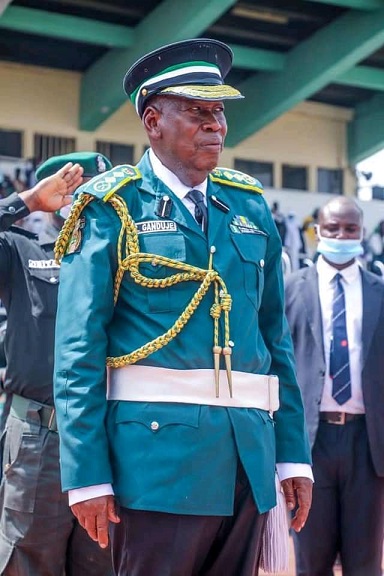
Open Letter to His Excellency Gov. Dr Abdullahi Umar Ganduje, OFR, (Khadimul Islam)
With all sense of honour, respect and humility, your Excellency, I humbly write this letter to convey a fundamental message (worth noting) to you and members of your executive council as well as other relevant stakeholders.
Your Excellency, as you know, Kano State is among the most consequential and venerated African lands. The state hosts international and influential clerics of high repute that promote Islam and the sunnah of our beloved Prophet Muhammad (SAW) to all domains in the north and beyond. Moreover, Kano has been the African commercial hub since the nineteenth century and the centre of learning and administration. For that cause, Kano is always at the front line of religious development and other aspects of human life. In addition, after the re-introduction of Shari’ah in early 2000, Kano embraced it in haste. Muslims have welcomed the development in good faith and unwavering conviction that if Shari’ah is appropriately implemented, life will become good and better in this world and have good fortune in the future existence.
Alhamdulillah! For the said development, the Kano state government established agencies to oversee Shari’ah affairs and ensure its implementation. Shari’ah commission was inaugurated as the apex body for Shari’ah matters and related business. Shari’ah courts were instituted and equipped. Well-trained experts were employed as Shari’ah judges. Zakah and Endowment (Hubusi) was founded and systemized to regulate the collection and distribution of Zakah wealth as stipulated by Allah and manage the waqf properties in the best interest of beneficiaries. The social reorientation directorate (Adaidaita Sahu) came into existence to ensure moral compliance by Muslims. The mighty Hisba Board was incorporated to complement the task of the Shari’ah Commission. The Office of Special Adviser on Religious Matters was created to support the Governor in dealing with Shari’ah functions. Above all, Shari’ah penetrates all government agencies and parastatals to the extent that it’s considered in all decision-making.
At districts and wards levels, the good people of Kano have cooperated. Groups of concerned Muslims constituted robust committees to compliment the government’s effort, namely Zauren Sulhu and its likes. They have significantly impacted the lives of ordinary people. Many such initiatives are in existence to this moment for their monumental works.
People believe that if such strategies are correctly implemented, they will bring sustainable socio-religious and economic development. It will curtail the ongoing bribery and corruption in civil service, robbery, burglary and phone snatching, immorality and other social vices. It will improve productive economic activities and reduce the high rate of poverty. It will promote Zakah awareness and boost the collection of Zakah wealth that, if used efficiently, will cater to the needs and demands of vulnerable widows and orphans as it did in history. This gesture will please Allah the Almighty; in return, He will bless Kano abundantly and ease the affairs of the state.
Your Excellency, the considerable success and giant achievements that Hisba is recording from its inception to date are commendable. Hisba is meeting its objective, mission and vision despite the factors hindering national progress. The support you are giving to the agency is laudable.
Your Excellency, what motivates and triggers me to write this letter is that the high poverty level, with over 55 per cent of the citizens being poor, is a matter of concern, according to the National Bureau of Statistics. Thus, it may not be a surprise that beggars are trooping and roaming the streets today, begging and occupying masjids and other public gatherings, pleading for assistance in various forms. In addition, radio and Television stations are becoming typical to hear the voices of people echoing for help due to poverty and other reasons for the financial predicament.
Besides, I am aware that the state government created a body responsible for looking after the vulnerable and impoverished per the saying of Allahu (SWT) in the Qur’an suratul Tauba verse number 103. The matter of contention is that; is the state government aware of this situation and giving all the necessary support and attention to Kano State Zakah and Hubusi Commission to execute its responsibilities, or is the commission just becoming worthless?
Your Excellency, it’s a known fact that in early 2022 your administration engaged about 600 people in civil service as tax collectors. It’s indeed a wise decision, for it reduces youth unemployment. However, one may wonder how many zakah workers were recruited to support the activities of zakah and consolidate it to achieve its overall objective.
Your Excellency, sincerely, Kano is lagging regarding zakah collection and distribution in modern times while its neighbouring states and emirates are thriving in this noble course. For instance, in Jigawa state, Dutse Emirate alone is mobilizing zakah wealth that eclipsed that of Kano in multitude. The narration is still correspondingly in Kazaure Emirate and Hadejia Emirate, among others. By extension, Sokoto State Zakah and Endowment Commission (SOZECOM) under Malam Lawal Maidoki, Sadaukin Sakkwato, is providing leadership in the country. In other countries, poverty and unemployment are reduced to the barest minimum. These exciting stories signify that Kano state could also join the race and achieve a lot, as it has immense potential.
Your Excellency, this is a gentle reminder hoping to reach you and praying to Allah to grant you the ability to use it and make it among your legacies. Undoubtedly, instrumental Islamic economic policy will help you lay a solid foundation for uplifting the well-being of the good people of Kano state. Zakah will be a panacea to poverty, unemployment, corruption and all forms of vulnerability in Kano state. I, therefore, wish to submit that our emirates have vital roles to play in the reformation. Moreover, collaboration with key stakeholders is necessary at this stage.
Last but not least, I applaud your efforts to improve security affairs in Kano State despite worsening scenes in the country and other neighbouring countries. May Allah guard and preserve our dear Kano State and Muslim communities in Nigeria and beyond. May Allah support you and grant you maximum success in your reign and beyond. Ameen.
Yours
Aliyu Ɗahiru Muhammad
Department of Economics
Bayero University, Kano
alitahir797@gmail
4/11/2022
Advice to the outgoing NYSC members
By Abba Abdulwahab Danmaraya
Congratulations to all my colleagues and friends who have recently finished their National Youth Service Corps (NYSC) scheme. I wish you success in your career, and may Allah bless the certificates you have acquired. Your number is too enormous for me to follow each of you and extend my wish but when you come across this piece, bear in mind that it’s for you.
As you achieve another record/milestone in your life journey, I want to advise you to embrace skills and apprenticeship and engage in any small business that comes your way. When you do that faithfully with God’s blessings, the big and lucrative ones you so desire may come to you.
You don’t need to be told about the hardship people experience in Nigeria. The saturated labour market and the job racketeering that’s going on in the country are under the watch of those who can make things right, but since it favours most of them and their loved ones, they allow it to continue the bad way.
You shouldn’t be carried away by the mentality of some graduates and refuse to work hard. Instead, get as much connection as possible, learn new things and improve the quality of your thought by thinking outside the box.
Today life has proven to us it is not only about how hard you work but also how brilliant you think/work. The certificates you possess don’t matter in getting you a job in most places in Nigeria if you have connections but also you can also be welcome to so many places if you can offer many things, create and work smarter.
Even on this social media, when used correctly and with caution, you will meet with many things, people, and items that will help shape and mould you to be a better version of yourselves. With your smartphones, you will learn a lot, and you can also generate more money and maximise your income when you manage your time and thought.
Abba Abdulwahab Danmaraya wrote via saniabdulwahabdanmaraya@gmail.com.

Exercise: A panacea for mental health?
By Aishat M. Abisola
As everyone knows, maintaining a proper grasp of your mental health can be difficult, especially in stressful environments. Stressful situations make it hard for people to have good mental health, making the mind vulnerable to mental illnesses like depression or anxiety disorder.
As someone who has dealt with anxiety, I can say with complete honesty that it is a terrible thing to deal with and the feeling of it lingers for a while until you feel better.
The best way to describe the anxiety, or how it made me feel, is that it made me feel cold and numb. It was hard for me to breathe as if I was drowning and many hands were pulling me down.
I didn’t know anyone around me who felt the same way I did, so it was a struggle for me. Luckily, I found a way around it, which was through exercise.
I’ll be honest and say that I don’t exercise as much as I used to, but when I did, I felt as if I had no worries. So I understand if you might be confused about why and how I started feeling better with exercise.
What you should know about exercise is that it keeps people in peak physical form and improves their overall well-being by creating changes in the brain.
Let me clarify that any form of exercise is better than none: yoga, walking, swimming, martial arts, stretching, and housework (despite what some may think, things like sweeping and mopping can put your muscles to work).
People who often exercise generally sleep better, feel more energetic during the day, have better memories, and feel more positive about themselves.
This is not conjecture, but facts, as studies have shown that exercise can treat mild or moderate depression the same way antidepressant medication can – minus the side effects. For example, walking 15 minutes a day or walking for an hour reduces the risk of depression by 26%.
Inactivity damages your mental health in the same way that exercise can bring many benefits to your mental health. As a natural anti-anxiety treatment, exercise relieves stress and improves physical and psychological energy. In addition, exercise releases what I refer to as the body’s “Happy” chemicals (Serotonin, Endorphins).
These chemicals are known for improving one’s mood, and exercise releases a particular amount depending on the type of exercise.
Exercise also improves physical in more ways than one:
• Improves cardiovascular health by lowering blood pressure, improving cholesterol levels, and reducing the risk of strokes, heart attacks, and heart disease.
• Helps with diabetes by improving blood glucose control, reducing cardiovascular risk factors, helping with weight loss, and delaying/preventing the development of type 2 diabetes.
• Reduces the risk of cancers: stomach cancer, breast cancer, bladder cancer, kidney cancer, uterine (endometrial) cancer, etc.
• Improves bone health by strengthening the muscles and bones because ageing causes bone density loss and prevents osteoporosis.
• Increase the chances of living longer.
• Helps you to maintain an appropriate weight level.
• Improves brain functions and reduces the risk of dementia.
When it comes down to exercise, at most, you should perform 2.5 – 5 hours of exercise a week.
It isn’t recommended that you do your exercise all at once. Instead, reducing it into time intervals would be best to make it easier. If you don’t have much spare time, here are ways that you can exercise without it taking up too much time:
• You can try walking or cycling if you have a bicycle.
• Incorporate exercise into your daily lifestyle by maybe taking the stairs when you would probably take the elevator or parking your car (if you have one) far from your destination.
• You can practice yoga by searching on YouTube and following the videos through the motions.
• You can exercise in the morning before you prepare for work.
• Dancing is a fun method of exercising without putting much effort. Just play music and move your body.
If you have a chronic condition like arthritis, a disability, weight issues, or an injury that prevents you from moving too much, talk to your doctor about ways for you to exercise safely. You can worsen your condition by exercising without consulting a doctor on the proper steps.
Another thing to note is that if you are feeling pain while exercising, stop and rest. Drink some water and lie down. If the pain continues, don’t ignore it. Go and see a doctor for help.
If you’ve heard the saying “Health is Wealth” before, then you know that you should prioritize your body. Harming yourself to improve your mental health will only make it worse.
Exercise may be helpful to the body and mind, but make sure to listen when your body clearly says, “NO!”.
Aishat M. Abisola is a member of the Society for Health Communication, Wuye District, Abuja. She sent this article via aishatmohd02@gmail.com.
Social Control: The Nigerian police and the criminal justice system
By Hassan Idris
As students of sociology and criminal justice, we can’t debunk the fact that social control is a compelling discussion subject in the criminal justice system. There has not been any society that exists without a social control mechanism to oversee the behaviours of its members. The Nigerian police, my discussion subject, is regarded as the ‘gatekeeper’ of the criminal justice system because it’s the nearest social control mechanism to the people. However, social control is unarguably the most preponderant static aspect of every human society. It’s the prerequisite for maintaining decorum, orderliness, and stability, which becomes a vital thing for every human society to develop a social control mechanism, be it formal or informal, to oversee the behaviour of the members of the society and bring about development and stability.
Marshall, in 1996 defined Social control as “the process of keeping individuals in check, moderating their behaviours, and maintaining social order”. Social controls tend to encompass the strategies and mechanisms put in place to oversee the behaviours of the members of human society. Social control is the birth of human social relationships which may be informal (comprising written norms, values, or customs) or formal (typically practised by the personnel of constitutionally acknowledged agencies. But we cannot discredit that formal and informal social control mechanisms are derived from the habituation and rationalization that arises from repeated interaction.
Okoye, in 2011 posited that the word” Police” comes from the Latin word politic, which means” civil administration”. However, the first Professor of Criminology in Nigeria from the Prestigious Ahmadu Bello University, Zaria-Nigeria, Professor Odekunle, in 2010, defined the police as “the government officials most proximate to crime, temporally and procedurally, and the leading figures in crime prevention, control and law enforcement processes”. The fundamental objectives of policing in society are to provide security, or at least a social and psychological feeling of security, for a majority of citizens, in a majority of places, and for most of the time. The police, the “gatekeeper” of the criminal justice system in all contemporary societies, is the most apparent agent of formal social control. This is why Bittner, in 1990, asserted that “social control and reactions to deviance are intimately bound up with the functions of the police because they all address the central problem posed by events or behaviour which ought not to be happening”.
However, the fact remains that the police assist other social control agencies through many of their actions. The paramount role the police play in ensuring societal laws, norms and values are kept and regulated made it one of the cogent institutions of the criminal justice system. Most Nigerians would not refute that the police institution is the nearest institution with regular contact with the people, making it distinctive amongst other criminal justice institutions. The uniqueness of the police clenches the evidence that its decision and action on the street or in society is vital to the existence of the criminal justice system. The police are the “gatekeeper” of the criminal justice system, and it decides who moves into the system and who comes out. Therefore, every action or activity carried out by the police have myriad and huge implications for the criminal justice system and other institutions.
Furthermore, to understand the contemporary Nigerian police and the anti-people administration they portend, it’s paramount to trace back to the history of policing and the colonial policies that influenced the current bureaucratic policing we have today. The history of policing predates the modification of the police as a permanent occupational group within bureaucratic institutions providing the primary state response to crime and disorder. In the past, before the emergence of the contemporary police we have today, it was traditionally the duty of all adults in the community, especially male adults, to prevent, control, and guide people from internal and external inversion and aversion. However, the emergence of the state with its wide bureaucracies brought about centralization, hierarchical authority, power structure and professionalism and the traditional strategies of policing were transformed from everyone’s business to the state business.
The historical emergence of the conventional police over the globe occurred independently; nevertheless, the historical emergence of policing in Nigeria is categorized into three. The first category is the pre-colonial category which policing then includes the use of cults, messengers, secret societies and palace guards. Crime surveillance and curtailing then in Nigeria were executed by indigenous institutions which are regionally based. The Northern and Southern Districts of the country’s system of policing were established on centralization and formalization. In the Northern parts of Nigeria, monopolized by the Hausa-speaking ethnic group, the Dogarai was employed as the bodyguards of the Sark( Emir or King). They refine full-time policing in the community. Under the leadership of the Dogarai, the Sarkin Dogarai was charged with capturing and disciplining offenders and protecting the town from internal and external invasions. Similarly, in the Yoruba-speaking ethnic group of Western Nigeria, the Ilari, Emese, or even the Aguven was responsible for apprehending or arresting criminals.
In the secondary category, which is the colonial period, the system and principles of policing changed and became anti-people. The vitality of establishing the formal police by the colonial masters was essentially to serve and protect their commercial interests and not the people. It’s a reason we have brutal and anti-people policing in Nigeria today. I’ll justify that in the next paragraph when I’m discussing the post-colonial category of policing. The third category, which is the post-colonial category, the leftover system in the pre-colonial category, which is anti-people policing, was still carried to this period, even when the colonial masters left, and this is evidence of why the style of law enforcement used by the Nigerian police today is not for the masses.
The Nigerian police, without a doubt, have lost confidence in the hearts of the people, and there have been accused of unnecessary arrest and even breach of law. But we can’t deny that the Nigerian police from inception was built upon the wrong foundation because the British established a predatory police administration for Nigeria for the fundamental purpose and strategy of sustaining, promoting, and ensuring the socio-economic and political orientations and occupations of the colonial masters.
In conclusion, the current pervasive feelings of insecurity and the near-total breakdown of law and order as a result of the upsurge in different criminal activities, like terrorism, kidnapping, armed robbery, political assassinations, and ritual killings, in Nigeria is an indictment of the failure of the Nigeria police force as the most visible agent of formal social control and the gatekeeper of the criminal justice system in the country. However, despite these shortcomings, the Nigerian police force remains a vital pillar through which conformity and maintenance of order are installed.
Hassan Idris is a sociologist and poet and sent this article via idrishassan035@gmail.com.
Questions on Naira redesign
By Abdulhalim Ishaq Ringim
Yes, there’s about N2.73 trillion outside bank vaults. This figure represents 85% of the N3.23 trillion in circulation. However, it only represents 6.5% of more than N49 trillion that is in circulation.
Now, let’s consider Nigeria’s unbanked population which stands at 64 million according to World Bank’s “The Global Findex Database 2021: Financial Inclusion, Digital Payments, and Resilience in the Age of COVID-19” report.
What financial intelligence, as a matter of specificity, does the CBN have regarding the magnitude of the money circulating within this highly populous unbanked system. If we were to assume all the N2.73 trillion is in the hands of these unbanked population, then the amount of money on a per capita basis would be about N42,000. Is that too much?
But we all know this assumption is far from reality because the banked population also hold cash for transactionary and precautionary purposes(as in the case of emergencies). So let’s extend our assumption by adding 50% of the banked population to the unbanked population and let the final figure be the number of people who hold cash either because they are unbanked or because of other purposes as transactions and precautions. The per capita cash amount would reduce to N28,000. Is that also too much?
For the hoarding claims, economically speaking, what is the incentive of hoarding cash in Naira considering the continuous devaluation and inflationary trend that has been wiping the value of the Naira against the dollar when there are various hedging options available? Does the CBN have any tentative intelligence that suggest massive hoarding or is this just another trial and error policy?
But let’s also assume there’s indeed hoarding and some people are holding suspicious money. Have the CBN thought of the possibility that the hoarders might now be forced to consider hedging options by flooding the market with money in exchange for hedging-compatible commodities? Have they considered the inflationary tendencies of such an eventuality? Check Dr. Adamu Tilde’s most recent post to appreciate the happening in real world markets. Is the recent sharp rise of the dollar value also a consequence of such tendencies?
The risk of counterfeiting has always been present. The CBN confiscated N64.7 million and N56.8 million in 2019 and 2022 respectively. Compared to the money in circulation, are these figures significant enough to evoke the need for a currency redesign?
If it is for the purpose of managing inflation and ensuring the CBN contractionary monetary policies become more effective, then let’s assume they succeed in mopping up most of the cash outside banking vaults. Is it increased money circulation that actually causes inflation or increased money supply? Isn’t the CBN culpable in the expansion of money supply through their unhealthy tendencies of printing money for government spending via ways and means? What are they doing about the money supply? What is the government also doing about deficit spending and the projected budgetary deficit for the coming year?
Is our inflation strictly a consequence of the Demand-pull Effect(caused by an increase in money supply or credit with commensurate increase in demand for goods and services and resultant price increases) or is it a consequence of a combination with the Cost-push Effect as a result of increase in Oil prices and other commodities(mostly as a result of global events plus local events e.g insecurity, oil theft, floods etc) that is gradually rippling and causing increase in the prices of production process inputs? Does the CBN also not think that the hike in the prices of commodities as a result of the consequence of hedging(possibility of which has been painted by Adamu Tilde in his recent post) would also contribute in aggravating the Cost-push as a result of hikes in production process inputs?
What is the CBN tackling exactly?
Abdulhaleem Ishaq Ringim writes from Zaria.
Thousands of PVCs still unclaimed by owners—Zamfara INEC
By Muhammadu Sabiu
The Independent National Electoral Commission (INEC) in Zamfara State has lamented that thousands of permanent voter cards (PVCs) are yet to be picked up by their owners in the state.
The State Residence Commissioner, Professor Saidu Babura Ahmed, said the 2023 elections would be different from others because plans have been made for a free and fair process.
He made an appeal to traditional leaders, Civil Society Organizations (CSOs), and other stakeholders to give necessary support to the Commission.
He said that the commission had made sufficient preparations in response to the inflow of internally displaced people to ensure that they would exercise their civic duties, noting that polling places will be built in locations where they would feel safer exercising their right to vote.
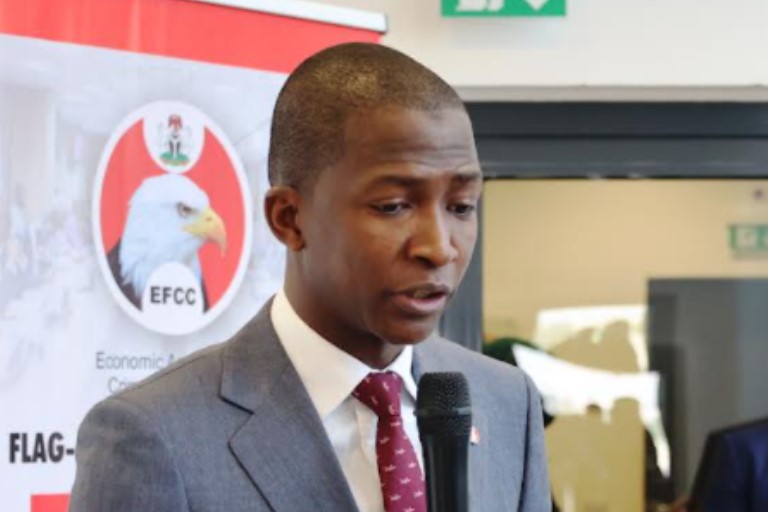
EFCC faults court judgement on chairman, says its shocking
By Ahmad Deedat Zakari
The Economic Financial Crimes Commission, EFCC, has reacted to the ruling of the Federal High Court committing EFCC Chairman to prison for contempt of court.
The Federal High Court sitting at Abuja had ordered the arrest and detention of EFCC Chairman, Abdulrasheed Bawa, on Tuesday.
In reaction to the development, EFCC Spokesperson, Wilson Uwujaren, in a press release on Tuesday, described the ruling as shocking. He argued that the the ruling casted aspersion on the person of their chairman
“This ruling is surprising as it creates a wrong impression of the person of the Executive Chairman of the EFCC as encouraging impunity. As far as the relationship between the EFCC and the judiciary is concerned, The Executive Chairman, Mr. Abdulrasheed Bawa has been an apostle of rule of law, due process, and close collaboration between the two institutions in justice administration ” He said.
The commission added that owing to error in the ruling, the commission will embark on a legal voyage to set aside the ruling of the court.
“Taking into cognizance the procedural lapse in the contempt proceedings the commission has initiated a process to set aside the entire contempt proceedings and committal of the Executive Chairman for contempt.” He added

Don advocates responsible journalism to combat fake news
By Uzairu Adam Imam
To combat fake news and safeguard society from its adverse effects, Nigerians have been advised to check for elements of credibility in reports and consult media platforms with proven integrity in sourcing for news and information.
A lecturer in the Department of Mass Communication, Kano State Polytechnic, Mallam Aisar Fagge, made the submission during a one-day workshop organized by the popular online newspaper The Daily Reality.
The lecture themed “Fake News on Nigerian Cyber Space: The Role of an Ideal Journalist” afforded young journalists the opportunity to understand the challenges of contemporary journalism practice.
Mallam Fagge said, “It is said ‘seeing is believing’ but not anymore. With Deepfake [and other apps], people can easily manipulate videos, pictures, etc. Thus, we need to dissect pieces of information before sharing them,” he stated.
He also called on the general public to examine stories critically before believing or sharing them with other people.
He further noted that fake news could be countered by applying the “technological, journalistic and pedagogical approaches among others.”
He noted that the nature of social media has made journalism more tasking and placed more responsibility on journalists, which behooves them to protect the image of journalism and not allow quacks to run them out of business.
Journalism educators, practitioners from conventional media and online newspapers as well as the students of Mass Communication from Kano State Polytechnic and Bayero University, Kano attended the event that took place on Sunday, 6th November, 2022 at the Centre for Research in Nigerian Languages, Translation and Folklore, BUK New Site.
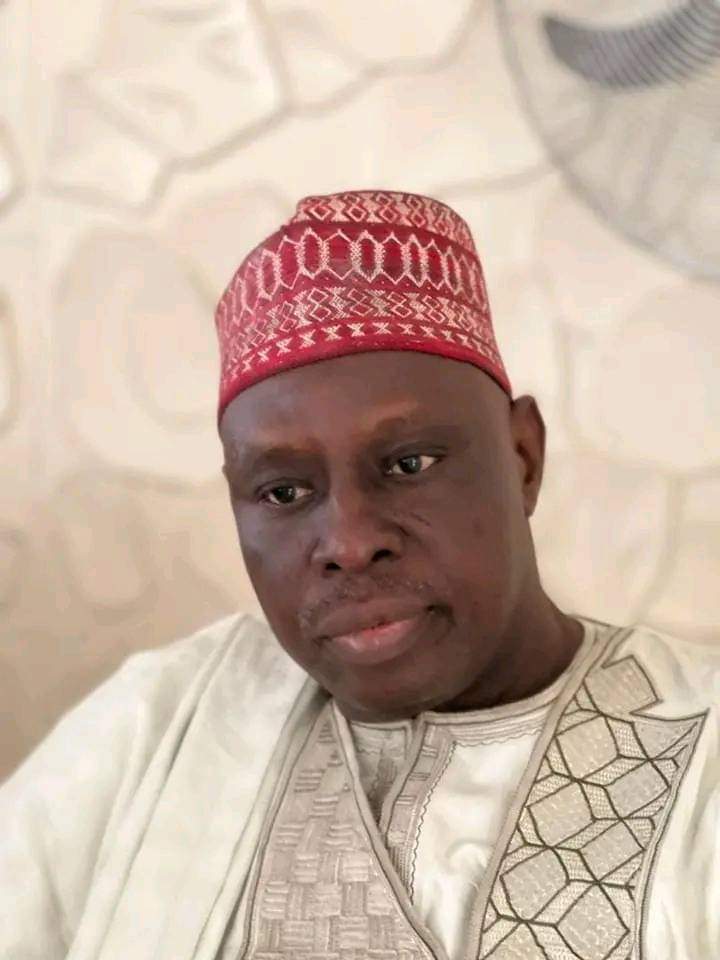
Alleged massive looting: We’ll hold Ganduje responsible – NNPP
By Muhammadu Sabi’u
One of the strongest opposition parties in Kano State, the New Nigerian People Party, has reacted to the alleged involvement in the looting of a huge amount of money by some three Nigerian governors.
Recall that the news alleging that three currently serving state governors are being watched for attempts to launder money by paying employees’ salaries under the table resurfaced a few days ago.
Reacting to the allegation, a Deputy Public Relations Officer of the NNPP in Kano State, Hon. Musa Nuhu Yankaba, hints that one of the governors in question is Dr Abdullahi Umar Ganduje of Kano State.
In an interview with Premier Radio Kano, he said, “If he [Governor Ganduje] refuses to come out and clear himself, we, as natives of Kano State and members of an opposition party, will not accept that, and we will expose him, so as to tell the people of Kano all that is going on and for proper action to be taken.”
Despite all these, the anti-graft agency, the EFCC, did not reveal the identities of the three governors involved in the scandals.
However, the chairman of the EFCC noted in an interview that two of them were from the North, and the third was from the South of the nation.
He added that information at the agency’s disposal showed that the three governors had come up with strategies to inject the money into the system by paying their state employees’ wages on a table-payment basis.
Giroud to the rescue as the Maldini dynasty continues
By Musa Abdullahi Kaga
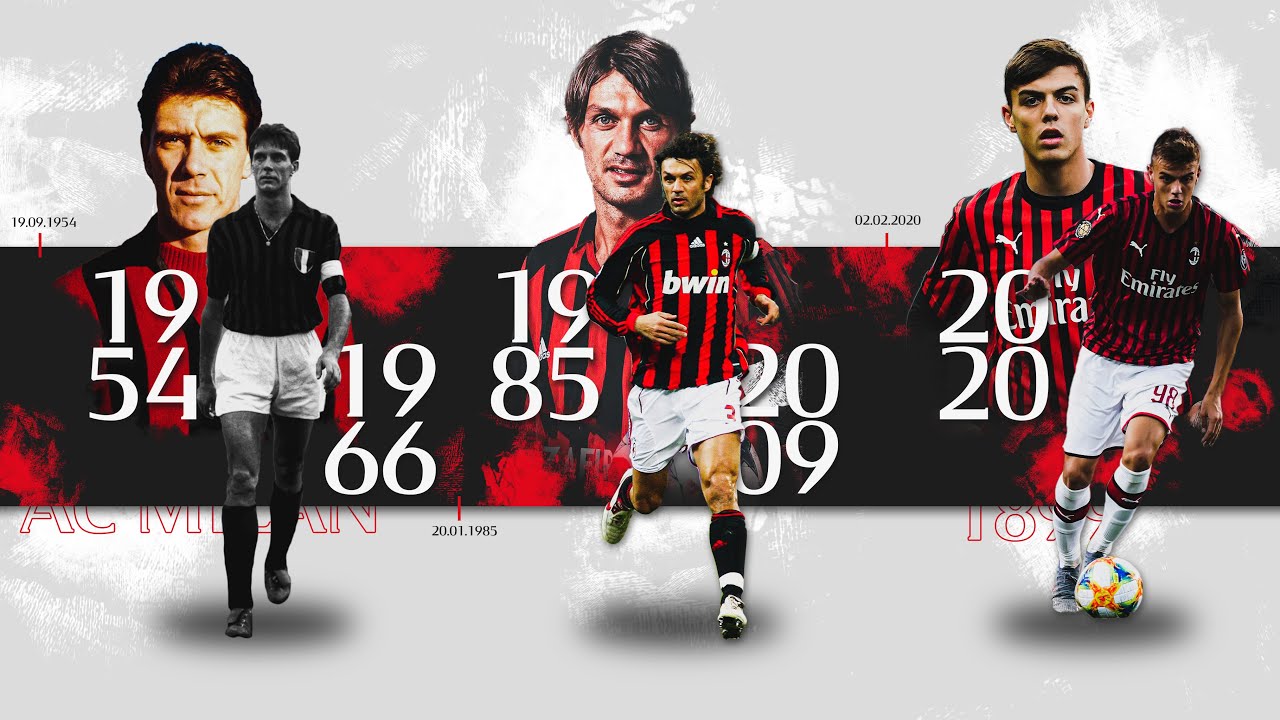
The name Maldini is synonymous with Milan, as it is impossible to talk about Milan’s history without mentioning the Maldinis. In fact, the name is almost synonymous with football itself. Just as the likes of Maradona, Pele and Cryuff, the Maldinis have crafted their names on the golden stones of football history, only that there’s was even more spectacular – Grandfather, father and now the son, all following the same path.
The dynasty began in 1954, when the Italian centre-back, Cesare Maldini, made his debut for the Rossoneri. Due to his impressive leadership qualities and team spirit, he was rewarded with the captain’s armband just a year after his move to Milan from Triestina. He had 12 illustrious seasons with Milan, lifting four league titles and a European cup (now Champions League) in the process. Cesare had the privilege of being the first Italian to lift the then European cup, and of course, Milan was the first Italian team to win the title.
Cesare, named after the Roman emperor, had excellent technique and passing range. He was known to be imposing in aerial duels and had an outstanding reading of the game with anticipation. As a defender, despite having hundreds of caps for both club and country, he was only booked five times and sent off once in his entire career, solidifying his place in the list of the greatest defenders to have graced the game – the likes of Sergio Ramos could only dream.
Cesare Maldini made his final Milan appearance in a 6-1 triumph over Catania on May 22 1966, only to return as a coach six years later. The dynasty continued as a certain 16-year-old boy made his Milan debut in 1984 – Paolo Maldini, making an incredible 902 appearances during an illustrious 25 years career, winning 23 major trophies in the process. One of the few ‘one club men’ was an elegant and cool defender known by his iconic no. 3 jersey, deservedly retired, just like the legendary Baresi’s no. 6. The ambipedal defender has, despite being a left-back, adequately occupied all the defensive positions, forming a formidable partnership with Milan and Italy legend Franco Baresi. The duo, while playing together, conceded only 29 goals in 196 games – astonishing? Legendary rather.
Paolo succeeded the retiring club captain, Franco Baresi, in 1997, after 20 years of service. Following his father’s footsteps, he captained Ac Milan till his retirement after the 2008/2009 season. The Maldini era was seemingly coming to an end until his unexpected return to Milan as sporting strategy & development director. He was, however, promoted to Technical director after a year. He was instrumental in the acquisition of the likes of Theo Hernandez, Rafael Leao and Mike Maignan. Among the new faces was a player with a very familiar and historic surname, coming through the youth ranks, Daniel MALDINI, your guess is right, the son of the legendary Paolo Maldini. Lo, a new chapter in the Maldini dynasty beckons.
Daniel, unlike his ancestors, plays as an attacking midfielder. Last season, in a very difficult match away to Spezia, Coach Pioli gave him his first Serie A start. The then 19-year-old did not disappoint, as he made history by scoring a header, becoming the third member of the Maldini family to score for Milan. Due to limited playing time, the 21-year-old was loaned out to Spezia this season. He started on Saturday evening against his parent club and, surprisingly, scored a curler to cancel out an early Theo Hernandez strike. A ‘Maldini‘ has scored in Sansiro again, precisely 5,333 days after Paolo’s goal against Atalanta in 2008 – Tradition.
Daniel would have rescued a point barring the intervention of Olivier Giroud. Milan thought they got the winner after Sandro Tonali’s screamer. However, VAR cancelled out the goal for a foul in the build-up. In the 89th minute of regular time, with incredible dexterity, from a tight angle, Oliver Giroud gave Milan a well-deserved victory again through a spectacular acrobatic volley – typical Giroud grand style.
The adrenaline was high, as you’d expect of any late winner. Hence, Giroud pulled out his shirt during the wild celebrations. Consequently, he was penalised for a second booking and eventually sent off. He was captured with a ‘mea culpa’ face in tears after the match. Cheer up, sins forgiven, Olivier!
Forza Milan!
Musa Abdullahi Kaga wrote via musaakaga@gmail.com.