


Improving your immune system during illness seasons
By Aishat M. Abisola
Now that 2023 has begun, we are at a time when it is not uncommon for people to start feeling ill. This can be either physical or mental.
Already, a throat disease (diphtheria) is spreading fast in the North, affecting many Nigerians. Even though this disease can be cured and prevented with vaccines, not many people will be able to gain access to them.
Every single disease in the world works by attacking the immune system without rest, and this is exactly why people need to be more concerned about their bodies. Although the human body is strong, it can still be damaged quite easily, either internally or externally.
Your immune system operates in a very specific manner. It must be strong and complex enough to fight off a variety of illnesses and infections but not so strong that it overreacts to small issues.
It is because of this that we need to be more attentive to our health, especially in times like this. If you look around you, you will see many supplements and products claiming to help boost immunity. However, supporting a healthy immune system is a lot more difficult than just taking a mix of vitamins and minerals packaged into a pill or powder.
From fighting off a cold to flu and then to COVID-19, there are things you can do to help give your immune system what it needs to function optimally, though.
For those who do not have access to vaccines or medicines that can help them boost their immune systems, there are things you can do to help give your immune system what it needs to function properly. None of these methods involves taking supplements.
1. Stay up-to-date on recommended vaccines
If you do have easy access to vaccines, make sure to stay up to date on them. A strong immune system means taking advantage of whatever we are provided with to protect ourselves from harmful illnesses: vaccines.
The human immune system is smart, but vaccines train it to be even smarter by helping it learn how to recognize and fight off certain disease-causing illnesses. Vaccinations make it for your immune system to learn than through infection with harmful germs.
2. Maintain a healthy diet
Just like most things in your body, a healthy diet is vital in maintaining a strong immune system. This means ensuring that sure you eat plenty of vegetables, fruits, legumes, whole grains, lean proteins and healthy fats. These micronutrients include:
Vitamin B6 (Chicken, Fish, Bananas, Green Vegetables and Potatoes with the skin)
Vitamin C (Citrus fruits like oranges and, strawberries, Tomatoes, Spinach)
Vitamin E ( Almonds, Peanuts and Leafy Vegetables)
Zinc ( Red meat like beef, Poultry, Beans, Dairy products like milk)
Magnesium ( Whole Wheat Products, Nuts, Seeds)
Many health experts believe that your body absorbs vitamins better when they come from dietary sources instead of supplements. So, the best way to support your immune system is by eating a well-balanced diet.
3. Exercise regularly
Despite what many may think, physical activity isn’t just for building muscles and helping yourself de-stress — it also plays an important role in being healthy and supporting a healthy immune system.
Exercise helps in mobilising the immune cells that are outside of the bone into the bloodstream, and it also moves immune cells that are already in the bloodstream in the cell tissues. By doing this, immunity surveillance is increased.
It is your immune system’s monitoring process, and exercise helps the immune cells to be more efficient at detecting and reacting to infections. Staying active and exercising regularly is vital for this to occur.
4. Hydrate
When it comes to supporting the immune system, water plays an important part alongside other roles in your body. Blood and lymph have immune cells in them, and they need water in order to flow and circulate in the body.
You constantly lose water by breathing as well as through urine and bowel movements. It doesn’t matter whether or not you are exercising. If you want to support your immune system, replace the water you lose daily with water that you can use. In order to do so, you need to know what your daily water intake is.
5. Get plenty of sleep
When you sleep, it may not feel as if anything is happening, but there are a lot of processes going on when you’re not awake. Knowing how much sleep you should be getting on a nightly basis as well as what to do if you have trouble sleeping, is the best way to give your immune system the best chance to fight off infection and illness.
6. Minimize stress
Chronic stress can have dangerous effects on your health, whether it comes quickly or builds up over time. Stress can either cause major or minor impacts on how well your immune system functions if it leads to sleep disturbances, a tendency to eat less healthy food, reduced water intake, less frequent exercise, and more.
Stress appears differently for everyone, and however way we choose to relieve it is different too. When you take into consideration the effect it can have on your health, it’s important to know how to identify stress. If you want to reduce stress, it is necessary that you get familiar with any type of activity that helps you relieve it, such as deep breathing, meditation, prayer, or exercise.
7. Limit Alcohol Intake
A moderate consumption of alcohol doesn’t have any positive effect on your immune system. Evidence suggests that binge drinking, or having more than four drinks in two hours for women and five for men, impairs immunity.
Alcohol can temporarily increase the number of white blood cells, which fight infections, in your bloodstream, but when your liver clears the alcohol from your system, your white blood cell count falls below the normal amount for at least five hours. If you want to work hard to stay healthy, it is best for you to avoid or limit your alcohol intake.
8. Practice Proper Hygiene
If you want to have a strong immune system, proper handwashing is one of the most important things to keep in mind. All you need is just normal soap and water. You should scrub your hands for at least 20 seconds—the length of singing “Happy Birthday” twice. This is the minimum time needed to significantly reduce the number of microorganisms on your skin.
However, it doesn’t matter how good your handwashing skills are if they won’t help prevent infection unless you know when to scrub up. It is advised that a person should wash their hands before and after any type of risky exposure. This includes after using the restroom, sneezing, or coughing.
Your hands should also be washed before you prepare food, after caring for a sick loved one, treating a wound, or touching any publicly used door handles, knobs, switches, or surfaces. If your hands get very dry after washing, make sure to moisturize them with cream or Vaseline.
9. Use the Right Hand Sanitizer
Hand sanitiser tends to kill most microorganisms, which is the next best thing if you don’t have access to soap and water. Before you use it, make sure to look at the alcohol percentage first. Alcohol (ethanol) is the active ingredient in hand sanitiser, working to kill viruses and bacteria. It is advised to use a hand sanitiser with an alcohol percentage that is greater than 60%.16
The human body requires a lot of care so that it can stay healthy and fight off most diseases (or, at the very least, reduce their effects). If you don’t care for your body, you are just setting yourself up for a very bad experience in the future.
Your body is a temple. Keep it clean and tidy. Prevent it from decay with any method that is available to you.
Aishat M. Abisola is a member of the Society for Health Communication, Wuye District, Abuja. She can be reached via aishatmohd02@gmail.com.
Dangote Group awarded for creating investment opportunities in Africa
By Aisar Fagge
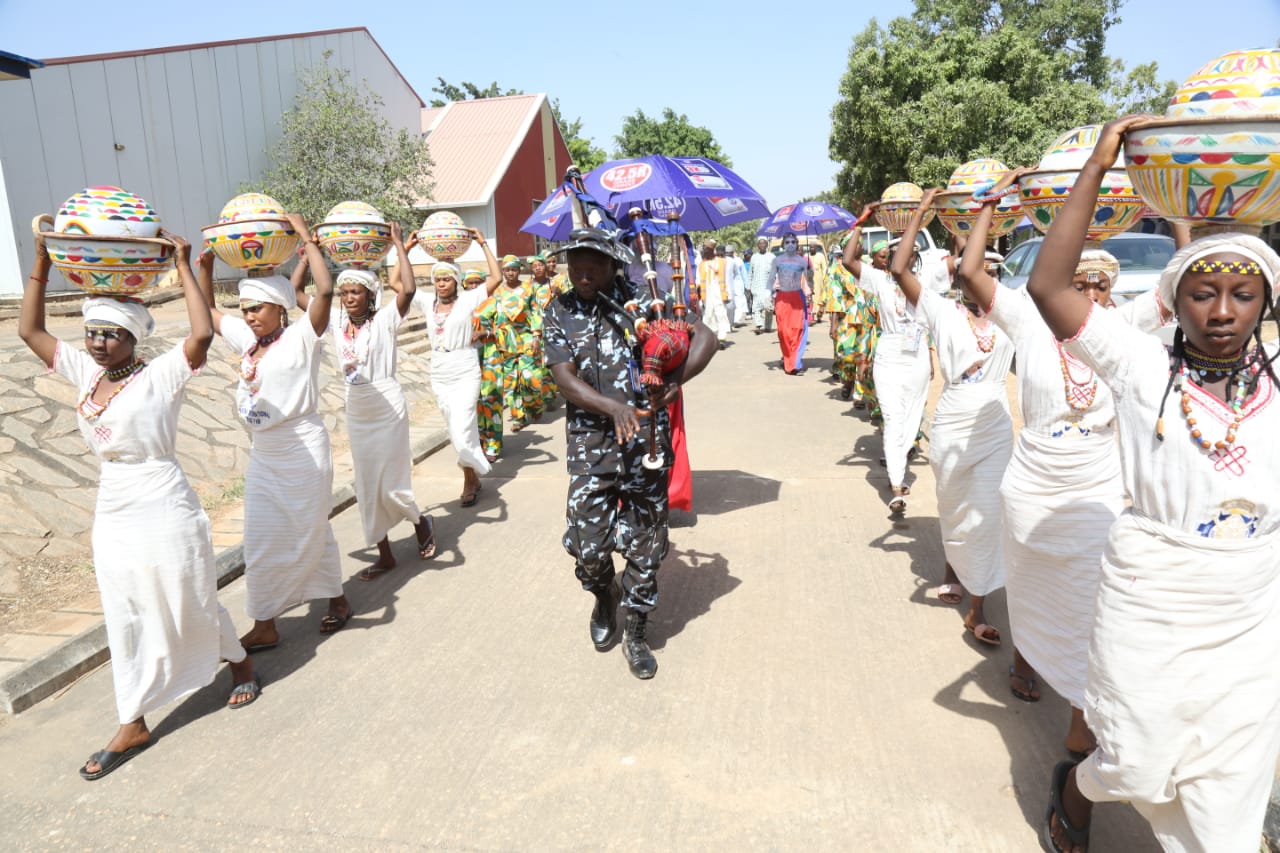
The Dangote Group Tuesday has bagged the First Runner-Up award at the just concluded 44th Kaduna International Trade Fair in Kaduna State.
The group was awarded for its enormous contribution in buoying investment opportunities across Africa through numerous businesses and philanthropic forays.
The Dangote Group made the disclosure in a news release issued to journalists on Monday.
The statement disclosed that Professor Umar Dantsoho, an economist, while speaking to journalists on the event, said the Dangote Industries Limited has been creating investment and job opportunities for Africans through its cement establishments in Nigeria and in Africa.
He said the key to developing the African economy is through the growth of the manufacturing sector, which is a major preoccupation of the company.
The statement added that, “Only recently, Dangote Industries Limited sealed a fresh deal of six million tons per annum with China Sinoma International Engineering which will strengthen local and African production to 57.6 million tons per annum.
“Aside government, Dangote Group is adjudged the biggest employer of labor in Nigeria.
“Speaking also Second Vice President of the Kaduna Chamber of Commerce Industry Mines and Agriculture (KADCCIMA). Alhaji Faruk Suleiman, commended the company for creating opportunities across Africa, adding that the upcoming Dangote petrochemical refinery will change the face of the African economy.
“General Manager, Sales, Dangote Sugar Refinery (DSR) North-West, Alhaji Abdulsalam Waya said the conglomerate would continue to provide opportunities for all willing Nigeria to invest as distributors or as investors in the stock market.
“He added that the theme for this year’s Trade Fare: Value Addition for Sustainable Growth and Development is apt, as Dangote Cement exports its product to several African countries, thereby creating jobs and opportunities across the value chain.
“The company is the major sponsor of the 44th annual event.
“Speaking, President of KADCCIMA Alhaji Suleiman Aliyu described the partnership with Dangote as very important for deepening commercial activities in the country.
“He said the support of the Dangote Group towards the success of the Fair cannot be quantified.
“Speaking to newsmen, the Director General of the Chamber Mr. Usman Saulawa said the Dangote Group is a major sponsor of this year’s Trade Fair and has been sponsoring the annual event.
“He said Dangote Group has been playing the role of supporter and partner for many years. It participation has been adding value to the Chamber.”
“The DG described this year’s fair as unique as there would be a Business Roundtable session that will further help deepens business opportunities for participants.
“The companies that participated under Dangote Industries Limited are Dangote Cement, Dangote Sugar, NASCON, Dangote Fertiliser, and Dangote Sinotruk West Africa Limited.
“A statement from the Corporate Communication Department of the Dangote Group said participants who seek to do business with any of the company’s subsidiaries can avail themselves of such opportunity through a special help desk at the pavilion.
“It described Kaduna State as one of the biggest markets in the country, given its historical position as the political capital of Northern Nigeria,” the statement added.
Lawan vs Machina – Explaining the Nigerian Supreme Court
By Sunusi Umar Sadiq
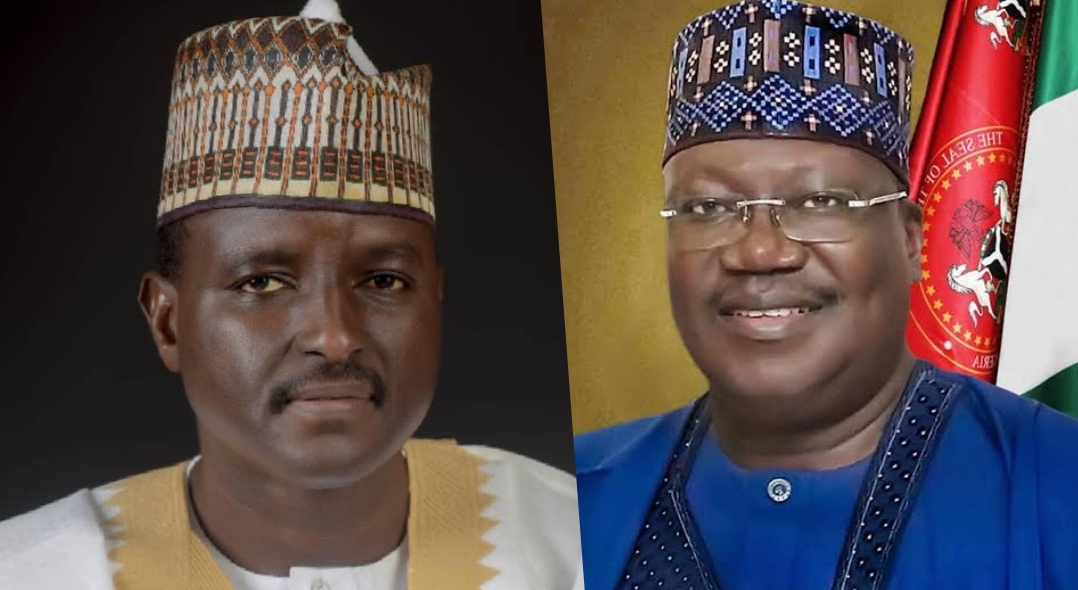
A few days ago, the Supreme Court of Nigeria delivered a judgment, the most significant outcome of which is the emergence of Alhaji Ahmad Lawan, the current President of the Nigerian Senate, as the All Progressives Congress’ senatorial candidate representing Yobe North Senatorial District in the forthcoming general elections. The public is naturally and expectedly, too, thrown into an abyss of confusion because, for all that is known, Senate President Lawan had obviously relinquished the senatorial seat he has been occupying since 1999 or thereabout when he contested for the APC presidential primaries sometime last year.
Politics is the manifestation of the immaturity of mankind. Politicians across times and spaces have always been very shrewd and crafty. The popular virtues are turned upside down. Selfishness becomes a guiding principle. Deceit and manoeuvre are articles of faith. Self-interest takes the position of justice, and fairness is something that is virtually and practically unknown. The end is all that matters. And anything is to the politician permissible to attain that end.
In a setting such as this, a heap of mess will surely pile up. And in a democratic setting, the unenviable onus of clearing such a mess or at least containing it is placed on the judiciary. And the Nigerian courts, the Supreme Court especially, have been grappling with that onus, coming under public attacks and bashing every now and then.
Unfortunately for judges, they cannot come out to defend or even explain themselves. In this kind of situation, it is the lawyers, as the primary constituents of the judicature, that ought to be the sentries for the hallowed chambers. They should educate the people and enlighten them.
There are two things to consider in order to understand any given judgment: the facts of the case and the issues raised before the court. Without knowing these, the most honourable thing for anyone to do is to remain mute. Let me briefly state here the facts of the case at hand so as to understand the context and reason behind the supposedly controversial judgment delivered by the Apex Court.
For whatever reason, Senator Ahmad Lawan decided to give a shot at the country’s Number One Seat, the Presidency. He bought the presidential Nomination and Expression of Interest Forms. It automatically followed that he had no further interest in keeping his senatorial seat. A Bashir Machina seized the opportunity. He aspired for Lawan’s seat, and on 28th May 2022, the primary election for that seat was conducted, and Machina got it on a platter, some might say.
Some eleven days later, 8th day of June 2022, the APC had its National Convention, and the presidential primary election was conducted. Lawan and twelve other aspirants lost to Bola Tinubu. As a cartoonist depicted it, Lawan had torn himself between the presidency and the senatorial seat. He ultimately lost both. Unknown to the cartoonist and other Nigerians, the Senate President had his Plan B in the closet. In hatching the plan, the APC maintained that Danjuma Manga, the party’s official that chaired and officiated the 28th May primary election, was not authorised to do so by the party’s National Working Committee (NWC). That primary election was therefore cancelled. Another was held on 9th June 2022, less than twenty-four hours after Lawan lost his presidential bid! Nobody needs to be told that there is something amiss and shady here. It is crystal clear that a heap of mess has piled up.
Machina then decided to cry out against this apparent and obnoxious mess. He took his grievances to the Federal High Court of Nigeria, Damaturu Division. He prayed the court, among other things, to hold that the 28th May primary election that produced him was the only legitimate and valid primary election, and the other one that produced Lawan was fraudulent and therefore null and void. And this is the beginning of the intricacy and the controversy.
The court is the repository of laws. It is the aggrieved party that will trigger the courts to invoke and apply those laws. For the litigant to succeed, therefore, they have to, firstly, be armed with hard facts that can be proved with acceptable evidence. And, secondly, such a litigant must, in ventilating the grievance, approach the court in strict compliance with the procedure provided for doing so. The success of every case depends on these two pillars.
The facts of some cases may be straightforward. The Rules of the Court provide for the commencement of such cases via Originating Summons. In using this mode, no witnesses need to be called. All you need is to state what transpired in an affidavit and present the documents that strengthen the facts in the issue, then invite the court to invoke appropriate laws and apply them to the case.
Some other cases are not this simple, more so when there is a criminal allegation. For such cases in which the facts in issue are contested, the Writ of Summons is the appropriate mode to be used in presenting one’s case to the law court. And whenever there is an allegation of a crime, the standard of proof is that of beyond reasonable doubt. Witnesses must be in court in flesh and blood to be examined, cross-examined and, if need be, re-examined.
From 9th June 2023, Machina’s Legal Team had up to 23rd of that month, a total of fourteen (14) days to build up their case and file same. I could imagine the mental race the team must have undergone to formulate the questions and the issues. Allegation of fraud is easy to come up with because Section 17 of the Penal Code intimates that ‘fraud’ is when one does something with the intent to deceive and by means of such deceit to obtain some advantage for himself or another or to cause loss to any other person.
It is on that ground that Aspirant Machina went to the court challenging the return of Senator Lawan as the Senatorial Candidate and the validity of the primary election held on June 9th. Commencing the suit by Originating Summons is just one of the issues raised. But since the suit failed, the primary election it sought to be declared fraudulent and therefore null and void remains valid, and Senator Lawan consequently remains the rightful candidate.
The Supreme Court is not to blame. If anything, the Supreme Court is the scapegoat. The real culprits are Machina’s co-travellers, and the politicians. After all, it is Machina’s own party that cancelled the primary election he had won. And it is also the party that took the matter up to the Supreme Court to ensure that Lawan remains its rightful and lawful flagbearer. The Supreme Court’s hands are tied as it is a court of law, not emotions.
Sunusi Umar Sadiq is a legal practitioner based in Kano State. He can be reached at sunusiumarandco@gmail.com.

Turkey-Syria Earthquake: Gov’t arrests building contactors
By Muhammadu Sabiu
Turkish officials reportedly issued arrest warrants or detained about 113 people who were allegedly involved in some illegal construction methods six days after earthquakes caused buildings to collapse and lost of many lives.
According to CNN, at least 12 people, including building contractors, have already been detained by Turkish authorities. Reports have it that rescue operations have been hampered in some areas due to protests in southern Turkey. More than 33,000 fatalities in Turkey and Syria have now been officially confirmed.
The arrests of building contractors, according to CNN on Monday, were perceived by many as a move by the Turkish government to shift full responsibility for the catastrophe.
According to findings before the natural disaster occurred, it was expected that the destroyed structures were built to withstand earthquakes. Since many new buildings in Turkey are unsafe because of widespread corruption and government practices, experts have been warning about this for years.
In order to promote a construction boom, including in earthquake-prone areas, those rules permitted so-called amnesties for contractors who flouted building regulations.
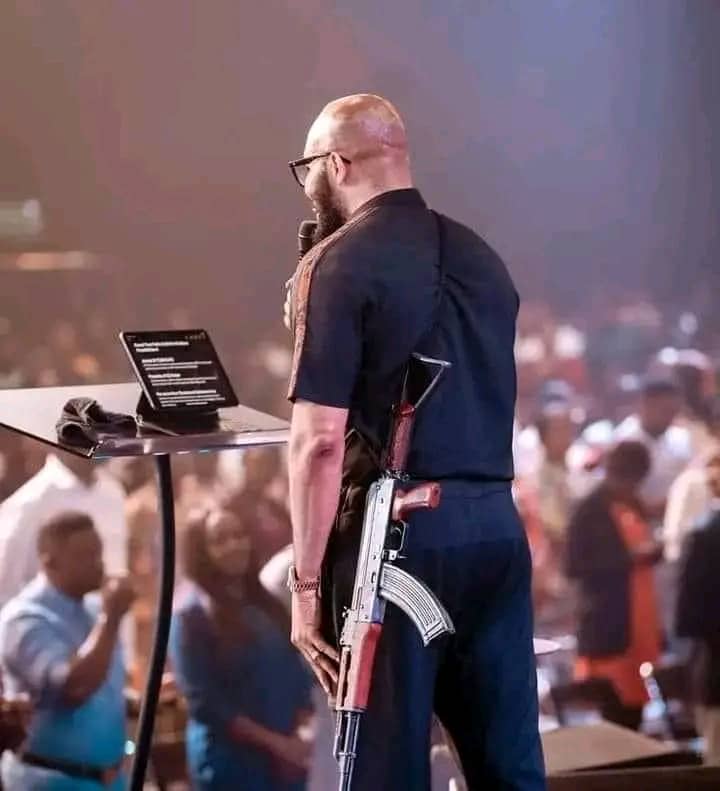
Pastor faces backlash for bringing AK-47 to church
By Ahmad Deedat Zakari
The presiding pastor of an Abuja church, Pastor Uche Ugbe, has brought himself to great disrepute and backlash after he took gun to the church on Sunday.
Pastor Ugbe, while on the altar addressing christian faithfuls, had an AK-47 dangling from his shoulder.
He was reported to have said he came to church prepared because some people are looking for his trouble
However, his action do not sit well with many Nigerians and they have taken to different social media platforms to lambast him.
Abdullahi O. Haruna, a journalist and public affairs analyst, described his action as insensitive.
Haruna said, “Yes, he is not a security guy,
He is a pastor wielding unabashedly this weapon of death, to a congregation that had children, exuberant youths, not minding the sensitivity. He reigns with such impunity. Don’t worry, this is Nigeria. Anything goes…”
Another Facebook user, Nasir Muhammad Salis, said, “I can’t fathom the high level of panic or tension some people will ignite in the country if this was Sheikh Gumi or Sheikh Pantami. But now, they are ignoring it. I don’t see, in my view, any justification for this childish dramatic action!”
Other persons have described him as silly, childish and attention-seeking.
As at the time of writing this report, the Christian Association of Nigeria (CAN), is yet to comment on the illegal possession of firearm by the pastor.
Interestingly, the Nigerian Police Force has also been conspicuously silent on the issue.

Ganduje shuts down Wellcare supermaket for rejecting old naira notes
By Uzair Adam Imam
The Kano State Governor, Dr. Abdullahi Umar Ganduje, has shut down Wellcare Supermarket for refusing to collect the old naira notes.
The governor instructed Baffa Babba Dan’agundi, the Acting Chairman of Kano State Consumer Protection Council, to shut down the supermarket.
Dan’agundi, who made this disclosure after shutting down the supermarket, said legal action would be taken against the supermarket.
Wellcare is a prominent supermarket that sells food products and drugs among other provisions stuffs.
The Daily Reality gathered that the closure order was a result of its refusal to accept the old naira notes from costumers.
It can be recalled that the Kano State Government instructed supermarkets and other marketers to continue accepting the old notes.
The Acting Chairman also warned other traders in Kano against refusing to collect the old naira notes.
He added that any supermarket caught refusing the old notes will be dealt with decisively.

Everyone is unique
By Dansale Aliyu Yahya
Every human in this world is unique. It’s you that will work tirelessly to find your uniqueness, the new version of yourself, and to pass that acquaintance you have to others. So that the whole of today’s world will thank you, and tomorrow’s world will write your name with their running blood.
Expand your mind by reading books. Know how to think critically. Look at everything with two eyes(seeing eye with reasoning eye) and concentrate on your outgrowth. You can do it, and you are the best! Just give it a hack today.
However, one may not succeed in any field without starting(you can never edit a blank page). Procrastination never helps. Don’t think you can do things well the first time you do them. Never think you can super pass your teacher in a single day. Please, give it your little time; it will give you years in return. Learn at your pace(You cannot finish in a day). If you know you cannot do all of it today, do some of it and leave the rest for tomorrow.
The best thing to earn what you want in life is to surround yourself with those that already get it. Because they know the way, they can show the path to follow. You cannot say that you want to be a teacher and are always in the hospital with doctors. The rule is that: if I love money, I must get people with the same dream in my surroundings. When I lose hope, they will give me theirs. We go together; we get together!
In the end, I will say, “please, my buddies! Start dreaming today and never die without bringing something new that will benefit the human world”.
May we live to serve our creator by helping others in and out of our midst, amin.
Dansaleh Aliyu Yahya can be reached via dansalealiyu@gmail.com.

Nigerian man creates 25 bank accounts, robs US citizens of $3.4 million
By Muhammadu Sabiu
Olaniyi Nasiru Ojikutu, a 39-year-old Nigerian, was convicted of participating in a multi-year romance scam and was given a sentence of nearly seven and a half years in a U.S. prison.
Ojikutu, a permanent resident of the US, allegedly opened roughly 25 bank accounts under his own name, a fictitious name, and the name of a shell company, through which nearly $3.4 million in fraud proceeds were moved.
It was revealed that Ojikutu and nine other people were charged in Operation Gold Phish, a Chicago-based sting operation that uncovered cybercrimes that preyed on senior citizens.
Ojikutu was charged with wire fraud in the scheme in 2019 and received an 88-month prison term on Wednesday, according to Fox32Chicago.
Ojikutu fled to Canada by bus after being charged, but was apprehended seven months later and turned up to American authorities in January 2020.
Last July, he entered a guilty plea to one count of wire fraud.
Social networking sites, including Facebook and Instagram, as well as the mobile dating app Match.com were used to contact scam victims.
Prosecutors asserted on Thursday that Ojikutu used the money obtained fraudulently for his own personal gain, including buying cars in the US and exporting them to Nigeria for resale.
Federal prosecutors reported that some victims suffered financial losses of several hundred thousand dollars as a result of Ojikutu’s acts.
Ƙoƙi and ethnographic slice of Hausa history
By Prof. Abdalla Uba Adamu
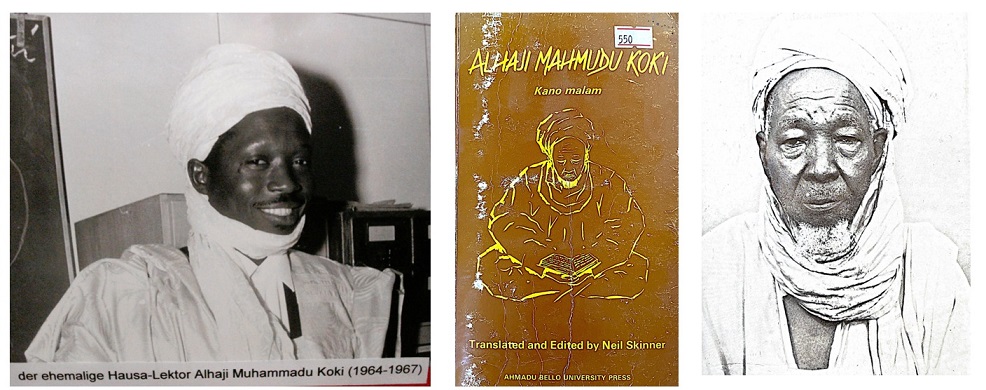
I was rummaging through my travel pictures when I came across a picture that I am sure has not been published anywhere. I saw it in a glass case at a ‘corridor museum’ at Universität Hamburg, Germany, on 2nd December 2008. I was excited because of its rarity. It was the picture that I am sure has not seen the light of day almost anywhere. I had vaguely heard about the man from my father, a writer, but did not pay attention then. Now he was there, smiling in all glory and right before me. I decided I would take the picture to show it to my father.
Edit: The man was Muhammad Ƙoƙi, the son of Alhaji Mahmud Ƙoƙi, the Kano Malam. His picture triggered my excitement about his father, Malam Mahmudu Ƙoƙi.
Malam Mahmudu was perhaps one of the most unsung and unknown critical literary figures in Hausa history. You can Google all you can. You won’t find him or his picture. Instead, you will be taken to Neil Skinner’s book, “Alhaji Mahmudu Ƙoƙi: Kano Malam” (ABU Press, 1977). I very much doubt if ABU Press itself has a copy. My copy is in excellent condition (except for a slightly scratched cover) since it was printed on shiny bond paper – and can therefore scan very well. I hesitate to do this for fear of copyright violation. I do wish ABU Press would consider retrieving a copy somewhere and reprinting it.
On return from Hamburg, I started looking for the book – and I was lucky to grab a copy at then ₦550 in January 2009. Now, some 14 years later, you can get a second-hand copy from the online store Abe Books for just $99 (cheap at ₦74,000 in 2023). At the moment, I don’t have any ‘kebura’ around me (since the ASUU strike was suspended!). Otherwise, I would offer mine for ₦50,000 for my copy!
Quite simply, it is a brilliant slice of Hausa history. Most significantly, it detailed the fieldwork done in the collection of data for Bargery’s Hausa Dictionary, whose full title is “A Hausa-English dictionary and English-Hausa vocabulary”.
Although mainly attributed to Rev. George Percy Bargery (1876-1966), an English missionary and linguist, the dictionary had significant input from Diedrich Hermann Westermann (1875-1956), a German missionary, Africanist, and linguist. The dictionary was published in 1934. The printed copy used to be available at ABU Bookshop, where a colleague of mine gifted me one he bought at the huge sum of ₦2,000 in ancient days, almost breaking his bank account!
The book was written/edited by Neil Skinner (1921-2015) at the request of Bargery’s son, Kenneth, to collect recollections of the elder Bargery while in northern Nigeria. Alhaji Mahmudu Ƙoƙi (1894–1976) was Bargery’s Chief Assistant in the preparation of the Dictionary and was the first choice to ask in 1967. As Skinner recollected, “I began recording some of his memories of Bargery. Listening to his vivid accounts of Kano in the first of the century, I formed the idea of putting together from Mahmudu’s lips some account of his own life.”
And what a fascinating life it was. Skinner continued, “As a son of the largest city of northern Nigeria, who had been born into the civil war of Aliyu and Tukur, M. Mahmudu saw the coming of the British, knew Waziri Giɗaɗo and Resident Temple, lived to see the end of the British rule and the Nigerian Civil War and, above all, had close contact with rulers and innovators, both Nigerian and British. He, therefore, seemed likely to have a tale worth recording for younger generation of Nigerians and those with an interest in Nigeria as it was and is. Mahmudu was a spectator of many great events and participant in not a few.”
And what a whirlwind tour of northern Nigeria it was in the early 20th century. Reading the book is like going back in a time machine. Everything was covered: economy, society, governance, culture, everything. As Neil Skinner stated, the book was told by Mahmudu himself – Skinner just edited it. It contained both fascinating and often disturbing details of days gone by. For me, for instance, I was traumatized by his account of the slave trade in Kano. As Mahmudu recalled,
“I used to see slaves being sold – with my own eyes! At Ƴan Bai, on the west of the [Kurmi] market. That was where they used to line them up and sit them down, with their feet sticking out, like this. Then it would be, ‘You there! Get up!’ And he would get up, and we would look him over well from top to bottom and say, ‘Walk a little!’ then he would do so until we told him to come back. He would do so, and we would say, ‘Right, go and sit down’ and put hand to pocket and take out a little money, perhaps a score of cowries or fifteen and give them to him. You would do this, whether you bought him or not. Then, if he saw someone selling groundnuts, he would call her over to get some saying he had been given the price for getting up to be inspected. That is how we have a proverb which says, ‘Tashi in gan ka ma na da ladanta’.”
Based on this disturbing account – in the heart of Africa – I wonder how many of our other proverbs have such creepy and dark origins? If you go to Ƴan Bai in Kurmi market in Kano, now you will only see mats, books and assorted goods.
Alhaji Mahmudu Ƙoƙi provides a rich tapestry of ethnographic details about how the Dictionary was compiled and the fact that the team of Bargery and his assistants insisted on seeing actual objects and their names before recording them. One wished they had an artist with them to sketch out many of the cultural artefacts that have all but disappeared now. It is good that the Bargery dictionary has been digitized and is available free online, thanks to the efforts of Hirokazu Nakamura of the Faculty of Human Science, Department of Human Sciences, Bunkyo University, Japan.
“Alhaji Mahmudu Ƙoƙi: Kano Malam” is comparable to “Baba of Karo” by Mary F Smith (wife of M.G. Smith, author of “Government in Kano, 1350 to 1950” amongst others, and which is available FREE online!). Published in 1954, “Baba of Kano” is an anthropological record of the Hausa people, partly compiled from an oral account given by Baba (1877-1951), the daughter of a Hausa farmer and a Koranic teacher. Baba’s reports were translated by Smith.
Books like these encourage us to seek out our own cultural history – visit those places mentioned, savour their historical aroma and note them as centres of excellence in discovering our past. By the way, Ƙoƙi is a ward in the city of Kano and right on the edge of the Kurmi market. If you are from the area, perhaps you may have heard of Alhaji Mahmudu from his grandchildren.
Don’t forget; this is not a review of the book but a memory jog on the old man, Alhaji Mahmudu Ƙoƙi, whose picture was honoured at a foreign university.
There is a composite collage of the picture I snapped in the Hamburg university museum of the son, the book and the father! as the latter appeared in the book.
Prof. Abdalla Uba Adamu can be reached via auadamu@yahoo.com.
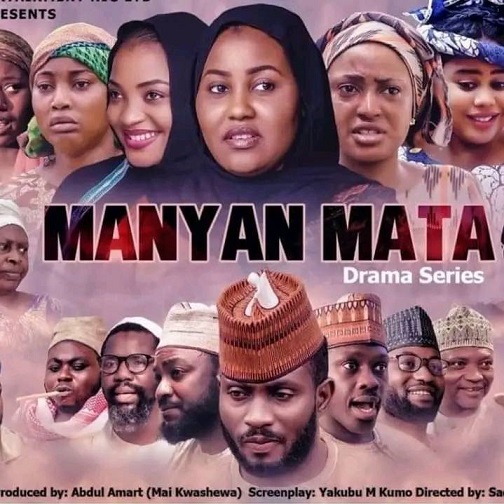
Quick takeaways from the premiere of Manyan Mata!
By Mahmud A. Zukogi
This much-awaited, much-talked-about and star-studded film series, which incidentally will hit your screens today, Saturday, February 11, 2023, at nine o’clock this evening on Arewa 24, was premiered on February 4 at the Film House, Ado Bayero Mall, Kano.
The event, which was graced by the invited guests and Kannywood’s veteran, reigning and emerging stars, was full of the usual fanfare, excitement and expectations associated with the premiere of any new film. The red carpet was lit with beautiful lighting and stars, and guests took turns to pose to the beauty and demand of the evening.
The industry is gradually exploiting the opportunities that film serialisation provides, no thanks to the exciting marketing platform made available by the leading entertainment television, Arewa 24. It is to the eternal credit of the television that such films as Dadin Kowa, Gidan Badamasi, Labarina, Kwana Casa’in, Gidan Danger, etc., have become popular and a must-watch by the teeming audience of the industry. It is obvious, therefore, that the art of film serialisation has gained currency in the industry, and Manyan Mata is coming to compete for space and attention. How it is able to do this will depend largely on the techniques and the staying power of the crew, especially the producer and the director.
Manyan Mata is produced and directed by two of the industry’s iconic duo, Abdul Amart (Maikwashewa) and Sadiq Mafia. What the film brings to the table can be summarised into three: innovation, diversity and topicality of motif. Abnur Entertainment is known in the industry for innovations that have opened a window of opportunities to the core stakeholders, from the producer down to the end of the ladder in the entertainment chain.
The film is highly diverse because of the array of stars it could gather under one roof. As far as the Kannywood industry is concerned, it takes great power, confidence and directing abilities to handle these stars, each with his/her ideals and idiosyncrasies. Thus, if any outstanding star is left out of the film, it could be a result of unavoidable oversight or a logistical glitch. But getting Ali Nuhu and Adam Zango, the northern and the southern poles of the industry, in one set is no doubt speaks of the commendable effort of the producers. Talk of the leading female stars of the industry; name them, and they are all there.
What, then, are the central motifs of the film and which has made it outstanding and a must-watch? The Almajirci question, the girl-child abuse/prostitution and the male overload of the women under the guise of marriage have been juxtaposed to educate, entertain and, most of all, draw public empathy to the raging social issues putting us down as a people.
The premiere opens with electrifying scenes of these social motifs, and this drew great excitement from the audience, who expressed individual understanding and appreciation of the representations in the film and its many expectations.
Veterans of the industry were well represented, ranging from Kabiru Maikaba, Shehu Hassan Kano, Hajiya Saratu Gidado Daso and the like. No less represented were the leading directors in the industry who came to support one of their own. There were expressions of appreciation and critique of the film, which was well received by the directing crew.
Overall, the premiere evening was full of life, excitement, and encomiums for the head of Abnur Entertainment, Abdul Amart, for his creativity and vision.
The greatest oversight is the industry’s inability to tap into the opportunities provided by the university which is next door. As far as the industry is concerned, there has not been a concerted effort to establish the needed relationship between and gown, a beneficial relationship that would help to grow the industry and take it to a whole new level of growth and worldwide visibility.
Strong institutional linkage is desperately needed to grow the art and economy of this under-tapped multibillion-dollar industry. I’m aware that scholars such as the respected Professor have invested so much energy in intellectual research that would have propelled the industry to the worldwide heights it ought to be. Same for Professor Yusuf Adamu, Ibrahim Malumfashi and, lately, Dr Muhsin Ibrahim, who has published widely and recently completed his PhD on a topic related to the industry at the University of Cologne.
Yours sincerely and his colleagues were only there in their individual capacity and not on institutional representation, which shouldn’t be the case.
It is thus necessary and about time that this costly oversight is remedied. The industry needs to open up and embrace change, and the best way to do this is to key into the opportunities they stand to gain by establishing a solid relationship with the university to improve its art and human capacity. I also believe this should be a two-way process, so the university should take the industry into confidence and dispel its image of unapproachability.
Mahmud Zukogi can be reached via mabuzukogi78@gmail.com.