


Jigawa: What’s Next?
By Shu’aibu Rabiu
I’m writing this with my heart sinking out of the brink, confused, and absorbed in the prism of my mind lost in the ocean, wandering not because of the outcome of the election or what may become of the winner or the looser but rather, of the situation Jigawans might find themselves due to the unrest that has been going on due to the current mant
Jigawa has been known to be one of Nigeria’s most peaceful and harmonious states for decades. However, this aged-long history is currently being threatened by what seems to be political tribalism and jingoism (emiratism, to be specific).
Since the inception of Jigawa, it has had three democratically elected governors – Ibrahim Saminu Turaki (Jigawa north-west senatorial district comprising Kazaure, Ringim and Gumel emirates), Sule Lamido (Jigawa south-west senatorial district which consists of Dutse emirate only) and Muhammad Badaru Abubakar (Jigawa north-west senatorial district). Looking at the division above, one may wonder what the Jigawa north-east senatorial district is.
Well, after the completion of the party primaries in the state, Malam Umar Namadi Danmodi from Jigawa north-eastern senatorial district emerged victorious under the flag of the All Progressive Congress (APC), While Mustapha Sule Lamido from Jigawa south-western senatorial district, became the flagbearer of the People’s Democratic Party (PDP). This, however, ignites the fire of what seems to be a battle between the already two conflicting emirates of Dutse and Hadejia, respectively.
For, Hadejia believed or rather thought of Dutse as its major shield or barrier in achieving its goal of producing a governor for the state. Dutse, on the other hand, considers Hadejia a threat to the state, for they believe Hadajiwas are selfish, narcissistic and self-centred, hence the hatred and hostility toward them.
The current enmity, hatred, hate speech and uproar doubled after the just concluded presidential election when both emirates decided to support their own (Hadejia went for APC’s presidential candidate, while Dutse voted for the PDP’s). This, however, became the major cause of the political unrest in the state, which, if care is not taken, will be a driving factor for the division of Jigawa in terms of political instability, peaceful coexistence and even beyond.
My main concern in the article is not who’s right or wrong for choosing to support their own and go against the other. Instead, my problem is what may become of Jigawa and its citizens now that Mustapha/Umar is declared governor-elect for the state.
It is pertinent to, at this juncture, make it categorically clear that the constitution of the federal republic of Nigeria states that whoever wins an election will serve all the citizens irrespective of party, region or emirate affiliation. This means that Malam Umar Namadi will be a governor for all the citizens of Jigawa state, and his leadership will have no relation with the saying “to each, their own”. This is a hard-and-fast rule.
Well, first things first, we must know that there’s life after the election, which is one of the most important things to consider now. Because, often, the election comes and goes, and as far as tradition, it usually comes with things that jeopardise people’s relationships, which often lead to lifelong enmity. This, however, will affect the state in such a way that the winner you fought for will find it challenging to manage the administrative duties delicately because you’re at war. So he must find a way to stop it, which will divert his attention from doing tangible things for the development of the state.
For peace and stability to continue in Jigawa, we must eliminate what happened during the camping and the election in our minds. Let’s embrace each other, forgive and forget, and be our brothers’ keepers. Until we do this, the aged long peace and stability will only be a thing to remember.
I, therefore, appeal to my fellow Jigawa citizens to accept this outcome with open arms. If the outcome turnout against your prepared candidate, please pray it turns out the best. Similarly, don’t let what happened to ruin your relationship with your friends anywhere in the state. Remember, this is all politics!
And to Malam Umar Namadi, I pray that you turn out to be the best that ever happened to Jigawa, may Allah the omnipotent guide you to do the right thing for Jigawa, amin.
Congratulations and best wishes.
Shu’aibu Rabiu wrote via shubrabbkd@gmail.com.
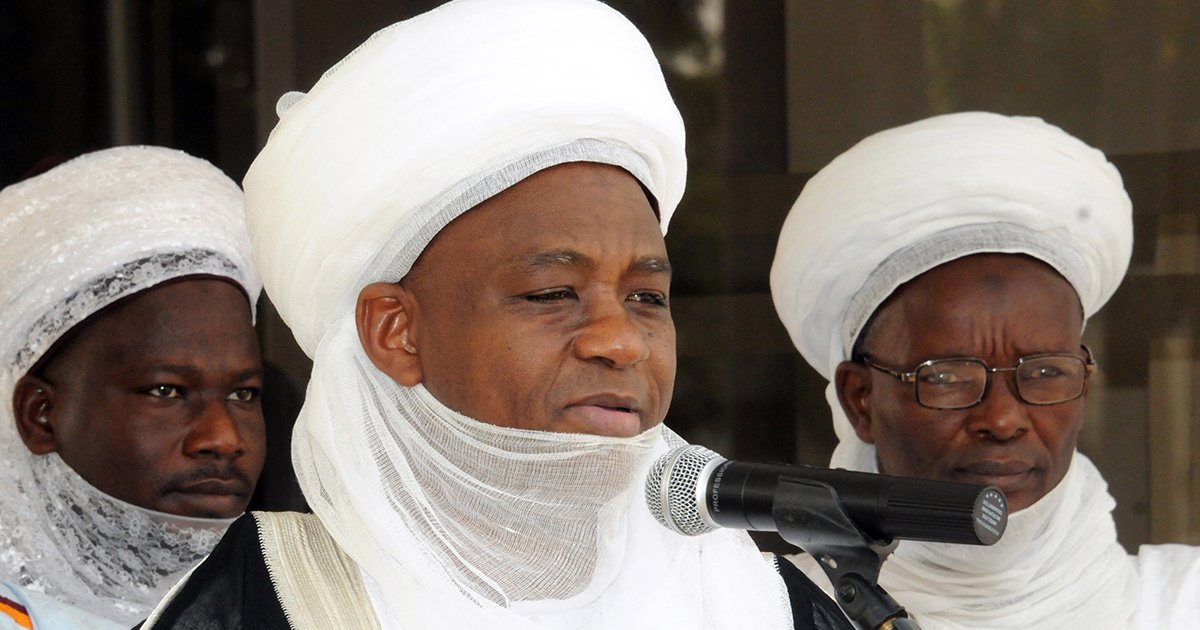
Ramadan starts Thursday, says Sultan
By Muhammadu Sabiu
The Nigerian Supreme Council of Islamic Affairs has confirmed that the Ramadan crescent has been sighted in different locations in Nigeria.
This announcement was made by the Islamic Council in a statement on its official Facebook page on Wednesday night.
The statement reads, “His Eminence has received positive sighting reports of the Ramadan crescent from various locations nationwide. Thursday, 23rd March, is the first day of Ramadan.”
It added that an official statement would follow afterwards.
The sighting of the crescent marks the beginning of the ninth month of the Islamic calendar, in which Muslims fast for twenty-nine of thirty days before observing Eid al-Fitr.
Man refutes social media gossip about wife’s age
By Muhammad Abdurrahman
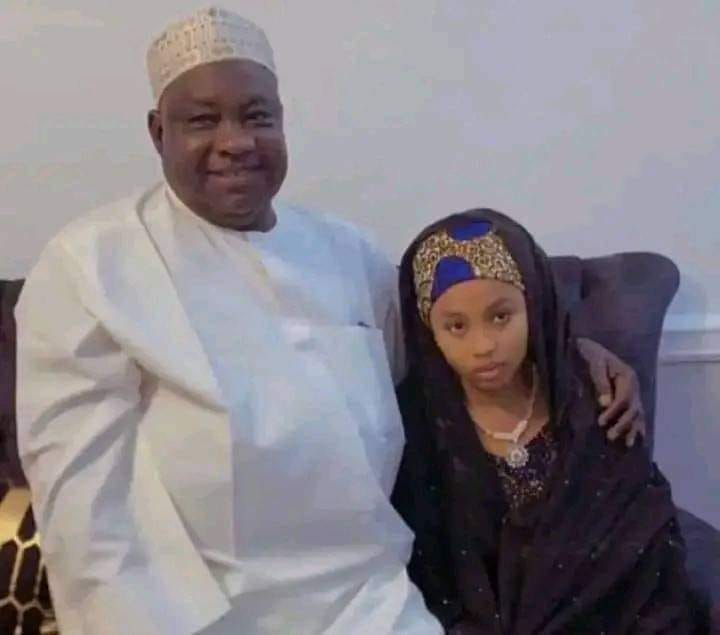
A photo and video clip of a man and his wife went viral in the past days on Nigerian social media. Several users, especially on Twitter, alleged that the wife was 11 years old while the man looked much older.
Others condemned the marriage, calling the man a paedophile and other unprintable words.
The man, identified as Aminu Danmaliki, debunked all these rumours. He those sharing them “blackmailers and doubting Thomas”.
Danmaliki, in a Facebook post, says:
“My recent marriage with Sakina has generated a lot of tension and unfounded allegations that I married an underage girl, some suggesting she is 11 years old and that she was forced to marry me. That is untrue.
“The wedding video went viral. We decided to keep mute, but [I] was advised to state the true facts. Here it is: My beloved wife is 21 years old. She made her own choice of me as her husband, and I loved her too.
“I hope the blackmailers and doubting Thomas will see the reality in this picture and leave us alone to enjoy our honeymoon.”

Danmaliki, per his social media profile, hails from Bauchi. However, he now lives in Abuja. The Daily Reality has not been able to contact him for further information.
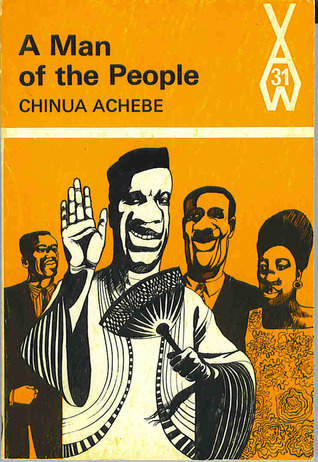
Chinua Achebe’s Man of the People: A story more than a fiction
By Saifullahi Attahir
It’s not surprising that nowadays you see my post regularly. I’m always looking forward to moments like this where I get released from the yolk of sleep-inducing medical books. Once again, I’m lucky to be surrounded by my favourite literature I enjoy which serves as a source of enlightenment, happiness, experience, and loyal and non-disturbing companionship.
This week I luckily came across a 362 pages novel written by a great and rare literary icon, Chinua Achebe, who needs no introduction. Dr Achebe was born around the 1930s in pre-independence Nigeria. He witnessed the early struggle of our nation with colonial amalgamation, premature political activities, and half-baked western knowledge. He was also blessed to witness the coup and the counter-coups, the civil war, the many long military juntas, and various democratic regimes. He died around 2013. what a long journey!
My respect for Achebe began when I discovered his early taste in Medicine (MBBS) at the University before switching to the Humanities. This is obvious in his surgical approach to writing and his simple use of words to convey a powerful message resembling a patient-doctor relationship in a way that no other can. Achebe is a political philosopher with all the tools to delve into politics (being famous, a great orator, experienced, a historian, and knowledgeable, of course, without the money) but decided to steer himself away from remaining a true nationalist.
The book, Man of the people, was so captivating that I couldn’t stop reading it until I was done in less than three days. How it related events in the early 1950s political arena to how it is in the present moment shows me that history is often a cyclical process with only names and dates that tend to change a little. This struck me with a reality that humans, despite our self-acclaim superior intelligence, are sometimes unfortunate gullible creatures that hardly learnt lessons from their past mistakes or the mistakes of others. This is more so true as today we rarely like to read history. Below is my take off from the book:
Chief Honourable Nanga is regarded in our settings as a wise and lucky few who was previously a low waged primary school teacher before finding his way into politics in the newly independent country. He was elected as a parliamentarian to represent his local people, who were mostly less literate in books than he was. Before his political adventure, Nanga was simple, intelligent, respectful, and friendly. All the mentioned attributes earned him the automatic approval of his people to represent them.
Of course, they weren’t wrong. Chief Nanga continues to be available to his people because he was a person you could describe as ‘let us eat together’. The main concern of his people was to bring them something to their mouths, not tangible and economically sustained programs. This automatically makes Chief Nanga the person whose main concern was to butcher the ‘national cake’ to satisfy his people and at least secure their approval for the next election round.
Chief Nanga was nominated a National Minister of Culture by the Prime Minister for his unquestionable ‘loyalty’ to the party and its leadership. The loyalty was nothing more than his ability to see wrongdoings and remains silent. Transgressions include high inflation, dashing money to party members, over-estimated contracts, sub-optimal road projects, conspicuous import duties, debt-ridden economic policies, debilitating educational reform, and countless more.
In exchange for his loyalty Chief Nanga was assured 10% of every project he was given, a 7-bedroom self-contained house, ten newly designed buses for his next election campaign, a newly 2-storey mansion in his village hometown Anata, a new Cadillac car, and four security bodyguards. Remember that this was 1960’s politics!
In the story, there was an incident of some members of Parliaments who were not loyal to this dirty scheme of ‘party politics’ and stood their ground to expose all these scandalous affairs. Their fate was that the newspapers, magazines, and media outlets were being bought up (bribed) to write news regarding a coup plot arranged by those patriotic citizens who were later dismissed and imprisoned. At this juncture, I noticed that it’s true that news from some media outlets sometimes has some aspects of interest, either being compromised financially or for personal benefit. This required a separate article on its own.
It’s a rule of life that such activities can never continue unnoticed. Therefore a group of young, overzealous, and enlightened University graduates, some of whom were already practising in various sectors, including lawyers, doctors, teachers, and engineers led by Max (a lawyer) and Odili (a teacher) gathered to form a political party or rather a revolutionary movement to counter the activities of Chief Nanga’s Government. After various arrangements and meetings, they began launching their campaign. They were able to display every tactic to draw the attention of the common men and women in the country.
To cut the story short, these zealous young men were, to some level, unsuccessful in their mission; as the system began to unfold, it seemed a very complex situation where the very people they were shouting to rescue were the very culprit supporting the corruption. Those masses see the politician as saviours whose role is to go and bring them their share of the ‘national cake’ bounty because they do not view it as their right or National asset that deserves preservation up to their unborn generation.
The problem is that the same common masses are responsible for encouraging the leaders to do the vices. The common masses are the vanguards (‘yan jangaliya), the bodyguards, the local party chairman, and the man who complained of Kola-nut for his daughter’s marriage. The same masses would first laugh at him (elected politician) after one year when he resigned from office without amassing something. Then, they would laugh at him that now he had become a pauper, so this automatically creates the intrinsic urge to loot.
During the election campaign, Max lost his life after being attacked by those unfortunate vanguards, and Odili sustained injuries, while his nomination paper didn’t even reach the electoral office as it was confiscated by corrupt Police. Chief Nanga’s party were ‘elected’ unopposed through massive ballot rigging and political hullabaloo. Fortunately, the country was saved by a military coup that overthrew Chief Nanga’s government.
The rest is history.
Saifullahi Attahir wrote from Dutse wrote via saifullahiattahir93@gmail.com.

CBN hikes interest rates to 18%
By Muhammadu Sabiu
The benchmark interest rate will rise by 50 basis points to 18% following a vote by the Monetary Policy Committee (MPC) of the Central Bank of Nigeria (CBN).
Godwin Emefiele, the governor of the Central Bank of Nigeria, revealed this while reading the communiqué from the second MPC meeting of the year on Tuesday in Abuja.
In a statement to the media following the two-day meeting, Emefiele stated that the committee had decided to maintain the asymmetrical corridor around the MPR at +100 and -500 basis points.
According to the governor, the small increase is intended to lessen the impact of inflation and other economic problems.
Since April 2022, when it was 11.50%, the MPR has been increasing.
The rate affects lending and inflation rates, which, when raised, have an adverse effect on the rise in the cost of goods and services.
Child sexual abuse: An effective solution
By Ishaka Mohammed
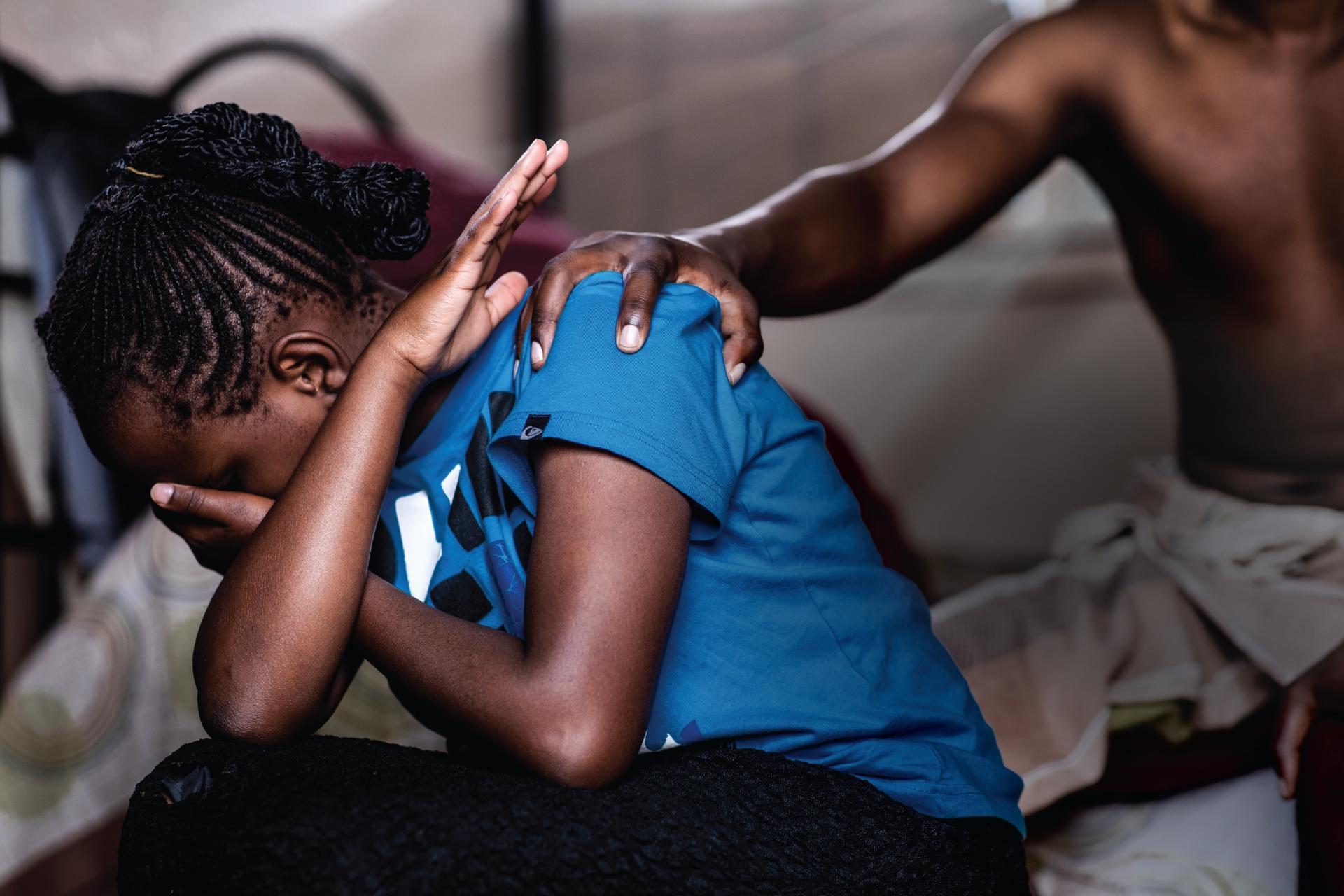
Children smile when they are happy and cry or weep when they are hurting. They see you (an adult) as a loved one and guardian, so they hold your clothes, allow you to touch them and accept your gifts. Kids believe that everyone is innocent like them. Little do they know that some of their “loved” ones are child sexual abusers looking for opportunities to steal their innocence.
From relatives and friends to neighbours and teachers, we see people who derive pleasure from destroying poor kids. We live with people whom we consider as lovely friends and guardians of innocent children, unknown to us that they are monsters who see the innocent kids as sex objects. What a wicked world!
Although male children are also victims, sexual violence or abuse disproportionately affects female children. At a tender age, the girl-child suffers sexual abuse from people she’s supposed to trust. While at home, her mother tends to be indifferent when a man starts his subliminal seduction by touching her and calling her “my wife”. And at school, some of her male teachers use their bare hands to smack her—not as a punishment. These unscrupulous men abuse the girl-child while smiling and making her do the same, taking advantage of her naivety.
I recently read a disturbing story about the arrest of a teacher who allegedly defiled four underaged sisters within ten weeks. It’s even shocking that the eldest of those girls is just 14 years old. I initially wondered how the suspect got a one-to-one meeting with the girls. I later realised that some parents are utterly irresponsible.
While listening to a Muslim cleric a couple of weeks ago, a man rebutted the claim that the religious orientation of children (especially girls) is a collective responsibility. According to him (a supposed father), parents had done their part by enrolling their wards and paying school fees, so the rest should be on Islamiyya schools. I was disappointed to hear such from someone who sometimes leads us in prayer. With this kind of man as a parent, it might be easy for a male teacher to even invite a female student to his house for a special (one-to-one) session.
Many parents trivialise the care of the girl-child nowadays. Maybe they are oblivious to her vulnerability, so they leave her to the mercy of people they tend to trust. Call it suspicion or being overprotective; I insist that it can be disastrous for a girl to be with a man (except her husband) in seclusion, regardless of their biological or social relationship.
While searching the incidence of incest in Nigeria some time ago, I found an enormous volume of reports. The findings shocked me because I grew up in a society where almost every family protected its name by keeping such nasty stories from the public. Besides, I never imagined sexual activities between parents and their children. Although I’ve read a few stories involving mothers, this unthinkable act happens mostly between fathers and daughters. If poor kids could be abused by their biological fathers, I doubt if they’d be safer anywhere else. So, what’s the way out?
Here’s my take. To protect the girl-child, we must shun emotional blackmail and take rigid measures. Members of every family should unanimously agree that any man (father, uncle, brother, teacher, etc.) that wants to talk to a female member should do so in the presence of other people. However, in the case of something seemingly private, they can be given a gap but must be visible to another member of the family.
You may think my position is absurd, but I’m sure you’d change your mind after reading some of the reports I’ve accessed. Child sexual abuse and incest in Nigeria cut across all regions and religions, so we must deny one another the chance to engage in this heinous act.
I once saw a quote that reads, “Virginity isn’t dignity; it’s lack of opportunity.” Although I disagree with the first part, I find the last one meaningful. A lot of people are innocent because they have no chance to commit certain sins.
I know a man in his late 30s who used to be angry with his dad because he had no personal room to copulate with girls, but this fellow is grateful today for the opportunity he didn’t have years ago. Indeed, a lack of something might just be a blessing in disguise. Dear men, let’s fight child sexual abuse by denying one another a one-to-one meeting with any girl.

Special forces deployed to rig Zamfara guber election, PDP raised alarm
By Aisar Fagge
The Zamfara State chapter of the People’s Democratic Party (PDP) raised the alarm that the Nigerian Inspector General of Police, Usman Alkali Baba has deployed a team of special forces to rig the Zamfara governorship election.
The Peoples Democratic Party in a statement today in Gusau through the Dauda Lawal Media Office accused the Inspector General of conniving with governor Matawalle to rig the governorship election in his favor.
The Independent National Electoral Commission (INEC) has announced the results of 11 local governments out of 14 local government areas of the state.
The People’s Democratic Party polled 325, 238 votes while the All Progressive Congress polled 251, 006.
“As it stands, we have won nine local governments while the APC won two local governments. We are waiting for the official announcement of three local government areas: Kauran Namoda, Maradun, and Birnin Magaji”.
“From the announced results by the Independent National Electoral Commission (INEC), we are winning with a margin of 74,232.
“Our major concern is the interference of the Inspector General of Police, Usman Alkali Baba. We raised the alarm on election day that there was no police presence across the state. It was a plot by the Zamfara state commissioner of police to aid the ruling APC in manipulating the process.
“Our verified sources have confirmed to us that the Inspector General of Police has deployed a team of special forces to Zamfara. They were flown to Sokoto from Abuja. We have learned that they are on their way to coming into Zamfara to cause chaos and create tension in the state capital.
“The Inspector General of Police in connivance with the Zamfara state government hellbent on manipulating the successful announcement of the result. They want to create a scene that will lead to the loss of lives and properties in Zamfara.
“We call on the Chairman of the Independent National Electoral Commission (INEC), Professor Mahmoud Yakubu to call the Zamfara State Resident Electoral Commissioner (REC) to order. We have lost confidence in him.
“Zamfara State Resident Electoral Commissioner (REC) is intentionally delaying the process of the announcement of the result, giving the governor room for manipulation.
“All collated results from 14 local government areas are ready and in the state collation center. We don’t know why they are delaying the process.
“The president, security agencies, and international observers should pay close attention to the process in Zamfara state.”
Sheikh Ibrahim Khalil: Goodbye to a political reformist
By Umar Ahmad El-Rufai
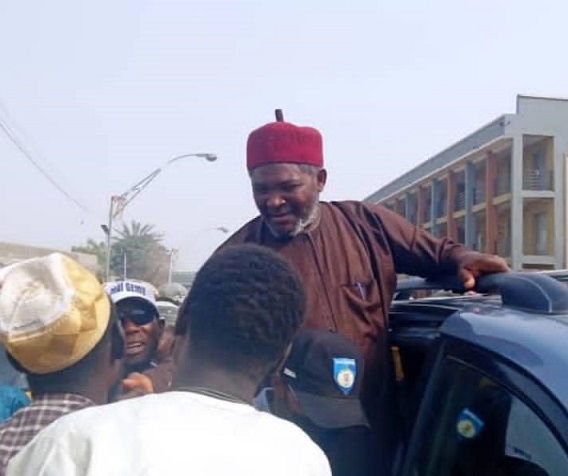
Sheikh Ibrahim Khalil is a renowned Islamic scholar. However, as a gubernatorial candidate in Kano, he didn’t hide under religion to win an election.
Whether you know it or not, he didn’t beg others to endorse him due to his identity as an Islamic scholar. He regards himself as a politician. Every politics is local.
He campaigned like everyone and participated in politics. That’s his constitutional right. However, he neither sought donations from his students nor others dignitaries.
As a result of Malam’s political journey, anyone among our Islamic scholars is free to venture into politics now. Nobody should hide under religion to achieve his political goals.
Sheikh Ibrahim Khaleel became chairman of the Northwest Nigeria Council of Ulama, an organisation of Muslim religious leaders. He has been opening big doors with small keys.
I regard him as a winner that reforms the system. As a result, nobody will come to get cheap popularity under religion. That’s a victory for everyone.
Politics is good to some. Mallam will be remembered as a political reformist. So do your politics; don’t hide under religion. The game is over.
Umar Ahmad Rufai wrote from Kano via umarahmadrufaijr@gmail.com. He is a student at Dala College of Education.
NNPP’s Abba Kabir wins Kano governorship election
By Muhammadu Sabiu
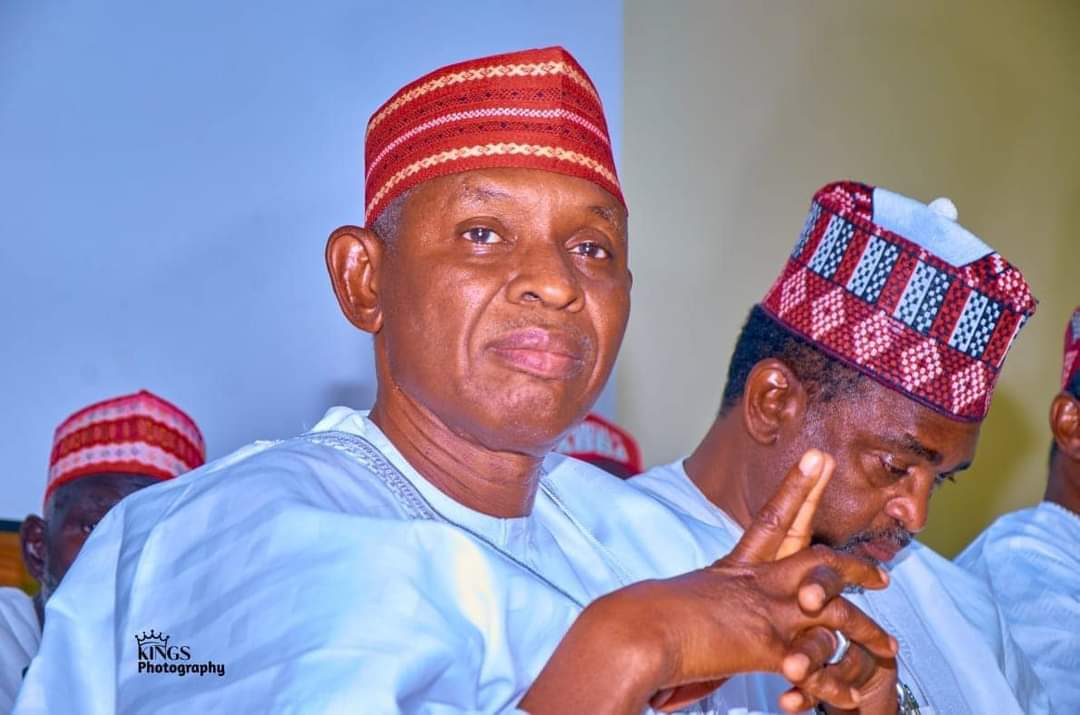
Yusuf Gawuna of the All Progressives Congress was defeated in the Kano governor’s race by Abba Yusuf, a candidate for governor from the New Nigeria Peoples Party (NNPP).
Gawuna, the state’s deputy governor, is Abdullahi Ganduje’s chosen candidate, and Rabiu Kwankwaso, the former governor of Kano State and the NNPP’s presidential candidate, is a strong supporter of Abba Yusuf.
At the conclusion of the collation across 44 local government areas (LGAs) in the state, the Independent National Electoral Commission (INEC) declared Yusuf the winner.
The returning officer, Ahmad Dokko Ibrahim, declared that Yusuf got 1,019,602 votes, while Gawuna got 890,705 votes.
In 2019, Yusuf ran against Ganduje in what was viewed as an extremely contentious election that was considered rigged.
Abba’s supporters jubilate in Kano
By Uzair Adam Imam
As votes were cast yesterday, the Kano State people continue to wait for the official announcement of the Governorship and the State House of Assembly elections` results by the Independent National Electoral Commission (INEC).
The umpire electoral body has this evening started the official announcement of the result today as returning officers of various polling units across the 44 local government areas submitted their elections results to the INEC.
However, some supporters of Eng. Abba Kabir Yusuf, the gubernatorial candidate of Dr Rabiu Musa Kwankwaso`s New Nigerian Peoples Party (NNPP), have started celebrations, given the wave of success they see from the results of various local government areas of the state.
The supporters took to their various social media platforms to celebrate Eng. Abba Kabir Yusuf said they foresee a better Kano under his administration, adding that they voted for him to continue the good work of his political godfather, Eng Rabi`u Musa Kwankwaso.
The supporters predicted that Abba would win the election, and their posts, “Abba is coming, in sha Allah”, went viral on Facebook, Twitter and WhatsApp, among many other social media platforms, including Tiktok.
Eng. Abba Kabir Yusuf, popularly known as Abba Gida-Gida, has been the major opponent of Dr Nasir Yusuf Gawuna, the gubernatorial candidate of the All Progressive Congress (APC).
Gawuna, who is the Deputy Governor of the state, was nominated by Governor Abdullahi Umar Ganduje to succeed him.
During the BBC`s debate for the governorship candidates in the state, Gawuna was also reported to have said that he would continue the good works of all his predecessors, Malam Ibrahim Shekarau, Eng. Rabi`u Musa Kwankwaso and Dr. Abdullahi Umar Ganduje.
Other candidates include Sadiq Wali of the Peoples Democratic Party (PDP), Sha`aban Sharada of the Action Democratic Party (ADP), and Malam Ibrahim Kalil of the African Democratic Congress (ADC), among other candidates.