



The Illogicalities in English Grammar
By Salisu Yusuf
As against the traditional definition of grammar, English grammar is a mixture of arbitrary and non-arbitrary, logical and illogical rules that are fused to form a language that was hitherto made up of some feuding tribal groups (Angles, Jutes and Saxons). It was around the 14th century, when the Renaissance started, that many linguistic and literary forms and areas were borrowed from Latin, Greek, Sanskrit, French, Spanish, etc, to swiftly form a language that would be used to conquer the world.
English grammar is full of arbitrary and illogicalities that are used as rules governing language use.
The inconsistency of English grammar is vivid in tense formations. For example, the three broad English tenses are further subclassed into 12. Each one delineates a form of the verb that allows you to express a specific time. But the English language has bizarrely many different ways of forming future references. While, for example, “he has…” and “he had…” express two incongruous tenses, the following 5 sentences express one thing, one idea and one tense:
1. The man will take off in 2 minutes.
2. The man will be taking off in 2 minutes.
3. The man is going to take off in 2 minutes.
4. The man is taking off in 2 minutes.
5. The man takes off in 2 minutes.
Has your language such bizarre ways of expressing the same idea from different tenses fused in one tense?
While the auxiliary verbs such as have, has, had, etc attract past form of a verb, the past modal auxiliaries such as could, would, should and might ironically attract the present forms of a verb:
He had arrived before you came.
He could arrive before you.
What an incongruity!
There’s no grammatical environment where the rules of agreements are flouted as in the use of idiomatic expressions. For example, the rule of specification in the use of definite and indefinite articles is sometimes dropped in favour of the arbitrary. For instance, nouns and adjectives take articles depending on the environment. But many idiomatic expressions do not leave rooms for articles:
He is second to last.
He is second to the last.
Moreover, idioms such as “it is high time..” and “it is time..” bizarrely take past forms of a verb whenever they are used though they express the present context:
It is high time we spent the night there.
It is time he was jailed.
Sometimes, two similar idioms can be at variance with a slight change in an article. For example, the following sentences express two opposite meanings:
1. Musa had been the shadow on Abdu’s shoulders during their undergraduate days.
2. Musa is a shadow of his former self.
While the first means that Musa was so intelligent that he was Abdu’s rival at the university, the second one expresses that Musa is no longer as formidable as he was.
English grammar becomes arbitrary under the notional concord. Notional Concord refers to the agreement of verbs with their subjects on the basis of meaning rather than grammatical form. For example, each of the following quantifiers takes a different rule when it’s used: while “a number of..” takes a plural verb, “the number of..” arbitrarily takes a singular verb:
A number of students are missing.
The number of students is missing.
Similarly, in the use of a “catenative verb”(denoting a verb that governs a series of verbs in a sentence), two or more verbs can appear in different forms. Another can follow a verb in past form in continuous or even base form:
I saw her complain.
I saw her complaining.
I saw her complained.
What a grammatical anomaly!
Conditional tenses clearly expose the incongruity of English grammar. For example, the first conditional tense looks more futuristic than present in their expressions, yet the “if ..” clause uses habitual tense(if you come..), and third person singular marker (if he comes..). But why should a future reference be used with elements of “s” inflexion exhibiting presentness?
The second conditional tense(which expresses unrealistic situations) daringly expresses the grammatical incongruity: “If you, we, he, she, they were..” is used in all the categories of pronouns and nouns. Here, classifications such as first, second and third-person singular and plural are immaterial!
Under subject/verb concord, he, she, it, Musa, Binta is used in expressing habitual tense aspects using “s” or “es” inflection but I is not used in this pattern. He/she is used with “has” but I is used with “have”. He, she, it is used with “is” but I is used with “am”. You(second person plural), we, they are used with “are” yet “you”(second person singular) is also used with “are”. But you, we, they, he, she, it is used with “might have..”. Why not he, she, it ” might has..”? English grammar is so funny and complex!
In plural/singular formations, the rule is sometimes arbitrary. For example, boy, girl, friend form their plural with an “s” inflection. Yet, ox(oxen), child (children), etc, are oddly different.
Why, then, is English so complex in its grammar, phonetics and phonology?
First, English is the child of partible paternity (many fathers)as Jute, Norman, Angle, and Saxon have all contributed their semen in the bearing and formation of what would later become English.
Secondly, English is the most subjugated language, with huge borrowing from Danish, Scandinavia, Latin, Greek, German, French, Arabic, Hindi, etc. No language enjoys huge borrowing as English does.
Even the so-called 8 English Parts of Speech belonged to the Greek, not English grammar. This is why there are lots of incongruous rules. This is why “boy” is a noun but “beautiful” is not a noun but an adjective. Yet “beautiful” has all the qualifications of a noun. A table with a flat top and 4 legs is not called an adjective, but beautiful, an abstract quality is called an adjective. This is why you have rules such as “he, she is..” but not “I is..” but “am”. These parts of speech are adopted from Greek grammar.
The above and many more reasons are what make the English language have the hardest spelling system, pretty difficult pronunciation, a high number of sounds and sound shifts, etc.
The logic is that he is he, she is she, but I is not I, you is not you, but I am.. and you are… While she HAS the book, I ought also HAS the book. But it says I have… While we are we, they are they, but why you is not you, they say you are you not you is you.
This grammar is illogical!
Salisu Yusuf wrote from Katsina via salisuyusuf111@gmail.com.

Notes on Hadiza Bala Usman’s book, Stepping on Toes
By Abubakar Suleiman
The 200-page book with 17 Chapters titled, “Stepping on Toes: My odyssey at the Nigerian Ports Authority,” is a very interesting book with damning revelations. It is an inside story of Hadiza Bala Usman’s stewardship as the Managing Director of the Nigerian Ports Authority (NPA) and the mess that is the Nigerian public service.
The book is written in simple and straightforward English that even a high school student will comprehend so well. My interest is piqued and waxing stronger from one Chapter to another thereby making the book to be unputdownable.
The first two chapters of the book highlighted the events that summed up her closeness to the former Minister of Transportation, Rt. Hon. Rotimi Ameachi, his recommendation to President Muhammadu Buhari for her appointment as the Managing Director of the Nigerian Ports Authority and the President’s subsequent approval.
Chapters three, four and five discussed the status quo or context in which Hadiza met the top government officials, internal reforms and her steps toward turning the place around for the better. Her innovation or attempts at decongesting the ever tiring Apapa’s traffic was also captured here.
The rest chapters delved into the ‘stepping on toes,’ the root causes of her imbroglio with vested interests in the industry and her boss-cum-witch-hunter and eventually her ‘stepping aside.’ It was either a major player in the industry or contractor breaches the contract agreement with impunity or it was the Minister who wants an extension for a contractor after a procurement process has already commenced.
The final chapter, Chapter 17, was the icing on the cake. If you’re not given to reading books, try to read this last chapter titled “The lessons I learnt.” For anyone who eventually finds themselves in the public service. The chapter needs to be etched in our memories before we get carried away by the allure of wealth or the sweetness that comes with the corridors of power whenever we are called to serve. I implore everyone to read the book especially people who have a tinge of interest in the public service.
It is good that she documented her experiences and travails as the boss of the NPA. Her successor or anybody with an interest in public service will learn some lessons on the political scheming, politics, lobbying, vested interests, backstabbing, soft and tough decisions and, careless and honest mistakes that come with public office.
Some decisions taken by public office holders might seem awkward, insensitive or uninformed but we never could tell the context and variety of information and decision available to them. An autobiography will give us these insights. And I am particularly happy that politicians or public servants are toeing this path of detailing their experiences, thoughts and decisions making in their public service sojourn. We hope, some day, the former Minister of Transportation, Rt. Hon. Ameachi will also write a book so we could get his own version of the story. The revelations are indeed damning.
Without falling for the danger of a single story and without prejudices to Ameachi, Hadiza’s story is not unusual as far as the public service terrain is concerned. From Sanusi Lamido Sanusi to Yewande Sadiku to many other patriotic Nigerians who left the call to serve the nation somehow scathed; it has always been a case of being loyal to the truth and country or being uncritically loyal to your boss or some vested interests who call the shots with impunity and clear disregard for the rule of law and the country’s image and integrity.
The Nigeria’s public service is a very intriguing space and it would be difficult not to step on big toes especially when you really want to carry out reforms or bring about change or sanity in the system. The beginning of your suffering as a Nigerian, whether as a leader or the led, is to insist on following due process in your dealings. With this sole decision, you’ve kissed peace a goodbye.
A reformed minded person will always come onboard with disruptive decisions and vested interests who have enjoyed monopoly, formed cartels and compromised previous and existing civil servants don’t go down without a fight. They will pull all the strings available in the book and it could be done in the most harshest and dirtiest manner.
From getting a court order to restrain you from proceeding with a well planned and thought out process to employing hoodlums to attack you and to using dangerous politicians to fight you on their behalf. And these dangerous tendencies have pushed many intelligent and patriotic people away from public service.
Furthermore, when it comes to feasting or latching on the national cake, the collabo between politicians or vested interests knows no political party, ethnicity or religion. The most important thing for the interests is to just align and every other thing or person is just a chess pawn.
Public service is increasingly becoming a toxic and thorny path many reform-minded persons will not want to toe. Now, should we decline a call to serve our country? The definitive answer to that is no! Whenever you are called to serve the country don’t hesitate to oblige, it is an opportunity to make decent contributions for your country. The public service is too important to be left to the sharks. Go into the public service terrain, get your fair share of scars but make sure you leave an imprint of integrity, transparency and accountability. And in the end, publish your story.
Abubakar Suleiman writes from Kaduna and can be reached via abusuleiman06@gmail.com

Declaration of guber election winner in Adamawa null and void, says INEC
By Muhammadu Sabiu
The Independent National Electoral Commission has declared null and void the declaration of Mrs Binani as the winner of the Adamawa supplementary gubernatorial election.
In a statement released through the commission’s verified social media handles, Barr. Festus Okoye, National Commissioner for Information and Voter Education, noted that the commission had suspended all the processes of the supplementary election.
The statement reads, “The attention of the Commission has been drawn to a purported declaration of winner in the Adamawa Governorship election by the Resident Electoral Commissioner (REC) even when the process has clearly not been concluded.
“The action of the REC is a usurpation of the power of the Returning Officer. It is null, void and of no effect.
“Consequently, the collation of results of the supplementary election is hereby suspended. The REC, Returning Officer and all involved are hereby invited to the Commission’s Headquarters in Abuja immediately.
The statement added that a “detailed statement” would follow shortly.

Increasing Kano’s IGR: roadmap for economic recovery under Abba
By Bashir Abdu Muzakkari, Ph.D.
Internally generated revenue (IGR) plays a crucial role in the economic development and sustainability of every state. As the Governor-elect of Kano State, His Excellency, Abba Kabir Yusuf, has shown a strong commitment to enhancing the state’s revenue generation through various innovative strategies and plans of action.
One of the key strategies proposed by Abba Kabir Yusuf is innovative financing. This involves exploring new and creative ways of generating revenue beyond traditional tax collection methods. For instance, the governor-elect plans to leverage partnerships with private investors and financial institutions to invest in revenue-generating projects such as infrastructure development, agriculture, tourism, and technology. By diversifying the sources of revenue, Kano State can reduce its overreliance on tax collection and increase its IGR.
Another critical decision towards his plan is the disengagement of current tax consultants. The governor-elect recognizes the need for a more efficient and transparent tax collection system that minimizes leakages and maximizes revenue collection. As such, he intends to review existing contracts with tax consultants and ensure that only reputable and qualified consultants would manage the state’s tax administration. This will help in plugging revenue loopholes and improving the overall effectiveness of tax collection in Kano State.
Furthermore, Abba emphasizes the need to improve the capacity and welfare of state tax collectors. He recognizes their important role played by tax collectors in revenue generation and believes that their welfare and capacity building are critical for optimal performance.
He plans to invest in the capacity-building programmes for tax collectors to enhance their skills and knowledge in modern tax administration practices. Additionally, he intends to prioritize the welfare of tax collectors by providing them with adequate remuneration, incentives, and tools necessary for effective tax collection.
Transparency and accountability in revenue generation are also key components of Abba’s plans of action. He aims to establish a robust system that ensures all revenue collected by the state is properly accounted for and utilized for the benefit of the people of Kano State. This will involve regular audits of revenue collection processes, the use of technology to track revenue inflows and outflows, and the publication of audited financial reports to ensure transparency and accountability in revenue management.
Moreover, the governor-elect is committed to enhancing tax legislation and administration in Kano State. He recognizes the need for an up-to-date and robust legal framework that supports effective tax administration. He plans to collaborate with relevant stakeholders, including the state House of Assembly, tax experts, and civil society organizations, to review and update existing tax laws and regulations to align with international best practices. This will help in creating an enabling environment for businesses and individuals to comply with tax obligations, thereby boosting revenue generation.
In addition, Abba Kabir Yusuf works to identify additional revenue sources for Kano State. This involves exploring new sectors and industries that have the potential to generate significant revenue for the state. For instance, the governor-elect plans to explore opportunities in the creative industry, solid minerals and other untapped sectors to diversify the state’s revenue base. By identifying and harnessing new revenue sources, Kano State can reduce its reliance on the federal grants by creating a more sustainable and resilient revenue generation system.
Abba also recognizes the importance of providing tax relief and incentives to relevant taxpayers. He plans to review the current tax system and identify areas where tax burdens can be reduced for businesses and individuals, especially small and medium-sized enterprises (SMEs), which are key drivers of economic growth. By providing tax relief and incentives, Kano State can attract more investment, stimulate economic activities, and ultimately increase its IGR.
In conclusion, Abba Kabir Yusuf envisions the creation of the Kano State Advertisement and Signage Agency (KASIA) as an additional revenue generation strategy. This agency will be responsible for regulating and managing outdoor advertising and signage in the state, including billboards, banners, and other forms of outdoor advertising. By properly regulating and taxing outdoor advertising, Kano State can generate additional revenue while also improving the aesthetics and environmental sustainability.
Bashir Abdu Muzakkari writes from Kano.

There is voter intimidation in Tudunwada/Doguwa supplementary election, group writes Kano CP
By Muhammadu Sabiu
The Kano Civil Society (KCSF) notes that it has received complaints from community members in the Tudun Wada/Doguwa Federal Constituency, the same areas where there were alleged intimidation, oppression, killings, and property destruction during the two previous elections in the state.
This was made known in a letter addressed to the Kano State Commissioner of Police dated April 14 and signed by Ambassador Ibrahim Waiya, President and Peter Hassan Tijjani, General Secretary, respectively.
The letter reads, “The above ugly situation, has till date become a National and Global human rights violation issue, as well as made the global community, the National Human Rights Commission, International organizations, National and Local CSOs to beam their search light on Kano State, in the supplementary elections.”
“Here we are, with the long awaited supplementary elections, which is scheduled to be conducted by INEC in some Local Governments, including Doguwa/Tudun Wada Federal constituency.”
“It is against the foregoing, we call on your good office to uphold the best practices of professional conduct to proactively address any likely re-occurrence of the 25th February, 2023 ugly incidences, where innocent souls were allegedly burnt to ashes.”

Hate over Love: The tragic consequence of custody battles
By Hajara Shehu Esq.
A broken marriage can have adverse effects on the custody of children. In many cases, when a marriage ends, the focus of each partner is solely on how to hurt the other, regardless of the impact on their innocent children.
Nowadays, custody of children has become a weapon of choice in this scenario. As a result, the battling parties are often blinded by fury and anger, sacrificing their children’s well-being in the process.
Unfortunately, the person fighting for custody may not have a conducive environment to raise the child/children. The primary objective is simply to separate the child/children from the other parent as a token of hatred. The main problem is that whoever wins the custody case often destroys the child/children’s lives. In most cases, the child loses the love, care, and affection of the parent who lost the case due to anger, and the parent who wins may not offer the best life for the child.
For instance, if the father wins custody, he may not be married and may live with an elderly mother. In this situation, the child/children often wander around without proper and adequate care. In another scenario, the father may be married and take the child/children to a stepmother. However, this can lead to complete abandonment from the stepmother due to the father’s attitude and behaviour, overprotectiveness, and unending interference.
Similarly, if the mother wins custody, the father may neglect the child/children and completely surrender them to the mother. Unfortunately, most mothers from less privileged families or orphans may find it difficult to meet all the financial needs of the child/children.
While credit is given where it is due, a mother always tries her best until she remarries and has other children. Then, the children will automatically suffer the same fate as above, except in favourable situations where the mother is privileged.
Leaving a child/children to their maternal/paternal grandmother is not a bad thing. However, it is not the best option considering the grandmother’s age and the need for a child to have love, closeness, and affection to be a good individual. The most disturbing circumstance is when both parents are married and have other children, and the child/children are left alone under the care of their dearest grandmother. In such cases, the child/children become hardened by circumstances and are forced to grow faster than their age.
Every child needs to be allowed to grow according to their age in love, care, and affection. Every child deserves the love, respect, and affection of both parents. It is not a privilege but a huge responsibility placed on them by Allah, the Most High, which they shall account for. The Prophet (PBUH) said we are all shepherds and shall account for it on the last day.
Many victims of broken marriages have grown up to become drug addicts, thugs, armed robbers, thieves, and engaged in many other crimes. Love, care, and affection are the foundation of a good individual. Where these are lost, most children go astray except those that Allah guides.
It is disheartening to witness parents cursing, abusing, and calling each other names while holding each other responsible. However, the truth is that these kinds of parents are equally and jointly responsible.
In conclusion, no matter how a marriage ends, Allah’s precious gifts (children) are not the reason and should be kept away from battles. Instead, parents should allow each other to play various roles in the child/children’s life. Relationships might end, but the child/children’s relationship with the ex-partner will forever remain. Children deserve a good life filled with love, care, and affection; parents should ensure they have it!
Hajara can be reached via Hbshehu301@gmail.com.
Why Nigerians should thank Peter Obi
By Prof. Abdussamad Umar Jibia
The 2023 general elections have come and gone, and like every set of elections, there are winners and losers. Typical of Africans, those who lost alleged rigging and those who won hailed the process.
In addition to winners and losers, there are other people we should cheer for their roles in the elections. First, we should give credit to President Muhammadu Buhari for being true to his promise of organizing free, fair and credible elections. The President himself has observed that Nigerian voters have become more sophisticated. One manifestation of this is that voters no longer vote along party lines. It doesn’t matter if he is a card-carrying member of a political party; once a Nigerian voter sees a better candidate in another party, they go for them. That is the new normal if you like, and it is a good lesson for our politicians.
We must also hail the INEC Chairman. Just like his colleague Prof. Attahiru Jega, Prof. Mahmoud Yakubu has shown an uncommon tolerance in dealing with politicians, even in extreme cases in which an ordinary person would lose control.
My man of the day is His Excellency Peter Obi, a former Governor of Anambra State. I have never met Peter Obi, and he did not attract my attention until he began to claim that he wanted to become Nigeria’s president. From the way he started up to the time he crashed, I knew that Obi didn’t have a good understanding of the country he wanted to govern.
First, Obi wanted it under the PDP. Despite being a failed party, a PDP ticket would have earned Peter Obi a distant second regardless of the part of the country he is coming from. When he could not clinch its ticket, he jumped to the Labour Party. Then he started his campaign, the method of which we all saw.
The part of his political activity that we should thank Peter Obi for is his ability to solve one of the greatest puzzles of the Nigerian census. I mean the question of religion.
Nigeria is a big country with a Muslim majority and a minority that includes a good number of Christians and some pagans. Nigeria’s last census that collected data on religious affiliations was in 1963. According to the 1963 census results, there were 47.2 % Muslims, 34.3% Christians and 18.5% others. In the North, the ratio was 71.7% Muslims, 9.7% Christians and 18.6% others.
Talking about South West, the 1963 census figures identified the present-day Oyo, Lagos, Ogun and Osun as Muslim-majority states, with only Ondo and Ekiti as Christian-majority states.
Subsequent censuses either did not capture religion like the case of the 1991 and 2006 censuses or were cancelled due to controversies surrounding their conduct which was the case with the 1973 census.
Demographic experts make projections based on past trends, fertility and mortality rates and in the case of religious proselytization, migration, etc. The Ibrahim Badamasi Babangida administration decided to remove religion in the 1991 census due to bogus claims of being majority especially made by the church, and since then, the Nigerian Population Commission has avoided conducting standard projections involving religious affiliations.
Without a head count and/or unbiased, professionally made projections, Nigerians are continuously bombarded with unrealistic population figures. At one point in time, Christians claimed that they constituted more than 45% of the Northern Nigerian population, a claim ignored by Muslims for being ridiculous.
While ordinary Nigerians can be misled by propaganda, politicians looking for votes have always been calculative in their determination of who constitutes the majority and should attract their campaign and who is a liar.
And it is not difficult to figure out. Political affiliation in Nigeria is a good pointer to religious affiliation. For example, it is well known that Northern Christians do not vote for Muslims, whereas the former are in the majority. The examples are many and well-known. Thus, the number of Christian elected politicians in a particular state would approximately tell you the percentage of Christians in that state. In addition, the number of predominantly Muslim states with large populations like Kano and Katsina makes the population of the two Christian-majority states of Plateau and Benue a joke.
As a politician who needs votes of the majority to win a national election, Obi should have known all these figures and used them to gauge his level of preparedness. Unfortunately, he lost it and was going from one Church to another, vividly falling into the propaganda trap of the Church. He was carried away by the belief that the Middle Belt is Christian. But where is the Middle Belt? Is it North Central? Who, among the Governors of Niger, Kwara, Nasarawa, and Kogi, is a Christian? Obi was simply too naïve.
However, it is not bad at all. The clergy campaigned for him. Christians were mobilized nationwide. The outcome is what the NPC could not achieve in its censuses. Christians overwhelmingly voted for Obi. The number of Muslims who voted for him was simply insignificant, just like the number of Christians who voted for the Muslim-Muslim ticket of Tinubu-Shettima. The few Christians who did not vote for Obi were seen campaigning for PDP. Overall, more than 14 million voted for either Tinubu or Atiku, both of whom are Muslims. Even if we take 10% of that and add it to Obi, Christians are still a small minority.
As Muslims, we have avoided these arguments as we consider them unhealthy since, after all, our eternal prosperity in Islam is not dependent on whether or not Muslims are in the majority at a particular time or location. But we have been boxed into it, and it is helpful.
Professor Abdussamad Umar Jibia wrote from Kano. He can be reached via aujibia@gmail.com.

Addressing Kano’s environmental challenge under Abba Kabir Yusuf
By Bashir Abdu Muzakkari, Ph.D.
Climate change and environmental control are critical issues that require urgent attention and action from policymakers and leaders around the world. The newly elected governor of Kano State, His Excellency Abba Kabir Yusuf, has outlined a comprehensive plan to address these challenges and promote sustainable environmental practices in Kano state.
One of the key commitments of Abba Kabir Yusuf is the development and implementation of a Kano drainage master plan. Flooding has been a recurrent issue in Kano State, causing damage to infrastructure, disrupting economic activities, and displacing communities. The incoming administration aims to tackle this problem through a well-designed drainage master plan that includes the modernization of existing drainage systems, the construction of new drains, and effective flood control measures. This plan will not only mitigate the impact of flooding but also enhance the resilience of Kano state to climate-related risks.
Another important aspect of Abba’s environmental plan is the reclamation of the Refuse Management and Sanitation Board (REMASAB) and the facilitation of waste-to-wealth initiatives. Proper waste management is crucial for maintaining a clean and healthy environment. The new government will revitalize REMASAB to ensure efficient waste collection, disposal and recycling.
Moreover, his new government to promote waste-to-wealth initiatives, such as composting, recycling, and upcycling, to transform waste into valuable resources, generate employment opportunities, and contribute to the circular economy.
Urban beautification is also a priority in Abba’s plan for climate change and environmental control. He recognizes that a clean, green, and visually appealing urban environment not only enhances the quality of life for residents but also attracts investments and tourism. He also plans to embark on urban beautification initiatives, including landscaping, tree planting, and public space development, to create a more sustainable and aesthetically pleasing urban environment in Kano State.
In addition to this, His Excellency, Abba Kabir Yusuf emphasizes the creation of oxygen banks as part of his environmental plan. Trees play a crucial role in mitigating climate change by absorbing carbon dioxide and releasing oxygen through the process of photosynthesis. He plans to implement a comprehensive tree planting program to combat desertification, enhance ecological control, and improve air quality in Kano State. This includes planting trees in urban areas, along highways and in degraded lands to restore the ecosystem and protect against the adverse effects of climate change.
Furthermore, the governor-elect recognizes the importance of environmental health practitioners in safeguarding public health and promoting environmental sustainability. He aims to reinvigorate the roles and capacities of environmental health practitioners in Kano State through capacity building, training and the provision of necessary tools and resources. This includes ensuring proper enforcement of environmental health regulations, monitoring compliance, and establishing partnerships with relevant stakeholders to enhance environmental governance.
Bashir Abdu Muzakkari writes from Kano
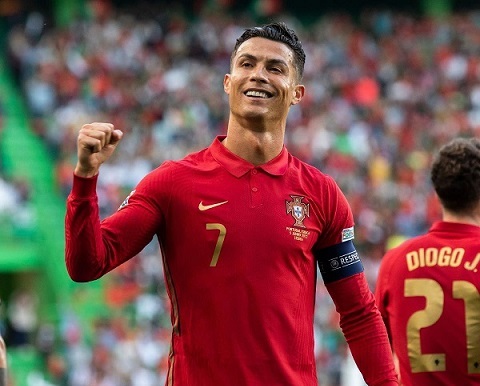
Grass to Grace: Lessons in Ronaldo’s rise to stardom
By ImamMalik Abdullahi Kaga
“From the small island of Madeira to the bright lights of Manchester, Cristiano Ronaldo’s journey was one of hard work and relentless dedication” — Peter Drury.
“Madiera, Manchester, Madrid, Turin and Manchester again” — Peter Drury.
Cristiano Ronaldo needs no introduction in the footballing world and beyond. He is one of the greatest football players in history and a complete inspiration for millions worldwide. But many people need to learn the story behind Ronaldo’s rise to success.
Born in Funchal, Madeira, a remote island in Portugal, Ronaldo grew up impoverished. His family was not wealthy; his father worked as a kit man at a local football club. Yet, despite his challenges, Ronaldo’s passion for the game was strong, and he started playing football at a tender age.
After showcasing promise as a young player, Ronaldo joined the youth academy of a local club, Andorinha, when he was only eight years old. Even as a young player, he showed promise, and at the age of 12, he caught the eye of a scout from Sporting CP, one of Portugal’s top clubs. But convincing his family to let him go was difficult, and his father encouraged him to train harder and pursue his passion.
At Sporting, Ronaldo worked very hard to turn his dreams comes reality, and soon he became a star player. He debuted in the Sporting first team when he was a teenager, precisely 17 years old, and his performances caught the eye of scouts from some of Europe’s biggest clubs. Eventually, in 2003, he signed for Manchester United, one of the biggest clubs in the world at the time he signed for them where he made his footballing Godfather– Sir Alex Ferguson.
Ronaldo’s time at Manchester United was a turning point in his career. Although his first season was tough, he improved every year, and his talent and hard work were soon impossible to ignore. He played a crucial role in helping Manchester United win three Premier League titles, one FA Cup, and one UEFA Champions League trophy.
Ronaldo signed for Real Madrid for a world-record transfer fee of €94 million in 2009. But despite the astronomical transfer fee, Ronaldo’s performances continued to improve, and he emerged as one of the best players in the world. He won four UEFA Champions League titles and two La Liga titles with Real Madrid. He became one of the club’s greatest players in history before he departed to the Italian giant, Juventus.
Cristiano Ronaldo’s move to Juventus in 2018 surprised many football fans, as he was widely regarded as the face of Real Madrid. However, he quickly proved his worth at Juventus, becoming the talisman for the team as they won their eighth consecutive Serie A title.
In his first season at the club, Ronaldo scored 28 goals in all competitions, and his performances helped Juventus reach the quarter-finals of the UEFA Champions League. Despite a disappointing exit from the competition, Ronaldo’s impact on the team was evident as they continued to dominate domestically. He has since become a fan favourite, and his incredible work ethic and dedication to the sport have earned him the respect and admiration of fans across the globe.
In 2021, Cristiano Ronaldo returned to his former club, Manchester United, after spending several years with Real Madrid and Juventus. The announcement of his return to Old Trafford was met with waves of excitement from United fans, who remembered the impact he made during his first stint with the club. Ronaldo’s arrival brought a sense of renewed optimism to United, and many believed that he would be the key to helping the team win their first Premier League title since 2013.
Ronaldo’s return to Old Trafford was nothing short of spectacular. In his first game back, he scored two goals against Newcastle United, and his performances throughout the season were consistently excellent. However, United’s decision to sell him to Al-Hilal, a Saudi Arabian team, after the 2022 World Cup shocked many fans, who believed that the club should have done everything possible to keep him.
Ronaldo’s transfer to Al Nasar marked the end of an era for Manchester United. Although many fans were disappointed to see him leave, they knew that it was a decision that he had made for personal reasons, and they wished him all the best in his future endeavours. Despite his departure, Ronaldo’s legacy at Old Trafford will live on, and his return to the club will always be remembered as one of the most exciting moments in United’s history.
Today, Ronaldo is a global icon, a game legend, and a role model for millions of people worldwide. He has worked hard to overcome life’s challenges, and his dedication and hard work have paid off. His journey from poverty to sporting superstardom inspires all who aspire to greatness.
In conclusion, Cristiano Ronaldo’s story is a story of passion, talent, determination, and hard work. It is a story that teaches us that success is possible if we believe in ourselves and are willing to work hard to achieve our dreams. Cristiano Ronaldo’s journey from poverty to the world’s biggest sports star is remarkable, and his legacy will continue to inspire generations.
Imammalik Abdullahi Kaga writes from Borno State University.

Dangote promises higher returns to shareholders
By Ahmad Deedat Zakari
Consumate entrepreneur and African wealthiest man, Aliko Dangote, has made promises of higher returns to shareholders and stakeholders of the Dangote conglomerate
The richest black man, who is the chairman of the Dangote Group, disclosed this in Lagos during the group’s 14th Annual General Meeting held in Lagos on Thursday.
He said, “We will continue to make sure that we keep our shareholders happy, not only the shareholders but all our other stakeholders… Our strategy remains steadfast, focused on organic growth in Nigeria and Pan-Africa while ensuring that Africa’s regional integration becomes a reality. We will continue to contribute to improving regional trade within Africa by building plants across West and Central Africa, guided by our vision of making the region cement and clinker self-sufficient. In addition, we aim to deliver higher returns and value to our shareholders.”
He also noted that despite the challenging economic atmosphere,
the company still made great strides, performed admirably, and remains Africa’s largest and leading cement producer.
He stated, ” In addition, we achieved giant strides in transitioning to cleaner energy, with our cost containment initiative propelling the use of Alternative Fuel (AF) to replace more expensive fossil fuels, such as coal and gas. We also increased the use of Compressed Natural Gas (CNG) for our trucks due to the rising diesel cost environment. These efforts have helped us reduce our cost base and enhanced our flexibility, enabling the Company to respond more effectively to changes in the market. As a result, we recorded revenue and EBITDA growth of 17.0 per cent and 3.5 per cent from the prior year respectively, albeit under unprecedented inflationary pressure. We also achieved a profit after tax of ₦382.3 billion, up 4.9 per cent compared to 2021.”
While speaking further on the success of the group, he stated that the company has generated more revenue in 2022 than any other year.