



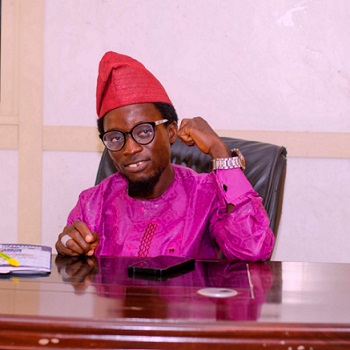
On pseudo-intellectual engagement in Nigerian social media
By Iranloye Sofiu Taiye
One of the essential elements that strengthen the unity of countries with numerous ethnicities is the mutually esteemed mode of communication, respect for their diversities, and by extension, mutual political relationship. But presently, the Nigeria social media fora are nothing but a channel for perpetrating, promoting, and sowing seeds of national discord, anchored on the uncivilised conduct of the politician and the supporters of political parties. It’s now conspicuous, apparent, and plausible that the spurious actions of the users of the social media platforms encompassing Facebook, Twitter, Instagram, and WhatsApp groups have nourished the already perturbed and suffocating political terrain.
Glaringly, this is an indication that we have a long battle to wrestle with, considering the pandemonium that ravaged the online space aftermath of this year’s general election. It’s very disheartening and daunting that we now freely strike and attack each other on the online space devoid of decorum and let alone having regard for divergent political opinions, which ought to be the beauty of democracy. The uncultured and vulgar attitude of the Baptists, Obidient,s, and Articulators was very appalling, which invariably made users of social media jettison the esteemed hitherto cultural mode of interpersonal communication, alas! we’ve now regrettably substituted it with barbarous, sadistic, and wanton mannerisms.
The magnificent of social media platforms being a free platform where people exchange ideas, audio-visual content, and debate political perspectives with the use of internet connection had forthwith metamorphosed into caliginous and obscurity due to the pretentious salvage rhetorically disseminated by politicians to their naive and gullible followers who have been brainwashed with the grandiloquence of their preferred candidate. Hence, mutual content-sharing and collaboration have become hallucinations in the social media space.
It’s a known fact that all the political parties now budget a humongous and whopping sum of money on social media purposely to manipulate the thinking of the people to kowtow to their interests. These are cliques and gangs the political parties recruited as an online army of soldiers to perform several tasks, including the following: cyberbullying, paddling false information, using hate hashtags, threatening and intimidating their opponents with their unguarded utterances and abusive statements, spreading derogatory anonymous articles and engaging in an illogical debate just to mislead the public.
This is quite terrible, horrendous, and awkward. Many youths have been cajoled and fed with negative thoughts and hatred about the country. After all, youths are the major users of social media, and this uncivil engagement is a stigma on the image of our nation State. The hate speech and this needless confrontation, brawl, and hullabaloo have set the citizens against each other, which is a setback to our nascent democracy and a violation of the expression of freedom, respect for the dignity of man and freedom of association as entailed in our national constitution.
However, Since the ill-ambitioned politicians and the hatred-fed supporters of the political parties have no monopoly on expression and the online space is free for all citizens to utilise, then the intellectuals, scholars, and objective writers should brace up their pen to engage in thoughtful and analytical political discussions, and logical debates on the Facebook, Twitter, Instagram, and other online space, to stem this delinquency before it wakes up the sleeping dogs. Let’s remember that the pen is mightier than the gun.
Note a Yoruba maxim said, “When elders are in the market square, the head of a new baby cannot be laid upside down”
Iranloye Sofiu Taiye (Optimism Mirror) is a public affairs analyst, public speaker, writer, and youth advocate. He can be reached via iranloye100@gmail.com.
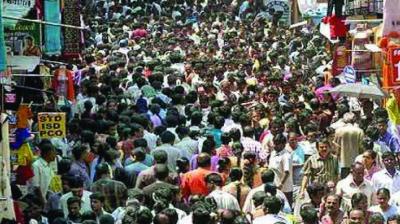
India will soon surpass China in population – UN
By Muhammadu Sabiu
India is soon to overtake China as the world’s most populated country, according to the United Nations Population Division.
John Wilmoth, the director of the UN Population Division, stated this at a press conference held on Monday at the UN’s New York headquarters.
Wilmoth asserted that the fertility rates in the two countries were the primary cause of this trend, stating that China and India together made up more than one-third of the world’s eight billion people.
Wilmoth was quoted as saying, “By the end of April, India’s population is expected to reach 1,425,775,850 people, with projections indicating further growth for several decades more.
“That’s slightly higher than China’s global record of 1.4 billion in 2022.
“China’s population reached its peak size in 2022 and has begun to decline.
“Projections indicate that the size of the Chinese population could drop below one billion before the end of the century.”

The need to shun obsession with scholars
By Ishaka Mohammed
There is a clause that is capable of solving many problems, but most of us often use it only to defend our flaws. The clause is: Nobody is perfect. Instead of internalising and living with this priceless statement, we tend to remember it only when people criticise our misbehaviour or mistakes. This clause is much more than a defence tool. Its proper use comes with an invaluable gift: open-mindedness.
Almost every time I come across a war of words (especially such that involves religion) between ordinary people on social media, I quickly blame our inability or refusal to listen to alternative views. I find it unfortunate that my guesses regarding such unhealthy behaviour are usually right.
We sometimes hold certain opinions so strongly that every other view becomes repulsive. This is one reason that makes me doubt if I will ever forget the year 2007. It was a time when I realised the danger of obstinacy. I discovered that a single source or person could never attain a true scholarship. Although it is still a work in progress, when I receive an important piece of information from anyone, I try to examine it or consult other sources to confirm its reliability.
I’ll explain my point with a few examples. In my quest to upscale my communicative competence in English, I follow certain scholars online. One of them, a professor of English, once made a social media post about English grammar, and I noticed a “wrong” pattern in the post. In an attempt to know if that was an exception to the general rules, I told him what I knew about the pattern. He never replied; he only liked my comment. If it were today, I would try to ignore his “mistake” because, considering his status, such a question could embarrass him.
Three years later, I bought a book he authored, and I noticed about six “wrong” patterns, including the one I had asked about on social media. Although the book is an interesting read, when a colleague of mine asked how she could get it for her daughter, I discouraged her because I feared that the teenager might internalise some “wrong” patterns.
Much as I would refrain from stating categorically that the prof is completely wrong, all the sources I have consulted, including the Oxford Advanced Learner’s Dictionary, point to that.
Away from English grammar, there is a renowned Islamic scholar who has been on the international scene for decades. Today, like many other people, he stresses the need to avoid castigating Muslims who try to mend their ways in Ramadan, arguing that the season is an opportunity to turn over a new leaf. However, I once heard him criticise the same category of people, calling them Ramadan Muslims (who are disbelievers for 11 months, only to become the most sincere believers in Ramadan). I would say that his earlier statement was either a mistake or due to a gap in his understanding. He is a human being.
In addition, my little exposure has revealed certain mistakes my teachers (from elementary classes to university) made while I was under their tutelage. I have also realised some of my mistakes as a teacher. My students could discover even more.
This discussion points to one fact: Humans are fallible. If you pointed out one perfect human being today, I would argue that you do not know that person. Therefore, it is advisable to tread very carefully in our interactions with human beings. Although I respect my teachers, [religious] scholars and elders, I believe that there is no single person in the world today whose lifestyles are completely worthy of my imitation or whose statements are totally deserving of my adherence. Instead, I strive to expose myself to multiple sources before taking a stand on issues, especially religious ones. It is dangerous to be obsessed with a single scholar because nobody is perfect.
Ishaka Mohammed wrote from Kaduna. He can be contacted via ishakamohammed39@gmail.com.
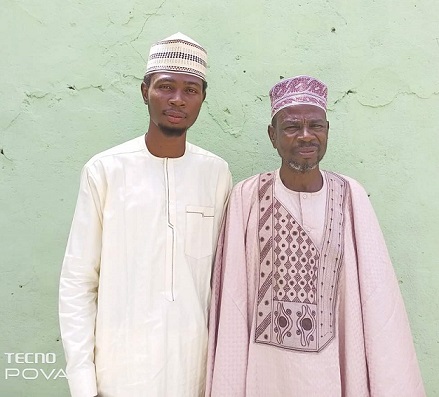
The Daily Reality reporter loses father
By Ahmad Deedat Zakari
Malam Adam Imam, the father of The Daily Reality reporter in Kano State, Uzair Adam Imam, has died.
Late Adam died on Sunday at Aminu Kano Teaching Hospital (AKTH), Kano State, after a protracted illness.
Announcing the demise of the deceased on Facebook, Malam Aisar Fagge, co-founder and editor of The Daily Reality, wrote:
“Innalillahi wa inna ilaihirrajiun! Yanzu na ke samun rasuwar mahaifin su Uzair Adam Imam bayan fama da jinya da ya sha ta watanni. Mal. Uzair was one of our outstanding students as well as the staff of The Daily Reality. May Allah rest the soul of his father and give them the fortitude to bear this monumental loss, ameen.”
He has since been buried according to Islamic rites.
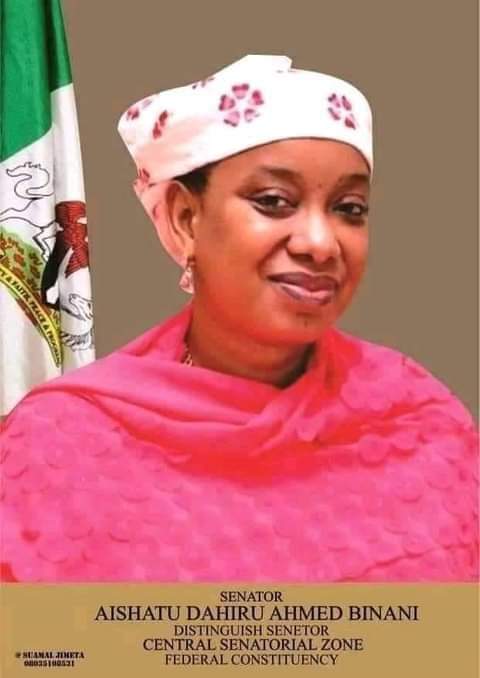
What next for Aishatu Binani?
By Zayyad I. Muhammad
Now that the storm in the drama-filled Adamawa gubernatorial election has been subdued, the two big contenders, Aishatu Dahiru Binani and Governor Ahmadu Umaru Fintiri, will have the opportunity to retrospect and strategize for their next steps.
On Binani’s path, there are two junctions. First, stick to the moment. Second, make a U-turn to a new path.
The fact is, the actions of the now-suspended Adamawa state Resident Electoral Commissioner (REC) Hudu Yunusa have ‘dented’ Binani’s public sympathy, especially outside Adamawa. The REC’s actions have put the APC on edge. So, Binani needs both ‘on-the-shelves’ and ‘off-the-shelves strategies, as her next moves may make and mar her political future. She has three (3) options.
First, continue to insist that she is the Governor-Elect, as declared by REC, Hudu Yunusa Ari. In this case, Binani will approach the tribunal with a sole demand – the court to proclaim her Governor-Elect, based on Section 149 of the Electoral Act 2022, which states that: ‘Notwithstanding any other provisions of this Act, any defect or error arising from any actions taken by an official of the Commission in relation to any notice, form or document made or given or other things done by the official in pursuance of the provisions of the Constitution or of this Act, or any rules made thereunder remain valid, unless otherwise challenged and declared invalid by a competent court of law or tribunal.
The second option for Binani is to pursue her cause through the tribunal while completely ignoring Hudu’s bizarre actions. She can reinforce her case by hammering on the alleged irregularities in some local government areas during the 18th March 2023 gubernatorial election. Places like Governor Ahmadu Umaru’s village, Madagali LGA, which claimed a whopping 42.2% voter turnout
Binani’s third opposition is to retreat – congratulate Fintiri, discard the option of any litigation and move for the future.
These three options have implications for Binani, Adamawa politics, and Nigerian polity.
If Binani and her team decide to take the first option, she would be testing the effectiveness and the efficacy of section 149 of the Electoral Act 2023. While it will be good for democracy, as the court will interpret the section, INEC will do whatever possible to save its face.
The Bola Ahmed Tinubu government may be interested as well because it may want to distance itself from Hudu’s actions to show the international community and Nigerian ‘eagle eyes’ that the election which brought Tinubu to power was fair and that the umpiring was not jungle-like. Binani taking this option means that many heads will roll, as Hudu may spill the beans. Binani may also continue to lose support because Hudu’s actions were a ‘third-rate’ action in politics (elections are best won at the polling units). REC Hudu’s action has attracted many observers even outside Nigeria.
For the second option, Binani has good advantages over Fintiri if she can assemble an excellent legal team alongside experienced politicians, political experts, and intellectuals from Adamawa to provide data, facts and figures, and shreds of evidence to back up the claims of irregularities during the elections. Binani has a bright chance of winning the case based on technicalities, while Fintiri will face a lot of hurdles here. This option is very expensive and requires both political and individual commitment from Binani’s team.
The third option for Binani is to retreat, congratulate Fintiri, and move on. This is the most difficult option for her, in fact, for any politician who has come as far as she has. If Binani goes for this option, many of her supporters will be initially demoralized. But in the long run, she would relieve the entire polity of the suspense, uncertainty, and unknowns. In fact, the investigations on Hudu Yunusa, securities heads, and other people will be inconsequential.
Binani will rediscover herself, remove the dent of Hudu’s action on her political outlook, and technically trounces her adversaries in the Adamawa APC. She will create the road to becoming Adamawa’s version of Kwankwasiya because of her well-known philosophical activities and for being an Iron Lady.
Furthermore, with this (third) option, Binani will ‘save the day’ for many people. But it is a very difficult option; only politicians operating with a complete mind of their own will opt for such an option. It requires foresight to see tomorrow from today.
Binani may have depleted her arsenal, but she has had a good fight; Fintiri will not forget her in a jiffy.
Zayyad I. Muhammad writes from Abuja via zaymohd@yahoo.com.
Open Letter to President-Elect Bola Tinubu: A Golden Ticket to Presidency Success
By Group Captain Sadeeq Garba Shehu (rtd.)
When new executives with a change mandate take over an organisation, they typically invest time in reshaping its strategy and determining the kind of culture needed to succeed. Those choices guide other decisions, including who their senior managers will be and how the leaders will allocate their time. Sadly many neglect the key factor that will help determine their effectiveness: the administrative system that guides day-to-day operations in their offices. This system ensures that leaders make the most of their limited time, that information arrives at the right point in their decision-making process, and that follow-up happens without their having to check. Many new executives default to the system they’ve inherited. Often there’s a better way to handle the information flow necessary for a President to succeed—and very often, a chief of staff (CoS) can play an essential role.
The CoS to the President is a political appointee of the president who does not require Senate confirmation and who serves at the pleasure of the President. While not a legally required role, Since President Obasanjo, all Nigerian civilian presidents have appointed a chief of staff. President Obasanjo had Gen Abdullahi Mohammed, while President Umaru Musa Yar’Adua had Gbolade Osinowo. The position was temporarily absent between 18 September 2008 – 17 May 2010 when President Yaradua sacked Osinowo and never appointed a replacement. President Goodluck Jonathan had Mike Oghiadomhe and Jones Arogbofa. President Muhammadu Buhari had the late Abba Kyari, and after his demise, the current CoS Prof Ibrahim Gambari. The position of CoS to the President is widely recognised as one of great power and influence, owing to daily contact with the President and control of the Office of the President. Almost all, if not all, governors in Nigeria now have a Chief of Staff, and many ministers have them.
The CoS role originated in the military and dated back centuries. Cicero, the Roman politician and orator, used a slave named Tiro, who, according to Cicero’s biographer Zach Bankston, served as a secretary, a financial overseer, and a political strategist. Andrew Roberts’s Napoleon: A Life describes the vital role that Louis-Alexandre Berthier played in assisting Napoleon at the height of his powers. The historians Ron Chernow and Joseph Ellis have described the CoS–like a role that Alexander Hamilton played for George Washington. These people aren’t to be confused with the personal secretaries or aides-de-camp that each leader also had. Rather, they were close advisers who handled the most-delicate strategic matters and became trusted confidants. While the Chief of staff is a role that started in the military, and now, we can see it in most industries and sectors.
WHAT DOES A CHIEF OF STAFF FOR THE PRESIDENT DO?
While there is no one-size-fits-all when it comes to describing the duties of a CoS in Nigeria, and each incumbent had wielded / not wielded power according to his personality and the relationship he has with his principal, the President, or the style of the President, their primary duties are making time, information, and decision-making for Mr President more effective. In other words, a CoS to Presidents helps Presidents become the best version of themselves.
The role of the chief of staff is not about dealing with administrative tasks only as he is not a PA. A CoS does not manage the President’s day-to-day schedule. The chief of staff is a leader. He/she makes high-level decisions, strategizes processes, and sets policies by devising meaningful plans and generating useful ideas, anticipating problems, and coming up with new solutions.
Paraphrasing Patrick Aylward, who breaks down the job of any CoS into five categories, I would say the job of the CoS to the President can be summed up as:
1. An air traffic controller for the President and his cabinet controlling the flow of people into the President’s office.
2. An integrator connecting MDAs’ work streams that would otherwise remain siloed, breeding inter-ministerial/inter-agency squabbles, duplication, overlap and fragmentation.
3. A communicator linking the Presidency team and the broader FG apparatus.
4. An honest broker and truth-teller when the President needs a wide-ranging view without turf/mandate considerations.
5. A confidant without an organisational or personal agenda-His agenda being only that of Mr President.
An effective and successful CoS to the President should be able to translate the above five categories can be translated into tasks and duties.
REQUIREMENTS OF AN EFFECTIVE AND SUCCESSFUL CoS: SKILLS AND PERSONAL QUALITIES
The main responsibility of CoS is to help the President stay organised, which will allow him to give time to more important A items. This requires a good understanding of the business of government, effective communication skills, and the ability to manage projects and relationships. It also requires the skill to anticipate and avoid problems, add value to the President’s vision, and be intelligent on the organisational and political levels. The CoS must be excellent in the management of important projects. The ability to simplify complicated tasks, strategic thinking and problem analysis is one of their strongest suits, and they should know how to see things through, from idea to execution, even when the President himself forgets.
The best skill one would have for any position is being effective in getting the right things done. In his book The Effective Executive, Peter Drucker argues that effectiveness derives from a set of five practices anyone can learn: managing time; focusing on results (what to contribute to an organisation); building on strengths; concentrating on top priorities; and making effective decisions. Experts are agreed that the above five skills or practices are extremely useful when it comes to the chief of staff position.
Managing time: When it comes to time, presidents find it challenging to have enough of their time at their disposal and available for important matters, which do make a difference. They can get easily distracted, and leaving little time to focus on strategy is usually the outcome. A good chief of staff helps presidents record, manage, and consolidate time and reallocating time through doing, delegating, and deferring non-urgent tasks and cuts unproductive demands on time. CoS helps diagnose time wastage (e.g., excess of meetings) and communicates where the President’s time should be spent to key stakeholders.
Focusing on results: Most executives focus on efforts rather than results.. An excellent CoS redirects the President’s attention towards contribution by focusing on direct results, building values, and developing people.
Building on strengths: Presidents might not be fully aware of all the available strength points (the strengths of associates, the strengths of individual ministers and cabinet members, and even the President’s own strengths). Excellent CoS helps the President conduct strength assessments to fully comprehend the team’s strengths and how to manage them best. CoS can help redesign jobs to attract and scout the right people and talents, recognise those with weak performances, especially managers, and initiate action plans.
Concentrating on top priorities: The need to prioritise and focus on major opportunities is the very core of a President’s job. This is what delivers results. Successful Presidents need to eliminate anything that is not worth doing and concentrate on the tasks that, if done perfectly, will make a difference. A successful CoS prepares and facilitates strategic planning processes and encourages the President to drop processes before they begin to decline. CoS leads or co-leads strategic initiatives and aims for what makes a difference rather than what is easy and safe to do.
Reaching effective decisions: With the chief of staff handling a considerable number of tasks, the President will have more time to think through big decisions, with the CoS serving as a reliable sounding board by testing opinions against facts. Without the help of a quality CoS, the President may make rash decisions, will not study the consequences of a decision before making one, and may be indecisive most of the time. An effective CoS gathers different teams’ perspectives to help Mr President understand the implications and helps direct the President to make decisions only when there is a disagreement, test opinions against facts, and compare the effort done and the risk of not taking action versus taking action.
Managing Meetings: Holding meetings is an integral part of the chief of staff’s responsibilities. Meetings represent a great demand on the President’s time, and the role of the chief of staff is to help the President never allow meetings to become the main demand on his time. To effectively manage meetings is a crucial part of the role of a chief of staff, as this chief of staff must not only manage the meeting but the people, agenda, objective, goal, strategies, and measures. To do this, the CoS must ensure all relevant MDA representatives are in the room, at the table, and participating while ensuring that meetings are designed to move the business forward with timed actions against goals. So, effectively managing team meetings is an important job requirement for the role.
The most sophisticated chiefs of staff also assist the President in thinking through and setting policies—and making sure they are implemented. They anticipate problems and are especially sensitive to issues that require diplomacy. They function as extra eyes and ears by pointing out political potholes their bosses may not recognise (especially if the bosses are new to the company). Importantly, a CoS acts with the implicit imprimatur of the President—something that calls for humility, maturity, and situational sensitivity.
Regardless of specific responsibilities, a CoS can help a leader achieve sharp gains in productivity and impact. The CEO to the President helps the leader become better organised, with more time for A items; Manages important projects well; Helps President and his Cabinet navigate through uncertainty and risk. Required capabilities include: Can do project management, Can manage relationships, Communicating well, Organising the President’s office, Can simplify complexity, Does strategic thinking and problem analysis, Can manage the process of idea to execution, Can anticipate and avert problems, Can grasp and adding value to the president’s vision, Has organisational and political intelligence, ability to research on a full range of topics. A good CoS knows which relationships are most important to the leader’s agenda. Being organised and disciplined, showing attention to detail, and following up doggedly to ensure the right results. Ability to see what pressures the leader faces in pushing for changes and to find ways to lessen them. Finally, communication skills are crucial because the CoS must help refine the leader’s message and ensure that it is understood by the right audiences.
WHAT KIND OF CoS SHOULD THE PRESIDENT-ELECT LOOK FOR?
So far in the CoS role , we have seen Gen Abdullahi Mohammed (OBJ), Gbolade Osinowo (Yaradua) Mike Oghiadomhe and Jones Arogbofa (GEJ) , Abba Kyari and Prof Ibrahim Gambari (PMB) , each with his different style , the powers he wielded , and based on the style of his Principal . With respect, the most enduring name, for good or bad (depending on who you ask) is that of late Abba Kyari. Many agree there were fewer inter-ministerial squabbles and less confusion in the Presidency when Kyari was around. He left a legacy and a reputation of a rigid gate-keeper for PMB, qualities that several analysts believe are required of a CoS to the President. During the last days of his presidency, Barack Obama observed: ‘One of the things I’ve learned is that the big breakthroughs are typically the result of a lot of grunt work—just a whole lot of blocking and tackling.’ Grunt work is what chiefs of staff do.” Richard Nixon’s first chief of staff, H. R. Haldeman, garnered a reputation in Washington for the iron hand he wielded in the position—famously referring to himself as “the president’s son-of-a-bitch”, he was a rigid gatekeeper who would frequently meet with administration officials in place of the president, and then report himself to Nixon on the officials’ talking points.
Everyone requires help to achieve his or her highest potential and to sustain the effort it takes to lead a complex organisation. The right chief of staff can be an important source of assistance to leaders who are pushing their organisations and themselves to ever better performance. President-elect Bola Ahmed Tinubu, in looking for a CoS, should look for all the qualities enumerated here but in addition, look for that person that also has the capacity and personality to be a rigid gatekeeper and, like Nixon’s CoS Haldeman and PMB’s CoS late Abba Kyari be “the president’s son-of-a-bitch”. But to be an effective CoS, the President must also empower the CoS. Both Nixon’s Haldeman and PMB’s Kyari have empowered CoS.
Group Captain Sadeeq Garba Shehu (rtd.) is a Private Security Consultant and member APC PCC Security Committee.

Afflictions and Stitches
By Zee Aslam
The door slammed open to reveal a heart-touching moment of a mother struggling to discover her breath as she aimed to bring another life into the world. The birth of a baby is one of the world’s most wondrous and hazardous moments.
Childbirth is a challenge, but it is undoubtedly one of life’s most rewarding events. As painful and fearsome as it may seem, the mother has this wonderful emotion overwhelming her as she awaits the arrival of her bundle of joy.
Being a mother comes with lots of sacrifices. Your body figure will be altered, re-moulded, and your brain becomes addled as you are being re-programmed right from the womb swelling with pride down to experiencing the pain of labour.
Pregnancy is exciting and scary all at the same time. Some days feel like a breeze, while others are just plain hard. However, the long nights with no sleep and mood swings are all worth it.
Despite all the doctors, nurses, and loved ones in the room during childbirth, it is all about you, your body, and your child. It’s an incredible experience. It’s like uncovering a superpower you never realised you had.
As she gasped for air while pushing out the baby, she looked around her and reminisced on the decision she took months back, which she never regretted once but still harboured doubts and fears. “What would become of this baby?” She asked herself.
The cry of her little one signalled the beginning of a new life. She looked keenly as the nurse cleaned up her baby and placed him on her, wrapped in boundless passion.
The aftermath of her decision just began. At night and when the hospital staff were distracted by an emergency, she stealthily sneaked out and walked miles away to a place where an orphanage was situated before dropping off the baby at the foot of a gate and then knocking at it.
An elderly woman came out and was attracted to the baby’s cries. She stood halfway, staring at the innocent boy before she reduced her height and picked him up inside. The mother watching from afar, only wiped off tears as they streamed down her face. “That was the best she could do for her baby”.
She travelled down memory lane to the path where some unknown men abducted, defiled and abused her. Then she thought she only paid the price of being an orphan roaming on the street, but now she knows better.
Her life took a new turn and brought her to face its realities, she has just given away her soul and a piece of her heart to a total stranger, but she rests assured that her boy will grow up amidst other kids and be a better person.
She calmly dragged her feet out of that street to what she called home and picked up the remnant from her shattered life, yearning to stitch them back together.
If she could turn back the hands of time, she would.
But since it’s beyond her control, she will only move on with her life and keep praying for the best to unfold into a piece.

‘We’re determined to evacuate you’, FG tells trapped Nigerian students in Sudan
By Muhammadu Sabiu
The National Emergency Management Agency, NEMA, informed Nigerians in Sudan on Saturday that the federal government was working to bring them home.
This is contained in a statement released by Manzo Ezekiel, the head of NEMA’s press unit, in Abuja.
He said that NEMA was very worried about the situation, was keeping an eye on it, and was working on all available possibilities to return the trapped Nigerians to their loved ones’ homes in a safe and respectable manner.
The statement reads, “The attention of the National Emergency Management Agency (NEMA) is drawn to the widespread public concern on the situation in Sudan especially in regards to the ongoing conflict and the safety as well as well-being of stranded Nigerian citizens including hundreds of students in various universities of the country.
“It has become necessary to inform the public that NEMA is in constant communication with all relevant partners including the Ministry of Foreign Affairs, the Nigerian Embassy in Khartoum, Sudan, the Nigerians in Diaspora Commission and security agencies while seeking for an appropriate window of opportunity to evacuate all stranded Nigerians back home in a safe and dignified manner.
“The current emergency situation in Sudan is very complex with fighting between waring factions going on and all airports and land boarders closed. NEMA is working assiduously with all its partners and is constantly compiling updated information on the situation.
“A committee has been set up comprising of professional emergency responders, search and rescue experts to constantly evaluate the situation and seek for the safest way to evacuate the Nigerian citizens even if it is through a country neighbouring Sudan.”
Recall that there is ongoing violence involving the Sudanese Army and its paramilitary, which was recently characterised by heavy gunfire and explosions in the capital Khartoum.

Why Nigeria needs a comprehensive data protection law now
By Muhammad Mikail
‘The amount of data being generated today is enormous; as such, it has become necessary to have a full-fledged data protection law to ensure confidentiality and privacy of the data’ – Prof. Isa Ali Ibrahim Pantami
In today’s digital world, data is key to the extent that some scholars have termed ‘data as the new oil’. This speaks to the huge revenue potential data has for every country serious about growing its digital economy. Nigeria is certainly one. This data is in the form of personal information, which is frequently collected, stored, and shared by businesses, governments, and individuals.
According to Professor Isa Ali Ibrahim Pantami, the Hon Minister of Communication and Digital Economy, who spoke at the recently held maiden edition of the ‘Digital Economy Regional Conference’ in Abuja with the theme: Positioning West Africa’s Digital Economy for the Future, “In the fourth industrial revolution, data is key. In 48 hours, the quantity of data generated globally is equal to the quantity of data that was generated within a period of 5000 years.”
However, without clear regulations to govern the use of such data, individuals and entities are left vulnerable to privacy violations such as data breaches, identity theft, and other forms of abuse. Today, it is a global best practice to have a data protection law in place. Otherwise, nations find it difficult to attract so many interventions beneficial to their countries. A data-secured environment is an investment wonderland.
The above explains why many development partners, international financial institutions, critical stakeholders in the digital economy space and even potential investors today have continued to ask questions as to why Nigeria does not have a data protection law in place. Having such a law in place will align the country with the scores of others around the globe and make Nigeria a global player. Put differently, the costs of a lack of a proper data protection law are enormous.
To address this issue, the Federal Government of Nigeria established the Nigeria Data Protection Bureau (NDPB) in 2022 as the regulatory institution responsible for ensuring that people’s personal information is kept private and safe when used for ‘digital things.’ Furthermore, in January 2023, the Federal Executive Council (FEC) approved the Nigeria Data Protection Bill presented by the Hon Minister of Communication and Digital Economy for transmission to the National Assembly for consideration.
The draft data protection Bill was sent to the National Assembly by the President in separate letters addressed to the leadership of the National Assembly and read on the floor of both chambers on Tuesday, the 4th of April, 2023. The Bill has gone through the first and second readings and sent to the ‘Committee of Whole’ in the National Assembly to harmonise positions from both chambers. This Bill will provide a legal framework for the protection of personal information, safeguard people’s basic rights and freedoms, and establish a data protection commission for the regulation of the processing of personal information and data when passed into law.
The eight Assembly previously passed the Draft Data Protection Bill, but President Muhammadu Buhari declined assent. This was due to concerns raised by stakeholders on some identified areas and clauses in the Bill. So far, Nigeria Data Protection, in collaboration with the Nigeria Digital Identification for Development Project, NDID4D, has been working with critical stakeholders, captains of industries and policymakers on addressing those concerns and perfecting the bill.
Recently, a validation workshop was held to present the draft bill to stakeholders for their buy-in, comments, criticism, and suggestions to improve the bill. Senator Ibrahim Hossein, and Rt. Hon Lado Suleja, both Chairman Senate and House Committee on ICT and Cybersecurity, respectively, have, on numerous outings, conveyed the support and willingness of the National Assembly to diligently work on the bill to ensure speedy passage and eventual assent by the President.
‘Data Protection is a constitutional right in Nigeria’, is an oft-quoted statement of Prof. Pantami, the communications minister, as Section 37 of the 1999 constitution as amended provides that: “The privacy of citizens, their homes, correspondence, telephone conversations and telegraphic communications is hereby guaranteed and protected.” In the same vein, the core rights of data subjects under the Nigeria Data Protection Regulation provide a data subject have a right to be informed, the right of access, the right to object, the right to data portability, the right to erasure, right to restriction of processing, rights to rectification and rights regarding automated decision making.
Thus, data protection law is urgently needed in Nigeria as citizens have had one form of data or the other compromised without the ease of recovery, leading to huge financial losses, reputational damage, revenue losses, and other forms of abuse. This is pertinent, especially with the growing rate of identity theft, cyberstalking, data mining, theft, internet fraud and increasing reported cases of abuse of financial information by financial institutions, mobile service providers and telecom companies, unregulated loan credit companies and so on.
The current National Assembly needs to pass the data protection bill for President Buhari to assent to it before May 29th, 2023. This will provide an additional layer of protection for the nation’s digital identity ecosystem and, in no small measure, safeguard the Nation’s fast-growing digital economy, boost investor’s confidence, attract foreign direct investment, improve our GDP, and ensure robust protection and safeguarding of personal information from being stolen and misused for fraudulent purposes, reducing the incidence of identity theft and fraud as well as serve as a buffer for citizens’ personal data privacy.
Data is critical to the survival of every nation’s economy, particularly in today’s digitised global home. It is on record that Nigeria is the first African country to join the developed countries in celebrating international data privacy day. This demonstrates the Nation’s drive and willingness to take its pride of place as a leading African digital economy hub amongst the comity of nations.
The data protection law is not in any way meant to punish our citizens but rather to create awareness so that we will all be data compliant. We are urged to comply. Today, because of awareness creation, collaboration amongst digital economy ecosystem partners, critical stakeholders in the data sphere, reaching out to institutions, sanctions, and interrogating others, the data protection and privacy compliance rate is on a steady increase.
Additionally, businesses and organisations will be held accountable for any data breaches or privacy violations, which will encourage them to take data protection seriously and implement proper measures to protect personal data.
The current Assembly should take due credit and ensure the speedy passage of this lofty bill, and President Buhari should quickly assent to it for the good of posterity. The passage of a comprehensive data protection law in Nigeria is urgent and should not be delayed further.
Muhammad Mikail writes from Abuja, Nigeria and can be reached via muhammadnmikail.mm@gmail.com.
Senate Presidency and the politics of 2027; the facts
By Mahmud Dambazau
Despite being the ruling party; having the President, Vice president, majority in both the senate and the house of representatives, 21 state governors and majority of states houses of assembly, a formidable national spread and structure, adequate financing and financing opportunities, easy access to intelligence from the security (in addition to other privileges of the government), seasoned politicians and the political profile, political sagacity, connection, foresight, friendship across the divide for its presidential candidate, Asiwaju Bola Ahmed Tinubu, still All Progressive Congress (APC) had to take the risk of flying Muslim-Muslim ticket at a time when religion could be a sensitive factor than at any other election period.
The risk taken was, for obvious reasons, the most probable option for winning at the polls and most importantly, it has been successful. Similarly, the success or otherwise of the incoming administration is directly proportional to its success at the legislative arm. The 8th national assembly, despite being led by members of the ruling party, was adjudged by the party itself as part of the reasons for the low and abysmal performance of the outgoing administration of President Muhammadu Buhari. The ABAT administration therefore cannot afford to fail in the choice of the presiding officers of the national assembly and most importantly, the senate.
A brief analysis of the 2023 presidential election results indicates the APC got the highest votes from three of the six geopolitical zones; the north west, south west and north central with 2,652,824, 2,542,979 and 1,760,993 votes respectively with Lagos and Kano states being the only two states that had given the presidential candidate more than five hundred thousand votes. But despite the numbers from the northwest zone, the APC came first in only two of the seven states in the region; Jigawa and Zamfara but Zamfara has now aligned with the PDP. The APC therefore now more than ever, needs to be strategic in ensuring the northwest region, which has the highest number of votes and gave it the highest remain within its fold.
Now back to Kano, the most important state in the region which was before the election and since inception of the APC being under the party but now turned its support towards the NNPP, producing their only governor and most of the other elected positions from the party. The state governor, the deputy governor who also doubles as the governorship candidate of the APC in the state as well as the state party chairman who was heard in a widely circulated video boasting that they will win the elections no matter the consequences all lost their local governments to the NNPP during the presidential election. Senator Gaya, a former governor of the state who has also been at the senate since 2007 also lost his reelection bid to the NNPP candidate.
The story is the same for the son of the state governor, who contested for the house of representative’s seat at the governor’s constituency. Out of the 22 House of Representatives seats announced, the APC got only 5 with the rest lost to the NNPP. It wasn’t coincidence or surprising that all these five came from Kano north senatorial zone, where Senator Barau Jibrin hails from. It should also be noted that Sen.
Barau resoundingly defeated his major challenger, the NNPP candidate who is a staunch ally of Engr. Rabiu Kwankwaso and also a former Executive Secretary of TETFUND. Sen. Barau defied all odds and won with a very wide margin. In view of that, it is safe to say that the fate of APC in Kano solely depends on the political future of its most acceptable candidate as shown from the polls.
I believe the APC will agree that Kano is too important to be abandoned politically and the surest way of a comeback is undoubtedly through Barau. The fate of the PDP at both the presidential and governorship election in the state, despite having Senator Shekarau; a current senator, a former minister and a former two term governor of the state should be a case study.
The Senate president is not just the head of the senate but also the leader of the legislative arm of government as well as the chairman of the national assembly which comprises both the Senate and the House of Representatives. Among all the contenders, Senator Barau Jibrin is the only one who has been at both the house and the senate. He was not just a member of the House of Representatives, but also served as the chairman of the most important committee; that of appropriation. He has been at the senate for two terms and has headed the committees of petroleum downstream sector and that of tertiary education and TETFUND. He is currently the chairman of the appropriation committee of the senate under whose leadership, Nigeria has consistently maintained its budgets within the year circle. Despite all these successes, not once has he ever been accused of any act of corruption! His performance at his constituency (visible at all the nooks and crannies of the constituency and beyond) were what endeared him to his constituents.
Just recently, the President approved the appointment of the management of the newly established Federal Polytechnic Kabo, one of the fruits of the senator’s representation. His bills at the senate were more than those of the other contestants of the senate presidency combined. What more could we possibly ask for?
The first 8 years of the PDP from 1999-2007 produced five different senate presidents from the same region; Senators Evan Enwerem, Chuba Okadigbo, Anyim Pius Anyim, Adolphus Wabara and Ken Nnamani but they were unable to push for the construction of the Second Niger bridge. It was accomplished under a president from the northwest, a minister from the southwest, a senate president from the northeast and a chairman of the appropriations committee from the northwest. So, the jostling for the position might not particularly mean the dividends of democracy to the masses. However, their occupation of the position has ensured continued support of the PDP at the region within the period.
With the now overwhelming support of the Labour party in the region and the inability of any of the contestants from the region to secure 25% for the party at the presidential polls make it necessary for APC not to sacrifice its biggest support region, the northwest, in anticipation of an unlikely support from the southeast.
At a time in 2007, three of the four highest offices in the country; President, Vice president, Senate president and Speaker of the House of Representatives were held by occupants from the same religion. That has happened again from 2019-2023 and it has not religionized the country or stopped adherents of other religions from practicing their religion. Nigeria will certainly progress faster if we set aside religion or ethnic considerations in favor of competence.
Without an iota of doubt, Senator Barau Jibrin is the most competent among all the contestants for the senate presidency of the 10th senate. The facts are there and it is now left to the APC and the Asiwaju Bola Ahmed Tinubu’s incoming administration to decide how it will respond. However, any action taken will have its consequences in the 2027 election!
Mahmud wrote from Kano and can be reached on madambazau@gmail.com.