


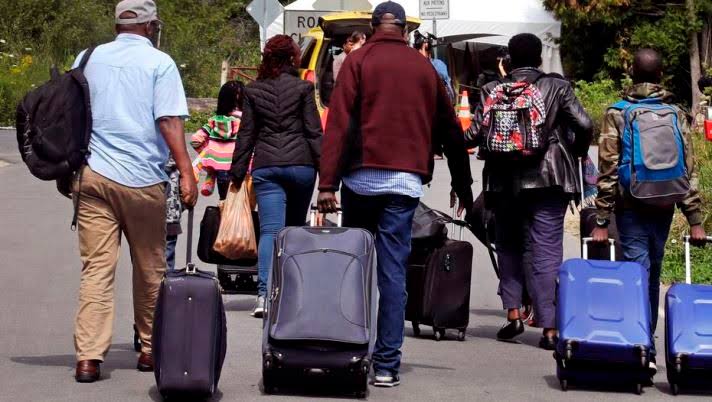
To even those who Japa: life-challenges are meant to be confronted, not to run away from
By Salim Marafa
It extremely itches my heart, mercilessly punish my soul and sometimes make me even feel like crying, whenever I hear a story of people that are running away from their problems rather than facing and solving them.
On this earth, the category of people I hate to the core, are those people who excel in nagging about their problems without making even a slightest effort to solve them. After them, then come those that are running away from their lives’ challenges and pretending all is well while is not, may be just to have a temporal peace of mind. Why the running? Why the pretention? Such kind of questions always wander in my head whenever I come across the story of such people.
Life on this earth, is naturally full of ups and downs. Therefore, people should know this and be courageous, bold enough and fearless to face those challenges. Running away from a life problem is never an option. We should understand that, like mathematical equations, problems are meant to be faced, confronted, balanced and solved.
Like human beings, problems have legs, hands and can move. Therefore, whenever one runs away from his share of life predicament, those problems will be running after him to wherever he goes. May be, up to his final home: grave. So, it will be much better, if we learn to dealt with our problems instead of running away from them.
And people, should understand that, God does not create problems and throw them into the life of his creatures just to punish them. No, its not like that. Creatures are beloved and dear to their God, and He is Loving, Caring and Merciful as His names signify. Therefore, definitely God creates problems for purposes; to test our faith, creativity, wisdom, sense of judgment and to make us learn from our previous mistakes. And most of the problems we encounter are just the consequences of our actions and inactions.
For instance, running away from problems is among the reasons Nigeria is at its current situation. For, it is in Nigeria one can find uncountable group of people who complain about the problems bedeviling them and the country, but they are not ready to make even a little effort to solve those problems they always talk about. And complain does not solve a problem, action does.
Nigeria, as a giant of Africa, has all it takes to be a great and developed nation. But the habit of “running away from problems”, “pretending all is well while is not” and ” excelling in complain than swinging into action” that beclouded the mind of its citizens are the obstacles that stand on her way and made the country “progressively stagnant”. It is high time Nigerians shun away from these negative habits.
Nigeria, is naturally enriched with human resources that can drive the country to the hill of success and development; ranging from, creative people, outstanding academia, technological gurus that have invented amazing things, successful entrepreneurs whose names echo through every mountain within the international business arena and what have you! Yet, the country is here languishing in the valley of problems such as bad governance, insecurity, high cost of living, not phone snatching which lead to killing of innocent citizens e.t.c., why?
The answer is that simple, Nigerians are good at complaining about problems than swinging into action. And not every Nigerian is ready to give all he has for his country to breathe a fresh air of development and freedom. Hence, the big dream of our people now is, let me gather a lot of money through whichever means and fly away abroad and enjoy my life. But I am not saying that all Nigerians abroad, run away beacause of the problems associated with the country.
There are few patriotic Nigerians that are abroad but their heart is here with us in Nigeria. They have unshakable love for the country and dream that one day everything will be alright. We have seen their patriotism through their social media; Facebook Posts, tweets and articles they write, it is all about Nigeria. May Allah bless them in abundance.
But to some, Nigeria is their main problem. So, once they get visa, that’s all. You will never hear from them again. They have forgotten their origin, pride and identity.
Running away from problems is never a good option. Nigeria is the only home we have, the nest where our biological eggs are hatched. So, If we see a good country in our dream that resembles a paradise, I think it is Nigeria that we should build to be that country of our dream. Not to run away to somewhere that will never become a home to us. Wise people say “if your home is broken, the responsibility of mending and fixing it is on your shoulder not on stranger’s shoulder”.
We should not cause our problems ourselves and expect someone to come and solve it for us. Our problems are created by us and therefore, we must solve them all by ourselves.
Nigeria is our home where we find shelter, an oasis where we find solace and we have nowhere like it. It is our pride, origin and identity, if we run away from it due to the heavy problems on her shoulders, who do we expect to come and solve those problems? Problems are meant to be solved not to be run away from.
May Allah bless Nigeria.
Salim Marafa writes from Bauchi, Nigeria.

Shocking: PSG suspend Messi
By Muhammadu Sabiu
Paris Saint-Germain have reportedly suspended Lionel Messi with immediate effect following his unauthorised trip to Saudi Arabia this week.
According to veteran football journalist Fabrizio Romano, the suspension begins now and will take effect for the next two weeks.
This means that the seven-time Ballon d’Or winner will not play for the French side if things go as planned.
“Leo Messi’s side now still waiting on the official communication from PSG in order to clarify the situation,” Fabrizio Romano wrote on his official Facebook page.
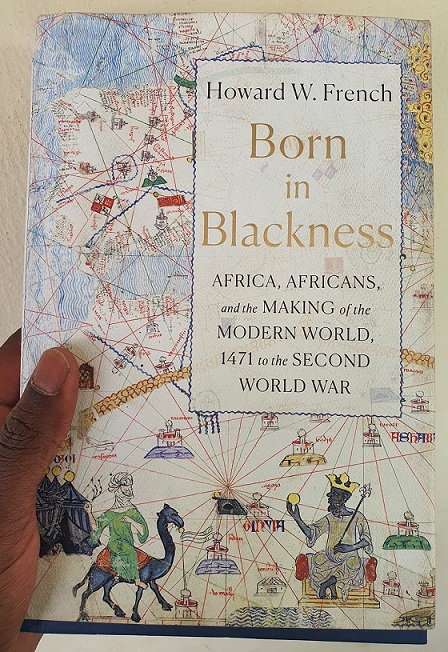
Book Review: Born in Blackness
By Dr Shamsuddeen Sani
When I first read about this book in the Guardian International sometime last year, I knew it had to be good. But even more so when I read somewhere about the author narrating a story of a Nigerian lady that bought 1200 copies of the book to distribute back here in Nigeria. In this seminal work, Born in Blackness: Africa, Africans, and the Making of the Modern World, 1471 to the Second World War, Howard French provides a comprehensive and nuanced exploration of African history and its impact on the world. French’s ground-breaking analysis challenges the dominant Eurocentric narrative of history, highlighting the agency and contributions of Africans to global events.
Subdivided mainly into five parts, the book covers a broad expanse of African history, from the early encounters between Europeans and Africans to the struggles for independence in the mid-twentieth century. Through a meticulous examination of historical events and phenomena, French emphasises the complex and interconnected nature of global history, illustrating how the experiences of Africans were intertwined with those of Europeans, Americans, and Asians.
One of the most striking highlights of the book is French’s deep commitment to challenging conventional narratives of African history. Through a nuanced analysis of primary sources and historical evidence, French emphasises the agency and contributions of Africans in shaping their destinies. He highlights how Africans responded to the challenges of imperialism, colonialism, and globalisation, from the rise of Pan-Africanism to the emergence of new cultural and intellectual movements.
Another key feature of the book is French’s emphasis on the dynamic and diverse nature of African history. Rather than presenting a monolithic view of African societies and cultures, French highlights the rich and complex tapestry of human experience on the continent. He explores the diverse political, social, and economic structures that emerged in different regions of Africa and how Africans adapted to changing circumstances over time.
Overall, this book is a tour de force of African history that challenges conventional wisdom and invites readers to rethink their understanding of the world. French’s masterful analysis and deep commitment to historical accuracy and nuance make this book a must-read for anyone interested in the history of Africa and its impact on the global stage.

Is the English language a measure of intelligence?
By Salisu Yusuf
I was drawn into this debate by Abubakar Shuaibu Rimi when he mentioned my name under the status update of one of his Facebook friends on the above subject. Rimi wanted to hear my side of the argument. I am not supposed to say something on this issue because it’s my area of specialisation. But I am writing on it to make some clarifications.
First language is a name given to either native speakers or those who acquire a language from early childhood; I mean those whose parents are non-natives but who are exposed to the language after birth. So first language is learned successfully during childhood without the need for a formal setting. First language is, in fact, acquired (acquisition), not learned, because a child is endowed with what linguists call LCD, a natural gift endowed by God so that a child will automatically acquire any language he’s exposed to.
The first language is learned with less effort because the acquirer acquires it subconsciously, as he’s not even aware of grammatical rules.
A second language learner, on the other hand, is someone who learns a language later after acquiring his native language. It’s usually through the formal setup and is leaned consciously with a lot of effort. While the first language is natural, the second language is a gift(intelligence), as the learner learns it consciously aware of grammar and can talk of the rules.
Second language learner is intelligent because:
In second language learning, the learner grapples with linguistic elements such as grammar, syntax, phonology, phonetics, sociolinguistics, morphology, semantics, etc. Whenever he’s speaking in the target language, he’s conscious of almost all of them, yet you say he’s unintelligent!
When learning a second language, the learner must scale cultural barriers and embrace certain new cultural elements in the target language. In other words, he must acculturate by bypassing what linguists call social and psychological distances.
Part of the learner’s acculturation is to learn how to use the new target language independently of his mother tongue, even though traces of his first language can be found in his expressions.
A second language learner must be intelligent enough to fight certain linguistic impediments such as systematic errors, mistakes, language interference, transfer, and interlanguage and learn the language, not his own.
A second language learner must pass certain difficulties to learn, especially when he passes 15 years, as his linguistic receptors in the brain are becoming strained, therefore, making learning more difficult.
The question ‘Is the English language not a measure of intelligence?’ may only be applicable to native speakers because they have learned the language since childhood and in their linguistic environment. Even this claim is contestable. This is because not all speakers of a language communicate with it efficiently. A select few do. For example, if the late Ɗan Masanin Kano or the former Emir of Kano, Muhammadu Sanusi II, addresses a Hausa audience in Hausa, people tend to listen because any one of the two masters the art of speaking even in Hausa. Can you call any one of the two dull?
So not only the English language, which isn’t our language, even a good Hausa speaker is intelligent because an unintelligent man can’t organise his words to impress an audience. Also, a good native/non-native Arabic speaker is also intelligent enough to organize his words to communicate impressively, so also is a Hausa native who communicates in either Fulfulde, Yoruba, etc.
Generating some linguistic elements such as grammar, phonetics, phonology, morphology, syntax, semantics, etc and combining them to negotiate meaning isn’t an unintelligent job. Not all language users combine the spoken and written expertise of language. The Hausa oral skills of Ɗan Masanin Kano, for example, wouldn’t be a sign of dullness but intelligence.
In other words, reaching linguistic “competence and performance” (the ability to combine sounds and meaning to communicate) even for native speakers isn’t a simple act of a simpleton, for not all language users are endowed with the skill to communicate well.
People are now acquiring higher degrees because of unemployment—Shehu Sani
By Muhammadu Sabiu
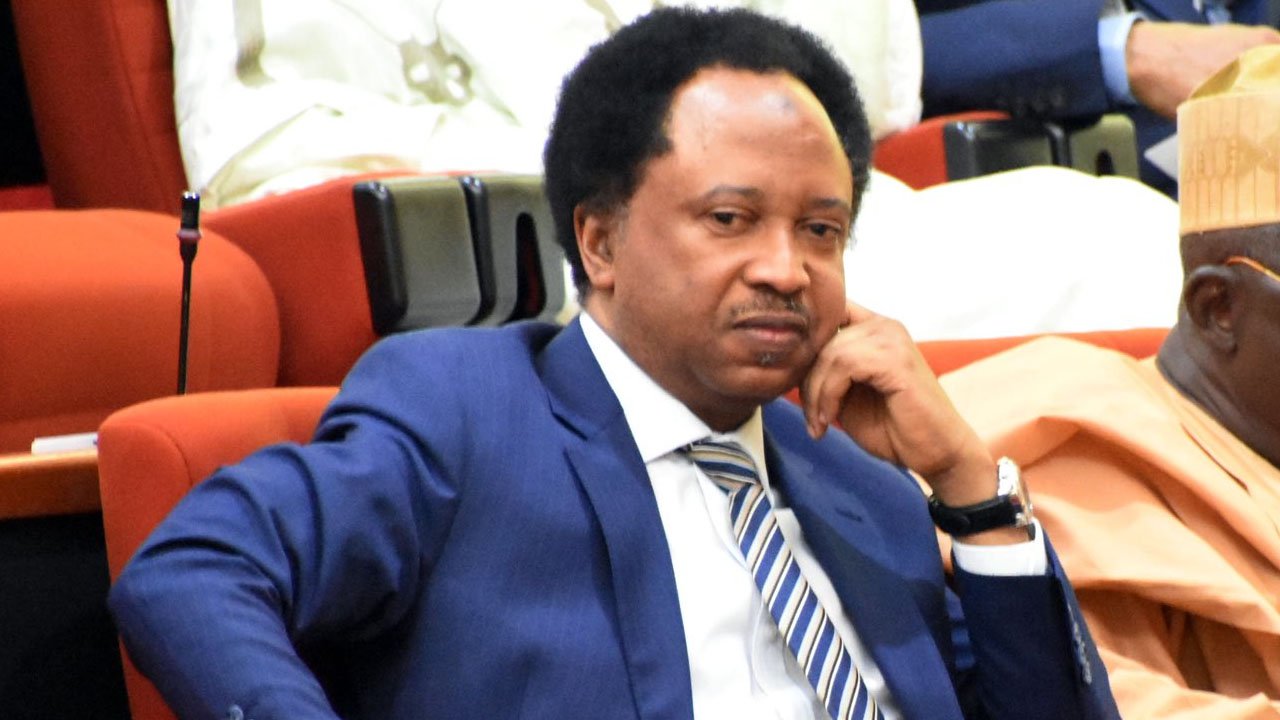
Shehu Sani, a former senator, has bemoaned the high rate of unemployment in Nigeria and lamented that many young people in have turned to seeking higher degrees as a result of the joblessness.
The former senator shared his concern in a tweet on Monday.
Recall that, according to a report in 2022, the joblessness rate in Nigeria rose to 37.7 percent.
During the “Workers’ Day” celebration, Sani noted that many young people were forced to pursue graduate studies due to unemployment.
He wrote, “Unemployment has forced so many youths to pursue masters and Doctorate degrees.
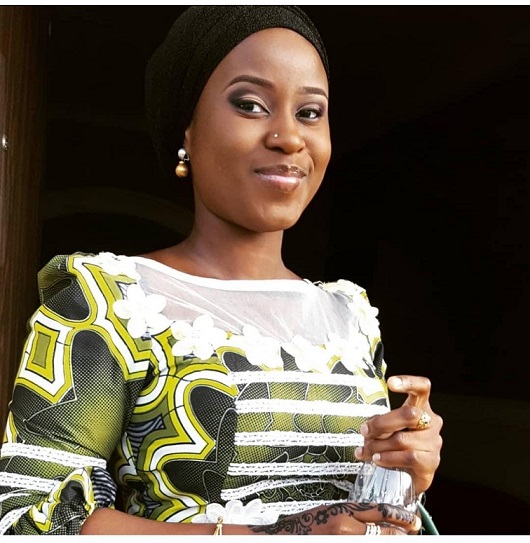
Amina Buba, a trailblazer: The first female urologic surgeon from North-Eastern Nigeria
By Kamal Buba Danladi
According to the Oxford Dictionary, Urology, also known as genitourinary surgery, is the branch of medicine that focuses on surgical and medical diseases of the urinary tract and the male reproductive organs. Organs under the domain of urology include the kidneys, ureters, adrenal glands, urinary bladder, urethra and the male reproductive system.
On the 19th of April 2023, Dr Amina Buba became the youngest urologic surgeon in Nigeria, the 7th female urologist in our country and the first Muslim woman in Nigeria to bear that title. Amina truly has shattered the glass ceiling! She is an inspiration to young women all around the world that anything is possible.
Amina was born in Lagos and attended St. Jude’s private School in Festac Town, Lagos. Then she started her secondary school at Federal Government College, Kwali, Abuja, before she transferred to Federal Government Girls College, Bwari, Abuja. After completing her junior secondary school there, she moved to El-Amin International School, Minna, where she completed her senior secondary school and then proceeded to her A-levels at Irwin College Leicester, England.
Amina also studied medicine at Brighton & Sussex Medical School, Brighton, England and then did her Master’s in Tropical Medicine & International Health at the Prestigious London School of Hygiene and Tropical Medicine, where she gained an MSc. as well as a diploma in Tropical Medicine and Hygiene. Shen then did her surgical residency in Abuja, Nigeria, which she recently completed.
When asked about why she chose this particular field, Amina says that she has always wanted to be a doctor, and when she qualified as a doctor, she knew that she wanted to be a surgeon but wasn’t sure of the surgical speciality. She began her residency programme with a posting in urology, and she fell in love with urology instantly because it is such a diverse surgical speciality, and you get to operate on the entire urinary tract as well as the male genital tract. There are also so many facets to it; there are paediatric urology, reconstructive urology, and upper and lower tract surgeries.
She further says that there are also plenty of opportunities to engage in both open and minimally invasive surgery, that is, laparoscopic, robotic and endoscopic surgeries. She was also drawn to it because, as a junior resident, she had 5 amazing consultants who, despite the strains of an under-resourced working environment, ensured that their patients got the absolute best.
Another interesting thing about the field, according to her, is that most urology patients have fixable problems and so it is really satisfying to identify a pathology in a patient, operate on it and discharge a happy, healed patient. She also added that urology is a fantastic speciality with so much room for growth.
She gave thanks to her mentors because they have been encouraging, and says she has had excellent teachers. Speaking about some of the challenges she faced, she says that they were there but were minimal and mainly from her peers questioning her decision to specialize in urology. This also prompted her to carry out a questionnaire-based survey on patients’ perceptions of having a female urologist. And interestingly, the majority of patients have absolutely no qualms at all.
In her practice, she has seen that even the few patients who seem sceptical tend to relax once she starts talking to them and establishes a rapport. She also says that she has had patients who specifically only want to see her, and she also added that when people are sick, they just want a good doctor and don’t care about their gender. She jokingly often asks people who question a decision to specialize in a primarily male-dominated area; “what of the men in gynaecology”. They only see women, but at least as a urologic surgeon, she sees both male and female patients. Another challenge she faced in training which she says is not peculiar to her, is the lack of facilities in Nigerian Teaching Hospitals. Our government really ought to do better.
And when asked about her family’s view on it she says that they were extremely supportive, and she really would not have been here if she didn’t have such supportive parents. Amina also says that her two elder sisters have been supportive, and they cheer her on in the process because the training is strenuous, emotionally and physically demanding and without her family’s support, it would have been impossible.
She also states that they have gone through the entire journey with her, and she appreciates them tremendously. She adds that she had some really supportive friends and bosses who have always cheered her on, and finally, her advice to young girls, especially in Northern Nigeria, is they should believe in themselves and strive for excellence, don’t settle for mediocrity. Pray hard, establish a good relationship with God and work hard.
Amina also has this to say “Pray like you are not working and work like you are not praying”. The world is our oyster, and there are so many glass ceilings waiting to be shattered! She concludes by thanking Allah for the mercies he has shown to her and by saying if she can do it, then anybody can. She hopes that her achievement will inspire young ladies to realize that there is so much that needs to be done.
Kamal is a student of Mass Communication from Skyline University Nigeria. He writes from Kano, Nigeria.
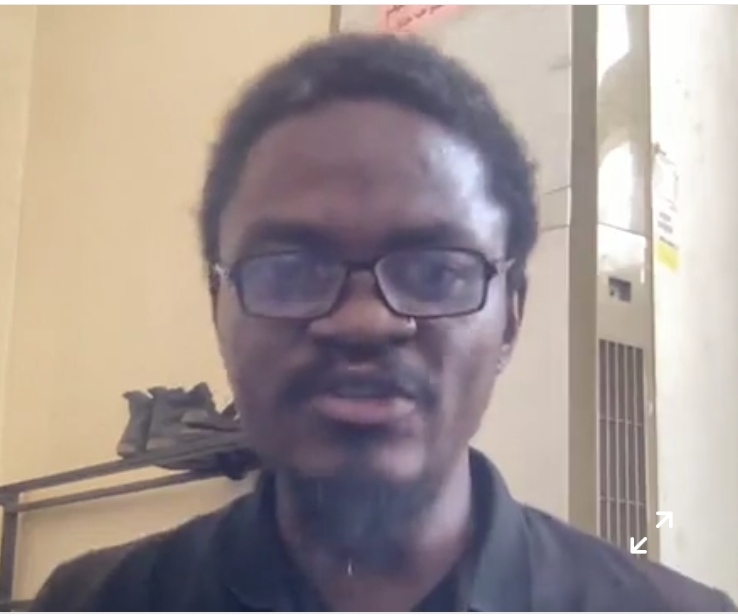
War in Sudan: Evacuation of Nigerian students has started
Ibrahim Mukhtar and Dubai Ado
The fierce war between the Sudanese soldiers and some rebels has already scattered and shattered the country, and now almost all of the foreigners staying in Sudan have looked for their ways out of the war-torn country.
Many countries, as reported, have already evacuated their citizens, but Nigerians have been stranded for nearly a week. However, an evacuation effort has already started since yesterday, were most of the stranded Nigerian students are now on their way back to Nigeria.
According to Hamid Alhassan, one of the popular Nigerian students in Sudan who kept on calling the attention of the authorities concerned about the situation on the ground, he confirmed that buses were provided for the Nigerian students to be taken out of the war zone. He posted that “We are now in Atbara, 6hrs and 287km away from Khartoum. We still have another 7hrs and 492km to go to Port Sudan, the final extraction point.
TDR confirmed that Hamid has been reporting the development right from the beginning through live streaming and telling the Nigerian authorities and the whole world about the situation. Sometimes heavy gunfire from the anti-aircraft gun was heard while he was explaining the situation on the ground. According to him, the Nigerian students suffered traumatic experiences during their waiting period while all other nationals were evacuated.
Another student who sent viral videos online, Fauziyya, also sent another video praising the Nigerian government and thanking all those who have shared their stories with the world. She said that they are now very happy and are about to return to Nigeria. She also appealed to all to continue for their safe return to Nigeria as they are right now on their way.
initially, there were reports of some corrupt practices and dubious transactions which were said to have crept in between the Nigerian embassy in Sudan, the bus drivers and the neglect by the Nigerian authorities on the evacuation. However, the students are now confirmed to be out of Khartoum, and they will hopefully reach Nigeria on Monday.

Nostalgia, time travel, and first contact
By Bilyamin Abdulmumin
While we listen to the Qur’anic “Tafseer” in the just concluded Ramadan, the scholar delves into an interesting phenomenon: nostalgia. He told the tale of how children used to be of importance to their parents in those days when children of even 12 years old could take full charge of farming the parent’s farmland, the parent’s job may be only to visit the farm to supply “fura” before bidding them farewell. However, in the present day, fully matured adults in their 20s or even 30s are not worth the salt to their parents—very distinctive highlights of the difference between the past and present.
A friend sitting close by turned to me to submit: it may surprise the scholar to realise that the scenario he is nostalgic about is still in practice in some villages. In addition, some of the current cultures in practice in the town may become obsolete and a matter of nostalgia in the future. This is quite evidence of social evolution.
But what if nostalgia is not just a way to remember the past but also a way to travel back in time? In the former case, imagine peering back in time to get an idea of what life might look like for ancestors or how grandchildren’s life may look in the future.
For example, one may need to visit relatively primitive villages. In contrast, one may need to visit moderately developed areas for the latter case. Many people who are fond of village visits are already fans of this concept of time travel.
Another concept brought time travel to the fore: first contact. This situation is where one culture is completely cut off from the rest of the world. So the first time these two civilisations make contact with each other, it becomes an exhilarating experience.
One such scenario involved New Guinea islanders and Australian miners. While looking for gold, these gold explorers would stumble on a community that had never interacted with modernity. These people pre-date all civilisations heard of; they are simply stone age exemplified.
Similar to New Guinea Islanders are Sentinel Islanders in India, but this uncontacted civilisation is different; they voluntarily refused to connect with their outside world and rebutted several attempts to connect them, but in any case, they stood their ground to remain isolated.
The intriguing and, at the same time, marvellous part of the ” first contact” is that it gives a picture of the extent of how far humans had attained, coming of age from simple tools like arrows, spears, and stones to sophisticated equipment like modern farming equipment, skyscrapers, and war arsenals.
So when such contact occurs, each side will become curious about each side’s values, practices, and gadgets. While 21st-century people would be captivated by archive tools like an arrow and spears, primitive people would be overwhelmed by things we even took for granted, like sugar, soap, mirror, matches, knives, cups, and many others.
Nostalgia proves a famous saying: change is the only constant in life, whether for good, like modern technology or for bad, like moral decadence. But research has good news; nostalgia provides self-contentment, hence a health booster, so let’s watch with keen interest while our older ones continue their voyage reminiscing.
Bilyamin Abdulmumin can be contacted via bilal4riid13@gmail.com.
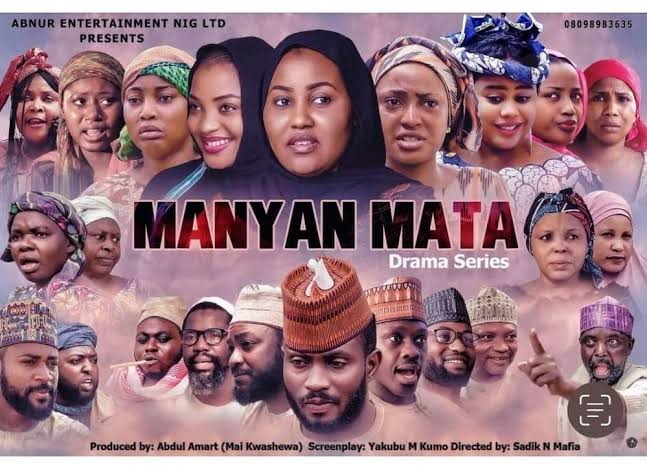
Notes on “Manyan Mata” series
By Abdullahi Haruna Kandash
In my opinion, Mayan Mata is one of the best series, if not the best movie ever produced in Kannywood. The movie portrays the vicious circle of poverty, a retinue of marriages, the mutilation of pregnant women and how children in society are raised with no regard for their futures.
Sadik Sani Sadik thinks nothing a man should be ashamed of if he bullies his wife. In the series, his pregnant wife faces a crisis despite her pregnancy. Unfortunately, they lost the child by miscarriage. Jamila Nagudu experiences petty humiliation after her one and only child is taken to Almajiranci. Daso’s son is a nasty disciple, too, a spoiled one. He was taken to Almajiranci when he was a child. He follows the gang and gets spoiled.
The movie portrays what really sabotages relationships, couples and children’s futures. The best part of this movie tells us that there are people in society with more clout who show no concern for other children and other women whose lives have been shattered by the cruelty of their spouses. I became truly interested in the movie after I watched some episodes. And I have seen many things that happen in real life portrayed in the movie. The director has done a wonderful job.
Kannywood should continue to bring cultural identities into its movies. The director also depicts literature, art and culture in the movie, and all these can be vividly seen in the different scenes of the film. Literature, art and culture are not something we can simply despise. They are like the air we breathe. And If we cut them off, the whole world will suffer.
Literature has enormously helped so many movies to gather an audience because of its literariness. Manyan Mata pictures exactly what is happening in our communities nowadays. It shows how parents treat their children with contempt. The director shows us how our societies are sliding backwards and experiencing immaturity.
But the best part of it, however, is that it teaches us how to understand the beauty of humanity, that everyone’s life matters.
Fati Washa experiences a worst-case scenario with her deceased mother’s co-wife. After watching the scene where her mother’s co-wife was trying to burn her schoolbooks rudely, I sensed that the movie is trying to tell us that societies that achieve better prosperities are those where huge investments are made in education. These are societies where every child is allowed to go to school to learn. This part also attempts to show us that every child should have access to education so that just and egalitarian societies can be built.
I hope the director will continue to fight inequality and bring sameness because that is what brings safety, security and a sense of belonging among people.
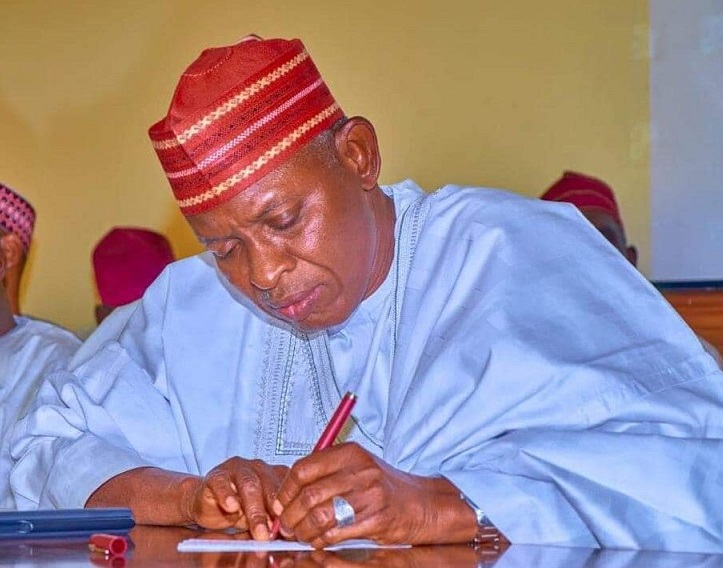
Abba Gida-Gida and the menace of phone-snatching in Kano
By Auwal Umar
The burden of expectation is often hard to shoulder. However, that won’t make the hope of the Kano people fade away on the good wish they bear for Abba to deliver Kano and bring the state out of the mess that engulfed her in the last eight years. Therefore, my constant prayer to Governor-elect Abba is: may the burden of expectation never dampen your indomitable passion, courage and vigour to serve and save Kano.
The menace of phone snatching is unimaginable. The slightest mistake of succumbing to the give-me-your-phone threat can easily land one in the most severe trouble of the loss of whole life. No being in the universe can create the wing of a fly. Imagine the priceless value of the Human soul! Think of how God created man most beautifully among all his creations. Unfortunately, some dim-witted dudes and miscreants, ungrateful and ruthless rascals, reduce human life to 20k or 30k. Sometimes, one’s life in their psyche is not worth 20k.
Tackling phone-snatching head-on should be one of Abba’s plans. The threat dashes hope to see able-bodied men killing and maiming innocent humans for just some tokens they might forcefully make you depart this world and render the world into a darker place by destroying Allah’s beautiful creation that has no equal or duplicate. The perpetrators mostly go scot-free daily because impunity has already taken over the course of justice in the land. The absence of justice or lack of it can singlehandedly expedite the alarming rate with which new breeds of phone snatchers are hatched daily to get on with the dubious business as usual.
This is the brain behind the meteoric rise of the devilish act of phone snatching. Placing a Sharp knife on one’s throat in a give-me-your-phone threat is no longer newsworthy as it has been reduced to the new normal in Kano. No one, I mean no one, can accurately estimate the number of people killed or rendered casualties from this unspeakable atrocity.
The joint task force should be initiated and equipped with modern security apparatuses in conjunction with vigilant groups in every nook and cranny of the state, with particular emphasis on the major roads that have almost become the constant targets and hubs of the perpetrators. Moreover, they should always have a system that may guarantee the check and balance process to sanitise the system from being hijacked by the invisible hands of the clandestine gangs of connivers.
The justice system should be sped up and established, or else jungle justice might be the last resort to curb the precarious acts of these people. I fear us all when people decide to have a recourse to bring them to justice through the backdoor without formal judicial proceedings. May the hand of justice be the mouth to speak the language and criminals understand better.