




Ángel Di Maria set to join Benfica
By Muhammadu Sabiu
Ángel Di Maria, the Argentine winger, is set to join Benfica in a verbal agreement.
According to a renowned football journalist, Fabrizio Romano, “Ángel Di Maria will become new Benfica player next week, verbal agreement sealed”.
He added that the deal will be valid until June 2024.
Di Maria’s arrival is expected to boost Benfica’s attacking prowess, and the signing is being hailed as an impressive move.
Fans eagerly await the official announcement and anticipate the impact the talented winger will have on the team’s success.

President Tinubu meets with Nigerians based in France
By Muhammadu Buhari
President Bola Ahmed Tinubu held his presidential diaspora engagement in Paris, France, today, meeting with Nigerians residing in the country.
This is contained in a short statement released by the President’s aide, Dada Olusegun, via his Facebook handle.
He said, “President Bola Ahmed Tinubu hold[s] his first presidential diaspora engagement in Paris, France with Nigerians Living in France today.”
The event, marked by a spirit of unity and dialogue, provided an opportunity for President Tinubu to engage with the Nigerian community abroad and discuss their concerns, aspirations, and ideas.

Titanic submersible: Pilot, 4 passengers presumed dead
By Muhammadu Sabiu
All five passengers of a missing submersible near the Titanic catastrophes, according to sub operator OceanGate, have died.
It’s now suspected that Paul-Henri Nargeolet, Hamish Harding, Shahzada Dawood, and his son Suleman Dawood have tragically passed away, the company said in a sombre statement on Thursday.
The firm expressed condolences to every member of their families during this tragic time and described the men as true explorers who shared a distinct spirit of adventure, and a deep passion for exploring and protecting the world’s oceans.
“We grieve the loss of life and joy they brought to everyone they knew. This is an extremely sad time for our dedicated employees who are exhausted and grieving deeply over this loss.
“This is a very sad time for the entire explorer community, and for each of the family members of those lost at sea,” it says in a condolence message.
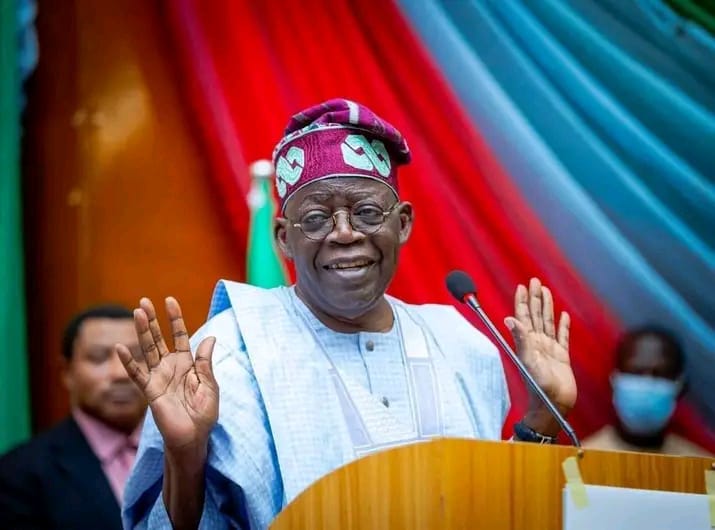
Tinubu has not approved salary increases for political office holders – Presidency
- News Desk
The above is contained in a statement signed by Dele Alake, Special Adviser to the President Special Duties, Communications and Strategy. It reads:
We have followed with consternation the viral story of the purported 114% increase in the salary of the President, Vice President, elected Federal and State political office holders and judicial officers.
We state without any equivocation that President Bola Tinubu has not approved any salary increase, and no such proposal has been brought before him for consideration.
While we recognise that it is within the constitutional remit of the Revenue Mobilisation, Allocation and Fiscal Commission (RMAFC) to propose and fix salaries and allowances of political office holders and Judicial Officers, such cannot come to effect until it has equally been considered and approved by the President.
It is important to note that RMAFC, through its Public Relations Manager, has responded to this fake story being circulated and has already set the record straight.
However, this unfounded story gained prominence on social media and in a section of mainstream media, again, bringing to the fore the danger fake news poses to society and our national well-being.
The misinformation was, obviously, contrived to create an ill will for the new administration and slow down the upward momentum and massive goodwill the Tinubu-led administration is currently enjoying among Nigerians as a result of its fast-paced, dynamic and progressive policies.
It is important to reiterate to journalists, media managers, and members of the public that stories on government activities and policy issues that do not emanate from approved official communication channels should be ignored.
Media practitioners are enjoined to, at all times, cross-check their stories to ensure accurate reportage, which is the hallmark of responsible journalism.
Hausa: Hantsi leƙa gidan kowa
By Muhammad Muhammad Salisu
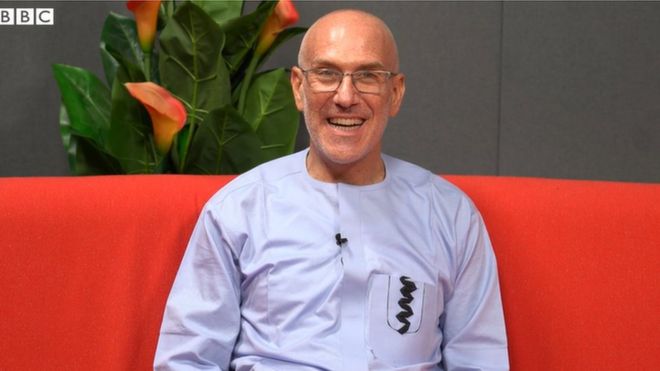
Meet Professor Rudolf Gaudio (he has adopted a Hausa name, Sani), a professor of anthropology at the State University of New York, who started learning Hausa in the US in 1986. He had never visited any African country, not to mention any Hausaland, when he started speaking Hausa. His first contact with the Hausa people was in 1991 in Sudan before coming to Nigeria. He started learning Hausa alongside Swahili.
This reminds me of an Igbo girl at Nigerian Law School, Yenagoa campus. She was awestruck when she saw me speaking Hausa with another Igbo girl. She retorted, “So you can speak that ‘thing’?” From her tune, I could see that she thought it an abomination for the person I was speaking to speak the ‘Aboki language’. The person I was talking to speaks the Hausa language fluently, though was born and raised in Bauchi.
Another incident was when I took a tricycle in Yenagoa. The driver told me the fare, which I bargained for. He told me, “Ka cika son banza.” I was surprised at how an Igbo man (he later told me he was Igbo) could speak Hausa, though with a heavy accent.
One day, I was at a restaurant alone at the Yenagoa campus. Another co-student was sitting by himself and three other female students from the northern part of Nigeria were at another corner gossiping. They, along the line, turned their gossip on the other lad. They were making jest of him, believing he couldn’t speak Hausa. When it was time for him to leave, he bade farewell to them in Hausa, saying, “Na gode [probably for making jest of him], sai an jima.” (Meaning, “Thank you, goodbye.”)
Muhammad Muhammad Salisu wrote via muhdibnmuhd@gmail.com.
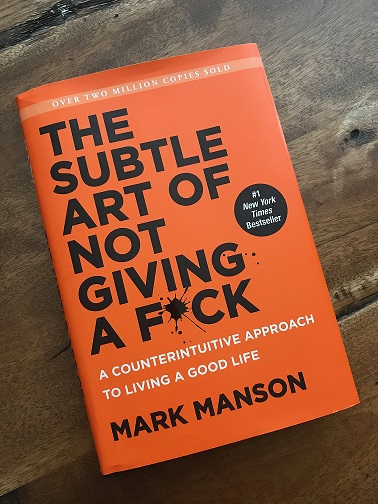
Book Review: The Subtle Art of Not Giving a F*ck
By Hafsah Ja’afar
The Subtle Art of Not Given a F*ck is a book with a provoking unconventional tone that challenges traditional sundries of happiness and success. Penned by Mark Manson, this book presents a refreshingly honest and no–gibberish approach to living fulfilling lives. Manson argues that true happiness and particular growth come from accepting our limitations, embracing discomfort, and understanding that life is innately difficult and delicate.
He encourages his readers to prioritize their values and choose what truly matters to them instead of seeking constant positivity or avoiding negative gests. Throughout the book, Manson explores colourful themes such as responsibility, authenticity, and the significance of setting boundaries.
He advocates for letting go of societal prospects, embracing failures, and learning from them. He suggests that we can lead a more meaningful and authentic life by fastening on what truly matters to us—using a mix of particular stories, philosophical perceptivity, and detailed advice.
Manson provides readers with a fresh perspective on changing happiness and purpose. It encourages them to let go of external confirmation, embrace their defects, and control their lives.
Overall, this book offers a counterintuitive yet empowering gospel that challenges everyone to rethink their precedence, review success, and live a life guided by their values rather than the prospects of others.
Hafsat Ja’afar is a school teacher and wrote from Kano via jaafarhafsat@gmail.com

Hakim Ziyech agrees to join Al Nassr
By Muhammadu Sabiu
Moroccan midfielder Hakim Ziyech has reportedly reached a verbal agreement with Al Nassr, marking a significant transfer deal.
Personal terms have been settled, and Ziyech is expected to sign a contract until June 2026.
An agreement has also been reached with his current club, Chelsea, with contract finalization pending.
The move signifies the advancing partnership between Chelsea and Saudi Arabian football.
More details to follow as the deal progresses.
BUK dismisses rumours of increased registration fees
By Uzair Adam Imam
The news making the round about the increment in school fees by the management of Bayero University, Kano (BUK), has dragged many students into a sheer panic while others fear the increment would be the end of their academic journey.
However, the school management debunked the circulated news on Wednesday and described it as fake news meant to startle students.
Malam Lamara Garba, the school Deputy Registrar, Public Affairs, told The Daily Reality that the story was baseless, urging the general public to reject it as “there is no official disclosure on that effect”.
The Daily Reality recalled that the news about the increment in the school fees to N170,000, initially said to be leaked information, has gone viral since the beginning of the last week.
The Students Union Government (SUG) claimed to have made several attempts to highlight the negative consequences the increment would have on students and subsequently held two meetings on the process with the school management.
Auwal Lawal Nadabo, the school acting SUG President, stated that all their efforts were in vain as the school management remained firmly on its stands after all the meetings.
Nadabo, who relayed this on a Facebook post, said, “The school management, after all consultations and finalizing the proposed fees, called for a second meeting where it was confirmed to the student leaders that the new range of school fees would be N97,000 to N170,000, as the case may be.
However, asked whether what the SUG President said was true, Garba denied knowledge of the meetings, saying, “I don’t even know when they had the said meeting with the management.”

The curious connection between money and relatives
By Abdulrazak Mukhtar
Money uniquely impacts family relationships, often leading to complex dynamics and a range of emotions. When individuals come into money, it can suddenly bring distant relatives to the forefront, seeking a connection or financial assistance. Conversely, acquiring wealth can also result in the emergence of long-lost relatives, appearing out of nowhere and claiming familial ties. This intriguing interplay between money and family sheds light on how our financial status influences our relationships.
When individuals experience a financial windfall, it’s not uncommon for distant relatives to suddenly appear. The allure of wealth and the possibility of benefiting from it can lead relatives who were once distant or disinterested to seek a connection. Whether driven by curiosity or a desire to share in the newfound affluence, these relatives may approach with familiarity, hoping to establish a bond and potentially reap the benefits of financial success.
Conversely, when someone finds themselves in a financially favourable position, they often become a target for relatives seeking assistance. Family members may seek financial support for personal endeavours, investments, or during hardship. The individual’s newfound wealth positions them as a potential source of aid, which can create a delicate dynamic of balancing familial obligations, personal goals, and responsible resource management.
The convergence of money and relatives can create a unique tug-of-war within family dynamics. Individuals who come into wealth must navigate the complexities of determining the authenticity of newfound relationships and managing expectations. Striking a balance between generosity and self-preservation is essential in maintaining healthy relationships while safeguarding personal interests.
To navigate this complex terrain, it is crucial to approach these situations with sensitivity and caution. Open communication is vital in establishing clear expectations, boundaries, and intentions with relatives. Honest conversations can foster genuine connections while managing financial expectations.
Defining personal goals becomes essential to make informed decisions about resource allocation. Individuals can prioritise their needs by aligning financial decisions with values and aspirations while considering family interests.
Seeking professional guidance from financial advisors, estate planners, or family counsellors can provide valuable insights and strategies for managing family dynamics while preserving personal financial well-being. These professionals can help individuals navigate the complexities of money-related familial relationships, offering objective advice and support.
Maintaining emotional boundaries is crucial when dealing with the influx of relatives during prosperous times. Distinguishing between genuine relationships rooted in care and those driven solely by financial motives is necessary to protect oneself from exploitation or manipulation.
Emphasising shared experiences, values, and interests can help foster authentic connections with relatives. Individuals can cultivate meaningful connections based on mutual understanding and common ground by focusing on the aspects of the relationship that go beyond monetary considerations.
In conclusion, the interplay between money and relatives within family relationships can be intricate and challenging. Managing the sudden emergence of distant relatives and requests for financial assistance requires careful consideration, open communication, and setting personal boundaries. By balancing familial obligations and personal goals, individuals can foster healthy relationships while protecting their financial well-being.
Abdulrazak Mukhtar can be contacted via prof4true1@gmail.com.

What you should know about Prosopagnosia and its effects
By Aisha M Auyo
“She’s very arrogant. Who the hell does she think she is? ita ba kowa ba sai girman kai, wai Auyo ce zata nuna bata ganemu ba? Why will Auyo pretend not to recognise us after all our years together? (My friends, acquaintances, coursemates, and relatives).
“Aunty Hadiza, Aisha fa bata gaidamu, idan mun hadu dauke kai take, abin mamaki da takaici“. (My mother’s friends and colleagues complain with disappointment that I don’t greet them whenever we meet.)
“Anti-Binta, Aisha fa matar Abdullahi in ta gammu yi take kamar bata sanmu ba, yarinyar data taso a gabanmu? Bata san mune sirikanta ba, we can do and undo fa“. (My mother inlaw’s friends, relatives and colleagues complaining that I don’t respect them.)
“Baiwar Allah ban gane ki ba; I think you have mistaken me for someone else. We’ve never met”. (The strangers I greet with confidence and pride, thinking that I recognise someone I know).
Does this sound familiar? These are the comments and remarks I’ve been hearing since my teens. Sometimes I explain to the complainants that it’s my eye problem; some people believe me, some do not, and they will say she’s just a snub.
Then comments started coming from my friends or their parents that they’d greeted my mom, but she did not recognise them. I’ll apologise and explain to them that she finds it hard to identify people.
So when the complaints kept coming, I realised that mam and I have a common problem. So also Hafsa. The issue started eating me. I always pray that my eyes or memory should not fail me whenever I go out.
Then greeting strangers become my new normal. I’ll see a person, assume that person is someone else, and even start exchanging pleasantries with them, only to see them surprised by my politeness, that they do not know me or the others I’m talking about.
Then it occurred to me that this isn’t normal. Something must be wrong with us. Like we do great in school, we have a sharp ability to memorise and recall lessons and events, but why not people? I know we have sight problems, hence the use of constant eyeglasses, but why has our memory never failed us in school? Shebi na the same eye and brain we use to see people and read books?
So when my appointment with the optician came, I told him of this condition affecting my life. He explained that it’s a rare socio-medical condition that can be inherited or acquired later in life. I did my research and learned a lot about the condition.
Here are a few things you should know about Prosopagnosia; perhaps you may encounter someone with such a condition.
Prosopagnosia (face blindness or facial agnosia) is a neurological disorder characterised by the inability to recognise faces. The term comes from the Greek words for “face” and “lack of knowledge.”
Depending upon the degree of impairment, some people with Prosopagnosia may only have difficulty recognising familiar faces, while others cannot discriminate between unknown faces. In severe cases, people may be unable to distinguish a face as different from an object. Some people are unable to recognise their faces.
Prosopagnosia is only face blindness, not colour blindness or overall visual impairment. It is not the same as forgetfulness or sometimes struggling to find the right word.
This condition is unrelated to memory dysfunction, loss, impaired vision, or learning disabilities. The disorder is thought to result from congenital influence, damage, or impairment in a fold in the brain that appears to coordinate the neural systems controlling facial perception and memory (right fusiform gyrus).
Congenital Prosopagnosia appears to run in families, making it likely to result from a genetic mutation or deletion. Some degree of Prosopagnosia is often present in children with autism and Asperger’s syndrome and may cause impaired social development.
Because there aren’t apparent brain lesions in people with congenital Prosopagnosia, scientists aren’t sure what causes it.
Prosopagnosia can be socially debilitating as individuals with the disorder often have difficulty recognising family members and close friends. They often use other ways to identify people, such as relying on voice, clothing, or unique physical attributes.
Evidence suggests that people with Prosopagnosia may become chronically anxious or depressed because of the isolation and fear that come with the condition.
Navigating basic social interactions with Prosopagnosia can become fraught, and some people avoid contact with family members and other loved ones out of fear that they will not be able to recognise or address them adequately.
Sadly, there’s no treatment for Prosopagnosia, but there are ways to manage it. People with Prosopagnosia often focus on features like hair colour, walking style or voices to tell people apart.
So now you know, if you meet a person and he/she fails to recognise you, kindly be supportive and understanding. They may be suffering from this condition; trust me, it is debilitating for people suffering from it because It’s hard for others to understand. It may even cause depression in severe cases.
And remember, before you assume, learn the facts; before you judge, understand why!
Aisha Musa Auyo is a Doctorate researcher in Educational Psychology, a wife, a mother of three, a Home Maker, a caterer and a parenting/ relationship coach.