
Nigerien coup amidst ECOWAS diplomatic impotence
By Muhammad Muzdaleefa
The resurgence of military coups is thwarting Africa’s democratic journey. The recent coup d’état in Niger, which saw the ousting of President Mohamed Bazoum by the military, has not only shaken the stability of the country but has also laid bare the divisions and weaknesses within the Economic Community of West African States (ECOWAS). It has also exposed a wide cleavage between citizens of member countries and their governments on ECOWAS policy on Niger.
As far as one can read the mood without the aid of a proper poll, support for military action against Niger would probably be less than 10 per cent across the region. In Niger, news footage suggests that the public is more solidly against ECOWAS military intervention. Somewhat or otherwise, the mainstream media and social media comments show deep scepticism about ECOWAS’ direction and intentions. Many, if not most, commentators believe that the West, especially France and the US, are behind the ECOWAS drive towards a military solution in Niger.
This has led to resentment, especially in the Francophone countries, where the citizens point out that ECOWAS has been silent at draconian French exploitation of their resources continuing long after independence.
One of the glaring weaknesses exhibited by ECOWAS in response to the Niger coup is its lack of unity and consistency among member states.
While some countries strongly condemned the coup and called for a swift return to civilian rule, others remained relatively silent, seemingly hesitant to take a decisive stance. This lack of a united front weakens the regional body’s influence and diminishes its ability to address such crises effectively.
Another aspect that has been brought to the forefront is ECOWAS’s flawed diplomatic approach. Despite constituting a mediation committee to engage with the coup leaders and negotiate a resolution, ECOWAS failed to halt the coup or achieve a viable solution. The committee’s lack of leverage and the limited consequences the perpetrator’s face have raised questions about the efficacy of diplomatic efforts and the regional body’s influence over military leaders.
ECOWAS has often resorted to imposing economic sanctions to exert pressure and resolve political crises. However, the effectiveness of such measures in addressing coups has been questionable. The reliance on economic sanctions has a limited impact, particularly in countries with weak economies and high poverty levels like Niger.
The recent example of Mali, where sanctions failed to bring about meaningful change after a military coup, highlights the need a more comprehensive and proactive approach by ECOWAS. The situation has become even grimmer, with Russia increasingly stepping in to provide short-term assistance to cushion the effects of the sanctions against coup countries, which appear to have exchanged the influence of France with that of Russia.
What is worse is the fact that the Niger crisis has also highlighted ECOWAS’s inability to identify and address underlying issues that lead to political instability. This failure to take pre-emptive measures further exposes weaknesses within the organisation. Since ECOWAS gave an ultimatum to Niger, citizens in ECOWAS countries have voiced their disapproval against any military action, mainly because ECOWAS lacks the moral authority to send troops into Niger.
Many commentators have pointed out failure within member countries as a significant contributing factor undermining ECOWAS’s intentions. Some West African governments are dynasties, flawed elections taint others, while some have repressed their countries’ media and opposition parties.
What principles does an ECOWAS military intervention in Niger seek to establish, and are they all practised in the countries that will impose them by force of arms in Niger? If democracy is essential to ECOWAS, it has to ensure that the complete panoply of democratic principles is firmly in place in all member countries. It cannot pick and choose. Therefore, to safeguard democracy, ECOWAS should invest more proactively in conflict prevention mechanisms, addressing socio-economic disparities, and promoting good governance across member states.
Timely intervention in electoral processes, strengthening democratic institutions, and promoting dialogue are crucial steps towards avoiding crises before they occur. In addition, ECOWAS must develop a robust apparatus to communicate with citizens across the entire subcontinent and carry out programmes that promote dialogue between citizens and between citizens and governments.
Does public opposition to military action signal a higher tolerance for military coups in West Africa? That is a difficult question, but there is no doubt that people have generally become disenchanted with the Western democratic model, given that poverty and lack of opportunity continue to be entrenched. At the same time, politicians are seen as opportunists who are in it for themselves. However, none of this can be interpreted to mean that people in West Africa prefer military regimes.
Significantly, however, the coup in Niger has exposed the leadership vacuum within ECOWAS. While the organisation has made progress in promoting regional integration and economic development, its political leadership role has been less pronounced. ECOWAS needs robust leadership capable of decisive action in times of crisis, backed by a clear framework and mechanisms that discourage power grabs and protect democratic systems.
The coup in Niger has exposed the weaknesses, divisions, and inconsistencies within ECOWAS. The regional body’s lack of unity, ineffective diplomacy, reliance on economic sanctions, inadequate pre-emptive measures, and leadership vacuum have hindered its ability to respond effectively to political instability. The regional body’s response to the coup has showcased its challenges in effectively addressing political crises, highlighting the need for a more cohesive and proactive approach to preserving democracy in the region.
To strengthen ECOWAS and protect democracy in the region, there is an urgent need for member states to forge a unified front, strengthen conflict prevention mechanisms, explore diplomatic alternatives, and foster strong leadership committed to preserving democratic values. Without addressing these fundamental issues, the fragile democratic gains achieved in West Africa may remain at risk, allowing further regional divisions and challenges to promote peace and stability.
Muzdaleefa wrote from Kaduna via mohammedadamu736@gmail.com.

Subsidy removal: 36 states, FCT to receive 5bn naira palliative each
By Muhammadu Sabiu
To lessen the impact of eliminating the petrol subsidy, the federal government has promised a N5 billion palliative for each of the federation’s states, including the Federal Capital Territory.
Babagana Zulum, the governor of Borno State, made the announcement to reporters at the State House on Thursday after the National Economic Council meeting in Abuja. The meeting was presided over by Vice President Kashim Shettima.
The governors of the 36 states, the governor of the Central Bank of Nigeria, and other government officials who have been coopted make up the council.
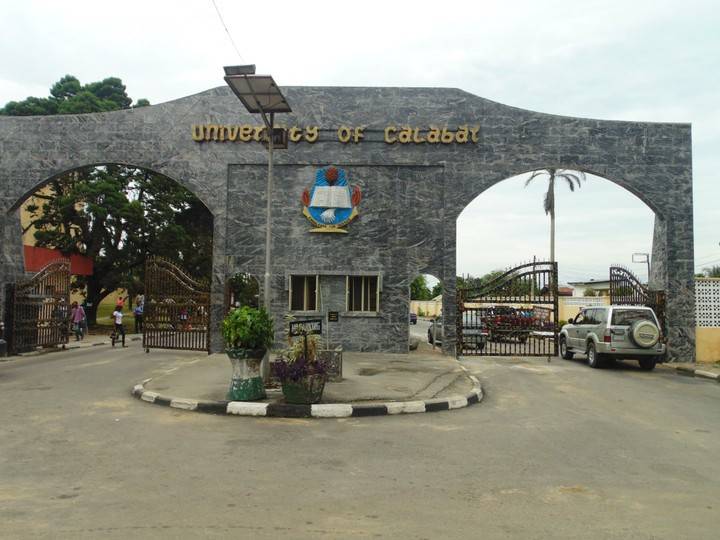
UNICAL suspends Prof. Ndifon over alleged sexual harassment
By Muhammadu Sabiu
The management of the University of Calabar (UNICAL) has suspended one of its lecturers, Prof. Cyril Ndifon, for alleged sexual harassment against female students.
The Daily Reality (TDR) understands that Prof. Cyril Ndifon has been placed on administrative leave twice in the past nine years due to allegations of sexual harassment.
Ndifon was recently suspended for breaking the terms of the institution’s current rules and regulations in a letter dated August 17, 2023, and signed by Gabriel Egbe, the registrar of the school.
He was suspended by the same university in 2015 following allegations of sexual assault against female students.
A few days ago, female law students demonstrated on campus with signs demanding that Ndifon be fired.
According to a report seen by TDR, some of the placards had inscriptions like, “Ndifon must go!” “We’re tired of sucking dicks for marks”, “Law girls are not bonanza,” and “Prof Ndifon must stop grabbing our bum bums.”
The suspension, according to the letter, followed Ndifon’s response to a question that had previously been posed to him by the university’s management.
According to reports, the Vice Chancellor was not pleased with Prof. Ndifon’s response to the question posed to him.
The VC then gave the order to suspend Ndifon and remove him from his role as Dean.
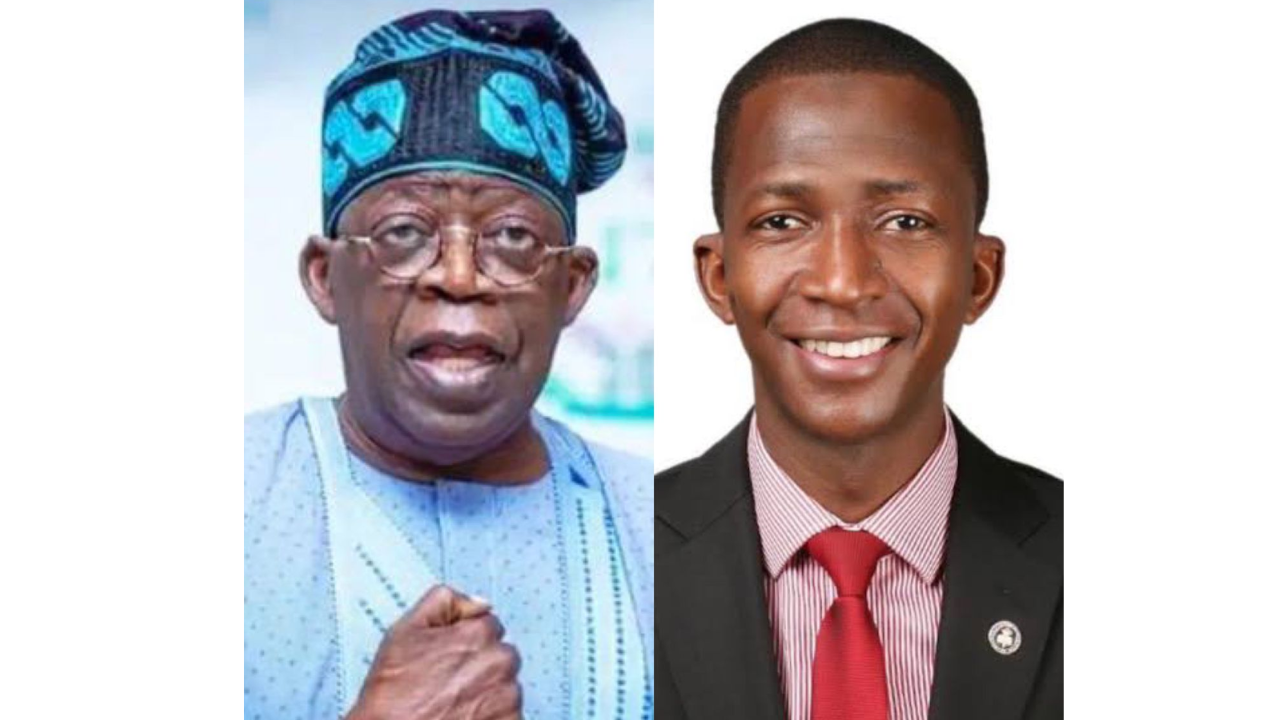
Free Bawa or charge him to court – MURIC
By Abdurrahman Muhammad
An Islamic human rights organisation, the Muslim Rights Concern (MURIC), has called on men of the Department of State Services (DSS) to set the former boss of the Economic and Financial Crimes Commission (EFCC), AbdulRasheed Bawa, free or charge him to court.
Making the call on Thursday, 17th August, 2023, was the Executive Director of the Muslim Rights Concern (MURIC), Professor Ishaq Akintola.
The full statement reads:
“Abdul Rasheed Bawa, former chairman of the Economic and Financial Crimes Commission (EFCC), has been in detention since 14th June 2023 without any explanation whatsoever.
“This is contrary to the letter and spirit of Section 36 of the 1999 Constitution of the Federal Republic of Nigeria, which guarantees fair hearing in compliance with the judicial principle of audi alterem partem (i.e. hear from both sides to a case before taking a decision). Nigerians are yet to hear from the former EFCC boss. Neither have they heard from his lawyers.
“There should be no detention without trial in a democracy. It stands in contradistinction to Section 41 of the 1999 Constitution of the Federal Republic of Nigeria, which says inter alia, ‘Every citizen of Nigeria is entitled to move freely throughout Nigeria and to reside in any part thereof…’.
“Article 7(b) of the African Charter on Human and Peoples’ Rights also stipulates the right to be presumed innocent until proven guilty by a competent court or tribunal. To that extent, therefore, it must be assumed that Bawa is innocent.
“MURIC demands that he should be set free or brought to court where his charges will be read to him. He should also be allowed to see his lawyer, his personal doctor and key members of his family.
“If Godwin Emefiele, who traumatised all Nigerians for months, could be arraigned in court twice since his arrest, we wonder what special crime Bawa committed to have warranted his indefinite detention. Could it be because the former CBN governor has access to a bottomless pit of foreign and local currencies and he could therefore engage the best lawyers in the land while Bawa, a young aspiring Nigerian, cannot afford lawyers’ huge fees?
“MURIC, therefore, demands the enforcement of Allah-given fundamental human rights of AbdulRasheed Bawa. He should be set free or arraigned before a court of competent jurisdiction where he can be granted bail.
“Our vision of Nigeria is that of a land where every man or woman is free from institutional, societal and individual coercion, a land where tyranny, oppression, injustice as well as political and socio-economic marginalisation become history.”
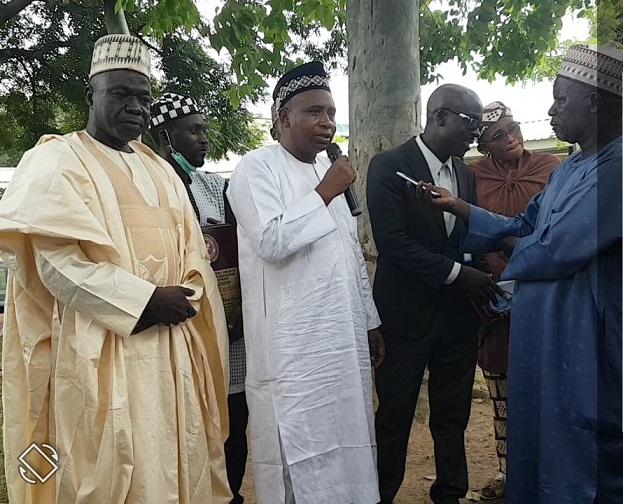
NMA offers free surgeries to 200 patients in Toro
By Ukasha Rabiu Magama
Preparations are underway as the Bauchi state chapter of the Nigerian Medical Association (NMA) prepares to offer free surgical procedures to more than 200 patients afflicted with various ailments across the Toro local government area.
Dr Adamu Umar Sambo, the recently appointed Commissioner of Health in Bauchi, announced the initiative during a ceremonial event hosted by the Islamic Medical Association of Nigeria (IMAN) at the Toro chapter.
“The Medical Association of Nigeria, NMA, will soon offer free surgery to over 200 patients suffering from various diseases across Toro local government. The association will do this to express its happiness and to thank His Excellency Bala Muhammad Abdulkadir for appointing one of them as Bauchi health commissioner.”
The free surgeries are a gesture of appreciation for Dr Sambo’s appointment as the new Commissioner of Health and a tribute to Governor Bala Muhammad Abdulkadir for recognising Dr Sambo’s contributions to the medical field.
Dr Sambo, who formerly held the position of Chief Medical Officer at Toro General Hospital Toro and currently serves as the Bauchi Commissioner of Health, urging his successor, Dr Maryam Ahmad Abubakar, to build upon his achievements and collaborate closely with hospital unit officials to align with Bauchi state’s health sector objectives.
Similarly, Dan’zumi Abdulhamid, Chief Nursing Officer at Toro General Hospital, praised Dr Sambo’s accomplishments as the former Chief Medical Officer, highlighting advancements such as upgrading the hospital to a real general facility, provision of essential equipment including generators and X-ray machines, establishing a Covid-19 centre, a new theatre room, and the renovation of facilities including staff quarters and the Juma’at mosque.
On his part, Alhaji Aliyu Yakubu Lame, the district head of Lame, encouraged the Commissioner to work selflessly to drive development in the state. He equally commended the Governor for appointing two key commissioners from Toro and urged Dr Maryam Ahmad Abubakar to carry on Dr Sambo’s legacy.
The event was graced by the presence of the district heads of Toro, representatives from the Nigerian Medical Association, members of the Islamic Medical Association of Nigeria – Toro chapter, and other esteemed dignitaries.
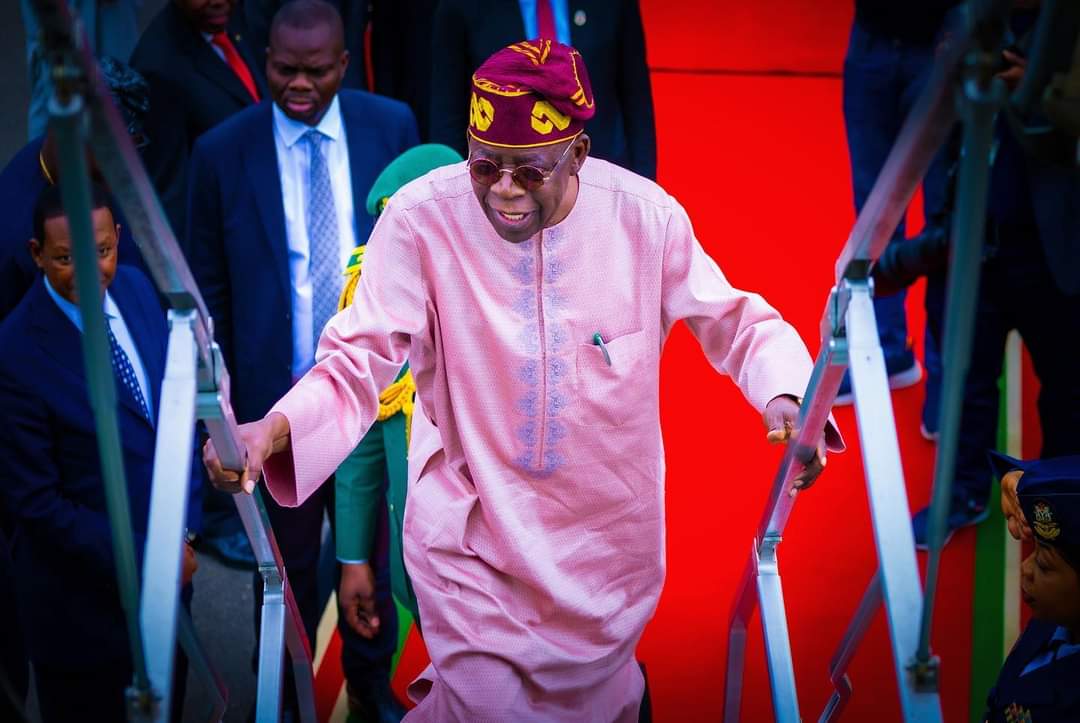
Breaking: Tinubu assigns ministers portfolios
By Muhammadu Sabiu
President Bola Ahmed Tinubu has assigned portfolios to his recently confirmed ministerial nominees, a document obtained by The Daily Reality shows.
Although the date of their inauguration has not been confirmed, the document has shown that the portfolios are as follows:
1. Yusuf Sununu – Minister of Education
2. Nyesom Wike – FCT
3. Mohammed Badaru – Defence
4. Ahmed Dangiwa – Housing and Urban Development
5. Simon Lalong – Labour and Employment
6. Bosun Tuani – Minister of Communications, Innovation and Digital Economy
7. Ishak Salaco – Minister of State, Environment and Ecological Management
8. Wale Edun – Minister of Finance and Coordinating Minister of the Economy
9. Bunmi Tunji – Minister of Marine and Blue Economy
10. Adedayo Adelabu- Minister of Power
11. Tunji Alausa – Minister of State, Health and Social Welfare
12. Dele Alake – Minister of Solid Minerals Development
13. Lola Ade-John- Minister of Tourism
14. Adegboyega Oyetola – Minister of Transportation
15. Doris Anite – Minister of Industry, Trade and Investment
16. Uche Nnaji – Minister of Innovation Science and Technology
17. Nkiruka Onyejeocha – Minister of State, Labour and Employment
18. Uju Kennedy – Minister of Women Affairs
19. David Umahi – Minister of Works
20. Festus Keyamo – Minister of Aviation and Aerospace Development
21. Abubakar Momoh – Minister of Youth
22. Betta Edu – Minister of Humanitarian Affairs and Poverty Alleviation
23. Ekperikpe Ekpo – Minister of State, Gas Resources
24. Heineken Lokpobiri – Minister of State Petroleum Resources
25. John Enoh- Minister of Sports Development

Nigerian university reduces number of workdays for staff due to ‘exorbitant’ cost of petrol
By Muhammadu Sabiu
The management of the University of Ibadan has approved the reduction of the number of workdays for staff from five to three.
According to a statement by the institution’s registrar, G.O. Saliu, the decision was taken due to the skyrocketing costs of fuel.
“The generality of Nigerians have experienced enormous economic difficulties as a result of the astronomical increase in the pump price caused by the removal of subsidy by the Federal Government,” the statement reads.
“Salary earners who have to commute to work every working day are faced with an aggravation of the condition, given the attendant hike in the transport fare and cost of living.
“After careful consideration of the situation, the University Management recommended a temporary work schedule adjustment for members of staff, which Senate at its meeting of Thursday, 03 August 2023 considered and approved.
“Accordingly, members of staff are now expected to work on-site for three (3) days in rotation per week, with effect from Monday, 14 August 2073. “It should, however, be noted that those on essential duties are exempted from this adjustment.
“It should be further noted that Management will review the arrangement as the situation improves. Meanwhile, members of staff are to maintain commitment, open communication, and cooperation towards ensuring free workflow, including working from home where and when necessary.
“In light of the foregoing, management seeks the understanding of all Deans, Directors, Heads of Departments and Units towards a smooth implementation of the intervention,” the statement added.

Shettima commends Google’s N1.2b grant initiative to support Tinubu’s employment target
By Muhammadu Sabiu
Vice President Kashim Shettima applauded Google’s N1.2 billion grant programme for the President Tinubu administration’s one million jobs goal.
The compliment was given by Mr. Shettima on Tuesday in Abuja when he welcomed several executives of Google, a well-known international technology corporation, to the Presidential Villa.
He believes the N1.2 billion award announced to support the Tinubu administration’s digital jobs initiative is admirable and deserving of imitation by other businesses.
“Let’s think outside the box and create more job opportunities. We need to walk the talk. It is easy to pontificate but very difficult to bring all of the ideas to fruition. I want to assure you, this administration is ready to partner with you.
“Nigeria is ready for business. The President that we have now wants to leave a legacy that Nigerians will be proud of many years after,” Mr Shettima said.

Who is watering the Nigerian grass?
By Bello Hussein Adoto
A few days after someone glibly told me that the grass was greener in Nigeria, a young medical doctor Dr Diaso Vwaere was crushed to death in an elevator accident at the General Hospital in Odan, Lagos State.
Netizens and other persons who have worked at the hospital said they complained about the malfunctioning elevator for years, but the management did nothing tangible to address it. So the young female doctor, with two weeks to complete her housemanship, took the elevator to retrieve a dispatch—a food package—on the ground floor. She never made it.
I imagine her in the elevator anticipating the food she ordered, salivating, getting ready to devour her food, and returning to her busy schedule as a house officer. I imagine her standing on the elevator, weightless, as it moves.
Then it snapped. Suddenly, the metal box is crashing down from the 10th floor all the way to the ground. Imagine her now in the elevator, weightless, as it falls freely. Imagine her grasp at everything and anything, something to break her fall. Then, bam, it crashed. Imagine her now.
What do you think she would have felt? She was trapped in the rubble. The package she was going to retrieve was less of a worry. Her call can wait. The world can wait. Now, she needed freedom, a way out of the rubble. She needed air. The wreckage is choking.
While in the rubble, time trickled. Seconds must have felt like a decade, minutes like forever. Time trickled. One, two, three… 40 minutes. She was there for 40 minutes before help came. She was out, finally. Ahhh, some relief.
Anyone could have been in that elevator. It could have been a patient, doctor, nurse, relative, or even you, my reader. It could have been a visitor, like the state governor or the CMD. Would this incident have made any difference? I wonder.
A consultant once said it’s better to have a heart attack on the streets of London than in the corridors of a teaching hospital in Nigeria, and I thought that was ridiculous. From what I have seen in recent times, he was not wrong. It is not impossible. We are all at our own’s risk.
Those who should provide the basic oversight at the hospital, from government officials to the hospital management and staff, seem to have other businesses than their jobs. That’s why the elevator could be so bad as to take a life before they consider fixing it. Do we need the president, governor, or minister of health to come and fix it too? What happened to the hospital management?
The elevator accident happened at a hospital big enough to have house officers, ten floors, and elevators. It is a big hospital, indeed, by every standard. Yet there was no blood to rescue Dr Diaso. Some said there was no morphine, emergency supplies, or cotton wool. The last part could have been a stretch, but I have seen resident doctors protest that there was no normal saline, which should be as common as sachet water. Yet…
When patients come to hospitals, and these supplies are not available, and they cannot afford them, they turn on the doctors and nurses that are equally helpless. A soldier beat my friend’s wife, a nurse at Sobi Specialist Hospital, some time ago because she asked him to get delivery packs for his wife’s delivery. Last December, patient relatives at the University of Ilorin Teaching Hospital pinned a doctor to the wall. They beat him because they thought their father was dying and he wasn’t helping. Meanwhile, they were asked to do a test they had yet to do.
These incidents happened in tertiary hospitals where we should expect—sorry, hope—that things are better, where supplies were available for patients to use and pay later. But they aren’t. What is the hope of someone in a rural area?
I wonder what would happen if someone fell off a storey building in Obehira, where I grew up, or Ikuehi, my hometown. What would be their fates? They may have to be referred to the recently built Reference Hospital in Okene. Will they fare any better there?
Back to Dr Diaso, the doctor in the elevator accident. She survived the crash but not the injuries she sustained. She was severely injured and needed blood. “There was no blood available for resuscitation,” wrote the Lagos branch of the Nigerian Medical Association. There she was in the hospital. She had spent 11 months and two weeks on calls, attending to patients, saving lives, unable to be resuscitated because there was no blood. She died. She died in the institution where she served.
They say the grass is greener here. Who is watering the grass?
Bello Hussein sent this piece via bellohussein210@gmail.com.

Can Tinubu do like Abacha?
By Malam MB
On May 25th, 1997, the democratically elected of Sierra Leon, President Ahmad Tejan Kabbah, was toppled by Major Johnny Paul Koroma. The development in Sierra Leone disrupted the plans of the Economic Community of West African States (ECOWAS) under the leadership of Nigerian Head of State, General Sani Abacha.
ECOWAS pleaded with the Koroma junta to step down but it didn’t budge. General Abacha didn’t shilly-shally, he directed the Nigerian troops under the Economic Community of West African States’ Ceasefire Monitoring Group (ECOMOG) to station themselves in and around Freetown (the Sierra Leone’s capital).
Major Johnny Koroma instantly became scared and sought dialogue which gave birth to Conakry Peace Accord on October 23rd, 1997. This Accord called for reinstatement of the legitimate government of President Tejan Kabbah within a period of 6 months.
Major Koroma who expressed his commitment to the Conakry Peace Accord dilly-dallied and that prompted General Abacha to oust him on February 6th, 1998 and reinstate President Tejan Kabbah.
When General Sani Abacha ousted Major Koroma, Nigeria didn’t experience collateral damage or negative implication because it doesn’t share any border with Sierra Leone and it didn’t have Boko Haram and Banditry then.
Today, Nigeria shares border with Niger Republic and our Nigeria that grapples with Boko Haram, Banditry and so much corruption, wants to militarily oust the Nigerien Dictator Abdurramane Omar Tchiani and reinstate the democratically elected President Mohammed Bazoum. Yes! Nigeria has the military strength to defeat Niger, Mali and Burkina Faso but how can President Tinubu contend with collateral damages and proliferation of Boko Haram and Bandits’ activities? I advise that Niger Republic should be sanctioned until the Nigerien people ask Dictator Tchiani to step down. Ah! I ought to ask again, can Tinubu do it like Abacha did?
Malam MB is a Senior Advocate of the Commoners (SAC) and can be reached via: malammb16@gmail.com