
North sets conditions for 2027 election support—ACF
By Abdullahi Mukhtar AlgasgainiThe Arewa Consultative Forum (ACF) has stated that Northern Nigeria will only back presidential candidates in the 2027 elections who prioritize the region’s interests.
ACF Board of Trustees Chairman Alhaji Bashir Dalhatu made the declaration on Wednesday during a meeting in Kaduna, attended by prominent Northern leaders, including former governors, ministers, and top political figures.
Dalhatu, a former Minister of Power and Steel, stressed that the North’s support will go to leaders committed to advancing its development, not to any specific party or politician.
“The North has the numbers, land, and political strength to shape Nigeria’s future, but we must stay united,” he said.
The region holds 19 states, the majority in the National Assembly, and about 60% of Nigeria’s population.
The ACF urged Northern stakeholders to work together, warning that division would weaken the region’s influence.
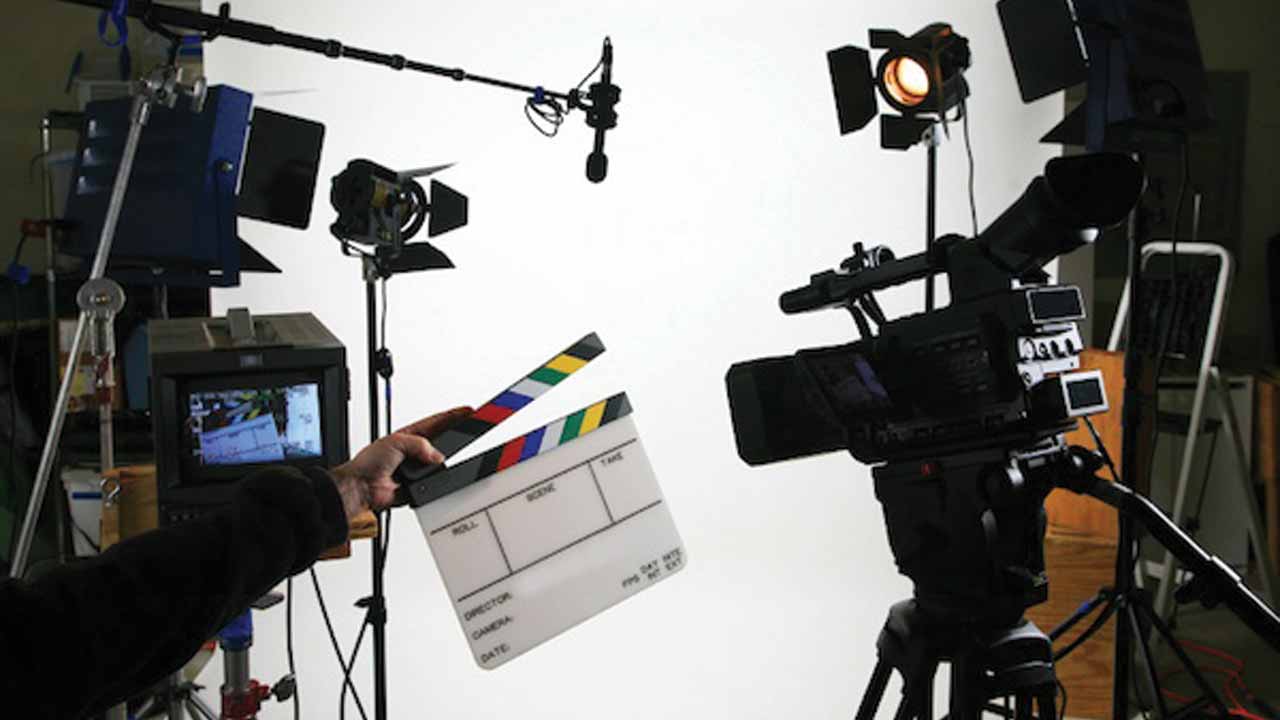
Lights, camera… stagnation? The untold battle of Nigeria’s entertainment industry
By Haroon Aremu
Like a sly jester winking at the moon, I was scrolling through social media when I encountered celebrity interviews recounting how they rake in millions within months. This spectacle ignited a contagious fervour among the youth, convincing them that the entertainment industry is the sole avenue to instant riches.
No one talks about the failures, the countless auditions, or the silent struggles behind the scenes; they only talk about the glamour, the wealth, and the “soft life.”
Bollywood thrives on strategic government investment, making it a global economic force that boosts employment, tourism, and digital expansion. Unlike Nigeria’s self-funded entertainment sector, India injects billions into its film industry, ensuring sustained growth and international reach.
Beyond captivating audiences, it turns filming locations into major tourist attractions, employs millions across various roles, and operates as a well-structured economic engine that drives cultural and financial influence.
Bollywood wields significant soft power, shaping international perceptions, fostering trade partnerships, and influencing policy discussions on a global scale. Now, the burning question is If India has done it, why can’t Nigeria?
President Bola Ahmed Tinubu and the Nigerian leadership stand on a promising foundation. Nollywood is already the second-largest film industry globally, built almost entirely on private effort. With champions like Kunle Afolayan, Femi Adebayo, Funke Akindele, Toyin Abraham and others reshaping narratives and cashing in on global platforms like Netflix, Prime Video and Box Office.
It is clear that Nollywood is not just an entertainment industry—it is an untapped goldmine. The cinematic feats of Kemi Adetiba, Mo Abudu, Bolanle Austen-Peters, etc., prove that, with proper government investment, Nollywood could evolve from a privately managed giant into a fully empowered national asset.
According to research, Nollywood generates over $590 million annually and produces around 2,500 films a year. It has managed to thrive despite a lack of properly structured federal support.
Imagine if this industry received the same kind of backing Bollywood enjoys. Free from corruption, federal investment could elevate production quality, generate millions of jobs, and turn Nollywood into Nigeria’s foremost non-oil revenue, especially when youth yearn for employment due to unemployment being generic.
Content creation, beyond Nollywood, has emerged as a formidable economic engine in Nigeria, proving that digital storytelling is not just a fleeting trend but a viable sector capable of generating wealth, employment, and global recognition.
The success of creators like Mr. Macaroni, Taooma, Kiekie, Sabinus, Lasisi Elenu, Cute Abiola, etc., illustrates how social media has democratised entertainment, allowing individuals to carve niches without relying on traditional gatekeepers like film studios or record labels.
Through comedy skits, social commentary, and brand endorsements, these creators have transformed their craft into multi-million naira enterprises, employing scriptwriters, videographers, editors, and marketers while driving traffic to brands and tourism sites.
Their work showcases Nigeria’s culture and humour on the global stage, attracting foreign partnerships and sponsorships that would have otherwise been reserved for mainstream Nollywood productions.
When properly harnessed, digital content creation can become a major economic driver, like Bollywood’s integration of influencers and digital expansion into film, tourism, and commerce. With the right policies—such as tax breaks, structured funding, and intellectual property protection—Nigeria’s content industry could grow into a leading non-oil revenue stream, competing with global giants like India and the United States.
Despite its promise, the content creation industry in Nigeria still grapples with fundamental challenges that could hinder its full potential. Unlike Bollywood, which benefits from government-backed investment and structured growth strategies, Nigerian content creators operate in a largely informal economy, where access to funding, infrastructure, and legal protections remains inadequate.
Some creators lack financial literacy, face inconsistent brand deals, and operate without a regulatory framework that protects their intellectual property.
Additionally, the absence of dedicated digital innovation hubs limits their ability to scale, collaborate, or transition from short-form content to full-length productions capable of breaking into mainstream cinema as some have done.
While some content creators have managed to bridge the gap between skit-making and brand influence, an untapped market for leveraging content creation into mainstream entertainment and tourism remains.
The government and private investors need to recognise digital storytelling as more than just “youthful amusement” but as a serious industry that, when properly structured, could create thousands of jobs, foster digital entrepreneurship, and export Nigerian creativity worldwide.
Suppose Nigeria is to harness the creative economy truly. In that case, it must institutionalise financial incentives, support digital film villages, and encourage content creators to transition into high-value productions that can contribute to global streaming platforms, film festivals, and international collaborations.
Only then can the country move beyond isolated success stories to a full-fledged, structured entertainment ecosystem that mirrors Bollywood’s impact on India’s economy.
States like Lagos, Kwara and others have already positioned themselves as film hubs, investing in production studios, enabling policies, and film villages to attract investors. If these state-led initiatives can yield results, what would happen if Nigeria had a full-scale federal-backed Nollywood revolution?
With well-structured grants, tax breaks, and infrastructure development, Nollywood could rival Hollywood and Bollywood, expanding tech-based employment and transforming Nigeria into Africa’s entertainment capital.
Yet, a crucial caution must be heeded. Nollywood, like every thriving industry, has its fair share of pitfalls. The rise of viral sensations over genuine talent, the exploitation of controversies for social media relevance, and the blurred line between creativity and chaos all pose risks to the industry’s long-term sustainability.
Nigeria must ensure that Nollywood does not fall victim to the same cycle of corruption that crippled agriculture and the oil sector.
The truth remains: talent differs from cruise, and entertainment is bigger than scandal-driven fame. Nollywood has the potential to be a global force, a national pride, and an economic goldmine.
The question is: Will Nigeria seize this opportunity or let Negligence and corruption again destroy another billion-dollar industry?
Haroon Aremu Abiodun, an author and PRNigeria fellow, wrote via exponentumera@gmail.com.

Bashir Aliyu Umar assumes presidency of Shari’ah council
By Anas Abbas
The Supreme Council for Shariah in Nigeria (SCSN) has appointed Sheikh Dr. Bashir Aliyu Umar as its new president following the passing of its former leader, Sheikh Abdul Rasheed Hadiyatullah, on Monday.
In an official statement issued by Malam Nafiu Baba Ahmed, the Secretary General of SCSN, the council expressed deep sorrow over the loss of Sheikh Hadiyatullah, emphasizing that his death is a significant loss not only to the council but also to the broader Muslim community in Nigeria and beyond.
The statement included prayers for Allah (SWT) to forgive Sheikh Hadiyatullah’s shortcomings and grant him a place in Jannatul Firdaus.
The announcement confirmed that Dr. Bashir’s appointment was made in accordance with the council’s constitution and established protocols.
“Sheikh Dr. Bashir Aliyu Umar OON has been unanimously endorsed as the new President of the Supreme Council for Shari’ah in Nigeria,” the statement read.
The council expressed full confidence in Dr. Bashir’s leadership abilities, scholarly expertise, and steadfast dedication to the principles of Shari’ah and justice.
Dr. Bashir is a distinguished scholar in Islamic studies and finance, holding a Ph.D. in Hadith and Islamic Studies from the Islamic University of Madinah.
He has been actively involved in various committees concerning Shari’ah and Islamic banking both nationally and internationally, including serving on the Shari’ah Advisory Committee of Stanbic IBTC Bank and the Council of Experts on Islamic Banking at the Central Bank of Nigeria (CBN).

Husband laments negligence in death of wife at Minna hospital
By Hadiza Abdulkadir
A grieving husband has alleged gross negligence and unprofessional conduct at Jummai Babangida Aliyu Maternal and Neonatal Hospital, Minna, following the death of his wife, Ramatu, after a surgical procedure on April 24, 2025.
UB Shehu, who shared a detailed account of the events leading up to his wife’s death, claimed that his wife was the last of nine patients to undergo surgery that day. During the procedure, an unstable power supply reportedly forced staff to switch from the main source to a smaller backup generator, which Shehu emphasized was not a diesel-powered unit but a basic household generator.
According to Shehu, Ramatu showed signs of critical distress immediately after surgery. While other patients were reportedly stable, his wife began bleeding excessively due to a drainage bag not being properly attached — a task he claimed the attending nurse was unqualified to perform.
“She told me she didn’t know how to plug the bag,” Shehu stated, expressing frustration that a doctor did not attend to the situation until five hours later. Even then, she only gave brief instructions without examining the patient.
Shehu described a harrowing night in which his wife’s condition worsened, alleging that she was repeatedly denied water and food and that his pleas for medical assistance were ignored or delayed. As her condition deteriorated, he said senior nurses refused to help, citing departmental responsibilities.
By 7:04 a.m., his wife began gasping for air. Despite his cries for help, Shehu said the ward lacked oxygen, prompting a rushed transfer to the ICU, where attempts to administer oxygen reportedly failed due to ill-fitting equipment. Ramatu was pronounced dead at 7:24 a.m.
The hospital has yet to respond to the allegations. The account has sparked conversations online about healthcare standards and the need for reform in patient care practices across public hospitals in Nigeria.

Kano govt approves over N51bn for infrastructural development projects
By Anwar Usman
The Kano State Executive Council has approved an over N51 billion for critical infrastructure and public service delivery projects across the state, as part of the administration’s efforts to enhance socio-economic development.
This was contained in a statement issued by the governor’s spokesman, Sunusi Bature Dawakin-Tofa following the 27th Executive Council meeting held on Tuesday, 28th April 2025.
According to the statement, the Council gave the green light for multiple key projects, including major road rehabilitations, installation of traffic systems, expansion of public buildings, and electrification upgrades.
Part of the approvals is the release of N5.4 billion for the rehabilitation and asphalt overlay of roads stretching from Mumbayya House to Tal’udu Junction, Gadon Kaya, Yahaya Gusau Road, and Sharada Road.
Another N3.4 billion was set aside for the provision of wireless solar traffic lights across Kano metropolitan under the Urban Renewal Program.
Additional funds were approved for the construction of Miller Road to Mission Road and the renovation of key public facilities, including the Kano Educational Resources Department and the Governor’s Lodge in Kaduna.
The Council also approved N1.46 billion for the upgrading and modernization of the Ministry of Power and Renewable Energy located in Sharada Phase I Industrial Layout.
“These approvals highlighted the administration’s commitment to sustainable urban development and improved public service delivery,” the statement revealed.

Louis Theroux explores life inside Israel’s West Bank settlements in new BBC documentary
By Muhammad Abubakar
Acclaimed British documentary filmmaker Louis Theroux returns to the screen with his latest project, The Settlers, an in-depth look at the controversial and deeply divisive issue of Israeli settlements in the occupied West Bank.
Premiering this week on BBC Two, The Settlers offers viewers unprecedented access to life inside some of the most ideologically driven and politically sensitive Israeli settlements.
Known for his immersive style, Theroux embeds himself in communities where religious conviction and nationalist sentiment run high, engaging with settlers, Palestinians, and human rights activists alike.
The documentary explores the motivations behind the settlers’ presence in the region, the tensions it creates with Palestinian residents, and the broader implications for peace in the Middle East.
Theroux approaches the subject with his signature calm and probing demeanour, seeking to understand rather than judge, even as he confronts conflicting worldviews and stark realities on the ground.
Critics have praised the documentary for its nuanced storytelling and bold exploration of one of the most intractable issues in modern geopolitics.
As Theroux notes in the film, “What’s striking is not just the conflict, but the normalization of it — the way people live their daily lives in a place most of the world sees as a flashpoint.”
The Settlers is currently available on BBC iPlayer and will be broadcast internationally in the coming months.

NNPC undergoes major restructuring, over 200 officials sacked
By Abdullahi Mukhtar Algasgaini
The Nigerian National Petroleum Company (NNPC) has carried out a major restructuring, leading to the dismissal of over 200 officials, including top executives.
The shake-up, ordered by newly appointed Group CEO Bayo Ojulari, marks his first major action since taking office on April 4.
Among those affected are Bala Wunti, former head of the National Petroleum Investment Management Services (NAPIMS), and Lawal Sade, NAPIMS’ chief compliance officer.
Ibrahim Onoja, Managing Director of the Port Harcourt Refinery, was also removed. Sources within NNPC say the restructuring aims to create more leadership opportunities for women and minority groups.
Maryamu Idris has been appointed as the new Managing Director of Trading, replacing Sade, while Obioma Abangwu takes over as Chief Liaison Officer for NNPC’s management board.
NNPC’s corporate communications team has not yet commented on the development. Ojulari, a former Shell executive, replaced Mele Kyari, who led the company for five years before his removal.

FCT police arrest eight, recover three stolen vehicles in Abuja
By Uzair Adam
The Federal Capital Territory (FCT) Police Command has arrested eight suspects, including a husband-and-wife duo, and recovered three stolen vehicles in separate operations across Abuja.
This was disclosed in a statement by the Command’s Public Relations Officer, SP Josephine Adeh, on April 29, 2025.
According to the statement, operatives of the Scorpion Squad arrested one Yusuf Yunusa on April 19, following a report of a stolen gold Toyota Corolla (registration number ABC 570 FJ) at the Federal Secretariat.
Further investigation led to the arrest of his wife, Blessing Yusuf, on April 25 in the Kwali Area Council.
She reportedly confessed to purchasing Toyota master keys from the Jumia online marketplace, which her husband used to steal vehicles, while she acted as a distraction during the crimes.
In a separate case on April 28, police received a report from a car buyer in Life Camp regarding a suspicious black Mercedes-Benz 4MATIC E-400 (registration number AAA 07 KA).
Investigation revealed that the car had been stolen from Lekki, Lagos.
Five suspects—Idris Suleiman, Isiyaku Habibu, Ganiyu Sadiq, Idowu Akintunde, and Bello Muyideen—were arrested.
They confessed to stealing the vehicle from their employer, and the car was recovered.
Similarly, following a report by Mr. Chinwenze Chinaza that his driver had gone missing alongside his unregistered Toyota Hilux Adventure, operatives from Mabushi Division acted on credible intelligence and tracked the suspect, identified as George Idung, to his village in Eket Local Government Area of Akwa Ibom State.
He was arrested while attempting to sell the vehicle, which was also recovered.
The police confirmed that all eight suspects are in custody and will be charged to court upon the conclusion of investigations.
The FCT Commissioner of Police, CP Ajao S. Adewale, urged residents to install tracking devices in their vehicles, avoid isolated parking spots, and verify ownership before buying used cars.Residents are encouraged to report suspicious activities by contacting the FCT Police Command Control Room via 08032003913, 08028940883, or 08061581938.

Jihadist resurgence in Northeastern Nigeria raises alarms
By Muhammad Abubakar
A recent surge in jihadist attacks in northeastern Nigeria has sparked concerns over a potential comeback of extremist groups in the region. Over the weekend, at least 48 individuals lost their lives in coordinated assaults across Adamawa and Borno states, marking one of the deadliest periods in recent months.
Security analysts attribute this uptick in violence to a reduction in infighting between Boko Haram and its splinter group, the Islamic State West Africa Province (ISWAP). The groups have reportedly adopted advanced tactics, including the use of armed drones and roadside explosives, indicating increased tactical support and funding from the Islamic State.
In Borno State, Governor Babagana Zulum has warned of militant regrouping in the Lake Chad and Sambisa Forest regions, noting a lack of strong military response. The Nigerian military has yet to comment on the situation.
The resurgence of these extremist groups poses a significant threat to the stability of northeastern Nigeria, a region that has endured over 15 years of insurgency.
Analysts caution that without a robust and coordinated response, the region may witness a return to the heightened levels of violence experienced in previous years.

Nigerian professor unveils groundbreaking study on Hausa cinema
By Hadiza Abdulkadir
Nigerian scholar Professor Abdalla Uba Adamu has officially announced the publication of his new book, Hausa Cinema of Northern Nigeria: Cultural Imperialism and Censorship, a landmark work that explores the development, politics, and aesthetics of Hausa-language film across West Africa.
Published by Bloomsbury, the book is the product of over twenty years of research spanning multiple countries and academic disciplines. Rather than focusing solely on the popular commercial industry known as “Kannywood,” Adamu takes a broader approach, examining Hausa cinema in its many forms—including diaspora productions, documentaries, art films, and digital series.
“This is not just about Kannywood,” Adamu explained. “It’s about Hausa cultural expression wherever it exists, rooted in Islamicate values and media flows across the Global South.”
Completed in 2010, the manuscript faced delays and was almost shelved. However, a 2023 conference presentation and a meal hosted by Dr. Muhsin Ibrahim, where Adamu jokingly called the large waina “one terabyte,” in Cologne, Germany, reignited interest, leading to its acceptance and revision.
The final version, praised by scholars such as Graham Furniss and Brian Larkin, will be released in July 2025.
Though priced at $130, Adamu plans to publish a locally accessible companion book titled Kannywood: A Brief Introduction later this year in Kano. It will be tailored for readers interested in a concise, less theoretical overview.
With this announcement, Hausa cinema gains its most comprehensive and scholarly treatment, firmly placing it in the global conversation about media and culture.