

Kano university shuts female hostels over safety, morality concerns
By Sabiu Abdullahi
The management of Maryam Abacha American University of Nigeria (MAAUN) has announced the closure of two female hostels in Kano State due to security and disciplinary issues.
In a statement released on Monday, Dr. Hamza Garba, the institution’s Vice President of Campus Life, disclosed that the university had withdrawn its approval for Al-Ansar Indabo female hostels situated along UDB Road and Hotoro in the Kano metropolis.
“I am directed by the management to write, inform, and bring to the attention of our esteemed parents and students that the university has withdrawn its approval for Al-Ansar Indabo female students hostels located at UDB Road and Hotoro,” the statement read.
According to Dr. Garba, the hostels had failed to meet the university’s standards regarding the operation of private accommodations for students.
He stated that several infractions had been observed, including immoral conduct, insufficient access to water and electricity, incidents of student violence, movement of students during late hours, and cohabitation with unidentified individuals.
“These issues pose a serious threat to the well-being of our students,” he added.
The university reiterateed that the decision was part of its broader efforts to ensure students live in a safe and morally sound environment.
All students residing in the affected hostels have been directed to move out immediately after the ongoing semester examinations.
The university cautioned them against returning to or having any connection with the hostels for their own protection.
“Management is working closely with relevant security agencies to ensure total compliance with the directive,” the statement added.
Parents and students seeking information on authorized and safe hostel alternatives have been advised to contact the Office of the Vice President, Campus Life, via the official email address — vp-campuslife@maaun.edu.ng.
MAAUN also made it clear that it would not be liable for any consequences that may arise from ignoring this directive.
Kano to equip 200 schools with 50,000 computers
By Hadiza Abdulkadir
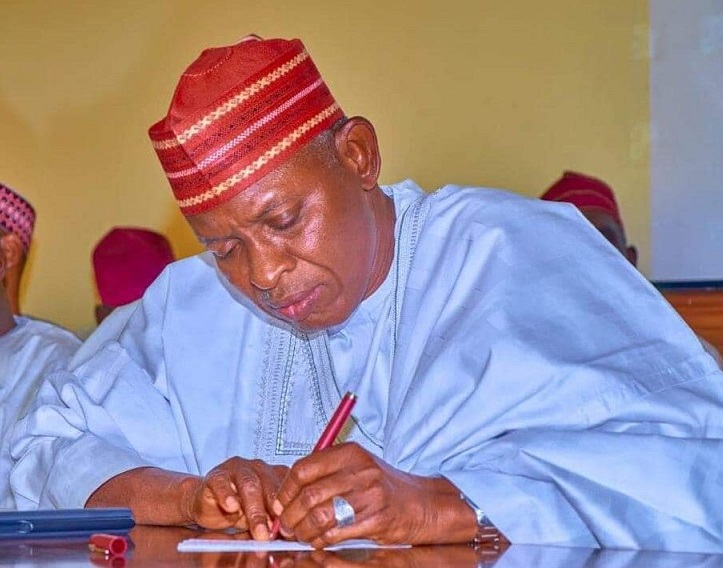
Governor Abba Kabir Yusuf has announced that 200 public schools in Kano State will each receive 250 computers, totalling 50,000 units, under a major digital education initiative supported by the World Bank through the AGILE Project.
The distribution, aimed at bridging the digital divide in education, was announced during the flag-off ceremony for instructional materials distribution held in Kano.
“Our goal is to bridge the digital divide and ensure our students are not left behind in this era of technological advancement,” the governor said.
According to Sunusi Bature Dawakin Tofa, the governor’s spokesperson, the initiative is expected to boost digital literacy among students and enhance the overall quality of education in the state.
“This is a transformational investment in our future. It will improve access to technology and empower thousands of students with the tools they need for academic success,” Bature said in a statement on Monday.
Governor Yusuf reaffirmed his administration’s dedication to promoting inclusive and innovative education through investments in digital tools and resources.

Kano Govt to solarise 200 public schools
By Hadiza Abdulkadir
In a bid to provide stable electricity and improve learning conditions in public schools, Governor Alhaji Abba Kabir Yusuf has announced plans to solarise 200 public schools across Kano State.
The initiative, unveiled during the official flag-off ceremony for the distribution of instructional materials to schools, is part of the World Bank-supported Adolescent Girls Initiative for Learning and Empowerment (AGILE) Project.
Governor Yusuf stated that the installation of solar power systems would ensure uninterrupted electricity supply, thereby creating a conducive environment for learning and digital education.
“This effort is part of our broader commitment to modernise education infrastructure and ensure that our students are learning in environments that support innovation and growth,” the governor said.
His spokesperson, Sunusi Bature Dawakin Tofa, noted in a statement issued Monday that the intervention aims to eliminate power-related challenges that have long hindered the use of technology in public schools.
The solar project is expected to enhance teaching and learning outcomes while supporting other digital initiatives planned by the state government.

FRSC intercepts overloaded vehicle along Potiskum-Gombe route
By Muhammad Abubakar
Operatives of the Federal Road Safety Corps (FRSC), RS12.31 Potiskum Unit Command, on Sunday morning intercepted an overloaded Volkswagen Golf along the Potiskum–Gombe (PKM-GME) highway.
The vehicle, with registration number TRN 59 SB, was stopped during a routine patrol as part of the Corps’ nationwide enforcement operation targeting overloading and other critical traffic offences.
According to the patrol team, the vehicle was found to be carrying passengers and cargo in excess of the permitted limit, a violation that significantly increases the risk of road accidents.
“This action is in line with the Corps’ commitment to reducing road crashes caused by reckless practices such as overloading,” a spokesperson for the unit said.
No injuries were reported during the interception. The vehicle has been impounded, and further investigations are underway.
The FRSC continues to urge motorists to comply with traffic regulations and prioritise safety for all road users.

Security: The Nuhu Ribadu Formula
By Zayyad I. Muhammad
Before the emergence of President Bola Ahmed Tinubu’s administration, Nigeria’s security architecture was grappling with deeply entrenched challenges, particularly in the Northwest and Southeast regions. The situation had deteriorated to alarming levels, with criminal elements and secessionist movements establishing a disturbing level of control in certain areas.
In the Northwest, banditry had evolved from sporadic attacks to the full-scale occupation of territories. Vast stretches of land, especially in states like Kaduna, Zamfara, and Niger, fell under the influence of heavily armed groups. The Abuja-Kaduna highway, which was once a vital economic and commuter route, became a perilous stretch, notorious for frequent kidnappings and ambushes.
The Northwestern security threats extended further, with the Kaduna–Birnin Gwari–Lagos road effectively shut down due to sustained bandit activity. Even commercial life suffered significantly; the Birnin Gwari cattle market, a major hub for livestock trade, was forced to cease operations under the pressure of violence and extortion.
Meanwhile, in the Southeast, the situation was compounded by the secessionist agitation led by the Indigenous People of Biafra (IPOB). Through fear and coercion, IPOB succeeded in enforcing a weekly sit-at-home directive across several states in the region, paralysing economic activities every Monday. Businesses were shuttered, schools closed, and the freedom of movement was severely curtailed, undermining both governance and development efforts.
This was the grim reality that the Tinubu administration inherited. However, at the heart of the renewed fight against insecurity stands a strategic recalibration: what many now refer to as the “Nuhu Ribadu Formula.” As National Security Adviser, Ribadu brought a fresh, intelligence-driven approach to tackling Nigeria’s security woes. With an emphasis on coordination among security agencies, restoration of public confidence, and targeted offensives against criminal enclaves, his methods have begun yielding tangible results.
While challenges persist, especially in remote and hard-to-reach areas, the difference in tone and trajectory is becoming increasingly evident. The Ribadu-led security strategy has not only focused on reclaiming territory but also on addressing the root causes of unrest, be it poverty, weak governance, or community grievances. It is this multidimensional and proactive approach that may well define Nigeria’s path to lasting peace and stability.
Mallam Nuhu Ribadu, the National Security Adviser, has been pivotal in reshaping Nigeria’s national security framework through a clear and strategic vision built on three foundational pillars.
The first is the carrot-and-stick approach, which balances kinetic (military force) and non-kinetic (dialogue, reconciliation, and development) strategies. This dual-pronged approach acknowledges that not all security threats can be addressed solely through force. By combining targeted military operations with community engagement and deradicalisation efforts, the approach aims to neutralise threats while addressing the root causes of violence.
The second strategy is a shift from rhetoric to action, a deliberate move away from endless briefings and political grandstanding towards concrete, measurable outcomes. Under Ribadu’s watch, security interventions are now judged not by promises, but by performance. The focus is on restoring peace, reclaiming lost territories, and enabling displaced persons to return to their communities.
Third is the promotion of synergy and intelligence sharing among security agencies. Previously plagued by inter-agency rivalry and fragmented operations, Nigeria’s security forces are now operating with improved coordination. Through unified command structures and shared intelligence platforms, responses have become faster, more precise, and increasingly proactive.
These strategies have already begun to yield visible results. The recent resurgence of attacks in Plateau and Benue States, as well as isolated Boko Haram assaults on soft targets in Borno and Adamawa, were swiftly countered using the same framework. Rapid deployment of forces, community-based intelligence, and coordinated operations prevented escalation and restored calm.
Still, the road to full recovery is a gradual one. While the machinery of state security has been retooled, the average citizen may not immediately perceive these gains. Part of the challenge lies in the persistence of outdated or unverified reports in some sections of the media, which can paint a distorted picture of the current realities. Nevertheless, those on the ground, especially in previously hard-hit areas, are beginning to sense a shift.
The “Nuhu Ribadu Formula” is proving to be more than just a tactical adjustment; it is an evolving doctrine that prioritises effectiveness, accountability, and collaboration. With sustained implementation and public support, it could well become the blueprint for enduring peace in Nigeria.
Zayyad I. Muhammad writes from Abuja, zaymohd@yahoo.com.

Of shoes, sermons, and stealing saints: A comic tragedy of sacred thievery
By Isah Dahiru
There’s a Hausa proverb that says, “Wanda ya saci akuya, ya saci itacenta”—he who steals a goat has already stolen the rope tied to it. But who would have imagined that the sacred grounds of a mosque, a space where hearts are purified and souls are recharged, could become fertile ground for what I now call “holy heists”?
Last Friday, I attended Jumu’ah prayers like any regular seeker of divine mercy, looking forward to the serenity of the sermon and perhaps a gentle breeze under the neem tree afterwards. You know, that kind of spiritual therapy that reboots your inner battery.
The Imam began passionately, with what I can only describe as a verbal balm for troubled marriages. He waxed poetic about marital life, reminding us brothers that a man’s greatness is not measured by how many goats he owns, but how gently he treats the mother of his children.
He quoted the Prophet (SAW), emphasising kindness, loyalty, and romance—even after ten years of eating her over-salted tuwo. He reminded us that he who denies affection at home may end up seeking counsel from side mirrors—and by side mirrors, I mean side chicks. It was a sermon of gold, and I had already drafted a mental apology letter to my wife (with a footnote asking for fried fish for dinner).
Then came the second khutbah—and brothers and sisters, the tone changed like NEPA light.
What followed was no longer spiritual nourishment—it was a full-blown security bulletin. The Imam, now resembling a mosque-based CNN anchor, solemnly announced the spike in theft within the mosque premises. Shoes, phones, even umbrellas—yes, umbrellas in dry season—had become an endangered species in the hands of holy day hustlers.
I blinked twice. “Wallahi, this must be fiction.”
Apparently not. The Imam cited examples. Men who had arrived barefoot left in polished Clarks. Samsung devices evaporated during sujud. One man reportedly came out of the toilet to find that not only had his shoes vanished, but so had his ablution kettle. “An saci butar alwala!” someone muttered beside me.
My friend Musa Kalim, ever the idea machine, leaned in and whispered, “Wallahi Isah, the mosque should invest in designer shoes with trackers inside. Give them out before prayer. Anyone who deviates from coming to mosque without shoes to going home with a shoe—bing! The alarm goes off. ‘Thou shalt not misstep.’”
Another friend, Engr. After I narrated the ordeal and my frustration to him, Aminu offered another way to tackle the situation. Honestly, I laughed so hard I almost missed the supplication after the prayer had ended. But knowing that Aminu wasn’t joking made me return to my senses. This is the same man who once suggested using goats to deliver medicine in rural villages, and almost got a grant for it from Melinda and Gates Foundation.
I imagined it immediately:
“Mosque Sole Security (MSS): Track Your Blessings from Sole to Soul.”
A startup powered by shame and GPS.
But there’s a deeper sadness here. When the masallaci, the house of Allah, becomes the hunting ground for pickpockets, it signals a spiritual recession. It’s no longer just a pair of stolen shoes—it’s a metaphor for the theft of morals, the robbery of conscience, and the hijacking of trust.
There’s a popular Yoruba saying, “Ti ile ba n bajẹ, a fi ti ile ni nko,” meaning, “When a home begins to decay, it starts from the inside.” And truly, if criminals now comfortably perform ablution before proceeding to commit theft, then we must urgently recalibrate our moral compass.
Let’s consider the ridiculousness: someone prays beside you, says “Ameen” with gusto, maybe even sheds a tear during supplication—and minutes later, he’s making off with your Bata sandals like a post-prayer souvenir. What kind of shame is that?
The Prophet (SAW) warned us of a time when people would pray like angels and live like devils. Perhaps this is what he meant.
Maybe the solution isn’t just CCTV or Musa’s high-tech slippers (although I’d donate to that GoFundMe). Perhaps we need something more profound—a revival of taqwa, of God-consciousness, in our lives. Because let’s be honest, even if we padlock the ablution area, thieves without fear of God will find a way to sin in style.
Perhaps we need to return to the basics—teaching our children that a stolen shoe, even if it fits, carries the burden of its last prayer. Reminding our youth that every crime committed under the minaret echoes louder in the heavens than those committed in the market square. And as elders, we must not be afraid to call out wrongdoing—even if the culprit looks like a saint in a turban.
Until then, dear reader, as you go for prayers, carry your faith boldly—but your shoes discreetly. I suggest you start wearing bathroom slippers, the type no thief would proudly wear. And if, by misfortune, you find yourself shoeless at the end of the prayer, don’t wail. Just smile and say: “May the thief walk straight into the path of repentance—and a pothole.”
And should you ever catch one red-handed, don’t beat him. Sit him down, offer him zobo and a hard chair, and give him a khutbah so fiery, even his ancestors would consider refunding your shoes.
Isah Dahiru is a pharmacist and can be reached via easerdahiru@gmail.com.

NCS wraps up training workshop on strategic communication, new media
By Sabiu Abdullahi
The Nigeria Customs Service (NCS) has successfully completed a three-day workshop focused on equipping its Public Relations personnel with essential skills in digital communication and media strategy.
The training, which held from May 7 to 9, 2025, at the NCS Headquarters in Abuja, was organised in partnership with Youth Digest.
The hybrid event brought together Public Relations Officers from various Commands, as well as reporters, editors, and staff from the PR Unit.
The sessions covered several key areas including digital engagement, strategic communication, content creation, and media innovation.
Participants also explored topics such as editorial workflows, inclusive language, house style development, visual storytelling, design principles, and media law.
In his keynote address, delivered by Assistant Comptroller-General Isah Umar, the Comptroller-General of Customs, Adewale Adeniyi, underscored the importance of effective communication in achieving the Service’s modernisation goals and improving public engagement.
“Today marks a key step in the development of officers charged with promoting the Nigeria Customs Service,” ACG Umar stated. “Capacity building is essential. I urge our younger officers to learn from the expertise of the professionals gathered here.”
National Public Relations Officer and Assistant Comptroller Abdullahi Maiwada, who actively participated in the training, advised attendees to remain committed to learning and self-improvement.
“This training is vital. Knowledge is endless, and we must seize every opportunity to grow. What we’ve learned here can greatly enhance our professional effectiveness,” he said.
“In the past three days, we’ve shared valuable insights. Let’s apply these lessons to improve both ourselves and the Service.”
The workshop ended with a certificate ceremony acknowledging the participants’ dedication to enhancing their professional skills.

Pope Leo XIV calls for peace in Ukraine and Gaza in his first Sunday message
By Hadiza Abdulkadir
In his first Sunday message as Pope, Leo XIV made a powerful plea for peace, urging an immediate end to the conflicts in Ukraine and Gaza.
Addressing the faithful gathered in St. Peter’s Square, the pontiff called for “an authentic and lasting peace” in Ukraine, emphasising the devastating human cost of the ongoing war.
He further implored for a ceasefire in Gaza, demanding the release of all Israeli hostages held captive.
“The world yearns for peace,” Pope Leo XIV stated, his voice resonating across the square. “We must strive for dialogue and understanding, putting an end to the violence that inflicts immeasurable suffering. In Ukraine, let the weapons fall silent, and in Gaza, let the hostages be released.”
His message underscored the Vatican’s continued commitment to promoting peace and reconciliation in conflict-plagued regions.
The Pope’s appeal resonated with many, who hope his words may inspire concrete action toward achieving a lasting resolution.

Patience Jonathan rules out return to Aso Rock, pledges support for Remi Tinubu
By Maryam Ahmad
Former First Lady Dame Patience Jonathan has ruled out any intention of returning to Aso Rock Villa. She affirms her support for the incumbent First Lady, Senator Oluremi Tinubu, ahead of the 2027 general elections.
Speaking at a public event over the weekend, Dame Patience expressed her commitment to working closely with Senator Tinubu to promote unity and women’s political participation.
Mrs Jonathan noted that her focus is on national development and supporting the current administration’s efforts, rather than seeking a return to political power.
“I have no interest in returning to Aso Rock,” she said. “I am fully behind our First Lady, Senator Remi Tinubu, and I will campaign alongside her come 2027.”
Analysts see this move as a significant show of solidarity between two of Nigeria’s most prominent political women and a potential boost for the ruling party’s female outreach ahead of the polls.
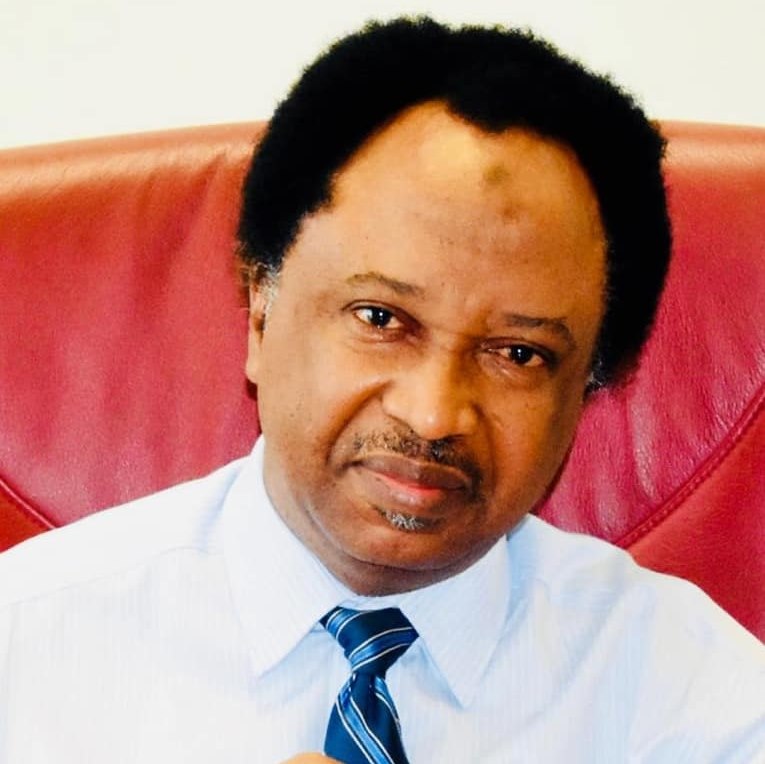
Military accused of misusing defence funds for shopping malls, hotels – Shehu Sani
By Abdullahi Mukhtar Algasgaini
Former Senator Shehu Sani has criticized Nigeria’s military for allegedly diverting defence funds into non-essential projects like shopping malls, hotels, and universities instead of combat operations.
Speaking on Channels Television’s Politics Today Sani argued that such misuse weakens Nigeria’s fight against terrorism and banditry.
He stressed that defence budgets should strictly support troops on the battlefield, not commercial ventures.
“Money meant for the military should not build plazas or hotels for military associations and wives,” Sani said.
“It should go to those risking their lives against terrorists.”
He expressed concern over security agencies investing in markets and universities while frontline soldiers face shortages.
Sani urged the government to prioritize battlefield needs over luxury projects, warning that misallocated funds undermine national security.
“We’ve talked enough about insecurity—now we need action,” he said. “You can’t defeat terrorism overnight, but misusing resources makes it harder.”