


Victor Osimhen named Galatasaray’s Best Player of the Year
By Hassan Muhammad
Nigerian striker Victor Osimhen has been crowned Galatasaray’s Best Player of the Year after a sensational debut season in Turkey.
On loan from Napoli, Osimhen scored 35 goals in 39 matches, helping Galatasaray secure both the Süper Lig title and the Turkish Cup. His standout performances included a brace in the cup final and a decisive goal in the league’s final matchday.
Club legend Tanju Çolak praised the forward as “the best player of the season,” while Osimhen himself expressed gratitude for the honor, calling Galatasaray “an amazing club.”
His future remains uncertain, but fans are hopeful he will extend his stay in Istanbul.

Security, youth empowerment, and innovation take centre stage in my first two years in office – Tinubu
By Maryam Ahmad
President Bola Tinubu has outlined significant gains in national security, youth empowerment, and innovation as his administration clocks two years in office, asserting that the groundwork is being laid for a more secure and prosperous Nigeria.
In a comprehensive national address, President Tinubu said his administration had improved collaboration among security agencies and made substantial gains in previously volatile regions. “In some areas of the northwest, hitherto under the control of bandits, our gallant armed forces have restored order,” he said.
The President emphasised the role of young Nigerians in national development, citing innovative programmes at the National Agency for Science and Engineering Infrastructure (NASENI), such as electric vehicle assembly, drone engineering training for women, and local manufacturing of rapid diagnostic kits.
“These initiatives are creating jobs, restoring dignity to work, and opening up a future of possibilities for our youth,” Tinubu stated.
Under the Renewed Hope Agenda, the federal government has also embarked on large-scale infrastructure projects, including major highway reconstructions, rural electrification through solar initiatives, and enhanced support for farmers to boost food security.
In a nod to cultural diplomacy, the President announced plans for the Motherland Festival—a global event that will showcase Nigeria’s cultural heritage, creativity, and tourism potential.
Tinubu also acknowledged the contributions of the Nigerian diaspora and introduced new policies, including a diaspora bond and non-resident BVN, to encourage greater engagement.
“Our direction is clear, and so is our resolve,” the President said in closing. “The real impact of our governance objectives is beginning to take hold. The future is bright.”

Police parade key suspects in gruesome killing of Rano DPO
By Uzair Adam
The Kano State Police Command has arrested 41 suspects, including key perpetrators, in connection with the gruesome killing of the Divisional Police Officer (DPO) of Rano Division, CSP Baba Ali.
This was revealed in a statement issued on Thursday by the Command’s Public Relations Officer, SP Abdullahi Haruna Kiyawa, on behalf of the Commissioner of Police, CP Ibrahim Adamu Bakori.
The Command condemned the killing, describing it as a senseless and shocking act that represents a direct attack on law enforcement and the safety of society.
It noted that the tragic loss has been met with widespread condemnation across the state.Following swift investigations, the police apprehended 41 suspects, including those identified as the principal actors.
The Command pledged to intensify efforts to ensure that all those responsible are brought to justice without exception.
CP Bakori assured residents of Kano that the police remain fully committed to safeguarding lives and property.
He urged the public to remain calm and continue supporting the police with useful information to aid the investigation.
The Command also paid tribute to CSP Baba Ali for his courage and sacrifice, reaffirming its dedication to honoring the fallen officer’s memory by ensuring justice is served.
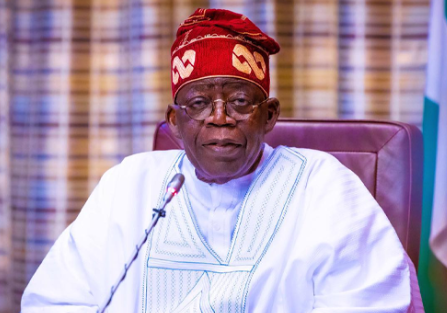
Tinubu: Reforms are working, Nigeria is on path to stability and growth
By Hadiza Abdulkadir
President Bola Ahmed Tinubu marked the second anniversary of his administration on Wednesday with an optimistic national address highlighting the government’s achievements and reaffirming commitment to economic reform, national security, and human capital development.
Speaking from the Aso Rock Presidential Villa, President Tinubu declared that his administration had made “undeniable progress” despite the sacrifices demanded of citizens, especially following the removal of fuel subsidies and the unification of foreign exchange rates.
“We are halfway through the journey that began 24 months ago. Today, I proudly affirm that our economic reforms are working,” he said, citing improvements such as easing inflation, increased foreign reserves, and higher state revenues.
According to the President, the federal government recorded over ₦6 trillion in revenue in Q1 2025 and successfully reduced the fiscal deficit from 5.4% of GDP in 2023 to 3.0% in 2024. Additionally, the country’s net external reserves rose sharply to over $23 billion by the end of 2024, a fivefold increase from the previous year.
In the energy sector, Tinubu noted a 400% increase in oil rig activity since 2021 and over $8 billion in new investments. “We have stabilised our economy and are now better positioned for growth and global shocks,” he added.
The President also highlighted reforms in taxation, infrastructure development, and the health sector. He announced the expansion of primary healthcare centres, the establishment of new cancer treatment centres, and a tax policy overhaul aimed at supporting low-income households and small businesses.
“Together, we are creating a system where prosperity is shared, and no one is left behind,” he said.

Tinubu celebrates economic resilience, sets sights on inclusive growth
By Muhammad Sulaiman
President Bola Ahmed Tinubu has reiterated his administration’s commitment to inclusive economic growth, declaring that the country’s economic resilience is beginning to yield tangible benefits for citizens across sectors.
Addressing the nation on the second anniversary of his government, President Tinubu described 2025 as a year of fiscal turnaround and recovery, driven by bold reforms under the Renewed Hope Agenda.
“Despite the bump in the cost of living, we have made undeniable progress,” he stated, noting improvements in inflation, food prices, and investor confidence.
A key highlight of the President’s remarks was the government’s aggressive tax reform agenda, which pushed the tax-to-GDP ratio from 10% to over 13.5% within a year. Tinubu explained that this success was made possible by simplifying tax policies and offering relief for low-income households and small businesses.
“We are eliminating the burden of multiple taxation and introducing a fairer tax system. Essential services like food, healthcare, and education will attract 0% VAT,” he announced.
President Tinubu also underscored the importance of sustainable national finances, stating that wasteful and opaque tax waivers had been abolished in favour of targeted incentives supporting high-impact sectors such as manufacturing, agriculture, and technology.
The administration is establishing an independent Tax Ombudsman to ensure accountability. The President says this move will protect small businesses and vulnerable taxpayers.
“We are creating an economy where investment is welcome, businesses can thrive, and every Nigerian can benefit from shared prosperity,” he added.
The President noted that subnational governments had also reaped the benefits of the reforms, with an increase of over ₦6 trillion in state revenues in 2024. This has enabled them to meet debt obligations and invest more in critical infrastructure.
“Our reforms are not just fiscal adjustments. They are about restoring confidence, strengthening institutions, and building a foundation for future generations,” Tinubu concluded.

Reforming the Almajiri system: A path to inclusive education
By Ibrahim Inusa
Over the years, the Almajiri system of education has served as a traditional form of Islamic education in northern Nigeria, where young boys, often aged between 7 and 14, are sent far from home to memorise the Qur’an by their parents under the supervision of a Malam (teacher). While the system’s intent was to instil religious knowledge, encourage direct engagement in Islamic activities, and provide practical moral learning, it has largely become disconnected from its original purpose.
At present, the system has turned millions of pupils into nuisances, leaving most of them without literacy or numeracy skills. Pupils divide their day between reading and wandering the streets to beg for food and money, intended to cover their living and schooling costs. This model places the pupils in highly vulnerable situations, exposing them to all forms of exploitation and manipulation, and even rendering them a threat to national security.
The Almajiri system of education has been a cornerstone of learning for many Nigerian children. However, its implementation has raised concerns about child welfare, education, and human rights. As Nigeria strives for progress, it is essential to address the challenges within the Almajiri system. One major issue is the lack of regulation and oversight, which leaves children vulnerable to all forms of abuse.
Another significant challenge is the limited access to quality education. Traditional Almajiri schools focus solely on Islamic studies, neglecting secular subjects such as mathematics, science, and English. This restricted curriculum can hinder students’ ability to compete in the modern world. By incorporating modern subjects, Almajiri schools can offer students a more comprehensive education.
The Almajiri system also raises concerns about radicalisation. Some Almajiri schools may promote extremist ideologies, which can have far-reaching consequences. To mitigate this risk, it is essential to encourage critical thinking, tolerance, and inclusivity within Almajiri schools.
To reform the Almajiri system, a decisive approach is necessary. Government agencies, NGOs, and communities must collaborate to provide support for Almajiri students, including access to healthcare, nutrition, and protection from abuse. Almajiri schools should be encouraged to adopt a modern curriculum and teaching methods.
Furthermore, teachers and caregivers in Almajiri schools require training and support to provide a quality education. Community engagement is also important, and parents, guardians, and community leaders involved in decision-making processes are encouraged to prioritise children’s welfare and education.
The current Nigerian government can play a crucial role in reforming the Almajiri system through policy initiatives, such as the Almajiri Education Programme. However, more needs to be done to ensure effective implementation and sustainability. Long-term commitment to reform requires a sustained effort to improve the lives of Nigerian children. By working together, we can create a more inclusive, equitable, and prosperous society for all.
In conclusion, monitoring and evaluation mechanisms are essential for tracking progress, identifying challenges, and making adjustments to reform initiatives. Reforming the Almajiri system is a complex task that requires collaboration, commitment, and creativity. By working together, we can create a more just and equitable education system that benefits all Nigerian children.
Ibrahim Inusa writes from the Department of Mass Communication at Abubakar Tatari Ali Polytechnic Bauchi and can be reached via Ibrahiminusa216@gmail.com.

Kannywood Movie Review: Dr. Halima
- Company: Mai Kwai Movies
- Director: Abubakar A.S Mai Kwai
- Producer: Abdul Dan Small
- Language: Hausa
- Cast: Ali Nuhu, Aminu Sharif (Momo), Maryam Ceeter, Baballe Hayatu, Hafsat Idris, etc.
- Year: 2018
The question of whether married women should be allowed to work remains contentious in Hausa society. Modern people support the idea, while traditionalists continue to frown upon it. As the debate continues, a Kannywood production company, Mai Kwai Movies, weighs in with their film Dr. Halima.
The story revolves around the eponymous character (played by Maryam Ceeter), a PhD holder whose husband, Yusuf (Ali Nuhu), allows her to work at a construction company. Dr. Halima takes pride in her appearance and enjoys being complimented on her looks, but her husband is a rigid alpha male who dismisses that as frivolous and never cares to praise her. Instead, she receives attention and admiration from her male colleagues, whom she openly welcomes despite being married. As a modern woman, Dr. Halima doesn’t see anything wrong with dressing fashionably and being appreciated by others.
However, jealousy consumes Halima’s husband when he realises she has become the centre of attention at her workplace. He reacts by neglecting her and sleeping separately. Despite her attempts to address the issue, he turns a deaf ear, leading to growing tension and a deterioration in their marriage. Meanwhile, Halima’s colleague, Dags (Aminu Shareef Momoh), who has long harboured feelings for her, gets an opportunity to intrude into her life. He eventually succeeds in his pursuit, taking advantage of her vulnerability.
Thanks to its powerful story, the film generally captivates despite having a limited narrative hook. It succeeds in delivering its central message: that the problem with married women working is mostly not from the work itself, but from the behaviour of the women involved. When a married woman respects herself, she repels temptation, and when she doesn’t, the opposite occurs. We see how Dr. Halima attracts indecent colleagues with her scanty dress, but repels them later when she begins to dress modestly.
The film also underlines the need for effective communication in marriage and the dangers attached to neglectful relationships. We see how cold communication leads Yusuf and Halima to neglect each other and sleep separately for over three months. This emotional distance is what plays a key role in Halima’s decision to commit adultery with her colleague, as shown in the movie.
Additionally, the film introduces a moderate Fatwa that a marriage does not necessarily have to end if a wife has committed adultery. What matters most is sincere repentance and seeking Allah’s forgiveness. Ultimately, Dr. Halima repents without revealing her transgression to her husband, and they continue to live happily ever after.
On the other hand, the film falls slightly short in its technical aspects. Both sound design and editing are poorly handled. The continuity and costume use are also noticeably flawed. For instance, in one sequence, a messenger is seen meeting Dr. Halima on the company premises. However, moments later, the same messenger appears wearing a different outfit when she enters the office.
Regarding the actors, Maryam Ceeter, with her mature presence, is perfectly cast as Dr. Halima. She brings emotional depth, portraying both the confidence and vulnerability of her character. Ali Nuhu excels as Halima’s rigid husband. He gives a realistic performance, with his love for Halima subtly evident even as he distances himself from her. Aminu Momoh fully inhabits his dubious character, as he often does, using his charm and great comic timing.
Other supporting actors, including Baballe Hayatu and Hafsat Idris, are equally well-cast and perform commendably.
Overall, Dr. Halima is a compelling family drama that does full justice to its serious subject matter. While it may not be suitable for children, it is a must-watch for adult audiences. Rating: 3.5/5
Habibu Maaruf Abdu wrote from Kano via habibumaaruf11@gmail.com.

Ngũgĩ wa Thiong’o, renowned Kenyan literary author, passes away at 87
Ngũgĩ wa Thiong’o, one of Africa’s most influential literary figures, has died at the age of 87.
His daughter, Wanjiku wa Ngugi, confirmed the news in a Facebook post on Wednesday, May 28, 2025.
“It is with a heavy heart that we announce the passing of our dad, Ngũgĩ wa Thiong’o this Wednesday morning, 28th May 2025. He lived a full life, and fought a good fight. As was his last wish, let’s celebrate his life and work. Rîa ratha na rîa thŭa. Tŭrî aira!” she wrote.
She also noted that the family’s spokesperson, Nducu wa Ngugi, would release more information about the celebration of his life in due course.
Ngũgĩ, who was born on January 5, 1938, in colonial Kenya, made his mark on global literature through novels, essays, and plays that dealt with colonial rule, independence struggles, social justice, and African identity.
He gained international acclaim not only for his writing but also for his unwavering support of African languages and cultural autonomy.
His debut novel, Weep Not, Child (1964), was the first to be published in English by a Kenyan writer. He went on to write The River Between (1965), which explored the tensions between tradition and change; A Grain of Wheat (1967), a narrative set against the backdrop of Kenya’s independence; Petals of Blood (1977), which addressed post-independence corruption; and Devil on the Cross (1980), originally written in Kikuyu as a political statement.
Ngũgĩ was arrested and held without trial in 1977 due to his outspoken criticism of government policies.
Following his release, he went into exile and continued his work from abroad.
He later became a respected academic, teaching at leading institutions such as Yale University and the University of California, Irvine, where he served as Professor of English and Comparative Literature.
Throughout his lifetime, Ngũgĩ wa Thiong’o remained a leading voice in the call to decolonise African literature and promote the use of indigenous languages in literature and education.

TikTok influencer Murja Kunya jailed for naira abuse, becomes EFCC, CBN ambassador
By Abdullahi Mukhtar Algasgaini
Popular TikToker Murja Ibrahim Kunya has been sentenced to six months in prison for abusing the Naira, following her conviction by the Federal High Court in Kano.
Justice Simone Amobeda handed down the verdict after Kunya pleaded guilty to spraying and stepping on Naira notes during a hotel celebration in December 2023, violating the Central Bank of Nigeria (CBN) Act.
Initially arrested in January 2025, Kunya fled after being granted bail but was later re-arrested in March. The court gave her an option to pay a ₦50,000 fine instead of imprisonment.
In a unique twist, Justice Amobeda also appointed Kunya as an EFCC and CBN ambassador, tasking her with using her social media influence to campaign against Naira abuse.
She must now educate her followers on the legal consequences of currency misuse.
The Economic and Financial Crimes Commission (EFCC) hailed the judgment as a deterrent against Naira abuse while promoting public awareness.

Technical college students to earn N45,000 monthly — FG
By Anwar Usman
The Federal Government has announced a monthly stipend of N45,000 for students in technical colleges across states in Nigeria.
This move was to be part of a plan to bring new life to Technical and Vocational Education and Training.
Idris Bugaje, the Executive Secretary of the National Board for Technical Education, revealed this in an interview in Abuja while speaking on the second year of President Bola Tinubu’s administration on Wednesday.
He said the plan was part of a bigger effort to improve the TVET system and make it more appealing than regular university education.
Bugaje explained that the main ai was to grow the TVET sector fast and get more students to enrol in technical colleges.
He added that the government will not only pay the monthly stipend but will also cater for other costs.
Bugaje said, “The government will pay school fees, give money to industry-based supervisors (called master class instructors), and cover the cost of skill certification.
“With this, young people will find it more attractive to come to a technical college, obtain the relevant skills and qualifications, get jobs locally and even beyond the borders of Nigeria.
“This way, the whole sector is being repositioned. We are at the moment facing what you may call either a resurrection or a rebirth of TVET.”
He noted that TVET used to be well-supported in Nigeria in the past.He further revealed that Tinubu’s government has set aside N120 billion to support students under this new TVET plan.
“This money will be given through the Nigerian Education Loan Fund (NELFUND).He further clarified that “The N45,000 is not a loan, but a grant. Students who enjoy this are not going to pay back. We want to encourage more people to enrol in technical education”.
To keep the programme running, Bugaje said the Minister of Education was working on a bill.The bill aims to create a National Skills Fund under the new Nigerian Skills Qualification Framework.