


Insecurity: Sokoto village attack leaves 20 dead
By Abdullahi Mukhtar Algasgaini
Over 20 people were killed in a terrorist attack on Kwalajiya Village, Tangaza Local Government Area, Sokoto State, in the early hours of Tuesday, leaving the community devastated.
Eyewitnesses described heavily armed assailants storming the village, firing indiscriminately and setting homes ablaze. Many victims, including women and children, are feared dead, with several residents still unaccounted for following the violence.
The village head reportedly fled to Sokoto city for safety, narrowly escaping the attack. His current condition is unknown.
Sokoto State Police Command spokesman, Ahmed Rufae, confirmed the incident but cited ongoing investigations as the reason for withholding further details.
While the motive remains officially unconfirmed, unverified local sources suggest the attack may be linked to the village head’s refusal to permit intermarriage with individuals associated with the Lakurawa terrorist group.
The assault has heightened existing concerns about persistent insecurity in Sokoto State and the expanding influence of armed groups in rural areas.
Residents are urgently appealing to state and federal authorities to enhance protection for vulnerable communities and ensure the perpetrators face justice.
Kwalajiya now mourns its dead amidst profound grief and uncertainty.

Presidency slams Buhari’s allies defecting to opposition coalition
By Abdullahi Mukhtar Algasgaini
The Nigerian Presidency has launched a scathing attack on former key allies of ex-President Muhammadu Buhari who have joined a coalition of opposition parties aiming to challenge President Bola Tinubu in the 2027 elections.
Presidential spokesperson Bayo Onanuga, in a statement posted on his Facebook page, accused the defectors of lacking principles and being motivated solely by bitterness after losing political relevance within the ruling All Progressives Congress (APC).
Onanuga specifically named and criticized several prominent figures like Rotimi Amaechi (Former Minister of Transportation) whom he described as having “lost everything politically” after failing to secure the APC presidential ticket in 2022.
Onanuga stated that Amaechi had effectively left the APC long ago.
Abubakar Malami SAN (Former Attorney-General and Minister of Justice) was then characterized by Onanuga as a “bitter loser” since President Tinubu took office, particularly after losing the Kebbi State governorship ticket.
Onanuga claimed Malami’s hostility towards the APC was well-known.
Others he slammed include Hadi Sirika (Former Minister of Aviation), Rauf Aregbesola (Former Minister of Interior and ex-Governor of Osun State).
Onanuga also mentioned Kashim Imam and Chief John Odigie Oyegun as longtime APC figures nursing grudges after losing out on the vice-presidential ticket in 2022.
He described Oyegun, a former APC National Chairman, as having lost influence within the party.In his statement, Onanuga warned Nigerians to be wary of the opposition coalition, labeling its members “bitter” individuals united only by their resentment towards President Tinubu.
He dismissed the coalition as “unprincipled” and “without ideology.””Their eyes are closed by the pursuit of their ambition, the hunger for power is glaring, not for the benefit of Nigerians, but for their own benefit,” Onanuga stated.
He predicted the coalition would inevitably collapse due to internal clashes and conflicting political ambitions among its members.
“Their mutual antagonism and political ambitions will make them fight each other,” Onanuga asserted.

The fathers we forgot to thank
By Lawal Dahiru Mamman
A senior colleague once shared a thought that has stayed with me for years. While discussing the burdens of parenthood, he described how fathers would go to great lengths to provide for their children, often at the expense of their own comfort.
He explained that for every penny earned, the first question in a father’s mind is, “What do the children need?” That struck a chord. With each passing day, as I grow older, I find myself reflecting on how my father silently sacrificed to ensure our needs were met.
These memories linger like a background hum in my consciousness. What becomes clearer with time is that we often miss what is right in front of us. We benefit from the comfort, the food, the shelter, the school fees, and the security,without giving much thought to the man behind it all.
It is the classic case of not seeing the elephant in the room or, as the saying goes, not seeing the wood for the trees. It is no surprise, then, that some people have questioned why there seem to be more songs, poems, and films celebrating mothers than those appreciating fathers.
While we may lack precise statistics to prove this imbalance, popular culture seems to confirm the observation. From the nursery rhyme “Who sat and watched my infant head…” titled “My Mother,” many of us were introduced to the emotional pull of maternal devotion.
Over time, several explanations have emerged for this artistic focus. Mothers are often perceived as more emotionally accessible. The mother-child bond, portrayed as warm, nurturing, and unconditional, lends itself easily to emotional expression in music, film, and poetry.
Cultural symbolism also plays a role. Across different societies, mothers are often regarded as the emotional anchors of the family. This perception makes them natural muses for stories about love, sacrifice, and resilience.
Moreover, many creatives draw from personal experience, with some having been raised primarily by their mothers. And then there is the reality of audience connection — people often relate more universally to stories about mothers.
All of that said, as we commemorate Father’s Day, it is crucial — now more than ever — to reflect on and appreciate the often-unnoticed contributions that fathers make. While mothers are frequently, and rightly, celebrated for their warmth and care, many fathers quietly go about their roles with little attention or applause.
Providing for the family remains one of the most visible expressions of a father’s love. Fathers work tirelessly to ensure there is food on the table, school fees are paid, and their children live comfortably. As children, we may take these things for granted.
It is only with maturity that we begin to realise the depth of their commitment. Fathers often do all this without asking for recognition. Their sacrifices are quiet and enduring — a form of love that speaks less and does more.
This year’s Father’s Day, like those before it, may have come and gone without noise or public fanfare. But even in the silence, we must recognise the strength of men who daily put their families ahead of themselves. They go without, just so we never lack.
They deny themselves small luxuries so their children can feel seen, equal, and included. That is not just love — it is selflessness in its purest form. Many of us, growing up, may have perceived our fathers as distant or overly strict.
But now, we realise that those long hours spent away from home, the constant budgeting, the unspoken worries — they were all signs of a love that often hid behind responsibility. Fathers may not always wear their emotions on their sleeves, but their love is steadfast and deep.
Times have changed, and we now see more women contributing financially to their homes, a development that deserves celebration. Still, it is important not to diminish the sacrifices and emotional labour of fathers. This is not a contest about who does more.
Instead, it is a moment to reflect on all that fathers do — without complaint, without applause, and often without being asked. If there is such a thing as an unsung hero, the average father fits that description. They show up.
They stay. They build. And they keep going. So, to every father, stepfather, guardian, and father figure — thank you. Thank you for your sacrifices. Thank you for the quiet strength you bring into our lives.
Thank you for the roads you walk, so that we can dream. You are the solid foundations upon which we rise. May your love, sacrifice, and strength never go unnoticed again.
Lawal Dahiru Mamman writes from Abuja and can be reached via: dahirulawal90@gmail.com.

Liverpool forward Diogo Jota, 28, dies in autocrash
By Sabiu Abdullahi
Liverpool and Portugal international, Diogo Jota, has passed away at the age of 28 following a car crash in Spain.
The accident occurred on the A-52 motorway at kilometre 65, near Palacios de Sanabria, in the Zamora province.
Spanish sports outlet MARCA confirmed the incident on Thursday, stating that the footballer died at the scene.
“Liverpool footballer Diogo Jota dies in a traffic accident in the province of Zamora,” the publication announced in a brief statement.
Jota, who was born in 1996, played a vital role at Liverpool FC and was a key member of the Portuguese national team.
His death has left the global football community in mourning.
Well known for his sharp attacking instincts, determination, and adaptability, Jota was widely respected on and off the pitch.
His contributions helped Liverpool secure major victories, and he remained a consistent performer for Portugal.
As of the time of this report, no additional details have been made available regarding the cause of the accident or funeral arrangements.

Kano State’s Digital Industrial Park reopens after looting incident
By Anas Abbas
The Minister of Communication, Innovation and Digital Economy, Bosun Tijani, has officially reopened the Digital Industrial Park in Kano State, just 11 months after it was looted during a nationwide protest on August 1, 2024.
The park was initially set to be commissioned a week before the attack.
During the reopening ceremony on Wednesday, Tijani expressed his satisfaction with the park’s revival, stating, “Instead of discouraging us, last year’s unfortunate event motivated us to complete this project in less than a year. I am proud to announce that it is even better than it was before the looting.”
Tijani urged the local community to safeguard the center to ensure that it serves its intended purpose for the benefit of the people in the northwest region.
Dr. Aminu Maida, Executive Vice Chairman of the Nigeria Communications Commission (NCC), emphasized that the park aligns with the NCC’s vision to foster innovation and digital entrepreneurship within the ICT sector.
He highlighted the importance of supporting research and development by transforming innovative ideas into market-ready solutions.
“The Digital Industrial Park is equipped with state-of-the-art computers, advanced networking systems, collaborative workspaces, and hands-on training facilities designed to nurture the next generation of digital innovators,” Maida explained.
He added that skilled technical and managerial personnel would oversee the park’s operations, collaborating with students involved in industrial training and skills development programs.
“Our objective is to create a vibrant ecosystem where cutting-edge ICT infrastructure supports the Federal Government’s initiatives to make digital services accessible and inclusive throughout Nigeria,” he noted.
The park features reliable broadband connectivity and a stable power supply, with similar facilities also established in Ogun, Borno, and Enugu States.
Kano State Governor Abba Kabir Yusuf, represented by his Deputy Aminu Abdussalam, expressed gratitude to the NCC for the park. He described it as a symbol of innovation, resilience, and collective ambition.
The Governor assured attendees that the state would prioritize the security of the facility and revealed plans for the creation of the Kano State Information and Communication Technology Development Agency (KASITDA) to further institutionalize ICT initiatives in the region.

Stories we don’t translate become stories we lose
By Habib Sani Galadima
In the 1960s, South Korea was poor, dependent on American aid, and still struggling with the scars of war. Then President Park Chung-hee changed the script. His government blocked most consumer imports and poured resources into industries that could export. Credit, subsidies, policy direction; all of it was aimed outward. By 1969, exports were growing at 35.3 percent each year. In the 1970s, they kept climbing at over 25 percent annually. Over two decades, South Korea’s economy grew by nearly 10 percent a year.
The turning point was clear. Instead of surviving on what came in, they built power by focusing on what went out. This same logic applies to language, especially to the future of Hausa.
For decades, translation into Hausa served as a cultural intake valve; bringing foreign ideas, religious teachings, policy language, and literary forms within reach of local audiences. This inward-facing strategy was institutionalized in 1933, when Rupert East and the Translation Bureau (later known as Gaskiya Corporation) launched a historic literature contest. The goal was practical: Western education had arrived in Northern Nigeria, schools were filling up, but there were no Hausa books to read.
That contest birthed a canon. It gave us Ruwan Bagaja by Abubakar Imam, Gandoki by Muhammadu Bello Kagara, Shaihu Umar by Abubakar Tafawa Balewa, Idon Matambayi by Muhammadu Gwarzo, and Jiki Magayi by John Tafida Umaru and Rupert East. These were not just books; they were tools for reading, models for fiction, and blueprints for cultural imagination.
Yet today, the imbalance is unmistakable. Nearly all cultural translation still flows inward, despite the fact that Hausa literature now spans generations, genres, and thousands of titles. We are no longer short on reading material. What we lack is export.
As a result, most outsiders now know Hausa culture through social media behavior, not through its stories. The literary gaze of the mid-to-late 20th century has faded. In its place is a shallow feed, not a studied archive. Our cultural signals are reduced to online patterns. Our worldview is flattened by algorithms.
The hunger for culturally grounded stories is not the problem. The gap lies in output direction. Hausa literature has grown in abundance from contemporary novels (known as Adabin Kasuwar Kano), oral chronicles, audio dramas, and digital fiction communities. But most of this intellectual output remains sealed within Hausa, or reduced to summaries when it crosses into English. This isn’t just a publishing shortfall, it is a missed tool of cultural diplomacy.
A language spoken by tens of millions across West Africa, rich in rhythm and moral nuance, should be shaping global discourse through its stories. The same way Korea exported Samsung and cinema to build national identity, Hausa can export ‘Magana Jari Ce’ or ‘So Aljannar Duniya’ , not just as books, but as blueprints of thought, ethical scaffolding, and communal logic.
But cultural export needs architecture. It means funding skilled translation from Hausa into global languages. It means backing writers who carry both the language and the ambition. It means understanding that prestige is not inherited through English, but built by those willing to make Hausa visible to the world. Until then, we keep importing ideas we already understand in a language that is not our own.
A people who do not share their worldview will one day find it narrated by outsiders. That is the quiet danger we face. Hausa is not vanishing, but it is being compressed. Our literature, our metaphors, our moral reasoning; all remain alive among us, but they rarely cross borders in our own voice. Others interpret us through news cycles and trending hashtags, not through the stories we wrote ourselves.

Kashifu Inuwa Abdullahi: The national asset powering Nigeria’s digital dream
By Umar Farouk
In a time when Nigeria faces complex challenges in its quest for economic growth, digital inclusion, and youth empowerment, one man has quietly and steadily emerged as a beacon of visionary leadership: Kashifu Inuwa Abdullahi, the Director-General of the National Information Technology Development Agency (NITDA). Appointed in August 2019, he has not only repositioned the agency but also redefined what leadership in the public sector should look like: effective, transparent, youth-focused, and transformative.
As Nigeria strives toward a diversified economy powered by innovation and technology, Kashifu Inuwa Abdullahi has been the chief architect, laying a strong digital foundation that could sustain the country for decades to come. His work has turned NITDA into a symbol of hope, especially for Nigeria’s millions of tech-savvy, ambitious youths who are eager to shape their future in the global digital economy.
Before Kashif took the reins, NITDA was largely known for its regulatory role. However, under his stewardship, the agency has evolved into a full-blown enabler of digital transformation and economic development. One of his most remarkable achievements is the Strategic Roadmap and Action Plan (SRAP 2021–2024), a bold vision designed to guide Nigeria’s digital aspirations across seven critical pillars, including policy, regulation, digital literacy, innovation, and stakeholder engagement.
As of 2023, over 64% of the goals outlined in the SRAP have been achieved. These include improved IT project clearance (which saved the government over N300 billion), robust cybersecurity policies, and the aggressive push toward digital literacy and inclusivity. By aligning NITDA’s operations with national priorities, such as the National Digital Economy Policy and Strategy (NDEPS), Kashifu has ensured that digital development is no longer a side project; it is now a central engine of governance and growth.
Perhaps one of the most commendable areas where Kashifu Inuwa Abdullahi has excelled is youth empowerment. Nigeria, with over 70% of its population under the age of 30, faces both a challenge and an opportunity. Kashifu saw the potential and acted. He launched multiple initiatives aimed at equipping millions of young Nigerians with the skills, tools, and platforms necessary for success.
Through NITDA’s various capacity-building programs, more than 3 million Nigerians have been trained in essential digital skills. The organisation also offers free online training for young Nigerians in areas such as coding, data science, AI, and cybersecurity.
There is Tech4COVID, during the pandemic, Kashifu led efforts to upskill thousands of youths and develop local IT solutions to support education, healthcare, and e-commerce, while through ONDI and programs like iHatch and Technology Innovation and Entrepreneurship Support (TIES), hundreds of startups have received technical support, seed funding, and global exposure. These programs have helped thousands of young Nigerians gain employment, start businesses, and even attract international investment.
Under his leadership, NITDA has taken infrastructure development seriously. He has overseen the establishment of over 600 Digital Economy Centres, including Innovation Hubs, Fab Labs, and IT Community Centres, across the country. Including the virtual Libraries and Smart Classrooms for schools in underserved areas.
Kashifu Inuwa is also an advocate for homegrown solutions. He has actively promoted the use of Made-in-Nigeria software and hardware, ensuring that local IT firms get the recognition and support they deserve.
Furthermore, through the enforcement of the Nigerian Data Protection Regulation (NDPR), NITDA has strengthened data security practices across industries. His tenure has seen the licensing of over 59 Data Protection Compliance Organisations (DPCOs), the creation of thousands of jobs, and the protection of millions of Nigerians’ data from misuse and breaches.
Today, NITDA, under the guidance of Kashifu Inuwa Abdullahi, has become a shining example of integrity and productivity in the government. In 2022, NITDA was awarded as the Most Productive Government Agency and became the first federal agency to earn ISO 27001 certification for information security management. Kashifu has represented Nigeria on global stages at GITEX, the World Summit on the Information Society, and the Smart Africa Alliance, consistently advocating for Nigeria’s place as a rising power in the digital world.
Hence, Kashifu’s vision goes beyond just setting up programs or delivering statistics. He is cultivating a digital culture in which innovation is encouraged, risk-taking is rewarded, and the government actively supports the next generation of builders, creators, and entrepreneurs. He often emphasises that Nigeria must move “from consumption to creation”, and everything he does at NITDA reflects this philosophy.
Kashifu Inuwa Abdullahi is more than just a Director-General; he is a national asset. His leadership at NITDA has ushered in a new era of innovation, digital transformation, and youth empowerment in Nigeria. By investing in people, building infrastructure, and promoting indigenous technology, he is laying the groundwork for a digital economy that benefits all Nigerians.
His story serves as a reminder that when leadership is grounded in vision, integrity, and action, it can truly transform lives and shape the destiny of a nation.
Umar Farouk writes from Abuja.

Dr Yasir Qadhi pays tribute to Alhaji Aminu Dantata
By Hadiza Abdulkadir
Renowned U.S.-based Islamic scholar Dr. Yasir Qadhi has paid a heartfelt tribute to Nigerian business mogul and philanthropist Alhaji Aminu Alhassan Dantata, who passed away at the age of 94.
In a message shared via his social media platforms, Dr. Qadhi described Dantata as “a shining star and a legendary icon” in Nigeria, praising his humility, honesty, and lifelong commitment to philanthropy.
“He was one of the most successful entrepreneurs and business tycoons in Africa,” Dr. Qadhi wrote. “Yet everyone knew him to be a humble and honest man… ever-ready to help others less fortunate, never greedy for more.”
Recalling a recent meeting with Dantata in Nigeria, Qadhi shared the late businessman’s parting words of wisdom: “Honesty! Always, be truthful and sincere, and leave the rest to Allah.”
Alhaji Dantata, who declined a political appointment, was never involved in a scandal and was laid to rest in the revered Baqi al-Gharqad cemetery in Madinah, Saudi Arabia.
“Such men are very rare indeed,” Qadhi noted, praying for Allah’s mercy upon him and for his legacy to continue through his progeny.

Prof. Haruna Musa emerges most popular candidate in BUK vice-chancellor selection process
By Muhammad Sulaiman
Professor Haruna Musa, Deputy Vice-Chancellor (Academics) at Bayero University, Kano (BUK), has emerged as the most widely accepted candidate in the university’s Vice-Chancellor selection process, following a keenly observed congregation vote held on Tuesday, July 1, 2025.
Prof. Musa, a Professor of Polymer Chemistry, secured a commanding 853 votes, far ahead of his four contenders in a process described as transparent and credible by participants and observers.
The vote, part of BUK’s Vice-Chancellor appointment procedure, serves as an indicator of community acceptability, contributing 20% to the final selection by the Governing Council.
Other contenders included Professors Mahmoud Umar Sani (367 votes), Sani Muhammad Gumel (364 votes), Adamu Idris Tanko (161 votes), and Bashir Fagge (18 votes).
Presiding over the session, Vice-Chancellor Prof. Sagir Adamu Abbas applauded the maturity and democratic spirit shown during the process, describing the outcome as a “collective victory” for the university.
“The result showcases our institutional commitment to transparency and unity,” he said, urging all candidates to support the eventual appointee.
Electoral Committee Chairman Prof. Muhtari Ali Hajara announced that 1,784 staff members were accredited to vote, with 17 votes deemed invalid and four unaccounted for.
Commending the process, Prof. Gumel, one of the candidates, stated: “The election was fair and credible. The result shows the community’s direction.”
Former Minister of Education, Prof. Rukayyatu Ahmed Rufa’i, and ex-VC of NOUN, Prof. Abdalla Uba Adamu, also praised the outgoing VC and the electoral process, urging continued cooperation for the university’s development.
The final appointment now rests with BUK’s Governing Council.
Tinubu’s new tax reforms and the North
By Zayyad I. Muhammad
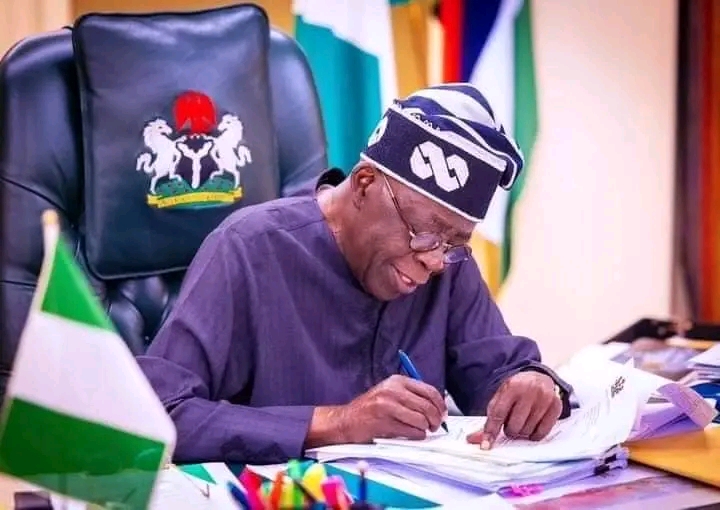
On Thursday, June 26, 2025, President Bola Tinubu signed into law four landmark tax bills that the National Assembly had recently passed.
Whether one agrees or disagrees with Tinubu’s style of governance, the new tax bills signal a new beginning for Nigerians, businesses, and governments, both at the subnational and federal levels.
Some key highlights of the Reforms are:
Elimination of Duplication in Tax Collection: One major reform is the establishment of the new Nigeria Revenue Service (NRS), which will now collect revenues that were previously handled by numerous agencies, such as the Nigeria Customs Service, Nigerian Ports Authority (NPA), Nigerian Upstream Petroleum Regulatory Commission (NUPRC), NIMASA, and others.
Tax Exemption for Low-Income Earners: With the new provisions, individuals earning ₦800,000 or less per year are now fully exempt from income tax. This is a masterstroke, especially for many people in the North. It removes a huge burden and creates space for their small and medium-sized businesses to grow and flourish.
New Personal Income Tax Rate:
Only those earning above ₦50 million annually will be required to pay the new 25% personal income tax rate. This is both fair and reasonable.
Another significant win for the North, which has the highest concentration of impoverished people in Nigeria, is the removal of VAT on essential goods and services, including school fees, medical services, food, pharmaceuticals, and electricity. This is a significant relief for the poor and small to medium-sized businesses.
The corporate tax rate will now be reduced from 30% to 25%, and small businesses will be fully exempt from paying income tax.
The controversial VAT issue has now been ‘fairly’ settled, and again, it’s a big win for the North, which had previously raised concerns. The new revenue-sharing formula is as follows:
Federal Government: 10%
States: 55%
Local Governments: 35%
Even more importantly, the VAT sharing formula has been revised in a way that favours the North. If northern states seize the opportunity to harness and develop their economies and markets, especially in agriculture, they will benefit significantly.
The new sharing criteria are:
50% of VAT is shared equally among all states
20% is based on population
30% is based on where goods/services are consumed
One of the most important features of these tax reforms is how they protect and uplift the poor and small businesses,especially in the North, where:
About 65% of Nigeria’s poorest people live
Over 52% of the country’s states are located
More than 60% of the population resides
Nearly 70% of Nigeria’s landmass is found
And almost 80% of agricultural production takes place
It’s time for northern states to tap into local knowledge and deploy homegrown experts to thoroughly study the four landmark tax laws in line with each state’s peculiarities and needs, yet with the whole North as the unifying objective.
If well studied and strategically implemented, Tinubu’s new tax reforms could be the silver bullet the North has been waiting for.
They offer fiscal justice, decentralisation of revenue, protection for the poor, incentives for businesses, and a practical opportunity to lift millions out of poverty.
However, as always, it will take visionary leadership, technical expertise, and political will to translate policy into meaningful impact. The opportunity is here. The North must not waste it.
Zayyad I. Muhammad writes from Abuja via zaymohd@yahoo.com.