
Court jails four for illegal tree felling in Sharada
By Anas Abbas
A Magistrate Court sitting in Normansland, Kano, has convicted four men for engaging in illegal tree felling at Sharada Municipal.
The convicts, Jibril Adamu and three others were prosecuted by the Kano State Ministry of Environment and Climate Change under the provisions of the Kano State Forestry Law, which prohibits cutting down trees without official authorization.
The case was heard by His Worship Auwalu Yusuf, who found the defendants guilty after reviewing the evidence presented by the prosecution counsel, Barrister Bahijjah H. Aliyu.
The court sentenced the four men to three months imprisonment each, with an option of a ₦40,000 fine.
They were also ordered to pay ₦50,000 in compensation for the damage caused.Reacting to the judgment, the Commissioner for Environment and Climate Change, Dr. Dahiru M. Hashim, welcomed the ruling, describing it as a victory for environmental protection in the state.
“Every tree cut down illegally robs our city of clean air, shade, and climate resilience,” Dr. Hashim said.
“This ruling sends a strong message that Kano will not tolerate environmental vandalism.”
The Ministry further urged residents to report cases of illegal logging and other environmental offences through its official channels, assuring that it remains committed to preserving a greener and healthier Kano State.

Son of Boko Haram founder arrested in Chad
By Hadiza Abdulkadir
Chadian authorities have arrested Muslim Muhammad Yusuf, identified as the son of Boko Haram’s late founder, Muhammad Yusuf. Muslim, believed to be 18 or 19 years old, was captured along with five others while leading an Islamic State West Africa Province (ISWAP) cell.
Analyst Bulama Bukarti confirmed Muslim’s identity after speaking with family friends and relatives, who said he is the son of Bintu, Muhammad Yusuf’s first wife. His arrest reportedly followed a tip-off from Nigerian intelligence.
The development comes in the same week Nigeria announced the capture of two top leaders of Ansaru, a Boko Haram offshoot, and the head of the Mahmuda Group, active in parts of North Central Nigeria.
Security experts describe the arrest as a turning point, marking the first time a major faction leader has been taken alive. They warn, however, that Nigerian authorities must now focus on dismantling bandit groups wreaking havoc in the North West and North Central regions.

NDLEA arrests drug kingpin at Kano airport, moves to free Nigerians detained in Saudi Arabia
By Uzair Adam
The National Drug Law Enforcement Agency (NDLEA) has arrested a 55-year-old drug kingpin, Mohammed Ali Abubakar, popularly known as Bello Karama, along with five members of his syndicate operating at the Mallam Aminu Kano International Airport (MAKIA), Kano.
The arrest followed investigations that linked the group to the shipment of illicit substances that led to the detention of three unsuspecting Nigerian pilgrims in Saudi Arabia on drug trafficking allegations.
The Agency disclosed this at a press briefing in Abuja on Monday, addressed by its Director of Media and Advocacy, Femi Babafemi, alongside Dr. Abdul Ibrahim, Director of Assets and Financial Investigation, and Theresa Asuquo, Director of Prosecution and Legal Services.
NDLEA explained that the development came after its Chairman, Brig Gen Mohamed Buba Marwa (Rtd), received complaints from three families whose relatives—Mrs. Maryam Hussain Abdullahi, Mrs. Abdullahi Bahijja Aminu, and Mr. Abdulhamid Saddiq—were detained in Jeddah following their lesser hajj pilgrimage.
The detainees were accused of trafficking drugs after being linked to six additional bags not belonging to them, three of which contained illicit substances.
Investigations traced the bags to the syndicate led by Abubakar, who checked them into an Ethiopian Airline flight ET940 on August 6, 2025, the same flight boarded by the three innocent pilgrims.
Members of the group, including staff of Skyway Aviation Handling Company, were said to have illegally tagged the bags against the names of the pilgrims without their knowledge.
Six suspects are currently in NDLEA custody, with four already charged to court. Confessional statements revealed that the bags were checked in for monetary rewards, with transfers of N200,000 linked to the operation.
The NDLEA said it has initiated discussions with Saudi Arabia’s General Directorate of Narcotics Control (GDNC) to secure the release of the detained Nigerians.
Marwa is also expected to personally meet with Saudi authorities during an international drug conference to press for their exoneration.
The Agency assured that while it remains committed to fighting drug trafficking, it will not allow innocent Nigerians to suffer for crimes they did not commit.

Ulama Forum rejects Nigeria-Israel security pact
By Muhammad Sulaiman
The Ulama Forum in Nigeria has condemned the reported Memorandum of Understanding (MoU) between the Federal Government and the State of Israel on security cooperation, describing it as “a dangerous and insensitive diplomatic move.”
In a statement signed by its Convener, Aminu Inuwa Muhammad, and Secretary, Engr. Basheer Adamu Aliyu, the Forum accused the Minister of State for Foreign Affairs, Mrs. Bianca Ojukwu, of unilaterally engaging Israel despite global outrage over its alleged genocide against Palestinians.
“At a time when the world of conscience is against Israel, Nigeria should be at the forefront of supporting South Africa’s genocide case at the International Court of Justice, not courting a state increasingly isolated for human rights violations,” the statement read.
The Forum warned that involving Israel in Nigeria’s internal security would erode national sovereignty, risk human rights abuses, and entrench dependence on foreign powers. It argued that “internal security issues require homegrown solutions that prioritise community engagement, social cohesion, and inclusive governance.”
Instead of seeking external assistance, the group urged the government to strengthen security institutions, address poverty and corruption, and ensure justice for offenders. It further called on President Bola Ahmed Tinubu to “call the erring minister to order” in the interest of national unity and public sensitivity.
The Forum reaffirmed its confidence in Nigeria’s security personnel and pledged continued prayers for “Allah’s guidance and support to our gallant forces.”

NCCE shuts 22 illegal tertiary institutions qcross Nigeria
By Uzair Adam
The National Commission for Colleges of Education has discovered and closed 22 unapproved tertiary institutions operating in different parts of the country.
The move followed a nationwide crackdown on illegal institutions, according to details contained in the commission’s achievement report obtained by Punch Newspaper.
“The NCCE identified and shut down 22 illegal Colleges of Education operating across the country. The commission also conducted personnel audits and financial monitoring in all 21 federal colleges of education,” the report stated.
President Bola Tinubu had recently directed regulatory bodies, including the National Universities Commission, the National Board for Technical Education, and the NCCE, to intensify efforts in eliminating illegal higher institutions undermining the integrity of Nigeria’s education system.
Speaking at the 14th convocation of the National Open University of Nigeria in Abuja, Tinubu, represented by the Director of University Education at the Federal Ministry of Education, Rakiya Ilyasu, warned against compromising academic standards.
He reiterated his administration’s commitment to strengthening the synergy among educational agencies, including the NYSC, JAMB, NUC, NBTE, and NCCE, to ensure the quality of education and eliminate certificate forgery and unrecognised institutions within and outside the country.
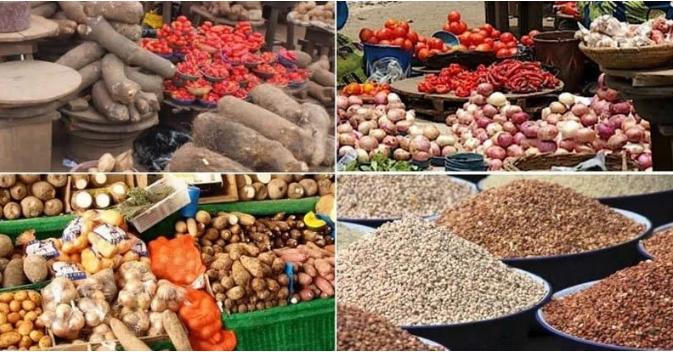
NEMA and the battle for Nigeria’s food security
By Abdulhamid Abdullahi Aliyu
The fight against hunger in Nigeria has entered a critical phase. With rising food prices, climate-induced disasters, and conflicts crippling agricultural production, food security is no longer a distant policy concern but an everyday reality for millions of households. What was once viewed as a seasonal challenge has now become a national emergency, demanding a shift from reactive relief to proactive preparedness.
At the forefront of this shift is the National Emergency Management Agency (NEMA), which is redefining its role beyond post-disaster interventions. Through the newly unveiled Food and Nutrition Security Crisis Preparedness Plan (FNSCPP), NEMA is laying the groundwork for a coordinated, data-driven framework designed to detect and respond to food security threats before they spiral into full-blown crises.
For NEMA’s Director-General, Mrs. Zubaida Umar, the stakes could not be higher. “Nigeria is at a critical juncture in its food security landscape,” she observed during a recent consultative session. “We must transition from reactive to anticipatory response models. This collaboration presents a pathway toward a more structured, timely, and impactful system of intervention.”
The new preparedness plan signals a significant departure from the traditional cycle of emergency relief. It recognises that food insecurity is not an isolated problem but a complex challenge worsened by flooding, drought, armed conflicts, and economic shocks. Seasonal floods, for example, continue to devastate farmlands in states like Anambra, Benue, and Niger, erasing months of hard work and leaving rural communities vulnerable to hunger.
The FNSCPP seeks to address this challenge by integrating early warning systems with national emergency operations, setting up clear crisis escalation protocols, and ensuring that federal, state, and community-level agencies respond in unison. This aligns with NEMA’s broader strategy, which has included launching the 2025 National Preparedness and Response Campaign (NPRC) and conducting large-scale flood simulation exercises in high-risk zones such as the South East.
Experts agree that timely action is the difference between a manageable disruption and a nationwide crisis. Dr. Ritgak Tilley-Gyado, Senior Health Specialist at the World Bank and one of the key technical leads behind the FNSCPP, highlighted this during a consultative visit to NEMA’s headquarters. “This is more than just an emergency response plan,” she explained. “It is a long-term preparedness blueprint. Once indicators are triggered, every institution must understand its role and act without delay.”
The stakes are particularly high for vulnerable populations, where food crises often translate into chronic malnutrition, displacement, and loss of livelihoods. Nigeria’s recent qualification for crisis response financing underlines the urgency of establishing a clear and unified response framework. Without it, resources risk being delayed, duplicated, or mismanaged — leaving those most affected to bear the brunt of avoidable suffering.
To counter this, NEMA is also championing community-level sensitisation, ensuring that disaster preparedness is not merely a top-down directive but a collective effort. By engaging local leaders, grassroots organisations, and youth groups, the agency aims to bridge the gap between policy design and on-the-ground realities.
Yet, significant challenges remain. Adequate funding, political will, and inter-agency coordination will determine whether this bold plan succeeds or falters. Beyond the federal effort, state and local governments must embrace their roles in creating food-resilient communities. Environmentalist Mayokun Iyaomolere captured this sentiment aptly when he remarked, “Preparedness is not just about government plans. Communities must also take ownership of the process, particularly in areas where local action can prevent disasters from escalating.”
As Nigeria faces a future marked by unpredictable weather patterns and growing food demands, the real question is not whether crises will occur but how effectively the country can respond. With the FNSCPP, anchored by NEMA’s leadership and supported by multi-sector partnerships, Nigeria has an opportunity to shift from a culture of reaction to one of anticipation and prevention.
The blueprint has been laid out. What comes next is the test of execution, coordination, and the political courage to ensure that no Nigerian is left to go hungry simply because the warning signs were ignored.
Abdulhamid Abdullahi Aliyu writes on disaster management, humanitarian response, and national development.

My daughter Rahma, cerebral palsy, and death
By Abubakar Suleiman
“I am sorry, the brain of your child has been insulted.” Those were the words of a friend who is also a medical doctor after reviewing the EEG result of my late daughter, Rahma, three years ago. He continued, “Abubakar, you have a case in your hands, Allah Ya baka ikon cin jarabawa.”
The phrase “brain being insulted” was unfamiliar to me then. I had to start browsing to be sure that the words weren’t what I feared. Alas, it turned out to be what I thought.
Being a twin, Rahma came into the world weak after her twin sister, Rayhana. And she was put in an incubator to resuscitate her. Before the EEG investigation, Rahma had jaundice that was detected when she was just seven days old.
Upon arrival at the pediatric clinic, after her vitals were taken and a series of tests conducted, she was hospitalised. Phototherapy and an exchange blood transfusion were carried out. And that marked the beginning of a pilgrimage, ranging from one consultant paediatrician to another neurologist, then a physiotherapist throughout her 3 years, 2 months and 1 week of existence.
“Hypertonia.” The word a doctor muttered after we were discharged from the hospital drove me to the internet. Slowly, I became an overnight ‘neurologist’ so much so that whenever we find ourselves in the hospital, the doctors were so surprised by how well I understood some medical concepts. Knowing that hypertonia is a form of cerebral palsy sent chills down my spine. What could have led to this? Loss of oxygen during birth? The jaundice that led to the exchange blood transfusion? Abi na all join? إلى الله المشتكى
Cerebral palsy rendered Rahma almost helpless. She could not sit, talk, walk or fall asleep with ease all her life. She doesn’t eat any kind of food. Feeding her required tact. Nutritionists’ aid was sought. Her neck control was only partial. We could only try to improve her quality of life with therapeutic interventions and the support of a caregiver.
While her twin sister, Rayhana, was energetic and quickly enrolled in school, Rahma was mostly on controlled drugs to help her sleep. From phenobarbital, clonazepam, phenytoin, diazepam, to all sorts of medications depending on her weight and other medical variables, as noticed by the doctor. Zamzam water and ruqya weren’t exempted.
Her smile and laughter were expensive. But whenever it appeared, it melted hearts. She shared many features of my late Dad. She is hairy and, in many ways, more uniquely beautiful than her siblings. Her ill health exposed me to the limitations of modern medicine, the high level of professionalism of some doctors and nurses, and, of course, the unruly and unprofessional attitude of others. It also made me renegotiate many priorities in life.
Sicknesses like cerebral palsy drain one psychologically and financially. It pushes one to the boundaries of imaan. In the mix of all these were suggestions, positive and negative. I heard whispers that my ‘Izala’ is becoming too much since I am not willing to try some traditional concoctions or so-called Islamic medicine (whatever that means). Again, I am also not given to superstitions. But alhamdulillah for a strong wife who never wavered in giving her best for Rahma and her siblings. Her imaan was unshaken. It was exhausting, but her resolve was steel-like.
To helplessly watch your child in pain or a medical crisis hits differently. It requires imaan, admonition and strong mental stamina. Whenever Rahma convulsed or cried out due to exhilarating pains, aside from Hasbunallahu wa ni’imal wakeel, all I could tell her was:
اصبري يا رحمة فإن موعدك الجنة إن شاء الله.
“Be patient, Rahma, your final abode is paradise, InshaAllah.” Even though she doesn’t hear me, I find solace in uttering those words.
My family and friends did everything they could to make things easy for me. Not to mention that the emotional, moral,and even financial support from them would amount to being economical with the situation. I was showered with love and admonition during Rahma’s trial and after her death.
Death. When your time is not up, you will not die. Rahma was hospitalised countless times, so I no longer informed relatives, friends or family. It became a routine. Her medical conditions were sometimes complicated and severe, so I often prepared myself for the announcement of her death when receiving some phone calls. But she bounced back. However, when it was time to depart the world, she bade us farewell peacefully in her sleep. It was indeed a bumpy ride and a heavy trail. Alhamdulillaah.
I am optimistic that Rahma has found peace inshaAllah. I pray Allah grants her Jannatul Firdaus. May Allah comfort all parents with children having special needs.

Kemi Badenoch expresses concern over increased racist abuse as ‘conservative leader’
By Anas Abbas
Conservative Party leader Kemi Badenoch has spoken of the racist abuse she has faced since becoming the first Black woman to head the party, describing the hostility as “Kemi derangement syndrome.”
In an interview with The Sunday Times, Badenoch said the attacks came not only from anonymous users online but also from a small number of MPs.
She explained: “There’s a certain cadre of people who clearly can’t cope with the fact that I won this, and I’m doing it. The level of personal attacks from anonymous people is hysterical. Not even just from MPs. I actually don’t think it’s that many MPs. I think it’s two to three people out of 120. That’s nothing. But online as well. People used to talk about Trump derangement syndrome. I think there’s a Kemi derangement syndrome: ‘How could she possibly have done this?’”
She pointed to a rise in ethno-nationalist rhetoric on social media, where critics sought to undermine her achievements because of her background.
“There’s a lot of ethno-nationalism creeping up, lots of stuff about my race and my ethnicity and the tropes around, ‘well, she couldn’t possibly have done this all by herself,’” she said.
Born in Wimbledon and raised partly in Nigeria before returning to the UK at 16, Badenoch has often resisted attempts to define her by race.
“I always try to think of every possible explanation before I go to race and racism. I think that is a healthy way to run a society,” she said.
“I remember when I stood up a few years ago and said Britain is not a racist country,ethnic minorities do very well here, it is white working-class boys who are actually struggling on a lot of metrics and I got pilloried for that.
“My view is that there are people out there who will say whatever it is, they will throw whatever kind of mud at you, and they will hope that it sticks.”
As she prepares for her first party conference speech, Badenoch faces questions about her leadership amid speculation of a potential challenge from shadow justice secretary Robert Jenrick, with the Conservatives polling at just 17 percent.
She dismissed the rumours, however, calling them “wishful thinking” and “sour grapes.”
“When I hear those things, I can tell those people are not focused on the country at all. Many of those people having those conversations think this is a game. But the lives of people in this country aren’t a game,” she said.

Nine Dutch ministers resign in solidarity with Gaza
By Muhammad Abubakar
In a stunning act of political defiance, nine Dutch ministers have resigned en masse, declaring they could not be complicit in what they described as the “silent endorsement of a humanitarian catastrophe” in Gaza.
The resignations have sent shockwaves through the Netherlands’ political establishment, shaking the foundations of the coalition government and igniting fierce debate across Europe. In their fiery joint statement, the departing ministers condemned the West’s “selective morality” and accused their own government of “turning a blind eye to mass suffering.”
Crowds gathered outside parliament in The Hague to applaud the move, with activists hailing it as an unprecedented moral stand in modern European politics. Critics, however, warned the resignations could plunge the government into chaos at a time of deepening international tensions.
“This is not about politics; it is about conscience,” one of the resigning ministers declared. “History will not forgive silence in the face of Gaza’s devastation.”
Analysts say the mass resignation marks a rare moment where political survival has been sacrificed for principle—an act many believe will reverberate far beyond Dutch borders.

Between Senator Sumaila and Senator Kwankwaso
By Kamal Alkasim
When Kawu Sumaila decamped from NNPP to APC, it showed that the issue isn’t about party loyalty but about choosing the best leader. Blind loyalty can hinder good governance in Nigerian politics. What matters most is effective representation, not party allegiance. Let’s prioritise good leadership over partisan loyalty and choose the best candidate for the benefit of Kano South.
When choosing between Rabiu Musa Kwankwaso, a prominent figure in Kano politics known for influencing political dynamics, and Kawu Sumaila, the decision leans towards Kawu due to his genuine service to the people of Kano South. Regardless of the political party Kawu affiliates with—whether APC, PDP, or ADC—his actions demonstrate a commitment to his constituents.
People recognise Kawu’s efforts and intentions, making party affiliations secondary to his impact. Let’s prioritise choosing the best candidate based on their service and dedication, rather than party loyalty.”
Kwankwaso’s impact will be remembered. Let’s choose leaders based on merit, not loyalty to individuals. In politics, those who deliver tangible benefits to the people should be preferred over those who seek dominance.
After 16 years of Kabiru Gaya’s tenure, which saw the Kano senatorial district abandoned for personal interests, it’s time for a change. Kawu Sumaila has emerged as a rescuer for our region, and let’s give him the support he deserves.
Let’s choose a leader who creates jobs, empowers youth, provides scholarships, and advocates for our interests in the Nigerian Senate. Prioritise your senatorial district’s needs and be vigilant. A leader who brings in multi-million dollar projects, generates employment opportunities for youth, and develops feeder roads in our communities deserves our support.
Both Kwankwaso and Kawu Sumaila have legacies that will be remembered, but let’s focus on the one who delivers tangible benefits to our region.
Kamal Alkasim wrote via kamalalkasim17@gmail.com.