

US Congress demands Wikipedia reveal editors in Israel content probe; Wikimedia vows to fight
By Muhammad Abubakar
A U.S. congressional committee is investigating the Wikimedia Foundation, demanding it hand over data on contributors who edited articles critical of Israel, a move the nonprofit is calling an “act of government overreach.”
The House Committee on Oversight and Accountability claims the probe is necessary to examine “potential misinformation and anti-Israel bias” on the online encyclopedia.
In a letter to the foundation, lawmakers requested internal communications and, crucially, the identifying information of volunteer editors.
The Wikimedia Foundation has vowed to reject the request for user data. “We will not comply,” a foundation spokesperson stated, arguing the demand jeopardises free speech, privacy, and the project’s neutral model.
Digital rights groups have also condemned the investigation, calling it an attempt to intimidate and identify anonymous critics.
The standoff sets the stage for a significant legal battle over congressional power, free speech, and the independence of digital platforms.

Against Shaykh Masussuka: A Qur’anic case for the reliability of Hadith
By Ibraheem A. Waziri
About three decades ago, at the beginning of my youthful years, around Bakinruwa, Sabongari, Kaduna, I first encountered the idea of “Qur’an-only” Islam. Shaykh Uthman Dangungu, who had passed through the Izala movement, began to promote it in our neighbourhood mosque near Kasuwan Gwari. He was not the first—Muhammadu Marwa Maitatsine had pushed something similar in Kano State in the 1980s, though in a harsher, less workable form. Since then, my philosophical self has wrestled with such currents—Wahhabism, Shi‘ism, Sufism, Boko Haramism, and more. Each encounter has been a struggle for clarity and stability, for faith, and for cultural continuity in our fragile postcolonial Nigerian modernity.
Now, with Shaykh Yahya Ibrahim Masussuka—my generational peer—reviving the Qur’an-only argument, it seems fitting to reflect again. This time, however, I do not begin from theology alone. I lean on the wear and tear of intellectual toil, and on the reflective gifts of experience—what philosophy, logic, and science have taught me about human beings and the trustworthiness of transmission.
Philosophy has long asked: Can knowledge survive without tradition? Plato, in The Republic, warned that truth severed from the teacher–student chain becomes mere opinion. Aristotle, more grounded, argued that reason itself grows from custom, habit, and inherited practice. If Plato guarded against instability, Aristotle reminded us that even rationality needs a body —a living community —to give it shape.
Modern science adds its own perspective. Research in psychology shows that while humans are prone to bias or fatigue, under structures of accountability and community, they are remarkably capable of fairness and truth-telling. Integrity, in fact, often comes naturally. In other words, people can be trusted, though they must be guided.
The Qur’an itself affirms this. It does not portray humanity as unfit to bear the truth. Instead, it honours our moral agency while calling for systems of verification. “And thus We have made you a just community that you may be witnesses over mankind, and the Messenger a witness over you” (2:143). To be a witness requires the ability to observe, remember, and transmit faithfully. Surah Al-Tawbah (9:122) goes further, encouraging some believers to remain behind, study religion deeply, and teach others. That is nothing less than a Qur’anic endorsement of scholarship—the very task Hadith scholars later undertook.
The Qur’an also acknowledges our dual moral compass— “By the soul and He who proportioned it, and inspired it with its wickedness and righteousness” (91:7–10). Hence, the command in Surah Al-Hujurat (49:6) to verify reports before acting. That balance between trust and scrutiny is the same principle that shaped the science of Hadith.
Even in worldly matters, the Qur’an demonstrates confidence in structured testimony. The long verse of debts in Surah Al-Baqarah (2:282) lays out detailed rules for recording contracts with witnesses. If humans can be entrusted with preserving financial records, surely they can also be tasked with documenting the Prophet’s words—so long as there is a system of accuracy and verification.
This brings us to the heart of the matter. The Qur’an-only stance insists that Hadith is unnecessary. Yet the Qur’an itself says otherwise: “We revealed to you the Reminder so that you may explain to people what was sent down to them” (16:44). The Prophet’s explanatory role is not contained in the Qur’an’s text—it lives in his sayings, actions, and approvals. Surah Al-Ahzab (33:21) refers to him as “an excellent example” for believers. But how would later generations know his example without the Hadith?
Other verses go further: “Whoever obeys the Messenger has obeyed Allah” (4:80); “Whatever the Messenger gives you, take it; and whatever he forbids you, abstain from it” (59:7). These are not time-bound commands. They apply to all Muslims across generations. And they assume access to the Prophet’s guidance—something only Hadith provides.
Seen this way, Hadith is not an intrusion upon the Qur’an but its necessary partner. The Prophet was sent not only to recite but to teach and model. His companions and the generations after them, through discipline and painstaking verification, preserved that model. The Hadith tradition is not perfect—no human endeavour is—but it was forged as a check from within Islamic culture, not imposed from outside. It is part of the Qur’an’s own vision of a community of witnesses.
At its core, then, the debate is not only about scripture but also about how we see human beings. If we assume people are too weak or biased to preserve truth, the Hadith collapses. But if we recognise—as both the Qur’an and science do—that humans, when guided and structured, can be reliable witnesses, Hadith stands on solid ground. The Qur’an-only position misses this deeper point. It mistrusts human agency in a way the Qur’an itself never does.
In Nigeria, where cultural streams converge and clash—Sahelian traditions meeting global influences—the Qur’an-only approach risks severing us from the rich heritage that has sustained Muslim communities through colonialism, civil strife, and modern pressures. My own journey—from that mosque in Kaduna to today—has taught me that certainty lies not in subtraction but in integration: the Qur’an as foundation, illuminated by the Prophet’s Hadith, upheld by our God-given moral agency.
As this debate resurfaces in our time, we would do well to remember: the Qur’an trusts us, commands us, and makes our testimony central to its unfolding. To follow the Qur’an, then, is to follow the Prophet. And to follow the Prophet is impossible without Hadith.
Ultimately, as Surah Al-Baqarah reminds us, we are called to be witnesses. Let us honour that calling by trusting the mechanisms Allah has provided—including Hadith, which brings the Prophet’s example to life for every generation

FG halts operation at two Chinese mines for illegal processing
By Abdullahi Mukhtar Algasgaini
The Ministry of Mines and Minerals Development has suspended operations at two Chinese-operated mines in Kasempa for illegally processing gold and copper ore.
The affected mines, Sino Octascone Mine and Ken Reliable, were found to be operating without the mandatory mineral processing licences.
The ministry’s Permanent Secretary, Hapenga Kabeta, led an inspection with officials from the Mine Safety Department that uncovered substantial stockpiles of gold and copper ore ready for processing on the premises.
“Investigations revealed that the mines had been conducting unauthorised processing of minerals for an unspecified period,” Dr. Kabeta stated.
“When questioned, mine officials failed to provide satisfactory explanations and relevant documents for their operation.”
He confirmed that the sources of the ore stockpiles will be further investigated, warning that any related illegalities would be “sternly dealt with.”
In response, the ministry has seized the ore stockpiles and directed law enforcement to secure the materials until the companies can present proper documentation.

Kaduna govt to reintroduce 5-day school week, promises improved teachers’ welfare
By Abdullahi Mukhtar Algasgaini
The Kaduna State Government has reinstated the five-day school week across all public schools in the state.
The Commissioner for Education, Professor Abubakar Sani Sambo, made the announcement while receiving members of the Kaduna Government College Old Boys Association in his office.
He explained that the decision is aimed at enhancing students’ learning outcomes and ensuring a more effective education system.
Professor Sambo further disclosed that the state is working on plans to improve teachers’ salaries in order to boost their productivity and commitment.
On the temporary occupation of Kaduna Government College by the Civil Defence Corps and the National Youth Service Corps (NYSC), the Commissioner clarified that the move was initially due to security concerns.
However, he stated that both organizations must now relocate to their permanent sites.
Earlier, the National President of the Kaduna Government College Old Boys Association, Alhaji Muhammad Yusuf Sa’in Lere, appealed to Governor Uba Sani to intervene, noting that the NYSC and Civil Defence currently occupy about 70 percent of the school premises, which affects its operations.

FG justifies new passport fees of N100,000, N200,000
By Sabiu Abdullahi
The Federal Government has defended its decision to raise the cost of Nigerian passports to N100,000 and N200,000, saying the adjustment is meant to sustain quality, tackle corruption, and guarantee quick delivery of the travel document.
In a statement issued on Thursday, the Nigeria Immigration Service (NIS) disclosed that the new charges will take effect from September 1, 2025.
According to the Service, applicants in Nigeria will now pay N100,000 for the 32-page passport with a five-year validity and N200,000 for the 64-page passport valid for 10 years.
“The review which only affect Passport Application fees made in Nigeria, now set a new fee thresholds for 32-page with five-year validity at N100,000 and 64-page with 10-year validity at N200,000,” the Service explained.
It clarified that Nigerians living abroad will continue to pay $150 and $230 for the 32-page and 64-page passports respectively.
The latest hike comes a year after the government approved an upward review in August 2024, when the 32-page passport was increased from N35,000 to N50,000 and the 64-page booklet from N70,000 to N100,000.
At the time, NIS said the change was necessary to maintain quality and enhance service.Speaking on Thursday in Abuja at the Ministry of Interior’s mid-tenure retreat, the Minister of Interior, Dr. Olubunmi Tunji-Ojo, defended the new rates.
He said the reform will eliminate corruption in the system and ensure Nigerians receive their passports within one week of enrolment.
“Our target is very clear: within one week of enrolment, every Nigerian should have their passport in hand. Not just delivering quickly, but delivering quality passports that reflect our integrity as a nation,” the minister said.
He revealed that the new system was introduced to put an end to delays and extortion that previously forced applicants to wait up to seven months or pay as much as N200,000 to fast-track processing.
“The system that we inherited that had six months backlog which we were able to clear in two and a half weeks. Nigerians will apply for passports and wait endlessly, or be asked to pay hundreds of thousands of naira. My own daughter had that bad experience. Even when I was chairman of the House Committee on NDDC, my daughter wanted passport, it was a problem. I had to pay hundreds of thousands to be able to get a passport for my daughter, a 12-year-old girl. That era is over,” Tunji-Ojo said.
He added that a new centralised personalisation centre, described as the largest in Africa, will speed up processing and strengthen document security.
“With this facility, we can print five times more passports than we currently need. Once you enrol, it doesn’t take us more than 24 hours to vet. Printing capacity is no longer our problem,” he noted.
As part of the reforms, the minister announced that Passport Control Officers (PCOs) will no longer have the authority to approve or delay applications.
“Some PCOs had so much power that they could decide not to approve or not to print a passport until they were settled. That abuse of power ends now,” he declared.
According to him, removing human discretion from approvals will help curb corruption and restore public trust.
“We realised that the best way to cut corruption is to remove human contact to the barest minimum. Passport approval will no longer rest with PCOs. My responsibility is not for them to like me — it is to deliver efficiency. Let Nigerians be happy,” he said.
The minister further stressed that the reforms would protect the value of Nigeria’s passport.
“My responsibility is not just to make passports available, but to ensure that anybody carrying it is a Nigerian. If you are not a Nigerian, you cannot carry it. It’s about our national integrity.”
He cited previous abuses, recalling: “In one incident, a Ugandan woman carrying a Nigerian passport was arrested at Lagos Airport after paying $1,000 to procure it. That cannot continue. Our passport must remain a true symbol of Nigerian identity.”
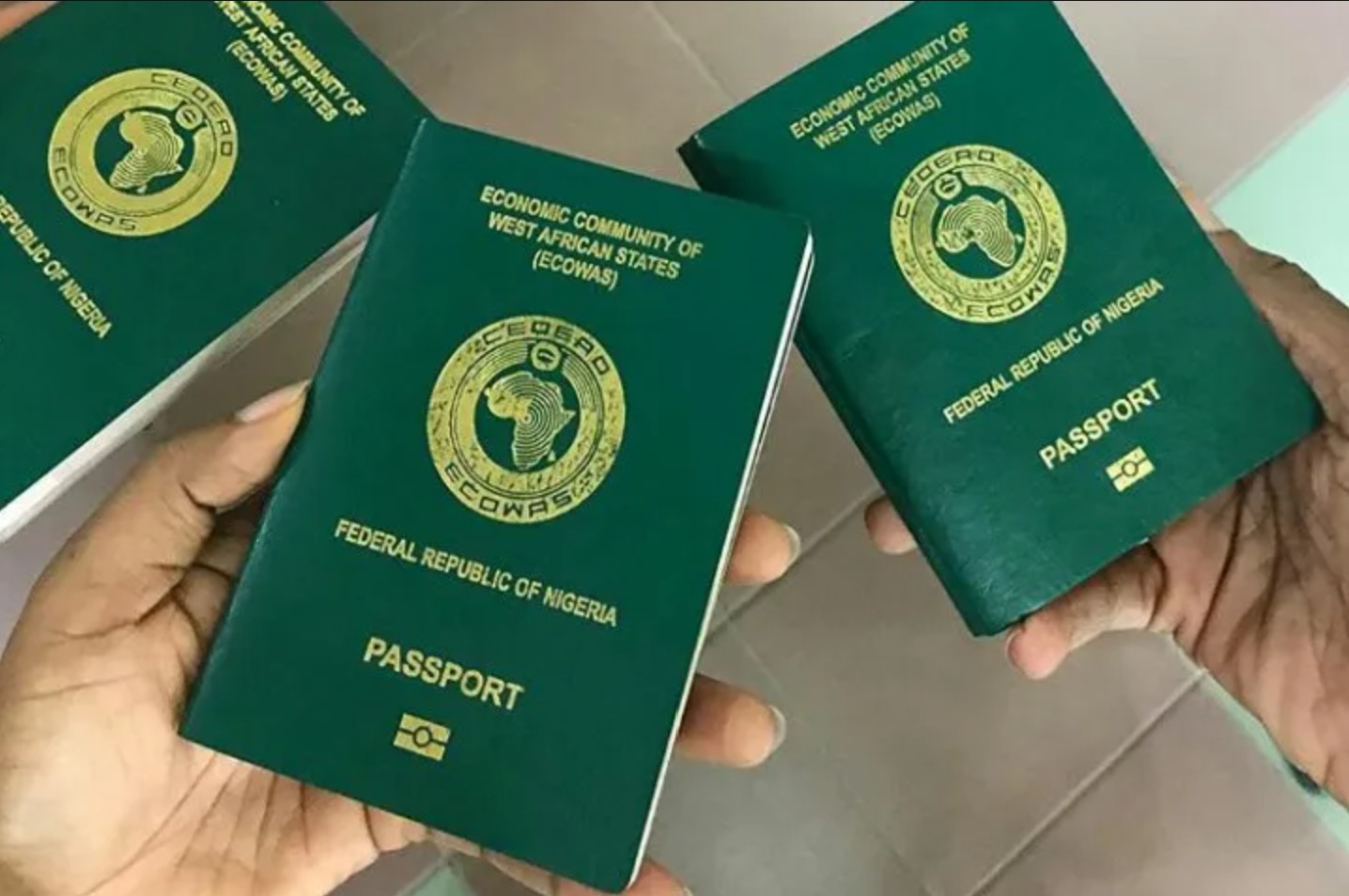
The Price of a Nigerian Passport and the Cost of Being Nigerian
BY Nazeer Baba Abdullahi
Imagine holding a Nigerian passport, symbolising pride, identity, and opportunity. However, effective September 1, 2025, the fee doubles from ₦50,000 to ₦100,000 for the 32-page version and from ₦200,000 to ₦ 400,000 for the 64-page version. This isn’t just an administrative change; it breaches the social contract.
Converting a basic identity document into an expensive luxury creates a two-tiered citizenship system, penalising ordinary Nigerians and restricting access to opportunities. A passport is a right of citizenship, like the free National ID and voter’s card, not a privilege for the wealthy. Why should a global identity extend to a commodity?
The typical justification of ‘cost recovery’ is invalid. Essential state services should be subsidised to ensure equal access, not turned into profit centres at the people’s expense. This is especially true amid Nigeria’s economic struggles with inflation, unemployment, and rising costs. The new ₦100,000 passport costs more than the ₦70,000 minimum wage, making it unaffordable for a civil servant’s monthly salary. When a passport exceeds one month’s earnings, citizenship access is effectively priced out. This isn’t governance, but punishment. Officials say the hike maintains quality and integrity, but Nigerians only want access to a valid ID, not luxury features. Raising fees without service improvements monetises desperation. Nigeria ranks 91st globally in terms of passports, highlighting the need to improve its international standing.
The irony becomes even more glaring when compared with the voter’s card. That document is distributed free of charge, delivered to electoral wards, and made as accessible as possible. The reason is simple: it benefits the political elite by ensuring mass participation in elections. The passport, however, offers no direct political benefit. Instead, it empowers citizens to seek opportunity abroad, to level themselves in mobility and access with the very elite who govern them. Empowerment is seen not as a service to the state, but as a threat. Your vote is free because they need you. Your passport is expensive because they fear you. This is not an accident of policy; it is a deliberate strategy of control. It reveals a government more concerned with revenue extraction than with service to its people.
A recent pattern shows the government increasing passport fees again after the August 2024 hike, indicating a trend of using vital documents for quick revenue rather than rights. Compared to neighbouring countries, Nigeria’s fees are disproportionately high. For example, a 34-page passport costs approximately ₦80,000 in Kenya, equivalent to a minimum wage of ₦ 15,000, and around ₦46,900 in Nigeria, both of which are less than the Nigerian cost. While Kenyans and Ghanaians with minimum wages can obtain passports in days or weeks, Nigerians face fees that exceed their monthly income, creating a severe financial burden.
The Nigerian passport should never be treated as a luxury item. It is a necessity in a globalised world and a symbol of national identity. To price it beyond the reach of ordinary citizens is to betray the very essence of governance, which is service, dignity, and protection of rights. What kind of nation are we building when we put a price tag on our citizens’ ability to seek a better life? What does patriotism mean if leaders measure it not by how they serve the vulnerable but by how much they can extract from them? Proper governance is not about profit; it is about fairness, opportunity, and respect for citizens.
Nazeer Baba Abdullahi wrote via babanazeer29@gmail.com.

Kano DG Protocol sues Jaafar Jaafar over “Thieving Aide” tag
By Muhammad Abubakar
The Chief Magistrate Court No. 15 in Kano has ordered police to investigate Daily Nigerian publisher, Jafar Jafar, and a staff of the newspaper, Audu Umar, over allegations of criminal defamation against the Director General of Protocol, Government House, Hon. Abdullahi Ibrahim Rogo.
Rogo filed the case, accusing the duo of maliciously describing him as a “thieving aide” to Governor Abba Kabir Yusuf in two reports published on August 22 and 25, 2025. He argued that the stories, carried by Daily Nigerian, were deliberately crafted to tarnish his reputation and portray him as corrupt.
One of the reports, titled “Gov. Yusuf Defends Thieving Aide, Says Protocol Directorate Under Ganduje Spent N20 Billion in 3 Months”, and another alleging that anti-graft agencies traced ₦6.5 billion to his office, were cited as damaging to his image.
The complaint, filed under Sections 106 and 107 of the Administration of Criminal Justice Law 2019, and Sections 114 and 393 of the Penal Code, seeks prosecution for defamation and breach of public peace.
Chief Magistrate Abdul’aziz M. Habib subsequently directed the Assistant Inspector General of Police, Zone One, to launch a full-scale investigation.
Meanwhile, Rogo has also filed a civil suit at the Kano State High Court demanding damages for defamation.

Kebbi governor appoints Sanusi Mika’ilu Sami as new Emir of Zuru
By Abdullahi Mukhtar Algasgaini
The Kebbi State Government has officially appointed Alhaji Sanusi Mika’ilu Sami as the new Emir of Zuru.
The appointment was confirmed on Thursday in Zuru when the State Commissioner for Local Government and Chieftaincy Affairs, Hon. Garba Umar Dutsin-Mari, presented the letter of appointment to the new monarch.
Dutsin-Mari stated that the appointment, approved by Governor Comrade Dr. Nasir Idris, followed the recommendation of the Zuru Emirate’s election committee. The committee screened three candidates for the revered throne, with Alhaji Sanusi Mika’ilu Sami emerging victorious by securing the highest number of votes.
The stool became vacant following the passing of the former Emir, His Royal Highness Alhaji Muhammad Sani Sami Gomo II, who died on August 16, 2025, in a hospital in London.
The commissioner congratulated the new Emir and urged him to justify the confidence reposed in him by the government and the people of the emirate. He advised the monarch to discharge his duties diligently and with the fear of God.
Alhaji Sanusi Mika’ilu Sami now assumes the leadership of the Zuru Emirate, succeeding his late predecessor.

BBC suspends Hausa Service editor Aliyu Tanko, rejects his resignation amid probe
By Muhammad Abubakar
The BBC has suspended Aliyu Tanko, the editor of its Hausa Service, due to bullying allegations, and has refused his resignation attempt.
Tanko, who took charge of the service in 2020, was handed a three-month suspension after former staffer Halima Umar Saleh accused him of mistreatment. The BBC has now launched a full investigation, with a team flown in from London to Abuja.
Sources say Tanko tried to resign a day after his suspension, but the corporation refused, insisting he must follow due process — either serve a two-month notice period or pay in lieu.
In an interview with Daily Nigerian, Tanko confirmed that he had resigned but declined to comment on the allegations. Attempts to reach him directly were unsuccessful.
Halima Umar, now a Senior Digital Editor at TRT Africa, had earlier spoken out in an interview with Arewa24, alleging Tanko maltreated her during her BBC days. The clip was later pulled down, sparking debate on social media.
BBC Hausa, with more than 40 staff across Nigeria and beyond, is the corporation’s biggest African language service. It reaches over 23 million weekly radio listeners and drives 10 million website visits.
Under Tanko’s leadership, the service rolled out hit shows like Daga Bakin Mai Ita, Ku San Malamanku, and Mahangar Zamani.
Immigration raises passport fees
By Hadiza Abdulkadir
The Federal Government has approved an upward review of passport fees for Nigerians, effective September 1, 2025.
This was announced in a statement issued on Thursday by A.S Akinlabi, the spokesman for the Nigeria Immigration Service.
He said the increment aims to ensure the quality and integrity of the Nigerian Standard Passport, set to take effect from September.
“The review which only affect Passport Application fees made in Nigeria, now set a new fee thresholds for 32-page with 5-year validity at ₦100,000 and 64-page with 10-year validity at ₦200,000.
“Meanwhile, Nigerian Passport Application fees made by Nigerians in diaspora remain unchanged at $150 for 32-page with 5-year validity and $230 for 64-page with 10-year validity”, he said
The Service reaffirms its commitment to balancing high-quality service delivery with the necessity of ensuring Passport services are accessible to all Nigerians.