

Court strikes down military’s 15-year resignation rule
By Abdullahi Mukhtar Algasgaini
A landmark judgment by the National Industrial Court in Abuja on Tuesday nullified a controversial military rule that compelled officers to serve for a minimum of 15 years before being allowed to resign.
The court declared the provision, contained in the Harmonised Terms and Conditions of Service for Officers (HTACOS), as “oppressive” and a “gross violation” of fundamental rights protected by the 1999 Constitution.
The ruling was delivered by Justice Emmanuel Subilim in a suit filed by Flight Lieutenant J. A. Akerele against the Nigerian Air Force (NAF).
Akerele had accused the force of “systematic persecution and victimisation” after he applied to resign.Commissioned as a pilot officer in 2013, Akerele stated that after submitting his resignation, the then-Chief of Air Staff not only rejected his letter but also declared him Absent Without Leave (AWOL) and issued a signal for his arrest.
In his affidavit, Akerele detailed a series of professional setbacks, including an abruptly terminated flight training in the U.S., prolonged stagnation in rank, and cancelled training opportunities, which he said caused him “severe emotional distress” and left him “traumatised.”
He argued that the 15-year service requirement violated his constitutional right to resign, as guaranteed by Section 306 of the 1999 Constitution.
In his judgment, Justice Subilim agreed, likening the rule to “modern-day slavery under the guise of national service.” The court struck down the compulsory service requirement and issued a perpetual injunction restraining the NAF from arresting or detaining Akerele.
The court also dismissed the NAF’s technical argument that Akerele had used the term “voluntary retirement” instead of “resignation,” ruling that the substance of his request was clear and valid.

Banditry: Tinubu approves troop deployment, drone usage in Katsina
By Abdullahi Mukhtar Algasgaini
President Bola Tinubu has authorized a major security overhaul for Katsina State, promising a fierce military blitz involving drone technology and tactical troop redeployments to crush banditry.
The decisive move comes after a high-powered Katsina delegation, fearing the state was under siege, stormed the State House to demand urgent action.
The delegation, a who’s who of Katsina’s political, traditional, and religious leadership, was led by Governor Dikko Umaru Radda.
It included the Emir of Daura, former Governor Aminu Masari, all three state senators, and two federal ministers.Confronted with the grave situation, President Tinubu issued immediate orders to security chiefs.
“I have directed all the security agencies to energize further… Additional deployment of air drones, and if they have to shift movement between Katsina and other boundary areas, they should do so,” the President declared.
He promised that ground forces would intensify operations to “smoke them out.”
The President also backed the growing call for sub-national policing, revealing plans are underway to establish state police as a critical part of a holistic security strategy.
Governor Radda expressed profound relief, thanking the President for his unwavering support and labeling him “a true son of Katsina.”
During the meeting, the Emir of Katsina’s representative, Senator Ibrahim Ida, disclosed the state’s massive financial commitment to the crisis, having already invested over N40 billion in security logistics.
He pleaded for federal reimbursement and the establishment of a permanent military presence in the vulnerable southern part of the state.
The meeting signifies a significant escalation in the federal government’s response to the security crisis plaguing the Northwest.
Atiku slams Tinubu administration on insecurity
By Muhammad Abubakar
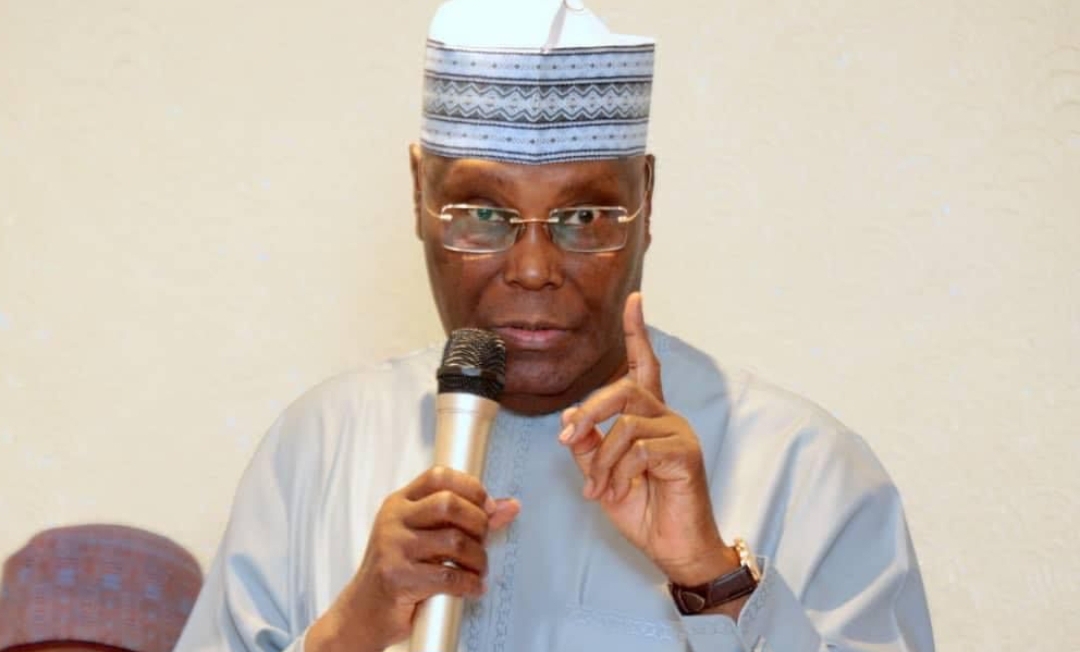
Former Vice President Atiku Abubakar has launched a sharp attack on President Bola Tinubu’s administration, accusing it of failing to secure the North-Central region of Nigeria.
Abubakar’s statement claims that the government has abandoned the area, resulting in a “monumental failure” in protecting its citizens.
Abubakar highlighted a dramatic rise in violence, citing Kwara State’s new status as a hotspot for kidnappings and bandit attacks. He also noted continued bloodshed in Niger, Plateau, and Benue states, where thousands have been killed in just two years.
The former Vice President went on to accuse the ruling APC of using thugs to disrupt opposition meetings, with security forces allegedly failing to act.
He warned that violence “is a vicious circle” that will harm those who use it, and called on the Nigeria Police Force to remain neutral and fair, reminding them that taxpayers, not the APC, fund them.

Kano State under siege by thugs
By Abbas Datti
Our beloved Kano State has now become a nightmare of unprecedented violence, lawlessness and phone-snatching all courtesy of thugs’ criminal activities. Once-peaceful communities now live under the shadow of fear as ruthless and armed gangsters unleash a reign of terror daily. These assailants, wielding deadly local weapons, have maimed, killed, and left countless families in mourning.
The attacks often strike without notice. Some places have now become theatres of war in the dead of night, forcing residents, young and old, to flee into the darkness with nothing but the clothes on their backs. Homes must be locked in broad daylight for fear of being a victim of some happy, menacing marauders.
The cruelty has engulfed so many metropolitan places of Kano State, with no concerted effort to stop the horrendous activities of those brutal thugs. We wonder when these horrible experiences will stop? Thugs have become a significant threat to the collective well-being of the people of Kano.
In the chaos, the gang of thugs attack with no mercy. Men are butchered as they defend their families; they have no scruples to attack even women and children as they attempt to escape. Residents speak of the horror of seeing loved ones hacked with machetes, swords and other local dangerous weapons. They destroyed properties, smashed buildings and cars parked outside houses and buildings.
As this wave of violence rages on, we call for urgent and decisive action from security agencies. Moreover, the Inspector General of Police is to dispatch a special intelligence unit to analyse the situation on the ground and subject it to a holistic review of the present strategy.
The people of Kano demand not only the arrest and prosecution of the perpetrators but also the establishment of permanent security posts in the most vulnerable areas. Although some security posts were built in some places for that purpose, they are yet to be fully operational, leaving residents with only the building structures. Without swift intervention, Kano risks slipping further into lawlessness, and the fragile threads of peace may be torn beyond repair.
This is not merely an attack on individuals; it is an assault on our shared humanity and our future. We ask for definite action before the fires of thugs consume us all. We ask for an end to this bloodbath that has been threatening the peace and stability of Kano and its people.
Abbas Datti writes from Kano via comradeabbasdatti@gmail.com.

Burkina Faso criminalises homosexuality
By Muhammad Sulaiman
Burkina Faso’s military junta has unanimously passed a law criminalising homosexuality, imposing prison terms of up to five years in what rights groups describe as a major setback for civil liberties.
The legislation, part of sweeping reforms to family and citizenship laws, overturns decades of legal tolerance for same-sex relations. Until the junta seized power following two coups in 2022, homosexuality was not a crime in the West African nation.
The move places Burkina Faso among more than 30 African countries that outlaw same-sex relations. Neighbouring Mali enacted a comparable law in 2024, while Ghana and Uganda have also tightened restrictions in recent years, drawing sharp criticism from global human rights organisations.
Advocates warn the law risks fueling stigma and violence against LGBTQ+ communities already facing marginalisation. Critics say the measure reflects the junta’s growing authoritarianism and its willingness to curtail individual freedoms under the guise of traditional values.
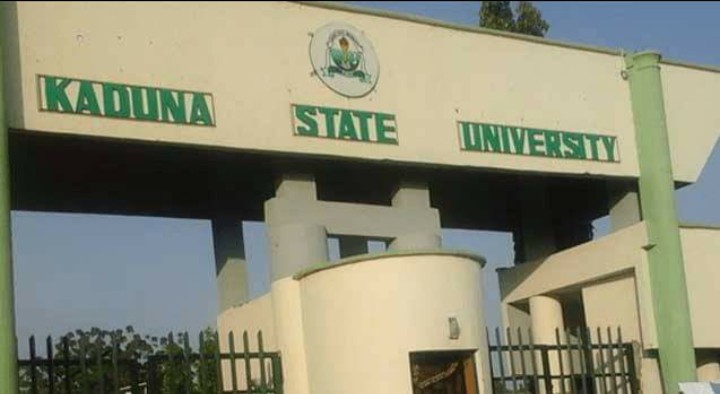
IIIT Central Nigeria Office promotes Islamic values at Kaduna State University
By Musa Kalim Gambo
In a rapidly evolving and increasingly secular world grappling with unprecedented challenges posed by science and technology, a groundbreaking symposium was convened at Kaduna State University (KASU) on August 28, 2025, to advocate for the integration of Islamic values into the academic content of tertiary institutions. Organised by the International Institute of Islamic Thought (IIIT), Central Nigeria Office, Abuja, in collaboration with KASU’s Department of Islamic Studies, the one-day event brought together leading scholars to explore the philosophical and theological foundations, pedagogical strategies, and practical pathways for embedding ethical and spiritual principles within conventional academic disciplines. The symposium was followed by the signing of a Memorandum of Understanding between Kaduna State University and the International Institute of Islamic Thought, Central Nigeria Office, on research, publication, and other areas aimed at integrating Islamic knowledge.
The symposium underscored the urgent need for education to transcend mere knowledge transmission and embrace the holistic development of character, ethics, and purpose. Speaking at the event, Dr. Sa’idu Ahmad Dukawa, the national coordinator of IIIT Kano Office, thanked KASU for the opportunity to “interface” and highlighted the IIIT project’s aim to revive the early Muslims’ approach to acquiring knowledge, integrating acquired knowledge with revealed knowledge, and reclaiming a holistic knowledge heritage. On his part, Dr. Aliyu Tanko, Coordinator of the IIIT Central Nigeria Office in Abuja, highlighted the ongoing contributions of the IIIT towards reform in Islamic studies within the framework of contemporary global realities across the Muslim world.
The Philosophical Bedrock: Tawhid as the Unifying Principle
A central theme woven throughout the presentations was the concept of Tawhid, the Islamic principle of the oneness of God, as the fundamental basis for integrating revealed (theological) and rational (philosophical) knowledge. IIIT’s Secretary General, Professor Omar Hasan Kasule, whose virtual presentation from Riyadh in the Kingdom of Saudi Arabia focused on the philosophical and theological foundations, explained that Islam itself is an integration of theology and philosophy. “All knowledge originates from one Creator,” Professor Kasule asserted, emphasising that revealed knowledge (Qur’an and Sunnah) and rational knowledge (human observation and experimentation) are inherently related and integratable.
Historically, Islamic intellectual discourse witnessed significant controversies between proponents of revealed and rational knowledge. Early Muslim thinkers, such as Al-Farabi and Ibn Sina, were heavily influenced by Greek philosophy, particularly Aristotelian thought. Al-Farabi was even known as “al mu’allim al thaani” (the second teacher) after Aristotle. However, this intellectual engagement also led to significant debates. Al-Ghazali, a towering figure in Islamic thought, famously authored “The Incoherence of the Philosophers” (Tahafut al-Falasifa), rejecting certain aspects of Plato and Aristotle’s philosophy and challenging the views of Muslim philosophers. Ibn Rushd later countered his critique in “Tahatuf al Tahatuf” (Incoherence of the Incoherent), arguing that reason and revelation cannot contradict each other because both seek truth.
Later, Ibn Taymiyah rejected Aristotelian philosophy and, in his seminal work “Removing Conflict between Reason and Revelation” (Darʾ taʿāruḍ al-ʿaql wa al-naql), proved that clear rational thought (sariih al ma’aquul) aligns with correctly transmitted revelation (sahih al manquul). This resolution to the perceived contradiction, rooted in the Tawhidi paradigm, underpins the modern movement for the integration of knowledge (IOK).
Professor Kasule further highlighted empirical observations supporting the unity of knowledge, citing discoveries such as:
- The synthesis of urea from inorganic materials breaks the barrier between organic and inorganic worlds.
- The atom is the common building block for all physical bodies.
- DNA serves as a common basis for the biological sciences, demonstrating a higher order.
- The interchangeability of mass and energy.
- Brain chemistry explaining mental phenomena.
- Universal phenomena of anticlockwise revolution, from celestial bodies to electrons and the tawaf around the Kaaba.
These scientific and natural phenomena serve as powerful evidence that the universe is integrated, implying that the disciplines studying it must also find integration.
Value-based Teaching and Research: A Holistic Approach
Professor Ahmad Bello Dogarawa, a seasoned scholar from Ahmadu Bello University, elaborated in his presentation on contextual approaches and pedagogical strategies, highlighting the value-based (VB) teaching and research methodology. From an Islamic perspective, this approach integrates ethical, spiritual, and moral values derived from Islamic teachings into the education and creation of knowledge. It seeks a “middle path,” preserving Islamic values without impeding scholarly progress.
Professor Dogarawa emphasised that VB teaching aims to nurture graduates with a strong foundation of faith, deep knowledge, competence, skills, and value-based creativity and innovation. The approach is founded on six essential elements:
- Tawhidic worldview
- Ethical considerations
- Islamic epistemology
- Contextualisation
- Integrative approach
- Maqasid al-Shari’ah (objectives of Islamic law)
He outlined practical pedagogical strategies, including infusing the Qur’anic worldview into content delivery (e.g., biology for the concept of life as a trust from Allah, economics for the prohibition of interest, and accounting for Islamic contributions to double-entry accounting). He also introduced case studies with ethical reflections.
Critiquing the scientific approach often prevalent in modern research, Professor Dogarawa pointed out its weaknesses, such as:
- Disconnection from ethics and values
- Knowledge dichotomisation
- Secularist worldview
- Neglect of context and over-reliance on statistical significance
- Vague claim of objectivity
He presented the Islamic approach as an alternative, combining spiritual, philosophical, and empirical perspectives to foster a more holistic understanding, encouraging purposeful investigation, contemplation, reflection, and verification of truth.
Challenges and Opportunities in Conventional Academia
Professor Khalid Aliyu Abubakar, the Secretary-General of Jama’atu Nasril Islam (JNI), addressed the challenges, opportunities, and strategic pathways for promoting the Islamic worldview in conventional academic environments. He acknowledged the “epistemological tensions” present in modern academia, which are often rooted in secular, materialist, and positivist frameworks that may dismiss metaphysical or revelation-based perspectives as “non-scientific”.
“Universities in the West and increasingly in Muslim majority contexts tend to separate faith from scholarship,” Professor Abubakar lamented, highlighting the resulting erosion of character and learning. He also pointed to internal fragmentation among Muslim scholars themselves, who may “lack consensus on how to integrate Islamic principles with modern disciplines”. Dr. Dukawa also used the analogy of Imam Al-Ghazali, likening acquired knowledge to “eyes” and revealed knowledge to “light” – both are essential, and neglecting either leads to blindness or inability to see. He further elaborated on Ibn Taymiyah’s work, which deconstructed Aristotelian philosophy regarding the relationships between “essence and existence” and “body and soul,” demonstrating how an Islamic perspective provides a more comprehensive understanding of reality and the afterlife.
Despite these challenges, Professor Abubakar identified significant opportunities:
- Enhancing ethical discourse: Islamic values can enrich debates on bioethics and other fields.
- Offering holistic paradigms: Integrating material and spiritual aspects of human existence (body, mind, and soul) can broaden understanding in psychology, education, and health sciences.
- Interfaith and cross-cultural dialogue.
- Revival of intellectual tradition: Promoting classical Islamic thought (e.g., Ibn Khaldun in sociology, Al-Ghazali in philosophy) and demonstrating its relevance to modern challenges.
Practical strategies include curriculum development that incorporates Islamic perspectives into the social sciences, economics, and psychology, as well as framing research questions informed by the Qur’an, Sunnah, and Islamic intellectual history.
A Call to Action and KASU’s Commitment
Professor Kasule also highlighted several societal problems arising from the lack of integrated values in the modern technological era, including:
- Lack of purposiveness (غائية): Technology advancements occur without a clear vision or purpose, leading to mere “play” or “pastime” (عبث).
- Blind following (تقليد): People blindly adopt new gadgets and trends without questioning their necessity, echoing historical instances of following forefathers without intellect.
- Over-reliance on concrete thinking over conceptual thinking: Modern life, with its abundance of imagery, discourages abstract thought, thereby impacting reflection on divine signs.
- Loss of balance (توازن) and equilibrium (اعتدال): An immersion in virtual reality and a culture of extremes can lead to a loss of natural balance in various aspects of life, contrasting with Islam’s emphasis on moderation.
To counter these issues and advance the integration of knowledge, Professor Kasule strongly advocated for professors and lecturers to write their own textbooks, integrating Islamic values rather than merely consuming knowledge from others. He outlined a detailed process for textbook writing, from general epistemology seminars to specific discipline working groups, curriculum outlines, and structured chapter development, including Islamic input, case studies, and texts from Islamic sources. IIIT offers grants to support authors in this endeavour.
The main achievement of the IOK movement, Professor Kasule noted, has been the establishment of integrated schools and universities globally, alongside integrated curricula and teaching materials, particularly in finance and food technology. However, the remaining challenge is to move beyond merely “adding Islamic values to existing knowledge or subtracting non-Islamic ones” towards creating new integrated or Islamised knowledge, making Muslims “creators and innovators and not consumers of knowledge by others”.
Concluding the symposium, Professor Abdullahi Musa Ashafa, the Vice-Chancellor of Kaduna State University, lauded the organisers and expressed KASU’s deep commitment to the integration agenda. Emphasising that “Islam is knowledge, knowledge is Islam,” he stated that KASU would analyse the presentations, implement the ideas, and organise a follow-up workshop on value-based teaching and research. Significantly, the Vice-Chancellor announced that KASU’s governing council had recently approved a brand-new Centre for Quranic Science, which will serve as a hub for discussions on knowledge, Islamic perspectives, and the relationship with Quranic insights. He also indicated a strong desire to formalise the partnership with IIIT through a Memorandum of Understanding (MOU).
The symposium at KASU marks a crucial step in re-establishing the holistic and value-driven pursuit of knowledge that characterised early Islamic scholarship, paving the way for a future where academic excellence is inextricably linked with ethical grounding and spiritual purpose.
Musa Kalim Gambo writes from Kaduna, Nigeria

UK warns international students to leave when visas expire
By The Citizen Reports
The British government has begun sending direct messages to tens of thousands of foreign students, cautioning them to depart the country once their visas run out or risk deportation, the BBC reported on Tuesday.
According to the report, the Home Office introduced a new initiative in response to what it called an “alarming” surge in student visa holders attempting to prolong their stay by applying for asylum.
For the first time, officials are reaching out to students via email and text to outline the consequences of overstaying.
The government expressed worry that more students are turning to the asylum process as a way to remain in the UK after completing their studies.
One of the messages being circulated states, “If you have no legal right to remain in the UK, you must leave. If you don’t, we will remove you.”
Official data shows that roughly 15 per cent of asylum requests last year—about 16,000—came from individuals who originally entered on student visas. Although it is unclear how many applied after their visas had expired, authorities believe the trend is significant enough to require urgent measures.
Home Secretary Yvette Cooper told the BBC that some students are “claiming asylum even when things have not changed in their home country.”
She added, “We obviously will do our bit to support genuine refugees, but if nothing has changed in their country, people should not be claiming asylum at the end of a student course.”
Cooper also highlighted the strain that the rising number of asylum claims from students places on the UK’s housing system, particularly accommodation and hotels for asylum seekers.So far, around 10,000 students with visas close to expiration have received these warnings.
The Home Office expects to contact another 130,000 students and their dependents in the coming months, in line with the busy autumn academic intake, the BBC reported.
The message being sent further reads, “If you submit an asylum claim that lacks merit, it will be swiftly and robustly refused.
Any request for asylum support will be assessed against destitution criteria. If you do not meet the criteria, you will not receive support. If you have no legal right to remain in the UK, you must leave. If you don’t, we will remove you.”The move forms part of broader immigration reforms introduced by the Labour government.
In May, the Home Office announced stricter requirements for universities, linking their ability to sponsor international students to higher standards on visa refusals and course completion rates.
While much of the immigration debate in Britain has focused on Channel crossings, officials say they are also increasingly troubled by those who entered legally but later shifted to the asylum system.
Figures show that of the 108,000 asylum applications lodged last year, about 40,000 came from people who arrived through legal routes, compared with 35,000 from small boat arrivals.
Students accounted for the largest share of these legal entrants seeking asylum, with numbers nearly six times higher than in 2020.
Although applications from students have since dropped by 10 per cent, the Home Office insists further reductions are necessary. Cooper noted that student visa holders represent just over one-tenth of all asylum claims but maintained that “to fix the system, we must tackle every single bit of it.”
The government has also reduced the time foreign graduates can remain in the UK after completing their degrees, cutting it from two years to 18 months. Recent figures show that successful asylum claims from skilled worker visa holders have also decreased.
59th birthday: Tinubu praises Shettima’s dedication
By Abdullahi Mukhtar Algasgaini
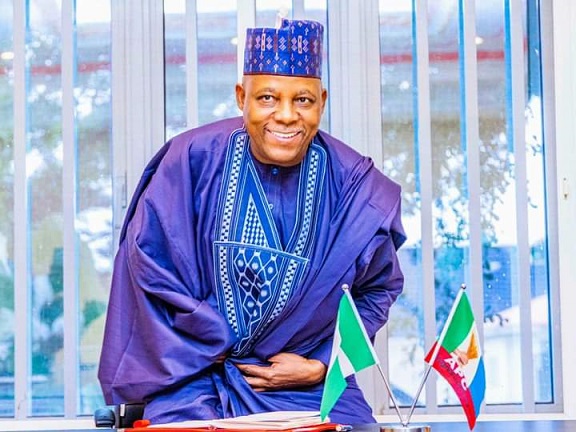
President Bola Tinubu has celebrated his deputy, Vice President Kashim Shettima, as a loyal partner and a pillar of his administration, on the occasion of Shettima’s 59th birthday.
In birthday message released on Tuesday, President Tinubu commended the Vice President for his unwavering “courage, sense of duty, tenacity, determination, and belief in Nigeria’s greatness.”
Reflecting on their political journey, the President stated that his choice of Shettima as a running mate was based on “competence and other qualities that Nigeria could depend on,” adding that the Vice President has justified that choice every day by strengthening the administration’s work and bringing fresh perspectives.
The message highlighted Shettima’s past service as a two-term Governor of Borno State and a Senator, noting that he demonstrated that “leadership is service, not privilege, even in the face of immense challenges.”
President Tinubu credited their partnership as integral to the early successes of the ‘Renewed Hope Agenda,’ specifically mentioning advancements in securing global partnerships, food security, and investment reforms.
Looking ahead, the President expressed confidence that their collaboration would continue to yield visible results for Nigerians, including new trade corridors, schools, hospitals, and jobs.
He concluded by describing their relationship as a bridge across Nigeria’s regions and traditions, united in purpose. He wished the Vice President “renewed vitality, wisdom and more years of impact.”
The Vice President marks his 59th birthday on Tuesday, September 2, 2025.

Jigawa at 34: Building a legacy of growth and stability
By Muhammad Abubakar Tahir
Jigawa State was created on August 27, 1991, by the administration of General Ibrahim Badamasi Babangida. Since then, the state — with its 27 local government areas and Dutse as its capital — has grown remarkably in almost every sector, living up to its nickname: “The New World.”
Anyone familiar with Jigawa today will agree that, among the states created at the same time, it has made more than commendable progress. Its story has been one of consistent development, particularly in modern agriculture, healthcare, environmental sanitation, good governance, and infrastructure.
Over the years, each governor who served the state has left a footprint of meaningful projects. Their efforts deserve gratitude and prayers from the citizens, for together they have turned Jigawa into one of Nigeria’s quiet models of growth.
One of the most visible achievements is in road construction. According to surveys, Jigawa ranks among the top three states with the best road networks in the country. Travelling from Birniwa to Gwaram, one will see how successive governments have invested in quality roads that connect communities, ease transportation, and improve livelihoods.
In agriculture, Jigawa stands tall as a national pillar. About 75 per cent of Nigeria’s exported food products originate from the state — a feat that underscores its central role in sustaining the nation’s economy.
Governor Umar Namadi’s administration, in particular, has deepened support for farmers. By making fertiliser affordable, offering loans, and providing milling machines and rice processing equipment, his government has empowered rural farmers and strengthened food security.
In Hadejia, the rice business has transformed lives. Buyers now flock in from across the country, increasing state revenue and creating employment opportunities. Many youths have become millionaires through rice farming and processing. And it is not just rice — Jigawa also thrives in sesame, hibiscus, millet, and maize, with many of these products being exported internationally.
The state’s lesser-talked-about sectors are also booming. Fish and frog farming, for instance, are creating jobs for youths from both North and South, while contributing to local revenue. My recent investigative work with WikkiTimes highlighted this silent but powerful transformation.
Education has also advanced. The sons and daughters of Jigawa continue to make their mark both nationally and internationally. Governments past and present have invested in schools and supported talented youths to acquire modern skills abroad — laying a foundation of knowledge for future generations.
Governor Namadi has shown particular resolve by announcing plans to recruit 10,000 teachers — a bold initiative that will strengthen the education system.
Progress is also visible in other areas, including electricity, water supply, and street lighting. Towns and villages that were once engulfed in darkness are now well illuminated, symbolising infrastructural renewal.
Jigawa has also remained at the forefront in welfare policies. It was one of the first states to implement the national minimum wage, long before it became mandatory across Nigeria. This pro-worker stance has relieved hardship for civil servants and enhanced productivity.
The state’s reputation for peace and security is not to be overstated. Jigawa remains one of the safest states in the country — a fact that allows visitors to move freely without fear. Governor Namadi has further strengthened this by addressing farmer-herder conflicts, ensuring lasting harmony among communities.
Tourism is another rising potential. The serenity, natural beauty, and hospitality of Jigawa are gradually attracting visitors, opening new doors for cultural and economic growth.
Truly, Jigawa has fulfilled its promise as the “New World.” From humble beginnings, it has become a source of pride not only for its people but also for Nigeria.
May Allah continue to bless Jigawa with peace, progress, and prosperity. Ameen.
Muhammad Abubakar Tahir wrote in from Hadejia, Jigawa State, via abubakarmtahir81@gmail.com.

Kano police arrest 107 suspects, recover weapons in new operation
By Uzair Adam
The Kano State Police Command has rolled out a fresh security initiative tagged “Operation Kukan Kura” to strengthen community policing and intensify the fight against crime using both kinetic and non-kinetic strategies.
The Commissioner of Police, Ibrahim Adamu Bakori, disclosed this during a press briefing on Monday, noting that the operation aligns with the directive of the Inspector General of Police, Kayode Egbetokun, to entrench community-centered policing.
He explained that the initiative is designed to boost public participation and encourage collaboration with security agencies, stressing the crucial role of residents as the “eyes and ears of the Police” across the state.
He recalled that similar strategies had earlier produced positive outcomes, particularly in tackling thuggery, locally called Fadan Daba.
Bakori also highlighted the Command’s recent breakthroughs, revealing that 107 suspects were apprehended in August for offences such as armed robbery, kidnapping, human trafficking, drug trafficking, and theft.
Items recovered during the operations include an AK-47 rifle, seven fabricated guns, 11 live rounds of ammunition, motor vehicles, motorcycles, cows, cutlasses, knives, and large quantities of illicit drugs.
He added that in 2025 alone, the Command had recovered hundreds of weapons and significant quantities of narcotics.
While commending officers for their resilience, he pointed out that the adoption of digital tools and technological innovations had further enhanced police operations.
The Commissioner assured that the Command would continue to adopt fresh strategies to outpace criminal elements and sustain peace in the state.
He expressed appreciation to residents and the media for their vigilance and support.
“The willingness of our people to share information has greatly enhanced our operations and strengthened our capacity to safeguard the state,” he said.
Bakori urged the public to promptly report crimes or suspicious activities to the nearest police station or through the Command’s emergency hotlines.