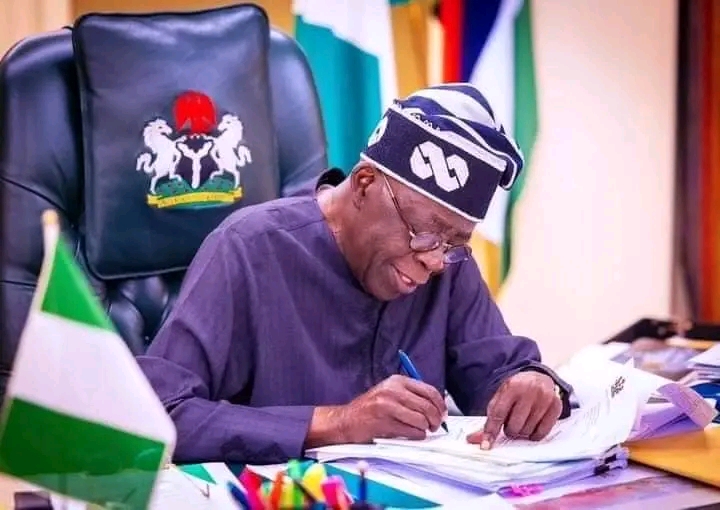
FG seeks fresh $1.75bn World Bank loan
By Muhammad Abubakar
The Federal Government of Nigeria has approached the World Bank for a fresh loan of $1.75 billion to support its economic reform agenda.
Minister of Finance and Coordinating Minister of the Economy, Wale Edun, disclosed that the facility would help cushion the impact of recent policy adjustments, including the removal of fuel subsidy and the unification of the exchange rate, which have placed significant strain on households and businesses.
He explained that the request, if approved, would provide critical budgetary support, strengthen fiscal sustainability, and help address the nation’s infrastructural and developmental challenges.
Nigeria’s President, Bola Ahmed Tinubu, has repeatedly defended his administration’s reforms, insisting they are necessary to revive the economy and attract foreign investment.
World Bank Country Director for Nigeria, Shubham Chaudhuri, confirmed that discussions are ongoing, although no official approval has been given yet.
Nigeria, Africa’s largest economy, has in recent years relied on multilateral loans to bridge financing gaps amid rising debt obligations and dwindling revenues.

One of the kindest has gone: A tribute to Prof. Hafizu Miko Yakasai
Dr. Muhammad Sulaiman Abdullahi
Innalillahi wa inna ilaihi raji’un. May Allah have mercy on Professor Hafizu Miko Yakasai. He was such a wonderful man that he never held any grudges against anyone.
I met Prof. Hafizu as far back as 2003/2004, and by 2007/2008, he had supervised my B.A. project on Hausa translation. While writing the project, Malam pushed me so hard that it later transformed my life for the better.
Malam was hardworking, friendly, calm and always gentle. You can even say that Malam was the nicest of them all. Malam was always smiling, and he spoke to us as if he were talking to his friends or even his bosses. Malam always looked down when he spoke to you. So kind and loving. We will genuinely miss his charming smile, especially when he wants to make a point or respond to an interesting topic.
To have known Malam was to have known a rare and gentle light in this world. The always smiling gentleman. Today, that light feels dimmed, the smiles have left us, and our hearts are heavy with a grief that words can scarcely hold. Yet, even in this time of mourning, we are compelled to celebrate the extraordinary person he was —a teacher, a mentor, and one of the kindest souls to have graced our lives at Bayero University, Kano.
Prof. Hafizu was a teacher in the truest sense of the word. His classrooms were not just a place of learning, but a sanctuary of encouragement and support. He didn’t just teach Semantics; he taught us how to think, how to wonder and how to believe in ourselves even when we doubted our own capabilities.
The professor saw potential in the quietest student and brilliance in the most struggling mind. His greatest lessons were not found only in the textbooks, but in his unwavering patience, smiles and profound belief that every one of us had something unique and valuable to offer the world.
When Malam became the President of Nigeria’s Institute of Translators and Interpreters, he called me and asked me to participate in a high-level process of evaluating new intakes. I felt as if Malam was elevating me to a position for which I wasn’t qualified, but Malam sat by my side while I put the records in order and smoothed out the process, and together, we made it a success.
Wallahi Malam was a very great gentleman to the core. A peace-loving fellow. A man of charisma and calibre. I never saw him become angry. Perhaps he has a unique way of swallowing all the anger and reveals only soothing smiles.
There was a time when Malam invited us to a project that he had obtained from his good friend, Barrister Dasin. It was a project of translation. We really enjoyed ourselves and have our pockets filled up.
One day, we sat at the Centre for Research in Nigerian Languages, Translation & Folklore. All of a sudden, Malam asked Muhammad, ‘How can we translate…’ He then mentioned a particular word. I was amazed that this was my teacher, who had taught me for years, now asking me for something. This is to show you how simple and easy-going Malam was.
Besides teaching us, Malam took us as his own children, always drawing us nearer. He never acted like a boss; he was a guide who walked beside us, and with us, not ahead of us. He offered counsel without judgment, wisdom without arrogance, and a listening ear that made even our most minor problems feel important. He shaped not only our intellect but our character, leading always by the quiet example of his own integrity, compassion, and grace.
And yet, what we will carry with us most indelibly, what is etched into our memory with the warmth of a permanent sun, is his utmost kindness and smile. That ever-present, genuine, and kind smile. It was a beacon of welcome in the morning, a signal of understanding during a difficult lesson, and a silent celebration of our successes. In a world that can often be too serious and too harsh, his smiles were a constant reminder that joy is a choice, and kindness is a language everyone understands. It was the purest reflection of his beautiful spirit.
Thank you for everything. Your syllabus for a life well-lived is complete, and you earned an A+ in humanity, wisdom, dedication and kindness. We will miss you more than words can say, but we will never forget your lessons and your magnificent smiles.
Malam was an HOD many years ago; he was a Dean, a Professor, and a pioneer Provost of the College of Arts, and he died in active service. He came and worked in the university even in the last days of his life. Above all, he was a very kind gentleman, a devout servant of Allah.
The best part of Malam’s life was that not many people knew he was an A-grade student and teacher of the Qur’an. Coincidentally, the last events he attended in his academic life were on the glorious Qur’an. The Centre organised the last for Qur’anic Studies under the leadership of Sheikh Prof. Ahmad Murtala. May the almighty Allah raise you among the Qur’anic reciters on the Day of Judgement, amen.
Prof. Hafizu has done his part and left. It is now time to reflect on his life and build on the good legacies he left. I extend my condolences to his family, friends, students, Bayero University, Kano, and the entire academic community.
May Allah forgive your shortcomings, Malam. May Allah make Jannatul Firdaus your final home. You have done wonderfully, Malam, with endless gratitude and love. Insha’Allah, you will continue to smile in Jannah, sir. Ameen!

Sahara Reporters charades again against Prof. Bugaje: Setting the records straight
By Ibrahim Mustapha
I read a story entitled “Fraud, Job racketeering scandal rocks Nigeria’s Technical Education Board,” carried out by Sahara Reporters, an online media outlet, on August 14, 2025, with great shock. Ordinarily, one should not have bothered to reply to the tissues of lies, misrepresentation of facts, and poor grasp of public service rules by Sahara Reporters and its co-sponsors. However, considering the weight of allegations and how gullible minds can be negatively influenced, it has become pertinent to set the record straight.
Though one had expected Sahara Reporters to produce a balanced story by contacting the executive secretary of the board, Professor Idris Bugaje, who remains accessible to share his side, this has never happened. The online media is so desperate to give a dog a bad name in order to hang it. The online media has discarded professional ethics and turned into a willing tool to smear the good image of Professor Bugaje and NBTE through fictitious allegations.
To accuse Professor Idris Bugaje of fraud and so-called jobs racketeering is nothing but lies, vendetta, and a deliberate campaign of calumny aimed at tarnishing his reputation, which he has built over many years. Government organisations carry out recruitment to fill vacancies created by staff death, retirement, and other circumstances.
Those organisations also recruit to meet their workforce demand. NBTE, like any other government organisation, is not exceptional. It carried out its recruitment exercise after vacancies had been identified, a waiver had been granted, and the Head of the Civil Service of the Federation had approved. There has never been any recruitment conducted without due process and the extant laws duly followed.
Another lie concocted by the Sahara Reporters and their sponsors is that Professor Idris Bugaje is bypassing the Minister of Education in all the recruitment he carried out. There is no iota of truth, as the executive secretary ensures that he consults widely with the Minister of Education for seamless policy implementation and recruitment exercises. Therefore, their allegations are nothing but a figment of their imagination.
The sponsors of the publication have spent considerable energy on “wild goose chase” allegations that Professor Idris Bugaje has made staff redundant and opted for a few to work with them. I think these people are rushing to blackmail Professor Idris Bugaje and cannot even stop to see some of his reforms that have transformed the board. For instance, upon assumption of office, Professor Idris Bugaje unbundled the NBTE by opening regional offices across the country. The “raison d’être” was to simplify work and assign more responsibilities to staff. If Bugaje wanted to make staff redundant, he would not have opened new offices across the country.
Regarding the allegation of rapid promotion for transferred staff, Sahara Reporters and its co-travellers have also gotten it wrong. Professor Idris Bugaje will never approve of illegality. He ensured the proper placement of staff. You cannot expect a staff member on level 14 to be demoted to level 13 because they have transferred their service to NBTE. That is why those who have been promoted to directors are eminently qualified.
Professor Idris Bugaje has been transforming NBTE in various aspects of human development. He is poised to achieve sound and qualitative technical and vocational education in line with Mr President’s renewed Agenda. Under his watch, NBTE has achieved great success through the monitoring and evaluation of vocational and technical institutions. It is sad to note that some unscrupulous people are bent on tarnishing his hard-earned integrity through spurious and blatant lies.
No amount of blackmail can distract Professor Idris Bugaje from initiating and implementing policies in line with the NBTE mandate.
Ibrahim Mustapha Pambegua, Kaduna State, via imustapha650@gmail.com.

Biden undergoes surgery for skin cancer
By Sabiu Abdullahi
Former United States President, Joe Biden, has undergone a surgical operation for skin cancer after images and videos emerged showing the 82-year-old with a bandage and scar on his forehead.
Fox News reported on Thursday that Biden’s spokesperson confirmed he had Mohs surgery, a procedure designed to remove thin layers of skin one at a time until all cancer cells are cleared while preserving as much healthy tissue as possible.
The specific type of skin cancer has not been disclosed.The surgery drew public attention after Biden was seen leaving a church in Delaware during the Labour Day weekend with a visible mark on his forehead.
His spokesperson, Kelly Scully, explained that the operation aimed to “completely remove the cancer while minimising skin damage.”
This is not Biden’s first encounter with skin cancer. In 2023, while still president, a basal cell carcinoma lesion was removed from his chest.
His physician at the time, Dr Kevin O’Connor, confirmed the cancerous tissue was fully extracted without the need for further treatment.Earlier this year, in May 2025, Biden revealed that he had been diagnosed with an aggressive form of prostate cancer which had spread to his bones.
Despite this, he has continued to project a message of hope. On social media, he wrote: “Cancer touches us all. Like so many of you, Jill and I have learned that we are strongest in the broken places.”
The Biden family has a painful history with cancer.
His late son, Beau Biden, died of a brain tumour, while his wife, Jill Biden, had two cancerous skin lesions removed in 2023.At 82, Biden remains the oldest living former U.S. president.
He continues to manage his health while maintaining public appearances, reflecting resilience and the value of prioritising medical care.Health experts stress that his case underscores the importance of early detection.
The American Cancer Society has long advised regular screening, warning that cancers such as skin and prostate cancer can be treated effectively if discovered in time.
The organisation recommends prostate-specific antigen testing for men of average risk from the age of 50, and from 45 for those at higher risk, including Black men or individuals with a family history.
Medical professionals also urge families and communities to share knowledge about preventive measures and to seek medical attention promptly.

Police summon ADC party officials over alleged incitement, violence
By Abdullahi Mukhtar Algasgaini
The State Criminal Investigation Department (SCID) of the Kaduna State Police Command has launched an investigation into several serious allegations against key members of the African Democratic Congress (ADC) in the state.
In a letter addressed to the Party Chairman of the ADC’s Kaduna Chapter, the police requested his presence alongside seven named party members to clarify allegations reported against them.
The case, filed under the headings: Criminal Conspiracy, Inciting Disturbance of Public Peace, Mischief, and Causing Grievous Hurt, was reported by complainants on Monday, September 8, 2025.
The individuals summoned for questioning are Mal. Nasir El-Rufa’i, Bashir Sa’idu, Jafaru Sani, Ubaidullah Mohammed (a.k.a 30), Nasiru Maikano, Aminu Abita, and Ahmed Rufa’i Hussaini (a.k.a Mikiya).
The police letter, which anticipates the party’s “timely response,” concluded with the regards and best wishes of the Commissioner of Police.
As of now, the ADC party leadership has not issued an official public statement regarding the summons or the specific details of the allegations.

Police arrest woman for burying newborn alive in Kebbi
By Uzair Adam
The Kebbi State Police Command has arrested a 20-year-old woman, Maryam Atiku, for allegedly attempting to kill her newborn baby girl by burying her alive in a bush in Dandi Local Government Area of the state.
This was disclosed in a statement issued on Wednesday by the Police Public Relations Officer, CSP Nafiu Abubakar, on behalf of the Commissioner of Police, Kebbi State Command, Bello M. Sani.
According to the statement, the incident happened on June 25, 2025, around 8:00 p.m., when Maryam, a resident of the Nasarawa area of Kamba, gave birth and allegedly tied three wrappers around the baby’s neck, covered her mouth, and buried her in a shallow grave at Malam Yaro bush.
The statement explained that on June 26, at about 12:30 p.m., a farmer, Alhaji Kabiru Muhammad, discovered a disturbed patch of soil resembling a fresh grave while working on his farm near Mallam Yaro village.
He raised an alarm, and with the help of nearby residents, the baby was exhumed alive.
The statement further noted that the baby was immediately rushed to General Hospital, Kamba, where she received medical attention and was certified to be in stable condition.
On receiving the report, detectives from the State Criminal Investigation Department (SCID), Birnin Kebbi, swiftly arrested the suspect.
According to the statement, she confessed to the crime during preliminary investigation. The Commissioner of Police, as quoted in the statement, condemned the act and described it as barbaric.
He reiterated the command’s zero tolerance for child abuse, exploitation, and all forms of gender-based violence in the state.
The statement added that CP Bello urged parents, guardians, and community leaders to fear Allah in safeguarding children under their care and to resist compromising their future because of poverty or other factors.
It also acknowledged the support of the wife of the Kebbi State Governor, Hajia Zainab Nasare Nasir Idris, for her intervention in ensuring the rescued child’s welfare, as well as the efforts of Alhaji Kabiru Muhammad, whose quick action saved the baby’s life.
The statement concluded that upon completion of investigation, the suspect was arraigned in court for prosecution to serve as a deterrent to others.

Kano strengthens HIV response with over N2bn despite donor exit
By Uzair Adam
Kano State has developed a sustainable framework to boost its HIV response despite the withdrawal of global donor funding, the state government has disclosed.
This was revealed in a statement issued by the Public Relations Officer of the Kano State Agency for the Control of AIDS (KSACA), Sa’adatu Suleiman, on Wednesday.
According to the statement, the Director General of KSACA, Dr. Usman Bashir, presented the state’s progress and strategies during a briefing with the Commissioner of Health, Dr. Abubakar Labaran Yusuf, heads of government agencies, and key partners.
The statement explained that while several states experienced disruptions in HIV services following global policy shifts, particularly under the Trump administration in the United States, Kano remained resilient through proactive planning, strong political will, and consistent government support.
It added that Governor Abba Kabir Yusuf backed the HIV response with a dedicated budget of N2 billion, with nearly half of the funds already released to ensure test kits, drugs, consumables, and improved data systems remain available.
“The government’s commitment has ensured that the agency is now stronger, functional, and working hand-in-hand with sister agencies to prevent service interruptions,” the statement quoted Dr. Bashir as saying.
The statement further noted that the Commissioner of Health, Dr. Abubakar Labaran Yusuf, reaffirmed the government’s commitment to sustaining HIV services.
It stressed that KSACA continues to collaborate with agencies including the Hospital Management Board, Kano State Primary Health Care Management Board, KHETFUND, KSCHMA, KNCDC, and PHIMA.
It added that the presentation was not only a review of progress but also an opportunity to identify challenges and chart new strategies to sustain and strengthen HIV services in the state.

History Makers: Kano siblings graduate with first-class degrees from different universities, with identical CGPAs, in same year
By Uzair Adam
Two siblings from Rimin Gado Local Government Area of Kano have achieved an exceptional milestone after graduating with first-class degrees in Computer Science from different universities in the same year.
Sulaiman and Maryam Salisu, younger brothers and sisters of a prominent BBC journalist, Aisha Salisu Babangida, both achieved identical Cumulative Grade Point Averages (CGPA) of 4.51 in 2025.
While Sulaiman studied at Al-Istiqama University in Sumaila, Kano, Maryam attended the Federal University of Dutsin-Ma in Katsina State.
Speaking with The Daily Reality on Wednesday, Sulaiman said his achievement was not just personal but a fulfilment of his late father’s dream.
He stated, “When I saw my final result, I was surprised. I was thrilled because I had fulfilled my father’s dream. He always told me I could do it and reminded me how important it was.”
He explained that his first semester result placed him in the first-class category, which brought joy to his father. But when his performance later dropped, his father sat him down and encouraged him to refocus. “That conversation changed everything,” he recalled.
Sulaiman also spoke about the sacrifices his parents made during his studies, narrating how his mother once sold her goat to send him money for food after he ran out of supplies.
“I only discovered what happened when I returned home during the semester break. I felt like crying when I realised the sacrifice. It motivated me to work harder because I knew my parents were giving their all for me,” he said.
As a member of the pioneer graduating set at Al-Istiqama University, Sulaiman said having no seniors to look up to pushed him to put in his best and even guide his peers.
Similarly, his sister, Maryam, graduated with the same CGPA of 4.51 from the Federal University, Dutsin-Ma. She described her success as a dream she had nurtured for years.
She stated, “I cannot describe the joy I feel. Completing my studies with such a result is something I had prayed and worked for. This achievement is not mine alone; it belongs to my family and to Nigeria as a whole.”
Maryam recalled that she nearly lost focus after the death of their father while she was about to begin her final year, but the support she received from her family, teachers, and friends helped her persevere.
She said her ambition is to pursue advanced studies in Computer Science, with a focus on software development and Artificial Intelligence.
She stated, “I want to use the knowledge I have gained to bring positive change to society, especially in Nigeria and Africa.
“I also hope to inspire women and young people to believe that with determination and faith, they can achieve their dreams,” she added.
Both Sulaiman and Maryam expressed gratitude to their family, teachers, and friends, praying for Allah’s reward for their late father and their mother, whose sacrifices they said played a vital role in their success.

Avoid scrolling your phone on toilet, experts warn
By Muhammad Abubakar
Health experts are warning against the growing habit of spending long periods on the toilet while scrolling through smartphones, according to a recent report by The Washington Post.
Doctors caution that sitting too long on the toilet can put unnecessary pressure on the rectal veins, increasing the risk of hemorrhoids and other related problems. What often begins as a quick bathroom break can stretch into 15 minutes or more when people get absorbed in social media, emails, or online news.
“The toilet is not a lounge chair,” one colorectal specialist noted. “It’s meant for short use, not for catching up on your notifications.”
Instead, experts advise leaving your phone outside the bathroom and limiting screen time during restroom visits. By doing so, they say, people can not only reduce health risks but also foster healthier digital habits.

Local government autonomy or new states: Which way for Nigeria?
By Lawal Dahiru Mamman
There are times when the stars seem to be aligning. All trouble appears to be disappearing, awaiting only what happens when those stars fall into line. But then, unexpectedly, things take a different turn, and the trouble assumes a different shape, sometimes with an additional burden. Such is the irony of Nigeria.
Governance was generally out of reach for the common man, especially those at the grassroots level who lacked the basic necessities required to live a decent life. To address this, there has been a clamour for local government autonomy. Successive governments have attempted to do so, but it was only the current administration that secured this victory in July 2024.
Since then, bureaucracies and political “manoeuvring have clogged up full implementation. Enforcement faced a delay in August when the federal and state governments negotiated a three-month moratorium, due to concerns about council workers’ salary payments and the need to conduct LG elections in certain states, alongside other pressing matters.
Just as progress seemed imminent, another hurdle emerged. The Central Bank of Nigeria (CBN) directed LGs to submit at least two years’ worth of audited financial reports as a prerequisite for receiving direct allocation. Key stakeholders, including the Association of Local Governments of Nigeria (ALGON), condemned the directive as perceived delay tactics.
While we are at it, the long-standing call for the creation of more states has resurfaced. In February, the House of Representatives’ Committee on Constitution Review threw a spanner in the works by proposing the creation of 31 additional states across Nigeria. If this comes to fruition, it would swell the number of states to 67, with some quipping that this would leave Nigeria with more states than “the Almighty United States”.
The proposed distribution of the new states is as follows: six to the North Central, four to the North-East, five to the North-West, five to the South-East, four to the South-South, and seven to the South-West.
The proposed new states are New Kaduna and Gujarat from Kaduna State, FCT State, Tiga and Ari from Kano, Kainji from Kebbi State, and Etiti, Orashi, Adada, and Orlu from the South-East.
Others are Okun, Okura, and Confluence states from Kogi; Benue Ala and Apa states from Benue; Amana state from Adamawa; Katagum from Bauchi state; Savannah state from Borno; and Muri State from Taraba.
Also included are Lagoon from Lagos, Ogun, Ijebu from Ogun State, as well as Oke Ogun/Ijesha from Oyo/Ogun/Osun States, Ogoja from Cross River State, Warri from Delta, Ori and Obolo from Rivers, Torumbe from Ondo, and Ibadan from Oyo State.
Some proponents interestingly argue that these new states possess abundant mineral and natural resources, which would be harnessed post-creation for the benefit of their people. One is forced to question the logic behind such reasoning and then wonder, are these not already entities within existing states, or would these new states be conjured out of thin air to perform this economic magic?
One would also need to educate Nigerians on a little bit of history and the processes required to achieve state creation in the country. The last time Nigeria created new states was in 1996, under the late General Sani Abacha. The only time a civilian government created a federating unit in the form of a state, rather than a local government area, was in 1963, and it was reportedly done without good faith.
The Northern People’s Congress (NPC) was the ruling party at the centre, and it was in alliance with the National Council of Nigeria and the Cameroons (NCNC), which was the ruling party in the Eastern Region. The ruling party in the Western Region was the Action Group (AG), while the opposition party was at the centre. There were other smaller parties, but only the NPC, NCNC, and AG were well-known. The alliance at the centre wanted to counter the growing influence of the Action Group, so a region was created from it.
That region was named the Midwest Region, which later became Bendel state (derived from Benin and Delta). Bendel later became the Edo and Delta states.
Since then, only military regimes have created states in Nigeria. The Gowon administration, on May 27, 1967, abolished the regional system and created 12 states – North-Western, North-Central, North-Eastern, Kano, Benue-Plateau, Kwara, Western, Lagos, Mid-Western, East-Central, South-Eastern, and Rivers States – as part of the strategies to weaken Col. Odumegwu Ojukwu and prevent the civil war.
Creation of states continued under subsequent military regimes. General Murtala Mohammed created an additional seven states (Bauchi, Benue, Borno, Imo, Niger, Ogun, and Ondo) in 1976, bringing the total to 19.
General Babangida created Akwa Ibom and Katsina states in 1987, and nine more states (Abia, Delta, Enugu, Jigawa, Kebbi, Kogi, Osun, Taraba, and Yobe) in 1991, bringing the total to 30. General Sani Abacha sealed it in 1996 by creating six more states – Bayelsa, Ebonyi, Ekiti, Gombe, Nasarawa, and Zamfara.
Conditions for state creation in a democratic setting are stringent and cumbersome, making it unlikely to happen. Military governments created states by decree, but in a democracy, it is a different ball game.
Before anyone advocates for the creation of a new state, they should study the provisions required to do so. Two-thirds of the National Assembly, as well as endorsements from State Houses of Assembly and Local Government Councils,must be achieved. This requirement makes it challenging to create new states in Nigeria.
In accordance with Section 8 of the Nigerian Constitution, any new state creation must be preceded by the approval of citizens from the area in question through a referendum conducted by the Independent National Electoral Commission (INEC). For the referendum to be successful, a two-thirds majority of the people in question must consent to the creation of the new state.
Then comes resubmission of proposals in line with the prescribed guidelines, which includes submitting hard copies and electronic copies of memoranda to the committee’s secretariat, among other things.
At a time we all advocate for a cut in governance costs, what would creating new states mean for the economy? What about the scarce resources consumed in holding meetings to contest whether or not to create new states? And what about the cost required to set up additional administrative units, the elections to be conducted, or the SUVs that would need to be purchased for 31 new brand governors and deputies, as well as principal officers in the House of Assembly?
The stars seem to be aligning in favour of local government autonomy, and hope is on the horizon for meaningful governance at the grassroots level, which will lead to national development. The movement towards state creation,therefore, appears to be an unnecessary and costly distraction.
Lawal Dahiru Mamman writes from Abuja and can be reached via: dahirulawal90@gmail.com.