Technology

How to detect Internet fraud

By Muhsin Ibrahim

There are many ways to detect scammers, especially those “offering” jobs (or scholarships) in foreign countries.

Here are a few tips:

1. Your employers will never ask you for money. They should, in fact, give you money. Once anyone asks you to deposit any amount of money into any account, run.

2. Visas are processed and issued solely at the embassies of the countries where you secure a job. In Nigeria, these embassies are primarily located in Abuja or Lagos.

3. Most jobs are offered only after a thorough review of your application, an aptitude test, and an interview.

4. In contrast, fraudulent jobs are effortlessly secured, often after submitting application documents or filling out forms online.

5. Please contact people who possibly know better or live in those countries before accepting a suspicious job offer. Contrary to the general belief, most of us are excited to see you here.

May you land the job of your dreams, amin.

Muhsin Ibrahim is a lecturer at the University of Cologne and he can be reached via muhsin2008@gmail.com.

Vietnam’s Facebook hackers nabbed in multi-million dollar sting

By Uzair Adam Imam

Vietnamese authorities have apprehended 20 individuals accused of orchestrating a widespread scheme to steal and commandeer tens of thousands of Facebook accounts, both domestically and internationally, reports state media. 

The operation yielded a staggering profit of nearly $4 million.

The group stands accused of creating and disseminating malware to seize control of over 25,000 high-value business accounts, as detailed by VNExpress. 

Cybersecurity police conducted raids across key locations, including Hanoi, Ho Chi Minh City, and Nam Dinh province, throughout April, resulting in the arrests.

The alleged mastermind, 31-year-old Dang Dinh Son, purportedly procured a malware source worth $1,200 to pilfer Facebook user credentials. 

According to state media, Son, who hails from Nam Dinh province, reportedly utilized this malicious software to hijack two popular Facebook fan pages associated with photo editing platforms: “Art Bay AI” and “Evoto Studio.”

Their modus operandi involved enticing Facebook users to download an application embedded with malware, subsequently compromising their devices. 

The stolen data was then funnelled to a server controlled by Son, who distributed it to five Telegram groups, facilitating the hijacking of user accounts by his accomplices.

The cybercrime syndicate profited by selling high-value Facebook accounts, while lower-value accounts were exploited for advertising purposes on e-commerce platforms, generating significant revenue. 

It’s reported that the accused collectively amassed $3.8 million from their illicit activities.

According to Statista, Vietnam ranked seventh globally in terms of Facebook users as of April, boasting a user base of 75.3 million.

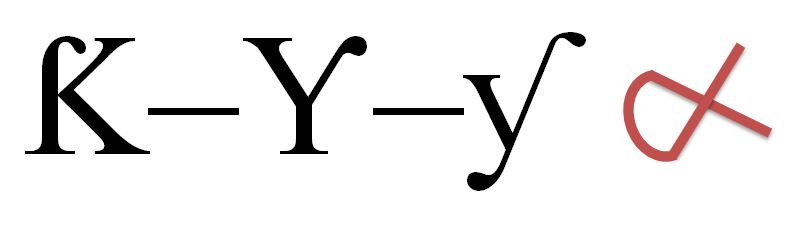
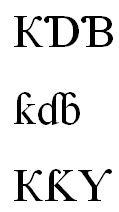
Ƙ and Ƴ: Who smuggles these characters into Hausa writing?

By Dr. Muhammad Sulaiman Abdullahi

I have recently seen the proliferation of the use of some letters which are clearly not part of the mainstream Hausa writing system. These letters are now getting ground and are even trying to push away the real and bonafide owners of the place. These are no other than the new Ƙ and Ƴ and some of their other dependants.

You see, in the field of Hausa orthography, we are already battling with various challenges that defy simple logic and reasoning and lack uniformity amongst the Hausa scholars. However, I find this recent one very shocking and disturbing. This is simply because, when you have a controversy about how to write a Hausa word, that may not be a big problem as perhaps each variant of the spellings may have some scholars backing it, and they may have a cogent and academic reason for that. But for these new entrants – Ƙ, Ƴ, ƴ – I don’t know who backs them. I don’t know who sent them. I don’t know who among the scholars promotes and propagates them. I feel like they are sent by some hidden forces of technology.

I can guess from where these recalcitrant intruders are coming. They are from our (newly) electronic gadgets and some Hausa keyboard applications, which are just sent into the market without any regard to the experts and knowledgeable professors in the field. Someone who has a company of smartphones will just employ those who think they know Hausa or, those who speak Hausa, or those who don’t even care about Hausa to do the Hausa technical dealings for him. This is where the problem probably came from. If you check our smartphones and some computer symbols, you find these deviant Ƙ and ƴ hanging around without any reason and without knowing who brought them. They are just like gatecrashers who are trying to feast more than the invited VIPs.

The affected legitimate Hausa consonants, which are the victims of this I-don’t-care mischief, are primarily the К and ‘Y. These are the correct ways in which these two are written: /К/- /ƙ/ and /’Y/- /’y/ respectively, and not as /Ƙ/ and /ƴ/. The main point of contention is the hook and where the hook should be. For the sake of knowledge, these are the only primary hooked and twin letters we have in Hausa, both small and capital, respectively /ɓ/,/ɗ/, /ƙ/,/’y/ and their capital Ɓ, Ɗ, К, ‘Y. The hooks you see on them have their specific and fixed position. It is not hooked anyhow and anywhere.

Phonologically speaking, /К/ is the capital letter of that Hausa voiceless velar ejective sound, while the /ƙ/ is the small letter. Equally, /’Y/ is that Hausa palatalized-glottal stop sound, and /’y/ is the small letter, but we don’t know of the newly emerged – /Ƙ/, /Ƴ/ and /ƴ/, from where are they and how are they phonologically represented? All we know is, that they are the illegitimate trying to push away the legitimate sons of the Hausa alphabet. And they are gradually gaining ground and getting momentum even among those who ought to have cared a lot and dismissed them for long.

Hausa orthography is one of the essential forms of knowledge, yet many people don’t bother to learn. Many writers don’t know how to write Hausa correctly or even know they don’t (know that). So sad! But very few are trying to learn. Good!

Generally, in the Hausa language, the hooked letters suffer a lot of trouble and total neglect by those who don’t care. But we are there for them as we surely care. I recently bought a smartphone and decided to return it when I realized it doesn’t contain Hausa in its language entry setting. I took it to someone who did something to it and the Hausa is back. Later, I formatted the phone and lost the Hausa again. I feel like throwing the phone away because I always feel embarrassed when I have to type something or respond to someone while the hooks are not properly represented. This is something serious to us that many others see as nothing.

I don’t have any problem with them if they are accepted, authorized, and certified by respected members and our professors in the field, but I have problems when they keep popping up and occupying the legal orthographical space of others.

Whatever someone says about them, one thing is certain: They are not in the books or from the books. Who can clarify this for us? Please help and save me or save them. If we accept them, fine; they are welcome. If not, please jail them. They are real intruders and disrupters of peaceful and correct writing.

Muhammad Sulaiman Abdullahi is a Hausa Language lecturer with the Department of Nigerian Languages at Bayero University, Kano, Nigeria. He can be reached via muhammadunfagge@gmail.com.

Artificial Intelligence

Artificial Intelligence (AI) has come to stay and co-evolve with us

By Mohammed Usman

Recently, the world has welcomed the advent of a rich, sophisticated, and yet unprecedented technological breakthrough with the potential to reshape the tapestry of human life. This breakthrough is referred to as “artificial intelligence” or simply “AI.” AI means the ability of a computer program to mimic the capability of the human brain. 

Artificial intelligence, more than it was initially envisaged, has proliferated acceptance in almost all realms of life. Because, in a very short period, it has proven itself to be the tool for metamorphosing and mushrooming productivity, efficiency and effectiveness that no human beings would have ever dreamed of. 

However, this breakthrough has recently been a heated debate among experts in various sectors of life, especially academia. Though the debate does not seem to conclude the horizon because of the weight each party has been proving in favour of its side, none can deny that this AI does not solely mimic the human brain’s capability. Still, it has made it evident that there is additional potential to do away with it.

Technology has made many people, especially youth, weak and reluctant to use their brains to think and be productive as long as this Al is at their disposal. They distrust the effectuality of their brains so long as they seek access to AI and find it. This is not only a challenge to the potentiality of youth but also to future generations at large.

A time can come, and God forbid, when people can be likened to pieces of objects that cannot do any simple task for themselves without the help of this Al. Deep and critical thinking, as well as cognitive capacity, will flutter away from those people. 

Hence, the need for members of any given society, especially the youth, to limit the use of this technology can never be overemphasised. It must always be handled with care and suspicion since it has come to stay and co-evolve with them.

Governments at all levels must develop policies, rules, and regulations that govern the use of this technology, be it shadow, put it under control, and ensure that it does not damage its citizens in any way. 

Mohammed Usman (Noble-Pen) wrote via mohammedusman5706@gmail.com.

Artificial Intelligence

Leveraging AI to streamline PR workflows

 By Haroon Aremu

Artificial intelligence (AI) is involved in everyday tasks, especially using smartphones or laptops to check message spellings, using voice commands for music, or following GPS directions. While these tools have existed, modern AI is much more advanced. It can not only complete tasks but also learn and improve its abilities by analysing information, making it even more powerful.

With its remarkable ability to think like a human and tackle everything from brainstorming to strategic planning, AI has become an indispensable ally in PR, reshaping how professionals craft their messages.

AI is a versatile powerhouse that can perform tasks such as generating innovative ideas and crafting tailor-made press releases and reports.

AI in PR is an especially exciting area. With tools ranging from traditional chatbots to cutting-edge, comprehensive platforms like Natural Language Generation (NLG) technology, PR pros can now create personalised content at lightning speed, paving the way for big-picture thinking and strategic approaches.

In a report by PRDaily and Accesswire, about 200 PR respondents were captioned. ‘59% seek predictive analytics for PR planning.’

Pundits argued that ChatGPT, the AI wizard that has revolutionised PR, is among the commonly used AI tools. With ChatGPT’s prompt input, tasks like building media lists and brainstorming content ideas have never been easier.

American Marketing AI Institute has also predicted that AI has created up to $2.6 trillion in business value in marketing and sales alone.

While incredibly powerful, AI is not 100% perfect and does not have emotions; it can also be inaccurate.

However, while AI may be a distraction, one thing remains abundantly clear: human connection is irreplaceable. After all, no machine can match the warmth and empathy of a genuine human interaction.

Meanwhile, AI and human interaction make the team’s dream easier. The deployment of both can boost efficiency and creativity and drive strategy. As the AI landscape continues to evolve, PR pros must embrace these changes wisely, leveraging technology as a tool to supercharge their skills and deliver impactful communication strategies by leveraging AI to streamline PR workflows in the digital age.

As an intern in PR and marketing communications, the influence of this field is undeniable. From advanced analytics to content generation, PR pros can deploy this tool to evaluate strategic decisions accurately.

Personalised marketing campaigns can also be deployed to elevate customer engagement, increase conversion rates and customer interactions, and enhance brand loyalty.

Notwithstanding, implementing AI also comes with challenges: data privacy concerns and the need for ongoing algorithm refinement present struggles requiring proactive solutions. Yet, these obstacles can be overcome through collaborative efforts and a willingness to adapt.

Haroon Aremu is a youth corps member with the PRNigeria centre and wrote in via exponentumera@gmail.com.

Impending collapse of Nollywood, Kannywood, and music industries due to the AI revolution

By Haruna Chiroma

Before the advent of the internal combustion engine, imaging two horses engaging in a conversation about the era of internal combustion engines. One of the horses envisions a transformative job landscape with new opportunities, while the other horse opposes the idea, seeing it as a potential threat to their relevance in transportation and a possible complete displacement from the realm of transportation. Horses have no position in the post internal combustion engine era. That is my prediction for the future of the movie and music industries in Nigeria.

The Nigerian movie industry is notably divided into two main sectors: Nollywood, primarily representing movies from the southern region and Kannywood, which focuses on movies from the northern region.

In the music industry, songs are typically sung in English, Hausa, Igbo, and Yoruba. Both the movie and music industries are currently confronting the looming threat of collapse due to the disruptive impact of AI innovations, inventions, and discoveries.

The process of writing movie scripts by scriptwriters is time-consuming and varies in duration depending on the complexity and proposed length of the film. It can take anywhere from two weeks to three months to complete the initial draft before further refinement. However, with the advent of AI tools like ChatGPT, scriptwriters can significantly enhance their productivity. By utilizing ChatGPT, writers can expedite the scriptwriting process, potentially reducing the time required from months to just one or two days for complex movie scripts.

The movie industry is on the verge of collapse in the near future with the emergence of generative AI tools capable of generating video from written text. In the near future, traditional methods of movie production may become obsolete. Instead of the laborious process of location shooting, hiring actors, coordinating camera movements, applying makeup, arranging logistics, etc. a movie script written by scriptwriter can simply be fed into a text-to-video tool converter. This innovative technology will then generate a movie video representation of the script, revolutionizing the way movies are created. The tool comes equipped with video editing features, enabling users to fine-tune the video to match their requirements. The process that involves many people with different expertise working from different perspective may likely require between 2 – 3 people instead of the large number of people required in the traditional process of movie production.

Recently, OpenAI unveiled Sora, a text-to-video conversion tool, garnering widespread attention from mainstream media. This development prompted a filmmaker in Hollywood, Tyler Perry to suspend his 4 years $800 million planned movie production studio expansion arguing that Sora will eventually impact every aspect of the movie industry and jobs in the entertainment industry.

In an intriguing development, yet another valuable AI tool for video translation has emerged. This tool enables users to translate their videos into different languages such as Dutch, French, Arabic, Swahili, Chinese, Malay, and more. By doing so, the movie video creators can extend their reach beyond Nigeria and cater to audiences across Africa, Europe, and Asia, thereby expanding their potential viewer base to a larger and more diverse audience.

A deepfake movie can be produced by using the faces of renowned movie stars from both Kannywood and Nollywood, eliminating the need for these actors to physically appear in any physical location. The movie developer only requires the consent of the actors to use their faces in the deepfake video, adhering strictly to ethical guidelines in the creation of deepfake content. With these permissions in place, a movie can be crafted featuring the prominent actor(s) as the central characters, offering new possibilities in cinematic storytelling.

These emerging concepts pose a significant challenge to the movie industry, making it increasingly difficult for the traditional model to sustain itself. This trend mirrors the significant decline or almost collapse witnessed in industries such as landline telephones, photo shops, and magnetic tape, suggesting that the movie industry may face a similar fate of eventual collapse to the changing landscape.

Already the adult content industry is facing tough competition from deepfake adult videos generated by AI tools. Recently, several dedicated platforms have emerged, exacerbating challenges for the traditional adult movie sector. These platforms are attracting millions of visitors, with one particularly renowned platform drawing over 17 million viewers monthly. Typically, the platform features short deepfake adult content videos as teasers, enticing viewers to access the full content elsewhere.

While the short videos span various platforms, the primary one serves primarily for advertising and provides links to other platforms where complete videos are available for purchase.

The proliferation of deepfake adult videos has led to a surprising revelation: these videos are not freely accessible but are instead sold in dollars, accepting payments via credit cards, debit cards, or cryptocurrency. This burgeoning industry has now become a multimillion-dollar enterprise. For anonymity and ethical reasons, I intentionally omitted specific platform names to prevent further traffic influx.

This discourse underscores a poignant observation: the inevitability of the movie industry’s potential decline due to the transformative impacts of AI research. In January of this year, a deepfake pornographic image featuring a celebrity, Taylor Swift surfaced on various social media platforms. The video quickly gained traction on X (formerly Twitter), spreading rapidly like wildfire and amassing over 47 million views in less than 24 hours. Despite ethical considerations, many X users shared the video extensively before it was eventually removed and searching for the image was blocked by X. I foresee the collapse of the adult content industry in the next 3 years with the deepfake videos taking over.

In the music industry, numerous AI tools for music generation are currently in various stages of development, testing, or initial release. For example, MusicLM, an AI tool developed by Google, is designed for composing music and has shown promising capabilities in generating music.

Currently, an advanced version called MusicFx is undergoing testing in Google’s test kitchen before its public release. Users can simply prompt ideas into the music tool, and it will automatically compose the music. This advancement suggests that the future of music composition may require fewer people, as one individual can prompt the tool with ideas to generate music without the need for multiple collaborators.

Another tool is Suno V3, it generates music from text easily. Therefore, the music industry is at the verge of facing stiff competition and eventual collapse of the industry from these revolutions from AI.

Haruna Chiroma, Ph.D. Artificial Intelligence University of Hafr Al Batin, Saudi Arabia, freedonchi@yahoo.com.

5 ways students can leverage generative AI to improve their academic performance and career prospects

By Najeeb G. Abdulhamid, PhD

I was recently working on a document about the ethical and responsible use of generative AI in academic research. It struck me that I hadn’t explored the potential of this technology for students themselves. So, I’ve compiled 5 potential uses cases for generative AI that can enhance learning while promoting responsible and ethical practices.

1. Leveraging Generative AI for Peer Feedback

One of the benefits of generative AI is that it can provide feedback on your work. Whether you are writing an essay, preparing a presentation, or working on a project, you can use tools like Bing Copilot, ChatGPT, Google Gemini, and Claude.AI to get comments on your draft. These tools can identify your strengths and weaknesses, suggest improvements, and ask insightful questions. This can help you polish your work and learn from your mistakes.

However, you should always verify and cite the feedback generated by these tools. Do not blindly accept or copy their suggestions without checking their accuracy and relevance.

2. Using Generative AI as a Personal Tutor

Another way to use generative AI is to get personalized tutoring. You can use these tools to review course materials, prepare for exams, and explore new topics. For example, you can use these tools to generate summaries, outlines, or flashcards from textbooks, lectures, or slides. You can also request practice questions, hints, and solutions tailored to your specific course and difficulty level. Additionally, you can use these tools to generate summaries, analyses, and insights based on your research questions and sources, allowing you to explore new areas of your field.

However, you should not use these tools as a substitute for your instructor, textbook, or classmate. You should still attend classes, do your readings, and participate in discussions.

3. Using Generative AI as a Source of Inspiration

Generative AI can also spark your creativity and self-discovery. You can use these tools to generate new ideas or content related to your interests, like stories, poems, music, images, recipes, or travel guides. This can help you discover hidden talents and passions, broaden your perspectives, and uncover new possibilities.

However, you should not use these tools to plagiarize or copy the work of others. You should always give credit to the original sources and the generative AI tools you used.

4. Using Generative AI as a Copilot to Conduct Research

Generative AI can also assist you in conducting research. You can use these tools for brainstorming and ideation, summarizing relevant literature, and exploring research questions, methods, findings, limitations, and recommendations.

Additionally, these tools can help you refine your language and address potential grammar or clarity issues in your draft papers. This can help you conduct research more efficiently, communicate your findings with greater clarity, and effectively convey the significance of your work.

However, you should not use these tools to fabricate or falsify data, code, or results, or to misrepresent or exaggerate your findings and implications. Always follow the ethical and responsible principles and practices of research, such as transparency, accountability, fairness, and privacy.

5. Leveraging Generative AI to Build Stronger Teams

With the rise of project-based learning, fostering effective teamwork is crucial. Generative AI tools can help you generate suggestions and tips for successful collaboration, such as strategies for setting roles and responsibilities, managing conflict, and resolving issues. These tools can also generate project plans outlining tasks, deadlines, and deliverables.

Additionally, they can create templates that prompt you to define roles, goals, communication methods, and feedback mechanisms. This can help you develop interpersonal, leadership, and problem-solving skills, ultimately improving team productivity and satisfaction.

However, you should not use these tools to replace or undermine the human element and the social aspect of teamwork and collaboration.

A Word of Caution: Responsible Use is Key!

While these applications hold great promise, it’s crucial for students to check with their faculty and consult their academic integrity handbook first. If specific policy guidelines aren’t established, here are some golden rules for responsible and ethical use of generative AI tools:

• Verify all information: As the user, you are ultimately responsible for ensuring the accuracy, relevance, and appropriateness of your work. Do not blindly accept AI-generated content without thorough verification.

• Cite your sources accurately: This includes both the original sources you used in your work and the generative AI tools you employed.

• Beware of fabricated information: Generative AI tools can sometimes invent references and information. Always verify any suspicious content before including it in your work.

By employing these tools thoughtfully and ethically, students can enhance their learning experience, boost creativity, and cultivate essential skills for academic and professional success. P.S:

To make this article more useful, I created some sample prompts for each of the five use cases I discussed above. You can use them to try out generative AI tools for yourself. Just follow this link t.ly/R5gPT to access the prompt library!

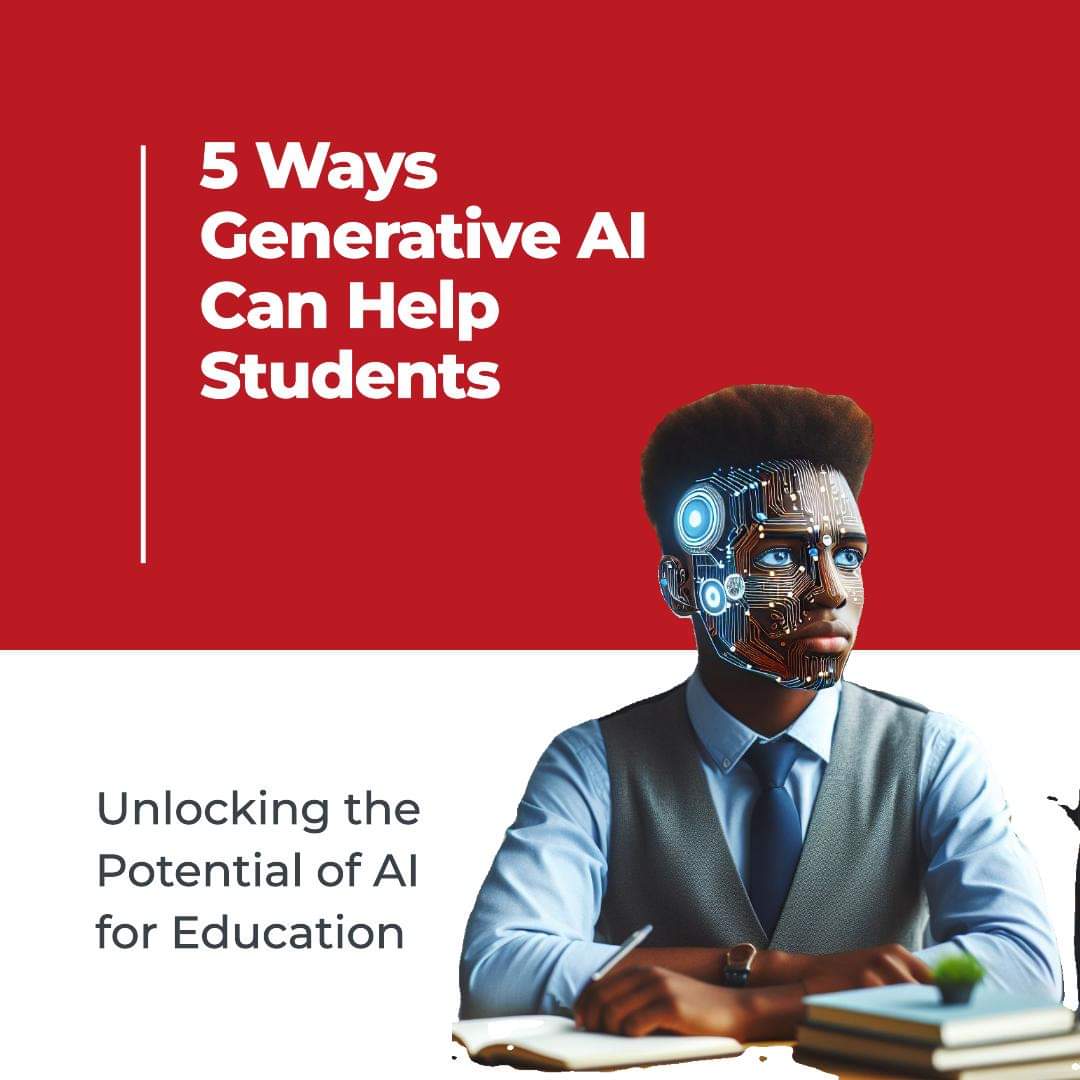
Image and poster credit: #generatedwithbingcopilot

Making noise for Mambila Hydro Power Plant Project

By Bilyamin Abdulmumin

In the dramatic Gabon coup d’etat late last year, after all the hope seemed to be lost for Ali Bongo, he resorted to the last glimmer, he appeared in a recorded video that went viral appealing for the public to make some noise, apparently to deter the Junta from succeeding.  To paraphrase the former Gabon president, in the spirit of the success of the Mambila hydropower project, let us make some noise!

When the news of the contract between Nigeria and the government of China to undertake the project broke, it threw the country into much celebration. The project was said to have been conceived about 40 years ago, but each government came and went without moving the project an inch. A presumable turning point came when the then president, Buhari, met with the Chinese president and both governments were said to have agreed on the formation of a joint venture by the three companies, CGCC, SINOHYDRO, and CGCOC under the guidance of the Chinese authorities for the project building. The total cost of the project was estimated at 5.8 billion dollars, With the Chinese government providing a loan of 4 billion dollars from Exim Bank, and the Nigerian government providing the rest. The news of the strategic bilateral agreement went all over the internet with several stories surrounding it. Given its potential for improving the socio-economic status of not only the community around the Taraba State but Nigeria at large. The Nigerian President even likened the project to China’s Three Gorges Dam.

Currently, Nigeria (after generation, and transmission finally) distributes a meager 4 to 5
MW of electricity for more than 200 million Nigerians, but the Mambila alone is proposed
to add about 3.5 MW to the national grid, one now can fathom not only the extent of
Nigeria’s energy poverty but why the euphoria about the project.

From 2017 when the news of the contract was broken down to 2023, the project
development news kept flying around, fueling the hope and happiness of the public as
such painting the government of the day white. Some government zealot supporters
even circulated colorful pictures of other projects at the completing level purporting it to
be the Mambila hydro-power project.

The back and forth, mystery, and uncertainty surrounding the project triggered BBC
Hausa to embark on a fact-check mission, making a few-minute documentary about the
project. This fact-check mission steered up the honest net making the news become the
major public discussion. The public felt utterly betrayed by the government and thus
questioned its transparency resulting in straining the government’s image like never
before. It emerged that the project purported to be at the completion stage with finishing
pictures circulating has yet to be torched an inch.

This development forces the government through Garba Shehu to come out for damage
control. Unknown to the public, while all the euphoria was going on about project
completion, the government was battling court litigation. According former special
adviser, a businessman named Leno Adesanya,  through their company Sunrise Power

Transmission Company of Nigeria Ltd (SPTCL) has filed about 2.3 billion dollar lawsuit
at the ICC International Court of Arbitration, Paris, against the Federal Government of
Nigeria (FGN) for breach of contract” which they have secure the right in the 2003
agreement to construct the 3,050MW plant in Mambila, Taraba state, on a “build,
operate and transfer” basis.

On March 26, 2020, the then attorney general and minister of justice Malami secured an
out-of-court resolution with this company, to pay the sum of $200 million as a “full and
final settlement” to discontinue the arbitration and set the government free from all
liabilities in the dispute. The only soft landing that could warrant the project to proceed. 
However, Buhari, in his reply, a month later, rejected the settlement: “FG does not have
200 million dollars to pay SPTCL. Shehu echoed this response while responding to BBC
Hausa’s report: The Nigerian government could only call on him to show nationalism to
withdraw unconditionally, to allow the project to continue.

Now that those who are holding to ransom, the Mambila power project is clear: the
government and SPTCL company, let’s make more than just noise – let’s make a
resounding call for transparency, justice, and the release of a project poised to be a
game-changer for Nigeria’s socio-economic landscape. The Mambila hydropower
project deserves more than a viral plea; it deserves a roar of collective voices
demanding accountability and progress.

Nigerian entrepreneurs and the startup ecosystem investment

By Salisu Uba, PhD, FCIPS

In Nigeria, especially in the North, the time is ripe for successful entrepreneurs and business leaders to forge an alliance and spearhead investment in the burgeoning startup ecosystem. By forming angel syndicates to venture capitalists, we can create a robust foundation for attracting substantial investment not only from within Nigeria but also from across the globe. This aligns with locally supported startups through investment, addressing market fit and confidence in the business model, especially if the solution is locally targeted.

Why is this crucial?

Firstly, establishing angel syndicates allows us to tap into the wealth of knowledge and experience possessed by seasoned entrepreneurs. Imagine having a syndicate of angels across all states investing in and mentoring startups and small businesses; this could lead to more successful ventures, social impact, and job creation. Typically, when you have resources and skills in business, it becomes an avenue for addressing challenges and opportunities within the startup landscape, making it a source of invaluable mentorship for emerging businesses.

Secondly, starting with angel syndicates incentivizes the process of attracting more venture capitalists, signifying a maturation of the investment ecosystem. It’s important to understand that venture capitalists bring not only financial backing but also strategic guidance and access to extensive networks, propelling startups towards rapid growth and scalability.

I am glad that some folks are forming partnerships and have come up with venture labs funding. However, my question is how effective this is, especially when we don’t get updates about the deals they have closed? I want to be positive, as a typical round of investment can take anywhere from 3-7 months.

Furthermore, without adequate funding, promising startups risk stagnation or even relocation to more investment-friendly destinations. Incorporating in these alternative jurisdictions not only deprives Nigeria of potential economic growth from the ecosystem but also undermines the socio-economic development of the country offered by the startups.

Lastly, to catalyze this transformation, heightened awareness and targeted training programmes are essential for our successful entrepreneurs and business leaders. Educating successful entrepreneurs on the benefits and mechanisms of investing in the startup ecosystem will empower them to become active participants in driving innovation and economic prosperity.

Business schools in Nigeria should come up with tailored programmes on startup investment opportunities and the future of sustainable business practices. Our revenue houses should perhaps create incentives for high net-worth individuals when participating in investment in startups or small businesses.

I am absolutely certain that Nigerian entrepreneurs and business leaders should be engaged in creating a network of angel investors to invest in the startup ecosystem. We can foster a culture of innovation, drive economic growth, and position Nigeria as a leading player in the global startup landscape. Now is the time to act, to seize the opportunity, and to realize the full potential of Nigeria’s entrepreneurial spirit.

I am sure platforms like Startup Arewa, NITDA, Ministry of Finance, FIRS, and many other stakeholders can facilitate a dialogue and create a conversation around my proposition.

Salisu Uba, PhD, can be reached via salisuuba@ymail.com.

The prospect of ChartGPT and how to optimize its application

By Bilyamin Abdulmumin

While toggling between TED videos, my mouse hovered over a talk titled “Can AI Catch What Doctors Miss?” which I decided to watch. The talk was given by a revered Cardiologist, Eric Topol. He espoused the possibility of AI surpassing expert physicians. To lend credence to his argument, he showed a picture of a retina to which he posed a question: can retina experts identify the gender by merely looking at this retina? He then replied that the expert chance of getting it correctly is only 50 per cent, while AI has an impressive chance of 97 per cent. So he argued if an AI could have such high precision compared to humans, how about relying on them to spot some diagnoses doctors have been missing? Dr Topol buttressed the idea with real examples.

A six-year-old boy suffering from an undiagnosed disease would shuttle between 17 experts, but for three years, his condition could not be diagnosed. So a decisive inspiration came to his mum, and she decided to consult ChartGpT by describing all the signs and symptoms she observed from the boy, and within a blink of an eye, the AI would successfully diagnose the condition:  “occult spina bifida”. After the doctors worked on the result, the boy became “perfectly healthy well”.

Topol finally closes his remark by recounting his conversion with an apprenticeship student one day after seeing patients together. He reflects the student how lucky he was to practice during an AI era, as he will connect with patients in a  way they could only imagine: the help of getting assistance for diagnosis.

This talk reminds me of my own mental note about ChartGPT—the prospect of the chatbot against the then-savior software like Grammarly, Quibolt, Google, etc.

Just as the advent of the phone rendered a plethora of gadgets obsolete—such as cameras, wristwatches, calendars, radios, recorders, calculators, tape players, speakers, torchlights, TVs, etc—the introduction of ChatGPT is poised to usher in a similar transformation. ChartGPT can make many tools redundant, including Grammarly, Quillbot, Turnitin, Google, Wikipedia, Britannica, and many more.

Crafting error-free text was a significant challenge for young writers: the intricacies of grammatical structures were daunting, especially for us bilingual individuals. But the advent of Grammarly, then, was revolutionary. With Grammarly, writers found relief from the hassles of English grammar intricacies. They could focus on generating a draft, confident that Grammarly would do the rest. But now, ChartGPT, in a similar vein, emerges as a game-changer.

Quillbolt is a six of one and a half dozen of another with Grammarly.

The quest for originality is paramount, mainly when composing a manuscript where maintaining a high degree of uniqueness—often limited to around a few per cent—is crucial. Authors submitting manuscripts endure a nerve-wracking moment as their work undergoes scrutiny through Turnitin software, hoping for a positive outcome. But with the introduction of Quillbot, much of this drama was alleviated. However, ChartGPT takes this capability to another level.

A mere decade ago, the idea that Google, with its dominance in information retrieval, could be overshadowed by a newer invention would have seemed far-fetched. Enter ChartGPT, and suddenly, the status quo is challenged.

While platforms like Wikipedia and Britannica offer ready-made articles, ChartGPT takes interaction to a whole new level. It doesn’t just provide answers; it collaborates with users to deliver precisely the information they seek.

Another hassling undertaking is programming. Coding used to be akin to a jewel in the crown or an elusive skill that felt like searching for a needle in a haystack. Few possessed the ability, and its intricate, time-consuming nature made those with such expertise exceptionally rare. However, for the proud coding masters, ChartGPT has emerged as a liberator. It can unravel the complexities of coding and teach it in a non-specialist manner. With ChartGPT, the once formidable barriers to coding knowledge are dismantled.

As Professor Topol reflected, I have also been in awe of ChartGPT transformations. Encountering it during my student years feels like a true blessing. Its impact on reshaping the educational landscape, especially in 2023, is remarkable. Being a student at this transformative juncture allows me to witness and reflect.

For optimal utilization of ChartGPT, however, a strategic approach should be involved. One has to initiate one’s efforts by crafting a draft before turning to AI for assistance. For instance, when comparing a request for a 250-word article on climate change without a draft to someone who provides a 50-word draft for improvement, the latter receives a more refined result. For even finer results, breaking down tasks into smaller components yields superior outcomes.

The same thing applies to coding with ChartGPT. If you ask ChartGPT, for instance, to generate a code for a specific task, there’s a likelihood that it might not run perfectly, leaving some details for you to fill in. However, if you start by writing your own code, even if it doesn’t run initially, and then turn to ChartGPT for assistance, it can swiftly identify and correct the errors.

Bilyamin Abdulmumin is a doctoral candidate in Chemical Engineering at ABU Zaria, a public affairs commentator, and a science writer.