Religion

Kiru Tahfeezul Qur’an graduates 1,643 Qur’anic memorizers

By Uzair Adam

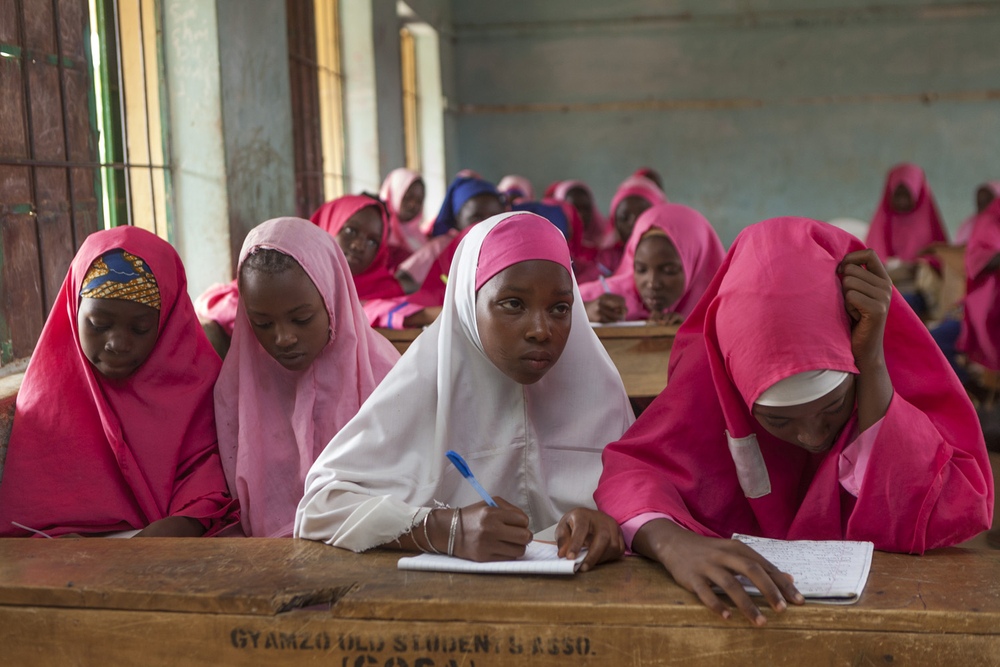
Kiru Tahfeezul Qur’an Secondary School has graduated 1,643 students who have memorized the Holy Qur’an.

The graduation ceremony, held on Sunday at the school’s conference hall, celebrated students who completed their studies between 2019 and 2024.

In a statement, Balarabe Abdullahi Kiru, Director of Public Enlightenment at the Kano State Ministry of Education, disclosed the achievement.

Speaking at the event, the Kano State Commissioner of Education, Dr. Ali Haruna Makoda, congratulated the graduates, describing their accomplishment as a divine blessing.

He commended the school for its role in promoting Qur’anic and Islamic education, recognizing it as one of the best in the state.

Represented by the ministry’s Permanent Secretary, Alhaji Bashir Baffa Muhammad, the commissioner announced the state government’s plan to renovate the school under Governor Abba Kabir Yusuf’s administration.

He noted that a team of engineers had recently assessed the school’s infrastructure to prepare a bill of quantity for the renovation.

Dr. Makoda reiterated the government’s commitment to improving education through various initiatives aimed at enhancing learning conditions.

He urged the graduates to uphold the values instilled in them and be exemplary representatives of their alma mater.

Earlier, the school’s director, Alhaji Mamuda Abdullahi, highlighted the institution’s impact, noting that many of its alumni have attained prominence within and outside Kano.

He added that the school currently has 1,400 students from all 44 local government areas of the state and beyond.

Dignitaries at the event included the Chairman of Kiru Local Government Area, Alhaji Abdullahi Sa’idu Kafin Maiyaki, and the Executive Secretary, Alhaji Rabiu Saleh Gwarzo.

The ceremony underscored the school’s commitment to quality Islamic education and the Kano State Government’s efforts to support learning and infrastructure development.

CICID 2025: Islam is the mother of all civilizations – Prof. Taufiq

By Aisar Fagge

In its effort to combat moral decadence among youths, the Centre for Islamic Civilisation and Interfaith Dialogue (CICID) organized a 3rd International Conference on the theme “The Role of Moral Etiquettes of Islamic Civilisation in the Development of Human Communities: Assessment of Past and Present,” held at the Centre for Excellence, Bayero University, Kano, from 3rd to 5th February 2025.

During his welcome remark, Associate Professor Taufiq Abubakar Hussaini, the director of the centre, said, “This year’s conference is guided by witnessing moral decadence in all spheres of our lives.”

“We anticipate engaging discussions, insightful presentations and collaborative efforts towards a shared goal of promoting moral etiquettes, good character, peace, understanding and unity. These are the bedrock of Islamic civilization, which has persistently built many nations and civilisations over centuries.

“I encouraged the participants to actively participate, exchange ideas, form connections that will extend beyond the confines of this conference so that our various societal ills will heal from the inevitable doom,” Prof Hussaini remarked.

As the event’s promoter, the head of Markazu Khulafa Al-Rashidin, Sheikh Abdulwahab Abdallah (Imam Ahlissunnah Wal Jama’ah), thanked the management of Bayero University, Kano, for “establishing the centre that focuses on building the morality of the ummah.”

Sheikh Abdulwahab urged the centre to introduce a programme or course that teaches politicians the politics and exemplary leadership style of Prophet Muhammad (S.A.W) so that they can learn how he led the entire Ummah with justice and fairness.

“This North is blessed with great people. The bad ones are few. It is our collective duty to educate and integrate them to have politicians and leaders who are Islamically rooted and God-fearing”, the Sheikh concluded.

The conference witnessed the attendance of prominent people such as Governor of Kano State, Alhaji Abba Kabir Yusuf represented by the Commissioner of Education, Dr Ali Haruna, Barrister Ali Sa’adu Birnin Kudu (former Jigawa State governor), Prof. Muhammad Sani Umar R/Lemo, Prof. Emeritus Muhammad Sani Zaharadden, Sheikh Tijjani Bala Qalarawi, Prof. Ahmad Murtada, Prof Babangida, Prof. Muhammad Muslim Ibrahim and many host of other academic dons, Islamic clerics, security chiefs, wealthy individuals and participants from both local and international educational institutions.

Kano govt pledges reforms in Qur’anic education system

By Uzair Adam

The Kano State Government has reiterated its commitment to enhancing the Qur’anic education system in the state.

In a statement on Tuesday, the Director of Public Enlightenment at the Ministry of Education, Balarabe Abdullahi Kiru, said the government remains committed to improving Qur’anic education and creating a conducive learning environment for students across the state.

The State Commissioner of Education, Gwani Dr. Ali Haruna Makoda, gave the assurance while receiving executive members of the Parent-Teacher Association of Government Tahfeezul Qur’an Secondary School, Kiru, during a courtesy visit to his office.

Makoda, represented by the Permanent Secretary of the ministry, Alhaji Bashir Baffa Muhammad, underscored the significance of Qur’anic education in promoting peace and stability among the Muslim Ummah.

He assured that the government would continue supporting the system to build a better society.

“This administration has done a lot in terms of providing infrastructure in schools and integrating Islamiyya, Qur’anic, and Tsangaya education to ensure access to quality Islamic and Western education in the state,” he said.

Speaking on the upcoming Qur’anic graduation of Government Tahfeezul Qur’an Secondary School, Kiru, the commissioner described the event as timely and pledged the ministry’s support.

Special Adviser to the Governor on Education, Alhaji Tajuddeen Gambo, lauded the school’s contribution to Qur’anic and Islamic education in Kano and beyond.

“The Kano State Government is very proud of Kiru Tahfeezul Qur’an, considering its role in propagating Qur’anic and Islamic education, not only in Kano but across the country,” he said.

He added that the government would ensure the renovation of dilapidated buildings in the school to provide a better learning environment.

The Chairman of the school’s Parent-Teacher Association, Alhaji Umar Natagunda Gezawa, said they visited the commissioner to brief him on preparations for the Qur’anic graduation ceremony scheduled for Sunday, February 9, 2025.

“The graduation covers students from 2019 to 2024, with a total of 1,643 students who have memorized the Holy Qur’an,” he said.

He also noted that the school has produced many graduates who have become prominent figures across the country.

“The school has played a vital role in shaping future leaders, and Kano is proud of them,” he added.

The school’s principal, Alhaji Mamuda, applauded the government’s decision to include the school in the first batch of renovation projects.

“The bill of quantity has already been assessed by the ministry under the governor’s directive to facilitate the project,” he said.

Bin Othman, Izala, and Sahaba Mosque controversy

By Ukasha Sani Idris

The ongoing debate regarding whether the founder of the mosque and the IZALA group should be held accountable for the controversy surrounding the “New Sahaba Mosque” is currently attracting increasing attention both online and offline in Kano, Nigeria’s most populous state.

Recall that on 8 March 2024, a prominent business tycoon, Alhaji A. Y. Maikifi, inaugurated a new mosque named “New Sahaba Mosque”— an extension of the existing Sahaba Mosque located less than a kilometre away. 

Initially, having seen the signboard for the new mosque titled “Proposed Sahaba Mosque” and having heard of the discussions and meetings that the founder invited the Chief Imam of Sahaba Mosque to, the community and beyond congratulated Imam Sheikh Bn Othman on this historic upgrade.

Considering Sheikh Bn Othman’s impressive profile, articulate nature, international exposure, fluency in multiple languages, and reputation for avoiding partisan debates and conflicts involving various sects, political groups, and religions, the community was excited to witness him lead the state’s most expensive and well-decorated mosque.

Subsequently, the Chief Imam made a public announcement from his pulpit, informing his followers of plans to discontinue Friday prayers at the old mosque in preparation for the relocation to the new one. The congregation enthusiastically accepted the idea despite the old mosque’s rich history spanning over twenty years.

However, in a surprising turn of events, the founder later informed the Chief Imam of his plan to employ new Imams,noting that his role would undergo a significant change. Rather than leading prayers as before, each Imam would now be responsible for leading two consecutive Friday prayers on a rotational basis. 

To illustrate this situation more clearly, let me use a football analogy that many of us can relate to: imagine a scenario in which a wealthy individual builds a football field next to you and names it after the local club you have been coaching. He promises you a key role in the new setup and allows you to announce the plans to abandon the existing field in anticipation of relocating to the new one. However, in a surprising twist, the founder informs you that you will be demoted to assistant coach, and your trusted players will be replaced by new ones over whom you will have little control. Just imagine yourself in this situation.

The attendance of numerous prominent Sheikhs at the grand opening highlighted its connection to the Izala sect. However, the sect’s leadership has remained noticeably silent regarding the controversy surrounding the mosque. My question is: what efforts are the Izala leaders making to resolve this conflict? Or are they preoccupied with other events, such as the recent Qur’an festival or Qur’an convention?

Ukasha Sani Idris wrote via ukasha_sani@yahoo.com.

1446AH: Sultan of Sokoto declares Friday start of Sha’aban month

By Sabiu Abdullahi

The Sultanate Council Advisory Committee on Religious Affairs announced yesterday that the crescent moon marking the beginning of Sha’aban 1446AH was not spotted anywhere in Nigeria.

This declaration, made in collaboration with the National Moon Sighting Committee, holds great significance for Muslims as Sha’aban precedes Ramadan, the holiest month in Islam.

According to Prof. Sambo Wali Junaidu, Chairman of the Advisory Committee, “no credible reports of moon sighting were received from any part of Nigeria.”

Consequently, Thursday, January 30, 2025, will be observed as the 30th day of Rajab 1446AH as his Eminence, Alhaji Muhammad Sa’ad Abubakar, the Sultan of Sokoto, has accepted the report and officially declared Friday, January 31, 2025, as the first day of Sha’aban 1446AH.

As stated, “The announcement is significant for the Muslim community, as Sha’aban is the month preceding Ramadan, the holiest month in Islam. The declaration ensures uniformity in the Islamic calendar, guiding religious observances across Nigeria.”

The Sultanate Council urged Muslims to adhere to official announcements regarding Islamic dates and prepare spiritually for Ramadan.

Iraqi Quran-burning organizer shot dead in Sweden

By Muhammad Sulaiman

Salwan Momika, the Iraqi refugee known for organizing Quran-burning demonstrations in Sweden, was shot and killed on Wednesday night in Södertälje, near Stockholm.

According to Swedish authorities, police responded to reports of gunfire at an apartment building, where they found Momika with multiple gunshot wounds. He was later pronounced dead. Five individuals have been arrested in connection with the shooting as investigations continue.

Momika gained international notoriety in 2023 for desecrating copies of the Quran, sparking widespread protests and condemnation from Muslim-majority countries. He moved to Sweden in 2018 and had been granted a three-year residence permit.

At the time of his death, he was facing trial for incitement to hatred, with a verdict scheduled for Thursday morning. The court has since postponed the ruling.

Swedish Prime Minister Ulf Kristersson confirmed that the country’s security service is involved in the investigation, citing possible foreign links to the killing.

Authorities are yet to disclose a motive, but the killing has raised concerns over tensions surrounding Momika’s controversial actions.

ABU awards Honorary Doctorate to Sheikh Sharif Saleh Al-Hussaini, restoring its prestige

By Hamisu Adamu Dandajeh, PhD

Recently, I have not encountered anyone more deserving of an Honorary Doctorate Degree globally than Sheikh Sharif Ibrahim Saleh Al-Hussaini Maiduguri CON. The 87-year-old global scholar and researcher has authored over 400 books and 100 conference papers in Arabic. 

Sheikh is a global mufti who currently heads the Supreme Council for Fatwa and Islamic Affairs in Nigeria (NSCIA). Throughout Nigeria’s history as a nation, no recognised Islamic scholar has made such remarkable contributions to the body of quality knowledge as the Mufti himself.

This renowned Sheikh embodies knowledge and humility and is a product of the Tsangaya System. Sheikh Sharif is, in fact, overly qualified. European universities established an Honorary Doctorate in the 15th Century to recognise exceptional individuals who have made substantial contributions to a particular field, society, and humanity despite lacking traditional academic credentials.

Sheikh Sharif has written extensively on nearly every facet of Islam, encompassing Quranic sciences, Hadith, Islamic law, history, philosophy, Islamic jurisprudence, linguistics, Islamic polity, Tauhid, Fiqh, Tafseer, Sufism, Arabic literature, Islamic law, inheritance, astronomy—indeed, astronomy—and the peaceful coexistence between nations.

While some universities worldwide have drifted away from the 15th-century original purpose of awarding Honorary Doctorates, instead prioritising celebrity appeal, fundraising, politics, diplomacy, and commercialisation, Ahmadu Bello University in Nigeria remains committed to upholding the original intent, as evident in the recent award to Sheikh Sharif. 

Sheikh Sharif has spent his entire life teaching, learning, researching, and contributing to community development, which aligns with the exact purpose of universities globally. He has exemplified scholarship and knowledge sharing, promoted interfaith dialogue, and fostered a culture of peaceful coexistence. 

Sheikh Sharif has produced many scholars of global repute, including Sheikh Professor Ibrahim Maqari, now the Chief Imam of the Central Mosque in Nigeria. He is building one of the biggest Islamic centres (Markaz) in Abuja to advance international teaching and research.

Sheikh Sharif brings class, integrity, dignity, and prestige to the Honorary Doctorate. We hope that, going forward, the nomination, review, selection, and conferment processes will remain transparent and accountable. 

To know what is next for Nigerian universities after this remarkable award, here is what Abdulbasit Kasim, a friend and a postdoctoral fellow at the African and American Studies at Stanford University, USA, added: “After awarding Shayk an honorary doctorate, Ahmadu Bello University should proceed to the next phase of translating and incorporating his books into the University curriculum. If I can include Shayk’s work on history, politics, philosophy, and economics in my Stanford syllabus, there is no reason why Nigerian students in humanities and social sciences should study Antonio Gramsci and Karl Popper but not Sharif Ibrahim Saleh and Adam Abdallah al-iluri. While this honorary degree has aesthetic value, I hope Ahmadu Bello University will diversify and broaden the curriculum beyond [the] Western canon.

Thank you, Ahmadu Bello University, for honouring an erudite scholar. Congratulations, Sheikh Sharif Ibrahim Saleh Al-Hussaini Maiduguri, on your well-deserved Honorary Doctorate in Law award.

Hamisu Adamu Dandajeh, PhD, is a Senior Lecturer in Sustainable Fuels, Energy and Climate Change at Ahmadu Bello University, Zaria – Nigeria.

Maulud: Kwankwaso rebukes Kano police over ‘false’ alert

By Uzair Adam 

Former Governor of Kano State, Senator Rabiu Musa Kwankwaso, has urged the Nigeria Police Force to maintain professionalism and avoid political bias, particularly in its operations within the state.  

This follows the controversy surrounding a terror alert issued by the Kano State Police Command on the eve of the annual Maulud celebration organised by the Tijjaniyya Sufi Order at the Sani Abacha Stadium, Kano.  

In a statement on his X handle, Kwankwaso commended the Tijjaniyya Sufi Order for successfully hosting the significant event. 

He also congratulated Khalifa Muhammad Sanusi II, the Emir of Kano, and Governor Abba Kabir Yusuf for their contributions to the event’s success.  

However, he expressed disappointment over the police alert, which he claimed caused unnecessary panic among Kano residents and attendees from across Nigeria and beyond.  

“The conduct of the police, which appears to align with the Federal Government’s habitual interference in Kano’s affairs, further erodes their credibility,” Kwankwaso stated.  

He warned that issuing unverified threat alerts could lead to public complacency during genuine security threats.  

“Issuing a false threat alert of this magnitude sets a dangerous precedent. It risks making people dismissive of genuine threats in the future,” he noted.  

Kwankwaso also criticised the global impression created by the police’s actions, given the international participation in the event. 

He called on the Kano State Police Command to prioritise professionalism and avoid partisanship, emphasising the need for the Federal Government to steer clear of interfering in Kano’s governance.  

“The Federal Government must resist involving itself in matters that complicate governance in Kano State,” he added.  

The Tijjaniyya Maulud celebration remains a prominent annual event for the Sufi order, attracting participants from across the globe.

The yearly Maulud: A Triumph over ‘security threats’ in Kano

By Dr. Mansur Hassan

The annual Maulud celebration organized by the Tijjaniyya sect in Kano State has once again highlighted the resilience of the people of Kano against politically motivated security threats. Despite repeated attempts by unscrupulous elements to disrupt such events, this year’s Maulud, conducted under the leadership of His Excellency Alhaji Abba Kabir Yusuf, the Executive Governor of Kano State, and His Royal Highness Muhammad Sunusi II, the Emir of Kano was successfully held.

Politically Motivated Threats and Compromised Agencies

It has become a recurring issue that whenever the government of Governor Yusuf, under the platform of the New Nigeria People’s Party (NNPP), intends to organize any form of gathering—be it religious, political, or social—certain individuals and groups, who are both indigenes of Kano and enemies of the state, orchestrate unnecessary security threats. These threats, fueled by political motives, are aimed at destabilizing the government and discouraging the people from attending such gatherings.

Disturbingly, some of these elements reportedly exploit their connections with the federal government to influence security agencies. In several instances, certain compromised officials within the security apparatus have appeared to yield to these politically motivated threats rather than prioritizing their constitutional duty to protect the lives and property of law-abiding citizens.

The Role of the Nigeria Police Force

The Nigeria Police Force, constitutionally mandated to ensure peace and security, has often found itself at the center of these controversies. Ideally, any credible security threat should be swiftly addressed to allow citizens to freely exercise their rights to assembly and worship. However, instead of providing adequate protection, there have been instances where the police were reportedly pressured by these unscrupulous individuals to ask the government to cancel such events under the guise of maintaining public safety.

This practice undermines the fundamental rights of citizens and creates unnecessary tension within the state. It is crucial for the police and other security agencies to remain neutral, professional, and committed to their duties rather than bowing to external influences.

A Victory for Unity and Resilience

Despite the challenges, this year’s Maulud celebration was a resounding success, marking a significant victory for the people of Kano. The event demonstrated the unity and resilience of the Tijjaniyya sect and the larger Kano community in the face of politically driven intimidation.

The successful organization of the Maulud sends a strong message that the people of Kano will not be swayed by fear or manipulation. It also highlights the commitment of Governor Abba Kabir Yusuf’s administration to upholding the rights and traditions of the people, ensuring that religious and social gatherings can take place peacefully.

Conclusion

The yearly Maulud celebration in Kano serves as a reminder of the need for vigilance and fairness in governance and security. It underscores the importance of safeguarding the rights of citizens against the machinations of those who seek to exploit political differences for personal gain. As the people of Kano continue to stand united, it is essential for all stakeholders, especially security agencies, to prioritize their constitutional responsibilities and act in the best interest of the state and its citizens.

Alhamdulillah, this year’s Maulud has proven that unity, faith, and determination can overcome even the most insidious of challenges. May such successes continue to inspire peace and harmony across Kano State and Nigeria at large.

Dr. Mansur Hassan is a Senior Lecturer in the Department of Mathematics, Northwest University Kano and he can be reached through mhassan@yumsuk.edu.ng

The politics of Qur’anic Festival and the predicament of almajirai

By Ibrahim Ado Kurawa

Nigeria is consistently one of the most successful countries in the annual international Qur’anic recitation competitions. It is blessed with many learned Ulama and pious populace but unfortunately it is also notorious for neglecting Almajirai (Qur’anic school pupils). Therefore the prestige of the Glorious Qur’an is relegated to optics not inculcating the true teachings of Islam of honoring its pupils and their teachers.

Recently, the Ulama closely associated with the president Ahmad Bola Tinubu propagandists and cronies have come under scathing criticisms because of their planned “Qur’anic Festival”. Dan Bello, the popular social media influencer, was the first to bring public attention to the project [contract] though negatively depicted. He exploited the prevalent anti-Tinubu sentiments. This is because, Tinubu is widely perceived as having betrayed the Ulama who supported the Muslim-Muslim ticket.

Shaykh Abdullah Bala Lau, the leader and National Chairman of Jama’atu Izalatul Bidi’ah wa Ikamatus Sunnah is the promoter or convener of the Festival. The Shaykh made a video clip that has become viral in support of the initiative. His most important reason for initiating the Festival is to promote the unity of the Ummah, which is laudable. He has been engaged in such efforts of bringing together leaders of various sects and factions in the past especially during national crises.For example, his most recent effort was in public diplomacy and it culminated in his leading the Ulama mediation team that visited Niger Republic to meet its military president on the tension between Niger and Nigeria over ECOWAS feud. That has immensely enhanced his image. In addition, he is widely respected within the Salafi circle as a man of compassion and friendliness. He has also been able to win some Sufi leaders who are also battling with their factional crises just like him. This is a major political asset, which could translate to votes hence politicians always visualize and exploit it.

Unfortunately, the Shaykh and many other Ulama and activists are not treated fairly by the politicians who are only concerned with exploiting the social capital of the Ulama. This is because, there are states where president Tinubu lost the election, but their politicians are now the major beneficiaries of his government more than the promoters of the Muslim-Muslim ticket – the most important strategy that brought him to power.

Tinubu’s handlers are only interested in using the Ulama for political gains. Hence Dan Bello’s insinuations always resonate with the poor masses no matter how hard the Ulama try to distance themselves from the ineptitude of the Tinubu’s administration.

The big questions people are now asking is, is the Qur’anic Festival going to be financed by Tinubu, his propagandists or cronies? Is the Qur’anic Festival for the benefit of the Muslim Ummah and at what cost? Shaykh Bala Lau must be careful in his dealings with politicians. Because he didn’t clarify the sponsors of the Qur’an Festival.

Though, in a widely circulated video clip, one of the Shaykh’s lieutenants alluded that the Shaykh and a senior official of the government initiated the idea. So, who’ll bankroll the exercise?

The Ulama must resist temptation of taking money from government officials past or present, without knowing the source of the money, otherwise, they will suffer the same fate of loss of integrity as clerics of other faiths. Although, the Shaykh’s followers never doubt his integrity, however, dining with politicians is a dangerous gamble.

Most politicians pretend to work for national interest but in reality it is subordinated to their interests. When did our politicians ever consult any religious leader before implementing unpopular policies? They only do so when things get bad and are in desperate need of public support. This is not acceptable more especially because Muslim organizations made responses to the Presidential Advisory Committee (PAC) Policy Document with diligence and expertise probably more than any other politicians who are now the darlings of Tinubu’s administration.

Moreover, the Tinubu team never respected and honoured the contributions of the Ulama and Muslim intellectuals to the policy proposals of the PAC. Therefore, Shaykh Bala Lau has no reason to use the Qur’anic Festival for the benefit of Tinubu administration unless it changes its course because they will use and dump him.

Presently, there are video clips of some Salafiyya clerics drawing the attention of Shaykh Bala Lau that he’s now compromising his doctrinal position by “inventing” a new “bidi’ah” which his organisation claims to be eradicating. Of course, the unity of the Ummah is sacrosanct and yes, the Qur’an unites the Ummah. But focusing our attention and finding solutions to the issues of almajirai who are neglected by the society are more important than a convention or festival.

According to the Shaykh, 30,000 Qur’anic reciters from across the country will assemble at Moshood Abiola Stadium to promote Qur’anic recitation. How much is the cost? Conservatively it could reach N3 billion at N100,000:00 per head. There is no need for this, because every year there is a National Qur’anic Recitation Competition or Musabaqa with representatives from all over the country. So why spending billions on a similar competition?

Finally, Shaykh Bala Lau and supporters of this Festival should use their influence to mobilize resources for the Almajirai through the National Commission for Almajiri and Out of School Children which has not received up to N3 billion from the Government since its inception. And if the Shaykh and his team do not support the Commission, they should channel their resources and energy to confronting the challenges of the Almajirai through whatever means they believe in, rather than festivities or jamboree. No strategy has so far succeeded in alleviating the predicament of the Almajirai since 1960 when Sir Ahmadu Bello (Premier of Northern Region) initiated the process with the Committee of 100 Mallams. Is this not a shame for Muslims of Nigeria?

Ibrahim Ado-Kurawa is a renowned historian who lives and writes from Kano. He’s the editor of Nigeria Year Book and Who is Who. He can be reached via ibrahimado@yahoo.com