Religion

The seven heavens as seven universes: A Qur’anic reimagining

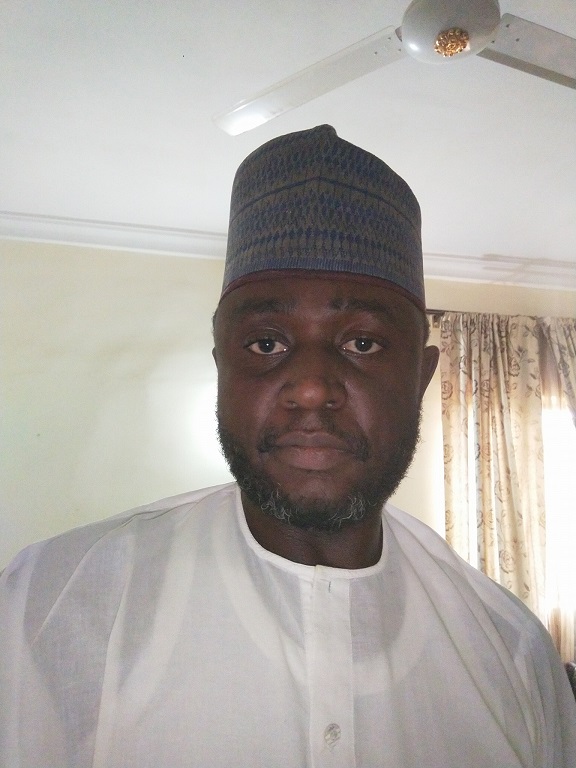
By Ibraheem A. Waziri

On March 20, 2025, I shared my essay A Reflection on Dimensions, Death, and the Eternal Four: Ramadan 2025 with Dr. Abdullahi Dahiru, exploring the Qur’an’s seven heavens, the cosmic role of death, and the possibility of 19 dimensions in Allah’s creation. Perhaps inspired by those reflections, Dr. Dahiru shared a post, via his Facebook page, from Mechanical Engineering World, noting the observable universe’s vastness: 2 trillion galaxies, with the Milky Way containing 200 billion stars, and Earth as one of 3.2 trillion planets. This sparked a thought-provoking thread. I commented, suggesting this universe might be one of “7 universes (heavens) in Allah’s dominion.” Dr. Dahiru responded, questioning the “7 universes” idea, citing Prof. Maurice Bucaille’s view that the Qur’anic “7” often means “uncountable,” a convention in ancient cultures.

Hammad Abubakar Puma joined, thanking Dr. Dahiru and suggesting he watch the YouTube documentary, Allah and the Cosmos, if he hasn’t seen it. I replied, arguing that the observable universe lacks the layered demarcations for the Qur’anic seven heavens. I propose a multiverse model—seven distinct universes—that better aligns with the Qur’an’s boundaries, jinns’ exclusion, and the gated ascent of Isra wal Mi’raj. 

Hashem Al-Ghaili’s recent posts about scientific findings, including multiverse evidence in the Cosmic Microwave Background (CMB) and the possibility of our universe residing within a black hole, bolster this perspective. This exchange and my earlier reflections lead me to propose that the seven heavens may be seven separate universes, bridging divine revelation with modern cosmology.

The Qur’anic Foundation: Seven Heavens and Cosmic Barriers

The Qur’an describes “seven heavens in layers” (67:3, 41:12), often interpreted as hierarchical realms—atmospheric layers, celestial spheres, or spiritual planes. Yet, the “nearest heaven” is adorned with stars (37:6) and guarded against rebellious jinns by “burning flames” (72:8-9, 67:5). Jinns, beings of smokeless fire (55:15), lament, “We have sought [to reach] the heaven but found it filled with powerful guards and burning flames” (72:8).

This suggests a cosmic boundary separating the nearest heaven from what lies beyond. If this nearest heaven is our observable universe—spanning 93 billion light-years with 2 trillion galaxies, as Dr. Dahiru’s post notes—then the other six heavens could be separate universes beyond our cosmic horizon. Qur’an 55:33 reinforces this: “O company of jinn and mankind, if you are able to pass beyond the regions of the heavens and the earth, then pass. You will not pass except by authority [from Allah].” This implies the heavens are inaccessible without divine permission. Science, limited to the observable universe, cannot breach the cosmic light horizon, and jinns’ failure to penetrate the heavens suggests the higher heavens may be parallel universes in a multiverse framework.

Isra wal Mi’raj: Gated Realms Beyond the Observable

The ahadith of Isra wal Mi’raj, the Prophet Muhammad’s (peace be upon him) Night Journey and Ascension, support this view. In Sahih Bukhari (Book 54, Hadith 429), the Prophet, guided by Angel Jibril, ascended through the seven heavens, knocking at each gate for entry. At the first heaven, Jibril requested access: “It was asked, ‘Who is it?’ Jibril answered, ‘Jibril.’ It was asked, ‘Who is with you?’ Jibril replied, ‘Muhammad.’… The gate was opened.” This repeated for each heaven, showing these are distinct, guarded domains, inaccessible even to an angel and the Prophet without divine approval. 

If the first heaven is our observable universe—where stars and meteors (the “flames” of 67:5) reside—its gate may symbolize the cosmic horizon, science’s limit. The higher heavens, requiring divine permission, lie beyond this horizon, potentially as separate universes with interdimensional thresholds, aligning with multiverse theories where universes are separated by barriers like inflationary boundaries or higher-dimensional branes.

A Multiverse Perspective: Seven Universes Under Divine Command

Modern cosmology supports this reimagining. The inflationary multiverse theory by Alan Guth suggests that rapid expansion after the Big Bang created “bubble universes” with different physical laws. String theory posits up to 10^500 possible universes, or “branes,” in higher dimensions. 

Hashem Al-Ghaili’s post from the Royal Astronomical Society notes a breakthrough: since 2004, scientists studying the Cosmic Microwave Background (CMB) have identified the “Cold Spot,” a region challenging standard cosmology. Initially considered a supervoid, the Cold Spot is now seen by some, like Ruari Mackenzie from Durham University, as evidence of a collision with another bubble universe—a hint of the multiverse.

The European Space Agency’s Planck mission confirmed its existence in 2014, fueling the multiverse debate. Could the Qur’an’s seven heavens be a divine simplification of such a multiverse, each heaven a distinct universe? The Qur’an’s emphasis on divine unity (41:12) ensures these universes remain under Allah’s command. 

The “nearest heaven” (our universe) is the first, where jinns are repelled by meteors (72:8-9). The higher heavens—universes 2 through 7—lie beyond, their gates symbolizing barriers science cannot cross. Each heaven’s “command” (41:12) may imply unique laws, like inflationary bubbles with varying constants, aligning with the jinns’ exclusion and the gated ascent of Isra wal Mi’raj.

Engaging the Thread: Addressing Traditional Interpretations

Dr. Dahiru cited Prof. Maurice Bucaille’s The Bible, the Qur’an, and Modern Science, noting the Qur’anic “7” often means “uncountable,” a convention in ancient cultures. While this aligns with traditional tafsir—viewing the seven heavens as symbolic—it doesn’t preclude a literal reading. The Qur’an’s specificity in naming “seven” heavens and Isra wal Mi’raj’s accounts suggest a structured cosmology. Bucaille’s point may highlight the Qur’an’s accessibility to its 7th-century audience, while its deeper truth—seven distinct universes—emerges through modern reflection.

Traditional tafsir, like Ibn Kathir’s, sees the heavens as layers within one creation, possibly atmospheric or spiritual. Yet, the observable universe lacks clear “layers” for 7, 70, or 70,000 demarcations. Planets don’t fit the gated structure of the heavens. A multiverse interpretation—seven universes—better accommodates the strict demarcations, jinns’ exclusion, and gated ascent, implying science’s reach is limited to the first heaven (Sama ta d’aya).

Dimensions, Death, and the Cosmic Graveyard

In my March 20 reflection, I proposed the seven heavens might enfold 19 dimensions, with black holes—mak’abartar taurari (the graveyard of stars)—as portals to these realms, tied to the Qur’anic number 19 (74:30, “Over it are nineteen”). Hashem Al-Ghaili’s post, citing the James Webb Space Telescope’s JADES survey, notes the rotation of 263 distant galaxies shows asymmetry—two-thirds spinning the same way, defying expected randomness. This supports black hole cosmology, suggesting our universe exists within a larger black hole, aligning with my concept of _mak’abartar taurari_ as a liminal space bridging dimensions or universes.

If each heaven is a universe, it might have a dimensional structure. Our universe is 4D, but higher heavens could harbor more dimensions, as string theory suggests (10 or 11 dimensions). The “gates” of Isra wal Mi’raj might be dimensional thresholds. Death could be the key to crossing them, carrying the soul through mak’abartar taurari into these universes, where nineteen angels of Jahannam (74:30) oversee dimensions, their number echoing the nineteen letters of Bismillahir Rahmanir Rahim—a cosmic symmetry of divine order.

Conclusion: A Unified Vision of Allah’s Creation

With 2 trillion galaxies, the observable universe becomes the first heaven, a single bubble in Allah’s dominion—potentially within a larger black hole, as the JADES survey suggests. The higher six heavens, as separate universes, align with the Qur’anic narrative of inaccessibility (55:33), jinns’ repulsion (72:8-9), and the gated ascent of Isra wal Mi’raj, resonating with multiverse theories supported by evidence like the CMB Cold Spot and galactic rotational asymmetry.

As I break my fast this 27th day of Ramadan, I marvel at this possibility, inspired by Dr. Dahiru’s thread, the contributions of Hammad Abubakar Puma, and the scientific insights shared by Hashem Al-Ghaili. I also remember Qur’an 18:109, which speaks of the vastness of Allah’s words: “Say, ‘If the sea were ink for [writing] the words of my Lord, the sea would be exhausted before the words of my Lord were exhausted, even if We brought the like of it as a supplement.’” 

As I ponder the vastness of Allah’s words: read, His creations—the seven heavens, each a testament to His boundless power; Science, jinns, and humans are confined to the first heaven, but death—through divine mercy—might carry us beyond, through the _mak’abartar taurari,_ into realms where nineteen angels stand guard, and Allah’s Kursi spans all (2:255). Yet in this sacred month, the Qur’an bids us ponder, and the seven universes offer a vision of creation as vast as Allah’s mercy itself.

Tribute to Dr Idris Abdul-Aziz Dutsen Tanshi

By Senator Shehu Sani

We live in a society where men of conscience and honour are better understood and appreciated when they are long gone or lost. Dr Idris Abdul-Aziz Dutsen Tanshi was a restless soul who spoke the inconvenient truth and walked alone in his paths and trenches. He cast the light of knowledge on the grey and dark spaces of our political and spiritual clime.

Dr Idris was a courageous man who lived an accomplished life of service to the human spirit. His voice was discomforting to the powers and the establishment. He audaciously spared no one in his sermons for equity and justice.

He was a one-man battalion and an exceptional commander of the faithful. His words were as sharp as a blade, piercing like a spear. He challenged a society complacent with injustice, keeping the leaders alert and his fellow Imams on their toes.

He was a man whose spirit was strengthened by his incarceration. He remained unbowed in the face of persecution. He could thank those who came to identify with him during his moments of trial, but he warned them against pleading for his freedom. He raised the torch and became the compass for objection and resistance. He was a non-conformist in the pursuit of the truth enshrined in his faith.

He was a dogged and distinguished spiritual combatant who used the powers of religious knowledge to question and challenge authority. He fought chains of battles within and without the realm of his mission and never surrendered. In life,he was largely misunderstood, and in death, he is well appreciated.

Dr Idris bowed out with dignity and grace. The nation has lost an irrepressible soul and indomitable spirit.

May his soul rest in Aljanna Firdausi, amin.

Nigerian Islamic scholars and the business world

By Zayyad I. Muhammad

Traditionally, in northern Nigeria, Ulamas have been expected to remain reserved, focusing solely on Da’awa while relying on handouts, Sadaqa, Zakat, and gifts for sustenance. However, this should not be the case.

Islam teaches that success comes through effort and striving while trusting Allah. A believer should work hard, avoid laziness, and seek lawful earnings, as this is part of being a responsible Muslim and an exemplary scholar. The Qur’an and Hadith of the Prophet Muhammad (SWA) emphasise the importance of self-reliance, hard work, and lawful livelihood. Islam teaches hard work and self-reliance.

The Qur’an: Surah Al-Jumu’ah (62:10) says, “Then when the prayer has ended, disperse in the land and seek the bounty of Allah, and remember Allah often so you may succeed.” — This verse encourages people to work hard after fulfilling their religious duties.

Quran: Surah An-Najm (53:39) also says, “And that man will have nothing except what he strives for.” — This verse highlights that people will only benefit from their own efforts.

The Prophet Muhammad (SAW) said, “No one has ever eaten a better meal than that which he has earned with his own hands. The Prophet of Allah, Dawud (David), used to eat from what he earned with his own hands.” (Bukhari, 2072) — This Hadith encourages individuals to earn through their own efforts rather than relying on others.

The prophet (SAW) also said:

“The upper hand (the one that gives) is better than the lower hand (the one that receives).” (Bukhari & Muslim)— This Hadith discourages dependence and promotes financial independence and generosity.

Recently, there has been a debate about some Nigerian Ulamas, their associates, or companies receiving government contracts. However, this is neither a crime nor contrary to Nigerian law or Islamic teachings. Ulamas are human like everyone else and can make mistakes, but their participation in business benefits society, themselves, and Islam. It provides them with financial independence and the ability to speak the truth, no matter how difficult it may be.

The involvement of Ulamas in business is neither a new phenomenon in Nigeria nor globally. The late Sheikh Mahmud Gumi consistently encouraged his students and Ulamas to avoid relying on others and instead pursue careers in business or the public sector. 

A shining example is the late Khalifa Isyaku Rabi’u, a billionaire businessman and renowned Islamic scholar. He established Isyaku Rabi’u & Sons in 1952, initially trading in sewing machines, bicycles, and religious books before becoming a major distributor for Kaduna Textiles in 1958. By the 1970s, his company had diversified into real estate, manufacturing, insurance, and banking. His children, including Abdulsamad Rabi’u, Chairman of BUA Group, and Rabi’u Rabi’u, owner of IRS Airlines, continued his entrepreneurial legacy.

Similarly, the late Muhammad Auwal Adam, also known as Albani Zaria, was not only a respected scholar but also a businessman and IT expert. He established the Albani Science Academy and Safwa Technologies Limited. Professor Isa Ali Ibrahim, an Islamic scholar, is also a businessman, international consultant, and technocrat who served as the Director General of NITDA and Minister of Communications and Digital Economy. Sheikh Dahiru Usman Bauchi is a globally recognised scholar, businessman, and entrepreneur .

A younger example is Abu Jabir Abdallah (Pen Abdul), a successful architect, entrepreneur, and Islamic preacher. He is also the CEO of SPW Limited and the Principal Partner at Diamond4 Architect. Dr. Idris Dutsen Tanshi in Bauchi State is a scholar, farmer, and entrepreneur. Sheikh Sani Yahaya Jingir,National Chairman of the Council of Ulama Jama’atu Izalatul Bid’ah Wa’Ikamatis Sunnah (JIBWIS) National Headquarters in Jos, is also a scholar , farmer, and entrepreneur. 

Before and after assuming the role of Imam at the Doubeli  Juma’at mosque in Jimeta-Yola, Adamawa State, many remember Sheikh Bala Lau as a dedicated farmer, entrepreneur, and businessman. His security company, AL-AHLI SECURITY GUARDS LIMITED, has been operational for over 20 years. Today, he engages in large-scale mechanized farming, international trade, as well as scholarship and Dawa’a, serving as the leader of Jama’atu Izalatil Bid’ah Wa Iqamatis Sunnah (JIBWIS) in Nigeria and Africa.

Islamic scholars around the world have historically balanced religious scholarship with business, demonstrating that economic success and religious devotion can coexist.

Dr Zakir Naik of India – An Islamic scholar and entrepreneur, he founded the Islamic Research Foundation (IRF) and owns media networks like Peace TV.

Caliph Uthman Ibn Affan (RA) – The third Caliph of Islam and one of the wealthiest companions of the Prophet (SAW). A major trader, he was known for his generosity and famously purchased a well in Madinah, making it free for public use.

Abdur-Rahman Ibn Awf (RA), one of the ten companions promised Paradise, a leading businessman in Makkah and Madinah, and a generous philanthropist who funded many Islamic causes.

Imam Abu Hanifa (Rahimahullah), the founder of the Hanafi school of thought and a wealthy textile merchant, was known for his honesty and fairness in trade.

Sheikh Muhammad Ibn Uthaymeen (Rahimahullah) – A renowned 20th-century scholar from Saudi Arabia who invested in businesses and financially supported Islamic education.

Sheikh Saleh Al-Fawzan is a contemporary Saudi scholar who has investments in various sectors while continuing his role as an Islamic scholar.

Islam has a strong tradition of combining scholarship, knowledge, and business. While Ulamas should avoid unlawful practices and corruption, they should actively participate in business—both in private ventures and government contracts. This will grant them financial independence and the freedom to speak the truth without fear.

By engaging in lawful business, Ulamas set an example for the Muslim community, demonstrating that economic empowerment and religious integrity are not mutually exclusive.

Zayyad I. Muhammad writes from Abuja via zaymohd@yahoo.com.

SSG Adubiaro urges Muslims to continue charitable acts beyond Ramadan

By Muhammad Abubakar

The Secretary to  Ekiti State Government, Prof. Habibat Adubiaro, has called on Muslim faithful to sustain the spirit of giving and compassion beyond the holy month of Ramadan.

Speaking on Sunday during the Sallah prayer at the Central Mosque Eid Praying Ground in Odo Ado, Ado-Ekiti, Prof. Adubiaro emphasized that acts of kindness and generosity should not be limited to the fasting period alone.

She urged Muslims to make charity a continuous practice, extending support to the less privileged throughout the year. 

According to her, the essence of Ramadan encompasses self-discipline, piety, generosity, and values that should be upheld even after the fasting season concludes.

“Our obligations to humanity do not stop after Ramadan. Giving to the needy should not be seasonal but a lifelong commitment. Let us continue to support one another and uplift the less privileged in our communities,” she stated.

Prof. Adubiaro also commended the Muslim community for their dedication to prayers, fasting, and charitable acts during Ramadan. She urged them to uphold the principles of peace, love, and unity, which are essential to Islam.

The annual fasting prayers at the Central Mosque Eid Ground attracted a large gathering of Muslim faithful, clerics, and community leaders who came together to seek divine blessings and guidance. The event featured fervent prayers for the state and the nation as a whole.

Duality of existence

By AMA Baffa 

The fields of theology and physics go hand in hand in explaining the existence of God and His omnipotence. Theology studies who the divine being—God Almighty—is, His power of creation, and everything He creates. Physics measures everything around us, from the smallest particles to medium-sized ones, up to the heavenly bodies and beyond, which constitute matter. It explores how these elements came about and the general underlying laws of their interactions. 

Whenever God wills to create or transform something in His kingdom, i.e., the universe or multiverse, if it exists, He simply states, “Be, and it is.” The general mechanism He uses, which applies to all His creations, is proportionality and measurement, as emphasized in numerous places in the noble scripture. 

Only what He decides to reveal and when it is revealed is known to mankind. The behavior of the majority of matter in the universe remains a mystery due to its different fundamentals and laws compared to the known matter we belong to, such as dark matter, which may be understood in the future or not at all. Perhaps this is why God says that the creation of the universe is more complex than that of humans.

Whenever there is a breakthrough in physics research, it transforms other areas of knowledge, as Prof. D. J. O’Connor highlighted in his book An Introduction to the Philosophy of Education. He stated, ‘The laws of physics set the framework within which the laws of chemistry may be found. Chemistry establishes a similar framework for biology, and biology does the same for psychology. Similarly, the laws of psychology define the limits within which the specialized sciences of man, such as economics and sociology, can be understood.’

According to some scholars of Qur’anic commentary, the verse that mentions those of God’s servants who possess knowledge and fear Allah refers specifically to the fields of physical science that explain the process of creation.

The universe was created on the principle of duality of existence or opposition, exemplified by the tangible material things understood through science, whose fundamentals lie in mathematics on the one hand, and the ideas comprehended through the liberal arts, whose fundamentals reside in semiotics and language on the other.

Language acts as the vehicle that conveys messages to the brain, enabling contemplation and facilitating logic— the rules of thinking that apply to both natural science and the liberal arts— to be practiced effectively and deeply. The interconnectedness between language and logic cannot be overstated, as they are both extensively employed by theologians and physicists, necessitating significant attention for in-depth understanding.

God is always a step ahead of any description of the laws of nature that science may provide, as He exists in one realm while the universe, as His creation, exists in another. The funniest thing is that when science discovers and describes a phenomenon, it completely removes God from the equation, as if the idea itself, matter, energy, and the processes of their interactions and histories are all self-sufficient without any power behind their existence. 

Yet, they advocate for laws stating that matter and energy can neither be created nor destroyed, only transformed from one form to another. Understanding a mechanism is different from understanding the object’s creator and phenomenon. That being who created them exists beyond their realm, differs from them, and is called God. 

God exists beyond the universe and multiverse and will never be understood through the physical laws of physics and chemistry. The less one understands God, the more ignorant one becomes.

AMA Baffa wrote via amabaffa@yahoo.com.

Saudi Arabia introduces AI-powered platform to teach Surah Al-Fatihah

By Hadiza Abdulkadir

The Presidency for Religious Affairs at the Grand Mosque and the Prophet’s Mosque has launched a groundbreaking digital enrichment project using artificial intelligence (AI) to teach and correct the recitation of Surah Al-Fatihah.

The initiative, inaugurated on Saturday, is part of broader efforts to enhance the experience of pilgrims and visitors at the Two Holy Mosques. 

It offers an advanced educational platform that allows users to enhance their recitation through AI-driven analysis, listen to model recitations from imams of the mosque, and explore translations of the surah in various languages.

According to the Presidency, this represents the pilot phase of the project, which is expected to expand in the future. The platform employs advanced algorithms to evaluate recitation in real-time, connecting traditional learning methods with modern technology.

As part of Saudi Arabia’s digital transformation strategy in religious education, the initiative aims to offer a seamless and enriching learning experience for visitors from around the world.

A reflection on dimensions, death, and the eternal four: Ramadan 2025

By Ibraheem A. Waziri

MashaAllah. As the crescent moon rose to herald Ramadan this year, on this twentieth day of March 2025, a profound stillness has settled over me. The fast silences my body’s clamor, the long nights of prayer elevate my spirit toward the heavens, and my thoughts drift into the boundless expanse of the unseen. This Ramadan, I find myself wrestling with the nature of dimensions—what they signify, how they shape our fleeting lives, and how death might unlock realms beyond our earthly reach. 

The Qur’an unveils glimpses of this mystery: seven heavens layered in divine order, Jannah’s gardens of eternal serenity, Jahannam’s depths watched by stern guardians, and Allah’s timeless, infinite dominion. The number four—etched into our 4D reality and echoed in a hadith debate I explored last week—anchors my reflection, while the nineteen of Surah Al-Muddathir, mirrored in the nineteen letters of *Bismillahir Rahmanir Rahim*, stirs my soul. Could death guide us through a cosmic graveyard of stars into these dimensions, as some now ponder in awe?

Let us begin with dimensions as we experience them in this Duniya, this transient abode. We dwell within three spatial dimensions—length, width, and height. A minaret pierces the twilight sky; its shadow stretches wide across the sun-warmed earth, and its foundations sink deep into the soil. Time, the fourth dimension, flows relentlessly forward, a current bearing us from the first whispered adhan of Fajr to the tranquil hush of Isha. 

These four—three of space and one of time—form our 4D reality, a spacetime framework we navigate with every breath and every step we take. Yet science, with its insatiable curiosity, gazes beyond this familiar quartet, proposing extra dimensions—ten, eleven, or perhaps far more—coiled tightly at scales too tiny for our eyes to discern or sprawling across unseen planes our hands cannot grasp. These are not mere directions to wander but subtle layers, bending the forces of gravity, energy, or the very essence of creation in ways that stretch our comprehension.

In 2018, a Northern Nigerian Hausa broadcasting Television Station, Arewa24, in a documentary about space named black hole mutuwaren taurari (Mortuary of Stars), but I preferred mak’abartar taurari—the Graveyard of Stars—as a more evocative term. Here, death is a profound key, a passage to what lies beyond. In this 4D shell, we are tethered—our physical forms bound to the limits of space, our lives measured by the steady march of time. 

The Qur’an, however, assures us that the soul, the ruh, endures beyond this fragile vessel. When we die, might that soul break free, slipping into a fifth dimension, a sixth, or even further—realms where Jannah’s rivers ripple with mercy and Jahannam’s fires blaze with justice, domains veiled from us until Malak al-Mawt, the Angel of Death, carries us across the threshold? 

Physics offers a faint echo of this possibility: higher dimensions might surround us, omnipresent yet inaccessible, hidden behind a veil that only death can part. Some astronomers link each soul to a star wandering the cosmos; when a person dies, their star might collapse into this graveyard, bearing their ruh along. Could this black hole be a portal, a barzakh, where dimensions unfold beyond our sight?

The Qur’an sketches this vastness with strokes of majesty. “He who created seven heavens in layers,” proclaims Surah Al-Mulk (67:3), urging us to reflect on the nature of these layers. Are they celestial skies arching above our world, glowing in the twilight? Or could they be universes, dimensional planes, each distinct yet interconnected, ascending beyond our perception into a hierarchy only Allah fully comprehends? 

Our 4D reality, with its glittering stars and sprawling earth, might be the “lowest heaven,” as Surah As-Saffat (37:6) suggests, with its adorned lights, while six more heavens rise above, reachable only when death turns the lock. Time, too, bends in Allah’s presence—Surah Al-Ma’arij (70:4) likens a day with Him to fifty thousand years of our earthly counting. In these higher dimensions, time might not flow as we know it; it could stretch into an endless horizon, loop upon itself, or fold into an eternal now—a reality death alone might usher us into.

Yet it is the number four that steadies my wandering mind, a pattern I cannot unsee. Just last week, in *The Eternal Quartet: Understanding the Hadith Debate in Northern Nigeria*, I wrote of a debate stirring Northern Nigeria’s Muslim online space—Shaykh Prof. Ibrahim Saeed Ahmad Maqari and Shaykh Prof. Sani Rijiyar Lemo clashing over the degree of certainty in different categories of Hadith rather than dismissing their essence outright. 

I framed the scholars’ dispute through four lenses: reason, belief, doubt, and rejection, a quartet mirrored in Islam’s four legal schools—Hanafi, Maliki, Shafi’i, Hanbali—and four theological paths—Mu’tazila, Ash’ari, Maturidi, Athari. Maqari, with his Ash’ari and Maliki roots, demands the unshakable certainty of Mutawatir hadiths, those narrated by many, while Rijiyar Lemo, grounded in Athari and Salafi trust, upholds authentic Ahad narrations with strong chains, even if from fewer sources. Four emerged as a complete, balanced square: Maqari’s logic seeking widespread proof, Rijiyar Lemo’s faith in vetted tradition, the doubters’ hesitant questions, the rejectors’ outright dismissal. As I dwell in our 4D spacetime, I see it again—four as our foundation, the root from which higher dimensions might grow, a motif threading through faith, nature, and the human heart.

Then comes a piercing verse—Surah Al-Muddathir (74:30): “Alaiha tis‘ata ‘ashar”—“Over it are nineteen.” Nineteen angels guard Jahannam, their number stark and resonant, a mystery that stirs my soul to its core. Are these guardians confined to our 4D frame, or do they stride across dimensions, overseeing a hell that burns beyond our spacetime? This deepens when I count the letters in Bismillahir Rahmanir Rahim—ب س م ا ل ل ه ا ل ر ح م ن ا ل ر ح ي م—nineteen in all, the sacred invocation that opens every surah but one. Could this parallel—nineteen angels, nineteen letters—hint at more, perhaps 19 dimensions woven within or alongside the seven heavens? Science freely posits dimensions; string theory suggests ten or eleven, but the Qur’an’s seven and nineteen numbers carry a divine weight. From our 4D base, the seven heavens might rise as broad realms, each enfolding finer layers, totaling 19—a cosmic framework death unveils, where the nineteen serve as eternal watchmen.

Consider the black hole, this mak’abartar taurari. Could it be barzakh, a liminal space bridging dimensions? Does it cradle Jannah’s tranquility or Jahannam’s torment? Some wonder: might the Day of Judgment spring from this starry graveyard, an event science cannot yet name, where fallen stars—and souls—rise into new dimensions? We perceive only four in this Duniya, but black holes might harbor twelve, as some speculate. Add seven for Jahannam’s planes, and we reach 19—four we know, eight in Barzakh’s depths, seven in Saqar’s fire, guarded by nineteen, as Allah declares, “Alaiha tis‘ata ‘ashar”. Last century, scholars like Khalifa Rashad stirred debate with new readings of this verse—could it point to such a cosmic order?

Envision it: our 4D reality as the first heaven, rooted in four—length, width, height, and time. Six more heavens ascend, each a dimensional cluster, totaling 19 with Barzakh and Jahannam’s layers. Surah Fussilat (41:12) says each heaven has its command—unique laws across these planes, from fifth to nineteenth. His Kursi (Surah Al-Baqarah 2:255) spans them, the nineteen as sentinels in its scope. The Qur’an says the soul’s end wanders in the space between the dimensions of fire (dread) or peace (natsuwa). Death might thrust us through mak’abartar taurari into these 19, where nineteen angels stand guard.

As Taraweeh’s verses wash over me this Ramadan, I feel four and nineteen entwined. If 19 dimensions veil Jannah, Jahannam, or more, might they host others—angels, jinn, beings unseen? Science puzzles at silence; death might unveil a chorus. In sujood, fasting’s clarity sharpens this: the Qur’an bids us marvel. Whether seven heavens hold 19 dimensions via a starry graveyard, death is our key—a mercy cloaked as an end.

Breaking my fast, dates sweet with Jannah’s echo, I feel tethered to this vastness. Our 4D world—fourfold in dimensions and thought—is a breath, a shadow of Allah’s infinite craft. Ramadan 2025 is my pilgrimage—through hunger, hope, and “Alaiha tis‘ata ‘ashar”, mirrored in Bismillahir Rahmanir Rahim—toward a reality where death, from our fourfold root, opens the door to seven heavens, nineteen dimensions, and Allah’s eternal truth. Allah Shine masani.

Walking Down the Memory Lane | The Kabara Tafsir and Surat Yusuf

By Prof. Abdalla Uba Adamu

A few comments about the ongoing Ramadan Tafsir at the Palace of the Emir of Kano conducted by Sheikh Qaribullah Nasir Kabara (translator, Qadriyyah) and Muhammad Hadi Gwani (reciter, Tijjaniyya) brought back nostalgic memories for many people. The conversation was started by Muhsin Ibrahim. Perhaps only those living or having lived in Kano may probably know of this Tafsir that has been consistently going on since about the 1940s, shifting location only once, from Chiranci to Kofar Kudu in Kano. On Sunday, 16 Ramadan/March 2025, I was part of a TV discussion on the Tafsir and its meaning to me. This was what promoted this sharing of memories. 

Tafsir is the scholarly interpretation and explanation of the Quran. It helps to clarify the meanings of verses, their context, linguistic nuances, and the reasons for their revelation. The combo of Sheikh Qaribullah Kabara and Sheikh Hadi Gwani in Kano is one of the hundreds of Tafsirs conducted during Ramadan in Islamicate northern Nigeria. 

Each individual has their preferences for the reciter/translator combo. Mine, inherited from my father, was for the Kabara Tafsir. The reason is up close and personal. I was born on 14th Ramadan 1375, or 25th April 1956. My father was informed of my arrival while he was at the Tafsir in the inner chambers of the Emir of Kano’s Palace near the reciters. My father was a Qadiriyya adherent and disciple of Malam Nasiru Kabara. 

The nostalgia was ignited by Muhsin’s reflections of Surah Yusuf, which was recited on the 9th day of every Ramadan. Perhaps the Surah draws the largest crowd apart from the day of the ending of the Tafsir (Hattama). I have always marveled at why there is a surge of attendees on any day the Surah is being recited/translated. I remember being annoyed one year when I was slightly late and had to virtually push and shove through a huge crowd – often “standing room” only – to get to my reserved seat deep in the open space of the Place just before the door leading to the “Soron Isa” antechamber. All eager to listen to Surah Yusuf. 

Significantly, the Juz’i containing the Surah ends on Ayat 52. But on Friday, 17th December 1999/9th Ramadan 1420, as I noted in my own copy of Yusuf Ali’s Translation of the Holy Qur’an, which I used as a guide in following the recitation, Sheikh Qaribullah suggested to complete the Surah to its 111 Ayats to maintain the narrative structure and continuity of its events. Thus, on the day, the Tafsir lasts longer than on other normal days, while the Tafsir on the following day, starting directly with Surah Al Ra’ad, always ends up being the shortest night of the Tafsir. 

There are many reasons for the attachment of thousands of people – some who attend the Tafsīr on the Surah Yusuf day only. While this has many lessons, I will examine it from an ethnographic perspective. The story of the travails of Prophet Yusuf has one central cultural importance to the Hausa – “haƙuri can dafa dutse”/Patience is a virtue. This was indeed played out by the way Prophet Yusuf went through so many challenges in life – simply because of the stupendous natural beauty bestowed on him by Allah (SWT) to begin with. 

But his trials centered around what I call “yan ubantaka,” sibling rivalry and jealousy inherent among siblings of different mothers. This is a theme in Hausa family structures where offspring sharing only a father seem almost always at each other’s throats. Of course, not all households are like this – I am sure you know some households with perfect harmony, despite different mothers (might even be your own particular circumstance). However, the general experience of many Hausa is precisely as described in Surah Yusuf – bitter rivalry towards the more outstanding brother – whether junior or senior. Attendees of the Tafsir, therefore, get solace at the spiritual formula and lesson of patience and perseverance and go home uplifted that, as for Prophet Yusuf, “komai nisan dare, gare zai waye”/there is light at the end of the dark tunnel. 

Another significant historical moment in the Kabara Tafsir was what I called The Switch. On 29th March 1990,equivalent to 3rd Ramadan 1410, while reading Surah Al-Ma’idah, Ayat 20, Mal. Nasiru stopped the translation. With an emotionally charged voice, he prayed for the Emir Alhaji Ado Bayero (the host of the Tafsir). Then he informed the congregation that the Emir had given permission for Qaribullah Nasiru Kabara to continue the translations. The massive roar of Allahu Akbar takbir startled the mass of Swallows (Bilbilo) perching on the trees in the Emir’s mangrove area (Sheka), where they took off en mass. It was indeed an emotional moment. Right away, Mal. Qaribullah took over the translations, and in a well-synchronized manner, Mal. Hadi led him through the recitation, changing the tonalities of his recitation with Mal. Qaribullah matching him tone for tone. More Takbirs followed every hill and valley of their voices. It was a truly historic moment. 

Finally, a massive controversy concerning filming the story of the Prophet Yusuf erupted in Kano in 2009. Luckily, it was not from Kannywood producers, who, aware of the prohibitions of depicting prophets of Allah in any visual form, dared not even attempt it. However, in 2009, a TV series, Yousuf-e-Payambar or Joseph, the Prophet, was screened at the 2009 Cannes Film festival. The 45-episode series was produced by Sima Film Productions, an affiliate of the Islamic Republic of Iran Broadcasting (IRIB). 

Although the series’ dialogue was in Persian, soon enough, the Lebanese Al Manar TV station, owned by the Shi’a Hezbollah, started re-broadcasting the series with Arab dub-over voices of the Farsi dialogue, and became available through the Middle East satellite TV networks. It was a Shi’a TV show, since apparently in the Shi’a understanding of Islam, there was nothing wrong with depicting Prophets in any visual medium. Further, the story of Prophet Joseph had universal constants that made it appealing throughout the Muslim world, regardless of doctrinal inclination. 

In the summer of 2009, a young Muslim Hausa student studying at the Al-Azhar University in Cairo somehow downloaded the entire Yousuf-e Payambar series with Arabic voice-over dubbing in his laptop and brought it to CD marketers in Kano, the biggest commercial centre in northern Nigeria. In Kano, somehow, it was dubbed over in the Hausa language. It was an instant hit. The marketers subsequently copied the series into eight-volume DVDs and released them to traffic light markets common in most African urban centers.

However, no sooner had the DVDs entered the market than two prominent Muslim clerics in the Shari’a State of Kano appeared on public radio and condemned the Series. These were Sheikh Amin Daurawa and Sheikh Ibrahim Khalil, the latter of whom was the Chairman of the powerful Kano State Council of Ulama. In their ‘fatwa’ – Islamic ruling – echoing the Al-Azhar proscription of visually representing a Prophet of Allah (SWT), they argued it is prohibited to depict any Prophet in any form visually. The basic problem was that while Shi’a filmmakers produced the Prophet Yusuf TV series, the consumers in Kano were Sunni and did not make the sublime distinction about the interdiction of prophetic images between Sunni and Shi’ite interpretations of Islam.

The fatwa resulted in the Kano State Censorship Board’s banning the sales of Joseph the Prophet DVDs and arresting and prosecuting marketers and vendors who sold the DVDs. However, while the series was banned in Kano, it became readily available in neighboring States, especially Kaduna and Bauchi, where Shari’a law was implemented more flexibly.

The Kabara Tafsir is available on the YouTube Channel I created specifically for it. So look for it if interested. If you want to know more about the controversies and censorship of the Prophet Yusuf CDs in Kano, read my article, “Controversies and restrictions of visual representation of prophets in northern Nigerian popular culture.” March 2017. Journal of African Media Studies 9(1):17-31. The journal publishers don’t want their articles on academic social media networks (ASMN),but they say nothing about personal sites! So, if you want to download the entire paper, it is Acibilistically available at this link.

For those old enough, there is also an Egyptian poster of the Prophet Yusuf/Zulaykha in the presence of her husband, al-Aziz (Potiphar) encounter (fully depicted in the TV series) which, together with other Prophets and saints, were also freely sold in Kano in the 1960s. This gives a historical perspective to how artists tried to portray this popular Islamic narrative in popular culture. The poster is in the article.

Gov. Yusuf hosts Ulama for Iftar, announces plans to transform Kofar Mata Eid ground into modern Islamic centre

By Hadiza Abdulkadir

Kano State Governor Abba Kabir Yusuf reinforced his administration’s dedication to fostering religious harmony and development during an Iftar gathering at the Government House on Saturday, which celebrated the 15th day of Ramadan. 

The event welcomed prominent members of the Council of Ulama and Imams, offering a platform to strengthen unity and recognize the vital role of religious leaders in promoting peace within the community. 

In a significant announcement, Governor Yusuf revealed plans to transform the Kofar Mata Eid Prayer Ground into an International Islamic Conference Centre. He explained that the venue, utilized only twice a year for Islamic gatherings, will be repurposed into a world-class facility to support ongoing religious activities, scholarly discussions, and community engagement. 

“The foundation stone-laying ceremony for the Centre is set to occur two weeks after Eid al-Fitr, after which it will be handed over to the Ulama for management,” the governor stated, outlining his vision for a lasting religious infrastructure in the state. 

Additionally, Governor Yusuf affirmed his commitment to renovating all Friday mosques across Kano State and ensuring they meet proper worship standards. He instructed the Commissioner for Religious Affairs to compile a list of mosques requiring urgent government intervention. 

In further developments, a new, larger Friday Mosque at the Government House is currently under construction. It aims to accommodate more worshippers and enhance spiritual activities in the region. 

Expressing gratitude for the ongoing support of religious leaders, Governor Yusuf urged them to continue promoting unity and peaceful coexistence among the populace, highlighting the importance of collaboration between government and religious institutions. 

During the gathering, Sheikh Muhammad Nasir Adam, Imam of Sheikh Ahmad Tijjani Mosque, praised the governor’s vision, emphasizing Islam’s encouragement of charitable acts, such as feeding those who fast and nurturing places of worship. 

He reassured the governor of the Ulama’s steadfast support and prayers for the advancement of Kano State. Members of the Shari’a Commission, the Executive Council, and other distinguished figures attended the Iftar event. 

Governor Yusuf reiterated his administration’s strong ties with the Council of Ulama, assuring them that their contributions will continuously inform government policies to ensure lasting peace, stability, and religious harmony in Kano State. 

World leaders, UN chief mark International Day to Combat Islamophobia

By Muhsin Ibrahim

World leaders, including United Nations Secretary-General António Guterres, took to social media on Friday to mark the International Day to Combat Islamophobia, calling for unity and action against discrimination.

In a post on X (formerly Twitter), Guterres emphasized the need to address rising anti-Muslim hate worldwide. “Islamophobia is an affront to human rights and the values of the UN. We must stand together to promote tolerance, understanding, and mutual respect,” he wrote.

Several heads of state and government officials echoed similar sentiments. Canadian Prime Minister Justin Trudeau reaffirmed his country’s commitment to fighting religious discrimination, while Turkish President Recep Tayyip Erdoğan called for global solidarity against Islamophobia.

The International Day to Combat Islamophobia was designated by the UN in 2022 and is observed annually on March 15. It aims to raise awareness of prejudice against Muslims and promote inclusive societies.

Advocacy groups have urged governments to go beyond statements and implement concrete policies to tackle hate crimes and discrimination against Muslims.