Religion

A call for religious balance in Plateau State

By Malam Aminu Wase

Plateau State is a richly diverse and vibrant community, home to people of various ethnic and religious backgrounds. We are one family, destined by God to live together in peace and mutual respect. Sadly, this unity is too often ignored when it comes to leadership, particularly the highest office in the state. The persistent adoption of a Christian-Christian gubernatorial ticket threatens the very foundation of our coexistence.

It is time for Plateau to embrace equity, justice, and inclusiveness. For too long, Muslims in the state have been marginalised in political leadership, particularly at the executive level. This exclusion must end. I firmly believe that the next governorship candidate, regardless of religion, should choose a Muslim as a running mate. A Muslim-Christian or Christian-Muslim ticket would truly reflect the spirit of fairness and unity we all profess to uphold.

For more than two decades, Muslims in Plateau State have shown unwavering political support for Christian-led tickets, believing in the promise of shared governance and mutual respect. From Wase to Kanam, Jos North to Shendam, Barkin Ladi to Quanpaan, Mangu, and other local government areas, Muslim communities have consistently turned out in large numbers to vote, not out of compulsion, but from a sincere desire to contribute to the democratic process and to foster unity across religious lines. Yet, this goodwill has not been met with reciprocity.

Despite making up a significant portion, nearly half of the state’s population, Muslims remain glaringly absent from the highest levels of leadership. This is not merely a matter of political imbalance but a painful reminder that inclusion and equity remain elusive. When a group that has given so much continues to receive so little in return, it breeds frustration, weakens trust, and threatens the very cohesion that Plateau so desperately needs. We cannot claim to be united while one half of our people are repeatedly shut out of the room where decisions are made.

Our call is simple: include us. Recognise our presence. Acknowledge our contributions. Let us build a Plateau where everyone feels seen, respected, and valued regardless of faith.

Personally, some of the most meaningful relationships in my life have been with my Christian friends, friendships that began in the classrooms of Pilot Central Primary School in Wase, grew stronger at Government Science College Wase, and deepened further during my university years. These bonds have shown me the beauty of unity, the strength of mutual respect, and the power of shared dreams. That is why it pains me deeply to see Muslims continually left out of leadership. It feels like a betrayal of the unity we have lived and believed in. If we can walk together in friendship, why can’t we lead together in governance on the Plateau?

In the Wase Local Government, Christians are a minority, yet they have never been treated as outsiders. They have held key positions, including that of the Deputy Chairman, and many have benefited from the federal appointments from the Rt Hon Ahmed Idris Wase, the immediate past Deputy Speaker of the Nigerian House of Representatives, thanks to his inclusive leadership. This is what true leadership should look like, recognising every citizen’s worth, regardless of faith or number. It proves that fairness is not a favour, it’s a duty. If such inclusive governance can be practised locally, why can’t it be replicated across the entire state?

Plateau belongs to all of us. We must build a future where leadership reflects our shared diversity. Let’s end the cycle of exclusion and embrace a new era of fairness, justice, and genuine unity.

Malam Aminu Wase writes from Kaduna State. He can be reached at aminusaniusman3@gmail.com.

Islamic wisdom offers a timely antidote to Nigeria’s silent mental health crisis, experts assert at IIIT lecture

By Musa Kalim Gambo

The International Institute of Islamic Thought (IIIT), Central Nigeria Office, recently hosted a pivotal monthly lecture series on Sunday, June 1, 2025, shedding light on the escalating challenge of mental health and psychosocial issues in the modern world through an Islamic lens. The virtual event, titled “Navigating Mental Health and Psychosocial Challenges in the Modern World: An Islamic Perspective,” brought together eminent scholars and practitioners to underscore the urgency of addressing mental well-being, especially in a nation grappling with pervasive stressors and inadequate healthcare infrastructure.

The lecture commenced with welcoming remarks from Dr. Aliyu Tanko, the Coordinator of IIIT Central Nigeria Office, who highlighted the widespread nature of mental instability, noting the common sight of individuals speaking to themselves or acting unusually due to mental distress. Professor Ahmad Bello Dogarawa, a Zaria-based Islamic scholar who served as the chairman of the occasion, emphasised the timeliness and relevance of the topic, noting that the issue of mental health and psychosocial wellness gained critical attention during the COVID-19 lockdown, as families experienced increased troubles and stresses while confined to their homes. This realisation, he stated, underscored the necessity of continuous discourse on mental health and psychosocial support.

The first distinguished speaker, Professor Salisu Shehu, a Professor of Educational Psychology at Bayero University Kano and Executive Secretary of the Nigerian Educational Research and Development Council, delved into the conceptualisation of mental health. He noted that traditionally, mental illness was only recognised in its most severe forms, such as “actual madness and lunatic behaviour,” overlooking milder emotional instabilities like neurosis or withdrawal syndrome. However, with expanding knowledge, it’s now understood that mental illness encompasses a broad spectrum, including emotional disorders.

Professor Shehu highlighted the fluidity in defining “disorder” or “maladaptation” in the modern world, influenced by libertarian philosophies and concepts of freedom and inclusivity, citing the LGBT movement as an example where behaviours once considered abnormal are now termed “difference”. He countered that in the Islamic context, and conventionally, any behaviour “that deviates markedly from the accepted ‘norm’ or pattern can be considered as a disorder or abnormality”. He adopted the World Health Organization’s (WHO) 2022 definition of mental health as “a state of well-being in which the individual realizes his or her abilities, is able to cope with normal stresses of life, work productively and fruitfully, and make a positive contribution to his or her community”. He further explained that mental illness, according to WHO, is a “clinically significant disturbance in an individual’s emotional regulation, or behavior,” often associated with stress. He lamented the “irony of modernity,” where inventions designed for ease have, paradoxically, accentuated stress and psychosocial challenges, leading to increased mental illness due to factors like urbanization, overcrowding, and the erosion of social networking and extended family support.

Transitioning to the Islamic perspective, Professor Shehu articulated that mental health and sickness are “primarily subject to the absolute will of Allah,” rooted in the Tawhidi framework. He emphasised that Islam attaches “fundamental and central concern on maintaining and preserving mental well-being”. A profound demonstration of this concern is the unequivocal prohibition of intoxicants, as mental well-being is a prerequisite for fulfilling all Sharia obligations. He cited a Hadith affirming that “the pen (for record of sins) is suspended… against… the mentally ill until he regains sanity,” underscoring the vital importance of sound mental health in Islam.

The Quran, he noted, directly links stress and depression to emotional disorders, offering remedies such as belief in divine decree, patience, trust, and gratitude. Practices like Dhikr (remembrance of Allah) and Dua (supplication) are prescribed as potent coping mechanisms for sorrow and anxiety. Professor Shehu referenced Islamic scholars like Ibn al-Qayyim al-Jawziyya, who in “al-Tibb al-Nabawy (The Prophetic Medicine),” discussed the effects of stress (e.g., sleeplessness, grief, unfounded fears) on mental well-being and outlined over twenty Islamic coping techniques.

Following Professor Shehu, Professor Taiwo Lateef Sheikh, a distinguished Professor of Psychiatry at Ahmadu Bello University, Zaria, delivered a comprehensive presentation. He echoed the sentiment that mental health is a core protection in Islam, ranking third among the five necessities. He stressed the critical distinction between mental health symptoms and mental illness, noting that many experiencing distress can recover with community or spiritual support without necessarily needing clinical intervention.

Professor Sheikh painted a grim picture of mental health in Nigeria, describing it as “one of the most neglected areas of health in the world and even worse in Africa”. He presented sobering statistics:

  • Over one in five people in conflict-affected areas experience mental health conditions.
  • Nigeria allocates less than 5% of its health budget to mental health, with funds often going to standalone psychiatric hospitals rather than comprehensive care.
  • There is a severe shortage of mental health professionals, with fewer than one psychiatrist per 100,000 people in Nigeria, translating to a ratio of 1 to 1.5 million.
  • More than 85% of people with severe mental illness in low- and middle-income countries do not receive the care they require.
  • Around half of all mental health conditions start by age 14, and suicide is the second leading cause of death among youth aged 15-29 in Africa.

He explained that mental health encompasses emotional, psychological, and social well-being, influencing thought, feeling, action, relationships, and stress management. He introduced the “bio-psychosocial approach” to care, integrating biological (physical investigations, medications), psychological (counselling, psychotherapy), social (lifestyle adjustments, environmental factors), and religious/spiritual dimensions. He passionately argued for the crucial role of spirituality in mental health, stating it provides a “sense of purpose and meaning, social support, healthier behaviours, increased happiness, and enhanced coping mechanisms and resilience”.

Professor Sheikh also detailed Nigeria’s mental health governance, outlining policies from 1995 to 2023. He highlighted his pivotal role in developing the National Mental Health Act of 2021, a landmark legislation signed into law in December 2023. However, he lamented the significant institutional barrier: the Act remains largely unimplemented, and the Federal Ministry of Health has yet to establish a dedicated Department of Mental Health, the “first rate-determining step” for a budget line and governance structure. Other barriers include professional rivalry, lack of standardisation in religious healing approaches, and individual self-denial and stigma. To overcome these, he called for multi-sectoral and integrated approaches, involving collaborations across health, education, housing, and other sectors and fostering partnerships with faith-based organisations and community engagement.

The lecture concluded with interventions from other senior colleagues and attendees. Professor Nasiru Maiturare, Rector of the Hajj Institute of Nigeria, underscored the effectiveness of the Islamic framework by presenting statistics on suicide rates: Muslim-majority countries show remarkably lower rates compared to nations like South Korea, Japan, and Sweden. This, he asserted, is not a coincidence but attributable to Islam’s “comprehensive approach to mental health,” which anchors human life in faith, remembrance of Allah, patience, trust, and gratitude.

Participants urged for greater mass outreach, including radio and TV programs in local languages, to reach broader audiences beyond those who can log into virtual platforms. Given their large followership, there was a strong call to engage religious and traditional institutions for awareness and community-based support and to standardise spiritual healing approaches. Suggestions were also made to integrate mental health awareness into primary school curricula and to establish groups of young, enthusiastic individuals at the state level to disseminate this crucial knowledge.

The lecture served as a powerful reminder of the urgent need for a societal shift in addressing mental health, emphasising that Islam provides a robust, holistic, and spiritual foundation for mental well-being and resilience in the face of modern-day challenges.

Gambo writes from Funtua, Nigeria and is a member of the IIIT Central Nigeria Office Monthly Lecture Series Committee.

OIC summit convenes amid Middle East turmoil, with little hope of influence

By Muhammad Abubakar

Leaders and foreign ministers from the 57 member states of the Organisation of Islamic Cooperation (OIC) are gathering in Istanbul this Saturday for a high-stakes summit overshadowed by escalating tensions in the Middle East, most notably Israel’s war with Iran and the ongoing devastation in Gaza.

Iranian Foreign Minister Abbas Araghchi is set to attend, as many of his counterparts are expected to call for an immediate ceasefire. Yet the OIC, long criticised for its limited political clout, is unlikely to shift the course of either conflict.

The situation in Gaza—now in its 21st month—remains dire. Humanitarian workers report that more Palestinians are killed by the Israeli army while trying to collect food than in actual combat. 

On June 17th, at least 59 people were killed when Israeli tanks reportedly opened fire near an aid distribution centre run by the Israel-backed Gaza Humanitarian Foundation. Israel’s military has pledged to investigate the incident.

Despite repeated condemnations and emergency meetings, the OIC has remained largely powerless in stemming the violence in Gaza. With tensions now spilling into a broader regional confrontation, the summit is expected to issue a familiar call for peace that few expect to alter the course of events.

NAHCON begins return journey of Nigerian pilgrims

By Uzair Adam 

The National Hajj Commission of Nigeria (NAHCON) has commenced the return transportation of Nigerian pilgrims from Saudi Arabia, with 1,310 already flown back home from Jiddah.

According to data released by Malam Shafii Mohammed, Principal Information Officer of NAHCON, four Nigerian Hajj air carriers operated a total of four flights as part of the initial phase of the inbound operation.

MaxAir flight VM269 departed Jeddah for Bauchi at 08:07 hrs, carrying 551 pilgrims and seven officials. Flynas flight XY9006 left for Kebbi at 09:45 hrs with 413 pilgrims and six officials onboard. 

UMZA flight UY3534 took off for Abuja at 13:12 hrs with 41 pilgrims and 122 officials, while Air Peace flight APK7901 departed for Owerri at 23:45 hrs, transporting 305 pilgrims and seven officials.

It was gathered that about 63,000 Nigerian pilgrims participated in the just-concluded 2025 Hajj.

Gov Yusuf visits Kano pilgrims in Saudi Arabia, offers sallah gifts

By Uzair Adam 

Kano State Governor, Abba Kabir Yusuf, has extended his Sallah greetings to the state’s pilgrims in Saudi Arabia and presented them with monetary gifts to mark the occasion. 

During his visit to their accommodation on Saturday night, he gifted each pilgrim 250 riyals, approximately N105,000.

Governor Yusuf praised the success of this year’s Hajj exercise, describing it as an improvement over previous years, particularly last year. 

“Last year’s Hajj exercise was also good, but this one is better, and we are grateful to God for this success,” he remarked.

The governor said the visit was intended to strengthen relationships, pray for the progress of Kano State and Nigeria, and share in the joy of Sallah with the pilgrims.

He urged the pilgrims to continue praying for Kano, Nigeria, and for those who lost their lives during the Hajj exercise. 

“I also commiserate with the families of those who died in Makkah, Madina, and during Arafah. May those who are missing be found,” he said.

Governor Yusuf called on the pilgrims to remain dedicated to their acts of worship and avoid any actions that might compromise the completion of their Hajj rituals until they return home safely.

He thanked the Kano State Pilgrims Welfare Board, local government chairmen, and other stakeholders for ensuring a smooth Hajj experience. 

“I also thank the local government chairmen for their unwavering support in caring for the people from their areas. And there are also members of the State Assembly, like I said. None of them is sleeping. Everyone is doing their best,” he added.

The governor concluded by praying for the acceptance of the pilgrims’ Hajj and a safe trip back to Nigeria.

In his remarks, the Director General of the Kano State Pilgrims Welfare Board, Lamin Rabi’u Ɗan Baffa, expressed gratitude to Governor Yusuf for his unwavering support and leadership during the pilgrimage.

Saudi Arabia bans political, sectarian activities at Hajj sites

By Uzair Adam S

audi Arabia’s Ministry of Interior has declared a comprehensive ban on taking photographs, recording videos, and displaying political or sectarian expressions at all key Hajj sites.

According to a statement released by the ministry, pilgrims are forbidden from engaging in such activities within Masjid al-Haram in Makkah, Masjid an-Nabawi in Madinah, and at significant Hajj locations such as Mina, Arafat, and Muzdalifah.

Authorities noted that these actions could disrupt the spiritual sanctity of the pilgrimage and potentially sow division among pilgrims gathered from around the world.

The ministry stressed that Hajj is a time for worship, humility, and unity, and any acts that contradict these principles will not be allowed.

Pilgrims are urged to respect these directives and work closely with officials to ensure that Hajj 2025 unfolds in a peaceful, organized, and spiritually fulfilling manner.

“Security personnel will be stationed throughout the pilgrimage to monitor and enforce these regulations,” the statement added.

FG declares June 6 and 9 public holidays for Eid-el-Kabir

By Maryam Ahmad

The Federal Government of Nigeria has declared Friday, June 6, and Monday, June 9, 2025, as public holidays to commemorate this year’s Eid-el-Kabir celebration.

Announcing the holidays on behalf of the government, Minister of Interior Dr. Olubunmi Tunji-Ojo extended congratulations to the Muslim Ummah both within Nigeria and in the diaspora. 

Dr Tunji-Ojo urged Muslims to embody the spirit of sacrifice and faith exemplified by Prophet Ibrahim (Peace be upon Him) and to use the period to pray for a peaceful and prosperous Nigeria.

In a statement signed by the ministry’s Permanent Secretary, Dr. Magdalene Ajani, the minister assured Nigerians that the people-oriented reforms and initiatives carried out under President Bola Tinubu’s administration’s Renewed Hope Agendaare aimed at restoring Nigeria to progress.

Eid-el-Kabir, also known as Eid al-Adha, is one of the most significant festivals in Islam. It commemorates Prophet Ibrahim’s willingness to sacrifice his son in obedience to Allah’s command. In Nigeria, the festival is marked by prayers, animal sacrifices, and sharing meals with family, friends, and the less privileged.

The declaration of these public holidays allows Muslims across the country to observe the religious rites and festivities associated with Eid al-Kabir.

Morocco shuts livestock markets for Eid; king to sacrifice on citizens’ behalf

By Abdullahi Mukhtar Algasgaini

In an unprecedented move, Moroccan authorities have ordered the closure of livestock markets nationwide ahead of Eid al-Adha following a royal directive from King Mohammed VI.

The decision aims to mitigate the impact of severe drought and economic strain, which have drastically reduced livestock numbers and left many families unable to afford traditional sacrifices.

Local officials have been instructed to enforce the ban on all public and seasonal animal markets, with some provinces also suspending municipal slaughterhouses and restricting sales of sacrificial tools.

The measures seek to preserve Morocco’s dwindling herds and ease financial burdens on households grappling with rising meat prices.

In a gesture of solidarity, King Mohammed VI announced he would perform the Eid sacrifice on behalf of all citizens, echoing a tradition of the Prophet Muhammad (PBUH).

The move has drawn widespread praise, with many Moroccans viewing it as a compassionate response to the country’s challenges.

While the restrictions may disrupt customary celebrations, they highlight Morocco’s emphasis on unity and shared resilience during hardship.

From us, by us, for us: How homegrown Waqf initiatives can shift our gaze from international donors

By Abdullahi Abubakar Lamido, PhD

It was a warm afternoon in my office at the Zakah and Waqf Foundation in Gombe, and I had cleared my schedule for what was described as a “very important meeting.” A group of nine young professionals—doctors, nurses, and medical administrators—filed in with purposeful expressions. These were respected Muslim health workers in our community, competent and resourceful in their own rights, leading their Muslim body. 

They sat down, exchanged pleasantries, and after a few minutes, one of them cleared his throat and spoke. “We were hoping you could help us reach Qatar Charity. We want to build a mosque in our hospital.”

I paused. My mind raced not with criticism but with confusion. These were not poor villagers. These were professionals, all salaried, some likely earning above average. I asked gently, “How much will the mosque cost?”

“About ten million naira.”

“And how many Muslim staff do you have?”

“Roughly 500,” they responded.

I picked up a pen and scribbled something. “That’s twenty thousand naira each,” I said. “Divided over four months, that’s 5,000 naira per month.”

There was a short silence. “You don’t need Qatar Charity,” I told them. “You need yourselves; you need Gombe Charity.”

From my limited understanding, I explained that most international charities, like Qatar Charity, raise funds from within their own people first. They identify a problem in a country, develop a proposal, return to their citizens and say: “Donate to build a mosque in Nigeria.” If they can do that for us, why can’t we do it for ourselves? I then told them to put my name as the first donor of the twenty thousand naira to kickstart the project. 

That brief meeting offered a glimpse into a deeper issue—our chronic psychological dependence on external aid, even when we can act. The problem isn’t always material poverty; often, it’s a lack of belief in our collective strength—a poverty of the mind and will.

The Turkey Phenomenon: A Lesson Misunderstood

Take, for example, the popular trend in some Northern Nigerian states where applications pour into Turkish and other organisations for Qurbani (Udhiya) distributions. Turkish charities, may Allah reward them, buy cows and distribute meat during Eid.

But here’s a crucial question: Is this a model to emulate or one to reconsider? If every year, our people look outward to receive—and never inward to learn how to organise, fund, and distribute—we risk cultivating a culture of constant reception without reciprocity.

Islam is not a religion of passivity. It teaches us to act before asking, to solve before seeking, and to build with what is already in our hands. Prophet Muhammad (peace be upon him) taught us that the upper hand is better than the lower one—the hand that gives is superior to the hand that receives.

The Al-Basar Example: From Vision to Visionary Impact

Now, let’s discuss a model worth following—Al-Basar International Foundation.

Al Basar International Foundation is a non-profit international NGO. Founded in 1989 by a group of concerned professionals. Al-Basar is a shining example of what happens when people come together to solve a problem themselves. Their focus? Combating preventable blindness across the Muslim world. No dependency. No grand donor campaigns. Just strategic self-mobilisation as well as waqf and collaborative mindset. 

It works in Yemen, Bangladesh, Sudan, Nigeria, Pakistan, etc. In Nigeria, for instance, a 2019 campaign funded by King Salman Humanitarian Aid and Relief Centre in collaboration with Al Basar International Foundation saw medical volunteers from Saudi Arabia meet 8,000 eye patients and perform 800 eye surgeries to remove cataract and glaucoma in Ibadan, Nigeria, as well as in Lafia in Nasarawa State. 

The foundation manages the Makkah Eye Specialist Hospital in Kano state, Nigeria, where 4,000 free eye surgeries were carried out in 2021. The hospital treats eye conditions, including diabetic retinopathy. In 2022, Al Basar International Foundation, in collaboration with the King Salman Relief Center, sponsored 400 free cataract surgeries for residents of Kano, which took place at Makkah Eye Specialist Hospital. 

Over the years, Al Basar has conducted over 2,000 outreach programs worldwide, performed over 700,000 cataract surgeries, and dispensed nearly 2 million glasses. With 28 hospitals across six countries, the foundation has recorded 26 million outpatient visits. It also invests in education by establishing colleges to train eye care professionals, impacting Africa and Asia. Their school screening program has reached over 1 million children, providing immediate interventions and ensuring a comprehensive approach to their eye health.

Now ask yourself: is Al-Basar a government-funded operation? No. Did it start with foreign aid? No. It was “from them, by them, for them.” And now it is for us, too—because they nurtured it to the point where it could grow beyond them.

We should not only admire such models. We should replicate them.

Historical Echoes: Islamic Proofs of Self-Driven Solutions

Uthman ibn Affan (RA) and the Well of Rumah

When water scarcity plagued Medina, and a private owner monopolised a well, the Prophet (SAW) called for someone to purchase it for the Muslims. Uthman (RA) stepped up, bought the well, and made it a public waqf. He didn’t write to Yemen. He didn’t petition the Romans. He simply used what Allah had given him to solve a problem for Allah’s sake.

So, What Can We Do? A Homegrown Waqf Blueprint

If we genuinely want to stop relying on donors and start building resilient communities, here are practical steps:

Think Within, Act Within: Begin every solution by asking what the community already has—not what it lacks. Do you have professionals? Land? Skills? Social networks? Then, start from there.

Group Economic Self-Waqfing: Encourage professional groups (doctors, teachers, engineers, traders, lawyers) to dedicate a portion of monthly income to a fund. Even a modest 5,000 naira monthly from 100 people can generate sustainable capital. At Zakah and Waqf Foundation, we enjoy that from some professionals, and it works. 

Community Challenge Waqf: Identify a local challenge—maternal health, education for orphans, access to clean water—and collectively endow a waqf around it. Let the yield solve that problem perpetually.

Transparent Management Structures: Set up trustworthy waqf boards to manage resources. Trust fuels contribution. Accountability sustains it.

Celebrate Independence: Create cultural pride around self-funded projects. Showcase schools, hospitals, orphanages, and mosques built without a single foreign dime.

It is Time to Change the Script

Imagine if each LGA in Nigeria had one waqf-funded primary health centre, one vocational training centre, and one scholarship fund—all funded by local contributions from professionals, retirees, and small traders.

We would not be beggars. We would be builders.

It’s time to write a new story. One not of helplessness and application letters to foreign NGOs but of resolve, unity, and strategic giving. One of From Us, By Us, For Us—in the truest, most impactful sense.

When that story is told to future generations, they will say: There was a people who stopped waiting and started building.

Amir Lamido wrote from Gombe via lamidomabudi@gmail.com.

Reforming the Almajiri system: A path to inclusive education

By Ibrahim Inusa

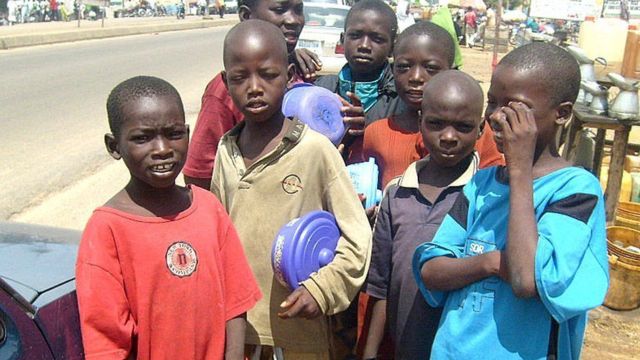
Over the years, the Almajiri system of education has served as a traditional form of Islamic education in northern Nigeria, where young boys, often aged between 7 and 14, are sent far from home to memorise the Qur’an by their parents under the supervision of a Malam (teacher). While the system’s intent was to instil religious knowledge, encourage direct engagement in Islamic activities, and provide practical moral learning, it has largely become disconnected from its original purpose.

At present, the system has turned millions of pupils into nuisances, leaving most of them without literacy or numeracy skills. Pupils divide their day between reading and wandering the streets to beg for food and money, intended to cover their living and schooling costs. This model places the pupils in highly vulnerable situations, exposing them to all forms of exploitation and manipulation, and even rendering them a threat to national security.

The Almajiri system of education has been a cornerstone of learning for many Nigerian children. However, its implementation has raised concerns about child welfare, education, and human rights. As Nigeria strives for progress, it is essential to address the challenges within the Almajiri system. One major issue is the lack of regulation and oversight, which leaves children vulnerable to all forms of abuse.

Another significant challenge is the limited access to quality education. Traditional Almajiri schools focus solely on Islamic studies, neglecting secular subjects such as mathematics, science, and English. This restricted curriculum can hinder students’ ability to compete in the modern world. By incorporating modern subjects, Almajiri schools can offer students a more comprehensive education.

The Almajiri system also raises concerns about radicalisation. Some Almajiri schools may promote extremist ideologies, which can have far-reaching consequences. To mitigate this risk, it is essential to encourage critical thinking, tolerance, and inclusivity within Almajiri schools.

To reform the Almajiri system, a decisive approach is necessary. Government agencies, NGOs, and communities must collaborate to provide support for Almajiri students, including access to healthcare, nutrition, and protection from abuse. Almajiri schools should be encouraged to adopt a modern curriculum and teaching methods.

Furthermore, teachers and caregivers in Almajiri schools require training and support to provide a quality education. Community engagement is also important, and parents, guardians, and community leaders involved in decision-making processes are encouraged to prioritise children’s welfare and education.

The current Nigerian government can play a crucial role in reforming the Almajiri system through policy initiatives, such as the Almajiri Education Programme. However, more needs to be done to ensure effective implementation and sustainability. Long-term commitment to reform requires a sustained effort to improve the lives of Nigerian children. By working together, we can create a more inclusive, equitable, and prosperous society for all.

In conclusion, monitoring and evaluation mechanisms are essential for tracking progress, identifying challenges, and making adjustments to reform initiatives. Reforming the Almajiri system is a complex task that requires collaboration, commitment, and creativity. By working together, we can create a more just and equitable education system that benefits all Nigerian children.

Ibrahim Inusa writes from the Department of Mass Communication at Abubakar Tatari Ali Polytechnic Bauchi and can be reached via Ibrahiminusa216@gmail.com.