Religion

MULAN condemns NBA for regional, religious bias

By Uzair Adam Imam

The Muslim Lawyers’ Association of Nigeria (MULAN) has lambasted the leadership of the Nigerian Bar Association (NBA) for treating the Muslim members of the association with ignominy and reckless abandon.

MULAN also blamed NBA for treating members with regional and religious bias, adding that the association is working against the interest of her Muslim members and Islam in Nigeria as a whole.

A statement jointly signed Thursday by Prof. Abdulqadir Ibrahim Abikan, the MULAN President and Adam Olori-Aje Esq, the Secretary-General, disclosed.

The statement decried that over the years, Muslim lawyers have had to bear the pains of participating in NBA programmes without due regard for their collective sensibility.

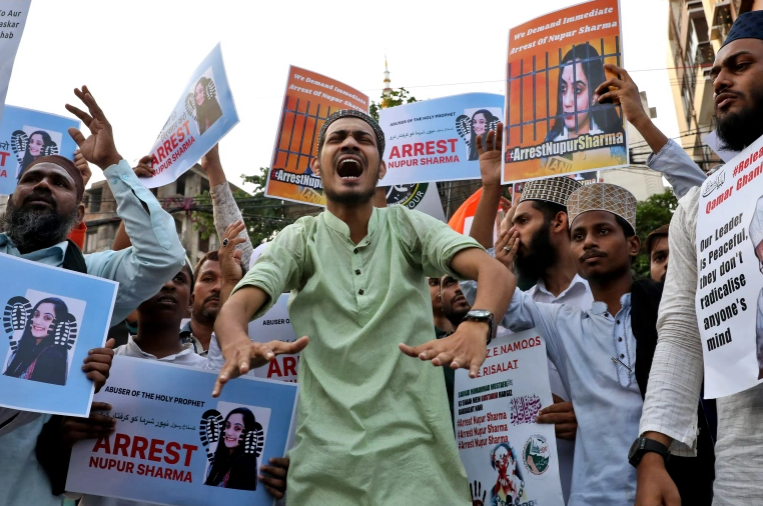
MULAN also condemned, in an intensely vitriolic tenor, the blasphemy of Prophet Muhammad (SAW) by Deborah Yakubu, as her act offends not only her Creator but also the sensibility of the Muslims world over.

The statement reads in part: “In December 2021, the Olumide Akpata-led Administration of the NBA announced the establishment of NBA Stabilisation Fund and Access to finance for Lawyers. The laudable and much celebrated multibillion-naira project was financed from our collective patrimony.

“However, it was structured on interest orientation that puts-off Muslim members that would not want to have anything to do with interest financing. The fact that the NBA did not think about the exclusion of those members, who are in thousands, alone, shows her high level of insensitivity.

“Without minding the insensitivity, the leadership of MULAN called the attention of the NBA to the implications of the exclusion vide a letter received at the NBA House on 23rd December 2021, addressed to the President and offered to assist her in the architecture of an inclusive alternative. Despite the fact that the letter was received, the President arrogantly ignored it till date.

“The purpose of the exclusion cannot be excused from premeditated impoverishment of a target group. NBA is a multi-billion-naira association in terms of her annual income from Practicing Fees, donations and local and multi-national partners’ funding. The quantum of Muslim Lawyers’ contributions to the fund is not mean.

“The funds are expended vide execution of projects and organization of programmes and events through her various statutory and ad-hoc committees. Along with the services rendered by members of the committees, they, in turn, become more exposed and developed in personal skills and human capacity. It is however curious that appointment into these committees has always been awkwardly lopsided that at no time would Muslim members of the NBA form more than ten to twenty per cent (10-20%) of any of her committees.

“For instance, a survey conducted by MULAN in November 2021 revealed the following percentage of Muslims in various committees set up by the current NBA administration: Judiciary Committee – 13%, Welfare Committee – 13%, Remuneration Committee – 7%, Legal Education Committee – 13%, Human Right Committee – 20%, Disciplinary Committee – 7%, Technical Committee on Conference Planning (2022) – 6% etc. the total number and percentage in the whole committees published by the NBA are graphically represented hereunder,” the statement added.

The leadership of MULAN also decried that NBA reverts to her default Sealed Lips Mode on the killing of Harira and her Children in Anambra State.

“It is not surprising that after insulting the sensibility of the Muslims on Deborah killing, NBA reverted to her default sealed lips mode when the news broke out of the barbaric killing of the pregnant Harira and her four children in Anambra State. Was it because it was Muslim lives that were involved or because it happened in Anambra, not Sokoto State or because the dastardly act was allegedly carried out by IPOB, not the Muslim mob that NBA kept sealed lip? While we await what event of the NBA would be cancelled

“in memory of Harira and her Children or staged in celebration of their killing, as the case may be, we at MULAN condemn in strongest terms, extra-judicial killing of any soul be it Muslim’s or non-Muslim.”

Blasphemy: Legal Aid Council denies lawyer to Abduljabbar Kabara

By Muhammadu Aminu

Legal Aid Council of Nigeria has refused to provide legal aid services to a controversial Kano cleric, Abduljabbar Kabara, who is standing trial for alleged blasphemy.

The Daily Reality earlier reported that the cleric sacked his previous legal teams over a misunderstanding.

Justice Ibrahim Sarki Yola earlier urged the Council to provide pro bono legal services to the cleric to enable him to have a fair trial.

The Council argued that Sheikh Kabara does not deserve its services because he earns more than Nigeria’s minimum wage (30,000).

According to the Council, it is also out of its jurisdiction to defend an alleged blasphemy case.

The prosecuting counsel, Yakubu Abdullahi, appealed to the Judge to allow the Kano State Attorney General and Commissioner of Justice to provide lawyers for the plaintiff.

Justice Yola, however, denied the request and directed that a letter should be written by an independent lawyer, Barr. Dalhatu Shehu to defend the cleric.

Sheikh Kabara has been facing trial for charges related to blasphemy in an Upper Shariah Court in Kano, although he denies the allegations.

Justice Yola adjourned the case to June 9, 2022, for a continuation of the trial.

How to plan the prosperity of your family through Waqf  (II)

By Abdullahi Abubakar Lamido

Bleak Economic Future on Losing bread Winner

Think of it; the moment you die, the socioeconomic status of your children and wives changes. Your children (those young among them especially) become orphans, and your wives are called widows. While alive, you worked hard and earned for their feeding, clothing, shelter, education, healthcare and general wellbeing. The moment you die, they lose a breadwinner. If in your lifetime you have searched from the Islamic Sharī’ah, you would have learned the art and science of planning beyond your lifetime for these prospective widows and orphans. After relying on Allah, you would have built for them a prospect such that they would live a life of meaning, success, prosperity and contribution, insha Allah. And here comes the relevance of family waqf; waqf, in general, being the Islamic instrument for institutionalising philanthropy and ensuring perpetuity in giving!

Family Waqf as a superb socioeconomic institution enables one posthumously to maintain his parenthood and breadwinner status for his family, generates him reward permanently and preserves the dignity of his progeny everlastingly. In family waqf, you find one of the essential instruments for planning the future prosperity of your progeny.

Family Waqf as Solution

Family waqf, also called posterity waqf, is a kind of endowment created as a futuristic investment for the sustainable prosperity of the endower’s relatives or friends. It is often called a restricted waqf, distinct from a public waqf whose benefits go to an open class of beneficiaries. It can be for the immediate family; wives and children. It may also include parents. It can be made for the extended family, depending upon the financial capacity of the endower. One can make a family waqf for a child with a special need, say one with sickle-cell disease. The beneficiaries of a family waqf, in short, are those defined by the endower.    

Significantly, although the primary beneficiaries of this form of waqf are those pinpointed from the endower’s family, time may expand the scope of the recipients of its fruits. When, for example, the revenues generated from the waqf grow so large beyond the family’s need, or when the family gradually goes extinct after some long time, the waqf could be converted to a public waqf, expanding the coverage of those who enjoy its benefits. Therefore, what distinguishes a family waqf from a general public waqf is its scope of defined beneficiaries. Virtually all other rules of its governance are the same with public waqf. It can be made a direct waqf, one that creates direct benefits, on an investment waqf whose revenues are distributed to the designated recipients.   

Family waqf can be made for the provision of all forms of welfare and empowerment services for the family. It can be made for education, healthcare, feeding, clothing and other needs. It can also be made, specifically for the sponsorship of Hajj to family members. In this regard, instead of spending five million naira for two or three members of the family to perform Hajj this year, the same amount can be invested as a waqf, such that after its maturity, the proceeds from the investment waqf can be used to sponsor Hajj for a certain number of family members every year. With proper management and Allah’s barakah, instead of three family members, dozens of them can enjoy Hajj from the same seed money even long after the demise of the original donor. Waqf multiplies benefits and rewards manifold.

More often than not, you hear people complain over the demands of their family members overwhelming them even as they want to contribute. But little do they know they have a satisfactory answer in family waqf. For example, suppose you know you spend two million naira for the education of your children and extended family annually. Why not make an investment waqf so that the proceeds of the waqf relieve you of any spending in that direction in some years to come?

Form and Functioning of the Family Waqf

A person can build a rentable shopping complex, subscribe to Islamic bonds (Sukuk), buy shares of a halal company, and dedicate the same and profits thereof as a waqf for the education of his children and grandchildren. Likewise, one can build an orchard full of date trees, mango trees and other fruit-bearing trees, dedicating them as a waqf for the future specific or general financing of the needs of their children.

When the endower specifies in the waqf deed that it is only for the education of his children, then, as a rule, no part of the rentals shall be spent on other needs, just as the resources cannot be used to fund the education of children other than his, except when the yields grow far beyond the education of the designated siblings. If the endower dedicates it to education and healthcare, its proceeds cannot be diverted to feeding the family or other things except under absolute necessity. All this is to safeguard the sanctity of the waqf, ensure its sustainability, and guarantee the continuous flow of its yields in line with the overall goals and objectives for which it is created.

 The good thing is that, like all other waqfs, making it a family waqf makes the investment/asset inalienable. It prevents it from being counted among the inheritable wealth of the endower, as it will remain a separate entity that creates benefits perpetually to the entire qualified beneficiaries. The asset can neither be sold nor given as collateral. It remains a waqf asset. This way, even when the children need other things, they source them outside the waqf, allowing the waqf to maintain its defined purpose perpetually.  

The idea behind family waqf stems from Islam’s emphasis on ensuring the wellbeing of a person’s family and biological relations and the need to spend continuously on all aspects of their needs; spiritual, intellectual, biological, physiological, socio-cultural, and so on. Talking about spending, the Qur’an draws attention to prioritising spending on the family. When, for instance, the companions continued to ask the Prophet (SAW) how best to organise their spending, Allah intervened with a divine spending formula: that whatever you plan to spend for good or charity, direct it to your “parents, relatives, orphans, the needy and the traveller” (Qur’an 2: 215).

Your family, in short, occupies the first three spaces on your scale of spending preference. They are the primary beneficiaries of your giving, be it obligatory or voluntary. Now, if, as the Prophet declares, the most pleasing act in the sight of Allah is one that is perpetual and sustainable; then it becomes apparent that the most rewarding spending on the family is the “gift that keeps on giving”, that is a waqf that keeps bearing fruits to the family.

Start Early, Start Now!

It is important you begin the waqf plan early. Many people start their marital lives with moderate incomes, which, with little adjustments, a futuristic mindset and financial discipline, are sufficient to be divided into consumption, saving and little investments. However, financial shortsightedness often prevents them from allocating some portion of that “meagre income” to what would ease their financial burdens and create a sustainable flow of income – and reward- for themselves and their family in the future. Little do they realise that as their family grows, so do their financial burdens. If these are added to inflation and other economic unpredictables, the complexity of the situation worsens.

Many people do not also realise that the best immunisation from the negative socioeconomic consequences of shrinking disposable income is to begin early implementation of an effective financial plan. Many begin to regret when the regret cannot change anything; they would want to start to cry when the head is already cut off!  

So, plan for the future of your beloved wives, children and relatives. That is a Sunnah, a well-established one, for that matter. A viable and well-managed revenue-generating waqf can do that for you. You get double rewards; you safeguard your family’s future Islamically and earn rewards perpetually. Make an effective plan for their feeding, sheltering, education, medicine, and socioeconomic prosperity. Make a waqf for their Hajj, ‘umrah and general spiritual wellbeing. That is sunnatic. Do not miss the opportunity to practice this multidimensional Sunnah, the Sunnah of family waqf. Our dear mother and wife of the Noblest Prophet, Aisha, reports to us that the Prophet (peace be upon him) dedicated his seven gardens as waqf to benefit the clans of Banū Abd Muttalib and Banū Hāshim as recorded by Bayhaqi.

We also see emphasising family waqf in the guidance of the Prophet to his companions. After the revelation of the verse “By no means shall you attain righteousness/piety unless you spend of that which you love; and whatever good you spend, Allah knows it well” (3:92), Abu Talha met the Prophet and said, “This is what Allah has revealed, and the most treasured of all my wealth is this garden, Bayruhā’. I have set it aside as a adaqah to attract reward from Allah. Therefore, you should administer it the way you wish”. The Prophet was amazed by this gesture. And so he said, “Certainly your wealth is blessed. Having heard what you have said, I recommend that you dedicate it as a perpetual charity to your relatives”. Based on this Prophetic advice Abu Talhah made it a waqf for his close relatives and cousins (Bukhari and Muslim).

It is interesting also that most companions of the Prophet are reported to have implemented this Sunnah. For example, Caliph Abubakar dedicated a house as a waqf for his son, and Umar dedicated a waqf near Marwa to his son. Also, Zubayr endowed a house in Makkah, another in Egypt, and yet another in Medina as waqfs for his children. Amr b. ‘Āss endowed a house and another huge property in Mecca for his children, just as Hakīm b. Hizām also dedicated a house as a waqf in Mecca and another in Medina for his son. After reporting all of these, Ibn Qudamah says in al-Mughniy, “All this are intact till date”.

Family waqf is a Sunnah of the Prophet, his companions and generations of Muslims in the last fourteen centuries. It is a well-developed institution that grew as a robust instrument for family empowerment and societal development until it faced the orchestrated wrath of the colonial monsters. The colonialists saw it as an institution that gave families and societies independence against their mercilessness and hence officially abolished it in Muslim nations like Egypt, Morocco, and so on.

Sadly, there is hardly any evidence of its practice as enshrined in Islamic law and civilisation here in Nigeria. With the growing waqf awakening in Nigeria, one hopes that a new page would be opened for entrenching this all-important Islamic civilisational institution. The good news is that with each family doing it, we gradually build a new waqf generation. Through that, we give a big blow to poverty at family levels before we finally eject it out of our communities. The early we sow, the earlier we reap. The more we sow, the more we reap. May we begin this journey NOW.

Abdullahi Abubakar Lamido, Chairman, Zakah and Waqf Foundation, Gombe . He can be reached via lamidomabudi@gmail.com.

How to plan the prosperity of your family through Waqf  (I)

By Abdullahi Abubakar Lamido

Introduction

In today’s Nigeria, we experience a rapidly growing population at an average rate of 3% per annum. We currently have about 220 million citizens and still counting. Our population is projected to reach nearly 400 million in the next 28 years. It is factual also that the population growth is much higher in the Muslim communities of Northern Nigeria than in other communities in both the North and the South.

Due to many reasons, foremost among which is the widespread practice of Islamically permissible polygyny, our population grows exponentially. At the same time, little is done to plan the expansion of infrastructure and provide alternative ways of coping with the needs of the expanding population. An average Northern Nigerian man likes and practices polygyny (i.e. marries more than one wife). In addition, family planning and birth control are generally considered taboos. Families are, therefore, mostly large.

While the population is supposed to be a blessing, it can also be a curse if not well managed. It is clear also that most of the Muslim masses and a large chunk of the Muslim leaders, intellectuals and even religious scholars are oblivious of the long term consequences of an ever-growing population that is not matched with a corresponding sharī’ah-compliant solid plan for taking care of the education, health, food and other socioeconomic and religio-spiritual needs of the expanding population.

While few are partly aware of some of the projections related to population growth vis-à-vis the socioeconomic and other realities, we are largely oblivious of the need to develop Islamic oriented ways of building the society and coping with the socioeconomic challenges associated with our growing population and exponentially changing societal dynamics. Therefore, the issue can quickly become controversial during any discussion.

But a society that accepts, based on an interpretation of religious teachings and cultural beliefs, that polygamy – rather polygyny – should be widely practised and even encouraged should also be a society that always goes back to the scripture for proper guidance on how to manage polygamous families. Since, as a religious Ummah, we have accepted what Islam has provided for us of the permissibility of having many children, is it not also Islamically incumbent upon us to go back to the Qur’an and Sunnah to learn how to organise the social, educational, economic and other needs of our families? Within this context, I intend to introduce family waqf, an almost entirely unknown Islamic institution for organising and planning the prosperity of families in Nigeria.  

Unpleasant Consequences of Life without Planning

How often have you heard stories that end with statements like: “Allahu Akbar! Late Alhaji Adamu was a wealthy person, a kind, gentle, and successful businessman. But look at how his children are suffering…”; or “Can you remember Alhaji Mai-Turare: the owner of XYZ Business at Tudun Muntsira quarters? Do you know that this hopeless drug addict is his son! He dropped out of school and joined a team of hooligans…Allah ya sa mu gama da duniya lafiya (May we have a good end in this world)”. And similar stories?!

Those are recurrent stories in Northern Nigeria. You have several successful entrepreneurs or accomplished aristocrats and professionals who reached the zenith of fortune in their chosen businesses and professions and lived lives of accomplishment and contribution. However, shortly after their demise, their estates would be shared among their 30 heirs; four wives, over 20 children, etc. After a few years, those inheritors of enormous wealth would fall from the world of prosperity to that of harsh poverty.

Many people would be rich, with an ever-expanding flow of income in the booming years of their careers. Still, they would never think of making a sustainable investment for the future prosperity of their children, not even for their life after retirement. After the family has grown large, inflation has multiplied manifold, and life has become unbearably expensive against their sources of income which have rather contracted due to age and other factors; they turn from affluence to poverty, battling to settle even the most basic of their bills. They neither invested for their retirement nor made an ever-flowing investment for their second life, the eternal life after death.

They have no passive investments that generate income for them at old age, nor a waqf (endowment) that would continue to fetch them rewards even while in their graves. They have no plan for what would sustainably finance their family’s education, health, and other essential needs. And so the worst happens. And the whistle is blown for their final, inevitable transition to the next world, leaving their family in economic and financial confusion, which often spirals into other messes in the spiritual, social and mental spheres. Soon after dearth, history forgets them as they have left nothing that continues to fetch them rewards and people’s prayers, not even for their immediate family.

The Importance of Making a Financial Plan

But why is it essential to make a financial plan for your children’s and family’s future prosperity? Does that have any place in Islam? Sa’d b. Abu Waqqas was an uncle to the Prophet (peace be upon him). He was among the ten topmost companions that received glad tiding of a direct entry ticket to Paradise in one sitting. He was rich. Actually, very rich.

One day, during the farewell pilgrimage, the Prophet visited Sa’d on his sickbed. After exchanging greetings, Sa’d told the Prophet that I am seriously ill, as you can see. He apparently was doubtful of surviving that illness. He said, “And I am a very rich person, but there is no one to inherit my wealth except a single daughter.” He then asked if he could give two-thirds of his wealth to charity, leaving one-thirds for the daughter. The Prophet instantly replied with a quick “No”. “What of half?” The Prophet again said, “NO”! What of one-thirds?” Now, here is where the Prophet reluctantly approved by saying, “One-third! Even one-third is huge and too much”. Anyway, the Prophet followed this with a statement that deserves the attention of parents at all times; “It is better to die leaving your heirs in affluence than to leave them in poverty, so they continue begging people for alms”. 

Many lessons abound in the above conversation of great personalities. One, piety and affluence are never mutually exclusive; you can be profoundly pious and superlatively prosperous. Two, connected to this, enjoying worldly opulence does not preclude enjoying everlasting other earthly felicity. In fact, worldly riches are effective instruments for attaining success in the next world. This is clear in the stories of great companions like Abubakar Siddiq, Uthman Bin Affan, Abdurrahman and, of course, Sa’ad.

Significantly also, you can plan all of these for your loved ones beginning with your children and wives. Not only you can; you have to! This is Prophetic advice, if not an order. The Prophet (may peace be upon him) made it impermissible for a person, especially while bidding farewell to the world, having no chance on sight to go to the market and earn more resources from gifting out his fortunes lest he throws them into poverty after him.

In simple terms, what the Prophet wanted from us is to plan for making our children self-reliant, self-sufficient and socio-economically empowered. With this, instead of being dependent, they will be independent. We should try making them givers, not receivers, assets rather than liabilities. Ask yourself, if not for empowering the deceased person’s posterity, why would the Sharī’ah even prescribe the inheritance laws in the first place? And in the Hadith of Sa’d above, the Prophet wants us to understand that the philosophy behind inheritance itself is to plan for the sustainable prosperity and economic independence of the deceased’s heirs; leaving them with sufficient inheritable resources to make them rich (agniya’) as against poor (alah).  

Abdullahi Abubakar Lamido, Chairman, Zakah and Waqf Foundation, Gombe . He can be reached via lamidomabudi@gmail.com.

Anambra Killings: Muslim clerics demand compensation for victims’ family

By Uzair Adam Imam

The Ulama Forum in Nigeria has condemned the wild killing of Harira and her four kids, demanding the Anambra state government pay full life compensation to the relatives of the deceased.

Reacting with dismay, the forum also called on the Anambra state governor, Professor Chukwuma Charles Soludo, to take measures to mitigate all forms of barbaric and terrorist acts and to also apologize to the Muslim community the world over.

The clarion call was in a statement jointly signed Thursday by Aminu Inuwa Muhammad and Dr Sa’id Ahmad Dukawa, the Convener, on behalf of the secretary to the forum.

The forum also voiced objection to the release of the IPOB’s leader, Nnamdi Kanu, blaming him for being responsible for the latest crime by the group he leads in killing innocent souls.

They added that what happened just recently must be added to the list of his unrepentant crimes until the full wrath of the law is brought down on him.

The statement partly read: “While we call upon Muslims in Northern Nigeria and other places to resist the temptation of any unlawful reaction, we at the same time call on the Federal Government of Nigeria and the security agencies to demonstrate that they are capable of protecting the lives and properties of Nigerian citizens irrespective of where they decide to reside in Nigeria, just as sanctioned by the Constitution of the Federal Republic of Nigeria, African Charter of Human and Peoples’ Rights, Universal Declaration of Human Rights and other international instruments.

“We are in such a state of grief and mental hardship inflicted upon us by IPOB that we need to say no more!!! We are watching to see whether there are responsive and responsible governments in Anambra state in particular and other states in the east where such unprovoked acts of barbarism and terrorism are being perpetrated over the years. May justice and peace prevail in Nigeria. Ameen,” the statement added.

The Daily Reality reported how the outlawed terrorist group, Indigenous People of Biafra (IPOB), has mercilessly murdered a heavily pregnant woman and her four innocent kids in Anambra.

The woman identified as Harira Jibril was killed alongside her four kids and six other persons of northern extraction on Sunday, May 23, 2022.

Deborah’s Blasphemy and Sokoto Riot: An Open Letter to Bishop Mathew Hassan Kukah

By Murtala Uba Mohammed (PhD)

Dear Reverend, I wish to thank God for sparing your life during last week’s riot in Sokoto City because of the intrinsic value and sanctity of human life as shown to us by our beloved religion of Islam. I have to do that Father, because, rumors went round that a mob had allegedly attacked Sokoto Diocese and killed the bishop. Glory be to the Almighty, the most exalted, that you have not sustained any injury and that it was only windows of the church that were smashed and neither you nor any member of your congregation was injured. 

I hope Father would not be angry with me for deciding to throw a letter addressed to him through a public domain, rather than sending it privately to his Most Reverend. Sir, I am only following your footsteps. I know you are used to writing public letters to many of our leaders, including late ones, as you did recently to his Eminence, the one and only Premier of the Northern Nigeria, Alhaji Sir. Ahmadu Bello Sardaunan Sokoto, whose ancestral home and the city established by his grandfather, Sultan Bello, is now serving as your abode.

Sir, you seem to have carved a niche for yourself for being blunt and outspoken; we know you talk to power in the Northern Region in the most audacious way or to put it differently in the words of Professor Edward Said that you speak “truth” to power and the powerful. Sir, your magnum opus, Religion, Power and Politics in Northern Nigeria have not spared any of the respected Northern leaders be he a politician, traditional ruler or religious leader. Sir, forgive us the younger ones if we speak to you in a similar tone because a Hausa have a proverb “mai kwaikwayon shan mai, ya fi mai koyan shafawa” loosely translated, a trainee learns more than what his trainer taught. The Hausa people might not be aware of the Biblical verse which says: a “disciple is not above his teacher, nor a servant is above his lord.

Let me not digress from the topic of the letter. I am writing concerning the blasphemy case and the riot that followed it. It is unfortunate that this had happened while you are holding the “Most important Christian chair in the Sokoto Region. Sir, the aura you built around you is that you are a “Peace Crusader”, which is stated as one of the goals of Kukah Centre. One expects you to come out boldly to uphold justice, speak the truth and promote the peaceful resolution of the crisis. Alas, your voice was one-sided. You are well aware of the highly accommodating and peaceful nature of the Sokoto people. It is enough pointer to their tolerance that you could freely come and settle in the city built by the Shehu and establish an institution which aims at unwinding and uprooting all that the Shehu had built two hundred years ago. Even as this crisis was surging, Muslim political and traditional/religious leaders would have definitely assured you of your rights and the rights of all Christians to settle in Sokoto or any Muslim city without hindrance. Shouldn’t such tolerance be reciprocated by the Bishop and his followers? What the people of Sokoto demand, as you work to reduce the strength of Islam by spreading the mission of Christianity is to AT LEAST respect the sensibilities of the people; respect their religious sanctity and personalities, do not subject them to ridicule, teach your followers good manners and the spirit of togetherness. This, disgustingly enough, you have failed to do. You have poisoned the minds of the young Christians around you and charged them with hatred against the majority Muslim population amongst whom they live. By God, how can you then claim being a peace maker? I know that in the case of Deborah, you may not be the person who directly misguided her behaviour. Some zealous Pastors might have been responsible. You are, however, the highest Christian cleric. I may therefore, not be wrong for holding you accountable for the irresponsible utterances of Deborah. Your one-sided statement lends credence to this assumption. Your position cannot be compared with that of the Sultan, who in the spirit of peacebuilding condemned those who took the law into their hands and called for restraint, knowing fully that he himself was deeply hurt by the assault on the personality of the beloved Prophet. The Sultan called his people to order, you called mainly for punishing the killers, pretending that there is no problem, therefore, your silence on the abuse cann be interpreted as tacit approval to rain more abuses on Islam and Muslims and further instigate demonstration in Churches and CAN Secretariat.

For the avoidance of doubt, I stand vehemently against taking laws into ones hand by any group of people. While condemning the killing of any soul not approved by a court of law, I am strongly convinced that she (Deborah) had crossed the red line and it is her filthy action that instigated the unfortunate youth reaction. It was Newton’s law that says every action generates equal and opposite reaction. 

Sir, the Sultan has done excellently well by not taking side with the killers; do the same Bishop, don’t just side with Deborah for the Muslims were insulted and enraged by her unprecedented foul words, therefore, remind your fellow Christians that Muslims hold their prophet in the most dearest way, let them teach their children never to insult our Prophet (peace upon him) again; after all we are not gaining anything by insults and curses, we gain by relating in the best of manners. In fact, no Muslim can be considered a true believer if he does not believe and respect Jesus. Your boldness is always against Muslim, this is the right time to probe yourself by showing it to Christians. 

Before I bid you farewell Father, let me use this opportunity to call for peace between you and three eminent children of Sokoto. Since you are now in their home region and you are still alive, this is the best time to cease fire with the trio who formed the tripartite stones that hold the Caliphate. Sir, I am talking of Shehu Usman bn Fodio, his great-grandchild Sir Ahmadu Bello Sardauna and Sheikh Abubakar Mahmud Gumi. Sir, all of them were dead when you wrote your book, which I believed to be an extract of your PhD thesis, but the book is full of a sort of vengeance and hatred towards them. Sardauna, as you insinuated was/is sustaining the wishes of Shehu which is extending the boundary of the Caliphate to the shore of Niger and beyond. This completely counter your dream and the dream of your master Dr. Walter Miller which is to have a ‘civilized North’ which according to him as you quoted in your book is looking “forward to the time not far from hence, when educated Christianized pagans will lead the way… and even encircle the more obstinate and conservative Muslim emirate” (Religion, Politics and Power in Northern Nigeria, p4). I think this is the main reason for your fight with Sardauna, because of his zeal to spread Islam, particularly his engagement in mass conversion in Central Nigeria. 

Finally, I wish you well as you will be celebrating your seventy year birthday in a few days to come. May we find peace in Nigeria, North, Sokoto and Southern Kaduna as well. Let us hope this will be the last time Sokoto will have this unfortunate incident. Thank you. 

Murtala writes from Kano, Nigeria, and can be reached via murtalamuhammadu@gmail.com

Sokoto Blasphemy: Soyinka demands sack of National Mosque’s Imam

By Muhammad Sabiu

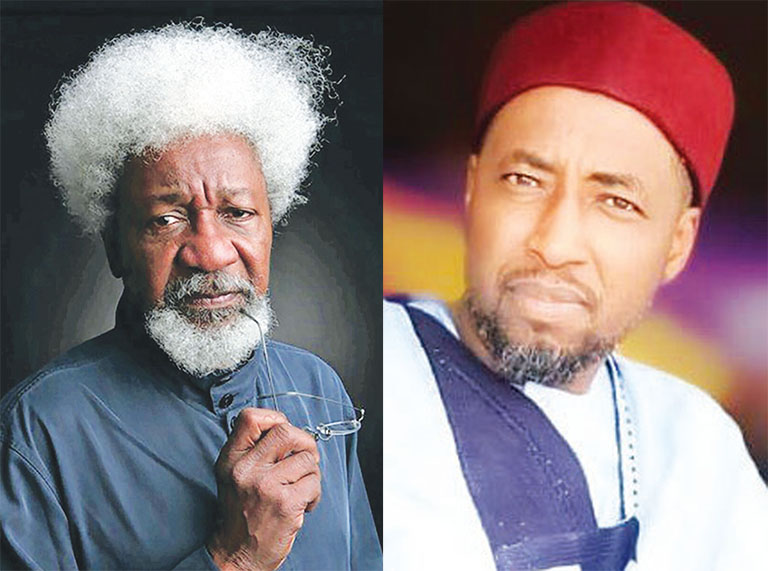
Professor Wole Soyinka, a Nobel laureate, has demanded that the Imam of the National Mosque, Professor Ibrahim Maqari, be fired for his remarks on Deborah Samuel, a 200-level student at Sokoto’s Shehu Shagari College of Education, who was lynched for blaspheming Prophet Muhammad (SAW).

Soyinka made this appeal in Abuja, Saturday, during the one-year commemoration of the late former Chief of Army Staff, Lt.-Gen. Ibrahim Attahiru, and the launch of Niran Adedokun’s biography of the late general.

Prof Soyinka claimed that the Islamic preacher directed his followers to take the law into their own hands.

Recall that the Imam of the National mosque Professor Maqari spoke strongly against the insulting comment made by the late college student, stressing that making such a comment was taboo.

The Nobel Laureate condemned religious lynching and demanded that the Imam be removed from office as an apostate of humanity’s credo

He was quoted as saying, “It is no longer sufficient for all to declaim that Islam is this and that, that the Sharia is thus and thus, that Prophet Mohammed set this or that example and made this or that humanistic pronouncement.

“We have gone beyond theocratic rhetoric that merely pays lip service to civilized norms. Let all pietistic denunciations be backed by affirmative action.”Prophet Muhammad (SAW) is the most beloved person to the

Sokoto blasphemy: Soyinka demands sack of Abuja National Mosque imam

Prof. Wole Soyinka, a Nobel laureate, has demanded that the Imam of the National Mosque, Professor Ibrahim Maqari, be fired for his remarks on Deborah Samuel, a 200-level student at Sokoto’s Shehu Shagari College of Education, who was lynched for blaspheming Prophet Muhammad (SAW).

Recall that the imam spoke strongly against the insulting comment made by the Shehu Shagari student, stressing that making such a comment was taboo.

Mr. Soyinka claimed that the Islamic preacher directed his followers to take the law into their own hands.

On Saturday, he spoke in Abuja during the one-year commemoration of the late former Chief of Army Staff, Lt.-Gen. Ibrahim Attahiru, and the launch of Niran Adedokun’s biography of Attahiru.

The Nobel Laureate condemned religious lynching and demanded that Professor Maqari be removed from office as an apostate of humanity’s credo.

He was quoted as saying, “It is no longer sufficient for all to declaim that Islam is this and that, that the Sharia is thus and thus, that Prophet Mohammed set this or that example and made this or that humanistic pronouncement.

“We have gone beyond theocratic rhetoric that merely pays lip service to civilized norms. Let all pietistic denunciations be backed by affirmative action.”

Prophet Muhammad (SAW) is the most beloved person to the Muslim faithful, who have the view that on no account should anybody make a derogatory or disrespectful remark against him.

Homeschooling, “American Islam” as seen through a non-American Muslim’s eyes

By Umm Khalid

I was at a park yesterday with a couple of friends (other homeschooling moms) and our kids. A fellow Muslim woman passed by where we were sitting and we exchanged salams. She approached me and asked, “بتحكي عربي؟” (“Do you speak Arabic?”) “Yes, I’m Egyptian,” I told her in Arabic, shaking her hand and gesturing for her to sit and join us. The rest of the conversation flowed in Arabic, her Jordanian dialect and my Egyptian one.

She gave me many important things to think about in this exchange. She sat down next to me and looked around curiously at the large group of kids playing rowdily around us. “Are these all your children?” she asked. “Yes, it’s the three of us moms here and these are our kids,” I replied.” Are you guys related? Are you all Arabs? How did you get together/find each other?” she asked. “We’re all friends,” I explained. I gestured at my two non-Arab companions nearby, an African American mom and a Latina mom: “My friends here are not Arabs. This sister is American, a convert actually, and this other sister is Hispanic.” She was surprised and seemed riveted. “To be honest, I was so fascinated when I saw you guys from a distance and all your kids playing together so well. Black and white. I didn’t know there was a third ethnicity in there too!” She told me a bit about herself and her background. She was a Jordanian young woman, 24 years old. Just arrived in America last year from Jordan. She didn’t know the system here yet and was especially confused by the school system. She looked again at the kids, who were now piled on top of one another (there are masha Allah ten boys total, so there tends to be a lot of wrestling).

“Are they in school? Is today an American holiday?” she asked, probably wondering why all these school-aged children were roaming around at a park instead of seated at desks in a classroom somewhere.” No, it’s not a holiday today. We home-school (in Arabic: تعليم منزلي ).” She gave me an intrigued look, fascinated. “What does that mean? I don’t know anything about this. Is homeschooling allowed? So your kids are not associated with *any* school at all? Who teaches them?” “Me,” I said simply. “I teach them. No, they are not associated with any school at all. It’s not necessary. Homeschooling is allowed and many families home-school. I know that it’s not really a thing in our Arab countries. We don’t hear about homeschooling in Egypt, or in Jordan either. But here, homeschooling is a perfectly legal option and there are lots of homeschooling families, alhamdulillah.” She nodded, interested. “What do you teach them in your homeschool?” “Qur’an mostly,” I answered. “We spend most of our class time memorizing Qur’an, then learning Tafseer, some hadith, and Arabic class, in that order. Then we also have an English class, Math, science, and Art. Some of these other classes are weekly, not daily. We also work on projects that the kids are interested in.”

“Why do you homeschool?” she asked the question I get asked the most.” I don’t want my kids to be raised by people I don’t know and don’t share core values with. That’s how it is in American public schools. I know because I went to American public schools. And it’s only gotten worse since I was in school. It used to be that you’d see boys and girls doing all kinds of things in the hallway at school, or sometimes hear kids swearing or using foul language. Nowadays, it’s escalated like crazy. Now it’s two girls or two boys doing all kind of things in the hallway at school, and kids looking at porn on their phones and teaching one another immoral things. Not only is it the kids, but this over-sexualized and LGBT+- stuff has made its way into the school curriculum itself! It’s not just the kids, it’s in the textbook, the teachers! This is what they teach kids in school now. And this is only *one* of the reasons,” I told her.

She nodded, understanding dawning on her face. “Yes, I did notice that the LGBT thing is big in America. That’s actually one of the first things I noticed immediately upon coming to this country. It’s one of the things I still haven’t gotten used to even though I’ve been here a whole year now,” she said. I asked her, “I know! It’s a huge culture shock. What were some of the biggest things that have shocked you, coming from Jordan to America? “She thought for a second, then replied, “I’ve been shocked by the number of concessions ( تنازلات ) Muslims make in living here in this country. I hadn’t been aware of that in Jordan, and it caught me by surprise and I still haven’t gotten over it. I have two brothers in high school here, and they see all kinds of things in school and tell me about it. They are both forced to shake the hands of females, but it’s hard not to, because of the culture. We met some Jordanians here who told us that they use riba (interest). We can’t look around without our eyes falling on some haram thing. It’s concession after concession. And I’m shocked at the Muslims here who seem totally fine with it, even though none of this is part of Islam!” I shook my head, acutely aware of her pain. I feel it too, but it was different to hear such clear, honest words coming from a Muslim who was freshly arrived from a Muslim, Arab country and confronting the reality of “American Islam.”

What would this Jordanian girl say if she found out that there are American Muslim “shaykhs” who encourage Muslims to hold hands with gay activists? How would she react if she heard that famous American Muslims keep insisting that as Muslims, we support “the right” of people to engage freely in haram acts? How much more shocked would she feel when she heard that popular American “imams” and “shaykhaz” were pushing feminism like it was candy to the Muslim population? So I simply told her, “You are absolutely right. I am still shocked at the same exact things, and I’ve been here for decades. It is just shocking. I hope I never get used to any of this or start thinking any of these things are normal. And this is another reason why I don’t allow my kids to enter these schools; I don’t want any of this to be normal for them, either.”

“Going to American schools every day will definitely normalize a lot of things,” she agreed. “I worry about my brothers. But alhamdulillah, they are older going into it. At least they were raised in Jordan and know enough not to be too swayed by the stuff they see here in these schools. I’d be frantic with worry if my brothers were in elementary school here, for example.” “Yes, younger kids are more vulnerable. The first years of a child’s life are for building a foundation (تأسيس ), and it needs to be done right, especially for us Muslims. Unfortunately, what sometimes happens in this country is that Muslim parents aren’t paying attention, and their kids enter non-Muslim schools from age 4 or 5 until age 18, and the change they undergo is drastic. It’s like entering a machine: you go into it a Muslim on the fitra, and come out the other end either barely still Muslim with warped views, or just an atheist or an agnost, والعياذ بالله.

For me, homeschooling is not optional. It’s mandatory. I have no other choice. If it’s a choice between the Deen of my kids and literally any other thing, there is no choice in the matter. They are my amana (أمانة), my responsibility before Allah.” She surprised me by saying, “You know, you are the minority here. You are not like the rest of the Muslims I’ve met so far in America. None of them do this homeschool thing. They send their kids to regular American schools and think nothing of it. They’re even a little proud maybe, that their kids are going to be Americans and learn to act and dress and speak like Americans. They care about the material (الماديات) and don’t seem too concerned about the effect of this society on their kids. They worry about things like if their kids will be able to fit in or not, if their kids will get good jobs or not, etc.” Long after the conversation ended and the sister left, I sat pondering her words, her assessment of the American Islam she was confronted with upon her arrival to America.

Peace beyond religion: Issues around blasphemy and way forward 

By Lawan Bukar Maigana 

To achieve the relative peace we crave, we must respect each other’s religion and be wary of using nasty words on our “sacred belongings.” However, I wholeheartedly condemn jungle justice, burning people, and people taking laws into their hands. That is un-Islamic. Islam is organized religion. We should follow due process when it comes to issues that require capital punishment. 

For a fact, I know that any negative thing in words or drawing against Prophet Muhammad (PBUH) will not be tolerated or pardoned by any truly practising Muslims across the globe. However, Muslims should be wary of taking laws into our hands. Some people say that the justice system in Nigeria does not do the right thing at the right time. They mainly delay judgment. 

Some people gave the example of Mubarak Bala – an atheist from Kano – who was sentenced to 24 years in prison after pleading guilty to blasphemous charges against him. They said that his punishment was the death penalty, but he was sentenced to 24 years in jail, which was unjust. I told them that that should not be an excuse for them to take laws into their hands because Islam does not encourage doing that, no matter how bad our systems are. 

In the wake of Deborah’s killing by a mob, a lady named Naomi Goni was reported to the police and the Borno State Government over a blasphemous she made on Facebook. The Borno State Government aptly did the needful to avoid jungle justice on her, as in Sokoto. Jungle justice and people taking laws into their hands are un-Islamic. Everyone should respect each other’s religion for the sake of peace. We shouldn’t be influenced by press freedom or any similar freedoms to do anything that can lead to the loss of lives and properties across the country.

On May 16th, I read news published by the Punch newspaper that a Lagos engineer was killed and burnt on the road by motorcycle operators because of N100. This is condemnable and should not be accepted by any reasonable government. It is high time the Nigerian government came up with strict laws on burning people no matter what they did. 

These guys gruesomely burnt the engineer because of N100. You can’t count how many people were killed and burnt because of minor things like stealing food, goat, little money, and shoes, among others, in the South. And they happily do it. No northerner will kill anyone because of any of the things mentioned above. Yet, the northerners are called murderers. Really! Are they?

Although I am not an Islamic scholar, I know that Allah has warned and forbidden believers from punishing people with fire. Only Him does that. Insulting Prophet Muhammad (PBUH) is unacceptable and unpardonable even in a Muslim minority state or country, let alone a place like Sokoto, which is primarily the root of Islam in the North. Desisting from insulting the prophet will not cost you anything. Why can’t we live in peace? 

As Muslims, we should act with knowledge in whatever we do. Allah has asked us to know Him before we worship Him. We can’t worship Him if we don’t know Him. We should respect each other’s religion no matter what happens because none of us will take it lightly when any of us transgresses. I fear that this issue should not be metamorphosed into religious conflicts because people’s comments on the incident are scary and dangerous. 

One’s faith in Islam will not be complete until he believes and loves Jesus – Isa (AS). That is why you won’t see Muslims insulting him. Honestly, some of the comments made by some moderate Muslims and Christians are unjustifiable because such things have been happening in the South/East in the open, and no Muslim has ever attributed them to Christianity because we know what Christianity is. 

Why can’t they do the same justice as Muslims do for Christianity when things go wrong in the South? Until we start telling ourselves the truth and live by it, respect each other’s religion and censor our utterances, we will continue to get things wrong. Then, we can live together without crossing each other’s red lines. 

It is hypocritical to condemn and label the Muslims as murderers because of what happened in Sokoto while you keep mute on the killings thriving in the South and other places. All lives are sacred, and no religion has asked its followers to kill people for no reason, and no religion has asked its followers to insult or mock someone’s faith. This has to be understood by all of us. 

The only way to end this kind of incident is through the establishment of laws on blasphemy with strict punishment for whoever is found wanting. In addition, the state governors should enact laws that will protect each other’s religion in the country to avoid jungle justice, burning people, and preventing people from taking laws into their hands.

The law should clearly state that whoever insults or uses nasty words on prophets or religion publicly will be decisively dealt with. The person should blame themselves for whatever punishment is meted at them. I think this will put an end to blasphemy, which will save lives and properties in the country. 

Lawan Bukar Maigana is a writer. He can be reached at lawanbukarmaigana@gmail.com

Islam is a religion of knowledge; learn it

By Professor Abdussamad Umar Jibia

Nigerian Muslims following discussions on the execution of a young woman by unknown youth in Sokoto would note that several obscure social media “Islamic scholars” have emerged. Some of them arrogated to themselves the right of ijtihad, a thing some of the most outstanding Islamic scholars avoided unless absolutely necessary. Unfortunately, people kept sharing such stuff as it suits their position on the matter.

When you decide to be a Muslim, you have taken a big decision to be a student of knowledge throughout your life. We all know this because the first passage of the Qur’an revealed to our Holy Prophet (Peace be upon him) is essentially an instruction to sit up and learn. After that, the Prophet lived the remaining 23 years of his life interpreting the Qur’an revealed to him piecemeal using both verbal and practical approaches. By the time he left, the religion was complete, and a whole body of knowledge was on the ground, safely transferred from generation to generation of Muslim scholars.

The knowledge is vast as it covers all aspects of life. Take the five pillars of Islam, for example. Whole books have been written on aqidah, which constitutes the first pillar of Islam. There are books on Salah (prayers), the obligatory and supererogatory aspects of it, prayer timings, adhan, iqama, the core body of prayer, etc. Same with Zakah, Fasting and Hajj.

The daily transactions of a Muslim in the market are well detailed in terms of halal and haram. In addition, there are books on rights, including rights of other Muslims, non-Muslims, neighbours, colleagues, animals, the environment, etc.

How would the sick be handled while still alive and after their death? What happens to their heritage? How is it shared? These are clearly stated.

All aspects of Islamic knowledge are available in detail, and, in sum, Islam is not a teach-yourself religion. Instead, it has to be learnt from those who know it.

Take it easy. I am not saying every Muslim must be a professional Islamic scholar, just like not everyone must be a medical doctor or an Engineer. You are probably 40, 50 or even 60 and above and have been working hard in the area Allah has placed you in. Keep working hard to earn a lawful means of livelihood for yourself and your family. That is an aspect of Jihad you are making.

I believe you would agree with me that you would not accept any quack to offer medical services to yourself and your family in the event of sickness. Most likely, you would look for the best affordable specialist to treat you and your loved ones. You would check their qualifications. You would not pick a document from an unknown specialist on the internet and begin to apply their medication and think you would be okay. When you want to build a house, you will look for the right architect to design it for you and the right engineer to supervise the work.

You are doing all of the above when it comes to Islamic knowledge. When you are going on hajj for the first time, for example, you would typically meet the scholar in your area to ask questions. You would probably attend the courses organized by the local pilgrims’ board. You are doing that to avoid wasting your money and make sure that you perform a hajj Allah would accept.

When your father dies, you would call someone you believe has a good knowledge of inheritance to help you share what has been left by the deceased. You do that for zakah, etc.

As a Muslim born to a Muslim family, you learnt to recite the Qur’an and pray from your Islamiyya days. Many thanks to your parents who took you there. Yet, you keep learning from your local Sheikh to make sure you recite the Qur’an even better and perform a prayer that is devoid of mistakes.

My brother, if you only consult an Islamic scholar you trust on all of the above, which are what you do daily and/or from time to time as a Muslim, why do you think you need a social media “scholar” to tell you the Islamic position on blasphemy, a thing not essential in your daily routine of Ibadat? I guess you are not contemplating insulting the personality of the Holy Prophet (SAW), and you are most probably not aspiring to be a Shariah court judge to know the kind of punishment you would pass on a blasphemer.

But in case you have abandoned your Sheikh and/or dropped all your Islamic books, thinking you don’t need to learn more about Islam, I am afraid that you are already preparing yourself for eternal destruction. So please go back, get an Islamic teacher you trust and continue.

As for the Sokoto case, we have shown sufficient anger, and anyone contemplating a repeat of what the young woman did would have to think many times. Let us leave the Muslim leadership to handle the rest. We should have confidence in the Sultan and his team.

May Allah forgive our shortcomings. Amin.

Professor Abdussamad Jibia can be contacted via aujibia@gmail.com.