Religion

No problem between Christians and Muslims in Nigeria – Bishop Kukah

By Ahmad Deedat Zakari

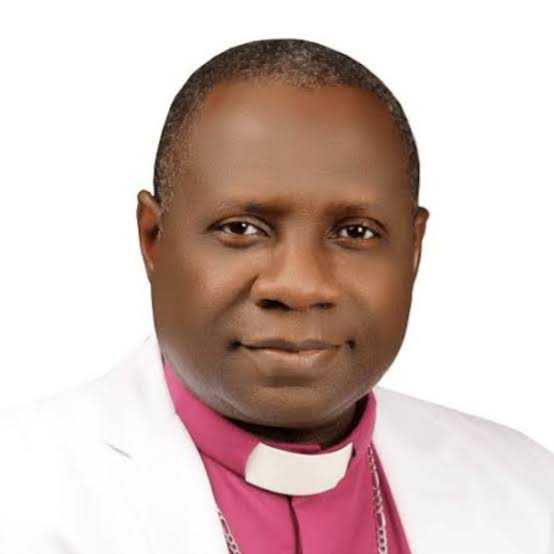
The Catholic Bishop of Sokoto Diocese, Bishop Matthew Hassan Kukah, said there was no rift between Muslims and Christians in the country.

Bishop Kukah said this while responding to questions on TVC News Breakfast Show on Monday, September 5, 2022. He said Nigeria’s problem is irresponsible leaders who weaponize religion as a tool of exploitation and oppression.

“There is no problem between Christians and Muslims. There is a problem with irresponsible leaders who don’t want to govern properly, irresponsible religious leaders who have now seen religion as a tool of oppression, instead of a tool for liberation.

“This has been the thrust of my argument because these are two areas of study. With all sense of modesty, I have spent a good part of my life studying theology and studying religion and society,” Bishop Kukah stated

Bishop Kukah, while commenting on the role of religion and ethnicity on Nigeria’s politics, also said the leaders have failed at building governance that prioritize the affairs of the citizens.

He explained, “If you are watching a football match or any game at all, that’s why there are referees. If the referee does not do what needs to be done and allows supporters to jump onto the field, you can see for yourself that referees are punishing coaches who overreach themselves by stepping even if it is just one inch, into the field. They are punished; sometimes they are taken off the pitch.

“Now, this is really what a state is supposed to be because, without the state, it will be all of us against each other. And that is why the state is called a leviathan. You put so much power so that the state can protect us. The Nigerian state has proved itself to be incompetent, grossly malfunctioning, unwilling to commit to the welfare of citizens as the principal basis of governance.”

Drama as pastor rapes own teenage church member in Ogun

By Uzair Adam Imam

The Ogun State Police Command has confirmed the arrest of a 38-year-old Pastor, Israel Adebayo, for allegedly raping a 14 year-old member of the choir in the church.

The Police Spokesman, Abimbola Oyeyemi, who disclosed this Sunday, said another pastor had been caught in the act of alleged rape.

Oyeyemi said another 48-year-old pastor, Michael Abiodun, was also arrested Friday for allegedly defiling and impregnated a 12-year-old member of his church at Owode Egba in Obafemi-Owode LGA.

He added that the pastor is tue General Overseer of “The Beloved Chapel” situated at No. 9, Iyaniwura street, off Owonikoko street Agbado area of Ogun state.

However, the mother of the victim stated that while she was away from home for treatment of an ailment, her daughter went to the church.

She added that, “But she ‘fell’ into the hands of the Pastor who lured her into his room and forcefully had carnal knowledge of her.”

Oyeyemi told journalists that, “On interrogation, the Pastor who admitted defiling the victim pleaded for forgiveness. According to him, his family and that of the victim are so close, but he didn’t know how and why such thing happened to him.

“Preliminary investigation revealed that the suspect would have been arrested long ago, but the mother of the victim frustrated the move because she doesn’t want to offend her Pastor.

“But when the victim continued bleeding from her private part since the incident which happened October 2021, she was left with no other option than to allow Police come into the matter,” he said.

Politicians should stop using religion for political gain—Bishop Kukah

By Muhammadu Sabiu

Matthew Kukah, the Catholic Bishop of Sokoto Diocese, has cautioned politicians against exploiting politics in the nation through religion, noting that a severe result would follow such a move just as it had in Germany during Adolf Hitler’s rule.

On Tuesday in Abuja, as part of the celebrations for his 70th birthday, Kukah spoke at the launch of his new book, Broken Truth.

“If you look at history, there is a consequence for using religion to manipulate politics. We just need to look at Germany. The consequences are there to see in Hitler.

“The problem is that the Nigerian political elites lack the mental capacity to understand the consequences of the fire they are stoking because there is nothing to suggest that the average person who is living in the north, who is Fulani, who is a Muslim, or who is Hausa, can say that they are proud of the Nigerian political system, beyond a very tiny percentage.

“So, if you decide that you want to give privilege to a religion or an ethnic group, what will happen is that others automatically become outsiders,” the bishop was quoted as saying.

Additionally, he indicated that protests are still taking place in the nation because the populace is more knowledgeable than those in charge of its affairs.

Kukah added, “The agitation that persists in Nigeria is largely borne out of the fact that those who govern us are not aware of how much mental progress ordinary people have made.

“Those who are being governed are more intelligent and endowed. And it will not have been a bad thing if people who don’t know seek knowledge.”

Drama as Maqari hammers ASUU, says varsity dons plagiarise for promotion

By Sabi’u Muhammad

One of the imams of the National Mosque, Abuja, Professor Ibrahim Maqari, has criticised and rubbished the conduct and nature of work of Nigerian university lecturers, members of the Academic Staff Union of Universities (ASUU).

Commenting on the issue of the ongoing ASUU strike, the controversial cleric queried the work of the university lecturers arguing that it does not yield any fruitful results.

In a 2-minute video clip in Hausa that went viral on social media, Maqari boasts, “No one would claim I don’t know university system. If anyone says so, it’s up to him.

“However, I had some knowledge of this position. This position presents several opportunities for disagreements and miscommunication. This work, as we’re calling it, is. In the name of work, what are we doing in the universities? The studies are where? There is no action taken.

“They steal and lie about everything. Each of them plagiarises the work of others. It’s all falsehoods, I assure you (wallahi).”

The retired academic stresses that most of his colleagues only feign carrying out research, but they don’t actually do it. He also laments that they only make an effort to have their papers published just to be promoted.

“It might be claimed, for example, that you are supervising or conducting research. That is false! except for a tiny minority, nothing is being done. They may be acting” (the research). But 80% of them aren’t doing it, which proves that they aren’t doing anything.

“When you see someone performing research, he’s pursuing promotion; therefore, he’d gather the works of his students or joint papers and enhance them to publish as his work merely to be promoted.

“His pen stopped after he was promoted! Did you get the point? How many people, after receiving a professorship, write 100 pages? Visit the universities to confirm! It would surprise you. I’m positive they’re 2/10. After that, 8/10 of researchers leave the field because their primary goal was to advance their careers.

“Like lecturing, it’s tough to find somebody who can complete 10 credit units weekly for a 6-hour course. It’s not much more than that, but I’ve forgotten. We’re down to 4 or 2 credit units, just like you. I took only 4 credit units over around three years.

“Before class, there is no preparation work to be done. It is entirely false. It’s been a 20-year-old handout. There is no investigation. The handout has been ingrained in each student’s memory.

“He has been teaching the same thing for nearly three years, and he is still teaching it now,” he said.

Ganduje promises to boost Hisbah operations in Kano

By Uzair Adam Imam 

The Kano State Government is set to provide equipment and other relevant working materials to Hisbah offices to enhance operational capabilities.

Governor Abdullahi Umar Ganduje, represented by the Kano State Commissioner for Religious Affairs, Dr Muhammad Tahir Adam, made the disclosure at the passing out parade of five hundred Hisbah corps.

Ganduje commended the efforts and commitments of the staff and management of the Hisbah Board in discharging their responsibilities.

He also called on the Kano residents to complement the government’s efforts by abiding by rules and regulations to maintain a crime-free society.

Speaking at the event, the commander general of the board, Sheikh Harun Muhammad Sani Ibn Sina, urged parents and guardians to be more vigilant. 

He said, “I call on the parents and guardians to be more vigilant and report any suspected person or character to relevant authorities to move the state forward.”

Man in tears after walking from UK to Makkah for Hajj

By Ahmad Deedat Zakari

Adam Muhammad, who lives in the UK, said he cried when he first arrived at Makkah for the 2022 pilgrimage. 

“I cried when I first arrived,” He told reporters. 

According to a report by Islamic Channel, the 53-year-old electrical engineer from the UK travelled around 4000 miles on foot to reach Saudi Arabia. 

He thanked the Saudi government for granting him and his family Hajj permits.

“The Saudi government granted my family and me Hajj permits when it knew I was travelling from the UK to Makkah on foot. I met with my family in Madinah after they arrived from the UK and walked together to Makkah. I feel grateful to them,” Adam said. 

While commenting on the journey, Adam said it was difficult, and he made it solely for Allah’s sake. 

“I would feel mentally exhausted, unable to eat or drink too. But then something inside me would tell me that what are you afraid of? You have Allah by your side, and you can make it. I have lived for 52 or 53 years for myself. Why can’t I dedicate 10 or 11 months to Allah?” He said. 

According to reports, Adam reached Ayesha Mosque in Makkah on June 26, where a huge crowd received him. 

Adam had documented the progress of his journey on TikTok, where he is very active with over 2.8 million likes.

Hamas: The faith triumphant

By Bala Muhammad

Every Israeli Prime Minister makes it an article of faith to attack Palestine – both the West Bank and the Gaza Strip. But as the West Bank is usually led by the compliant and complacent so-called Palestinian Administration of PLO inheritors, it is mainly spared the fury of Israel. But Gaza, the home of HAMAS and Islamic Jihad, always takes the brunt whenever an Israeli leader wants to flex muscle and show ‘manhood’.

With each passing day of the Israeli aggression against the Palestinians, with each additional death of a child or mother, Muslims worldwide are becoming more militant, more fundamentalist, and more jihadic. This is very ominous for the West, on whose behalf Israel is doing what it is doing.

Samuel Huntington, who died not too long ago, wrote Clash of Civilisations. Now, more than ever before, this Clash is at hand. If there is any cause that unites Muslims today, it is the Palestinian Question; if there is any future war that Muslim youth would gladly join and wage, it would be the Jihad to liberate Al Aqsa, Al Quds and Palestine. But for the Western-propped-up Arab regimes encircling Gaza, many young people would have gone into the Strip to join the martyred army of Hamas and Islamic Jihad.

In the matter of HAMAS, Faith will always be Triumphant. Incidentally, The Faith Triumphant is the title of Chapter Eleven in one of the most important books of the Islamic Movement, Ma’alim fit Tariq (Milestones), written by the Movement’s leading intellectual and Martyr, Sayyid Qutb (1906-1966) of the Muslim Brotherhood, Ikhwan al Muslimun.

In Milestones, Qutb wrote: “Allah says, ‘Do not be dejected or grieve. You shall be the uppermost if you are Believers’ (3:139). The first thought which comes to mind on reading this verse is that it relates to the form of Jihad, which is actual fighting, but the spirit of this message and its application with its manifold implications is greater and broader than this particular aspect. Indeed, it describes that eternal state of mind that should inspire the believer’s consciousness. It describes a triumphant state which should remain fixed in the believer’s heart in the face of everything, every condition, every standard and every person; the superiority of the Faith.

“It means to be above all the powers of the earth which have deviated from the way of the Faith, above all the values of the earth not derived from the source of faith, above all the customs of the earth not coloured with the colouring of the faith, above all the laws of the earth not sanctioned by the Faith, and above all traditions not originating in the Faith. It means to feel superior to others when weak, few and poor, as well as when strong, many and rich. It means the sense of supremacy which does not give in before any rebellious force.

“Steadfastness and strength on the battlefield are but one expression among many of the triumphant spirit which is included in this statement of Almighty God. The superiority through faith is not a mere single act of will nor a passing euphoria or a momentary passion but is a sense of superiority based on permanent Truth centred on the very nature of existence.

“The person who takes a stand against the direction of the society – its governing logic, its common mode, its values and standards, its ideas and concepts, its error and deviations – will find himself a stranger, as well as helpless, unless his authority comes from a source which is more powerful than the people, more permanent than the earth, and nobler than life.

“Conditions change, the Muslim loses his physical power and is conquered; yet the consciousness does not depart from him that he is most superior. If he remains a Believer, he looks upon his conqueror from a superior position. He remains certain that this is a temporary condition which will pass away and that faith will turn the tide from which there is no escape. Even if death is his potion, he will never bow his head. Death comes to all, but for him, there is martyrdom. He will proceed to the garden while his conquerors go to the fire. What a difference!”

So wrote Sayyid Qutb. Let us now end today’s treatise with the following story on Challenge, the type the Palestinians are facing: “The Japanese love fresh fish. However, the waters close to Japan have not held many fish for decades. So to feed the Japanese population, fishing boats got bigger and went farther. The farther the fishermen went, the longer it took to bring in the catch. If the return trip took more than a few days, the fish were not fresh. The Japanese did not like the taste.

“To solve this problem, fishing companies installed freezers on their boats. They would catch the fish and freeze them at sea. However, the Japanese could taste the difference between fresh and frozen, and they did not like frozen fish. So fishing companies installed fish tanks. They would catch the fish and stuff them in the tanks, fin to fin. After a little thrashing around, the fish stopped moving. They were tired and dull but alive. Unfortunately, the Japanese could still taste the difference. Because the fish did not move for days, they lost their fresh-fish taste. The Japanese preferred the lively taste of fresh fish, not sluggish fish. So how did Japanese fishing companies solve this problem?

“To keep the fish tasting fresh, the Japanese fishing companies still put the fish in the tanks. But now, they add a small shark to each tank. The shark eats a few fish, but most of the fish arrive in a very lively state. Because they are challenged, they kick and protest and ultimately arrive fresh. Or martyred.”

Allah has put a tiny shark (Israel) in the Arab tank. Only some fish called Hamas, Islamic Jihad and Hezbollah are kicking. The others are frozen stiff. RIP. After all, L. Ron Hubbard once wrote: “Man thrives, oddly enough, only in the presence of a challenging environment.”

May Allah help the Palestinians.

Dr Bala Muhammad wrote from Kano, Nigeria. He can be reached via balamuhammad@hotmail.com.

Book Review: The Walking Qurʾan: Islamic education, Embodied Knowledge, and History in West Africa

  • Book time: The Walking Qurʾan: Islamic education, Embodied Knowledge, and History in West Africa
  • Author: Rudolph T. Ware III.
  • Date of Publication: 2014
  • Number of Pages: 330
  • Publisher: The University of North Carolina Press
  • Reviewer: Shamsuddeen Sani

After recently reading a book about Quranic Schools in Northern Nigeria, I was left hungry for a less Western way of presenting the subject matter. So I serendipitously laid my hands on this book, and knowing that I have read about the author in the past, I didn’t hesitate to devour it.

Following a broad introductory section, the book delves deeply into an interdisciplinary examination of the knowledge philosophy underlying Quranic education. This required an in-depth historical ethnography of the institution in modern-day Senegambia, which lays the way for comprehension of the conceptualization and transmission of knowledge. It also strengthens the case that internalizing texts, even by swallowing them, was crucial to understanding and remembering the material. This book’s central concept represents the embodiment and actualization of Islamic knowledge.

Importantly, these early chapters look at the emergence and long-term evolution of a native West African clerisy. Ware underscores how these African Islamic instructors and thinkers were the primary agents of Islamization in a continent unperturbed by the early Islamic conquests. In order to avoid rulers (and maintain their independence), they established a unique framework for the interactions between political and religious powers. It also emphasizes both moral and political economies of studying and teaching the Qur’an throughout the 18th century focusing on how the growth of the Atlantic slave trade led to the breakup of this model of pious distance from power.

As we near the middle of the book, Ware thoroughly explored the historical account of the enslavement of ‘huffaz’ in Senegambia from the 1770s until the advent of the French colonial rule in the late 19th century. With clerics viewed as embodied exemplars of the Quran, such incidents of enslavement were perceived as more than just violations of Islamic law, but as desecrations of the Book of God.

The book meticulously illustrates the chronological narrative of Senegambia’s revolts, rebellions, and even revolutions inspired by the enslavement of “the walking Qur’an.” Without going further into spoilers, these historical happenings culminated in the climactic radical movement by African Muslim clerics and their disciples, with a cascade of events leading to the overthrow of hereditary slave-owning kings in 1776, the abolition of both the Atlantic slave trade in the Senegal River Valley and the slavery institution itself.

These narratives would lack crucial context if they did not include the efforts of formerly enslaved people and other oppressed groups to use the legal abolition of slavery in the French colonial state to assert their dignity through the dissemination of the Qur’an in the early 20th century. They fought to transform their very selves through Islamic education while doing so from within the epistemology of embodiment and in opposition to regional traditions that stigmatized their bodies because of their social standing. The establishment of mass Sufi organizations and the emergence of new French and Muslim teaching forms were only two of the many changes in colonial Senegal’s political and educational landscapes fueled by this knowledge-sifting process.

This outstanding work profoundly serves as the first step for anyone interested in learning about Qur’anic instruction in West Africa. A significant chunk of detail about Quranic education in West Africa jumps right off the page, you can feel the author’s passion, and as he claims, this is the narration from within. The writing style is genuinely simple and engaging and has a powerful sense of atmosphere. It gives you a lot to chew on and is one of those books that it would not feel right if you didn’t give it the five stars it deserves.

Rudolph T. Ware III is a historian of West Africa at the University of California, Santa Barbara. He formerly taught at the University of Michigan and then at Northwestern University. His work aims to confront and dispel Western misconceptions about Islam.

Kano loses pilgrim in Saudi Arabia 

By Ahmad Deedat Zakari

A Kano State pilgrim in Mecca has passed on in the holy city of Mecca. 

The Executive Secretary of the Kano State Pilgrims Welfare Board, Alhaji Muhammed Abba-Muhammad, disclosed this to the press on Saturday, August 6, 2022. 

The Executive Secretary said Idris Muhammad, who hailed from Madobi Local Government Area, passed on after a brief illness in a Hospital in Mecca. 

“The deceased has been buried according to Islamic rites at Grand mosque at Masjid Haram Shira yard in Mecca,” He said

He also prayed for the deceased and extended his condolence to his family.

On the Hausa-Fulani virtual rift and need for caution

By Yakubu Aliyu

A huge global empire machination is afoot to put a wedge among major Nigerian nationalities, the Hausa and Fulani, to weaken the social and cultural fabric of the North and the Muslim Ummah, for eventual onslaught to take over the mineral deposits under our soil, now that oil and gas are no longer paying off as they historically used to.

Again, this kind of discussion that is promoted by tech giants like Twitter is deliberately orchestrated to lay the basis for putting Nigeria in a perpetual low intensity conflict, and warfare, meaning ba gaba, ba baya, and become incapable of confronting and dealing with the asymmetric war now being waged against the North, in the form of insurgency, via Boko Haram terrorism and armed banditry, by the global empire.

The objective is to distract the Nigerian state and pave the way for the continuous looting of our wealth and resources without invading us like Iraq, Libya, and Syria.

Now simple words like kaɗo and haɓe that have been used from time immemorial without disrupting the social harmony between the two nationalities are deliberately being given new meanings, misinterpreted, and weaponized. Firstly, for politics, and secondly to serve the purposes of the global agenda.

Fulbe and Hausa people have coexisted even before Hausa became the umbrella identity of the communities that existed right from Songhai Empire to the pre-existing Hausa states.

That process has been on-going even before the Jihad that brought about the Hausanisation of the Fulbe and the Fulanisation of the Hausa across the expanse of Northern Nigeria.

There are many dimensions to this process such that many have lost their previous identity and have taken on a new one. This transformation is about to be halted and replaced with internecine animosity, instigation, and reminders of distant unpalatable historical engagement.

The unity that has been seamlessly sealed and enabled by Islam is being shattered by flippant debates and enthroning ethnic identity over a more all-encompassing universal identity.

We are now regressing back to Assabiyya, the stage Ibn Khaldoun associates with primitivism, a stage we passed through well before the enlightenment brought to us by Islam and the exposure to local and international communities brought by trade and migration that have positively impacted our outlooks. All on the alter of the quest for political power.

The dimension this unnecessary nay abhorent online schism is taking has similitude with how some hatchet historians, some years ago tried to bifurcate the aspirations of the Kanuri from that of the Fulani through historical revisionism of the exchanges that took place between Usman bin Fodiye and Elkanemi of Borno at the beginning of the Jihad.

The Northerners of Hausa and Fulani stock who are also Muslims should be careful of the machinations of these merchants of carnage. We have not yet addressed our sectarian religious differences, and if we are not careful enough, we will be adding the altercations over who is Fulbe or Haɓe to the mix.

Okay, goodluck to us all.

Aliyu Yakubu writes in from Abuja and he can be contacted via his email address aliyakubus@gmail.com