Religion

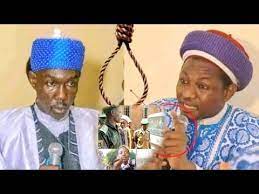
Story of Abduljabbar

By Sheikh Aminu Aliyu Gusau.

The story of AbdulJabbar is that of fanaticism. 

It is about the feud between the Izala and Darika in Kano and across the nation. AbdulJabbar’s over-zealousness, eventually, landed him into trouble. He is from the Qadiriyyah Sufi order, whose headquarters is in Kano, just as Kano is one of the headquarters of Tijjaniyyah. Lately, Kano also became one of the headquarters of factional Izala group, specifically the Salafiyyah.

AbdulJabbar grew up in the midst of an ongoing harsh and hot arguments between the scholars of Izala and that of Darikah. Thinking that he is knowledgeable enough to wade in, he dived into the arguments. 

The fundamental aspect of the Izala argument, which secluded the title of “Ahlussunnah” to itself, is basing everything on the Qur’an and Sunnah based on the understanding of the first three generations of Islam. But they put more emphasis on hadith (sayings, actions and approvals of the Messenger of Allah) with a pedagogical approach. To display that he has an unmatched prowess in that kind of knowledge, AbdulJabbar ventured into the altercation head on. 

That coincided with the emergence of Kano as one of the headquarters of the Shi’a sect, (with whatever you come to Kano, you will find someone/something better). The Darikah Ulama are divided into two, pertaining engagements with Shi’a. While many of their scholars are suspicious about them, some have embraced them for their (Shi’a) near similar stand on the status of the progenies of the Messengerof Allah. AbdulJabbar is one of those who were influenced by the doctrines of Shi’a. He started to turn to their books, which contained condemnation of the companions of the Messenger of Allah and rejection of what they reported directly from the Messenger of Allah. When he went to Iraq for studies, he met many adherents of Shi’a and, consequently, became influenced by their stand on the companions of the Prophet and Hadith.

Thence, AbdulJabbar decided to wage a war on Izala in an unprecedented way – through the condemnation and destruction of the entire Sunni school of thought- to which Izala held on tightly and proudly. Prior to this, no scholar have ever tried that. In addition, all the Darikah scholars believe that they are Ahlussunah, they have no problem with the sunnah of the Messenger of Allah (PBUH). Their problems with Izala is only that of definition, meaning or translation. The Izala, too, according to some scholars among them, agrees that yes the Darikah adherents are Ahlussunnah, in a “broader meaning”, while they (Izala) are the specific/real Ahlussunnah. 

Another influence of Shi’a, specifically the Zakzaky faction, on AbdulJabbar, is the “heedless” confrontational approach. He decided to confront Izala in a “heedless” manner similar to the Zakzaky faction of Shi’a. He failed to decipher that Zakzaky faction only display “heedlessness” while confronting the government, but when it comes to the Shi’a doctrine, specifically on the companions of the Prophet, they apply the  “Taqiyyah”. AbdulJabbar didn’t learn the wisdom behind Taqiyyah, because he thinks that if if he didn’t disrobe himself from the Sunnah he can’t say anything (to suppress Izala) when it comes to “knowledge driven discussions.”

He started by insisting that most of the Ibadat undertaken by Izala were not based on the Sunnah of the Prophet but based on innovations from his companions. He, then started discussing the “innovations of the Sahaba”, giving more emphasis on the second CalIph, Umar. This exposed how deep he was influenced by the Shi’a. He spent time discussing “the fifty innovations” that were smuggled into Islam by Umar.

The fundamental thing that AbdulJabbar failed to realize, when he started his “heedless” sojourn, was that he was invalidating the whole jurisprudence that were in practice by every Muslim who was not a Shiite. He failed to understand that he was, indeed, attacking every Muslim.

When he started this, the scholars at his home quickly realized where he was heading and the danger that lies ahead if their family is to be identified with what he was spewing. Therefore, they tried to stop him, an action that resulted in bitter disagreements between them. Consequently, he parted ways with them and started his own group for his kind of Da’awa.

The advent of Google search engine gave AbdulJabbar quick access to some writings by atheists, Muslim heretics and orientalists from the Christian scholars who satirize the Prophet and his companions. This emboldened him over his attack on Sunnah.

He immediately embarked into the process of invalidating Hadiths. His most important targets were Sahih Bukhari and Sahih Muslim, to be followed by the rest of Hadith books. His method was to establish that it was the companions who deliberately concocted  those Hadiths in order to destroy Islam after the Prophet. The Prophet didn’t utter those Hadiths. He insisted that those who reported the Hadiths knew that they were lies, concocted by the companions, but they chose to conceal the truth for over a thousand years! This is exactly the stand of Shi’a on the Hadith believed by Ahlussunnah.

To prove that the companions were against the Prophet and that they were trying to destroy his religion, AbdulJabbar decided to quote the utterances of Shi’a scholars, heretics and that of the atheists, (everything said by AbdulJabbar on this subject was copied from elsewhere, he was not the one who discovered or hypothesized them, as he boastfully claims), that asserts that the companions have disrespected and ridiculed the Prophet, or that they (the companions) have invented some things into Islam that could never have been from the Prophet (PBUH).

This is what the scholars termed as challenging the “Dirayah” (the part of knowledge that ascertain whether or not the import or meaning of a hadith is in concurrence with the shari’ah) instead of challenging the Hadith from the angle of its authenticity or not, through observing the chain of reporters (Riwayah). 

AbdulJabbar used both approaches, but he took an opposing stand to that of the scholars of Hadith’s principles that “a hadith couldn’t be faulted on the basis of the companion who reported it, because all the companions are deemed trustworthy and honest (specifically when reporting what the Prophet said)”. He, instead, selected the stand of Shi’a that asserted that the fault of a companion is also the fault of any hadith from him, notwithstanding who followed in the chain of the narrators.

Muslims in this country have been reading these books and other commentaries on them from the day Islam came into this country, they’ve never heard anyone interpreting them with such bizarre meanings as did AbdulJabbar. But he kept misinterpreting them – as the Judge said in his rulings – “without showing or pointing the exact words in the books, and it was not an interpretation with meaning (which is lawful) but that -as he (AbdulJabbar) claimed- it was an interpretation with a “Shubhul “Ma’na.” 

Therefore, to all Muslims in this country, with the exception of the Shi’a, AbdulJabbar’s failure to point the exact offensive words he alleged were uttered by the companions, meant that those reprehensible words were his, and he is the one who invented those words against the Prophet (PBUH). This ignoble act, prompted all the Muslims in Kano that bear the name of Ahlussunnah, even if it is the “broader meaning” of Ahlussunnah, to merge in order to fight this menace which is simply Shiism in the garb of Sunnah.

The merger scholars were victorious in pressuring the government to prosecute AbdulJabbar. The judge sentenced him according to the Malikiyya school of thought, using the verdict from “As-shifa”, a book made famous by the family of AbdulJabbar for reading it always in public. It was disclosed that the stand of Imam Malik is that “anyone who report offensive comments on the person of the Messenger of Allah, and eventually failed to prove it, will be deemed as the one making the offensive statement, and is liable to be sentenced to death.”

When AbdulJabbar came out “heedlessly” to proselytize Shiism using the garb of Sunnah, in order to suppress Izala, he was oblivious of this statement from “As-shifa”. Eventually, the verdicts of the book have consumed him. He had also forgotten that, by so doing he will be fighting every segment of the Muslims who are not Shi’a. Now the merger has consumed him. He had also forgotten that though it is said that in this country everyone can say whatever he likes, due to Freedom of Speech, the shariah law is exercised in Kano. Now he is consumed by Shariah. 

Overzealousness in sectarianism should be avoided by all, please. 

Translated by Muhammad Mahmud.

Blasphemy: Court sentences Kano cleric to death

By Ahmad Deedat Zakari

An Upper Shariah Court sitting at Kano has sentenced the controversial Kano Islamic cleric, Sheikh Abduljabbar Nasiru-Kabara, to death for blasphemy.

Delivering the much-anticipated judgement on Thursday, the presiding judge, Ibrahim Yola, declared the defendant guilty and hereby sentenced him to death by hanging.

The embattled cleric was charged to court by the Kano State Government after making comments deemed blasphemous to the personality of Prophet Muhammad (SAW).

Before delivering the judgement, the presiding judge said he was convinced that the prosecution did their part and had proven their case beyond a reasonable doubt.

He said: “I am convinced that the prosecution counsel has done their part and proven their points beyond a reasonable doubt.”

Before the conviction of the defendant, the embattled cleric had disowned his lawyer, Aminu Abubakar, in court and interjected his plea for mercy. Mr Abubakar had opined the cleric acted in ignorance.

Abduljabbar Nasiru-Kabara stated that he did not know the lawyer nor needed the court’s mercy. He added that he would die a hero.

The Daily Reality learnt that Abduljabbar was quoted as saying: “I don’t know him. This is the first time I am seeing him. He should not be allowed to speak on my behalf. I can and should be allowed to speak for myself,” he said.

Speaking further, Abduljabbar said: “My lord, after I heard how you twisted all my evidence, you turned around all my submissions upside down, you have assigned words to me that I have never uttered.

“Deliver your judgement, and I am not asking for leniency at all. I want all my followers to know that I will die a hero, and I don’t want you (the Judge) Ibrahim Sarki Yola to do me any favour or grant me leniency. This is my last word. Assalamu Alaikum.”

Blasphemy: Abduljabbar Kabara knows fate Thursday 

By Uzair Adam Imam

The case of Sheikh Abduljabbar Nasiru Kabara, a famous Kano-based controversial cleric, accused of defamation, has continued to attract a great deal of public attention.

The entire Kano population is eagerly waiting to see what the court will decide on the fate of the embattled sheikh on Thursday, December 15, 2022.

However, while the court decision on the case remains unpredictable, the two parties, Kabara and the Kano State Coalition of Ulama, wish to win the case.

On July 10, 2021, Kano State Government organised a debate between Kabara and some of the state’s scholars to defend himself over what the Ulama Coalition described as blasphemy.

However, according to the statement made by the judge of the debate, Professor Salisu Shehu, Kabara failed to clear his name or defend his utterances.

‘Where Abduljabbar gets it wrong’ – Awaisu Al’arabee Fagge

In several commentaries and reading sessions, the embattled cleric assumes himself more knowledgeable than any other Islamic scholar of his time and history. He also disregards and criticises any view that does not sit well with his belief.

Holding to this belief, Kabara lambasts any legal pronouncement by the prophet’s companions and, worse, defames Prophet Muhammad (SAW) himself in his subsequent preaches, which he falsely attributes to some Islamic scholars. 

However, Kabara’s counterparts in Kano stood up to put an end to his unsavoury teachings and controversies while bringing many books, including rejoinders some of the scholars published.

The Kano State Government also organised a debate between Kabara and some of the state’s scholars, where, as judged, he failed woefully.

Kabara drags to the court after his defeat

Abduljabbar was subsequently arraigned on Friday, July 16, before an Upper Sharia Court Judge, Kofar Kudu, Alkali Ibrahim Sarki Yola, where the charges included blasphemy, incitement, and sundry offences were mentioned.

The development followed the receipt of the First Information Report from the police by the Office of the Attorney General and Commissioner for Justice, which prepared charges against the cleric.

However, something dramatic happened at the court as Kabara alleged that his attorney, Dalhatu Shehu Usman, received N2 million as a bribe to influence the Upper Shari’ah court judge presiding over the case.

“My lawyer told me he gave the judge N1.3 million, another person N200,000, and he himself took N500,000,” Kabara alleged.

Thus, the cleric continued to quarrel with his lawyers and laid claims and allegations against them since the beginning of the court sitting.

All this comes to an end tomorrow, Thursday, 15 December 2022.

CPS condemns Christian leaders for criticising Muslim-Muslim ticket

By Uzair Adam Imam

The Centre for Promotion of Shari’ah (CPS) expressed worries over the utterances of some prominent Christian political and religious leaders concerning the Muslim-Muslim ticket.

The centre was also dismayed by the numerous social, political and economic challenges bedevilling the Muslim Ummah in the country.

This was contained in a communiqué signed by Aminu Inuwa Muhammad, the centre National Coodinator, at the end of a one-day stakeholders meeting in Abuja.

It said, “Current developments in the political landscape of Nigeria have become a source of serious concern to CPS and the general Muslim Ummah in the country.

“The decision of some parties in the choice of presidential candidates and their respective running mates has attracted unguarded statements from some religious and political leaders, a development that has worsened the already tense political situation,” it added.

The centre also called on the Muslims to vote for the political parties and candidates who will ensure justice and protection of their rights and interests.

“Muslims in Nigeria need to properly organise themselves in order to take full advantage of their obvious demographic strength during the 2023 elections.

“Muslims need to pursue proactive measures towards countering the negative profiling in the media as well as the moral drift and mischief prevalent in the social media.”

MURIC condemns INEC for scheduling meeting inside church

By Uzair Adam Imam

The Muslim Rights Concern (MURIC) has condemned a decision by the Lagos State Office of the Independent National Electoral Commission (INEC) to hold its meeting inside a church in Ikeja, Lagos State.

Prof. Ishaq Akintola, the MURIC Director, made the condemnation in a statement released and issued to journalists on Thursday.

It was gathered that the Lagos headquarters of INEC scheduled a meeting for Thursday and picked Archbishop Vining Memorial Church Cathedral, Ikeja, as the venue of the meeting.

Akintola advised INEC Lagos headquarters not to hold any of its activities in any church except those meant for church members alone and that same goes for mosques and shrines.

He added that INEC has no business using places of worship for their activities, adding that the development is ‘very disappointing’.

The statement read, “This is very disappointing. How can an electoral body of INEC status pick a religious house of worship as venue for its meeting? Is the meeting for the Christian wing of INEC or what? Is INEC meeting members of the church? It is unacceptable.

“The choice of a church as venue for a meeting of INEC is very insensitive particularly given the very volatile situation, we are in Nigeria today. It is an open secret that Christian pastors are deeply involved in political campaigns.

“Many of them have turned 2023 election into a straight fight between them and the Muslims.

“INEC Lagos Headquarters has taken a false step. Holding an electoral body’s meeting inside a church is like holding it inside the secretariat of one of the political parties.

“It erodes confidence. It is totally wrong particularly in a situation whereby the church has publicly revealed that it is an interested party in the ongoing electioneering exercises.

“Why pick a church when there are hundreds of neutral places all over Lagos? Is INEC promoting the church’s vested interest in the 2023 election? Is some kind of connivance in the offing?

“INEC Lagos headquarters must prove to Lagosians that their votes will count. We call on Lagosians to watch the activities of INEC from now on because we are not convinced that it is going to be neutral,” Akintola said.

Lagos announces readiness to comply with apex court hijab-judgement

By Ahmad Deedat Zakari

The Lagos State Government has announced that the State is ready to comply with the Supreme Court judgement on the use of hijab by female pupils and students in Lagos schools.

In July 2022, the Supreme Court had dismissed an appeal by the Lagos State Government and upheld the use of hijab in Lagos schools.

Lagos State Head of Service, Hakeem Muri-Okunola, announced the state’s readiness through a circular he issued and signed on behalf of the government on Monday, December 5, 2022.

“It’s hereby notified for general information that the supreme court judgment SC/910/2016 delivered on the 17th of June 2022 on the use of Hijab as it affects pupils/students in Lagos State schools has delivered that the students should be allowed to wear the hijab if desired,” the circular read in part.

Mr Muri-Okunola stated that a comprehensive guidelines on the use of hijab will be issued to all agencies of the government in due course.

He added that, “you are to note that the judgement is binding on all schools in the State.

“As a law-abiding administration, all accounting officers are to note the contents of this circular for immediate compliance and give it the deserved service-wide publicity,” He said.

Aliyu Tilde resigns as Bauchi State Education commissioner, gives shocking reason

By Ahmad Deedat Zakari

The Bauchi State Commissioner for Education, Aliyu Tilde, has resigned from the Bauchi State Executive Council.

Mr Aliyu Tilde announced his resignation as the State Commissioner for Education in a Facebook post on Monday.

According to Mr Tilde, the Governor of Bauchi State, Bala Muhammad, has approved his letter of resignation and same have been communicated to him through the Secretary to the Bauchi State Government.

Stating his reason for resignation, he said he resigned in order to attend to a call of an associate who direly needs his services.

Part of the statement reads : “A few minutes ago, Today, 5 December 2022, I received a letter from the Secretary to the Government conveying my release by His Excellency.

“In it, the Secretary conveyed ‘the appreciation of the Executive Governor for your contribution to the Education Sector and wish you well in your future endeavor…’”

“With this, my tenure as Commissioner of Education has come to an end. I am happy to see the peaceful ending of what have been very exacting but fruitful years and will ever remain grateful to God who stood by me until the last minute.”

Dangers of entrusting religious leaders with sex education responsibility

By Aishat M. Abisola

A few weeks ago, I read that the federal government ordered the Nigerian Education Research and Development Council (NERDC) to remove sex education from the basic school curriculum. This decision was made by the Minister of Education, Mallam Adamu Adamu.

This followed the call by experts that sex education should be placed in the hands of parents and religious institutions so that it would not be taught in schools in ways that would not further “corrupt” young children with phones and access to technology.

Adamu stated that since Nigeria is a religious country, morals and values should be taught in Mosques and Churches, adding that it would bring up children with strong morals and reduce the rate of out-of-school children.

When I read this, I was shocked for many reasons. First of all, the introduction of sex education into the basic education curriculum is still recent, and most schools are not even implementing it.

When I was in secondary school, my classmates and I were mainly taught about the biological and chemical aspects of reproduction, not the elements concerning sex and sexuality.

Secondly, how are they sure that sex education has not benefited the youths who are barely taught about it in schools?

Sex education can be defined as teaching and learning about a myriad of topics related to sex and sexuality. It dives into the values and beliefs regarding these topics. It helps people gain skills they will need to navigate their relationships with themselves, their partners, and their community and helps them manage their sexual health.

Sex education can be taught anywhere, in one’s house, school, community setting with trusted individuals, or online. As I stated earlier, I was not taught much about sex education in secondary school.

Luckily, my parents were there to answer my questions on sexual education and even imparted helpful knowledge that has helped me a lot in many ways.

When I learnt more about sex education and focused on what my parents taught me, I learned more about myself, my body, and how I could improve in terms of mental and physical health.

Despite common misconceptions that sex education corrupts children when taught about it at school, sex education can be more beneficial than you might expect. The full description of what sex education entails is as follows:

Human Development

This involves human anatomy, puberty and how it will affect them both physically and mentally, sexual orientation (the different types of sexual orientations), and gender identity (what it means to be male or female).

Relationships

Relationships consist of Interpersonal relationships such as family, friendships, romantic relationships, and relationships with healthcare practitioners.

Personal Skills

This involves areas surrounding communication, boundaries, negotiations, and decision-making.

Sexual Health

Sexual education covers the areas that deal with sexual health, like sexually transmitted diseases, Birth Control, and pregnancy.

Society and Culture

This involves Media Literacy, Shame, and stigmatisation associated with sex and sexual education, the way that power, identity, and oppression can affect sexual wellness and reproductive freedom.

But besides all this, my main concern is how sex education is so callously put in the hands of religious leaders and institutions.

Most parents can be trusted to impart their knowledge about sex education to their children so they are more aware and careful.

On the other hand, religious leaders and institutions cannot be trusted in the same way.

Historically and in recent times, both religious leaders and religious institutions have been known to use children’s lack of sexual knowledge against them in ways most foul.

Priests, pastors, and Imams have preyed on young children entrusted to them by unsuspecting parents.

The more commonly known religious institution to do so are the Catholics, but other religious institutions and their leaders have done the same.

In some Islamiyah (Islamic religious learning academies), Imams have inappropriately touched young children they were supposed to care for.

Some examples would be a French Catholic church that was reported after discovering that its clergy and lay members had sexually abused at least 330,000 children over the past 70 years.

Another example would be a young girl from Lagos whom a Friar sexually abused at her parish church. In 2020, an Imam had taped himself raping a five-year-old girl, and earlier this year, in July, another Imam was arrested for the sexual abuse of seven children.

In October this year, another Imam was arrested for sexually assaulting an 11-year-old. Men (Women as well) who are placed into positions of power are more often than not predators who seek to prey on those weaker than them.

These days, anyone can become an Imam or a pastor. Because of the relaxed nature in discerning whether someone is an actual man/woman of god or whether they can be trustworthy in a position of power, many people get hurt.

Young children should not be placed in their care, nor should they be allowed to discuss sex education with them.
For all we know, they could teach these young and highly impressionable children wrong things and could hurt them badly in the long run.

Statistics have shown that when children have been sexually abused, there is a high likelihood that they will go on to commit the same injustices that were performed on them.

Ultimately, it will perpetuate a cycle of pain and torment.

Appropriately trained sexual education professionals should be tasked with training children on what they need to know about sex education from a young age. This way, they will learn more about their bodies and the best way to know if what is being done to them is right or wrong.

Along with this, their community should also take care of children.

If more than one eye is trained on a child, then any odd behaviour will be noted and told to their parents so that they can take the proper actions necessary.

With these two in hand, parents won’t need to rely on religious leaders or religious institutions to teach children about sex education when children are more likely to be abused by them.

Perhaps then, the government will have more trust in the education system instead of leaving such a delicate and complicated matter in the hands of people who would instead make matters worse than fix anything.

Children are blank canvasses, and teaching them the right things will make lovely and ethereal colours glow on their canvas, but teaching them in the wrong manner will damage it.

Children are the hopes and future of their parents and forefathers; It is with them that a legacy of peace, faith, and kindness is ensured.

I hope whoever reads this takes my words to heart and acts righteously for these children who might be led astray due to improperly placed trust.

Aishat M. Abisola is a member of the Society for Health Communication, Wuye District, Abuja, via Aishatmohd02@gmail.com.

Soyinka distances self from any religion

By Muhammadu Sabiu

The Nobel Laureate, Wole Soyinka, has stated that he does not need a religion and does not worship any gods, stating that he does not practise any religion.

At a public presentation of his two-volume collection of essays on Sunday, Soyinka made this revelation and said he saw nothing wrong with embracing mythology as an integral part of his creative process.

As a mythologist, he added, people have the right to fabricate stories about themselves based on their personal experiences.

The professor was quoted as saying, “Do I really need one (religion)? I have never felt I needed one. I am a mythologist.

“But religion? No, I don’t worship any deity. But I consider deities as creatively real and therefore my companions in my journey in both the real world and the imaginative world.”

Open Letter to His Excellency Gov. Dr Abdullahi Umar Ganduje, OFR, (Khadimul Islam)

With all sense of honour, respect and humility, your Excellency, I humbly write this letter to convey a fundamental message (worth noting) to you and members of your executive council as well as other relevant stakeholders.

Your Excellency, as you know, Kano State is among the most consequential and venerated African lands. The state hosts international and influential clerics of high repute that promote Islam and the sunnah of our beloved Prophet Muhammad (SAW) to all domains in the north and beyond. Moreover, Kano has been the African commercial hub since the nineteenth century and the centre of learning and administration. For that cause, Kano is always at the front line of religious development and other aspects of human life. In addition, after the re-introduction of Shari’ah in early 2000, Kano embraced it in haste. Muslims have welcomed the development in good faith and unwavering conviction that if Shari’ah is appropriately implemented, life will become good and better in this world and have good fortune in the future existence.

Alhamdulillah! For the said development, the Kano state government established agencies to oversee Shari’ah affairs and ensure its implementation. Shari’ah commission was inaugurated as the apex body for Shari’ah matters and related business. Shari’ah courts were instituted and equipped. Well-trained experts were employed as Shari’ah judges. Zakah and Endowment (Hubusi) was founded and systemized to regulate the collection and distribution of Zakah wealth as stipulated by Allah and manage the waqf properties in the best interest of beneficiaries. The social reorientation directorate (Adaidaita Sahu) came into existence to ensure moral compliance by Muslims. The mighty Hisba Board was incorporated to complement the task of the Shari’ah Commission. The Office of Special Adviser on Religious Matters was created to support the Governor in dealing with Shari’ah functions. Above all, Shari’ah penetrates all government agencies and parastatals to the extent that it’s considered in all decision-making.

At districts and wards levels, the good people of Kano have cooperated. Groups of concerned Muslims constituted robust committees to compliment the government’s effort, namely Zauren Sulhu and its likes. They have significantly impacted the lives of ordinary people. Many such initiatives are in existence to this moment for their monumental works.

People believe that if such strategies are correctly implemented, they will bring sustainable socio-religious and economic development. It will curtail the ongoing bribery and corruption in civil service, robbery, burglary and phone snatching, immorality and other social vices. It will improve productive economic activities and reduce the high rate of poverty. It will promote Zakah awareness and boost the collection of Zakah wealth that, if used efficiently, will cater to the needs and demands of vulnerable widows and orphans as it did in history. This gesture will please Allah the Almighty; in return, He will bless Kano abundantly and ease the affairs of the state.

Your Excellency, the considerable success and giant achievements that Hisba is recording from its inception to date are commendable. Hisba is meeting its objective, mission and vision despite the factors hindering national progress. The support you are giving to the agency is laudable.

Your Excellency, what motivates and triggers me to write this letter is that the high poverty level, with over 55 per cent of the citizens being poor, is a matter of concern, according to the National Bureau of Statistics. Thus, it may not be a surprise that beggars are trooping and roaming the streets today, begging and occupying masjids and other public gatherings, pleading for assistance in various forms. In addition, radio and Television stations are becoming typical to hear the voices of people echoing for help due to poverty and other reasons for the financial predicament.

Besides, I am aware that the state government created a body responsible for looking after the vulnerable and impoverished per the saying of Allahu (SWT) in the Qur’an suratul Tauba verse number 103. The matter of contention is that; is the state government aware of this situation and giving all the necessary support and attention to Kano State Zakah and Hubusi Commission to execute its responsibilities, or is the commission just becoming worthless?

Your Excellency, it’s a known fact that in early 2022 your administration engaged about 600 people in civil service as tax collectors. It’s indeed a wise decision, for it reduces youth unemployment. However, one may wonder how many zakah workers were recruited to support the activities of zakah and consolidate it to achieve its overall objective.

Your Excellency, sincerely, Kano is lagging regarding zakah collection and distribution in modern times while its neighbouring states and emirates are thriving in this noble course. For instance, in Jigawa state, Dutse Emirate alone is mobilizing zakah wealth that eclipsed that of Kano in multitude. The narration is still correspondingly in Kazaure Emirate and Hadejia Emirate, among others. By extension, Sokoto State Zakah and Endowment Commission (SOZECOM) under Malam Lawal Maidoki, Sadaukin Sakkwato, is providing leadership in the country. In other countries, poverty and unemployment are reduced to the barest minimum. These exciting stories signify that Kano state could also join the race and achieve a lot, as it has immense potential.

Your Excellency, this is a gentle reminder hoping to reach you and praying to Allah to grant you the ability to use it and make it among your legacies. Undoubtedly, instrumental Islamic economic policy will help you lay a solid foundation for uplifting the well-being of the good people of Kano state. Zakah will be a panacea to poverty, unemployment, corruption and all forms of vulnerability in Kano state. I, therefore, wish to submit that our emirates have vital roles to play in the reformation. Moreover, collaboration with key stakeholders is necessary at this stage.

Last but not least, I applaud your efforts to improve security affairs in Kano State despite worsening scenes in the country and other neighbouring countries. May Allah guard and preserve our dear Kano State and Muslim communities in Nigeria and beyond. May Allah support you and grant you maximum success in your reign and beyond. Ameen.

Yours

Aliyu Ɗahiru Muhammad

Department of Economics

Bayero University, Kano

alitahir797@gmail

4/11/2022