Religion

Ramadan: Dr Bichi distributes foodstuff worth millions

By Lamara Garba Azare

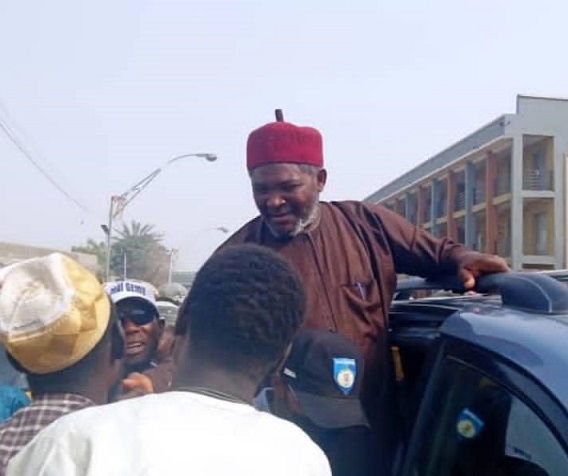
A chieftain of New Nigeria People’s Party (NNPP) in Kano State and former Executive Secretary of the Tertiary Education Trust Fund (Tetfund), Dr Abdullahi Baffa Bichi has distributed essential commodities worth millions of Naira to the needy as part of a humanitarian gesture to ease the suffering of the populace.

The items, which include rice, cooking oil, noodles and other commodities estimated at several hundreds of millions of Naira.

Interestingly, the commodity was given across the board irrespective of the party affiliations of the beneficiaries.

Those who benefitted from the gesture prayed to Allah to reward him abundantly.

A widow with 7 children who said she travelled from a far distance to come and collect the gesture burst into tears of joy when she was given 25kg of rice, noodle and cooking oil, saying the last time she saw rice was about a year ago.

“We have no words to thank Dr Bichi. If he had known how happy we are now, certainly, he would further understand the suffering of many of us. To be frank with you, the last time I cooked rice in my house was a year ago when I was passing by the Kabuga area, and I saw a large crowd of women going inside BUK quarters to collect food items. I joined them, and luckily I was given too.”

The coordinator of the distribution exercise, Honourable Ghali Mu’azu, said several thousands of people male and female from across the state have benefited from the gesture.

According to him, this gesture had been instituted by Dr Bichi for a long period of time, spanning over two decades, and priority was given to the elderly and those with physical challenge cutting across all strata of people.

“We gave out to every lucky person irrespective of his political leaning. Ours is to touch humanity by giving it to the needy among the populace,” he said.

Mr Ghali commended the compassionate attitude and benevolence of Dr Bichi, who he described as kind-hearted and a man with a big heart.

Much-awaited debate between Dr. Dutsen Tanshi, Sufi clerics suspended

By Muhammadu Sabiu

The Bauchi State Government has suspended the much-awaited debate between a controversial cleric, Dr Idris Abdulaziz Dutsen Tanshi, and other scholars who tagged his recent comments about “seeking humanly impossible” help from Prophet Muhammad (SAW) as inappropriate.
 
The suspension, according to the state’s Sharia Commission, is until further notice.

Recall that during a Ramadan Tafsir session, Dutsen Tanshi was quoted as saying, “We don’t need help from Inyass; we don’t need help from Tijjanni; we don’t need help from Abdulqadiri; we don’t need help from Shehu Usman. In fact, even from the Prophet. That’s the end of it.

“Whose help do we need? Allah. It’s left to them to twist my words. The Prophet himself said, ‘If you need help, seek help from Allah.'”

Consequently, in a letter the Bauchi State Shari’a Commission sent to the cleric late yesterday night, it says, “I am directed to write and formally inform you of the reschedule[d] date of the interactive session earlier slated for Saturday, 8th April 2023.

“That the new date will be communicated to you accordingly, please.” 

Ramadan: ABU Professor distributes 40 bags of rice to students

By Ahmed Deedate Zakaria

Madinan-educated Professor of Islamic Law, Prof. Arsalan Muhammad, has distributed 40 bags of foreign rice to his students. 

On Tuesday, Professor Arsalan, who is reputed for his generosity, donated 40 bags of rice to the 400-level students of the Faculty of Law, Ahmadu Bello University, Zaria. 

The beneficiaries organised themselves into groups to receive the professor’s rare act of kindness. 

The Daily Reality gathered that all interested students got the rice irrespective of their faith.

Professor Arsalan is known for his generosity and always reaches out to outstanding students with textbooks, handouts and even money.

Below is a brief biography of Professor Arsalan Muhammad:

Professor Muhammad Arsalan was born in 1968. He attended several local Quranic schools between 1973 to 1983. Arsalan started his formal education in 1983, got admission into Jama’atu College of Arabic Studies Zaria and graduated in 1987. He then proceeded to Bayero University Kano, where he obtained his Diploma between 1987-1990.

Muhammad Arsalan travelled to the Kingdom of Saudi Arabia and got admission into the Faculty of Sharia, Islamic University Madina and graduated in 1995 and returned to Nigeria immediately and served his NYSC in 1996. 

Muhammad Arsalan got admission for his LL.M. and appointment as a Graduate Assistant in the Faculty of Law, Ahmadu Bello University Zaria, in 1996 and graduated in 2000 and proceeded to his PhD in 2001 and graduated in 2009. 

Arsalan was promoted to the rank of Lecturer 2 upon his successful completion of his LL.M in 2000 and promoted to the rank of Lecturer 1 in 2005, and to the rank of Senior Lecturer in 2009, he was also promoted to the rank of Reader/Associate Professor in 2012 and finally promoted to the rank of Professor in 2015.

The consequences of religious politics in Nigeria

By Usman Muhammad Salihu.

Religion has been a part of Nigeria’s political landscape for decades. The country has a diverse population with multiple religions, such as Christianity, Islam, and traditional faiths.

The influence of religion on Nigerian politics cannot be overemphasised, as it plays a significant role in shaping political decisions and outcomes. However, the involvement of religion in politics in Nigeria has come with both positive and negative consequences.

One of the positive consequences of involving religion in Nigeria’s politics is the promotion of moral values. Religion teaches moral values such as honesty, integrity, and justice, which are crucial for a stable and just society. Religious leaders can use their platforms to advocate for these values and hold politicians accountable for their actions. Additionally, religion can inspire people to participate in politics and contribute to the development of their communities.

On the other hand, the involvement of religion in Nigeria’s politics has also led to negative consequences. One of the most significant adverse consequences is the proliferation of religious extremism and intolerance. The politicisation of religion has fuelled religious conflicts and violence, leading to the loss of lives and property. The Boko Haram insurgency, which began in 2009, is an example of the consequences of religious extremism in Nigeria.

Another negative consequence of involving religion in Nigeria’s politics is the erosion of the country’s secularism. Nigeria is a secular state, but the involvement of religion in politics has led to the blurring of lines between religion and state. This has resulted in the adoption of policies that favour one religion over the other and the exclusion of minorities from political processes.

Furthermore, the involvement of religion in politics has also resulted in the emergence of religious leaders as political power brokers. This has led to the entrenchment of corruption in the political system, as religious leaders often use their positions to secure political appointments and contracts for their followers.

In conclusion, the involvement of religion in Nigeria’s politics has both positive and negative consequences. While religion can promote moral values and inspire people to participate in politics, it can also fuel religious conflicts and lead to the erosion of secularism.

Therefore, it is essential to strike a balance between religion and politics to ensure that the positive consequences of faith are maximised while minimising the negative effects. This can be achieved by promoting interfaith dialogue, adopting policies that promote equality and inclusivity, and establishing effective mechanisms to hold politicians accountable for their actions.

Usman Muhammad Salihu writes from Mass Communication Department, Abubakar Tatari Ali Polytechnic, Bauchi, Bauchi state. He can be reached via muhammadu5363@gmail.com.

Ramadan starts Thursday, says Sultan

By Muhammadu Sabiu 

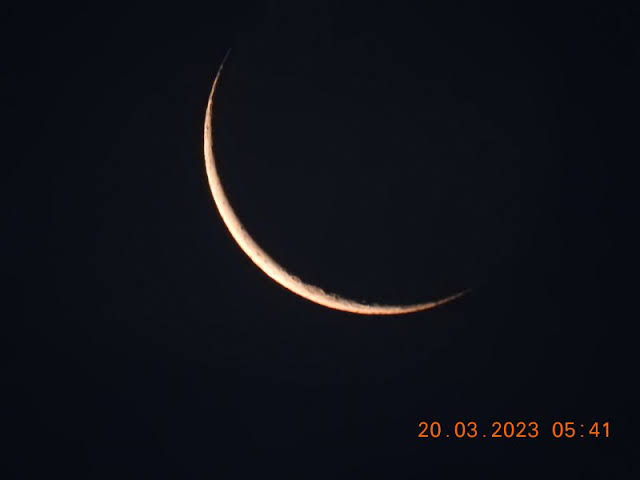
The Nigerian Supreme Council of Islamic Affairs has confirmed that the Ramadan crescent has been sighted in different locations in Nigeria.

This announcement was made by the Islamic Council in a statement on its official Facebook page on Wednesday night.

The statement reads, “His Eminence has received positive sighting reports of the Ramadan crescent from various locations nationwide. Thursday, 23rd March, is the first day of Ramadan.”

It added that an official statement would follow afterwards.

The sighting of the crescent marks the beginning of the ninth month of the Islamic calendar, in which Muslims fast for twenty-nine of thirty days before observing Eid al-Fitr.

Sheikh Ibrahim Khalil: Goodbye to a political reformist

By Umar Ahmad El-Rufai

Sheikh Ibrahim Khalil is a renowned Islamic scholar. However, as a gubernatorial candidate in Kano, he didn’t hide under religion to win an election.

Whether you know it or not, he didn’t beg others to endorse him due to his identity as an Islamic scholar. He regards himself as a politician. Every politics is local.

He campaigned like everyone and participated in politics. That’s his constitutional right. However, he neither sought donations from his students nor others dignitaries.

As a result of Malam’s political journey, anyone among our Islamic scholars is free to venture into politics now. Nobody should hide under religion to achieve his political goals.

Sheikh Ibrahim Khaleel became chairman of the Northwest Nigeria Council of Ulama, an organisation of Muslim religious leaders. He has been opening big doors with small keys. 

I regard him as a winner that reforms the system. As a result, nobody will come to get cheap popularity under religion. That’s a victory for everyone.

Politics is good to some. Mallam will be remembered as a political reformist. So do your politics; don’t hide under religion. The game is over.

Umar Ahmad Rufai wrote from Kano via umarahmadrufaijr@gmail.com. He is a student at Dala College of Education.

Sheikh Sudais marks 40 years as the Imam of Masjid Al Haram

By Ahmad Deedat Zakari

Sheikh Abdulrahman Sudais, the renowned Islamic cleric and revered Imam of the grand mosque in Makkah, has completed forty years as Imam of the mosque. 

According to reports by the Haramain Sharifain on Tuesday, Sheikh Sudais was appointed as Imam of Masjid Al Haram, Makkah, by Royal Decree issued by the Late Custodian of the Two Holy Mosques, King Fahad bin Abdulaziz in 1984/1404 at the young age of 22.

Sheikh Sudais led his first Salah on 22 Sha’ban 1404, corresponding to May 1984. His First Salah in the Haram was the Asr Prayer.

Below is the brief biography of Sheikh Sudais:

Sheikh Sudais was born in the Islamic year 1381 in the City of Qassim, Saudi Arabia. He got his early education in Riyadh, and by the age of 12, he had memorized the whole Quran under the supervision of Sheikh Abdul Rehman Al Firyan.

Sheikh Sudais graduated from the Faculty of Sharia in the year 1402, Completed his final years of Studies at Umm Al Qura University in Makkah and earned a PhD Degree in Sharia in 1416.

He was appointed Imam of Masjid Al Haram in 1404 at the very young age of 22. Since then, Sheikh Sudais has been leading Taraweeh every year, and in 1441, he completed his 40th time of completing the Quran and reading the Khatam ul Quran Dua.

In 1433, he was appointed as the President of General Presidency for the Affairs of the Haramain in a decree ordered by the Late King Abdullah of Saudi Arabia just before the Grand Expansion started in Masjid Al Haram

Sheikh Abdul Rahman As Sudais was appointed by King Salman to deliver the Hajj Khutbah in the year 2016/1437. Later, by Royal Decree issued by the Custodian of the Two Holy Mosques, Sheikh Sudais was reappointed as President of the General Presidency for a period of 4 years in 1441.

In 1444, Sheikh Sudais completed 40 years of his appointment as Imam and Khateeb of Masjid Al Haram, Makkah.

2023 Ramadan: Qatar reduces prices of 900 consumer goods

By Ahmad Deedat Zakari

As Muslims all over the world prepare for fasting in the holy month of Ramadan, Qatar has announced a reduction of prices of 900 consumer goods for citizens of the country.

On Monday, the Qatar Ministry of Commerce and Industry (MoCI) made the announcement of the reduction of prices for hundreds of goods during Ramadan.

“Prices of more than 800 commodities have been reduced in coordination with major outlets in Qatar, starting from Wednesday, March 23, until the holy month of Ramadan,” MoCI said.

The Ministry added that the types of discounted goods include the most important food and consumer goods required by a family during Ramadan like:

Honey, flour and its products, cereals and corn flakes, yoghurt and dairy products, powdered and condensed milk, cheeses, juices, sugar, coffee and its products, dates, mineral and bottled water, tin foil (aluminium), paper napkins, washing powder, trash bags, pastries and pasta, legumes, rice, frozen vegetables, poultry and its products, eggs, meat products, tomato paste, tea, ghee, yeast, salt, personal hygiene items and household cleaning detergents and edible and cooking oils.

The power of same-faith tickets

By Ibrahym A. El-Caleel

First, I am neither a propagandist nor an apologist of any of the personalities mentioned in this article. I am a Nigerian with keen interest in the Nigeria project.

Gov Nasir El-Rufai is many things. I used to say Governor Hajjaj bn Yusuf Al-Thaqafiy of the Umayyad Dynasty and Governor Nasir El-Rufai of Kaduna State share some leadership traits. Both of them are efficient leaders who lead with uncommon pragmatism. They set and achieve their goals not minding whose ox is gored in the process. They made stellar achievements that haven’t been recorded by their predecessors. Both Hajjaj and El-Rufai are vicious in handling political rivalry. They fight it with mightiness, or what Robert Greene would say; crush your enemy totally. Juxtapose everything that Hajjaj did in Iraq with El-Rufai’s lockdown during Covid; mass sackings or what he calls right-sizing; demolition of houses. How El-Rufai demolished the house of his political rival and a serving senator, Suleiman Othman Hunkuyi is an example of how extreme he can handle political rivalry. So this is a man who you should ordinarily avoid when selecting a wrestling mate in the political ring. But somehow, the Kaduna Christian South establishment seemed not to have studied the personality close enough.

Their melodrama was so graphical that they presented the region as a sworn political opposition to El-Rufai. From 2015-2019, El-Rufai’s deputy, the Late Arc Barnabas Bala Bantex was from that region and a Christian himself. They have been friends from their university days and worked amicably as leaders of Kaduna State. El-Rufai would travel and give Bantex the acting governor capacity. But that hasn’t fetch El-Rufai any political capital from the region where his deputy hails from. In 2019, Bantex decided to contest for a senatorial seat in the same Kaduna Christian South but he failed the election. Thanks or no thanks to his dining with a man whose politics they are not in good terms with. On his part, El-Rufai felt he has nothing to gain politically from a people who abhor his politics. So, he decided to pick a Muslim running mate from the minority in that region. He was willing to test the depth of the river with both feet. He must be a daring researcher to experiment a Muslim-Muslim ticket in Kaduna State. No one has tried it since the return of democracy in 1999. He took the calculated risk and it eventually worked. Today, anyone can try it knowing that it flies to victory.

Kaduna State looks like Plateau State from the demographics. El-Rufai must have borrowed the template from neighbouring Plateau State, which despite having a significant Muslim population, have always fielded a Christian-Christian ticket which has always succeeded. It has never been a Christian-Muslim ticket in Plateau. We underestimate these politicians, but they are cunning. We waste so much time insulting and criticising them, while they study us carefully. Bravo to them. In this article, let’s review how they successfully study and beat the intellect of the proletariat. When did the choice of a running mate began to matter?

Five Nigerian heads of state have died while in office. Three were killed in bloody coups, while only two died from natural causes to pass the leadership mantle to their deputies. Few civilian governors died in office to give way to their deputies. In conclusion, most elected leaders complete their tenure. However, there is a developing appetite to discuss the possible death of a president or governor. The main aim is to develop some vibrancy around the offices of Deputy Governor and Vice President; to show that it matters.

These two ”assisting” offices are largely inert. When you occupy either of them, then literally, the only freedom you have is the freedom to choose the type of tea you drink in your office. The president/governor is the man who calls the shots. You don’t get to do much “to your people” unless Oga gives you the go ahead. You will be visibly absent in the news. Indigenes of your village will unconsciously forget that they have their brother in government. I explained this better in the long Hausa article I wrote in defence of VP Atiku who is constantly fired that he hasn’t done anything for the north.

If you ask my view, I would say the Vice President and Deputy Governor positions are ceremonial. Unless you have a boss like President Buhari who will gladly give you the “Acting President” for two months to show your muscle; or you have a boss like Gov El-Rufai who will give you “Acting Governor” position to swing the armchair for 3 weeks. Many ogas never give their deputies any chance to do something tangible. If a deputy is quite ambitious, then his Oga’s men (aka cabal) will easily notice it. They will set him at loggerheads with Oga. He is eyeing your seat! This is how Ogas and their deputies usually start their fight. Go and verify!

How was VP Goodluck Jonathan faring under President Yar’Adua? Was he doing anything spectacular in his native Niger-Delta region? Was Deputy Governor Ramalan Yero even in the mass media while Gov Patrick Yakowa was calling the shots in Kaduna? Deputies are not even visible, talk less of executing anything so serious. VP Yemi Osinbajo is only lucky that President Buhari is a nice Oga. Yemi Osinbajo could even use his ad-hoc “Acting President” muscle to dismiss DG SSS, Lawal Daura. He was given the opportunity as an Acting President to swear-in Justice Walter Onnoghen as Chief Justice of Nigeria after Buhari kept the judge in an acting capacity. Buhari is a soft and simple Oga. No Nigerian Vice President in the last 24 years enjoyed this opportunity and audacity. It was on this basis that I made my case saying VP Atiku was being unfairly flogged over something that was beyond his control. In his case, he was not just ambitious, he was fighting with Oga’s third term agenda. How could Oga give him any breathing space to look politically relevant in his region?

Anyway, back to my main discussion:

Today, these deputy posts have only become a discussion topic because politicians are playing to the gullibility of the fairly-conscious electorate. Religion is serious and appeals to the sensibilities of the average electorate. In a state like Plateau with a very large number of Muslim population, it has always been a Christian-Christian leadership. Currently in Kaduna, APC is hosting a Muslim-Muslim ticket, while PDP is hosting a Muslim-Christian ticket. In Plateau State, both APC and PDP are hosting Christian-Christian tickets. The same faith ticket in Plateau has become a culture in such a way that no one is even talking against it any more. Any major political party that dares host a Muslim deputy governor in Plateau State is already wearing a political disadvantage. Ditto Taraba and Benue States.

El-Rufai and Kaduna APC have understood that a Muslim-Muslim ticket in Kaduna appeals to the majority of the voters in the state as well. It worked perfectly in 2019, this is why the template is re-applied in 2023. The only reason why the success is not guaranteed this time around is because of El-Rufai’s excesses in mass layoffs, demolitions, prolonged lockdown of the major cities and markets during the pandemic and other anti-proletariat actions. This is why some voters are thinking they need to punish El-Rufai by not voting his anointed candidate in the APC. But religion is something we place above everything. When the average voter remembers the Plateau and Taraba scenarios, his mind will draw him closer to vote for the Muslim-Muslim ticket in favour of the APC. Especially since this time around, El-Rufai is not the face on the ticket. Uba Sani is largely seen as generous and will not be as socioeconomically toxic as his friend. This is why Uba Sani has better chances of coasting to victory than Isah Ashiru. 


If the APC makes it to the Kashim Ibrahim House another time, then the PDP might have no choice than to also start adopting a Muslim-Muslim ticket effective 2027. I told you that both APC and PDP are fielding Christian-Christian tickets in neighbouring Plateau State. No political party exists to appeal to your personal religious sentiments. What maters to every political party is to win elections by virtue of what majority of the electorate are okay with. This is why it was laughable watching some Islamic scholars on their pulpits explaining how the Tinubu-Shettima ticket is the next best thing to Islam since Salahuddeen Al-Ayyubiy. It is all politics!

Tinubu is a veteran politician. He knows that picking a northern Christian means he wants the PDP to defeat him as early as 8:00 am on the election day. In your right senses, do you think Tinubu believes that Yakubu Dogara or Babachir Lawal as Christian northerner will earn him the huge political capital laden in the populous Muslim North? It is said that Yoruba Muslims are a minority when you look at the entire population of Southern Nigerian. So Tinubu emerged from the so-called minority there, then he will come to the north and pick a running mate from the Christian minority again? Two minorities on a ticket? Isn’t that a recipe for defeat? This was why he picked Shettima; to tap into the political capital in the Muslim North. Not because he will launch Shari’a in Abuja. If he was that type, he wouldn’t be confidently telling you his wife is Christian. Expectedly, the average Nigerian christian electorate ran away from that ticket as if it was sponsored by ISIS; while the average Nigerian muslim electorate welcomed it as if it was formed by Shehu Usman Danfodio 200 years ago. But it was all politics! Apologies to Simon Kolawole. Tells you that Asiwaju Bola Tinubu knows his onions. A long time ago, even Chief Olusegun Obasanjo has testified that Tinubu is a great politician. 


The same faith ticket will still be a key discussion in the 2027 polls especially if Tinubu is able to get it correctly on either security or economy, or both. These two issues are the main troubles affecting the north at this time. Even if he fails every other thing, but gets these two correctly, then the north will still be so passionate about the Muslim-Muslim ticket again. The average northern electorate will only have second thoughts if he sees the same Buhari poor scorecard is what Tinubu is generating. This is when the opposition parties can have a space to gain some votes, just like we are seeing in Kaduna. Uba Sani’s strongest opponent is not Isah Ashiru. It is Gov Nasir El-Rufai. Had people not felt that El-Rufai mercilessly dealth with them, then Isah Ashiru would have been a walk over for Uba Sani. The mere mention of Muslim-Muslim ticket will command a huge voter turnout, and Uba Sani would not have so much to worry about. Especially since Uba Sani appears to be more qualified and ready for the job than Isah Ashiru.

Same-faith tickets give very little room to discuss what matters in a nation like ours. No time to discuss quality of the candidates and what they have to offer for our myriad of problems. In 2023, Nigeria that used to be richer than Singapore does not have a stable electricity; her universities could be closed for a whole academic session because of striking lecturers; her doctors are leaving its underfunded health sector. Many pressing issues. But politicians are using religion to take away the minds of the suffering electorate from all these pressing needs.

It shall be well, someday!

Ibrahiym A. El-Caleel writes from Zaria, and is reachable via caleel2009@gmail.com

CAN endorses PDP in Kaduna, says supporting LP is waste of votes

By Ahmad Deedat Zakari

The Kaduna Chapter of the Christian Association of Nigeria, CAN, has endorsed the candidate of the Peoples Democratic Party, PDP, Isah Ashiru, for the forthcoming gubernatorial election in the state.

The State CAN Chairman, Rev. John Joseph Hayab, disclosed in a statement on Monday.

According to CAN, they arrived at the decision after reviewing the just concluded presidential and national assembly elections. They added that owing to the Labour Party’s performance in the presidential election, a vote for the party is a complete waste.

CAN also said they have reached an agreement with the PDP’s gubernatorial candidate, Isah Ashiru, on positions he will reserve for Christians in exchange for their votes.

CAN further explained that they are not comfortable with the background and the religious disposition of the candidate of the All Progressives Congress, Uba Sani. They said he favours the Muslims and the marginalisation of Christians will get worse if he becomes governor.

Part of the statement reads, “That it has been observed that aside being a son of a prominent Islamic cleric in Zaria, the APC gubernatorial candidate is more likely to promote Islam than the current governor. Because he is constantly seen around Islamic clerics and making huge donations to the propagation of Islam in Kaduna State. he also facilitated the disbursement of CBN’s non-interest loans. 80% of the beneficiaries in Kaduna were Moslems. Therefore, Christians should bear in mind that our current marginalisation will only become worse if he is voted as governor!”