Religion

Muhammad Yusuf was never formally or informally considered Ja’afar’s heir – Dr Ismail Hashim Abubakar

By Muhammad Abdurrahman

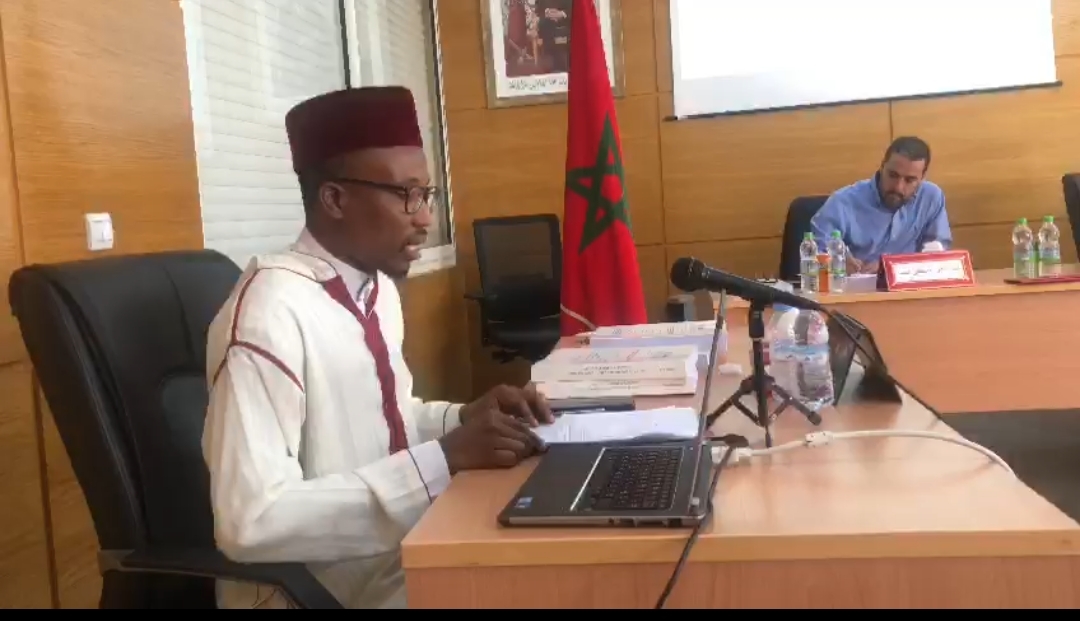
In this interview with The Daily Reality, Ismail Hashim Abubakar, who finished his doctoral program at Mohammed V University, Rabat, in the Kingdom of Morocco, gives a synoptic picture of his PhD thesis titled “Contemporary Islamic Thought in Northern Nigeria: Shaykh Ja’far Mahmud Adam as a Case Study”. The thesis, which appears in 4 volumes, was written in both Arabic and English. Enjoy: 

At the beginning and as a background, the reader would like to know what propelled you to embark on academic research in this area and to select this topic with the personality of Shaykh Ja’afar as your case study.

I was propelled to undertake this research by many factors. Perhaps the most current and academically engaging factor was the aftermath of the 2009 Boko Haram uprisings when documentation of the saga started outflowing in different forms, including academic studies and media reportage. I observed that the Boko Haram saga was used by many writers – local and international – to, in the process of researching the evolution, growth, ideological base and all other issues associated with the insurgency, direct their attention on the late Shaykh Ja’afar Mahmud Adam and devote some portions in their works on the relationship between Shaykh Ja’afar and the founder of Boko Haram, Muhammad Yusuf.

While I acknowledge that these writers have relevant information and facts regarding this dynamic, I can confidently assert that many facts have been twisted, distorted and misrepresented. In fact, too much attention on Ja’far’s interaction with the leader of Boko Haram would certainly swerve readers’ attention to the grand reform mission Ja’afar had carried out in his career that spanned about two decades.

Furthermore, some writers made absurd and explicit allegations that should not be allowed to pass without a solid, verifiably intellectual response. Besides, the career of Shaykh Ja’afar was full of captivating and interesting episodes that would add up to the history of postcolonial Islam, contemporary religious movements, the interplay of Ulama with civil society and authorities in northern Nigeria and the Hausa-speaking world in general. In other words, if you like, confining the career of Shaykh Ja’afar to an engagement with an estranged disciple is an act of cruelty and tyranny to history.

If this is the case, how does your work differ from the previous works on Boko Haram, and what do you particularly object in them?

In my thesis, I review the representation of Ja’afar and his engagement with Boko Haram as cited in studies and reportages. I endorse what appears to be true and verifiable, while I counter what is a distortion of facts. For example, I tackle the question of Muhammad Yusuf’s studentship and mentorship under Ja’afar; here, there are two visible opinions. One opinion suggests that Yusuf was the mentee, star, protege and possible successor of Ja’afar, while the other view objects to the point of almost debunking any teacher-student relationship between the two men. I seek to stand in between these positions. Based on fieldwork I carried out in Maiduguri in 2019 and in addition to the literature I consulted, I draw a conclusion that Yusuf had, of course, studied under Ja’afar.

Nonetheless, as confirmed by several informants, Yusuf was never punctual during Ja’afar’s lessons; in fact, he did not study a complete book under Ja’afar. Consequently, I re-examined the assertion of the closeness of the two men; it manifested to me that Yusuf was never formally or informally considered Ja’afar’s heir, nor was he considered intellectually capable of taking over from Ja’afar.

Meanwhile, I make reference to Yusuf’s ideological trajectories and terminals of religious activism, starting as an ambitious young man looking for fame. As such, he took a leading position in Muslim Brotherhood, Jama’atu Tajdid al-Islam, before finally joining the Izala, which he would also break from within a couple of years. Finally, on this point, I compare Ja’afar and Yusuf, what the two figures represent to Nigerians and the legacies each one has left behind. 

What else do you address besides the Boko Haram phenomenon in your project?

Hmmm. Like I said initially, Boko Haram is a small (though most popularised) aspect of Ja’far’s career. I set a background where I give a snapshot of the state of Islam and Muslims in postcolonial Northern Nigeria, highlighting the engagement of Muslims in politics and governance while appraising the debates of Shari’ah implementation and discourse on secularism which characterised the Nigerian public sphere after the turn of the 21st century.

I also look at the relations between Muslims and Christians, pointing to the areas of divergence, which are quite many, but also the few areas where Muslims and Christians united in pursuit of a common goal. I also survey the fragmentation of Islamic society along sectarian lines by first tracing the emergence of major and minor religious sects, groups and movements and their major views and arguments. I also illuminate the interplays between these two groups and what brings/brought them together to speak in one voice. All these are meant to give much insight into the religious and landscape sociopolitical contexts in which the figure of my study lived and conducted his mission. This represents the first significant section of the work, which, as you can see, represents the first epithet in the thesis title. 

I supply a relatively detailed biography of Ja’afar, focusing on his family background, the phases of his knowledge acquisition and the factors that contributed to his public visibility as a young man, all before his sojourn to the Islamic University of Madina. 

The work dwells on Ja’afar’s reunion with the Da’awah arena after his study at Madina and how unlike before, he concentrated on the transmission of knowledge and cultivation of disciples while minimising open-air preaching. In this regard, I supply comprehensive information on the major sites and centres of Da’wah, which used to host and coordinate Ja’far’s public engagement and private study circles.

In Kano, for instance, I reserve sections in which I discuss in detail the majalis of Ja’afar, such as the Triumph Mosque in Fagge, the Beirut Road Mosque, Usman Bin Affan Mosque, Gadon Kaya, Almuntada Mosque in Dorayi and the majlis in Ungogo Road. I explicate all the activities Ja’afar conducted, such as leading prayer, teaching for open and private audiences and presentations of sermons, lectures and seminars.

In Bauchi, I make reference to sites that hosted Ja’far’s mission, such as Gwallaga Jumaat mosque, Shaykh Awaq mosque at Old GRA, Baban Godi Mosque in Mallam Goje Street and Women Centre of Bauchi located at Gombe Road. Moreover, in about thirty pages, the thesis unpacks the mission of Ja’afar in Maiduguri, with a particular reference to the activities he conducted within the Indimi Mosque, hinting at the challenges Ja’afar confronted at the beginning and the strategies he adopted in the process of consolidating his Da’wah. The work here emphasises the Qur’anic interpretation exercise Ja’afar led during Ramadan at the mosque and how it became an annual conference that attracted audiences from different parts of northern Nigeria.

But Ja’far’s mission was also characterised by other features: teaching, presenting lectures and seminars and rigorous engagements in civil and political issues. Does your work take a look at this also?

Yeah, of course. I dedicate a full and lengthy chapter that surveys and appraises Ja’far’s interactions and engagements with some events that affected Nigerian contemporary developments, Islam and Muslims, and Ja’afar’s relations with various government and public figures, religious groups and individuals. It focuses on Ja’afar’s role in the return of Shari’ah in northern Nigeria, how he collaborated with religious leaders of other groups, and how this resulted in the implementation of Shari’ah in some northern states. It also refers to Ja’far’s participation in the implementation of the Shari’ah process in Kano.

The chapter further lays bare Ja’far’s engagement with Nigerian politics, governance, politicians and public figures, taking a look at his criticism of General Obasanjo’s administration and different political and government institutions, including Kano state, his base, but also figures such as Muhammadu Buhari, Atiku Abubakar, Ahmed Yarima, Ibrahim Shekarau, Rabi’u Musa Kwankwaso, Ahmed Adamu Muazu, Ahmed Makarfi, Abubakar Habu Hashidu, Sanusi Lamido Sanusi, Baba Impossible, among others.

The work also relates Ja’afar’s interplay with traditional institutions, which connects to his position on the royal fathers of the northern emirates and how they disagreed with some and collaborated and had cordial relationships with others. Still in the chapter, Ja’afar’s engagement with religious groups is narrated, beginning with Salafi networks to which he belonged, the Sufi brotherhoods with whom he disagreed most of the time and the peripheral groups like the Shia, Boko Haram and others. 

As a complement to a cleric biography, the chapter categorises Ja’far’s disciples and followers into four tabaqat, just as it mentions some of his colleagues, teachers and role models. It also provides insightful information relating to Ja’afar’s assassination, including the events that preceded the tragedy and what followed it, such as the posthumous attraction of the Muslim public toward the legacy and mission of the murdered cleric. 

The final chapter in the thesis extracts the thoughts, ideas and philosophical views and visions of Ja’afar on a plethora of issues such as education, economy, sociocultural topics, marriage and women issues, politics, global politics and international affairs, relations between Muslims and non-Muslims and the prospects of peaceful coexistence. The chapter presents at the end what the researcher believes is the central position of Ja’afar on Jihad, which further unravels the extent to which he conceived violent extremism in a world and time when Islamophobia was rising high.

But how have you encountered all this stuff, which appears to involve huge materials you had to engage?

Yes, I gathered my data through multiple sources. First, I laid my hands on the available recordings of Shaykh Ja’afar, including cassettes and online content. I listened to his entire Tafsir tapes, available Friday sermons, and many of his lectures and public and private lessons on Islamic texts. I also conducted fieldwork where I travelled to many states in Northern Nigeria and met about a hundred informants. Needless to say, I consulted a great deal of literature that ranged from published books, journals, newspapers and magazines, and reliable internet pages.

What challenges did you face while undertaking this research?

A lot of daunting challenges, but a researcher must always be ready to confront them. It suffices to say that one has to be away from family to a distant land to carry out this task. But before then, I faced challenges as regards accessing some informants. For example, although the work discusses Boko Haram, I could not interview any Boko Haram members to hear some things from him directly. But the most appalling of all the challenges was the lack of positive cooperation from some of Ja’afar’s colleagues and disciples. While some of them delayed, procrastinated and even cancelled my appointments with them, some of them even avoided me and refused to give me any audience at all. Paradoxically, I got positive responses and warm accommodation from personalities who might be well counted among Ja’afar’s rivals and competitors, including Sufis and Shiites.

Which plan do you have now for this work after you have been awarded a doctoral degree?

I just remembered that the work is bilingual and in four volumes, or if you like, two volumes in Arabic and two in English. My ambition is to publish it as a book or as two books. I will be glad to edit the Arabic version and publish it in a press in an Arab world like Egypt, Lebanon, Qatar or any other country, while the English version is to be hopefully published by a Western (preferably university) press.

Is there any point you disagree with Shaykh Ja’afar in your work?

Of course, there are. I can count almost ten. 

Can you give an example?

Certainly! During one of his lessons to women at Gadon Kaya, a woman asked if it was permissible for her to make a supplication – a prayer – to ask God to prevent her husband from marrying a second wife. Shaykh Ja’afar answered that it was not permissible since marriage is lawful, and no one has the power to make unlawful something that was made lawful by God. My argument here is that in a situation where women have turned adding a second wife into their earthly hell, so much so that they go to any extent, including dangerously deadly means to thwart their husbands from the second marriage, giving a fatwa with the permissibility of praying against this wish seems to be safer for all the parties involved. If God wishes, he would answer, and if He doesn’t answer, the woman would accept fate like that. 

Are there journal articles that have been published out of this thesis?

Yes, two articles have been published so far. One was published in a journal at an Islamic University in Uganda. I examined the thoughts and ideas of Shaykh Ja’afar on education. It is available here.

The second one was published in an Indonesian journal, and it talks about Ja’far’s views on women, marriage and family institutions. It can be accessed via this link.

I expect to publish two more before the end of the year, in sha Allah. One of them presents a contextual analysis of a sermon that Ja’afar delivered at Almuntada Mosque in Kano in the aftermath of the OPC massacre of northerners in Southwestern Nigeria. In the essay, I argue that the sermon, despite its strident nature and use of highly harsh language, served as one of the rhetorical instruments that calmed frayed nerves and tensions amid the possibility of reprisal attacks. The second essay examines Ja’afar’s engagement with Boko Haram and violent extremism. 

What are your concluding remarks?

I will conclude by stressing that the clerical career of Shaykh Ja’afar has provided one of the most interesting and attractive pages in the history of Islamic activism in contemporary Nigeria and Hausa speaking world. With millions of followers and his ideas circulating within public domains, Ja’afar’s mission is worth reading and researching. I proposed in my work what I call “Jafarology”, which refers to the process of studying the legacies of Ja’afar in different dimensions and from different perspectives.

I will close by expressing my immense gratitude to all the people who supported me in one way or the other. I must thank my parents for putting me through this path early. I thank my mentor Professor Salisu Shehu, to whom I dedicate this work. I still recall his visit to Morocco in June 2022 and consider it a fatherly concern that gave some moral comfort to a son away from home. In the same vein, I thank Professor Alexander Thurston, who read my chapters and offered me invaluable suggestions and recommendations. My success in this work owes greatly to his mentorship. The same gratitude goes to Dr Abdullahi Abubakar Lamido, whose mentorship and frank counsel encouraged and motivated me to delve into this research area. I also thank a colleague of mine here, Osho Iskil Kehinde, who has greatly supported me.

I also use the medium to appreciate the Federal University Gusau management for releasing me to undergo this program. In this vein, I must thank Dr Abubakar Masama, the Dean, Faculty of Arts; Dr Qasim Badamasi, the former HOD, Islamic Studies; Malam Abdallah Bashir Bakori, Dr Ja’far Agaji, the present HOD, and all the colleagues within the Department of Islamic Studies and Faculty of Arts of the University.

Last, I must reiterate my thanks to Dr Anas al-Shaykh Ali, the Director of the IIIT London Office. Sister Shiraz Khan, a coordinator at the Office, the Director of the Institute of Epistemological Studies Europe (IESE) in Brussels, Dr Beddy Ebnou al-Murabity and Dr Naima Daoudi for being of great help to me. It was these institutions that sponsored my entire studies here in Morocco.
Tension as Saudi, Iran summon Swedish diplomats over Qur’an protests

By Uzair Adam Imam

Saudi Arabia, often described as the Middle East powerhouse, and Iran have summoned Swedish diplomats to denounce the Stockholm’s permission for protests that meant to desecrate Qur’an, the Muslims holy book, on free speech grounds.

The calls by the two majority-Muslim countries, which came separately, were in statements made available late Thursday.

This is coming amid heightened tensions between Sweden and Iraq over a Sweden-based Iraqi refugee, who last month burnt pages of Qur’an outside Stockholm’s main mosque.

The Daily Reality learned that, in the latest such incident on Thursday, the refugee, Salwan Momika, stepped on the Qur’an but did not burn it.

Monika’s action was considered to be the reason that triggered the renewed condemnations and calls for protest across the Muslim world.

According to a foreign ministry statement, Saudi Arabia, it would hand the Swedish charge d’affaires “a protest note that includes the kingdom’s request to the Swedish authorities to take all immediate and necessary measures to stop these disgraceful acts”

Nasser Kanani, the Iranian Foreign Ministry Spokesman, said Sweden’s ambassador to Tehran had been called in to censure the permit granted to Momika’s protest and to warn Stockholm of the consequences of such actions.

“We strongly condemn the repeated desecration of the holy Koran and Islamic sanctities in Sweden and hold the Swedish government fully responsible for the consequences of inciting the feelings of Muslims around the world,” Kanani said.

Islamic New Year: Kano gov’t declares Wednesday work-free day

By Uzair Adam Imam

The Kano State Govenor, Abba Kabir Yusuf, has declared tomorrow Wednesday as a work-free day in commemoration of the 1445 Islamic new year.

A statement by the Commissioner of Information, Baba Halilu Dantiye, disclosed this on Tuesday.

The statement read in part ‘’The Governor who congratulated Muslims around the world on the dawn of the new Islamic year, enjoined the civil servants and the people in the state to pray for peace and tranquility as well as economic development of our dear state and the country at large.’’

According to Dantiye, the govenor also called on the good people of Kano state to live in accordance with the teachings of prophet Muhammad (SAW).

He added that, “The Governor also called on people to live their lives based on the teachings of Islam and practice the virtues of kindness, love and tolerance as exemplified by our Holy prophet Muhammad peace be upon him.”

Muslim domination of Nigerian politics, El-Rufai’s remarks and the quest for a just social order!

By Ibraheem A. Waziri

1. As against the postulations of some, who think Nigeria to be a fantastic, British-contrived social experiment. Many believe it to be purely a product of inevitable historical processes that ordinary mortals should only play along with. So, it is said that statesmen and cultural priests cum social philosophers must – by the spirit of the time, fair universal human values and exigencies of frequent unassailable moments – always create and promote a narrative of a reasonable sociocultural balance for the country to continue to thrive.

2. In this, since religion is adjudged, by scholars of identity in history, to be the strongest factor in social mobilisation. It is safe to assume that the crème de la crème of the Nigerian military, who ruled the nation between 1983-1998, although mostly Northerners and Muslims, had good intentions; to have worked hard to ensure the provision of religious balance, between mainly Muslims and Christians, in the general administration of the national and sub-national units of the country.

The Justification

3. A casual review of both the 1st and 2nd Republic is enough to show tendencies to Muslims’ domination of the Nigerian political space. Also, since Islam is consistently found to be deeply expressive in the discourses and practices of its adherents daily, especially in Northern Nigeria, non-Muslims may not help but feel threatened – even if only imagined, not real – with marginalisation when individual Muslims are in power. This, regardless of whether their predilections do not suggest inclinations to any assumed extremist tendencies. Because often politics and politicians ride on only prevailing narratives and popular sentiments as major currencies during elections and subsequently in forming finer details of general governance policy direction!

4. This may have been why people like the late Capt. Ben Gbulie would maintain this in his book, Nigeria’s Five Majors, and much later when he responded to questions by late Barrister Yahaya Mahmood SAN during a session at the Oputa Panel. That one of their reasons for staging the January 1966 coup d’état that killed mostly Northerners Muslims in power was intel, they got and rigorously verified to confirm, by some standard, that the then Nigerian government, led by mainly Northern People’s Congress (NPC), was clandestinely planning a Jihad with the hope of Islamising the country.

5. The measures of balancing taken by the military may not be favourably viewed by modern reviewers, depending on the angle of vision one takes. But it is unmistakably clear that had the prevailing rhetoric of the Nigerian Muslim communities of the late 80s and 90s – that were even celebrating as heroes on various pulpits, figures and ideals of contemporary Islamist movements in Egypt, Iran, Algeria, Afghanistan and Sudan – met with a popular narrative of Muslim majority populated Nigerian state, the results would have been better imagined now. 

6. Thus, during both the two aborted electioneering processes of 1992 and 1993, to usher in a democratic government, General Ibrahim Babangida (IBB), the Head of the Nigerian state, deliberately tried to ensure political parties presented bi-religious tickets for elections into offices of governors, everywhere there is a significant population of people of differing faith, and ultimately that of the Presidency.

7. Many scholars and pundits alike have concluded that it was the failure of the southern Muslim, Moshood Abioĺa, Social Democratic Party’s candidate, who is said to have won the election, to respect IBB’s wish to select Paschal Bapyau, a northern Christian, as Vice Presidential candidate that led to the annulment of June 12 1993 elections! The Quest for such religious balance was that important to IBB, as we can conveniently presume it to be part of his insight and blessed wisdom clinging to higher moral flanks, advancing the standard of a fair, indivisible Nigerian nation.

8. Fast forward to the events preparatory to ushering in the fourth republic in 1999. It was the same cream of former Northern Nigerian top military generals who insisted on a power shift to the South, particularly to a Christian president, who would, in turn, have a Muslim running mate from the North. Thus, Northerners or Muslims from the South were cajoled to stand down their ambitions in the name of peaceful, regional and religious balance!

To Every Action…

9. Yet, as the timeless law of physics stipulates, there is an equal and opposite reaction to every action taken. So also the decision to premise all the sociocultural discourses on Nigeria on the narrative of religious balancing. Religion as a determinant of who gets what, in the string of the political equation, and ultimately down the line on the food chain of the country’s rentier economy, also became the cheap tool providing the impetus for persistent conflicts and unending violence, particularly in some subnational units in Northern Nigeria.

10. In Kaduna, my state, there has been a wave of religiously motivated crises, coupled with agitation for territorialism and territorial expansion, more resource allocation and political representation, since 1987. After the ushering in of the fourth republic in 1999, it continued assuming an alarming direction, characterising every aspect of the policy discussion in the state. Every single appointment, political or otherwise, must factor in religion. Yet the wave of the crisis did not show any sign of going away. It kept consuming many lives and properties, casting a blight on every possible future of progress and development. Refugee camps became a distinct feature of satellite towns in the state.

11. Government, civil society and faith-based organisations became very busy and active daily on the issues of conflict resolution and rehabilitation and resettling of refugees more than any other thing. From 2013 to 2014, Reverend Joseph Hayeb, the present Kaduna State Christian Association of Nigeria’s Chairman and a Muslim cleric, Shaykh Haliru Maraya, served as Special Advisers to the then Kaduna State governor, Mal. Mukhtar Yero on Christianity and Islam, respectively. They partnered with an international peace promotion non-governmental organisation, Global Peace Foundation, in a state-wide campaign for peace and conflict resolution in the state. Malam Samuel Aruwan, who was to become the first Commissioner of Internal Security and Home Affairs in Kaduna 2019 – 2023, and I joined them on the invitation. We wrote essays and appeared with them at conferences, engaging in the discourses of why Muslims and Christians must find ways to live in peace!

2015!

12. the deployment of superior vigilance technology, by the Independent National Electoral Commission, in the conduct of the 2015 elections exposed the fallacy of the premise ascribed to the religious balancing narrative that has lasted for 30 years in Kaduna. Instead of the entrenched assumption that the religious demographic spread in the state is almost 50-50 between Christians and Muslims, it was realised that it was at most 30 – 70 in favour of Muslims!

13. This, unfailingly, was to give room to so much reflection, on the utility of the religious balancing narrative, in providing the needed peace and stability for the general administration of the state. In that, a fair and dispassionate assessment could be said that over the years, it has proven to be a burden to the state and is threatening the overall peace and stability of the Nigerian Nation! Even if it has once been useful in keeping peace and maintaining justice, providing stability and strengthening the foundation of the Nigerian Nation.

14. More so, the assumed justifiable reasons that made the northern military elite deploy it then can be said to be no longer there now. As Samuel Huntington projected in his 1993 seminal work, The Clash of Civilisations and the Remaking of World Order, the appeal of the universal call to Jihad among Muslims would lose its popularity in about 25-30 years. That Muslims world over would gradually appreciate and align with the values of democracy and its prescriptions in the rule of law and freedom of expression.

15. Global war on terror and the experience of the Muslims here, home to Boko Haram, has helped make Huntington’s prophecy real. It significantly changed the perspectives and disposition of the Muslim elites in the country. Many scholars and clerics have stopped identifying with Jihadi rhetoric and, in many cases, withdrawn or dissociated themselves from the earlier ones they once made. There has been a wide-ranging consensus among a larger section of them to work with the present multi-religious composition of Nigeria and support its established institutions!

16. Also, the era now is not a military era, where the earlier conceived balancing narrative can be sustained by fiat nationally and sub-nationally. Democracy is here, and its promises, based on the premise of popular participation and will, are bound to force the hands of society in a particular direction.

17 In 2019, the Pew Research Centre, an independent American think tank that specialises in social sciences, demographic research and analysis, published that, in 2015, Muslims in Nigeria constituted 50% of the population as against Christians who are less. And by 2050, Muslims will constitute about 60% of the people, while Christians will be less than 40%. 

18. When I wrote about this on the 11th of July 2022, in a message wishing fellow Muslims well during Sallah celebrations, I also called them out to reflect on what Nigeria they would want. Many experienced pundits and senior citizens in my list submitted that the 60% per cent figure is most likely the population of Nigerian Muslims now. We are only hindered from knowing that for a fact because the past Nigerian military leaders had struck out religion as a variable in all official national headcounts. They believe that by 2015, Nigeria’s Muslim population will likely be 70 – 75%. 

19. All these should point to the reality of the futility of struggle, for a just social order, in Nigeria while clinging to the religious balancing narrative. 

The El-Rufai Example of 2019!

20. Malam Nasiru El-Rufai was elected into the leadership of Kaduna State on top of events significant to unravelling the wave of fallacies that made operational in the state, the religious balancing narrative. He was equally confronted with the reality of the non-viability or even risks associated with any attempt to perpetuate it.

21. In 2019, he won the election after confronting the operational, religious balancing narrative and crushing it. Amid cheers by the Muslim community, who are excitedly displaying an air of triumphalism, some of us must have assumed that the winner takes all maxim will be deployed. Yet Malam Nasiru went ahead in his acceptance speech on the 11th March 2019 to state: _“Let us all see and value each other as human beings descended from Adam and Eve. Let us end the misuse, abuse and manipulation of religion for personal gains. Religion should be a private matter. Our identities should not become barriers to common humanity. Our doors are open to a new chapter of concord.”

22. Subsequently, appointments and responsibilities were allocated based on merit, trust, commitment, party loyalty, and clearly outlined cause. Thus, many so-called sensitive positions, like the Accountant General, Commissioner of Internal Security and Home Affairs, and many others, go to non-Muslims!

23. In this, as an independent observer not speaking for Mal. Nasiru, I will say that one can see that if the Muslim-Muslim ticket has any purpose, it is only for burying the religious balancing narrative, which has proven to be cancer, in the body of our journey of development, into a just and prosperous society. It is also to serve as a teachable moment, to Muslim leaders, politicians, and the teaming youthful population, on operationalising the new narrative of the Muslim majority Kaduna and Nigeria, which is soon to be the new order of the day.

The Controversial Speech of 28th May 2023!

24. Nigeria’s 2023 elections, which saw the much-maligned success of a Muslim-Muslim ticket at the national level, had reasons to give Nigerian Muslims a feeling of triumphalism again. It has confirmed their numerical superiority and harbours the tendency of permanently killing the religious balancing narrative in our national politics. It also came with the risk of making some elements among Muslim politicians, clerics, and scholars alike start using it, in future, in a manner that would be inimical to the interest of their fellow Muslims, non-Muslims and the idea of the Nigerian nation.

25. The farewell dinner, Imams, clerics and Islamic scholars organised for Mal. Nasiru Elrufai, the 28th of May, 2019, in my opinion, was the best place for him to kick start the conversation about what the victory of the Muslim‐Muslim ticket should mean to the Muslims and the country in general. Both mark the end of the religious balancing narrative, religious politics and what future clear Muslim dominance or leadership should mean. 

26. From the clips of the recordings circulating in social media and the translation of the entire speech by various news outlets. It is clear that though Elrufai spoke appealing to his audience’s sentiments and good feelings, he was also unequivocal that the Muslim leadership across history and his, in Kaduna, did not and shall not try to discriminate against non-Muslims. This is a call and a subtle cautionary appeal to those who may think otherwise to reflect and reconsider as an exemplary guide in future.

The Ways Forward

27. Nigeria has moved into a new era in its history and evolution. Not that it has only seen the futility and, ultimately, the end of the religious balancing narrative; it has also come to the era where the influence and wisdom of its retired military generals in its democracy is about to cease altogether. All hands must be on deck to help chart a new cause and craft a fresh narrative for its sustenance and maintenance on a just and equitable pedigree.

 28. The country’s new reality of a sociocultural composition needs the attention of scholars, pundits and policymakers to ensure that the nation moves with reasonable speed on the lane of development. And this is what that speech by El-Rufai on that day should be seen to have helped to transit the national conversation quickly!

Ibraheem A. Waziri wrote from Zaria, Kaduna State. He can be reached via iawaziri@gmail.com.

MURIC congratulates Jigawa Attorney General on his reappointment

By Muhammad Abdurrahman

The Kano State chapter of the human rights advocacy group, the Muslim Rights Concern (MURIC), has sent a congratulatory message to Dr Musa Adamu Aliyu on his reappointment as the Attorney General and Commissioner for Justice of Jigawa State.

Dr Aliyu was among the 16 Commissioners sworn in by the Executive Governor of Jigawa State, Malam Umar Namadi, on Wednesday, 12th July 2023.

In a statement released on Friday, 14th July 2023, the Chairman, Kano State chapter of the rights advocacy group, Malam Hassan Sani Indabawa, said:

“The Muslim Rights Concern (MURIC) rejoices with family, friends and associates of Musa Adamu Aliyu, PhD, on his reappointment as the Attorney General and Commissioner for Justice of Jigawa State.

“This, in fact, is a recognition of excellence, professionalism, dedication, hard work and selfless service exhibited by Dr Aliyu during the tenure of the immediate past administration of Jigawa State.

“As a consummate professional in the legal profession, Dr Musa Adamu Aliyu had initiated several revolutionary reforms of Jigawa State justice system, jurisprudence and advocacy.

“We observed with awe and admiration how the young and energetic Musa overhauled the Jigawa State judicial system by instilling professionalism, hard work and meritocracy. 

“In his remarkable display of hard work and competence, Dr Musa had brought about far-reaching changes by discouraging redundancy and promoting excellence and prudence in the justice sector service delivery.

“He, similarly, modernised the system by digitalising resource materials and introducing Information Technology (IT) tools for efficient and effective service delivery. This was unprecedented.

“Your being reappointed”, MURIC observed, “is a testimony of the role you played in advancing positive changes in the development of Nigerian law, jurisprudence and advocacy by your physical appearances in courts, a new innovation to the Jigawa State office of the Attorney General. 

“We, therefore, urge you to remain focused, undaunted, resolute and exemplary in your matchless passion to reform the Jigawa State Justice system.

“Your vision to inculcate professionalism, honesty, and hard work is one of the Nigerian positive vibes that all hope is not lost with young professionals like you bringing about the desired change. 

“We, sincerely, pray for your success while congratulating His Excellency, the Executive Governor of Jigawa State, Malam Umar Namadi, on being circumspect, in his choice in you, signifying the desire for continuity.”

Nigerian Muslims condemn burning of Qur’an in Sweden

By Muhammad Sabiu

The Nigerian Supreme Council for Islamic Affairs (NSCIA) has issued a press release strongly condemning the recent burning of the Glorious Qur’an in front of the main Mosque in Stockholm, Sweden. 
 
The NSCIA, led by President-General and Sultan of Sokoto, His Eminence Alh. Muhammad Sa’ad Abubakar, CFR, mni, speaks on behalf of the entire Nigerian Muslim Ummah in expressing their outrage and denunciation of this act.
 
The statement partly reads, “This abominable and heinous act is a clear affirmation of the growing high level of Islamophobia while evidencing the impunity of Islamophobes whose hatred for Islam and Muslims knows no bound. Actions and utterances credited to these Islamophobes smack of gross insensitivity, and disrespect for the feelings and sensibilities of nearly two billion Muslims in the World. This is one too many attacks on Mosques in Sweden, especially recalling that of 2015 and another in December 2022, following which a damaged copy of the Qur’an was left chained up and hanging outside the entrance of the Mosque.”
 
The NSCIA, along with global leaders and individuals, condemns this provocative and blasphemous act in the strongest possible terms. The burning of the Qur’an stands as a testament to the growing levels of Islamophobia and the audacity of individuals driven by hatred for Islam and Muslims.
 
Such actions and rhetoric displayed by Islamophobes demonstrate a profound insensitivity and lack of respect for the feelings and beliefs of the nearly two billion Muslims worldwide.
 
This incident is not the first of such incidents in Sweden, with previous instances occurring in 2015 and December 2022, where a damaged copy of the Qur’an was left hanging outside a mosque’s entrance.

University don questions Nigerian governors for donating millions to pilgrims

By Muhammadu Sabiu

A German-based Nigerian lecturer at the University of Cologne, Germany, Dr Muhsin Ibrahim, has taken to his social media handles to question some Nigerian governors for donating a huge amount of money to Nigerian pilgrims in Makkah, Saudi Arabia.

The Daily Reality understands that some of the governors who made the donations include Abba Kabir Yusuf of Kano State, Dikko Radda of Katsina State and Bala Abdulkadir Mohammed of Bauchi State.

According to reports, Governor Kabir gave 6,166 Kano pilgrims N65 million; Governor Radda gifted N278 million to Katsina pilgrims, while Governor Bala gave over 300 pilgrims 300 Saudi riyals each.

Questioning the governors’ actions, the lecturer asked what the essence of this is, looking at Nigerians’ critical situation.

His words, in Hausa, and translated into English: “For God’s sake, what is the essence of donating millions of naira to pilgrims by some governors?

“Giving out is good, but is this gift a “priority”, especially at this critical moment people are in? Hmm.”

Nigerians are in a critical situation characterised by the inflation of almost every consumable product nationwide.

Recall that an announcement of fuel subsidy removal by President Bola Tinubu during his inauguration triggered an increase in the prices of petrol by over 100%, leading to a significant increase in transportation fares and the prices of commodities.

Pope Francis condemns Quran desecration in Sweden

By Muhammad Abdurrahman

Pope Francis expressed his strong disapproval of the burning of the Quran, stating that he was both angry and disgusted by the act. He rejected any notion that this action could be considered a form of freedom of speech.

Recently, there was an incident of Quran’s desecration in Sweden where a man burned a copy of the sacred book outside a mosque in the country’s capital city. The Pope has made remarks in response to this event.

On Sunday, 57 Muslim states — under the banner of the Organisation of Islamic Cooperation — said that collective measures are needed to prevent acts of desecration of the Quran and that international law should be used to stop religious hatred.

Swedish police had granted Momika a permit in line with free speech protections, but authorities later said they had opened an investigation over “agitation against an ethnic group”, noting that Momika had burnt pages from the Islamic holy book very close to the mosque.

Sweden’s government condemned Momika’s actions on Sunday, calling them “Islamophobic”.

FG declares Wednesday, Thursday public holiday

By Muhammadu Sabiu

The Federal Government has declared Wednesday, June 28, and Thursday, June 29, as holidays in observance of Eid-El-Kabir.

This is contained in a statement by Oluwatoyin Akinlade, the Permanent Secretary of the Ministry of the Interior.

The statement reads, “The Federal Government has declared Wednesday, June 28th, and Thursday, June 29th 2023, Public Holidays in commemoration of this year’s Eid-el-Kabir celebration and heartily felicitates with the Muslim Ummah at home and in the diaspora,” the statement read.

“We are hopeful that the prayers and sacrifices that come with this great celebration, as well as the message of Eid-el-Kabir, will bring about peace, unity and progress in Nigeria”

Muslim faithful across the world are preparing to observe Eid El-Kabir, popularly called Babbar Sallah in Northern Nigeria, on Wednesday.

Sokoto Killing: Stop jungle justice – MURIC

By Muhammad Abdurrahman

On Sunday 25th day of June 2023, the good people of Sokoto woke up and learnt about the murder of one butcher called Usman Buda over an alleged blasphemous comment against our noble Prophet Muhammad (SAW).

Sources revealed that some of the victim’s closest business associates at the Sokoto abattoir made frantic efforts to rescue him, but they equally sustained injuries and have been admitted to the hospital sequel to the attack.

Sokoto State Chapter of the Muslim Rights Concern (MURIC), in a statement signed by its chairman Muhammad Mansur Aliyu Esq., has condemned the murder and urged the Muslim Ummah to stop taking the law into their hands each time there is an alleged blasphemy. It reads:

“We assert that Islam abhors jungle justice because it will lead to the taking of innocent lives and the destruction of the properties of innocent persons. Islam does not allow people to do what they like or take laws into their hands as they deem fit. It is only the courts (Shariah and common law courts) that have the power to execute offenders after proving them guilty through a fair trial. This position can be found in many Qur’anic verses such as Qur’an 4:65, 6:57, 12:40 and 43:10 etc.

“It is not in dispute that Islamic law provides a death sentence against anybody who insults, defames or brings disrepute to the Prophet of Islam, Muhammad (Peace and Blessing of Allah be Upon Him). However, Islamic law does not leave the killing open in the hands of private individuals as it happened in the case of Usman Buda.

“In fact, Islamic law stipulates that the offence of blasphemy, like other offences, should be established through evidence by witnesses before a court of law, and the Court shall pronounce such person guilty of blasphemy before the execution could be carried out by the authorities.

“Finally, while we condemn the murder of Usman Buda, we also, in the strongest terms, urge Muslims to stop jungle justice and allow the law to take its course whenever issues of such nature arise. May the peace and blessings of Allah continue to be upon the noble prophet Muhammad (SAW).”