Religion

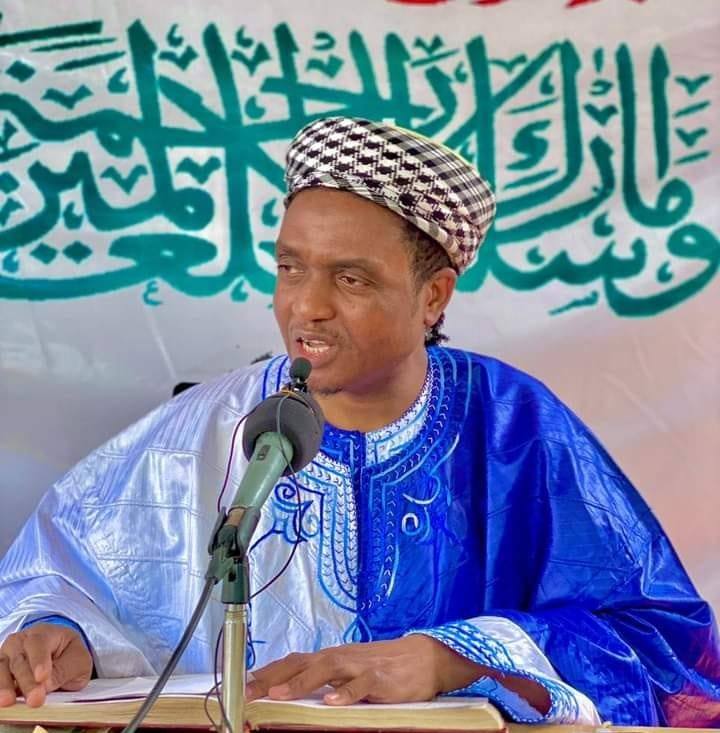
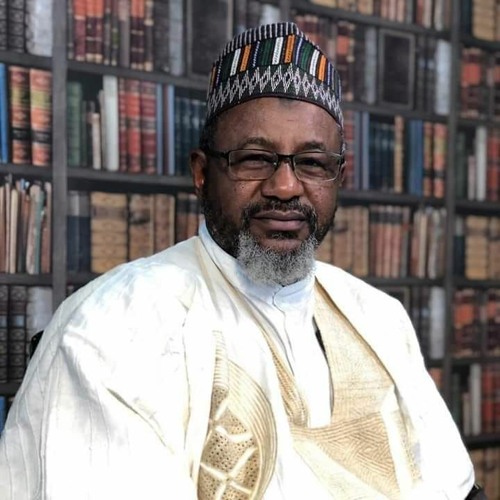
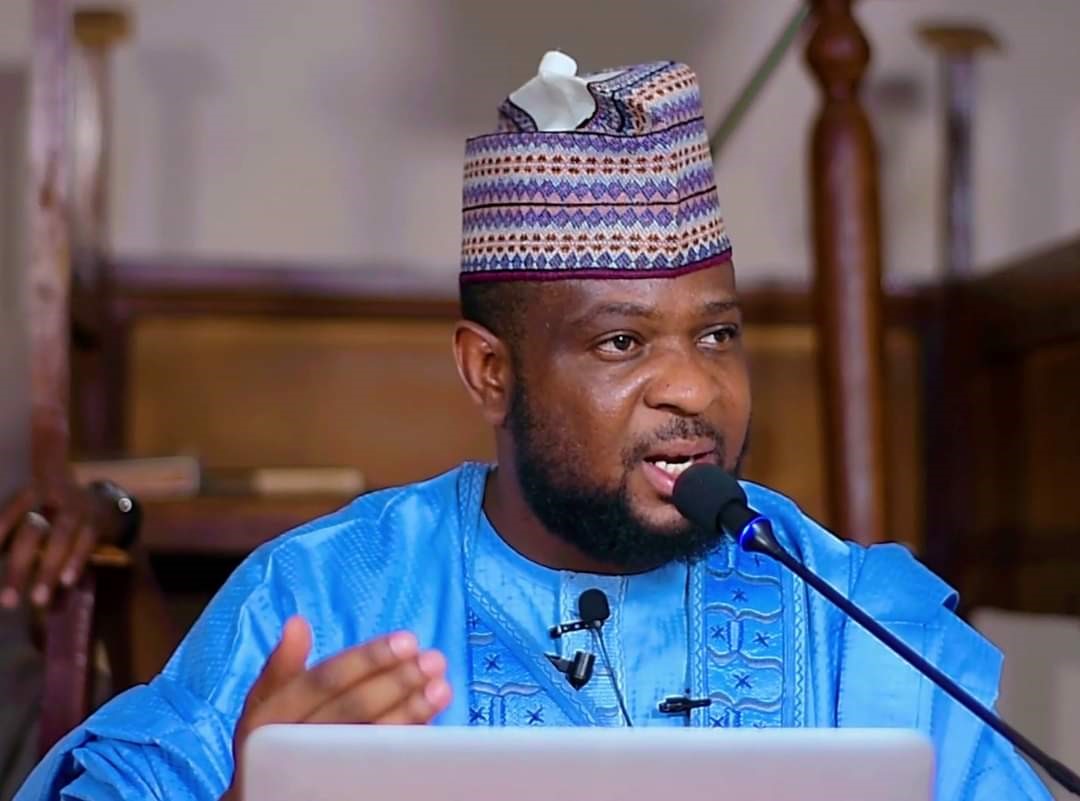
Malam Jabir Maihula: A hero archetype

By Abdulrahman Sani (philosopeace)

The German psychologist Carl Jung proposed archetypes as universal themes within the collective mental frameworks of humans. They represent the primary human drives, impulses, hopes, and desires that shape behaviours, perceptions, and actions. While he identified approximately seven archetypes, my interest lies in the Hero archetype, which symbolizes the relentless pursuit of excellence, growth, and overcoming challenges. I believe Malam is a living example of the Hero archetype.

Malam had a modest upbringing in Sokoto before gaining admission to major in Hadith Sciences at the Islamic University of Madina. After graduation, he furthered his studies with a postgraduate Civil and Criminal Justice diploma at the same university. Upon his return, he began teaching in Islamic schools. His breakthrough came through deputizing for his mentor, Professor Mansur, in his Sahih al Bukhari class.

Malam  as an Academic 

Malam’s primary training was conducted in Arabic. Still, due to his daring pursuit of excellence, he chose the unconventional route of pursuing a Master’s in Law at the University of East London instead of following the familiar path taken by others within his academic circle, which typically involves going to Sudan or Egypt for a Master’s in Islamic Sciences. Malam had to work on his English fluency to pave the way for a more multifaceted academic journey. His PhD journey was equally challenging, pushing the limits of his capabilities. Malam’s PhD was supervised by one of the foremost Taymiyyan scholars in Western academia, Professor Jon Hoover.

I recall calling Malam upon hearing that he had started his PhD and recommending that he look into Professor Hoover. Malam was pleasantly surprised that I knew about Hoover and informed me that Hoover was actually his supervisor. I became acquainted with Hoover through his book, Ibn Taymiyya’s Theodicy of Perpetual Optimism. In less than three years, Malam completed his PhD. He later published a portion of his research as a book titled Ibn Taymiyyah in the Literature of Contemporary Jihadists, an excellent book with a title I have reservations about, but that’s a topic for another article.

Malam’s work ethic as the Head of the Department of Islamic Studies at Sokoto State University was commendable. Despite his popularity and significant social influence, he never allowed these factors to impact his primary duties to his academic constituents negatively.

Malam as a Scholar 

Malam has mastered the social landscape in his relentless pursuit of excellence. The most important lesson from his scholarly life is to stay away from controversies and unproductive verbal spats while remaining true to one’s principles and beliefs. Although Malam is non-confrontational, it doesn’t prevent him from engaging in polarized intellectual discourse. He once wrote a booklet engaging with and critiquing a pamphlet written by one of the Sokoto scholars on a polarizing theological issue. Still, in his characteristic fashion, that discourse didn’t translate into conflict.

Apart from his scholarly rigour and eloquence, an even more impressive trait is his accessibility to all and sundry. He is not merely an ivory tower scholar buried in the dust of books, shielded from his immediate realities. Malam is a Hero archetype who is not afraid to take the road less travelled. He constantly evolves his da’wah to fit the spirit of the times while staying true to tradition.

Malam as a Public Servant 

Malam has just started his journey as a public servant and is making a significant impact with his meticulous approach to public service. I know for a fact that he had no financial incentive to take that job. It was purely out of giving back to his society. He occupies a sensitive position as the commissioner for religious affairs because of the sectarian divides but has been able to navigate those tricky waters and gain confidence across the religious divide.

A good documentary on his official Facebook page delves into his incredible accomplishments within just a hundred days in office. Still, beyond that, I am particularly interested in how he has made Almajiri Education a priority, laying a groundbreaking blueprint and even seeking international partnerships. It is an impossible challenge to overcome for so many reasons, but if there is anyone for it, it is Malam.

I have a lot more to say, but the Arabs have a saying that “the best of speech is that which is concise.” You might have noticed that I have purposefully refused to use the honorifics “Dr” or “Honorable” to describe Malam. It’s because Malam is more important than anything else. Finally, and even more importantly than positive appraisals, is prayer: May Allah guide him throughout this challenging journey of incidental public service.

Abdulrahman Sani (philosopeace) wrote via philosopeace@yahoo.com.

Eid al-Fitr: President Tinubu urges national unity, dedication

By Uzair Adam Imam

In a heartfelt address marking the conclusion of Ramadan, President Bola Ahmed Tinubu called upon all citizens to unite and recommit themselves to the profound task of nation-building.

Emphasizing the collective responsibility of shaping Nigeria’s future, President Tinubu likened the nation to clay, sculpted by the hands of its people.

“We are the sculptor, and Nigeria is the clay; we build it the way we desire,” he affirmed.

Speaking specifically to the Muslim community on the occasion of Eid al-Fitr, President Tinubu stressed the importance of unity in action. He described the holy season as a time of “total submission to God Almighty and to His command of sacrifice and service to humankind.”

Extending his greetings to Muslims both within Nigeria and across the globe, President Tinubu offered prayers for the acceptance of their supplications and sacrifices by Almighty Allah.

Through a statement issued by his spokesperson, Chief Ajuri Ngelale, the president expressed his hope that the lessons, blessings, and joys of Eid al-Fitr would endure beyond the festivities, shaping the nation’s path forward.

As the nation celebrated Eid al-Fitr, President Tinubu concluded his message by extending warm wishes to all Nigerians, invoking a spirit of unity and prosperity for the nation.

Sokoto cleric challenges official Eid date, observes prayer

By Uzair Adam Imam

Sheikh Musa Lukwa, a prominent cleric based in Sokoto, made headlines on Tuesday as he led his followers in observing the Eid prayer.

This move came in defiance of the Nigerian Supreme Council for Islamic Affairs (NSCIA), led by Sultan of Sokoto, Alhaji Muhammad Sa’ad Abubakar III, which had declared Wednesday as the official Eid day, marking the end of the 2024 Ramadan fast.

Contrary to the NSCIA’s announcement, Sheikh Lukwa insisted that the crescent moon signaling the beginning of Shawwal, and hence Eid, was sighted in neighbouring Niger Republic on Monday.

He justified his decision to hold the Eid prayer on Tuesday by citing reports and a verified video clip from Niger Republic’s council of Ulamah authenticating the moon sighting.

According to Lukwa, adhering to the teachings of the Holy Prophet necessitated following the declaration made in Niger Republic.

Despite the NSCIA’s assertion and the earlier stance of Saudi Arabia authorities, Lukwa remained steadfast in his belief, leading prayers at his Juma’at mosque around 8:30 am.

This event underscores the ongoing debate and differing perspectives within the Muslim community regarding moon sightings and the determination of Islamic holidays.

He was qouted to have said, “If we can accept that of Saudi Arabia, why can’t we agree with that of Niger Republic which is nearer to us.

“I am not saying all Nigerian Muslims must observe their Eid prayer on Tuesday but we have no moral justification not to observe our prayer on Tuesday because the new moon was sighted by our neighbors.

“And remember there is no fasting on Sallah day, it is prohibited,” the imam stated.

Lukwa has been defying Sultan directives, accusing the monarch of forcing Muslims to accept the moon sighting of Saudi Arabia which he believes is against the tradition of the Holy Prophet Muhammad (PBUH).

The cleric however, challenged any scholar with a contrary view to a public debate.

Harvard Encounters: A day of holistic journey of intellectual exchange and spiritual enrichment

“And another time – you shall see something wondrous.”
“And I thank my Lord that my secret is not sterile or barren.”
– Sheikh Ibrahim Niasse

By Umar Sheikh Tahir

Harvard University is renowned for its academic excellence and intellectual vibrancy. Visitors often expect encounters with great minds and engaging discussions with professors, students, and highly enlightened individuals. However, my recent visit transcended mere intellectual exchange; it was a holistic experience that seamlessly intertwined intellectual discourse with spiritual enrichment, specifically with my fellow Tijjāniyah Faydah community, where I shared my day with them, which was superb and was a Friday full of activities. 

On March 29, 2024, the day commenced with an eagerly anticipated lecture under the Islam in Africa initiative Lecture Series, co-organized by Prince Bin Al-Waleed Bin Talal Islamic Studies Program, Hutchins Center for African and African American Research, Harvard Faculty of Arts and Sciences, and Harvard Divinity School, and also the program convened by Professor Ousmane Kane al-Waleed Bin Talal, Professor of Contemporary Islamic Religion and Society.

My friend and interlocutor, a fellow Tijjānī disciple Amadu Kunateh, is a PhD candidate who works on Islamic Intellectual Traditions in Sub-Saharan Africa and their philosophical currents. He presented a lecture on the reception of theology (Kalam) and philosophy (Falsafa) in Modern Sub-saharan Africa. He utilised Sheikh Ibrahim Niasse as a case study of African ulemas’ engagement with the subjects. In keeping with the form of the subject matter, Amadu summarised his work in syllogistic form: 

Premise 1: In Islam in Sub-Saharan Africa, Kalam and Falsafa were present but held limited valorisation.

Premise 2: Sheikh Ibrahim Niasse denounced Kalam and Falsafa as ‘evil innovations’.

Premise 3: Kalam’s aim of providing certain knowledge was refuted by Niasse, who argued that it cannot offer certainty.

Premise 4: Ma’rifa and tarbiya, offering certain knowledge, negate the necessity of Kalam.

Premise 5: Critics suggest that Ma’rifa is exclusive, leaving Kalam and speculative reasoning as alternatives for the populace.

Premise 6: In the Islamic context of West Africa, under Sheikh Ibrahim Niasse’s guidance, Ma’rifa is universally attainable.

Conclusion: Thus, in this milieu of the `Ārifeen in Subsaharan Africa, Kalam and Falsafa become redundant. 

Notwithstanding, Amadu suggested that despite the privileging of ma’rifa and tarbiya as alternative cognitive modes, he showcased the continued presence of profound intellectual contributions to the issues pertinent questions of Kalam and Philosophy found in Sheikh Ibrahim’s Fi Riyād al-Tafseer.

The Q&A session allowed for more in-depth engagement with particular issues ranging from questions on Sheikh Ibrahim’s conception of Time, God’s Attributes (Sifat) & Dhat (Essence), the limits of the Intellect (‘aql), and more. The lecture ended with a hot meal, which was enjoyed by non-Muslims who are not observing Ramadan fasting, and takeaway containers for Muslim fasters.

Since it was Friday, we went to the Masjid for Friday prayer, where I found myself spiritually immersed, complementing the intellectual discourse seamlessly. Serendipitously, the Friday sermon (khutbah) was delivered by Dr. Ousmane Kane, who reminded congregants of the importance of God-consciousness (taqwa) and how taqwa results in God teaching you knowledge directly. This was a poignant reminder for an audience of academics and students in the pursuit of knowledge. 

The sermon echoed Amadu’s earlier presentation on the alternative epistemologies and limits of the intellect. How remarkable to have heard a presentation on Sheikh Ibrahim Niasse only to follow it up with a khutbah at Harvard by his grandson, Dr. Kane, the son of his daughter Seyda Maryam Niasse. It was evident that the Flood (Fayda) had indeed travelled westward, and its wonders reverberated through the Harvard walls. 

Dr Ousmane Kane

Following the Juma’ah prayer, the day continued to unfold its tapestry of spiritual and philosophical threads, culminating in two extraordinary meetings: one a private meeting with Dr. Kane in his office. During my meeting, I updated him on my project and the progress I am making at Columbia University. He gave me some valuable academic tips and then prayed for us with my friends.

My doctoral dissertation is about the tradition of Arabic Islamic logic in Subsaharan and North Africa. As such, it was suggested that I meet Āqil, an undergraduate student at Harvard College majoring in Math and philosophy, with a particular focus on modern logic. He is well-versed in Islamic tradition, having had madrasa training in Malaysia before arriving at Harvard. 

Our conversation explored the relationship between Modal Logic, Classical Logic, and Arabic logic. The discussion focused on the metaphysical assumptions that ground modern logic and go unnoticed by modern logicians like Frege, Russel, and Wittgenstein. However, precise and comprehensive due to its extensive utilisation of symbols, it can be used for contemporary Usul al-Fiqh (Principles of Jurisprudence) as classical Arabic logic was traditionally espoused as an ‘instrumental’ tool for Usul and Theology. We were not convinced of the utility of modern logic for the Islamic sciences, but this issue requires further exploration. 

Since it was Friday, and as Tijjānī adherents, we headed out to the Zawiyah located at Shaykh Ousmane Kane’s home to engage in more remembrance (dhikr), Qur’an recitation, poetry recitals community before the Maghrib prayer. In the midst of rigorous intellectual engagement, moments of spiritual reflection provided a refreshing pause. A moment of tranquillity presented itself during the Haylala at the Zawiyah. The evening culminated with the Quranic khatm, which is done every week following a complete recital of the Quran by members of this community. 

We broke our fast together, which fostered a sense of community and companionship. It was amazing to experience a day of intellectual fasting at Harvard – with each conversation serving as a reminder of Allah. 

The Path to Paradise is the prayer and the fast.
And the Path to Allah is abandoning everything apart from Allah.

– Sheikh Ibrahim Niasse

As we partook in the communal meal, it became evident that such gatherings not only nourish the body but also nurture the soul, and the healing food is exclusively cooked with the heart before the hand. Thanks to Kane’s family.

By the way, not surprisingly again, Shaykh Ousmane Kane presented the annual Ramadan Lecture (Durūs al-Hasaniyah)hosted by His Majesty the King of Morocco in front of Muslim global ‘ulema on Western Academia and Islamic Intellectual Tradition in Sub-saharan Africa and his efforts at Harvard to unravel that history. It’s astonishing and unprecedented that Shaykh, who lectured in front of the world’s Islamic scholars in Morocco, was a Harvard professor, khatib, and spiritual leader (muqaddam). It is a testament to Dr Kane (complex of two oceans of mind and spirit, as I named him in lines of my poetry last year,) the grandson of Shaykh al-Islam and Harvard professor.  Indeed, the Fayda has flooded over from Africa to Harvard and its nurturing hearts and minds. 

Reflecting on the day’s experiences, it’s evident that intellectual and spiritual pursuits need not exist in isolation; rather, they can complement and enrich one another, as is currently occurring at Harvard. Within Harvard’s diverse intellectual community, there exists a small group of people championing a holistic approach to learning. 

Umar Sheikh Tahir, PhD Candidate at Columbia University. He can be contacted via ust2102@columbia.edu.

In search of a link between some Hisbah operations and Shari’a implementations

Isma’il Hashim Abubakar

A few weeks ago, the Kano State Hisbah Board stole the limelight when a brief misunderstanding erupted between the Kano State Governor, Abba Kabir Yusuf, and the Hisbah leadership. The Muslim public, represented by religious leaders and the elite, played a significant role in calming tensions and restoring peace in the issue, which everyone welcomed with sincere happiness and unique hope that the short altercation would result in the promotion and reinforcement of Hisbah. 

In the two articles I penned within the clusters of that misunderstanding, I stressed that Hisbah is virtually the only government institution that transcends abstract symbolism and remains the lively organ that operationally contributes to the implementation of the Shari’a project, which was once the highest ambition of the Nigerian Muslims. I emphasised that all Muslims should regard Hisbah as their delicate property that should not be, in the least, jeopardised by internal or external commissions, omissions or inactions of any individual, no matter how highly placed, let alone common people who can just be dealt with and cracked down by responsible leadership.

One of the top functions of Hisbah is to serve as a machinery that supports the process of Shari’a implementation by deterring people from committing crimes, apprehending suspects, and presenting them before Shari’a courts for proper investigation and ruling. Of course, at different stages, Hisbah commendably serves as a forum for reconciliation and solving social disputes, which at times pleases and satisfies opposing parties in a better way than courts do. Nonetheless, this is never an excuse for the institution if it operates so that its effort to intervene in matters and find solutions for them becomes counterproductive to the letter, spirit and goals of Shari’a, which the board was primarily established to protect. 

Although preserving dignity is a principle that characterises Hisbah’s operations, as a government force backed by law, the board is not expected to provide cover or leeway for criminals to evade the wrath of the law. Shari’a will cease to have its proper meaning if criminals assume they are not to be treated as culpable and should, in principle, be deterred from, cautioned against, or punished for flouting Islamic law. 

In light of how some Hisbah officials handle cases both at the headquarters and various branches in the 44 local governments, some categories of criminals now utilise Hisbah to get their crimes tacitly covered as they further pursue their fiendish goals by conniving with or approaching some elements within the board. They no longer fear legal penalties that their crimes could lead them to, but could even summon the courage to approach the board to confess their crimes and demand certain rights that may have followed the consequences of their crimes. 

To be clearer, by citing examples, in a recent report I watched, which was broadcast by Tozali Magazine Online TV, a Chinese master in a company in Kano impregnated the daughter of his driver. When this crime was unmasked, the people involved tried several ways to abort the six-month pregnancy. After failing to get rid of the mess since medical experts refused to conspire with the Chinese fellow and his illegitimate in-laws, the case was taken to Hisbah, who is said to have searched for a solution for them. 

The report has it that the Hisbah leadership has resolved that the Chinese man, who earlier sought to silence his poor driver through pecuniary consolation, should just now marry the girl despite her heavy pregnancy so that the matter would be put to rest. If this report is true, with all its attendant jurisprudential intricacies, similar to what has allegedly occurred repeatedly in several branches of the morality police, then the institution needs to review its operations. 

As a Shari’a implementation body, when a suspect admits committing a crime as felonious as this, which involves adultery and attempts at feticide, is the expected response from Hisbah to look for a solution or to make a comprehensive investigation and forward the case to Shari’a court for judgment? Is Hisbah not shielding adulterers and providing escape routes for suspects who attempted to commit a feticidal crime? The punishment for an adulterer is clear; to be stoned to death and 100 lashes for the girl who seems to be unmarried since her Chinese lover, according to the report, did not rape her or use any form of coercion to have carnal knowledge of her. How could all this be replaced by forcing these criminal parties into marriage? 

A knowledgeable person heads the Hisbah, and the wisdom behind resorting to marrying culprits of this nature is a motive to preserve human dignity, conceal wrongs committed and prevent an illegal child from being born from perpetual bullying and stigmatisation. But yet, is this enough reason to sacrifice divine injunctions and render them obsolete? From what we read in the Glorious Qur’an and interpreted by the Messenger (SAW) through his speeches and deeds, suspects could only be shielded if the matter is not taken to authority or the relevant legal agency has not got hold of the felons. Concerning a set of crimes and their penalties, Allah says:

“illa alladhīna tābū min qabli an taqdirū ‘alaihim fa’lamū anna Allaha Gafūrun Rahīm” (except those who repent before they fall into your power, then know that Allah is Most-Forgiving, Most-Merciful) [ Sūrat al-Mā’idah: 34].

In several instances, the Prophet (SAW) warned that once a matter was presented before his court, then Allah’s law would take precedence over all other concerns. However, the Prophet (SAW) took pity on an illegal child born by a woman from the al-Ghāmidī clan. As a result, he asked her to go and take care of her child when the woman returned after she successfully weaned the child. She insisted that she must be punished according to the divine law; the Prophet (SAW) did not look for any other solution but applied the law to her, which, interestingly, promoted her posthumous virtue and spiritual rank. Worthy of notice also, nothing was heard about the man responsible for her illegal birth, nor did the Prophet himself ask her to mention him, just as the child was also integrated into the society without inscribing a permanent taboo on his status. 

Of course, many will argue that the penalties above are practically infeasible, but yet rewarding the felons with marriage is also discouraging and counterproductive to the goals of Shari’a. A midway solution is at least to apply a warning penalty (ta’zīr) on the criminals by serving their sentences to spend years in jail, which will be done by the court.

The scenario of Ɗan Chana and his street in-laws represents one of the many cases that evince Hisbah’s indecision to fully side with the spirit and letter of Shari’a as fully enshrined in the state law and is still the main legal framework that ought to guide Shari’a implementation process. It is now common to see a girl carrying a small child and asking for the address of Hisbah to report a case of her love affair, which resulted in the birth of a bastard whose alleged father refuses to adopt, take care of, or just abandons. The girl will summon enough courage and temerity to shamelessly divulge her secret affair just because she is confident she won’t be served with proper Shari’a law. Her aim for approaching Hisbah is not to repent and make amends but rather to wheedle her way into favour and capitalise on the institution’s power to extort money from her accomplice, who may have even denied being responsible for the unwanted birth. 

Even if Hisbah won’t pursue the case to the court, which it should, it should at least explain to girls like this that pregnancy and birth are enough evidence to prove a woman guilty of adultery or fornication, unlike in men’s cases, which primarily demands eyewitnesses or personal confessions. After all, illicit relationships do not have a sanctity similar to marriage, which has a Shari’a cover. As such, failure by a partner in illicit relationships to fulfil certain duties should not be equated with marital disputes between spouses. If a whore pretends that she is innocent and goes on to claim damages or demand a right, then what makes her different from a legitimate housewife or a divorcee? 

In the same manner, men accused of raping innocent girls are sometimes relieved from their burden through local arrangements with victims’ families such that in the long run, money will be the prime solver of the dispute, and suspects get away once they make commitments to take care of certain clamours about their victims.

The disconnect between some operations of Hisbah, which is portending a gloomy future for the institution, shall be one of the priorities of the governing council of the board, but also the head of government, who now does not have any doubt about the institution’s significance and dearness to the Muslim public. As we are in an era of normalisation of strange and weird mores and practices, Hisbah should be highly cautious and extra-careful not to be an agent through which barbaric, savage and amoral attitudes will be mainstreamed. 

Lovers who lack fear of God or a woman who falls so low to trade with her dignity in exchange for cash will continue to be emboldened to make a claim when any of them feels cheated in an illegal deal. No matter how rich or influential a man is, he shouldn’t be given a cover to get away with his crime just for pledging to take care of his rape victims. The application of appropriate legal sanctions is the only solution and guarantee for the safety of all parties, including the Hisbah and its leadership.

Isma’il writes from Rabat and is reachable via ismailiiit18@gmail.com.

Dangote inaugurates 15 billion naira nationwide rice distribution initiative

By Uzair Adam Imam

In an effort to address the pressing needs of the less privileged during these difficult times, Alhaji Aliko Dangote, the Chairman of the Dangote Group, has initiated a nationwide distribution of one million bags of rice.

The distribution began in Kano State, with 120,000 beneficiaries, and will continue throughout the country.

The rice will be disbursed in all local governments in Kano State, and the initiative will then be replicated in other states. Dangote hopes that this effort will alleviate some of the hardships faced by the poor.

The Dangote Group’s nationwide rice distribution program was officially launched at the Kano State Government House, with Alhaji Aliko Dangote himself in attendance.

The ceremony was also attended by Kano State Governor, Alh. Abba Kabir Yusuf, who expressed his gratitude for the initiative.

According to Dangote, the rice distribution aims not only to alleviate hunger in the short term, but also to invest in long-term solutions for communities across Nigeria.

The program represents a significant step towards ensuring food security and reducing poverty in the country.

“We should stand as one community, one nation, extending our hand of friendship and brotherhood,” remarked Dangote.

He also emphasized on the importance of unity and compassion during these challenging times.

“During this month of Ramadan, we are reminded of the spirit of compassion and generosity. This initiative is not just about addressing hunger; it’s about fostering a sense of communal support,” he added.

Alh. Aliko Dangote said the gesture is for 774 local governments nationwide, covering one million bags of rice, with Kano State receiving the lion’s share of 120 thousand beneficiaries

“I am confidently informing you today’s distribution is special. Despite the fact that for the past 30 years, we have been extending support to the teaming populace. We decided to come and add this project to relieve our fellow Nigerians in need.

In addition to the current rice distribution program, Alhaji Dangote informed the audience that the Dangote Group has also been providing meals for 10,000 beneficiaries daily in Kano State.

He also mentioned that the nationwide rice distribution initiative cost a total of 15 billion Naira.

Governor Abba Kabir Yusuf thanked Alhaji Dangote for his generosity and noted that the assistance comes at a critical time when many people are struggling.

He urged the distribution committees, including the HISBAH Board, to ensure that the rice reaches the most vulnerable members of society, and thanked Alhaji Dangote for his commitment to helping those in need.

Governor Yusuf stated that the gesture by Alhaji Dangote will greatly alleviate the hardship faced by the people of Kano, and noted that selecting 120,000 beneficiaries from Kano for the inauguration ceremony was significant.

Zouera Yousoufou, the Managing Director of the Aliko Dangote Foundation, also spoke at the event, highlighting Alhaji Dangote’s consistent philanthropic efforts and the critical role that the foundation plays in promoting and facilitating such initiatives.

She stated, “It is we at the Dangote Foundation who encouraged him to publicize the gesture, so others can immulate but he has been doing it for years without the left hand knowing what the right hand was given, ensuring that assistance is provided to those in need without drawing undue attention.”

The distribution of palliatives organized by Alhaji Aliko Dangote demonstrates a commitment to alleviating the suffering of those less fortunate, embodying a spirit of compassion and solidarity. It is a meaningful gesture of support for those in need.

Fasting Ramadān in the university: A treasure for campus students

By Dr Zakariyya Shu’aib Adam

Last week, I had a pre-Ramadan lecture session with Muslim Health Students at Usmanu Danfodiyo University Teaching Hospital, Sokoto. I reiterated the merits of the four most important acts of ibadah in Ramadān: fasting, recitation of Qur’ān, night prayers, and feeding the needy. I also emphasized how, as students, we can make judicious use of our stay in the university during Ramadān.

Contrary to the mainstream notion, observing fasting in the university is scrupulously enchanting and divinely pleasing. In this piece, I want to write some of the points I mentioned in that session for the benefit of a larger audience. It is worth noting that I drew most of what I said from my experience as a former university student who stayed on campus.

Although fasting is physically exhausting, particularly for a university student who, in most cases, lacks sufficient foodstuff for suhoor (pre-dawn meal) and iftār, it can quietly serve as a pathway that provides students with immense opportunities to connect heartily with their Lord.

During Ramadān, affluent students often use to invite the indigents for suhoor and iftār. You mustn’t cook food before you eat. Moreover, the Muslim Students’ Society of Nigeria [MSSN] sometimes obtains funds from the Sokoto State Government and Muslim lecturers to purchase all that is needed for Iftār. In such circumstances, students usually gather in a hall and break their fasts in what was popularly known as “Tarāsoo” (the word was gotten from the state of closely and neatly joining legs in a congregational prayer).

I haven’t observed a more composed Tarāweeh that is full of tranquillity and serenity like the one we used to observe in school. Specifically, in Tora Bora Masjid, we used to read one page in each raka’ah of Tarāweeh and spend an average of an hour. The congregation was very large. Retrospectively, the Imāms there recited with melodious voices that would touch hearts. There were brief admonishments between every four raka’ah. We were always happy observing this prayer.

When it was the last ten days of Ramadān, many students would be in the mosque for Iʿtikāf (seclusion in the mosque for the purpose of worship, especially the last ten days of Ramadān). Those performing Iʿtikāf receive food from Tarāsoo and from their friends who aren’t staying in the mosque. They constantly recite the noble Qur’ān during that period. In a nutshell, they devote themselves to all kinds of ibadah for a period of ten days.

During Tahajjud (night prayers), we had more than enough Imāms because there were many memorizers of the Qur’ān among us. The ruku’uh and sujood were almost as lengthy as the qiyām (standing). We were given a chance to make prayers to Allāh in sujood because it’s the closest moment a servant is to his Lord. Most university dignitaries attended such ibadāt with us. They relate with us with humility and demureness. This played a role in reducing the imaginary hiatus between students and lecturers.

Females, too, were given special consideration. A portion of the mosque was dedicated to them to observe I’tikāf. Everything they needed was provided to make their stay delightful. When it was time for Tahajjud, they made rows in the mosque and observed prayers with males. There was a question-and-answer session every night, usually organized by experts in Islamic jurisprudence among the I’tikāf members.

I am neither trying to portray my stay in the university during Ramadān as Shangri-la nor am I being utopian. Notwithstanding the aforementioned, some students do not participate in these ibaadāts. They instead go to the female hostels and spend time with their inamoratas. It seems as though they prefer worldly pleasure to the everlasting one. In some instances, they often present what they call Ramadān baskets to these inamoratas, thereby engaging in prodigality.

Others spend much time in social gatherings. You mostly see them chitchatting about politics and entertainment. They burn calories in debating about football. Champions League matches used to be on the night at the exact time of Tarāweeh. Therefore, big boys won’t attend the night prayers. Females, too, weren’t left out. They commit themselves to watching Korean TV series and Indian love movies. Their role models used to be Lee Min-Ho, Lee Min-Jung and Aishwarya Rai.

I entreat you not to be like these students. Be steadfast in your ibādah. Remember that Ramadān is made up of either 29 or 30 days. If the month elapses, you may not necessarily live to witness another Ramadān. Stay in the circle of pious friends. Never befriend anyone that doesn’t help you in your studies or doesn’t add to your religiosity. Devoted servants in Ramadān are rewarded in multiple, so also the transgressors – their punishment is multiplied.

Lastly, I narrate this to settle the nerves of students who are unhappy with their stay in the university during Ramadān. I, admittedly, was unhappy in school in my first year. Subsequently, it became apparent to me that I could turn that cheerless moment to my advantage. I doubt if, in the nearest future, I can have enough time I dedicated to myself for ibadāh in Ramadān as I had in the school. So, make good use of your stay in school during Ramadān while you are still a student. You may not have much time if you graduate.

Dr Zakariyya Shu’aib Adam is a serving corp member with Area Veterinary Clinic, Argungu, Kebbi State. He graduated from Usmanu Danfodiyo University, Sokoto. He can be reached via: zakariyyashuaib2020@gmail.com.

Malam Ahmad the Muezzin: As Constant as the Northern Star!

By Malam Mahmud Zukogi

Those who did one program or the other at the Bayero University, Kano (BUK) new campus may know Malam Ahmad in two places: the university library and the now-old new campus mosque. 

For students who frequent the library for the serious business of “acada,” the likelihood of you not meeting Malam Ahmad every other day is zero. At any of his bits in the Reserve, Circulation, Serials, and Nigeriana sections, you are certain to meet a man who is calm, gentle, welcoming, and professional in his disposition. 

Malam Ahmad listens to you, guides you, and directs you where to get the books and materials you seek. Such is the man Malam Ahmad, who recently retired from the services of Bayero University, Kano, as a Principal Librarian in 2019.

Malam Ahmad obtained his Diploma in Library Science in the early eighties and was absorbed into the university’s services. He went on to do his bachelor of Arts Education in Library Science at Ahmadu Bello University (ABU) Zaria and capped it off with a master’s degree in BUK.

However, his professional duty has not made Malam Ahmad renowned at the university. For over 40 years, his heart has been devoted to the mosque. Starting as an assistant Muezzin, he rose to become the substantive Muezzin, a role he held steadfastly. 

At the onset of time for prayers, you will hear Malam Ahmad’s voice waxing through the air, calling faithful to prayer. He’s as constant as the northern star. Whether sun or rain, he will be on top of time to open the mosque, clean up the spaces and hit the mic with his signature voice. Let the rains tear through the skies with intensity at dawn; his voice calling to prayer and success will wow the fierce nature into the homes and ears of adherents in the quarters. Subhanallah.

He looks frail in his mid-seventies, but his heart is still strong and firm. As a testimony to this, even after packing out of the university quarters, Malam Ahmad will still be in the mosque at the appointed time. The only time you won’t find him is when he is challenged healthwise. He is a very peaceful man, never engaging in any squabbles or quarrels. You will find him engrossed in zikr and recitation of the Holy Qur’an between prayers. 

Ya Allah, grant this your servant good health and endow him with sufficient means to live his remaining life in peace and harmony. Ya Allah, grant him a beautiful ending and enlist him into Jannat ul Firdaus.

Time to return to the masjid

By Bello Hussein Adoto

When COVID-19 came, we switched from receiving exegeses of the Qur’an and Hadith from masājid and physical gatherings of knowledge to virtual ones. We attended Facebook Live and Zoom sessions to listen to our favourite scholars. We followed their tafsirs on Mixlr, Google Meet, and Telegram.

These were supposed to be temporary solutions to the social-distancing mandates that COVID-19 imposed, but they have become the norm. It is about time we returned to the masājid to restore their beauty and secure the blessings of learning physically from scholars.

This Ramadan is a great time to start.

Allāh says in the glorious Qur’an, “I did not create mankind and the jinn except to worship Me.” The masjid is central to this worship. We observe the congregational ṣalāt at the masjid, perform iʿtikāf there, distribute the zakāh, and listen to explanations from our scholars.

Beyond worship, the masjid unites us as a community by bringing us together with our Muslim brothers and sisters as members of a shared community, united by faith. In preserving this faith and community, we must find a way to restore the essence of our masajid, even in the age of online communities.

Why should we return to the masjid?

Islam is not against technological innovations that would benefit Muslims. Indeed, we use microphones to project the adhan, telescopes to observe the moon, and smartphones and other devices to spread the message of Islam beyond the masajid. Therefore, we are free to seek and adopt goodness from any source.

However, attending virtual lectures or learning at online madrasahs or Islamic institutes should complement, not substitute, listening to lectures in the masjid or learning physically at the feet of scholars.

The masjid creates a veritable platform for teachers, scholars, and students to connect physically and leverage the elements of the surroundings—the sound, the sights, the mannerisms, and the divine blessings—to achieve maximum benefit from the engagement. Besides, it is the most common place to connect as brothers and sisters and focus solely on learning and worship without distractions.

So, how can we return to the masjid?

Start small

Returning to lectures at the mosque or taking in-person classes would be challenging in the first few days. You are changing a routine and need time to adjust.

So, start small. Instead of joining Twitter Spaces for morning reminders, stay back for three to five minutes to listen to short tafsirs of the Quran and Hadith. If that is unavailable at your masjid, introduce the idea to the masjid committee. Then, you can listen to your virtual sessions on your way home.

Commit to optimizing Jum’ah sessions

The Jum’ah prayer is our weekly chance to gather in our numbers to worship Allah. Thankfully, Imams deliver khutbahs on salient issues that can provide us with much to ponder for the week. We can optimize our schedules to prioritize the Jum’ah sessions.

Set out early to secure convenient spots. Those of us who sleep through the khutbah can nap before going for Jum’ah. That way, we are more likely to stay sharp until the end of the service and earn the full reward.

Leverage your local masjid

The scholars at the mosque you pray at may not compare with the exotic collection of scholars you can listen to online, but they offer a great platform to keep you grounded in your community’s realities.

They speak your language, use local examples to explain Islamic concepts, and are easier to reach than those you listen to online. Physical sessions with these scholars and teachers also provide a social presence unmatched by virtual ones.

The mere fact that they are live before you strengthens your connection and primes you to appreciate better the content and context of the lecture or discussion. So, start with your local masjid and see how a virtual platform can help you improve.

Remember, the masjid offers more than learning

Think back to the last time you were at the masjid. Perhaps you met a brother you hadn’t seen in a while or made a new acquaintance. Whatever the case, you must have said tasleem, shaken a hand or two, or even felt the warm embrace of your brother in the Deen. Such is the richness that comes with the masjid, the one that strengthens our brotherliness and fetches Allah’s mercies.

We can listen to podcasts for hours and join Mixlr, Zoom, Google Meet, Facebook, or YouTube live sessions to follow our favourite scholars. Still, they cannot and should not replace our intimate experience of physical sessions.

If anything, their many limitations—the distractions, the weaker connection between scholars and students, speakers and listeners, the transient sense of community that virtual platforms foster, and even the difficulties that come with setting up virtual sessions and following them—show that we need our masājid and our ḥalaqah now more than ever.

Ramadan is here. It’s time to return to the masjid.

The Kingdom of Saudi Arabia does not represent Muslims

By Abba Abdullahi Garba

There is an apparent misunderstanding of what a kingdom in the Arabian Peninsula (Saudi), Islam, and Muslims mean and what they represent, especially when it comes to the point of view of some Nigerians.

This short, precise, and well-clarified article, under 700 words, will differentiate these things and conclude with the reason why the Saudi Kingdom does not represent Muslims or Islam but Saudi Arabians.

Saudi Arabia Kingdom

The Saudi Kingdom rules Saudi Arabia and represents it worldwide. It acts as the president, prime minister, and legislative body of Saudi Arabia.

Anything that is outside Saudi land is outside the control of the Saudi Kingdom [from religion, spirituality, international politics, et cetera], except what directly relates to it or its citizens.

The Kingdom, just like its counterparts in Qatar, the UAE, and others, has the authority to allow things [like entertainment, sports, et cetera] to take place within their land. And that is their business, not Muslims!

Islam

Islam is a non-modifiable religion practised by over one billion people all over the globe. And those people come from all walks of life and different races.

However, what makes it the perfect choice for many people is the fact that there is no racism, discrimination, indecency, or so many other leftist things. It is a religion that uses over 1,400 years of old scripture, which, to date, no one has modified, and it will remain like that till the end of the world.

Islam does not have a representative country, kingdom, or race. Its representatives are the teachers who taught it appropriately, and even if they cannot modify its teachings, they must teach it the way it is.

Islam promotes peace, tolerance, love for each other, good manners, truthfulness, and honesty, among other things.

I can’t tell you everything about Islam right now because this article is supposed to be short. But, sincerely speaking, Islam is a way of life!

Muslims

Muslims are the people who accept and practice the teachings of Islam regardless of their race, country, or region. And when I say Muslims, I mean all Muslims.

And it is impossible to say this: all Muslims are good people, or all are bad! Some are good people, and some are bad people. Everywhere and in every religion, there are those kinds of people, good and bad.

And the behaviour of one Muslim does not represent Islam if it is against Islamic teachings. It represents that person, not his religion.

And the behaviour of a kingdom that rules a country of people who follow and practice Islam does not represent Islam; rather, it represents that country and its leaders.

Any Islamic preacher or ordinary Muslim whose actions or words are out of Islamic context does not represent Islam but rather his person.

Conclusion

Islam is a religion. Muslims are those who practice it. And the Saudi Kingdom does not represent Muslims or Islam. It represents the people of Saudi Arabia. And Muslims all over the world have no say in what the Kingdom of Saudi Arabia decides for its people in any aspect of life.

So, for those who think the Saudi Kingdom represents Islam, then it is time to change your perception on this topic, for Islam is a religion with no authoritative body that can speak or act on its behalf. And Muslims are those who practice it.

And you can be one too!

Abba Abdullahi Garba wrote from Zugachi, Kano, Nigeria. He can be reached via abbaabdullahigarba@outlook.com.