Religion

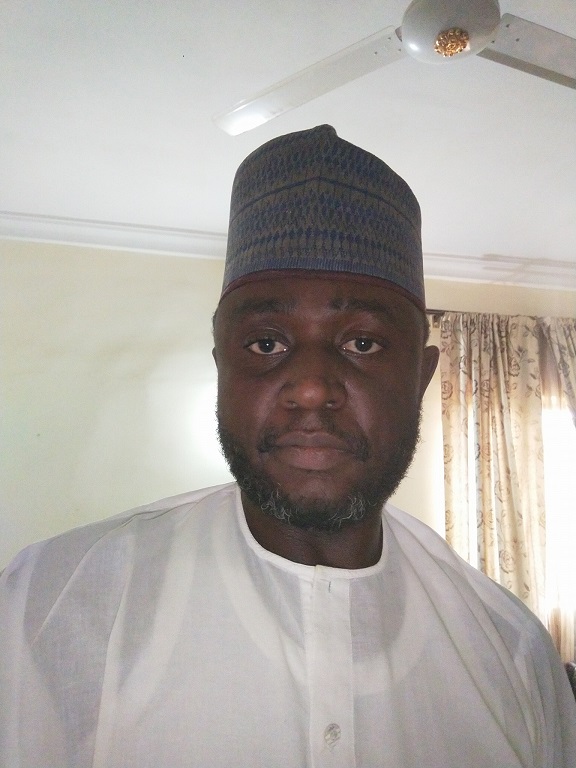
Double blessings: A tribute to Prof. Salisu Shehu

By Isma’il Hashim Abubakar, PhD

In one month, our mentor, leader, teacher, and father, Professor Salisu Shehu, the Vice Chancellor of Al-Istiqamah University Sumaila, Kano, and Deputy Secretary-General of the Nigerian Supreme Council of Islamic Affairs, received two distinguished honorary awards in recognition of his years of exemplary leadership, meritorious services, and contributions to the development of Islamic education.

The National Association of Teachers of Arabic and Islamic Studies (NATAIS) conferred one of these awards on Professor Salisu Shehu in a grand ceremony on November 16, 2024, at the Federal College of Education, Yola. The event was part of the Association’s 41st Annual International Conference. 

The note of the Association’s highest Merit Award, inscribed on the crest presented to our beloved mentor, reads, “For your Exemplary Leadership and Contributions Towards the Islamic Propagation and Development in Kano State and Nigeria at Large.” 

Coincidentally, the Bauchi State Qur’anic Recitation Competition in Jama’are presented the second award to the professor on the same day. Like its peer, this award recognises and celebrates the role played by our mentor in the dissemination of Islamic knowledge, societal enlightenment, and mentoring of the upcoming generation. 

Interestingly, however, this second award is both a reward of excellence and a turbaning ceremony of Professor Salisu Shehu as Khadimul Qur’an (Custodian of the Qur’an), the highest title that connotes the peak one attains in promoting the knowledge of Islamic Scripture. The note of the award reads, “Islamic Knowledge Award presented to Prof. Salisu Shehu, V.C, Al-Istiqamah University, Sumaila, Kano State, for his tireless efforts in spreading Islamic knowledge, guiding our community, and inspiring a new generation of Muslims to embrace their faith.Congratulations Khadimul Qur’an”.

For hundreds of mentees and millions of Muslim followers of Professor Salisu Shehu, these esteemed awards clearly testify to the commitment and devotion for which the Professor has been known over the decades. This reputation is justified by his successes in various positions, including his position and duties at Bayero University Kano, where he taught before becoming the founding Vice Chancellor of Al-Istiqamah University Sumaila.

Professor Salisu Shehu displayed an inimitable commitment to modifying the establishment of the Centre of Continuing Education establishment at Bayero University. The centre grew from strength to strength, eventually transforming into the Institute of Continuing Education (ICE) and finally to the School of Continuing Education (SCE). 

Professor Salisu Shehu was appointed as the first head of this centre, which started from scratch. He led a tenacious staff team, some of whom were younger colleagues he mentored or guided, to develop and upgrade this academic centre into a formidable educational unit of Bayero University. The place has already transformed from a diploma-awarding body to a degree-awarding school within one of Nigeria’s leading and most prestigious learning institutions.

Professor Salisu Shehu is a man in whom one can have confidence and a guarantee of success in any project or mission he undertakes or participates in. His years as the National Coordinator of the International Institute of Islamic Thought (IIIT) can, without much ado, testify to and validate this claim. Space will not allow us to marshal the achievements this Institute recorded when Professor Salisu Shehu headed it. 

The same can be said of various other capacities and ranks in which he served and holds, such as being the first  North-west Coordinator of JAMB organised for the visually impaired as the chairman of the Bauchi State Qur’anic Recitation Competition Committee (2007-2011); his role as the Executive Secretary of the Islamic Forum of Nigeria; Deputy Secretary-General, Nigerian Supreme Council of Islamic Affairs (NSCIA) and a host of other duties including imamship and delivery of sermons and Islamic lessons.

Besides all these, our distinguished scholar is also an effective mediator; all Nigerians can proudly vouch for his accomplishments. Northern Nigerian Muslims still remember the Professor’s role in facilitating the remarkable debate between some scholars and Abduljabbar Kabara, who shook the religious polity in Kano with his utterances that were considered highly aberrational. 

Nigerian citizens and their counterparts of the Niger Republic, as well as their posterities, will remain forever indebted to Professor Shehu and his colleagues among religious leaders who intervened and brought about an understanding that averted war between two neighbours.

As our mentor was conferred these honours by both NATAIS and the Bauchi State Qur’anic Recitation Competition Committee, we pray that he will continue to receive more recognition and blessings in his life. More importantly, however, we pray that these recognitions are precursors to Divine recognition and honour by Allah on the Day of Judgement in the Hereafter.

Isma’il writes from the Advancing Education and Research Centre (AERC) in Rabat and can be reached at ismailiiit18@gmail.com.

The challenges of integrating Almajiri traditional schools into mainstream education

By AbdulMajid Haruna

Several policies on education span across four decades, and yet Nigeria is still grappling with the menace of out-of-school children. Recent statistics from UNESCO projected a figure hovering around twenty million, with a significant portion of the children being the Almajiri Quranic students. 

Issues such as inconsistent government policies, poor implementation, inadequate funding, and limitations in terms of the scalability and scope of interventions provided by non-state partners and international donors have hindered efforts to address the problem. However, cultural and religious resistance remains a significant barrier.  

The classical system of Quranic Almajiri education imbibes Islamic teaching that every Muslim must acquire religious knowledge. However, culturally, the system aims to instill self-reliance and a sense of responsibility in the social and moral training of the child through hardship, toil, and hunger.

Sufism, the doctrine on which the system was founded, frowns at self-indulgence and believes asceticism and humility to be the hallmarks of a seeker of knowledge. This sentiment was echoed in the Weekend Triumph Newspaper of August 26, 1989, by Abdulkareem A. Bello, who describes the system as “the old wine in an old bottle”. 

In this article, Samaila Ado, an Almajiri in the Kano municipality, was reported to have said, “Our deplorable and wretched condition is a symbol of selflessness and humility.” According to Samaila, a true Almajiri is not concerned with worldly gains but rather is busy preparing for eternal life, which is more paramount.

Historically, the system had flourished owing to the support from the state’s public finances, the local community, and the philanthropic efforts from elites that catered to the modest needs of the children. During this time, the Almajiri scholars were artisans who, during their lecture-free hours, engaged in farming, fishing, well construction, production, masonry, trade, and tailoring. Most were farmers of the iconic Northern Nigerian cotton and groundnut pyramids. Some engaged in leather tanning and shoe and bag making in the old Sokoto empire. 

Sadly, however, the system has failed to adapt to the realities of the twenty-first century, with the modern Quranic Islamiyyas overshadowing the traditional Tsangayas and the Western secular education providing the safest route to climb up the socio-economic ladder. But more worrisome is the report that said six out of ten Almajiri pupils never find their way back home, and many lose their lives through street violence, ritual killing, kidnapping, disease and hunger.

Over the years, Integration has proven difficult due to the inadequacy of our policies. A careful analysis of the failure of Jonathan’s Almajiri integrated Model Schools by the Former Director of the Universal Basic Education Commission, Professor Ahmed Modibbo Mohammed, at Arewa House In Kaduna revealed that the lack of sensitisation and mobilisation of the nation affected the level of buy-in leading to a decrease in support and acceptance of the new system.  

Qualitative assessment research corroborated this analysis, carried out among Almajiri communities in Adamawa State. It demonstrated that including secular subjects was one of the major reasons parents did not welcome the program. 

Time and again, our policymakers have underplayed the subtle but widespread sentiment among the Islamic traditionalists who fear the new order poses the danger of erasing the cultural identity of the people. In a 2021 report published by The Resource Centre for Human Rights and Civic Education (CHRICED), Sheikh Bakura Assusaawi was remarked to have said: “Every Islamic scholar had gone through the system which shows us that there is indeed a great benefit in that system which we cannot afford to lose. There is no other help apart from helping the religion, and when we all neglect to do that, there is never a way forward.”

This allegiance to the old system and aversion towards Western education is rooted in the early events of the 20th century. On October 9, 1902, Fredrick John Lugard replaced Arabic & Hausa-Ajami (Hausa written with Arabic alphabets) with English & Romanized Hausa as the official language of Northern Nigeria. 

This single act in history changed the region’s educational scholarship trajectory. Not only did it render the rich knowledge produced in Ajami in the fields of humanity, science, and social science by the preeminent Sokoto caliphate obsolete and dying, but it relegated those proficient in this script to the background because to be “literate” and “employable” means to speak English and to write in the Roman script.

Tragically, the British also failed to recognise the Almajiri schools and abolished their state funding, tagging them as mere religious schools. This linguistic displacement brewed an identity threat in the people’s social psyche, igniting disdain and antagonism for the new system introduced by the colonial state and the Christian missionaries. 

Unfortunately, a century gap is still not enough to change the thought patterns of the Almajiri community. A recent story shared by a Twitter user about his late colleague’s son aptly drives home my point: 

The colleague had died, and the possibility of sponsoring the child’s education was hanging in the balance because the grandmother was standing in the way. She wanted the son to be enrolled in an Almajiri Quranic school instead of a secular Western school. 

The Twitter user was baffled because the grandma wouldn’t budge even when it was suggested that the child attend a formal school on weekdays and the Almajiri school on the weekends.

Many juxtaposing factors remain underpinning enrolment in traditional Almajiri education, barring socio-religious commitments and an aversion to Western education. These include rural-urban migration in search of greener pastures, disbanded families due to divorce or the death of the breadwinner, poverty, irresponsible parenting, and bad governance. 

Integration begins by fixing the stated problems, but reorienting society to the limitations of this age-long conservative approach to Islamic scholarship takes precedence.  Ever since the pilot scheme of 1964 to modernise Islamic schooling in the Northern Nigerian government headed by Sir Ahmadu Bello that ran successfully for few years before coming to a halt after his assassination, subsequent education policies namely Universal Primary Education (1976), National Primary Education Commission (mid-1980s), Universal Basic Education Act(2004) and Ministerial Committee on Madrasa Education (2009) which led to the establishment of President Jonathan’s Almajiri Model Schools have suffered detrimental setbacks.

Policies are cathedrals in the grand scheme of things; reality is the quicksand sinking them to the bottom. The government and relevant stakeholders must develop the political will to implement policies to their very ends. Most importantly, they must engage in intensive enlightenment, mobilisation, and re-orientation of the populace through the mass media, town hall meetings, and active involvement of the traditional Ulamas and leaders. 

AbdulMajid Haruna is an education thought leader and an inclusive education advocate primarily focused on vulnerable Almajiri children. He can be reached via abdoulmajeed570@gmail.com.

Prof Pate loses mother at 80

By Uzair Adam

The Vice-Chancellor of the Federal University Kashere in Gombe State, Prof. Umaru Pate, has lost his mother, Hajia Zainab Pate.

According to family sources, Hajia Zainab, aged 80, passed away in Yola, the Adamawa State capital, on Wednesday following a brief illness.

The Daily Reality gathered that she is survived by three children: Prof. Umar Pate, Amina, and Hamza.

The funeral prayer was said to have taken place this evening in Yola.

Sheikh Yasir Qadhi visits Emir Sanusi II, presents his work to him

By Abdullahi Muhammad

Renowned US-based Islamic scholar Dr. Yasir Qadhi paid a visit to Dr. Muhammad Sanusi II, the Emir of Kano, at his royal palace. Accompanying Dr. Qadhi was the esteemed Shaykh Dr. Bashir Aliyu Umar.

During the visit, Dr Qadhi, who has delivered a sermon and lectures across Nigeria in the last few days, presented one of his scholarly works to the Emir as a gesture of intellectual camaraderie. 

Dr Qadhi acknowledges that Emir Sanusi II was widely respected as both a traditional leader and an academic. Sanusi holds multiple degrees in economics and Islamic law, reflecting his dedication to scholarship and his role as a revered political figure.

The meeting highlighted the shared commitment of all parties to fostering intellectual and spiritual growth within the Muslim community. 

Dr. Qadhi expressed his admiration for the Emir’s leadership and intellectual pursuits, while the Emir extended his gratitude for the thoughtful visit and gift.

Ulama Forum rejects proposed tax reform bills 

By Uzair Adam 

The Ulama Forum in Nigeria has expressed strong opposition to the proposed Nigeria Tax Bill (NTB) 2024 and Nigeria Tax Administration Bill (NTAB) 2024, currently before the National Assembly. 

In a joint statement signed by its Convener, Aminu Inuwa Muhammad, and Secretary, Engr. Basheer Adamu Aliyu, on Monday, the forum raised concerns about the bill’s implications on equity, federalism, and economic fairness.  

The statement criticized the bills for transferring the largest share of Value Added Tax (VAT) revenue from consumption or generation areas to states hosting production entities’ headquarters. 

“VAT is a consumption tax. Transferring its revenue from the areas where it is generated to the locations of head offices undermines fiscal equalization, widens income disparity, and risks social disharmony,” the forum said.  

The forum also noted that the bills threaten the survival of critical agencies such as TETFUND, NITDA, and NASENI by proposing a gradual reduction in their funding through the Development Levy. 

“Phasing out these agencies will jeopardize infrastructure, research, and capacity-building efforts in our tertiary institutions, leaving students to bear exorbitant tuition fees under an ill-conceived student loan scheme,” the statement warned.  

The forum accused the government of rushing the bills without sufficient public scrutiny, alleging that they align with a long-term reform agenda by international financial institutions such as the World Bank and IMF. 

“There is room to suspect that these bills are part of the World Bank’s 10 to 15-year reform agenda, threatening our sovereign independence,” the forum alleged.  

To address these issues, the Ulama Forum urged the National Economic Council and State Governors to intervene and demand a thorough review. 

“The concerns of state governors and other stakeholders must be addressed to give these bills credibility and avoid perceptions of external imposition,” it added.  

The forum recommended that the bills be subjected to extensive public debate and expert analysis to ensure they align with Nigeria’s federal structure and national interest. 

It called on members of the National Assembly to act in the best interests of their constituencies and resist any pressure to pass the bills in their current form.  

“We urge public-spirited individuals and organizations to rise against this threat to fair and even development. The VAT-sharing formula and the proposed bills strike at the heart of federal constitutionalism,” the forum concluded.  

The Ulama Forum emphasized the need for justice and fairness, calling for the bill’s withdrawal to allow for broader discourse and a national consensus.

Almajiri system of education needs reform

By Dahiru Kasimu Adamu

The word “almajiri” emanated from the Arabic word used earlier to refer to the companion of the prophet Muhammad (peace be upon him), who migrated on his instruction for the sake of Islam from Mecca to Madina.

Later, “almuhajirun” refers to knowledge seekers who move from one place to another in search of religious knowledge, predominantly the holy Qur’an.

Therefore, the word “Almajiranci” refers to the traditional method of acquiring and memorising the glorious Qur’an, where boys at a tender age are sent by their parents or guardians to other villages, towns, or cities to acquire Qur’anic education under a knowledgeable Islam scholar called “Malam.”

The Almajiri system of education involves somebody who migrated for learning or for the sake of advocating Islamic knowledge.

This migration is tied to a system in which people in a particular community gather male children of school age and hand them to a teacher yearly. The purpose is for Malam to teach those young children the basics of Islam through Qur’anic schools, popularly known as “Tsanagaya or Makarantun allo”.

The pupils are taught how to read the Qur’an and write the Arabic alphabet. They also learn strict discipline and aspects of living.

Due to environmental distractions, the malam may relocate his pupil to a distant area, such as a town or city and camp them there. Almajirai (plural of Almajiri) learn self-reliance and discipline in the camp.

History shows that the population provides free accommodation and leftover food for the pupil and their teacher; even though the food may not be enough, Malam sends his students into the neighbourhood to solicit food. One reason compelling Almajiri to beg is to let them experience and appreciate the hardship and necessity they will face in life.

According to the record, after the efforts of various communities and later Native authorities around the twentieth century, a modernised version of Makarantun allo-cum-Islamiyya schools emerged. This gave birth to at least four types of Islamic schools: Quranic Schools (Makarantun allo, Tsanagaya), Islamiyya Schools, Public and private model Quranic schools, and government Arabic and Islamic institutions.

The information indicates that begging was not involved during pre-colonial times, and Almajirai were doing menial jobs. They have not been abused before they could get a job. Their noticeable hygiene and good manners can simply identify them.

Islamically, it is responsible or necessary for a parent to provide moral education to their children. But the kind of Almajiri system being practised today is an entirely bastardised system compared to the one practised in the past, as mentioned above.

Now, children are seen wandering, begging for food; Almajirai are seen and identified by their unwanted hygiene, unkempt, tattered clothes, and disease-afflicted and ulcerated skins.

Many Almajirai spend most of their time on the street, which can lead some of them to intermingle with different people, including criminals. Several reports indicate how some of them engage in theft, drug abuse and other crimes. Also, lack of food has made them vulnerable to some diseases.

In summary, as the Qur’an mentions, Islam has identified several rights granted to children. These include the right to a stable family, proper development, showing love towards children, being mindful of education and spiritual growth, and having the right to the good life (chapter 19:98).

But nowadays, due to some factors, including economic hardship and extreme poverty,  most parents are running away from their economic responsibilities enshrined in Islam, sending their children at a very tender age to mallams in towns and cities. This led to behavioural changes among all age groups.

The research found that other factors include some parents who obtained only the knowledge of the glorious Qur’an without understanding its inner meaning, always supporting the Almajiri system, and some seeing Malams benefit from the size of the Almajiri studying under him because school size increased the Malam’s life.

Due to the street begging among Almajirai and other activities, hunger and lack of moral upbringing, many Almajirai are not observing proper Islamic values in their daily life. Some take it just as traditional because if it’s education, everyone can study in his locality.

To address these issues, all hands must be on deck. Leaders must be committed to fighting against extreme poverty, illiteracy and unemployment.

Come out with a new master plan towards a new method of the Almajiri system. This includes verification of all teachers to participate in teaching Almajirai because some are not even qualified to teach, allocating the number of children every mallam should teach, and he should not allowed to exceed the number assigned to him.

Parents and mallams should at least create a new way of accommodating and feeding the pupils. There should be the right place where pupils or Almajirai could get food instead of begging on the street. This includes the total elimination of street begging.

The authorities, Malams, and stakeholders should be sensitised about the importance of this educational sector, and they should provide shelters, health care services, clothes, and other essential things that will end street begging.

This can also be achieved by empowering pupils with vocational skills to sustain themselves and improve socioeconomic standards. There should be a good record of the numbers of Almajiri in each locality, state and country at large. In addition, the fundamental human rights of Almajirai and Malam should be promoted.

Good teaching and learning materials and a conducive atmosphere for learning should be provided for both Malams and Almajirai. Seminars, workshops, lectures, campaigns, and other mobilisation activities should be carried out to counsel Almajirai, other stakeholders, and the general public on career development. Almajirai should be included in acquiring Western education and skills.

By working on all the items mentioned above and more activities, the Almajiri system would be reformed and improved. All Almajiri,malam, and society’s socioeconomic standards will improve out of illegal nature and other sundry.

Dahiru Kasimu Adamu, Argungu, Kebbi State, is a young journalist and Mass Communication student at UDUS. He can be reached at dahirukasimuadamuargungu@gmail.com.

Former Deputy Director of SGS, Malam Umar Farouk passes away

By Uzair Adam

Adam Malam Umar Faruk, the former Deputy Director at the School of General Studies (SGS) and the first Head of Department (HOD) of the Mass Communication Department at Kano State Polytechnic, has died.

The Daily Reality reports that Malam Umar Faruk passed away today, Wednesday, after a brief illness.

According to his colleague, H. Kawu, Faruk’s sudden demise was deeply saddening, noting that his WhatsApp status remains active.

Kawu shared, “Even yesterday, he called me. Unfortunately, I wasn’t near my phone. Then, all of a sudden today, I heard of his death.”

According to his relatives, the Janaza (funeral prayer) will take place at 4:00 p.m. at his residence located in Saban Titi, Mandawari, near Abu Hanifa Academy.

The late Umar Faruk, who was the pioneer HOD of the programme in 2011, played a significant role in shaping the Mass Communication Department during its early years.

His contributions, many believe, to the polytechnic will be remembered by colleagues and students alik

Senate confirms Prof Pakistan as NAHCON Chairman

By Uzair Adam

The Senate has officially confirmed Professor Abdullahi Saleh Pakistan as the substantive Chairman and Chief Executive Officer of the National Hajj Commission of Nigeria (NAHCON).

His confirmation on Thursday followed President Bola Tinubu’s nomination, which was submitted to the Senate in August 2024.

The Senate Committee on Foreign Affairs, led by Senator Abubakar Bello (APC Niger North), presented its report to the Red Chamber, affirming Pakistan’s suitability for the position.

Bello, a former governor of Niger State, highlighted Pakistan’s qualifications and his vast experience in Hajj operations.

After a voice vote led by Senate President Godswill Akpabio, Pakistan’s nomination was confirmed with the overwhelming support of lawmakers.

Professor Pakistan previously served as the Chairman of the Kano State Pilgrim’s Board, where he managed the largest contingent of pilgrims in Nigeria.

President Tinubu had formally nominated Pakistan for the role on August 19, 2024, through a statement by his former Special Adviser on Media and Publicity, Ajuri Ngelale, before transmitting the nomination to the Senate.

Hajj fare rises to ₦10 million as NAHCON withdraws subsidy

By Uzair Adam

The National Hajj Commission of Nigeria (NAHCON) has announced that the federal government will no longer provide subsidies for Hajj pilgrims starting in 2025.

In previous years, pilgrims benefited from a concessionary exchange rate offered by the Central Bank of Nigeria (CBN), allowing them to purchase dollars at a lower rate.

With the naira currently at N1,650 to the dollar, pilgrims are expected to pay nearly N10 million for the Hajj fare, given that the minimum cost is around $6,000.

Although the official fare for the 2025 pilgrimage is yet to be confirmed, some State Pilgrims Welfare Boards have already started asking for an initial deposit of N8.5 million from intending pilgrims.

NAHCON also announced a refund of 64,682 Nigerian pilgrims (equivalent to 150 Saudi Riyals) who participated in the 2023 Hajj.

This was disclosed during a virtual meeting between NAHCON officials and Private Tour Operators (PTOs) on October 7, 2024.

The meeting also highlighted a reduction in the number of approved PTOs for the 2025 Hajj, with Saudi Arabia cutting the figure from 20 to 10, and each operator required to register at least 2,000 pilgrims for visa approval.

NAHCON also addressed a refund of over SR62,000 (N26.9 million) owed to PTOs for substandard feeding arrangements during the 2022 pilgrimage, while clarifying that it received N2.75 billion from 110 PTOs for the 2024 Hajj and still holds a balance of N750 million from undecided operators.

Operators who initially paid a cash deposit of N40 million as a cautionary measure for the 2025 Hajj now have the option to submit a bank guarantee instead.

Faith and reflection: My visit to Hassan II Mosque and the decline of religious observance, by Dr. Muhsin Ibrahim

Admin

I was en route to Casablanca during Ḍuhr prayer. I attempted to do it on the train, but as a traveler, I told myself that I could combine it with ʿAṣr at the famous mosque I was going to visit, Hassan II Mosque.

The inner part of Hassan II Mosque in Morocco

Completed in 1993 and named after the King of the day, Hassan Mosque is said to be the second-largest mosque in Africa and the 14th-largest in the world.

Unfortunately, it was closed to worshippers when I reached there; only tourists were allowed in. To enter, a visitor has to pay 150 Moroccan dirhams, which is about ₦26,000. I hesitated to do that. The security man told me to wait until 4:30 p.m., the time for ʿAṣr, to enter free of charge.

I left the mosque’s vicinity. After all, I am in a vastly Muslim-majority country. I said I would find another mosque nearby. To my shock, I couldn’t. Even gas stations nearby don’t have any—something strange by northern Nigerian standards.

I returned to Hassan II Mosque. Pressed to pee, I prayed for the opening time. Luckily, they gave us access before 4:30 p.m. I relieved myself, performed ablution, and walked into the beautiful, massive edifice. I was awestruck.

Unfortunately, there were only a few of us in the mosque. We did not fill the first two rows. It felt like I was in Cologne Cathedral, another large and beautiful place of worship with few or no worshippers.

What is happening to us? What are human beings becoming? Frankly, Morocco is far less religious than I thought. This wave is becoming more powerful, perhaps more threatening, than one can imagine. I will say more on this another time.

May we be guided, amin.

Muhsin Ibrahim, who teaches at the University of Cologne, Germany, wrote from Casablanca, Morocco during his short stay in the Northern African country. He can be reached via muhsin2008@gmail.com.