Politics

You can add some category description here.

Sheikh Nuru Khalid: The way they and I see it

By Bilyamin Abdulmumin

The nation has woken up with yet another round of controversial news, as the committee to the National Assembly mosque, Apo legislative quarters Abuja, deemed it fit to suspend the renowned Islamic cleric Sheikh Nuru Khalil before sacking him later. The committee cited incitement and lack of showing remorse as reasons for the suspension and the final sacking, respectively.

Last week’s Friday prayer sermon the Sheikh delivered was the action that earned him the sack. In the sermon, reeling from the Abuja-Kaduna train attack tragedy, the Sheikh supported a boycott of the upcoming 2023 general election should the government fail to protect the lives of Nigerians. This message immediately went viral to generate a heated debate among the public on social media.

Those who support the message have some reasons. Because it was just history that repeated itself; before the 2015 general election, Nigeria, especially the North, was literally on fire. Amidst the chaos majority of the northern Islamic clerics openly criticized the government of the day – PDP, while drumming support for the opposition – APC.

Fast forward, seven years later, the table has turned. The APC is in charge, and similar to the eve period of the 2015 general election, the insecurity is threatening the country again. So, for this category of view, what is good for the goose should also be good for the gender.

Some try to strike a balance. According to these people, the Sheikh’s sermon was right, but they argue that leadership comes with responsibility. So, a leader with a large audience has both privilege and responsibility. Some of these responsibilities are eschewing opinion, unlike any ordinary person who doesn’t mince words. In other words, the Sheik should have a tread with caution. 

Some categories look at it from the extremism tendency. According to them, some extremists, such as Muhammad Yusuf, the Boko haram leader, started as a spokesperson to the masses. First, he became a fierce critic of the government, but later, when his antics escalated to insurgency, those masses clapping for him became the most victims in the end.

Some sought to politicize the controversy. According to them, the Sheikh has pitched a tent around the opposition – PDP, so they claim he has been a critic of the Buhari government for the last seven years. These critics sealed their arguments with the allegations that the Sheikh was appointed an Imam at a mosque built by Atiku Abubakar, a new Jumu’at Mosque behind the Central Bank Nigeria (CBN) Quarters, Abuja.

The peculiarity of any argument is that if anyone is allowed to explain his view, one will somehow see a reason for their claim. The above four viewpoints on the same thing are good examples.

By and large, if there is anything this raging debate achieved, it is one thing: it made Nigerians forget the series of other pressing issues like the ASUU strike, fuel scarcity, the naira to dollar depreciation, VP Osinbajo, Minister Pantami, and Farooq debates, even the plight of the actual victims of the attack (may theirs be a speedy release, harmless). One Nigerian coined this scenario: “one rising issue after another makes Nigerians forget their suffering; Nigerians live for the moment.”

Bilyamin Abdulmumin is a PhD candidate in Chemical Engineering at ABU Zaria. He is also an activist for a better, informed society.

Quest for Jigawa: zoning, unity and 2023 elections

By Umar Farouk 

Power brokers and political gladiators begin to fracture the peace and unity of Jigawa State and polarise its youths for their personal interests and idiosyncrasies. This challenge is further compounded by a misguided view of amalgamation by some segments of Jigawa as more of a historicized occurrence without any barefaced or hidden advantage to the state; a mindset that further promoted deliberate demonstration of impunity, as well as superiority by one group or zone against the other.

But to dramatize this superiority complex, the point people did forget is that never should one be so foolish to believe that you are stirring admiration by flaunting the qualities that raised you above others. By making them aware of their inferior positions, you are only sowing the seed of bitterness and envy that will hunt you back in ways you might not imagine.

Regardless of what others may say, it has plundered the socio-economic affairs of the nation to a sorry state; an occurrence that stems from an unknown leadership style described by analysts as neither ‘system nor method based’ without anything exemplary or impressive. While this appalling situation unfolds in our political space, the global leadership stage is littered with telling evidence about leaders that have demonstrated leadership sagacity and professional ingenuity that our leaders have refused to replicate their resourcefulness on our shores.

Having discovered the challenge threatening the continued existence of Jigawa State, it becomes imperative to say that whatever might be the failure, we must as a state begin to return to where we came from and what we were known for. But whatever measure we may want to use in tackling this challenge can only succeed if it probably puts in place steps that will guarantee leadership restructuring.

Catalyzing the process of building the Jigawa of our dreams that is laced with good leadership will among other demands require sincere and selfless leadership, a politically and economically restructured polity brought by the consciousness that can unleash the social, economic and political transformation of the state while rejecting the present system that has bred, inefficiency, a primitive capital accumulation that socially excluded the vast majority of our people.

Above all, to completely put things right, the state government must recognize our position, for Jigawa to be a society of equal citizens where opportunities are equal, a personal contribution is recognized and rewarded on merit regardless of town, zone or political affiliations.
The best hope we have is to use the 2023 general elections to stop politicians that cannot draw a distinction between politics and leadership. And in its place, enthrone leaders that will align their aspirations with the people and compel leaders to stick to their campaign mandates, preventing them from reneging when elected into power. 

Yes, politics and politicking are about the quest for power. Indeed, one of the major attributes of politics is the acquisition and devolution of power. In a democracy, one of the recognized processes of getting representation and power is through an election. The purpose of an election is to get power. Thus, any person or party desirous of electoral victory must carry the electorates along by effective stakeholders’ engagement which includes consultations, program exposition; interest aggregation and consensus building which among other things is for the purpose of ensuring equity and allaying fears of oppression and domination.

No doubt, the issue of power devolution has been a very knotty issue in Jigawa state politics. Similarly, zoning as a tool for power-sharing has been a very contentious one. The major advocates of zoning or rotational leadership are the people from Hedejia Emirate Zone. Thus, the canvassing for power shift should demonstrate and implement it in their zone.

For me, the concept of zoning or power rotation may sound mossy, and it may not be ideal for our situation fraught with fear of domination, distrust, apathy and immaturity.

Democracy is about people, their representation and not power-sharing. It may have many variants depending on the people, their culture, history and political ideology.

Clearly, adopting zoning practice may not eliminate the monolithic over-centralized system that brings tyranny, mediocrity, impunity and a winner-takes-all mentality among other things. Carrying everybody along will reduce apathy – something that has been identified as the bane of our local politics. I must advise that as a matter of necessity, we should eschew the if-not-my-zone-nobody-else-should-lead mentality and work for the success of Jigawa State.

Our people must shun disunity, disorganization, sentiment and politicians who once they get into office would bring unprecedented hardship, chaos and hopelessness. As I believe, we all want, hope and pray for one thing – a state where peace, stability, fairness, equity and love shall reign supreme.

May Almighty Allah Bless Jigawa state, ameen.

Umar writes from Jigawa, he can be reached via 08081058283.

Pantami and the bitter taste of politics (II)

By Aminu Nuru

As a man of God in power, Pantami has been anticipated to promote justice and fairness to all, doggedness in executing the rule of law and consistent due process while amicably working to advance his ministry. Unfortunately, however, some of his decisions, actions and inactions shatter this goodwill, clearly undermining what he should – or was expected to – represent.

Given the above, it is fair to say that Pantami’s reputation as an ambassador of the faithful and clergies in the corridor of power is being tarnished and marred with shameful inadequacies that are not worthy of emulation. From the onset, it is important to state that some of those rumpuses may not be disassociated with Pantami’s status of being the first Imam of Jumma’a cum notable Islamic cleric to be a member of Nigerian’s apex council of power execution. However, some of them are avoidable if he had approached and dealt with specific issues differently and wisely.

Barely a few weeks after his appointment as Minister, Pantami’s name began to trend in what seemed to be his first scandal in office. Pictures of some luxurious apartments were shared on social media with the allegation that he owns them. Perhaps, other Ministers occupied better, polished and more luxury apartments, but nobody cared to nail them down for their exotic preferences despite being in the same shoes as him. This should tell Pantami that his colleagues may be excused and get away with so many other things while he would not. This is obviously because of his antecedents as an Islamic cleric.

One would think this politically-driven furore would be an eye-opener to Pantami and should guide his future decisions and endeavours henceforth; it should dawn on him that things will never be the same for him again; that certain things about his life and that of his family, relatives and even close friends would be twisted and become a source of gossip on the cyberspace from now. Therefore, he should thread carefully

But Pantami appears not to appreciate the complexities of his new reality. If not, why would someone as blessed as Pantami allow his name to linger in a scandal of dubious professorship appointment (promotion) by the Federal University of Technology, Owerri? Let’s assume that the fuss generated by the position is a work of his foes and mischief-makers, and there’s nothing wrong with it. Still, the ensuing controversies are not suitable for his image as an Islamic cleric.

It is such a shame that a man of his calibre would allow his love for title to overshadow his conscience. If I were Sheikh Pantami, I would get rid of this appointment to save what remains of my image. And after my tenure as minister, I will go back to university to become a legit professor, proving my capability to be one. But because of what seems to be an untamed ego, Pantami will not succumb to the voice of ethical and moral principles and do that. On the contrary, he remains adamant and shows no sign of withdrawing the appointment sooner or later.

The Academic Staff Union of Universities (ASUU) opposes the appointment vehemently. But, in what seems to be a reprisal move to frustrate its struggle, NITDA, an agency under Pantami’s ministry, discredited ASUU’s proposal of UTAS. This came after NITDA’s earlier proceedings showed that UTAS passed the integrity test with 93% aggregate.

In another twist, Pantami’s Ministry of Communication and Digital Economy fails to complete its initiation of NIN-SIM enrolment and verification, which should curtail digital-related crimes in the country. This single policy, if fully executed, will be one of the most significant legacies of Pantami’s stewardship. Yet, just this morning, several media outlets reported that the exercise, which deadline was earlier scheduled to be January 2021, has been extended yet again for the tenth time. Again, this shows weakness and a lack of political will and patriotism.

Before coming to office, nobody would believe that Pantami would be engaged in an unfortunate political twist like this. It is now clear that Pantami is becoming more partisan and a career politician; his status as a strict technocrat in the corridor of power has noticeably changed now. In fact, political moles carrying his posters which bear the inscription “Digital 2023”, were sighted at the just concluded national convention of the All Progress Congress (APC). It will not be a surprise if Pantami contests in the forthcoming general election.

While it is within his constitutional right to do so, he should bear in mind the embodiment of the institution he represents and the challenges ahead. He should know that he is in politics and public service to set, among other things, precedence for others to follow. I hope that he will face, manage and swallow the bitter taste of politics with wisdom, courage and ethical and moral principles. I hope that his decision and indecision will not further generate unfortunate controversies. I hope that he will remain steadfast to his religion while promoting the rule of law, due process and good governance for Nigerians.

Aminu Nuru wrote from Bauchi. He can be contacted via aminuahmednuru@gmail.com.

Shehu Sani picks Governorship form, clarifies that he, not any group, buys it

By Ahmad Deedat Zakari.

Shehu Sani picks the Governorship Form. However, he said he would not lie that a group paid for the nomination form.

Senator Shehu Sani, who represented Kaduna Central Senatorial district in the 8th Assembly from 2015 to 2019, disclosed this on his confirmed Facebook account on Wednesday, April 6, 2022.

“I picked my Governorship form. I suppose to lie that “a group” bought the form for me, but I can’t start with such lies. We need your support and prayers,” Sani posted

Mr Shehu Sani has long indicated an interest in contesting the 2023 Kaduna State gubernatorial election, and picking the nomination form did not come as a surprise to many.

Many people have commented on Shehu Sani’s post, wishing him well in the gubernatorial race.

“Victory all the way, Sir.” Stephanie Sewuese Shakaa, a Facebook user, commented.

Another Facebook user, Al-Ameen Jumare, said, “Best wishes, sir, our solidarity and support are priceless.”

Pantami and the bitter taste of politics (I)

By Aminu Nuru

Isa Ali Ibrahim Pantami’s odyssey into public service, and mainstream politics in Nigeria by extension, is so far filled with notable controversies that muddy the stream of his public image despite being received and welcomed with a reservoir of goodwill and optimistic anticipations by many Nigerians.

Although some people may argue that, before Pantami’s appointment to public office, there were members of the Federal Executive Council (FEC) equally knowledgeable in the matters of Islam and could be regarded as scholars in their own rights. Still, the fact is that both Mallam Aminu Kano and Senator Bello Maitama Yusuf made a name for themselves in politics and public service before Islamic scholarship and preaching. Or, to say it better, the duos are more widely known for their political engagements than anything else. Thus, they were seen as full-time politicians in the public eye. While Pantami, on the other hand, got his fame strictly from Islamic teachings and discourses.

Therefore, Pantami is a trailblazer who pioneered a cause in Nigerian polity – a revolution of Islamic clerics from Northern Nigeria joining national politics and public service. This position naturally accords him the status of a role model for subsequent clerics from the North that are willing to join public service in the future.

Though preaching and propagation of Islam would have played a role in Pantami’s rise to prominence and subsequent appointment into Nigerian public service, the controversial minister, to be fair, has demonstrated some degree of competency and seems to be averagely prepared, to say the least,  to the job he has been offered as the Director-General of NITDA  and later Minister of Communication and Digital Economy. In the same vein, he has also recorded some achievements so far. Unfortunately, however, a series of controversies are beginning to overshadow these achievements, which are at the same time complicating his polity. Still, some of these complications may not be disconnected from his past. On the contrary, they could be best appreciated if one revisits and analyses the context and content of his previous preaching vis-à-vis the atmospheric politics of the time.

Efforts to corroborate the exact date Pantami made his debut into the realm of Islamic preaching in his first preaching base – Bauchi – proved abortive. But what is certain was the unique style he adopted in delivering lectures, Tafseer sessions and Friday sermons, which promptly endeared him in the hearts of the local audience.

In the early 2000s, most Western-styled educated Muslims were looking for a fresh voice in Islamic preaching and seemed to be tired of the “oldies” and their archaic modus. They wanted something different and were eager to access the new approach that analyses and interprets contemporary issues from Islam’s perspectives. They were looking for an Islamic preacher to address and speak to them in the manner and tongues they would align and reason with. A preacher that could, for example, scrutinize the EU’s foreign policies and the US invasion of the Middle East and validate his points with the verses of the Holy Qur’an.

In Pantami, they saw the exponent of those ideals. This was due to his ability to demonstrate basic knowledge of global politics, international relations, and science and technology through the lenses of the Quran and Hadith. In addition, he commanded a very good English Language (a rare talent among Islamic clerics at the time). He exhibited a charming oratory skill sauced with puritanical diction – a personal endowment and enchantment that he consciously or subconsciously deployed to arrest, startle, and move his audience. The eloquence with which Pantami delivered his sessions was what stood him out among his contemporaries. Consequently, Pantami became the darling of Muslim populations in Bauchi and beyond for this and other intellectual traits. The Western-styled educated populations saw a 21st-century Islamic cleric of their dream in his shape.

As an influential preacher with access to grass-root populations, his pulpit echoed a dissenting voice against the government of the day. He was explicitly critical of PDP’s government at both the state and national levels and openly promoted the presidential ambition of General Muhammadu Buhari (GMB). It is on record that Pantami was not the only cleric to uphold the candidature of GMB via his pulpit; other clerics had also promoted him with equal conviction. However, Pantami’s open romanticism and penchant for the General were so extreme that when his old “friend” – Governor Isa Yuguda – fell out with Buhari’s ANPP and decamped to PDP, Pantami was not reluctant to denounce this move. Therefore, he launched out series of attacks and criticisms of the Yuguda administration in his Friday sermons (despite being a back-door “friend” of the Yuguda administration).

In an article titled “Nigerian Politicians and Hypocrisy”, Pantami wrote: “I do not know a profession anywhere in the world that is full of professionals who fulfil all the characteristics and signs of hypocrites aptly described by our infallible Prophet like Nigerian politicians in the corridors of power, particularly the companions of the largest, and probably the most dangerous party in Africa (PDP)” (Premium Times, 2012).

Nobody felt Pantami was not doing the right thing among the population. He was even celebrated and eulogized for his vilification of the PDP’s government and support for GMB. His effort was appreciated as a selfless service to the poor masses. He was practically dancing to the bits of the society. Naturally, this created a public image for Pantami – an image of an honest Islamic cleric who told the truth to power (PDP’s government?). 

Considering this background, it is not entirely out of sight if some groups work to step back on Pantami’s toes now that he has been appointed a Minister of the Federal Republic of Nigeria. They would not also relent to feed him the same bitter pills of politics through (de)constructive criticism, malice and deliberately cooked scandals. Therefore, it is not a surprise if, for example, some pundits dug into his past utterances to make the polity difficult for him now. Or it is not least expected if some of his critics alleged that he used the garment of Islamic preaching to reach where he is now – an allegation echoed loudly by his fellow preacher and former neighbour in Bauchi. This particular preacher believes that Pantami is not worthy of being considered an Islamic cleric simply because he did not attend any Islamic school.

This allegation could be dismissed as sheer envy, especially as it comes from a fellow Salafi cleric who does not hide his aspersion of the minister. Reputable Islamic scholars have, time without number attested to Pantami’s intellectual prowess and competence in Islamic scholarship. Besides, altogether, he has tackled those accusations cleverly by not quitting the teaching of Islam even after being appointed a Minister.

The accusation that may have firmly stood is how Pantami’s pulpit swiftly changed from being a pro-people voice to one with less interest in the matters of governance and the governed. There’s no more dissent voice against the government. Even the choice of his texts for his ta’alims at Annur Mosque were deliberately strategic in the sense that their content analysis and commentary of moral truth and calls for proper conduct may not be extended explicitly to subjects within the present government. From their titles, both Kindness to Parents and Kindness to Relatives and Loved Ones would surely give a soft landing for anybody willing to avoid activism in his preaching.

His defenders may argue that Pantami now has unlimited access to the government. Therefore, he can channel his grievances privately, but the atrocities for which he vilified the previous government have also been committed, doubled and tripled by the present administration. Morality demands that he does more than voice his anger privately, considering his earlier vituperation.

One would think he will not hesitate to relinquish anything that has to do with this administration to demonstrate his unreserved solidarity for the masses. But, unfortunately, Pantami – an erstwhile vibrant advocate of good governance – is not the man to surrender power for posterity. Therefore, while it may not be the wisest decision to leave the government to demonstrate his pro-masses stand, Pantami should do better in making patriotic moves decisions no matter whose ox is gored. He could do that while avoiding avoidable controversies and political tussles that may tarnish his image and the institution he represents.

Aminu Nuru wrote from Bauchi. He can be contacted via aminuahmednuru@gmail.com.

PDP and consensus presidential candidate

By Zayyad I. Muhammad

The 2023 presidential elections will present to the Peoples Democratic Party (PDP) a golden opportunity to wrestle power from the ruling All Progressive Congress (APC). However, the greatest challenge facing the PDP is how to utilize this opportunity seamlessly by presenting a candidate that can secure for the party sufficient votes throughout the country.  

Today, all indices indicate that the APC’s presidential candidate may come from the southwest. Since 2015, APC’s trump cards have been the north and the southwest. However, the north may be APC’s biggest dilemma in 2023- the party has to appease the north while striking a balance on Nigeria’s complexities- this is where the PDP can take advantage if it plays its own cards very well.

Former Senate President Bukola Saraki, Governor Aminu Tambuwal, and Governor Bala Mohammed, all presidential aspirants on the PDP platform, have kick-started a move for the PDP to present a consensus candidate for the 2023 presidential elections. Saraki said the reason they were pushing for a consensus candidate was to reduce the likely rancour in the process of choosing the party’s flag bearer. Apart from having a rancour-free process, a consensus candidate will give the PDP an opportunity to pull resources together for a common goal. Furthermore, the party will have ample time to campaign for the general elections, as it has eliminated the long and tedious campaign for the primaries.

The big question is, who is PDP’s ideal consensus candidate among all the aspirants? The person should be someone who is well-known, have a network and connection, and is sellable across the country.

As a matter of real politics, the PDP may consider a one bloc vote. That is the Buhari cult-like followers, who, as of now, have undecided votes. The PDP can win the vote of that bloc vote and combine it with its own traditional votes by presenting someone different from Buhari but acceptable to Buhari’s cult-like followers. In addition, a consensus candidate should be someone who knows the Nigerian political terrain –and is acceptable to the common people- someone who Nigerians see as capable of tackling the current problems in the country.

If the PDP agrees to go for a consensus candidate- the party should do this based on certain logic. Firstly, the PDP should analyze the North and Southwest- two parts of the country with the highest number of voters- to define which of them will give the party some cutting-edge advantage. The party should then present a candidate that can bring the votes from that region.

Secondly, as the APC is looking southwest, the PDP should analyze the entire south and do its arithmetic with an open heart on just how to win the election.

Thirdly, PDP’s ideal consensus candidate should be chosen relative to the APC’s likely presidential candidate. It should be someone from the PDP ranks who has the clout, the political structure, the war chest, and the human resources to face any candidate from the APC.

An open discussion among the PDP presidential aspirants can produce good results for the consensus candidate. Though some of the aspirants will fizzle out from the race if the party does not use a zoning formula because their aspirations are based on permutations that the ticket is zoned to a particular section of the country.

Consensus is good for an opposition political party with an opportunity to get power. But some observers are of the view that a primary election will eliminate any hassle for the good candidate- as he may be tied down with many demands from other aspirants and interests.

If the call for a PDP consensus presidential candidate by Bukola Saraki, Governor Tambuwal, and Governor Bala is without any ulterior motive, it will be a welcome and excellent idea for the PDP. Former Vice President Atiku Abubakar said, all the presidential aspirants don’t have issues with each other, once they sit down in a room, they will select the best candidate among themselves. Most political observers said Atiku made the statement because he is fully aware that, as of today, all the odds are in his favour – either consensus or primary election.

 Zayyad I. Muhammad writes Abuja via zaymohd@yahoo.com.

Is Gov Bala marginalising Bauchi North?

By Mallam Musbahu Magayaki

It’s no longer news that the uncontrollable fire outbreak on Monday, March 21, 2022, in Azare central motor park consumed millions of Naira properties, and others were left casualties.

However, if you can vividly remember, on Friday, April 02, 2021, Katagum Local Government Area’s firefighting truck had a tragedy on its way to an emergency salvage. The occupants of the zone have been lamenting, on top of their voices, over the provision of an out-of-order firefighting truck. Sadly, their tears have not yet been wiped out by the governor.

Since our firefighting truck had an accident that resulted in its damage, the executive Governor of Bauchi State, Senator Bala Mohammed Abdulkadir, has been playing possum with incessant fire outbreaks.

Since the firefighting system was damaged nearly a year ago, many lives, particularly those of children and women, have been lost due to uncontrolled violent fire outbreaks on properties worth millions of naira.

The people of Katagum LGA and the entire constituents of Bauchi North are completely taken aback by the enigmatic silence of the government. They voted for the governor, expecting him to keep his mind on serving them from the bottom of his heart, regardless of region, tribe, or ethnicity.

We expect our governor to be that good listener leader. But, Governor Bala’s mysterious silence and the way he turns a blind ear to the constant fire outbreaks consuming the lives of innocent people of our LGA signal as if he is not an empathetic leader.

In conclusion, we, the people of Katagum LGA and the entire constituents of Bauchi North, are begging Allah (SWT), weeping and pleading with Him to make our governor empathise with us and wipe off our tears by providing a new firefighting truck for us, amin.

Mallam Musbahu Magayaki wrote from Sabon Fegi, Azare, Bauchi State. He can be reached via musbahumuhammad258@gmail.com

El-Rufa’i: A politician without political ambition?

By Safiyanu Ladan

While speaking on Channels TV program Politics Today, the governor of Kaduna state, Malam Nasiru Ahmad El-Rufa’i, said he’s currently not vying for any office come 2023. The governor, whose tenure is elapsing in the next fourteen months, insisted that he’s not interested in any political position.

“I have said it over and over, but I guess the trust in politicians is very low. Nobody believes me. I have said over and over that, I’m not a contestant for any office. I’m not an aspirant for anything,” he said.

“Rotimi Amaechi is interested in running for president. He has the right to do so, but I’m not running for anything. I’m not going to be on his ticket.”

He gave an impression that he had never wanted to run for the office of the governor of Kaduna state in 2015, but President Buhari prevailed over him. Because he has so much respect for the President, he reluctantly accepted to run.

The essence of being in politics is to have political ambition, which includes aspiring for a higher political position. Political ambition dictates the activities of every politician and can go to any extent in fulfilling their aspirations.

Yet, Mr El-Rufa’i remains the only politician in the history of this country without any political ambition that came out on national TV endorsing the removal of the National Chairman of the APC caretaker committee. Therefore, one can’t help but ask what the governor’s motive is?

It’s high time for this politician to stop deceiving us. We already know that the ambition of every politician is fixed and well defined. It’s nothing other than being in a political position.

Safiyanu Ladan wrote from Kaduna. He can be reached via uncledoctor24@gmail.com.

Kwankwaso and his over-ambitious movement

By Sagir Ibrahim

Recently, we witnessed a new direction in our modern politics, whereby former Governor of Kano State, Engr. Rabi’u Musa Kwankwaso and other former political heavyweights formed a new movement with an ambition to upset the status quo ante of our politics.

No doubt, Kwankwaso is a political juggernaut with a track record of achievements within his state. I don’t think it will be an exaggeration to say, none among his peers can match him in terms of positive impact on the lives of the poor. From that, he successfully built a team of educated youth that penetrated the nook and crannies of Northern Nigeria. On a visit to any tertiary institution in the North-West, it is rare to register the absence of a lecturer who happened to be a benefactor of the Kwankwaso government or under his present Kwankwasiyya Foundation.

And on the other hand, looking at his peers, for instance, Sokoto, under Governor Aminu Waziri Tambuwal, is not yet free from the shackles of illiteracy despite being a former speaker a second-term governor. Moreover, Sokoto is ravaged by persistent banditry insecurity. So then, how can he save the nation from the current insecurity challenges if he can’t secure his state? But in terms of party acceptance and the 2019 PDP presidential primary election’s result, his political strength is more extensive than Kwankwaso’s.

Although, that will not be unconnected with his ability to forge a good relationship with his party leadership, unlike Kwankwaso, who is known to have mad love for dominating relationships and space without considering others. For instance, when he left PDP for APC in 2014, he dominated the APC in his state by anointing his preferred candidates on the party tickets leaving no room for those he met in the party. The same happened when he defected to PDP from APC. He cornered all the party structure and candidates to his faction without regard for others that were there before him. That forced people like Sen. Ibrahim Shekarau to leave the party.

Kwankwaso’s New Movement

Recently, Kwankwaso launched a new movement that aimed to bring a positive change to the country’s political atmosphere. Known political figures that attended the launching are ex-governors, ministers, political actors and some technocrats. But, there is a possibility that the movement would join an existing political party outside the two major parties to serve as a third force in the upcoming election. Assuming that it joins another party, is he the only person in the movement with a presidential ambition? How ready are his colleagues to assist him financially and politically? Are they influential enough to sway people to vote for him? These and many more questions are begging for an answer.

Currently, forming and marketing a new political party in Nigeria less than a year before the election is almost impossible unless it is a merger of existing political parties. But, unlike this new movement, the influence of its convener is the most potent force that can be marketed. And if he can be sold in his Kano quickly, could that be done in Northeast, which has VP Atiku Abubakar, Ahmed Mu’azu, and Gov. Bala Muhammad that are eyeing the same seat?

Even in the North-West, how well prepared is the movement to confront the likes of Tambuwal that outshined him during the 2019 primary election?

What about Southerners who believe this is their perfect time to clinch the seat? Therefore, Kwankwaso has a lot to face in this new direction.

If not for wishes being horses, he would’ve exercised enough patience to join either of the two bigger parties, especially the APC. Because if the likes of Prof. Yemi Osinbajo emerge as the party flag bearer, they will be left with no perfect match to serve as his running mate than him. But his desperation is for leadership is second to none.

But looking at the constitutional provision, one needs a political party to contest any political seat since there is no constitutional provision for independent candidacy. With this, we can understand the political calculation of Kwankwaso. Going by the obstacle(s) mentioned, there is no possibility of Kwankwaso being the flag bearer of any of the two major parties. At best, joining NNPP could serve as an avenue for him to test his relevance in the national political space since his new party has no candidate of his calibre. Therefore, there’s every possibility for him to clinch the party presidential ticket.

Can He Win?

This is something that only time could tell. But, indeed, if any of the political parties give their ticket to a Northerner, Kwankwaso will now turn into a major spoiler to the Northern votes and a distraction. Thus, this could pave the way for a Southern candidate to victory. And in the end, if God lend us long life to 2027, maybe then he’ll contest again and luckily emerge as a winner since most of the contestants are either in old age or have given up their ambition

Sagir Ibrahim is a graduate of Economics from the Department of Economics, Bauchi State University Gadau. He can be reached via ibrahimsagir1227@gmail.com.

The political calculations of 2023

By Muhammad Sagir Bauchi

As the political atmosphere in the country started to get momentum, top political actors are back on the strategy board to put down action and execution plans for successful campaigns and elections victory. Overnight, some controversial politicians are now running away from their once arrogant and nonchalant attitudes to a born-again one, thereby looking away from whatever may dent their newly ‘customised integrity’. As a result, the usual campaign promises of provision of security, creating job opportunities, fighting against corruption, etc., now appears unsaleable talking points to the electorates as they once were.

News of the inter-party crossover from some prominent politicians like former Speaker Hon. Yakubu Dogara (PDP-APC), Matawalle of Zamfara (PDP-APC), Kwankwaso (PDP-NNPP), etc., are making headlines.

Hon. Yakubu Dogara is one of the major political figures in Bauchi State politics. His role in ousting the previous governor of the state would never be neglected or underestimated. He played a vital role in his constituency and other spheres of the system.

When he decamped from PDP, the party that brought the present administration of Governor Bala Muhammad, several opinions were expressed in respect to that. To some, he joined the ruling party in anticipation of giving him the party leadership (i.e National Chairman of the party). While, to others, he was craving for the seat of Vice-President, in case the party ticket is won by a Southern Muslim. In present Nigeria, a Muslim-Muslim or Christian-Christian ticket at the presidential ticket is a non-starter, as it will polarise the country, create chaos and mistrust.

Of the two opinions surrounding the decamping of Dogara, none could totally be disregarded as they contain some elements of truth. For instance, If APC assigns Bola Ahmed Tinubu as its flag bearer, the party must pick a Northern Christian politician with popularity, high political experienced and wide acceptance among the regional religious, political and traditional leaders/institutions. The aim is to convince the electorates to go out and vote for the party on the election day. Dogara is one of those Northern Christians with broad appeal and political experience. But, can he win the confidence of his Northern block to vote for their ticket?

For that answer, we have to examine the current political doings and his image in his home state, Bauchi, to answer that question.

The present political situation in the state is a bit complicated. We all witnessed how his doings in his constituency influenced the emergence of the current governor of the state during the last gubernatorial elections. Still, events have overtaken the once-political comrades’ romance between him and the governor. His popularity has significantly dropped in 2/3 of the constituency he’s representing. And that could affect his future career in the state and beyond. Therefore, the Dogara factor alone cannot influence Northerners to vote for his party.

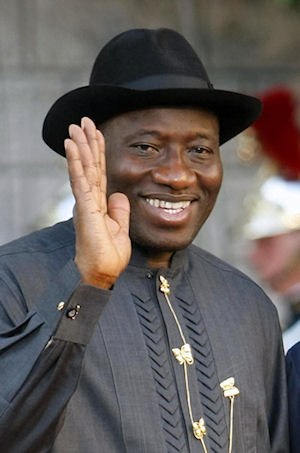
Now, away from Dogara to the party at large. Months ago, APC Governor’s Forum paid an unexpected visit to the former President, Dr Goodluck Ebele Jonathan. Of course, we did not know what was discussed during the visit. Still, looking at how the party is desperate to retain the president’s seat, it’ll be hard to disconnect it from what the Hausa people termed as “gaisuwa da ro’kon iri”. So they visited him, likely to ask for his blessing, sympathy and support to use his influence in the South-South to canvass support for their party flag bearer during elections. Or maybe, to lure him into accepting to contest for the presidency on the party ticket. 

If we take the party entirely and put it on a scale, we can see that the party is in a dilemma of who to be entrusted with the party ticket to retain the presidential seat. But looking at how the party zoned the national party executives, now it is clear that the flag of the party would come from the South.

Among the top Southern candidates that expressed interest in the presidency are Vice President Yemi Osibanjo and the party leader, Bola Tinubu. One of these two have every chance to win the party primaries. But, who among them can be an easy sale to all the regions of the country? Would the old rivalry between Igbos and Yorubas resurrect and allow Igbos to support anyone of them? Only time would tell.

But in the North, despite the significant drop in trust and popularity of President Muhammadu Buhari, there still exist those supporters that will go for whoever PMB anointed to succeed him at the polls. But many will be in a dilemma of choosing between one of their own, an outsider or may even decide not to vote.

After the country’s return to Democratic rule, PMB was among those with a desperate ambition to rule the country again. He contested three times but lost at general elections. Fortunately for him, he won at his fourth outing. Unfortunately, during his failed bids, his body language was that he only relied on the votes of his fellow Northerners.

By 2010, Buhari realised that that illusion wouldn’t give him the presidency. So, he aligned/merges his one-man party, CPC, with an umbrella forum of some rebellious and highly influential mainstream politicians from the ruling party, nPDP, ANPP and the Southwest’s AC to form the APC. This conglomeration of parties (merger) is what solely got him the presidency.

With all honesty, looking back at the significant contribution of the Southwest politicians, this is the right time for him to pay back those that helped him actualise his presidential ambition with the party ticket on a platter of gold, especially to a Southwestern candidate.

There’s not much tension within the PDP due to their discipline and expertise in handling intra-party conflict. However, the party must be careful with an emerging conflict from Wazirin Adamawa and governors’ overzealous ambitions. In addition, they must learn from their 2015 avoidable mistake that cost them the elections and government.

Sagir Ibrahim is a graduate of Economics from the Department of Economics, Bauchi State University Gadau. He can be reached via ibrahimsagir1227@gmail.com.