Politics

You can add some category description here.

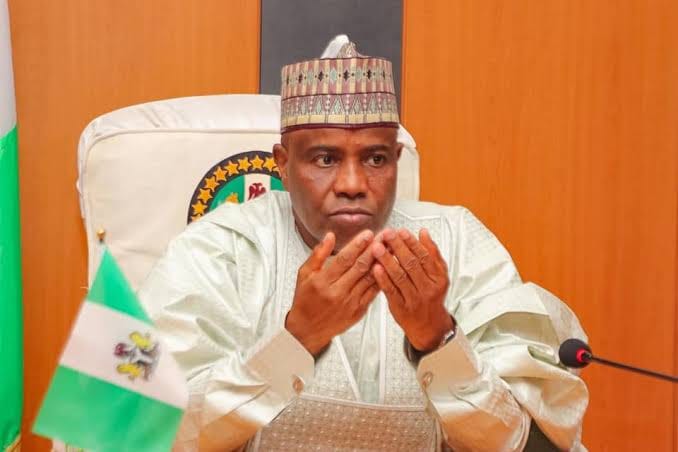
Shehu Sani picks Governorship form, clarifies that he, not any group, buys it

By Ahmad Deedat Zakari.

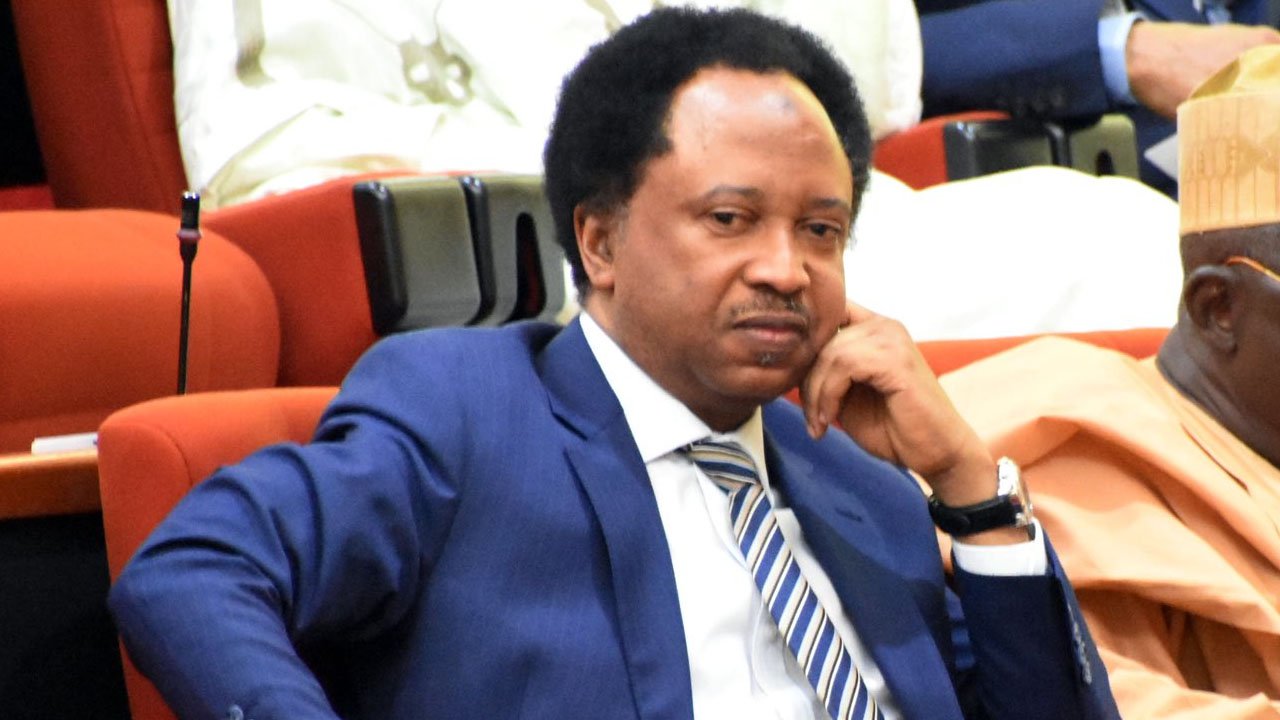
Shehu Sani picks the Governorship Form. However, he said he would not lie that a group paid for the nomination form.

Senator Shehu Sani, who represented Kaduna Central Senatorial district in the 8th Assembly from 2015 to 2019, disclosed this on his confirmed Facebook account on Wednesday, April 6, 2022.

“I picked my Governorship form. I suppose to lie that “a group” bought the form for me, but I can’t start with such lies. We need your support and prayers,” Sani posted

Mr Shehu Sani has long indicated an interest in contesting the 2023 Kaduna State gubernatorial election, and picking the nomination form did not come as a surprise to many.

Many people have commented on Shehu Sani’s post, wishing him well in the gubernatorial race.

“Victory all the way, Sir.” Stephanie Sewuese Shakaa, a Facebook user, commented.

Another Facebook user, Al-Ameen Jumare, said, “Best wishes, sir, our solidarity and support are priceless.”

Pantami and the bitter taste of politics (I)

By Aminu Nuru

Isa Ali Ibrahim Pantami’s odyssey into public service, and mainstream politics in Nigeria by extension, is so far filled with notable controversies that muddy the stream of his public image despite being received and welcomed with a reservoir of goodwill and optimistic anticipations by many Nigerians.

Although some people may argue that, before Pantami’s appointment to public office, there were members of the Federal Executive Council (FEC) equally knowledgeable in the matters of Islam and could be regarded as scholars in their own rights. Still, the fact is that both Mallam Aminu Kano and Senator Bello Maitama Yusuf made a name for themselves in politics and public service before Islamic scholarship and preaching. Or, to say it better, the duos are more widely known for their political engagements than anything else. Thus, they were seen as full-time politicians in the public eye. While Pantami, on the other hand, got his fame strictly from Islamic teachings and discourses.

Therefore, Pantami is a trailblazer who pioneered a cause in Nigerian polity – a revolution of Islamic clerics from Northern Nigeria joining national politics and public service. This position naturally accords him the status of a role model for subsequent clerics from the North that are willing to join public service in the future.

Though preaching and propagation of Islam would have played a role in Pantami’s rise to prominence and subsequent appointment into Nigerian public service, the controversial minister, to be fair, has demonstrated some degree of competency and seems to be averagely prepared, to say the least,  to the job he has been offered as the Director-General of NITDA  and later Minister of Communication and Digital Economy. In the same vein, he has also recorded some achievements so far. Unfortunately, however, a series of controversies are beginning to overshadow these achievements, which are at the same time complicating his polity. Still, some of these complications may not be disconnected from his past. On the contrary, they could be best appreciated if one revisits and analyses the context and content of his previous preaching vis-à-vis the atmospheric politics of the time.

Efforts to corroborate the exact date Pantami made his debut into the realm of Islamic preaching in his first preaching base – Bauchi – proved abortive. But what is certain was the unique style he adopted in delivering lectures, Tafseer sessions and Friday sermons, which promptly endeared him in the hearts of the local audience.

In the early 2000s, most Western-styled educated Muslims were looking for a fresh voice in Islamic preaching and seemed to be tired of the “oldies” and their archaic modus. They wanted something different and were eager to access the new approach that analyses and interprets contemporary issues from Islam’s perspectives. They were looking for an Islamic preacher to address and speak to them in the manner and tongues they would align and reason with. A preacher that could, for example, scrutinize the EU’s foreign policies and the US invasion of the Middle East and validate his points with the verses of the Holy Qur’an.

In Pantami, they saw the exponent of those ideals. This was due to his ability to demonstrate basic knowledge of global politics, international relations, and science and technology through the lenses of the Quran and Hadith. In addition, he commanded a very good English Language (a rare talent among Islamic clerics at the time). He exhibited a charming oratory skill sauced with puritanical diction – a personal endowment and enchantment that he consciously or subconsciously deployed to arrest, startle, and move his audience. The eloquence with which Pantami delivered his sessions was what stood him out among his contemporaries. Consequently, Pantami became the darling of Muslim populations in Bauchi and beyond for this and other intellectual traits. The Western-styled educated populations saw a 21st-century Islamic cleric of their dream in his shape.

As an influential preacher with access to grass-root populations, his pulpit echoed a dissenting voice against the government of the day. He was explicitly critical of PDP’s government at both the state and national levels and openly promoted the presidential ambition of General Muhammadu Buhari (GMB). It is on record that Pantami was not the only cleric to uphold the candidature of GMB via his pulpit; other clerics had also promoted him with equal conviction. However, Pantami’s open romanticism and penchant for the General were so extreme that when his old “friend” – Governor Isa Yuguda – fell out with Buhari’s ANPP and decamped to PDP, Pantami was not reluctant to denounce this move. Therefore, he launched out series of attacks and criticisms of the Yuguda administration in his Friday sermons (despite being a back-door “friend” of the Yuguda administration).

In an article titled “Nigerian Politicians and Hypocrisy”, Pantami wrote: “I do not know a profession anywhere in the world that is full of professionals who fulfil all the characteristics and signs of hypocrites aptly described by our infallible Prophet like Nigerian politicians in the corridors of power, particularly the companions of the largest, and probably the most dangerous party in Africa (PDP)” (Premium Times, 2012).

Nobody felt Pantami was not doing the right thing among the population. He was even celebrated and eulogized for his vilification of the PDP’s government and support for GMB. His effort was appreciated as a selfless service to the poor masses. He was practically dancing to the bits of the society. Naturally, this created a public image for Pantami – an image of an honest Islamic cleric who told the truth to power (PDP’s government?). 

Considering this background, it is not entirely out of sight if some groups work to step back on Pantami’s toes now that he has been appointed a Minister of the Federal Republic of Nigeria. They would not also relent to feed him the same bitter pills of politics through (de)constructive criticism, malice and deliberately cooked scandals. Therefore, it is not a surprise if, for example, some pundits dug into his past utterances to make the polity difficult for him now. Or it is not least expected if some of his critics alleged that he used the garment of Islamic preaching to reach where he is now – an allegation echoed loudly by his fellow preacher and former neighbour in Bauchi. This particular preacher believes that Pantami is not worthy of being considered an Islamic cleric simply because he did not attend any Islamic school.

This allegation could be dismissed as sheer envy, especially as it comes from a fellow Salafi cleric who does not hide his aspersion of the minister. Reputable Islamic scholars have, time without number attested to Pantami’s intellectual prowess and competence in Islamic scholarship. Besides, altogether, he has tackled those accusations cleverly by not quitting the teaching of Islam even after being appointed a Minister.

The accusation that may have firmly stood is how Pantami’s pulpit swiftly changed from being a pro-people voice to one with less interest in the matters of governance and the governed. There’s no more dissent voice against the government. Even the choice of his texts for his ta’alims at Annur Mosque were deliberately strategic in the sense that their content analysis and commentary of moral truth and calls for proper conduct may not be extended explicitly to subjects within the present government. From their titles, both Kindness to Parents and Kindness to Relatives and Loved Ones would surely give a soft landing for anybody willing to avoid activism in his preaching.

His defenders may argue that Pantami now has unlimited access to the government. Therefore, he can channel his grievances privately, but the atrocities for which he vilified the previous government have also been committed, doubled and tripled by the present administration. Morality demands that he does more than voice his anger privately, considering his earlier vituperation.

One would think he will not hesitate to relinquish anything that has to do with this administration to demonstrate his unreserved solidarity for the masses. But, unfortunately, Pantami – an erstwhile vibrant advocate of good governance – is not the man to surrender power for posterity. Therefore, while it may not be the wisest decision to leave the government to demonstrate his pro-masses stand, Pantami should do better in making patriotic moves decisions no matter whose ox is gored. He could do that while avoiding avoidable controversies and political tussles that may tarnish his image and the institution he represents.

Aminu Nuru wrote from Bauchi. He can be contacted via aminuahmednuru@gmail.com.

PDP and consensus presidential candidate

By Zayyad I. Muhammad

The 2023 presidential elections will present to the Peoples Democratic Party (PDP) a golden opportunity to wrestle power from the ruling All Progressive Congress (APC). However, the greatest challenge facing the PDP is how to utilize this opportunity seamlessly by presenting a candidate that can secure for the party sufficient votes throughout the country.  

Today, all indices indicate that the APC’s presidential candidate may come from the southwest. Since 2015, APC’s trump cards have been the north and the southwest. However, the north may be APC’s biggest dilemma in 2023- the party has to appease the north while striking a balance on Nigeria’s complexities- this is where the PDP can take advantage if it plays its own cards very well.

Former Senate President Bukola Saraki, Governor Aminu Tambuwal, and Governor Bala Mohammed, all presidential aspirants on the PDP platform, have kick-started a move for the PDP to present a consensus candidate for the 2023 presidential elections. Saraki said the reason they were pushing for a consensus candidate was to reduce the likely rancour in the process of choosing the party’s flag bearer. Apart from having a rancour-free process, a consensus candidate will give the PDP an opportunity to pull resources together for a common goal. Furthermore, the party will have ample time to campaign for the general elections, as it has eliminated the long and tedious campaign for the primaries.

The big question is, who is PDP’s ideal consensus candidate among all the aspirants? The person should be someone who is well-known, have a network and connection, and is sellable across the country.

As a matter of real politics, the PDP may consider a one bloc vote. That is the Buhari cult-like followers, who, as of now, have undecided votes. The PDP can win the vote of that bloc vote and combine it with its own traditional votes by presenting someone different from Buhari but acceptable to Buhari’s cult-like followers. In addition, a consensus candidate should be someone who knows the Nigerian political terrain –and is acceptable to the common people- someone who Nigerians see as capable of tackling the current problems in the country.

If the PDP agrees to go for a consensus candidate- the party should do this based on certain logic. Firstly, the PDP should analyze the North and Southwest- two parts of the country with the highest number of voters- to define which of them will give the party some cutting-edge advantage. The party should then present a candidate that can bring the votes from that region.

Secondly, as the APC is looking southwest, the PDP should analyze the entire south and do its arithmetic with an open heart on just how to win the election.

Thirdly, PDP’s ideal consensus candidate should be chosen relative to the APC’s likely presidential candidate. It should be someone from the PDP ranks who has the clout, the political structure, the war chest, and the human resources to face any candidate from the APC.

An open discussion among the PDP presidential aspirants can produce good results for the consensus candidate. Though some of the aspirants will fizzle out from the race if the party does not use a zoning formula because their aspirations are based on permutations that the ticket is zoned to a particular section of the country.

Consensus is good for an opposition political party with an opportunity to get power. But some observers are of the view that a primary election will eliminate any hassle for the good candidate- as he may be tied down with many demands from other aspirants and interests.

If the call for a PDP consensus presidential candidate by Bukola Saraki, Governor Tambuwal, and Governor Bala is without any ulterior motive, it will be a welcome and excellent idea for the PDP. Former Vice President Atiku Abubakar said, all the presidential aspirants don’t have issues with each other, once they sit down in a room, they will select the best candidate among themselves. Most political observers said Atiku made the statement because he is fully aware that, as of today, all the odds are in his favour – either consensus or primary election.

 Zayyad I. Muhammad writes Abuja via zaymohd@yahoo.com.

Is Gov Bala marginalising Bauchi North?

By Mallam Musbahu Magayaki

It’s no longer news that the uncontrollable fire outbreak on Monday, March 21, 2022, in Azare central motor park consumed millions of Naira properties, and others were left casualties.

However, if you can vividly remember, on Friday, April 02, 2021, Katagum Local Government Area’s firefighting truck had a tragedy on its way to an emergency salvage. The occupants of the zone have been lamenting, on top of their voices, over the provision of an out-of-order firefighting truck. Sadly, their tears have not yet been wiped out by the governor.

Since our firefighting truck had an accident that resulted in its damage, the executive Governor of Bauchi State, Senator Bala Mohammed Abdulkadir, has been playing possum with incessant fire outbreaks.

Since the firefighting system was damaged nearly a year ago, many lives, particularly those of children and women, have been lost due to uncontrolled violent fire outbreaks on properties worth millions of naira.

The people of Katagum LGA and the entire constituents of Bauchi North are completely taken aback by the enigmatic silence of the government. They voted for the governor, expecting him to keep his mind on serving them from the bottom of his heart, regardless of region, tribe, or ethnicity.

We expect our governor to be that good listener leader. But, Governor Bala’s mysterious silence and the way he turns a blind ear to the constant fire outbreaks consuming the lives of innocent people of our LGA signal as if he is not an empathetic leader.

In conclusion, we, the people of Katagum LGA and the entire constituents of Bauchi North, are begging Allah (SWT), weeping and pleading with Him to make our governor empathise with us and wipe off our tears by providing a new firefighting truck for us, amin.

Mallam Musbahu Magayaki wrote from Sabon Fegi, Azare, Bauchi State. He can be reached via musbahumuhammad258@gmail.com

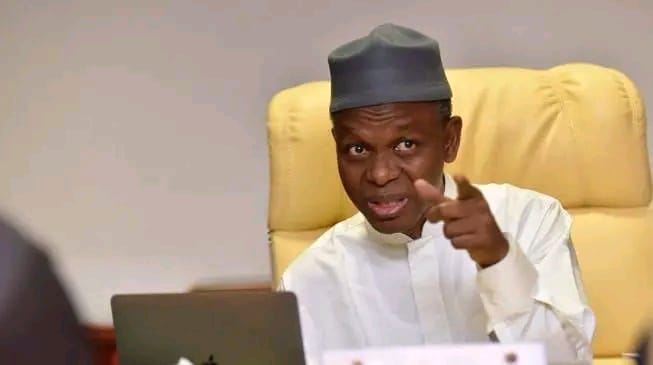
El-Rufa’i: A politician without political ambition?

By Safiyanu Ladan

While speaking on Channels TV program Politics Today, the governor of Kaduna state, Malam Nasiru Ahmad El-Rufa’i, said he’s currently not vying for any office come 2023. The governor, whose tenure is elapsing in the next fourteen months, insisted that he’s not interested in any political position.

“I have said it over and over, but I guess the trust in politicians is very low. Nobody believes me. I have said over and over that, I’m not a contestant for any office. I’m not an aspirant for anything,” he said.

“Rotimi Amaechi is interested in running for president. He has the right to do so, but I’m not running for anything. I’m not going to be on his ticket.”

He gave an impression that he had never wanted to run for the office of the governor of Kaduna state in 2015, but President Buhari prevailed over him. Because he has so much respect for the President, he reluctantly accepted to run.

The essence of being in politics is to have political ambition, which includes aspiring for a higher political position. Political ambition dictates the activities of every politician and can go to any extent in fulfilling their aspirations.

Yet, Mr El-Rufa’i remains the only politician in the history of this country without any political ambition that came out on national TV endorsing the removal of the National Chairman of the APC caretaker committee. Therefore, one can’t help but ask what the governor’s motive is?

It’s high time for this politician to stop deceiving us. We already know that the ambition of every politician is fixed and well defined. It’s nothing other than being in a political position.

Safiyanu Ladan wrote from Kaduna. He can be reached via uncledoctor24@gmail.com.

Kwankwaso and his over-ambitious movement

By Sagir Ibrahim

Recently, we witnessed a new direction in our modern politics, whereby former Governor of Kano State, Engr. Rabi’u Musa Kwankwaso and other former political heavyweights formed a new movement with an ambition to upset the status quo ante of our politics.

No doubt, Kwankwaso is a political juggernaut with a track record of achievements within his state. I don’t think it will be an exaggeration to say, none among his peers can match him in terms of positive impact on the lives of the poor. From that, he successfully built a team of educated youth that penetrated the nook and crannies of Northern Nigeria. On a visit to any tertiary institution in the North-West, it is rare to register the absence of a lecturer who happened to be a benefactor of the Kwankwaso government or under his present Kwankwasiyya Foundation.

And on the other hand, looking at his peers, for instance, Sokoto, under Governor Aminu Waziri Tambuwal, is not yet free from the shackles of illiteracy despite being a former speaker a second-term governor. Moreover, Sokoto is ravaged by persistent banditry insecurity. So then, how can he save the nation from the current insecurity challenges if he can’t secure his state? But in terms of party acceptance and the 2019 PDP presidential primary election’s result, his political strength is more extensive than Kwankwaso’s.

Although, that will not be unconnected with his ability to forge a good relationship with his party leadership, unlike Kwankwaso, who is known to have mad love for dominating relationships and space without considering others. For instance, when he left PDP for APC in 2014, he dominated the APC in his state by anointing his preferred candidates on the party tickets leaving no room for those he met in the party. The same happened when he defected to PDP from APC. He cornered all the party structure and candidates to his faction without regard for others that were there before him. That forced people like Sen. Ibrahim Shekarau to leave the party.

Kwankwaso’s New Movement

Recently, Kwankwaso launched a new movement that aimed to bring a positive change to the country’s political atmosphere. Known political figures that attended the launching are ex-governors, ministers, political actors and some technocrats. But, there is a possibility that the movement would join an existing political party outside the two major parties to serve as a third force in the upcoming election. Assuming that it joins another party, is he the only person in the movement with a presidential ambition? How ready are his colleagues to assist him financially and politically? Are they influential enough to sway people to vote for him? These and many more questions are begging for an answer.

Currently, forming and marketing a new political party in Nigeria less than a year before the election is almost impossible unless it is a merger of existing political parties. But, unlike this new movement, the influence of its convener is the most potent force that can be marketed. And if he can be sold in his Kano quickly, could that be done in Northeast, which has VP Atiku Abubakar, Ahmed Mu’azu, and Gov. Bala Muhammad that are eyeing the same seat?

Even in the North-West, how well prepared is the movement to confront the likes of Tambuwal that outshined him during the 2019 primary election?

What about Southerners who believe this is their perfect time to clinch the seat? Therefore, Kwankwaso has a lot to face in this new direction.

If not for wishes being horses, he would’ve exercised enough patience to join either of the two bigger parties, especially the APC. Because if the likes of Prof. Yemi Osinbajo emerge as the party flag bearer, they will be left with no perfect match to serve as his running mate than him. But his desperation is for leadership is second to none.

But looking at the constitutional provision, one needs a political party to contest any political seat since there is no constitutional provision for independent candidacy. With this, we can understand the political calculation of Kwankwaso. Going by the obstacle(s) mentioned, there is no possibility of Kwankwaso being the flag bearer of any of the two major parties. At best, joining NNPP could serve as an avenue for him to test his relevance in the national political space since his new party has no candidate of his calibre. Therefore, there’s every possibility for him to clinch the party presidential ticket.

Can He Win?

This is something that only time could tell. But, indeed, if any of the political parties give their ticket to a Northerner, Kwankwaso will now turn into a major spoiler to the Northern votes and a distraction. Thus, this could pave the way for a Southern candidate to victory. And in the end, if God lend us long life to 2027, maybe then he’ll contest again and luckily emerge as a winner since most of the contestants are either in old age or have given up their ambition

Sagir Ibrahim is a graduate of Economics from the Department of Economics, Bauchi State University Gadau. He can be reached via ibrahimsagir1227@gmail.com.

The political calculations of 2023

By Muhammad Sagir Bauchi

As the political atmosphere in the country started to get momentum, top political actors are back on the strategy board to put down action and execution plans for successful campaigns and elections victory. Overnight, some controversial politicians are now running away from their once arrogant and nonchalant attitudes to a born-again one, thereby looking away from whatever may dent their newly ‘customised integrity’. As a result, the usual campaign promises of provision of security, creating job opportunities, fighting against corruption, etc., now appears unsaleable talking points to the electorates as they once were.

News of the inter-party crossover from some prominent politicians like former Speaker Hon. Yakubu Dogara (PDP-APC), Matawalle of Zamfara (PDP-APC), Kwankwaso (PDP-NNPP), etc., are making headlines.

Hon. Yakubu Dogara is one of the major political figures in Bauchi State politics. His role in ousting the previous governor of the state would never be neglected or underestimated. He played a vital role in his constituency and other spheres of the system.

When he decamped from PDP, the party that brought the present administration of Governor Bala Muhammad, several opinions were expressed in respect to that. To some, he joined the ruling party in anticipation of giving him the party leadership (i.e National Chairman of the party). While, to others, he was craving for the seat of Vice-President, in case the party ticket is won by a Southern Muslim. In present Nigeria, a Muslim-Muslim or Christian-Christian ticket at the presidential ticket is a non-starter, as it will polarise the country, create chaos and mistrust.

Of the two opinions surrounding the decamping of Dogara, none could totally be disregarded as they contain some elements of truth. For instance, If APC assigns Bola Ahmed Tinubu as its flag bearer, the party must pick a Northern Christian politician with popularity, high political experienced and wide acceptance among the regional religious, political and traditional leaders/institutions. The aim is to convince the electorates to go out and vote for the party on the election day. Dogara is one of those Northern Christians with broad appeal and political experience. But, can he win the confidence of his Northern block to vote for their ticket?

For that answer, we have to examine the current political doings and his image in his home state, Bauchi, to answer that question.

The present political situation in the state is a bit complicated. We all witnessed how his doings in his constituency influenced the emergence of the current governor of the state during the last gubernatorial elections. Still, events have overtaken the once-political comrades’ romance between him and the governor. His popularity has significantly dropped in 2/3 of the constituency he’s representing. And that could affect his future career in the state and beyond. Therefore, the Dogara factor alone cannot influence Northerners to vote for his party.

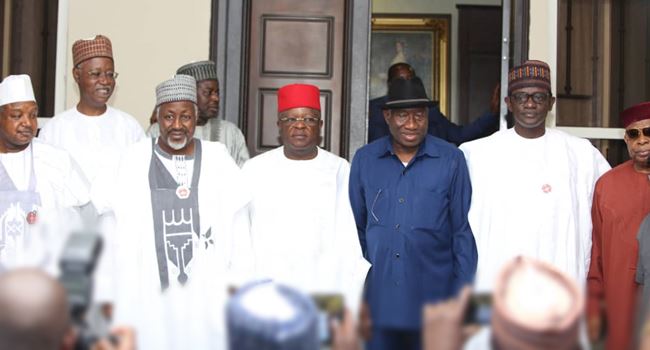
Now, away from Dogara to the party at large. Months ago, APC Governor’s Forum paid an unexpected visit to the former President, Dr Goodluck Ebele Jonathan. Of course, we did not know what was discussed during the visit. Still, looking at how the party is desperate to retain the president’s seat, it’ll be hard to disconnect it from what the Hausa people termed as “gaisuwa da ro’kon iri”. So they visited him, likely to ask for his blessing, sympathy and support to use his influence in the South-South to canvass support for their party flag bearer during elections. Or maybe, to lure him into accepting to contest for the presidency on the party ticket. 

If we take the party entirely and put it on a scale, we can see that the party is in a dilemma of who to be entrusted with the party ticket to retain the presidential seat. But looking at how the party zoned the national party executives, now it is clear that the flag of the party would come from the South.

Among the top Southern candidates that expressed interest in the presidency are Vice President Yemi Osibanjo and the party leader, Bola Tinubu. One of these two have every chance to win the party primaries. But, who among them can be an easy sale to all the regions of the country? Would the old rivalry between Igbos and Yorubas resurrect and allow Igbos to support anyone of them? Only time would tell.

But in the North, despite the significant drop in trust and popularity of President Muhammadu Buhari, there still exist those supporters that will go for whoever PMB anointed to succeed him at the polls. But many will be in a dilemma of choosing between one of their own, an outsider or may even decide not to vote.

After the country’s return to Democratic rule, PMB was among those with a desperate ambition to rule the country again. He contested three times but lost at general elections. Fortunately for him, he won at his fourth outing. Unfortunately, during his failed bids, his body language was that he only relied on the votes of his fellow Northerners.

By 2010, Buhari realised that that illusion wouldn’t give him the presidency. So, he aligned/merges his one-man party, CPC, with an umbrella forum of some rebellious and highly influential mainstream politicians from the ruling party, nPDP, ANPP and the Southwest’s AC to form the APC. This conglomeration of parties (merger) is what solely got him the presidency.

With all honesty, looking back at the significant contribution of the Southwest politicians, this is the right time for him to pay back those that helped him actualise his presidential ambition with the party ticket on a platter of gold, especially to a Southwestern candidate.

There’s not much tension within the PDP due to their discipline and expertise in handling intra-party conflict. However, the party must be careful with an emerging conflict from Wazirin Adamawa and governors’ overzealous ambitions. In addition, they must learn from their 2015 avoidable mistake that cost them the elections and government.

Sagir Ibrahim is a graduate of Economics from the Department of Economics, Bauchi State University Gadau. He can be reached via ibrahimsagir1227@gmail.com.

Would APC live long?

By Aliyu Nuhu

If APC said it wants to rule forever, it is not an offence but it is forgetting God, the ONE that stopped PDP from ruling for sixty years. Barely 16 years in power, PDP was thinking of even changing its name because of the level of hatred it attracted from Nigerians. Well, APC is making the same mistake. It is now a hated party already, except only for those in power and those that benefit from its bad leadership.

If you want to rule for 36 years you must first rule well. ANC has ruled South Africa for 25 years but was only lucky because South Africa has no serious opposition party, with the country sharply divided along racial line. In America none of the two parties, Democratic party and Republican party had ruled for more than 12 unbroken years. But there are exceptions. For example, Mexico’s Institutional Revolutionary Party (PRI), Mongolia’s Mongolian People’s Party (MPRP), Taiwan’s Kuomintang party have all enjoyed long tenures in power despite competing in multi-party systems.

The parties that ruled for so long were mostly in a one party system like in China, Vietnam and Cuba. These parties didn’t run down and steal from their countries. China and Vietnam are well governed. Cuba should be doing well if not for the diplomatic isolation and economic strangulation of its economy by the United States.

APC has some work to do if it wants to live long. There are a lot of jobs to do on internal security. That is the first deadly sin of APC. If it can work on that, well, Nigerians are not only forgiven, they are forgetful.

The second deadly sin is the economy. People are worse off than they were under PDP. No jobs, no food with high inflation and soaring fuel and electricity prices. The value of naira is falling daily with resultant effect of galloping inflation. In the last days of PDP Naira was exchanging dollar at 199. Today under APC Naira is officially 412 to a dollar.

The third deadly sin is unchecked corruption in all tiers and arms of government. Not up to PDP stealing but slow and steady APC is almost there.

After correcting the mentioned flaws, APC must know that it was a North and South-west Alliance that brought it to power, not Buhari and his campaign rhetorics and promises. Well that alliance is falling apart and breaking to pieces. To hold on to power, APC must mend fences.

But to its credit, even if it loses power after eight years, APC will leave something that it would definitely be remembered for. It would have built second Niger bridge, it would have built Abuja-Kaduna-Kano express, it would have built Kano-Kaduna rail, Lagos-ibadan express, it built an already running Lagos-Ibadan rail. The truth is most of the projects APC is handling are not suffering the fate of PDP projects where all the money were stolen. That is a big plus for APC. At state level many APC states are also delivering on infrastructure. PDP also did some projects at some state levels but left without completing many projects at federal level. Even the Kaduna-Abuja train was completed by APC. The same fate befell Itakpe-Warri rail which is supposed to be extended to Abuja.

It is well.

Aliyu Nuhu is a social analyst. He write from Abuja, Nigeria.

Why Dattijo should succeed el-Rufai

By Abu Hibbah Ibrahim

Typical of a penultimate election year, pictures and billboards of aspiring politicians have littered major and minor roads in Kaduna State. People who share in the leadership ideologies or principles of the Governor of Kaduna State, Nasir Ahmad El-Rufai, have all started indicating interest to succeed him. Also, people who are at variance with all he stands for have likewise thrown their hats in the ring.

In his quiet moments and as he drives out of Sir Kashim Ibrahim House through the state metropolis, billboards of different politicians erected in strategic locations staring at him, only God knows what runs in El-Rufai’s mind regarding his successor in 2023. It seems William Shakespeare had El-Rufai in mind when he captured in Macbeth that: “There’s no art to find the mind’s construction in the face.”

As El-Rufa’is second tenure nears its end, and after exhibiting a tremendous performance, the next most audacious and bold decision left for him is to anoint a successor, rally his supporters around him and subsequently aid him in attaining victory at the polls. Verily, this singular act will make or mar the sustainability of his hard-earned and stellar achievements. More reasons why el-Rufai should be meticulous.

To understand the importance of having a credible and competent successor, let’s cast back our minds to the second tenure of former president Olusegun Obasanjo. After failing to extend his tenure, the infamous third term, Obasanjo, imposed a sick president on the country. Unfortunately, this singular act almost erased the decent achievements he recorded in his second term.

Interestingly, during his interview with Seun of the Channels Tv last Wednesday, Governor el-Rufai made sketchy explanations on who will likely succeed him. He highlighted that he would want someone from his team with whom they have developed and implemented policies to take on the baton of leadership from him.

Being a youth myself, I have a bias for Muhammad Sani Abdullahi, popularly known as Dattijo, considering his age. Of course, age in itself isn’t a recipe for good governance or positive results, but young age coupled with competence, experience, the ability to form a capacitated team and then lead them to drive reforms and produce results would do magic. And Dattijo exudes these sterling qualities in addition to the advantage conferred on him by age.

Plus, he has exhibited these qualities and delivered outstanding results as the Commissioner of Planning and Budget Commission of Kaduna state and Chief of Staff to the Governor. Under the governor’s tutelage and with his experience as a commissioner, he has been armed with the ability to allocate resources amidst competing demands or interests for the betterment of the state. In addition, he chaired the Infrastructure Council, one of the policy councils initiated by el-Rufai to fast track soft and hard infrastructural developments.

Dattijo is a development practitioner trained in the University of Manchester and a graduate of Economics from the prestigious Ahmadu Bello University. With dwindling federal allocations, effects of COVID-19, the possibility of subsidy removal on petrol, and security challenges, economic difficulties will be harder for the state governments. However, I believe his deep knowledge of economics will help him navigate the state through tough financial times. Consequently, he has the mettle to sustain the growth in revenue mobilisation that has characterised el-Rufai’s tenure.

El-Rufai has done remarkably well in revenue mobilisation. This terrific effort has pushed Kaduna above the commercial nerve of Northern Nigeria, Kano State, in terms of internally generated revenue (IGR). Moreover, he has consistently invested in education and health as these two sectors gallop the highest percentage of the state’s budget. And as one Indian writer posited, “nobody bothers about education because results take a long time to come.” But el-Rufai cares. This fantastic idea of investing in critical sectors, especially education and health, needs to be continued.

Temperament and intellect. Ever since Dattijo’s body language signifies an intent to be the governor of Kaduna State, he has been under scrutiny and verbal attacks by some political opponents or sycophants. This is expected in electioneering, though. However, he has demonstrated thoughtful calmness and grace under pressure. He is even-tempered and not given to volatile gestures. These virtues are pertinent in a governor who would want to continue leading the Kaduna state towards greatness by reducing or eliminating ethnic tensions and building bridges.

On a final note, the saying that power corrupts people is a tag sincere seekers of the truth, or any discerning person cannot place on Dattijo’s neck. In all the leadership positions he has been appointed into by his boss, el-Rufai, he has served the people of Kaduna with humility, loyalty and hard work.

I believe Dattijo has the moral compass to build on el-Rufai’s legacies. He is blessed with intellectual rigour and has the courage to make sound, careful and bold decisions that hold generational transformation. Dattijo has officially declared his intention to succeed his boss. Therefore, I beseech Governor el-Rufai to rally other APC aspirants to support him. He is prepared and ready.

Abu Hibbah Ibrahim writes from Kaduna and can be reached via hibbahabubakar1505@gmail.com

A word of courage for Senator Oloriegbe and the 9th Senate

By Ibraheem Abdullateef

Praises may not come often. But the impact will always be felt – wherever it is being made. 

On the heels of the above, I write to the leadership of the Nigerian senate to commend them for conducting investigations into the N400 billion National Primary Health Centre projects awarded during the tenure of President Olusegun Obasanjo 2006 but were abandoned for strange reasons by the contractors. 

The administration initiated the National Primary Health Centre to deepen access to quality and affordable healthcare facilities for the less privileged at the local levels. It was originally conceived to build in each of the 774 LGAs in Nigeria a sixty (60) bed-capacity primary health centres; complemented with a three-bed flat; doctors quarters, ambulance, drugs; and other basic hospital equipment. 

To prosecute the projects, the federal government deducted monies from the excess crude account of all the 774 LGAs every month until the budgeted funds required for the project was realised. Despite that, little or no notable jobs have been done 15 years after. The majority of the projects have not been started, while many are simply abandoned to waste across the country. I wail at this culture of abandonment, sleaze, corruption, and wickedness to humankind. 

The consequences of this suspected case of breach of contract, diversion, and misappropriation of public funds are far-reaching on national health. According to the World Health Organisation (WHO), cited by the Journal of Global Health Report, the Maternal Mortality Ratio in Nigeria is 814 per 100,000 live births in 2020. It accounted for about 20 % of the global maternal deaths. The malaria figures are as grim, if not worse. The World Malaria report 2021 revealed over 50 million cases and 207,000 deaths annually. It means that the giant of Africa accounts for at least 27% of malaria deaths worldwide. 

Findings from global health reports linked the high mortality rates and malaria cases to delay in seeking maternal healthcare, delay in locating medical facilities, and low-quality healthcare services for the patients. It is safe to conclude that the full implementation and execution of the National Primary Health Centre project would have improved accessibility, availability, and affordability of quality care services in all the 774 LGAs in the country. As they were not handled well, it might have cost the nation over 7 million lives, mainly women, infants, and young adults. 

It is good this has not been made to pass yet. Upon the motion by Senator Yahaya Oloriegbe of Kwara central and the adoption of the resolution of an investigation by the senate a fortnight ago, some of the unscrupulous contractors have started works on the abandoned projects. In Ilorin South Local Government Area, one of the LGAs making up Kwara Central, work has resumed at the site, and some of the equipment are being returned. But will that be enough to compensate for the delay in the last 15 years? Who are these people? What would be the price of justice? 

I urge the media, the civil society groups, and the security agencies to aid the outstanding Senator Oloriegbe and the 9th senate’s bid for justice and probity. 

Kwara Central Senator Yahaya Oloriegbe’s alarm shows uncommon bravery, patriotism, and excellent knowledge of the industry as chairman of the Senate Committee on Health. This should propel investigations into the case deep and thorough. The conclusion of this issue is weighty. One, it would stimulate healthcare services across the country. Two, it may grant due punishment or sanctions to wrongdoers, setting a template for future conduct. The third point is that it may lead to a review, introduction or implementation of stricter laws and processes, including the roles of the ministries and agencies, in bidding and drawing funds for projects. 

Looking at the history of Nigerian politics, I am aware that this is hard to pull off. But it is not impossible. Leaders are elected to make hard, cracking decisions in the interest of the people and nation. The nation, especially the Nigerian youths, is happy with this step and are proud of the 9th senate. We urge them to go all out for justice in the larger interest of the nation. Here is our word of courage. 

Ibraheem Abdullateef is the Kwara Central Representative in the Nigerian Youth Parliament 5th Assembly. He tweets via @_ibraheemlateef