Politics

You can add some category description here.

More clarifications ahead of 2023

By Amir Abdulazeez

When President Obasanjo carelessly picked Goodluck Jonathan to serve as Umaru ‘Yaradua’s potential Vice President in 2007, little did we know that the politics of choosing running mates would later become complex and problematic. The death of Umaru, the ascension of Jonathan, the surprising emergence of Namadi Sambo and Patrick Yakowa becoming the first Christian Civilian Governor of Kaduna State would all combine to later add more relevance to the politics of running mate selection. In 2014, APC had more headaches picking a presidential running mate than the presidential candidate himself. It took them so much time and effort that one thought they would organize a new convention for that purpose.

Today, the Muslim-Muslim ticket debacle is the bane of Nigerian political discourse. While clamouring for fairness and balance, which are needed for a fragile system like Nigeria’s, we should also remember that from 1999 to date, no religion can claim any net gain from this Nigerian version of democracy. Ordinary followers of all faiths have been victims of bad governance, even pagans. We have suffered so much that if a pagan/pagan ticket will eradicate insecurity, fix the economy and bring development while being fair to all interests and affiliations, we should allow it. Therefore, the choice is between searching for solutions and satisfying sentiments; we seem to favour the latter.

A section of public commentators and spectators are already suggesting a walkover for Atiku Abubakar in the 2023 polls. That is the biggest complacency I have ever seen in contemporary Nigerian politics. How can you be facing a ruling party with almost 65% of political stakeholdership in the country and be expecting to have a walkover? Atiku is an institution, but his successes in the last two PDP primaries are more financial supremacy than political dominance. That aside, barring a Buhari-like scenario, Atiku will make a good president. He is perhaps the only fully independent candidate with a clear and accessible blueprint since 2007. In 2011, he had a better manifesto and approach than President Goodluck Jonathan; he only lost the PDP primaries to the power of incumbency. By the way, what happened to the Jonathan 2023 candidacy?

From 1992, this is Atiku’s 7th attempt at the Presidency, with 2019 being his closest to success. Many believe 2023 is his year, and so many apparent factors call for optimism in his camp. However, two fundamental things may haunt Waziri; (in)consistency and (un)popularity. Buhari and Tinubu are successfully reaping the harvests of consistency and perseverance; they stuck to opposition politics all their lives. Atiku should’ve remained in opposition when he decamped to Action Congress in 2007 or should’ve stayed in the ruling PDP when he decamped back in 2011. Ambition had kept him running from one place to another, making him neither establishment nor anti-establishment. The second question is whether there is a single state in Nigeria in which Atiku can secure one million votes or more in 2023? I hope we all remember Dr Rabi’u Kwankwaso’s 3-K States theory?

Tinubu’s boast in Ogun State over his role in the emergence of Buhari as President needs some revisiting and clarification. To avoid doubt, Muhammadu Buhari did not lose the 2003 presidential elections; it was brutally rigged to return Obasanjo for a second term. 2003 will easily enter the list of the worst elections in modern world history. In 2007, the results of the presidential election were simply written, so we can’t even call that election not to talk of who won or lost. I have never relied on 2003 and 2007 election figures for research or serious analysis because they are primarily fabricated. The 2011 elections were relatively fair, but at least 40% of the vote was rigged, written, or inflated, especially in the South-South and South-East.

In the circumstances like these, we cannot comfortably declare Buhari a loser of all the previous elections he contested and only became a winner when he met Tinubu. Although 2015 was indeed the weakest version of political Buhari, it was confirmed that he had lost hope and that the APC merger spearheaded by Tinubu was what brought him back to life. But it is also true that so many other factors other than Tinubu contributed crucially to Buhari’s victory. One major one was the abysmal performance of Goodluck Jonathan. One, however, is that, without Tinubu’s support, it would’ve been near impossible for Buhari to emerge APC flagbearer against the financial powerhouses in Kwankwaso and Atiku.

This brings us to the argument that access to public funds is why some candidates (not aspirants) are stronger than others. Supporters of a particular presidential candidate even claimed that if their man had equal access to public funds, he would be better than certain candidates. This is laughable; a debate like this will take us nowhere. Just campaign for your candidate and persuade people to vote for him. If we are talking about the abuse of people’s trust and the utilization of our commonwealth for personal political development, none of the prominent politicians in Nigeria will come out clean. So, let us not deceive ourselves and others.

Where are our smaller political parties who had spent most of their last four years fighting INEC over deregistration? This is a reasonable amount of time they would’ve spent coming together to form a strong bloc. In case we don’t know, 74 of them were deregistered for failing to meet the requirements to continue to exist as political parties. About 10 to 15 of the currently existing will be due for deregistration by this time next year. Instead of them to consider merging to form a decent alternative, they’ll rather hang on only to be fighting a legal survival battle with INEC next year. As the strongest and largest intellectual organization in West Africa, I don’t even know why ASUU is yet to form a political party or adopt any of the smaller parties to set up a path towards satisfying their own demands all by themselves instead of waiting and hoping for a hopeless Federal Government.

Why is nobody talking about the enormous task ahead of the next president, whom credible international reports suggest will have to use 100% of his revenue in servicing (not repaying) debts by 2024? To execute projects or even pay salaries, the next government may have to borrow further. Nigeria is in trouble. We are drowning in the ocean of foreign debts. Meanwhile, we are concerned over a presidential candidate’s religion more than his ability to bring us out of this mess. Buhari has failed because Jonathan had built a solid foundation for that failure. Now he has built a worse foundation for his successor. The possibility and danger of the next president, irrespective of his affiliation and preparedness to economically be worse than Buhari, is imminent. May God help us.

All of the political dynamics of today are closely related to 1999, some a bit earlier. Suppose you have not directly experienced Nigerian political development from 1999 with a mix of some pre-1999 historical knowledge. In that case, you will find it difficult, if not impossible, to connect specific dots that you see today. Extensive and intensive reading may help, but politely interacting with veterans will do better. Unfortunately, social media, where most of the political debates occur, is dominated by youths who knew little or nothing pre-2011 and don’t invest significant time in reading but trying to engage or even confront the same veterans that would’ve been their best opportunity at understanding the genesis of the current situation.

There are some visible changes in Nigeria’s socio-political spaces, although not new but have taken a different twist from the previous. The renewed order is the attempt to criminalize certain political choices against others. Between 2014 to 2018, discourses were dominated by hate, campaigns of calumny, fabrications and outright abuse. Today, political promoters are trying hard to make it appear that only their candidates are good enough, and any other choice is treason. This is extremism. Let’s be careful, everything is a matter of opinion, and everyone is entitled to his.

Twitter: @AmirAbdulazeez

2023: Atiku names Okowa as running mate

By Sumayyah Auwal Usman

The Governor of Delta State, Ifeanyi Arthur Okowa, has been named as the vice presidential candidate of the Peoples Democratic Party for the 2023 presidential election.

Former Vice President Atiku Abubakar who emerged the presidential flag-bearer of the main opposition party made the announcement on Thursday at the party’s national secretariat.

Born 8th July, 1959, Okowa attended Edo College, Benin City (1970–1976), and later proceeded to the University of Ibadan where he studied Medicine and Surgery, graduating in 1981 with an MBBS degree. 

He served as a Commissioner in the Delta State government for Agriculture and Natural Resources (July 1999 – April 2001), Water Resources Development (April 2001 – May 2003) and Health (September 2003 – October 2006).

He resigned to contest in the 2007 Delta State PDP governorship primaries, but did not win the governorship primaries. In June 2007, Ifeanyi was appointed Secretary to the Delta state Government.

He was elected Delta North Senatorial candidate in the January 2011 PDP primaries and won the election. He clinched the ticket for the gubernatorial election in 2015, and won the Delta State Gubernatorial elections.

2023: Why Lalong won’t make a good Vice-President 

By Usama Abdullahi

I’m not actually driven by religious extremism, nor do I consider politicians based on their religious leanings. One’s religion or region shouldn’t determine their politics. When we look at politics through the prism of faith, we do ourselves no justice. I understand that the APC’s presidential nominee, Bola Ahmed Tinubu, is conflicted with the idea of picking a running mate. 

Because Nigeria is a multi-religious nation, people suggest that the slot of the Vice-President for the APC presidential candidate be given to a northern Christian. According to them, a Muslim-Muslim ticket is abominable in Nigerian politics. And some people are endorsing Plateau State’s Governor Simon Lalong for the VP slot.

People are unaware of something. It’s easy for people to say who should the APC pick as running mate to Tinubu. But do we deem our favourite candidates suitable for such a seat because of the blind love we have for them? Or should we only nominate a person because of his ethno-religious affiliation? These are critical questions which need not be left unanswered. However, we all know these aren’t the criteria for selecting a genuine leader. 

Leaders are best chosen by how competent they are. Competence goes beyond our myopic views. Another big blunder we should avoid is choosing a leader because of his background. Now back to the equation. Is Lalong suitable for the vice-presidential seat? Well, I don’t think so. 

One thing people ought to acknowledge before they consider Lalong fit is his performance so far in the state he runs. What has he done remarkably to attract public attention? His performances are all that must be examined before we leap to a conclusion. Honestly, Simon Lalong hasn’t done that much that will earn him such a high position.

I’m not trying to de-market him, but for fairness’ sake, Lalong isn’t the right man for the job. A person whose tribal bigots administer the Local Government Council (LGC) doesn’t merit the title of a Governor, let alone aim for a much higher position. If you aren’t from his tribe, you lose the chance of winning an election for credible offices in his LGC.

I come from the same LGC as him, yet I can’t risk getting a mere indigene form. This is so because I’m not from his tribe. So to even have myself appointed by the local authorities, I must renounce my pedigree.

He knows all this. As an incumbent governor entrusted with the care of  people of diverse beliefs and ethnicities, he should have done something different. But, worst still, he chooses to go mum over such unfair treatment. He never talks about it. His silence isn’t golden. It either suggests his approval or his lackadaisical attitude towards that. 

However, before his ascent to power, he had sworn to install a village head in Yelwa during his campaign. Yelwa is a very popular village that contributed massively to his votes which saw his ascension from a dethroned speaker to a governor. The town is thrice the size of his hamlet and is within a shouting distance from his. Unfortunately, his first tenure ended without him making everything alright in that village. So my people decided to trust him again by voting for him for the second term, thinking he would redeem their precarious state. And now, we are just a few months away from the expiration of his tenure. Yet, he remains uncommunicative and insufficiently active.

Lalong has failed the people who helped his rise to power. So, how would you wish a ruling governor who silently fuels tribal prejudices among his people to be singled out as a running mate for the party with high chances of winning?

I won’t be worried about any other person that will be cherry-picked as a running mate to Tinubu as long as he is capable and has good track records. It isn’t that I seem purely envious of Lalong. On the contrary, I fear having a VP who has been speechless for the past seven years over the growing ethno-religious bigotry in the state he governs.

Usama Abdullahi can be reached via usamagayyi@gmail.com.

Letter to Bauchi State electorate

By Tajuddeen Ahmad Tijjani

All political parties’ primary elections have come and gone, leaving a slew of gladiators in the political arena plotting to sway the electorate into their camp to win the general elections.

From the return of democracy after a long military rule, Bauchi State had Adamu Mu’azu from 1999 to 2007. There was massive infrastructure in every nook and cranny of the state with little human development. However, many of these capital projects were concentrated in Bauchi, the state capital. When Isa Yuguda came on board from 2007 to 2015, he shifted to human development. Nevertheless, there was some infrastructure that would stand the test of time, like the Bauchi State University Gadau and the Abubakar Tafawa Balewa International Airport.

Indeed, there appears to be no better time when the good people of Bauchi State seek a governor who will serve them all than now. Certainly, there is a leadership vacuum regarding equal opportunities and the distribution of meagre resources. Not only that, I bet you, anything that leadership entails is comatose.

Nonetheless, there is still time for the current administration to make amends, and it is up to the people to decide their fate on who will take the mantle of leadership. As the election of 2023 approaches, who is the best candidate for the job?

What’s at stake is the ambiguity surrounding the payment of civil servants’ salaries. Unfortunately, no one on the state government payroll can be guaranteed that they will not be “deliberately omitted”. As a result, people have families under their control, and their only source of income is routinely squandered.

For instance, a credible report was that a particular ministry lodged their complaints to the state Accountant General. He bluntly told them it was beyond his power to make amends for the simple fact that the number one citizen is the architect of the lingering crisis. Shall we continue this way? It is left for the civil servants to seal their signatures if they are comfortable with the recent developments.

We’re not calling for people to vote based on primordial sentiments but rather to look for a competent hand who will never joke with workers and pensioners that have expended their energy on the development of Bauchi State. Yet, ironically, the end of their reward is to deny them their entitlements while the leadership is living flamboyantly with taxpayers’ money.

However, we will consider changing the narrative. The state is more significant than any individual to have a mindset of doing as he so wishes to the detriment of the larger society. Indeed, our people are waiting for the appropriate time to give him a dose of his own medicine.

Recall that Governor Muhammad Abdullahi Abubakar was unceremoniously voted out for the same offence that the current administration deliberately neglects or refuses to tackle.

There are insinuations that some power blocks or powerful forces are fighting the government of PDP in Bauchi. This fictitious or imaginary claim is far from the truth and can’t hold water. When a leader does the right thing, no one can stop or sabotage him. Therefore, I can boldly affirm that we are good at speaking the “language they understand”.

We hope that the good people of Bauchi will resolve to vote for a candidate who will treat all segments of the states as his constituency rather than focus on working for a single local government as if it were the only one that gave him votes. Even other sectors such as health and commerce are not receiving the attention they deserve. Thus, the internally generated revenue is not healthy, and our industries are left unattended. We need a governor who has the competence to address these issues head-on. The ball is in our court to take us out of the wounds or retrogress in the party of failure.

Tajuddeen Ahmad Tijjani writes from Galadima Mahmoud, Kasuwar Kaji, Azare, Bauchi state.

2023: The imperative of a Muslim-Muslim ticket for APC

By Prof. Abdussamad Umar Jibia

The All Progressive Congress (APC) is undoubtedly a party that brings together some of the most outstanding politicians in Nigeria. However, what makes the APC most attractive is the fact that it is in power. It seized this power from the People’s Democratic Party (PDP), a party that ruled Nigeria for 16 years and was also adjudged a failure by the majority of Nigerians. That is why many people do not see PDP as the solution despite all the shortcomings of the APC-led government and the economic and security challenges confronting Nigerians.

One manifestation of the interest Nigerians have in the APC is the occupation of social media discussions, radio and television programmes and interpersonal group discussions by the APC Presidential ticket. Last week, Asiwaju Bola Ahmad Tinubu, a devout Muslim from Lagos, won the APC Presidential primary election with a landslide to qualify as the party flag bearer in the 2023 presidential election. As is the tradition, Alhaji Tinubu, a southerner, is expected to pick a Northerner as his running mate.

But there is also another tradition. Christian flagbearers usually pick Muslim running mates, and Muslim flagbearers choose Christian running mates. The examples are many. In fact, since Nigeria’s return to party politics, that has been the case. First it was Obasanjo/Atiku, then Yaradua/Jonathan followed by Jonathan/Sambo and now Buhari/Osinbajo. But in all these examples, the Muslims are Northerners, and the Christians are southerners. There is no problem since it can be said with a reasonable degree of accuracy that Christians are the majority in the South and a negligible minority in the North.

Now, should Asiwaju pick a Northern Nigerian Christian as his running mate? I listened to many arguments. The Governor of Kaduna State, Mallam Nasiru El-Rufai, for example, said religion does not matter in the choice of a running mate. What matters, according to him, is competence. This argument is faulty because democracy is about the choice of the majority, a choice characteristically influenced by many factors, including ethnicity, religion, gratifications, etc., in our country. If it is just about merit, candidates would be selected based on their performance in a standard examination on governance organized by my colleagues in Political Sciences Department.

The position of the Christian Association of Nigeria (CAN) is the most uncouth and uncivilized. CAN thinks they have a monopoly for violence and always use threats instead of valid logic. Suppose their position was backed by sound logic. In that case, all they have to do is present their arguments to Nigerians including Christians and non-Christians like every other individual and group does. The rest shall be for Nigerians to judge. Again, in politics, threat is the language of someone who has no one to influence, and it is obvious that peace-loving Nigerian Christians have lost faith in CAN and are no longer controlled by its rantings.

The fact is, any step taken by a political party preparing for an election is carefully handled to attract majority votes from the electorates. This includes the choice of its flagbearer and their running mate, its manifesto, which, unfortunately, most Nigerian voters do not read, its campaign strategy, etc.

Now, who are the majority voters in Northern Nigeria and what is their relationship with the minority? What would happen to the chances of APC if this majority realizes that the party is succumbing to threats like that of CAN to select its running mate? Is it by force to vote for the ruling party after all? Can’t they look and vote for an alternative?

Religion was not captured in the 2006 census. Still, we can have a good idea of the Muslim: Christian ratio in the North by considering the ratio of elected politicians in the North. Of the 19 elected governors in the North, 16 are Muslims representing 84.2 %, while three are Christians representing 15.8 % in the North and 8 % nationwide. Of the 58 senators from the North, nine are Christians representing 15.5 % in the North and 9 % in the entire country. In the North Central geopolitical zones, there are more Muslims than Christians. Four of the North Central elected governors are Muslims, with the other two being Christians.

These figures mean Northern Christians are a tiny minority compared to their Northern Muslim compatriots. Their number is even smaller when the country is considered as a whole and much smaller if we remember that most Christians in the North would not vote for APC regardless of its flagbearer or his running mate. You may wish to look at the voting pattern of Benue, Taraba and Southern Kaduna.

Over the years, activities of groups like CAN have set the Northern Christian minority against the Muslim majority. It is so bad that in any Northern Nigerian community where Christians are the majority, the story is about hate and violence against Muslims. The examples are many.

For example, as I am writing this piece, there is no single Muslim left in Tafawa Balewa, the hometown of the first Nigerian prime minister. The few Muslims who have not been killed have migrated to Bauchi and other places. Incidentally, that is the constituency of Yakubu Dogara, one of the Northern Christians being mentioned in the selection of a running mate for the APC flagbearer. In the event Dogara becomes the running mate of Asiwaju, the question every Northern Nigerian Muslim would ask is, is it compulsory for me to vote for my killer?

Other examples of Christian communities known for their violence against Muslims are Plateau State and Southern Kaduna. Over the last several decades, whole Muslim communities have been attacked and nearly wiped out in these places. Yet, when commissions of enquiry are set up, the grievances of the Northern Christians have always been that emirs dominate them, their great grandparents were enslaved, they are not given opportunities, etc.

Muslims have made many overtures in states where they have the majority in order to take Christians along and make them feel at home. An example of this is Kaduna state. It has always been ensured that the Deputy Governor of Kaduna is a Christian even though a Muslim-Muslim ticket can win with a landslide, as demonstrated in 2019. In their efforts to give Christians maximum opportunity, Muslim politicians were once suppressed to allow a Christian to become the governor. Where in the whole of the Christian world has this ever happened?

Moreover, chiefdoms were created for them by the Ahmed Makarfi administration to address Christians’ complaints of being traditionally ruled by emirs. After all these overtures, the same people killed over 1000 Muslims on one day in Zonkwa. Those who are saying that appointing a Christian as the running mate of Asiwaju would bring Christians and Muslims closer are probably not aware of this.

Compare the case of Kaduna with that of Plateau. Plateau has a population of Muslims equivalent to the population of Christians in Kaduna State. Yet, a Muslim has never been a Deputy Governor, much less a Governor. Attacks on Muslim communities in Plateau and Southern Kaduna only ceased because of the Fulani herders who, unlike the Hausa, would always take revenge when attacked. When the intolerant Christians realized it was a war they could not win, they had to declare peace.

That does not mean Muslim travellers are not intercepted in Plateau and massacred. We are very much aware of the murder of General Idris Alkali by Lafendeg non-Muslims. Yet, somehow, all the suspects arrested have been released due to the influence of the Governor, Simon Bako Lalong. We saw how he was running up and down between the state house and the Defence Headquarters to ensure that the culprits were not punished. Today, not even a fly of Plateau state has been convicted due to the murder of General Idris, a high-profile Muslim Army General.

Those pushing for Lalong to become Asiwaju’s running mate are probably ignorant of this. Suppose Lalong, who is only a Governor can successfully follow up to ensure that murderers of Muslims are not punished. What would happen if, tomorrow, he sits as the Acting President with full control of the country’s security apparatus and a similar thing happens?

Now take Babachir Lawal and the more charismatic Boss Mustapha. Both are from Adamawa State and were appointed by President Muhammadu Buhari only because he is Buhari, the darling of Northerners. The only question I have here is whether they have the political strength to defeat Atiku in their state. Certainly no. Outside Adamawa, other rules apply.

This write-up is not meant to malign any politician. On the contrary, all the Christian politicians I have mentioned above have APC dear to their hearts and wouldn’t like to see it lose at the polls. That is also the intention here.

Northern Nigerian Christians have not adequately prepared themselves for elections at the National level due to unnecessary inferiority complex and hate towards their Muslim neighbours. Of course, there are outstanding ones among them as no rule exists without exception. However, the collective behaviour of a community is used to assess people anywhere.

For now, Northern Christians may wish to set their house in order and plan for the future. Elections are not won by threats but by careful planning and building bridges.

Professor Abdussamad Jibia can be contacted via aujibia@gmail.com.

Security agencies foiled what could have been a major attack in Kano, Abuja – Irabor

By Muhammad Aminu

The Chief of Defence Staff(CDS), General Lucky Irabor, has said that security agencies have foiled what could have been major attacks in Kano and Abuja last week.

Gen. Irabor also said citizens must trust and support the military and other security agencies for the war on insecurity to be more effective in the country.

The CDS disclosed this while speaking on a Channels Television special programme on Sunday for Democracy Day.

He regretted that violent incidents continued in Nigeria but argued that security agencies had averted several others.

“Security agencies had halted what could have been a major attack in Kano and Abuja,” he said.

“We recovered a large quantum of arms and ammunition and other materials which, of course, the criminals were intending to use in various parts of the country, including Abuja,” he added.

He said the security operatives across the country record many successes despite persistent criminal activities.

Gen. Irabor, therefore, called on Nigerians to trust and support the security operatives as all Nigerians are potential victims.

“I’m a victim as well as any Nigerian that is on the street. We are all victims together. There’s no one who is on the other side. We are in it together. We are on the frontlines. Trust is not something we need to beg for.

“I will seek and crave the indulgence of all Nigerians to say that there has to be trust. Trust must exist, and trust must be given in all respect so that together we will achieve the state of peace that we so desire,” he said.

However, he admitted that the desired state of security is yet to be achieved as many parts of the country are disturbed by violent crimes, including kidnapping and gunmen massacres.

It can be recalled that recently police in Kano intercepted a vehicle laden with Improvised Explosive Devices (IED) on its way to the state via Jigawa State.

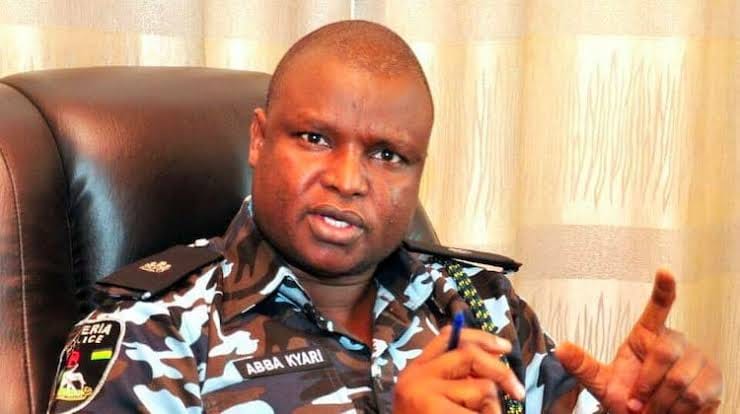
Similarly, the Department of State Security ( DSS) arrested a top commander of the Islamic State West African Province (ISWAP) identified as Malam Abba in Kano.

Kano and Jigawa States are the only relatively secure states in Northwestern Nigeria where bandit-terrorists continue killing and abducting innocent citizens.

Tinubu’s Muslim-Muslim Ticket: A stitch in time saves nine

By Adamu Hussaini.

Since Nigeria returned to democracy in 1999, I have followed the politics and its sentiment based on region and religion for about two decades. The organic way it has been going is that whenever a southerner/Christian emerges as the presidential candidate of a particular party, his running mate will automatically be a Muslim from the northern region and vice visa. This has been the practice starting from the days of President Olusegun Obasanjo, a southwestern Christian, to his successor, late Umaru Musa Yar’adua of blessed memory. Who came from a northwestern Muslim family to Dr Goodluck Jonathan, an Ijaw Christian from the south-south Niger Delta region, down to the current President, Muhammadu Buhari of the northern extraction.

 All their running mates are from other regions and religious divides. The only time in Nigerian Democratic history where a Muslim-Muslim ticket was formed was in late MKO Abiola’s June 12, 1993, with his running mate Babagana Kingibe.

If we can recall vividly, after the 2014 presidential primary of the All Progressives Congress (APC), President Muhamadu Buhari wanted to pick Asiwaju Bola Ahmed Tinubu as his running mate. But other powerful politicians, like the former senate president and a two-term Governor of Kwara State, Senator Bukola Saraki, stood their ground and vehemently opposed it because of the fear of having a Muslim-Muslim ticket. We left it for history to judge whether they did it based on fairness or selfish political interest.

Suddenly, the political equations are trying to deviate from the known established political norms, which characterized the Nigerian politics of regional and religious sentiments; after the emergence of Senator Asiwaju Bola Tinubu, a Muslim as the APC presidential candidate and the party’s flag bearer for the 2023 general election. Tinubu was a former Southwestern Lagos State governor. Since Tinubu is a Muslim from the south, Nigerians expect him to pick a northern Christian as his running mate this time. This will be seen as fairness, equity, “JUSTICE,” and the possibility of carrying all the religious beliefs.

But considering a Christian running mate has its political consequences. Because many may argue that northern politics is based on religious sentiments, you may find that there are only three states, Taraba, Benue and Plateau state, out of the 19 northern states that have Christians as both the Governor and their deputy. So, why not the party pick a Muslim from the north as Senator Tinubu’s running mate? Since the primary reason(s) for forming a political party is to win elections.

Many believed that the opposition People Democratic Party, PDP jettisoned its zoning arrangement to field the former vice president, Alhaji Atiku Abubakar as its presidential candidate to woo northern votes. Since the northwestern state of Kano has more votes than some five small states in the south, in this case, Tinubu’s running mate should be a Muslim from the northwest, where there are a lot of votes or the northeastern part of the country, where they have never produced a Nigerian president in the last 20 years for equity sake. In my little political observation. PDP gave Alhaji Atiku Abubakar the ticket because religious politics is more pronounced in Arewa than in the southern part of Nigeria.

Lastly, I think the earlier we start looking at who has competence, vision, enviable track record, and pedigree, among other virtues, the better for us as a people. And not electing or supporting candidates because of the region they came from, or their religious beliefs are better for the country. Nigeria is the most populous black nation in the world. So anything happening there may affect other black races living on the African continent. as the saying goes, “a stitch in time saves nine.”

Hussaini wrote from Gombe state, Nigeria and can be reached through hadamugombe@gmail.com.

Some clarifications ahead of 2023

By Amir Abdulazeez

The primary elections of the two leading political parties, APC and PDP, had come and gone. However, the dust raised by the exercises across various states of the federation is yet to settle. As things are going, it is unlikely that both parties’ primary election appeal committees will adequately or significantly settle the dust to the extent of amounting to a major change of the status quo. After all, everything was clear; the contests were majorly a measure of financial power.

As usual, our attempts to digest the intrigues and expectations of the upcoming grand 2023 event have once again resulted in endless debates that often lead to more confusion than clarifications. Certain political dynamics cannot be adequately explained by simple analysis or even complex ones. This is truer for cases like Nigeria, where deep insight is considered old-fashioned, authentic information is always scarce, and genuine narratives are always twisted.

Ahead of the just concluded APC Primaries, many accused Yemi Osinbajo of being a traitor and betrayer by contesting against his benefactor Tinubu. However, few people will understand that only one out of a million people will go so close to the presidency as Osinbajo did without succumbing to the temptation of taking a shot at it. The cabal theory notwithstanding, he is perhaps the Nigerian Vice President who was closest to the full privileges of the presidency in recent history. At a time, the Professor himself appeared like the next President in waiting. In sincere terms, Osinbajo may feel that running for the Presidency is more of an attempt to fulfil a destiny than betraying a godfather whose help he may not need any longer.

Maybe, many have forgotten that the Vice President had at a time been an Acting President with virtually full Presidential powers. He is aware of people’s confidence in his competence and knows that many factors are against Tinubu’s candidacy. With the Southwest as the default region where APC will likely have its next candidate, it is only natural he (the second default candidate) tries his luck in case Tinubu (the default candidate) does not get the nod. How can he cash in on a Tinubu collapse if he doesn’t contest? If he hadn’t competed, his promoters would never have forgiven him. Now that he had competed, he knows the extents and limits of his political strengths, which might have been hitherto exaggerated.

Some analysts have accused Tinubu of trying to become President at all costs despite being sick and unstable. We have forgotten that he had, since 1998, invested almost 25 years of his life (and health) trying to reach this point, and we all know he will need an ultimate reward at the end of it all. Now that the prize is within reach, only one out of a million people will back off over health challenges that are yet to prevent him from managing a public appearance. When he made all those sacrifices and concessions, many of us did not bother to understand the larger picture of where he was heading. If not for democracy, one will suggest that the APC ticket should’ve been handed over to him unopposed.

Therefore, Tinubu has fought for long. He has been in the opposition all his life. He has helped build a new political order in Nigeria. Without him, power will still likely be with the PDP and maybe forever. It’s not his making that his health appears to be failing him at this moment of near fulfilment, but as a human, he will continue believing his condition is good enough to manage him to the finish line. The late President Ƴaradua’s situation in 2010 should teach us some lessons, that of Buhari in 2017 too. Tinubu is undoubtedly not the best APC had on offer capacity-wise, but he is the most formidable. His political structure is out of this world. Win or lose, at least they have repaid a significant part of the debt they owe him.

In the build-up to the primaries, we all thought everyone was an enemy of the Southeast since the rest of Nigeria had refused to zone the presidency to the region exclusively. In his speech at the APC convention, Ogbonnaya Onu emotionally shouted for justice against the Igbo marginalization. If not for the APC and PDP Southeast delegates who proved the Igbos’ unpreparedness by refusing to vote for any of their kinsmen, everyone would simply be emotionally blackmailed. Besides, we have all seen how disorganized the Southeast aspirants were across both parties.

From 2003 to 2010, the Southeast was considered a formidable political bloc, but they wasted opportunity after opportunity to consolidate. Instead, they focused on ethnic and religious politics. Conceding the Presidency to the Southwest in 1999 was basically a military arrangement executed against democratic principles. The Southeast demanding the same in a maturing democracy is quite tricky. In this era, no one will gift you the Presidency; you have to earn it.

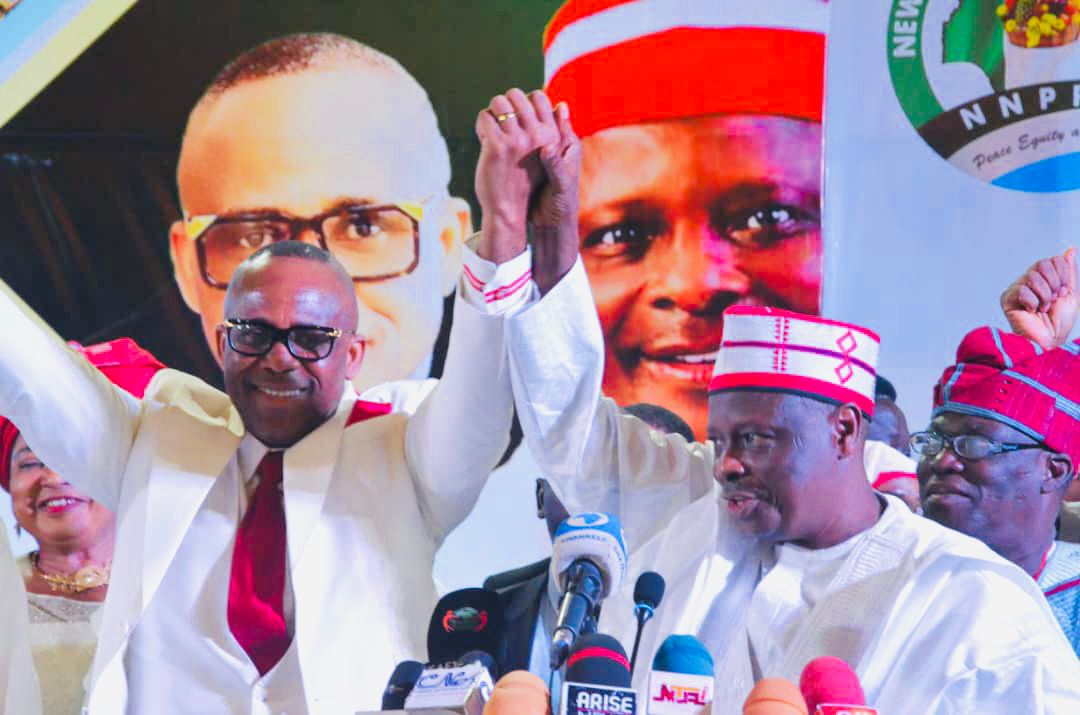
Another aspirant is NNPP’s Rabi’u Kwankwaso. His critics accuse him of being a local champion. However, his supporters insist on rating him higher than Atiku and Tinubu based on a tangible track record. However, the debate is not as simple as it seems. The same scale cannot be used to measure Tinubu, Kwankwaso and especially Atiku, as their political career paths are distinctively different. The truth is that Kwankwaso is a national figure who has invested too much energy in local politics, which was why he achieved what he has achieved. However, this has come with a price because he has dominated and taken away all the local relevance he could’ve easily allowed his subordinates to coordinate, a feat that would’ve given him a Tinubu-like aura. In the end, he ends up fighting for crumbs with local people, making him unavoidably local.

What of Peter Obi? He appears to have more packaging than substance, but he is yet another litmus test for the Southeast. They feel denied, marginalized and short-changed. Their response should be a massive vote for him. Even if he may not win, they will succeed in sending a strong message ahead of 2027. However, there is a wiser option. They can use Petr Obi as a bargaining tool with someone like Kwankwaso for example; form an alliance, challenge the red-cap man to deliver the Northwest zone while offering Southeast and see whether something will come out of it.

The bottom line is that we don’t need to be too upset or over-obsessed with anybody’s ambition, any region’s miscalculations or any party’s misdirection. There are so many choices in the political landscape that our myopia hinders us from utilizing. For example, if you genuinely want an Igbo president, the Labour Party has fielded Peter Obi. If you want somebody whose hands are not shaking, NNPP has fielded Kwankwaso, etc. So quietly do the needful and urge others to do the same. Give it a try. The strong parties and candidates are only front liners because you and I made them so.

Nigerian public discourse often makes complex political analysis look simple and simple political analysis look complex. And finally, we end up achieving no political analysis at all.

Twitter: @AmirAbdulazeez.

Thugs restrain EFCC officials from arresting Rivers PDP guber candidate

By Uzair Adam Imam 

Armed thugs have assaulted and restrained officials of the Economic and Financial Crimes Commission (EFCC) from arresting the governorship candidate of the Peoples Democratic Party (PDP) in Rivers State in the 2023 general elections, Siminialayi Fubara.

The incident that surprised many took place Tuesday at the Port Harcourt International Airport when Fubara, alongside other PDP chieftains, arrived at the airport from Abuja.

The Daily Reality gathered that Fubara jetted to Abuja to receive his certificate of return alongside some of the PDP chieftains. 

The thugs, who were believed to be his supporters, reportedly thwarted the EFCC officials from arresting him.

The EFCC Head of Media and Publicity, Wilson Uwujaren, confirmed that the operatives of the Port Harcourt Zonal Command of the EFCC were restrained from arresting Fubara.

Uwujaren condemned the development, describing it as a blatant attempt to obstruct justice.

He, however, warned that the commission’s civility should not be taken for granted. 

The Daily Reality recalls that the EFCC had declared Fubara wanted over alleged N117 billion fraud.

Tinibu Victory: Atiku, PDP govs in closed door meeting

By Uzair Adam Imam

The presidential candidate of the Peoples Democratic Party (PDP), Atiku Abubakar, is reportedly holding a closed door meeting with the governors of the party in Abuja.

This is however coming not long after the former Lagos state governor, Asiwaju Bola Ahmed Tinubu, was announced winner as presidential candidate in the ruling All Progressive Congress (APC) primaries took place last night.

It was gathered the isses to be discussed include strategies of the presidential campaign with the view to uproot the APC from power in the 2023 general election.

The Daily Reality learnt that some of the governors at the meeting were Samuel Ortom, Sokoto state Governor Aminu Tambuwal and his Oyo state counterpart Seyi Makinde.

Others were said to have been Bayelsa Governor, Douyi Diri, Bauchi Governor, Bala Muhammed, Rivers Nyesom Wike, and that of Benue.

All these are coming as preparations towards the 2023 general election, with all the candidates from different parties trying to emerge winners as the time is due.