Politics

You can add some category description here.

Advocacy, ethics and the trial of Abduljabbar Nasiru Kabara (I)

By Ibrahim Ahmad Kala, LL.M

The one-time Attorney General of the Federation and Minister for Justice in the Second Republic, Late Chief Richard Akinjede, SAN once asserted that oral Advocacy is a special science and art skill of good courtroom lawyers which is likened to the scene in Julius Caeser that took the form of funeral orations by Brutus and Antony over Ceaser’s corpse. Having just killed Ceaser, the conspirators wanted Brutus to assure the Romans that all was well and that Ceaser’s death was necessary to prevent tyranny. Antony, Ceaser’s close friend, feigned solidarity with the conspirators and persuaded them that he too should say a few words over Ceaser’s body.

In comparing Brutus and Antony as orators, we should remember two other classical orators: Cicero and Demosthenes. When Cicero finished an oration, the people would say: “How well he spoke”.  But when Demosthenes finished speaking, the people would say: “Let us March”. Brutus was like Cicero and Antony like Demosthenes. Brutus won respect, but Antony started a riot.

The funeral orations which exemplify an extraordinary example of how Shakespeare can bear on the law, underscore the effectiveness of oral Advocacy which a lawyer should read before addressing the court in a major trial.

Regrettably, like Antony, Bar Shehu Usman Dalhatu on 7/7/2022 in his appearance while defending Sheikh Abduljabbar Nasiru Kabara before a Sharia Court of Kano State, caused stirred on social media and openly accused the trial judge of being unlike Ceaser’s wife of not sitting above board in the case. As seen in a viral video, the counsel was heard castigating the court for allowing the prosecution to ask “all sorts of questions such as asking the defendant when his father died? Which he argued, is not contained in the charge,” during cross-examination,  and “denying his client right to make a no-case submission”, saying no prima facie case was established against him. According to the Daily Trust report, the mild drama led the defence counsel, Dalhatu Shehu-Usman to walk out on the judge.

The Kano State Government had charged Kabara with four counts, bordering on blasphemous comments against Prophet Muhammad (PBUH) on Aug.10, Oct. 25 and Dec 20, 2019.

With due respect to all, the entire scenario that played out in the court is, to say the least, highly nauseating and totally against the professional ethics required of players in the administration of justice in this country. In one of my previous articles on the relationship between the Bar and the Bench, I penned down as follows:

In R. vs. O’Connell (1844) p261 at 312-313 lifted from Oputa JSC’s book “OUR TEMPLE OF JUSTICE” p.14, Crampton J. said thus:

“This court in which we sit is a Temple of Justice, and the Advocate at the Bar as well as the Judge on the Bench are equally ministers in that Temple. The object of all, equally, would be the attainment of justice…”

Oputa JSC further distilled some guiding principles on the relationship between the Bench and the Bar as follows:

 “Lawyers and Judges being instruments of justice are honoured and honourable.

Such honourable men should not allow ‘the infirmity of human nature and the strength of human passion’ to lead them astray, let alone lead them to perpetuate an outright injustice.

The Legal profession is not just another avenue for quick money-making by hook or crook. To so conceive the profession, is to degrade it.”

Similarly, Richard Du Cann in his book: “The Art of the Advocate” speaking on the duty of the Advocate while quoting Lord MacMillan, a Lord Advocate-General in Scotland and a member of the Judicial Committee of the House of Lord’s declared the duty in fivefold as follows:

“In the discharge of his office, the Advocate has a duty to his client, a duty to his opponent, a duty to the court, a duty to himself, and a duty to the state. The duties, in fact, begin long before he rises to his feet resplendent in horsehair wig and stuff gown”.

Hence, it is not part of the duties of a Lawyer to win at all costs or at any cost. There is rather a heavy cost to winning at all costs and that cost is disdain and dishonour and the desecration of the sacred temple of justice. Judges and Lawyers have a prior and perpetual retainer on behalf of the truth.

All these, therefore, reflect very much the tradition of the legal profession on the relationship between the Bar and the Bench, and which is one of reciprocity. The smooth administration of justice envisages the existence of courageous, efficient, honest and fearless Bar and Bench.

The Bench is entitled to unqualified respect from the Bar and so expects it. The least Magistrate Court, Area, Sharia or Customary Court and the highest court of the land are equally entitled to this respect. Members of the Bar stand up when they address or are addressed by the Bench.

The counsel who easily picks up quarrels with the Bench acts in contravention of this important duty. The duty of respect which is as old as the profession itself is highlighted under Rule 1(a) of Rules of Professional Conduct as follows:

It is the duty of the Lawyer to maintain toward the Court, a respectful attitude, not for the sake of the temporary incumbent of the judicial office, but for the maintenance of its supreme importance. Judges not being wholly free to defend themselves against criticism and clamour. Whenever there is a proper ground for a serious complaint of a judicial officer, it is the duty of the Lawyer to submit his grievances to the proper authority. In such cases, but not otherwise, such charges should be encouraged and the person making them should be protected.

This aged-long tradition of respect has crystallized into a solid cornerstone in the edifice of the Bar-and-Bench relationship. You alone cannot change the position overnight. The tradition is so well established at the Bar that, even when counsel has nothing but rude remarks to make, by tradition he is expected to start by saying: “With respect”.

These ethics demanded the best of Man: obedience and decency, as it was demanded that Adam (A.S) should keep his own part of the bargain, and he did not; that was unethical and there came his fall.

The court is where counsel will spend the rest of his years at the Bar trying to persuade to his view. One cannot carry it along with him if, by lack of manners, one alienates its feelings beyond recall or consistently.

To be continued

Ibrahim Muhammad Kala Esq is the Head of Litigation Department, Court of Appeal Gombe division and can be reached via ibrokalaesq@gmail.com

APC urges Nigerians to pray for Buhari over rising insecurity

By Uzair Adam Imam 

The All Progressives Congress (APC) has urged Nigerians to pray for President Muhammadu Buhari as insecurity exacerbates in the country. 

Barr Felix Morka, the APC National Publicity Secretary, disclosed in a Sallah message to Muslims on Saturday. 

Morka said Nigerians should put the interest of the nation first, adding that Nigerians should pray for Buhari to end the security challenges bedevilling the country.

The party said, “We urge Nigerians to continue to support and pray for the government of President Muhammadu Buhari as it tackles our national security challenges just as we continue to reject insensitive and unpatriotic attempts by some partisans to politicise security breaches by enemies of our land.

“On this occasion of Eid-El-Kabir, we urge all Muslims to pray for sustained peace, security and prosperity of the country as the APC-led government continues to prioritise the wellbeing and safety of all Nigerians.

“On this occasion of Eid-El-Kabir, we urge all Nigerians to place national interest first in all dealings. We must not yield to retrogressive elements who seek to divide us through terror and hate.”

Between Atiku, Wike and the PDP

By Zayyad I. Muhammad

The 2023 presidential elections present the Peoples Democratic Party (PDP) with a golden opportunity to wrestle power from the ruling All Progressive Congress (APC). However, the PDP faces a daunting challenge in how to utilize this opportunity. To do this, the PDP needs to present a common interest from the party’s wide, and sometimes, varying interests so as to secure for the party, sufficient internal and external support during the elections.

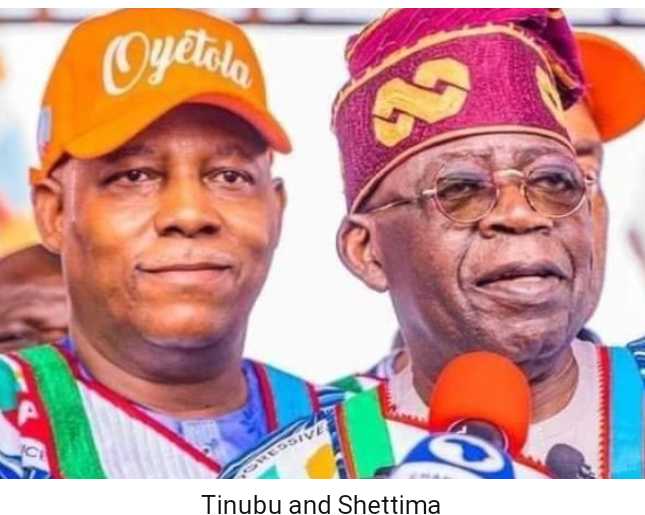
PDP got its calculations right. The All Progressives Congress (APC) picked its presidential candidate from the South, especially the Southwest – Asiwaju Ahmed Bola Tinubu, is APC’s presidential candidate.

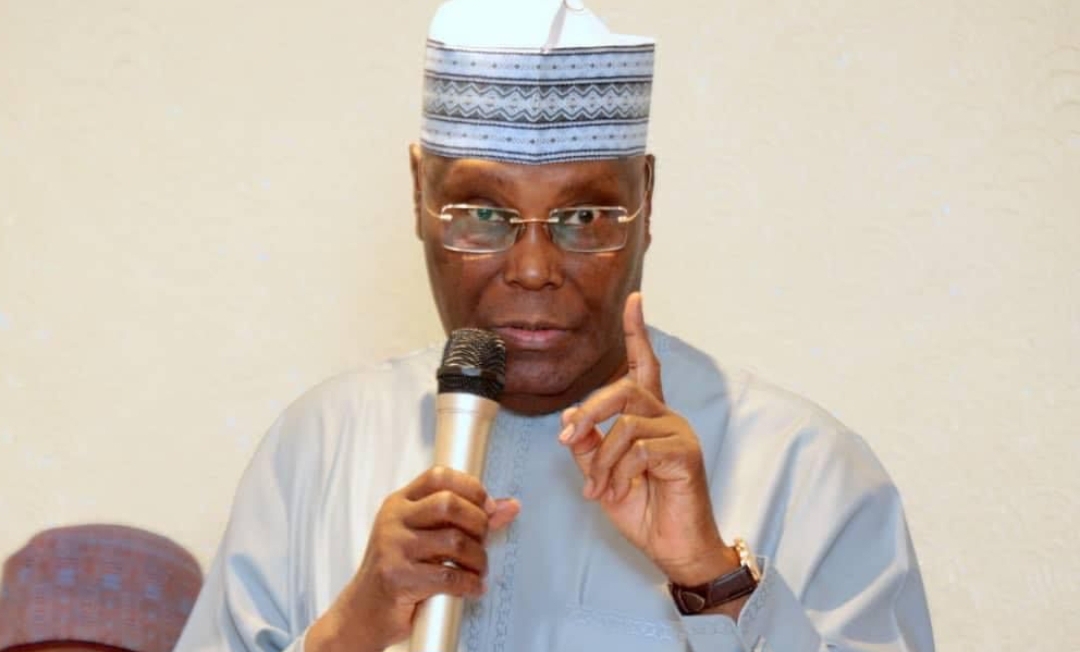
The emergence of Alhaji Atiku Abubakar as the presidential candidate for the main opposition party – (PDP) was a product of three things. The party has settled for someone who has the national outlook; the party wants to outwit the ruling All Progressive Congress ( APC) in one of the latter’s strongholds — the North, and lastly, the party needs a strong war-chest for the 2023 presidential elections.

Atiku’s emergence was smooth, despite the political intrigues that occurred before and during the presidential primaries. The selection of Ifeanyi Okowa as Atiku’s running mate had appeared also a smooth one. But two weeks after, it is causing dangerous stirs in the PDP camp that had appeared united, initially after the primaries. Former Governor Ayo Fayose scratched the ‘ old-wound’ of the call for a southern presidential candidate, Governor Samuel Ortom of Benue state is fuming, while  Governor  Nyesom Wike’s camp is causing more ‘commotion’ within the party by threatening the much-needed unity in the party. 

To be nominated or selected as a Vice Presidential candidate, the person must bring something to the table — votes, a daring war chest, well-established political structures, or influence in the political party.

Had Atiku picked Wike, the PDP would have appeared to opt for someone that will bring a massive war-chest and “home votes”. At the same time, the PDP would appear to have succumbed to pressure and tried to calm ‘a bull in a china shop’.

The APC, on the other hand, would have been happy, if Wike had emerged as the PDP vice presidential candidate. Firstly, it would have ‘balanced’ its controversial Muslim-Muslim ticket. Secondly, the APC would have used Wike’s candidacy to consolidate its votes in one of its strongholds — the North. In the 2019 presidential elections, the APC used Peter Obi’s Vice Presidential candidacy to de-market the PDP in the north. Peter Obi’s deportation of northerners was massively used against him. Like Peter Obi, Wike doesn’t have longtime friends, political associates or structures in the north, to defend him. However, to be fair to Wike, during the campaign for the PDP presidential primaries, he was able to tour the country, thus making some new networks and contacts. Furthermore, if Atiku had picked Wike, the former would have had to work extra hard in the north, because Wike will be a good recipe for APC’s strategy in the North. With Wike as VP, those people who are unhappy with APC or have not decided, may not want to thumbprint a ballot paper with a “Wike.”

The selection of Governor Ifeanyi Okowa as Atiku’s running mate is a product of PDP’s strategy to consolidate its footings in its strongholds — the Southeast and the South-South while not jeopardizing its attempt to strike the APC in the North. Okowa is controversy-free and the North will not have any issue with him.

Any person in Governor Nyesom Wike’s shoes will certainly feel hurt and demeaned — he has been a pillar in the PDP when the party was ‘deserted’ and he’s among the very bigwigs that have never left the PDP to another party. Furthermore, Mr. Wike polled 16 votes to defeat Mr. Okowa who scored three votes in a shadow election by a committee set up by the PDP to pick a running mate as reported by many media houses in the country. Moreover, whether one likes or dislikes Wike, for sure, he has something to offer the PDP.

That window created by Atiku for the PDP to setup a committee to select for him the Vice Presidential candidate, was an error on Atiku, so to say. The selection of a running mate is the absolute right of the flagbearer. Since Atiku already had someone in his mind, that committee was unnecessary. Though, it appears it was an honest attempt to bring everybody on board in making or taking a decision.

When it comes to elections, every political party has its own strategy. Had Atiku accepted the choice of the ‘VP Selection Committee’, it would have been the first time in the history of Nigerian politics, that a political party will solely determine the VP candidate for its presidential candidate. Though the PDP said, it was Atiku that requested the party to recommend to him, a VP. Atiku has the final say!

Atiku Abubakar is a master in negotiations, give and take and reaching out to people, including adversaries. Atiku should sit down with Wike, one-on-one, to resolve all the issues. It’s politics. It’s all about winning!

Zayyad I. Muhammad writes from Abuja, Nigeria. He can be reached via; 08036070980 or zaymohd@yahoo.com.

Sadiq Baba Abubakar: A victorious political warrior

By Mukhtar Jarmajo 

Mao Zedong, the founder of the Peoples Republic of China, once said, “Politics is war without bloodshed while war is politics with bloodshed.” By inference, thus, there is so much correlation between politics and war, the only difference being that the former isn’t bloody while the latter is. Therefore, the art of politics is the same as that of war, where two or more opposing parties contest for supremacy either in terms of votes for political power as with politics or territorial control as with war. Additionally, politics and war involve strategies to subdue the opponent through deceptive techniques. 

Perhaps this is why Sun Tzu, the great Chinese writer, philosopher and war strategist, noted that while differentiating victorious warriors from defeated ones, “Victorious warriors win first and then go to war, while defeated warriors go to war first and then seek to win.” Aside from that, Sun Tzu emphasised the importance of strategy in war. He also meant that only warriors who adopt strategies in defining the means to conquer the enemy are victorious. The third import of Tzu’s quote is that strategists conquer their opponents well before the offensive is launched. 

So just as wars can be won and lost before the first Salvo is released, elections too can be won and lost even before any vote is cast. Meanwhile, it bears no repeating that only strategic politicians achieve such excellence. They study the prevailing political circumstance, analyse it based on the ambitions of the time, and then meticulously plan the best strategy to be used in conquering the opponents. Politicians such as the Bauchi state APC governorship standard bearer, Sadiq Baba Abubakar, are victorious political warriors simply because they understand the art of political warfare. 

During the governorship primary election in Bauchi state, the erstwhile Air Chief turned political czar and let his fellow contenders believe they were more political than him. Therefore only they knew what the road to winning the party’s ticket looked like. After the contest, Sadiq Abubakar won the day, with the runner-up placed at a distant 92 votes away. While they were reluctant that he was not a factor to count, Sadiq Abubakar campaigned vigorously and reached out to stakeholders and delegates to convince them of the substance and import of his ambition. 

In the end, they were convinced that aside from experience he would bring to the table, the erstwhile diplomat is one politician capable of giving the ruling PDP in Bauchi state a run for its money. Thus, he won the primary election before the first ballot was cast. And by Sun Tzu’s standard, Sadiq Baba Abubakar is a victorious political warrior. It raises no eyebrows that as a graduate of political science who also holds a master’s in strategic studies, the Bauchi APC governorship standard bearer can do even more than this. 

Jarmajo can be reached via dattuwamanga@gmail.com.

Jigawa 2023: Danmodi is the best man for the job

By Habibu Gimba Kafin Hausa

The resent gubernatorial primary election of the All Progressive Congress in Jigawa State, which produces Deputy Governor, Alhaji Umar Namadi (Danmodi) to fly its flag, ahead of 2023 election really commendable.

Since assumption of office, Badaru’s attention has been focused on the aspects of the economy that have direct bearing on his people in terms of welfare and social uplift, not forgetting their viability and economic worth.

The state has initiated investment-friendly policies, reasons for its position as third in Nigeria in the World Bank’s latest Ease of Doing Business Report, in addition to many fruitful policies for businesses to drive and that had contributed to the state’s internally Generated Revenue and raised the state’s Gross Domestic Product from 900 billion to about 2 trillion naira, the highest ever in the history of the state. 

Before his appointment as Finance Commissioner and later promoted to the Deputy Governor, in 2015 and 2019 respectively, Umar Namadi, was a member of the state committee constituted by Governor Badaru on verification and validation of contracts as well as that of staff audits.

Also, after he assumed office as Finance Commissioner, various rankings by national and international bodies have consecutively ranked Jigawa as the most transparent State in budget transparency in Nigeria.

Umar Namadi’s achievements in office, when he was a state commissioner of finance, have made him one of the most transformative commissioners of finance sector in the history of Jigawa State. As a Chartered Accountant and Head of Economic Team, Under Umar Namadi, we have seen how Civil Resource Development and Documentation Centre declared Jigawa State top among the 36 states on Budget Transparency Index 2020 ranking.

While Jigawa State continued to be at the top of the sub-index, Ondo and Kano States ranked second and third with scores of 86 and 80 respectively.

The commitments and excellent jobs of Namadi, as the chairman of the Jigawa State Investment Promotion Council, upgrade the business ecosystem of the state. This is why from 2019 to 2022 Jigawa State has been ranked as the third state with the fastest growing small and medium scale industries in the country.

He has been doing everything possible to bring in key players to make Jigawa State a top destination for investment in Nigeria. This singular effort brought about 70 local and foreign investors who show their interest to invest in Jigawa, with a potential of providing 60,000 jobs opportunities, where about 17 of such opportunities have been actualized and are worth 1.2 million dollars.

In a bid to take his responsibilities, as the Chairman Governing Board of Invest Jigawa, the Deputy Governor led the members of the agency to hold a roundtable discussion numerous times. This has been to discuss opportunities to network with top government leaders and captains of industry.

Danmodi is loved by Jigawa people and compatriots outside the State. He has the education, charisma and experience to pilot Jigawa State to the Promised Land.

As the Chairman of Nigerian Association of Small Scale Industrialists (NASI), Jigawa State Chapter, a successful businessman and a private sector inclined, Namadi will provide enabling environment for international and domestic investors to improve our economy, through the pursuit of policies that guarantee economic growth, and ensure sustained progress in the improvement of basic human development indicators.

A well-recognized business tycoon, Namadi will continue to provide all the necessary support to boost small and medium enterprises (SMEs) in Jigawa as part of his effort for ease of doing business reforms. He has been saying that the responsibility of any government is to provide facilities that would improve economic activities of its people. If he is elected as the governor of Jigawa State, Danmodi will demonstrate his readiness to reposition the state’s economy to a growth trajectory where the economy will work for all of us.

His running mate, Engineer Aminu Usman Gumel, is a competent, dedicated and a focused commissioner. Under him, we have seen how the State Government embarked on massive road constructions and rehabilitations. Almost all the road projects, totaling around 716.5kms inherited by Badaru’s administration, have been completed while an additional 878.15km of regional, township and feeder roads awarded by Governor Badaru’s led administration are at different stages of completion. All these happened while he was the works and transport Commissioner for 8 blessed years.

Alhaji Umar Namadi is person who understands Badaru’s policies and programmes and their impacts on the people. If Jigawa people vote Umar Namadi to be their elected governor in 2023 general election, the welfare and future of Jigawa people will always remain his focal point.

PDP National Chairman should resign – Shehu Wada Sagagi

By Muhammad Aminu

The Chairman of the People’s Democratic Party (PDP) in Kano Hon. Shehu Wada Sagagi has called on the National Chairman of PDP Dr. Iorchia Ayu to quit his position in the interest of the party.

Hon. Sagagi made the call today during a press briefing in Kano.

Hon. Sagagi said for peace, unity and giving a sense of belonging to PDP members from the southern part of the country, the national chairman should pave way for a southerner to replace him.

“In the interest of unity and success of our party, I would like to call on the national chairman of our party Dr. Iorchia Ayu to please honour his promise that he earlier did, that in case a Northerner emerged as a flagbearer of the party, he promised to resign.

“So I will like him to toe the path of honour so that unity returns to the party, so that Atiku Abubakar will be successful in the 2023 election because the Southerners in our party need to be given sense of belonging,” he said.

The PDP Chairman further said: “A situation where the national Chairman is from the North, Chairman of Board of Trustees is from the North, the Chairman PDP Governors Forum is from the North and the presidential candidate is also from the North, I think there is no sense of fairness.”

Hon. Sagagi emphasised that unity and success of the party should be the priority while the Chairman should consider his resignation as a necessary sacrifice for the PDP.

“I call on Dr. Ayu, as a statesman, to honour his promise and consider it as a sacrifice he should make for the party to move forward. And So, his resignation will go a long way in forging unity in the party so that at least a southerner should emerge as a National Chairman of the party for unity to prevail and peace will return to the party.

“And we promise to be law-abiding members of the party and we will heavily campaign for our presidential candidate Alh Atiku Abubakar to win the forthcoming 2023 general election,” he added.

The Chairman further dispelled the rumour that they are hobnobbing with other political parties and candidates other than PDP.

He added: “On behalf of the Kano State Executive Committee (SEC), I dispel the rumour that we have any association with any political party or candidate. Our party still remains people’s Democratic Party PDP and we are committed to its success at all levels.

“We call on the party SEC in the State and our governorship candidate to engage in aggressive Party membership drive in all the wards and 44 local governments in the Kano State for the success of the party in 2023.”

Hon. Sagagi also appealed to aggrieved members of the party to sheath their swords and join hands with them for the success of the PDP.

“We would like to use this medium to call on all aggrieved members of the party to sheath their sword to come and let’s join hands to work together as a party so that victory is ours in 2023.”

He commended SEC and party members in the State on the successful primaries. He congratulate all candidates who emerged successful after the primaries at the state and national levels.

“I congratulate the national leadership of the PDP for the successful national convention. I applauded the Election committee together with all our party men and women in Kano State for their dedication and commitment.”

Muslim-Muslim ticket in APC: North, ethno-religious manipulations and the way forward

By Abdulhaleem Ishaq Ringim

It is the realization that Nigeria’s presidency cannot be won by the sole or combined agencies of personal fame, resources or regional influence that informed the ideation of a merger of political parties that eventually birthed the APC. 

And the essence of this merger, as it were, was the pursuit of a formidable confluence between Nigeria’s most politically active blocs – northern and south-western regional voting blocs. This resulted in the officiation of an alliance through the instrumentality of a transnational political platform capable of displacing the political hegemony of the PDP. And the central representative figures of the two voting blocs were unarguably Muhammadu Buhari and Bola Ahmed Tinubu. 

Evidently, the merger would not have been successful without the uncompromising commitment and consensus of these central figures. Lack of such a consensus was the sole reason why attempts at the merger failed in 2011. And the eventual consensus was what translated into a successful merger that ousted PDP in 2015. One could say both of them are indispensable for as far as the merger is concerned. 

In both instances, the dynamics of running mate selection constituted a major challenge; one that stalled the entire merger process in 2011 and almost jeopardized the efforts again in 2015 if not for last minute compromises. And for the purpose of this article, our referential premise would be the events that characterized the selection of a running mate for Buhari in 2015. 

The resumption of merger talks was principally premised on the assurances of improved mutual understanding and primacy of deliberation and mutual agreement on all issues before implementation. Resultantly, the issue of VP selection was agreeably deferred to the ACN side of the merger. And being the leader of the ACN and a southerner, Bola Tinubu was the first point of call. 

However, such a supposition was put to test by the concern of certain stakeholders largely from the non-ACN merging parties over the feasibility of flying a Muslim-Muslim ticket to victory against the PDP. And based on this singularity of a justification defined strictly on the bases of religious [in]compatibility questions, Tinubu was dropped for Osinbajo whose credentialed affiliation to the leadership of Nigeria’s Christian establishment was seen as a suitable match to Buhari’s perceived religious fanaticism. 

7 years later, the same political platform faces same dilemma. Tinubu, the initial choice of Buhari’s running mate in 2015 and flag-bearer of the APC for 2023 presidential elections is faced with the daunting task of choosing a running mate. The dynamics that defined his emergence was largely characterized by ethnic considerations and the process of choosing his running mate seems to be greatly saturated by the influence of the overbearing conflict of ethno-religious interests. 

Ironically, the hypocritical ultimacy of political convenience as against principle has never been this blatant. Scores of politicians who vehemently opposed the idea of a Muslim-Muslim ticket in 2015 are seen today to be championing the cause. Even more perplexing is the dismissal by some of these supporters of issues of religious affiliation(of the running mate) as irrelevant. This group’s advocacy centers around the supposed primacy of merit and capacity to deliver without deference to ethno-religious considerations. The contradiction here is that same group agitated for a Tinubu presidency in fulfillment of a zoning agreement strictly based on an ethno-regional arrangement. 

As the elite slug it out, they keep deliberately torrenting the conflict down to the level of the masses whose minds have over time fallen victim of manipulative conditioning by the elite. As a result, the Christian establishment and followership, especially in the North demand uncompromisingly that the VP be picked amongst their brethren. While the Northern Muslim establishment and followership in the usual feeling of mutual insecurity and distrust have threatened to actively oppose a ticket with a Northern Christian as VP. 

It sadly almost seems as though whoever clinches the VP slot officially and institutionally enhances the presence and validity of the religion he belongs to. But is that accurate? How is a peasant Muslim farmer going to be better off with a Muslim as VP? And how’s the Christian peasant farmer in the opposite situation? What of security? Buhari is president yet the North suffer from insecurity the most. What of Justice? 

This conflict is largely an in-house Northern conflict. And we’ve consistently been falling victim to these manipulative tendencies because we’ve failed to understand certain political and social realities. But the most important among such realities is the glaring yet often forgotten fact that the allegiance of almost every elite in Nigeria is more to the power superstructure than it is to religion.

“This game of masks!”, as Yusufu Bala Usman, of blessed memory, described it only adopts religion as a manipulative enabler and agency for continued relevance within the power cycle. That is all! Religion should not be a manipulative tool. And it is high time we understand that it is never about religion but about power and the spoils that accompany its acquisition. The Muslim community should also be able to distinguish between manipulation and genuine allegiance to religious interest. 

In his seminal work ‘Leadership and Governance in Nigeria: The Relevance of Values’ whose content is drilled in philosophical and ethical theorization of Sokoto Caliphate’s breed of leadership and public policy with an exposition of the imperative of pillaring contemporary political and social value systems on the pristine belief systems and culture of our people; Mahmud Tukur, of blessed memory, explained that affiliation and allegiance to the Islamic belief system and values formed the foundational basis of community identity during the caliphal era. He puts “working hard in co-operation with fellow members to achieve the higher values of society or service in the interest of the community’s raison d’etre” as the archetypal basis of communal belonging. 

Muhammadu Sanusi II in his review of Tukur’s work deduced Islam – as a corpus of teachings(and values) rather than of actions of persons – to be the definitive basis for identity of the Northern Muslims. To quote his deconstruction of this principle, “… the fact that a “northerner” or a “Muslim” or a “Fulani” is the subject of a political issue is not sufficient to make that issue a “northern”, “Islamic” or “Fulani” one. The bottom line is how consistent is the issue at stake with the teachings of Islam as incorporated in the value-systems underlying the caliphate. In effect, every other identity is subsumed under our Islamic identity, and the Islamic values are the ones worthy of defending. These are not to be sacrificed in the name of “nationalism” or “northern politics” or even “Muslims”.

I find these delineations very instructive for it exposes religious manipulative systems and presents us with the philosophical framework for subjecting our political actions as Northern Muslims to intellectual scrutiny. It provides the basis for validation(or not) and examination of the consistency of our collective actions with the pristine Islamic value-systems. In the context of this article, it affords us the opportunity of examining the consistency of our agitation for VP slot(supposedly in the interest of religion) to our foundational Islamic values; is having a Northern Muslim Vice President fundamentally an Islamic interest? And are the Muslim northerners considered for the slot worthy of supporting strictly based on Islamic affiliations and considerations? Will fielding them in anyway lead to achieving the higher values of the Islamic community? 

These are the fundamental questions that require our dispassionate attention. By answering them, we’d be able to realize whether or not we are yet again falling for religious manipulative machinations. It will also reveal to us those social and political realities of ours that render us susceptible to this manipulative tendencies. However, one thing is clear, that the divarication and fragmentation of the formerly United North (into Muslim and Christian North) is our greatest source of susceptibility to manipulation and even marginalization. Even as the Union was not devoid of internal skirmishes, we were presentable as a United, influential front externally. This dichotomization only weakens our influence and negotiating position of advantage. 

Our collective problems as the North do not respect such bifurcations same way the results of incompetence of both Muslim and Christian political leaders of Northern extraction do not too. And good and ethical leadership are not exclusive preserves of any of the two religions. In fact, there’s a strong convergence of both religions on issues of political values, leadership ethics and principles of good governance. Insecurity; poverty; economic underdevelopment; inefficient educational and healthcare systems; infrastructural inadequacies; etc are our collective challenges and our collective resolve should be of getting competent leaders to reverse the situation. Ours should be geared towards sustaining and consolidating the unmatched northern political negotiating base and influence and leverage that to ensure we force the leadership to stick to their side of the social contract. 

To these manipulative elites, religion is only but an agency for the sustenance of relevance and power for self-aggrandizement. We must rise above such manipulative machinations and focus on building a formidable consensus capable of enforcing on the leadership a Northern agenda for development regardless of who becomes VP. 

Abdulhaleem Ishaq Ringim is a political/public affairs analyst, he writes from Zaria and can be reached via haleemabdul1999@gmail.com.

Continuity or not, no two governors are the same

By Ibrahim Siraj Adhama, PhD

In Nigeria, as in most democracies, incumbent elected office holders are given the right of first refusal by their political parties. That is to say, they are considered the first option to fly the party’s ticket again while seeking re-election, all things being equal. As an extension of that privilege in Nigeria, incumbents serving their terms in office are accorded the opportunity to handpick who they want to succeed them. The anointed candidates – as fondly called – would therefore be bequeathed the incumbency factor and everything that comes with it.

The incumbency factor entails a lot of things; it is a blessing and, at the same time, a curse. It is a blessing because the incumbent has a record in office to show. He has achievements and a scorecard of performance to campaign with. It also confers the incumbent many other advantages, especially in terms of holding over the apparatus of power and control. It gives unrestricted access to state resources and assets. It is often said that in developing democracies, the incumbent always has the highest chance of winning an election than his opponent.

Incumbency could also be a burden where the scorecard is not so impressive, or the performance is below par. Whatever the case may be, the fact is no government is perfect! No matter how good the government’s plans and programmes are and well-executed they could be, its opponents will never be done. Again, no matter how good the government’s performance is, opposition parties will still pick holes here and there to criticize it. Characteristically, they will try to belittle the success stories and amplify the weaknesses and the shortcomings, thereby promising to do things in much better ways.

Suppose there’s anything to learn from the first round of the US presidential election debate of 2012 between then-incumbent President Obama and former governor Mitt Romney, the Republican candidate. In that case, it is the difficulty inextricably associated with defending incumbency. Many people agree that former President Obama’s biggest asset was his eloquence and his way with words. Yet, the world watched as he struggled to ward off attacks against his administration by a determined and hard-hitting Romney in a debate unanimously adjudged to have gone his (Romney’s) way. It’s simply not easy!

And things get a bit more complicated when the government’s approval rating is low owing to self-inflicted and needless controversies. Such is the predicament of Dr Nasiru Yusuf Gawuna, Kano State deputy governor and the APC flagbearer in the 2023 governorship election, who aims to carry Governor Abdullahi Umar Ganduje’s baggage. Gawuna’s situation, many people would say, has been made worse by his public avowal not to betray the governor. This is, without doubt, a considerable burden on his shoulder, considering Ganduje’s numerous controversies. And this is leading to what many analysts see as considerable scepticism among some voters.

But if the truth must be told, no two governors can be precisely the same despite the pretence and ostentation of continuity. Neither will Gawuna be exactly like Ganduje, nor will Abba Kabir Yusuf be the same as Engr Rabiu Musa Kwankwaso. Whether we like it or not, all leaders are different, for better or worse. Individuals’ leadership style is influenced by their experiences, worldview, knowledge, vision, temperament, God’s consciousness, wisdom, discipline, character, etc. We’re naturally different vis-á-vis those qualities and variables mean that our approach to leadership should also be different. Thus, nothing could be more preposterous than assuming that one governor would do as his predecessor did. For me, it would be unwise – if not foolhardy – to insist Gawuna is going to be Ganduje’s puppet.

History of anointment has presented us with at least three patterns of relationship vis-à-vis predecessors and successors. First, there is the category of conformists represented by successors who are able to remain loyal to their predecessors through thick and thin. Secondly, there are the “surpassers” who are believed to have done better and outperformed their predecessors. Lastly, there is the category of derailers made up of successors who, for whatever reason, ditch their predecessors to chart a new direction. Governors under this category are often accused of betrayal if not dubbed ingrate. Successors’ overzealousness, power drunkenness, and predecessors’ desire influence their successors and get them to do their bidding in complete negation of the maxim no two captains on the same ship have always been responsible for the strained relationship. Add to that meddlesomeness of political charlatans who would want to create discord, knowing that without one, they will miss their relevance in the scheme of things.

Nasiru Gawuna is stepping into Ganduje’s shoes with a promise to continue from where he (Ganduje) left. Nonetheless, those people insinuating Gawuna will be Ganduje-reincarnate should be forgiven for their lack of understanding of the man. They were either too young or far away to know the strides he made when he held sway at Nassarawa Local Government. Those familiar with his record know full well that Kano will be in for a more fantastic future, judging by his numerous achievements.

Education, healthcare, business and commerce, security, infrastructure etc., will receive tremendous attention. Workers will be in for a greater deal as Gawuna’s people-friendly government will ensure prompt payment of salaries and other entitlements. Gawuna has long been known for his empathy and compassion. Therefore, his government will be expected to be responsive to the plight of pensioners, who are dying in silence. He will be trusted to go out of his way to offset the backlog of gratuities accrued over the years.

On the whole, Gawuna is imbued with unflinching willingness for the rapid social and economic transformation of Kano. This you come to understand each time you discuss it with him. He has the ideas and the initiatives that can change things for the better in our State. He has the leadership qualities, capacity, and determination to deliver. Ganduje himself would be proud to have a successor who will not only build on the successes achieved but also try to correct the mistakes made, sweep the mess created and improve on what is already there. And this is what Gawuna will be doing as governor.

Gawuna has the rare privilege of working closely with all the three governors Kano has had since the Fourth Republic in 1999. He worked with former governors Ibrahim Shekarau and Rabi’u Kwankwaso as Local Government Chairman and Commissioner, respectively. He is now working with Governor Ganduje as Commissioner and Deputy Governor. Therefore, it is perfect to assume that he has learnt some important leadership lessons from each. That he will be coming immediately after Governor Ganduje does not mean he is going to be having any fixation about it.

Thus, instead of continuing “from where Ganduje left”, Gawuna is expected to build on the legacies of all past Kano governors. He will hope to consolidate their individual and collective achievements as he leads Kano toward the path of more development and prosperity.

May Allah choose the best for us!!!

Dr Siraj writes from the Department of Mass Communication, Bayero University, Kano and is also a reporter for The Daily Reality.

Court restrains Gov. Ganduje’s N10b loan for CCTV

By Muhammad Aminu

A Federal High Court sitting in Kano has, in the interim, restrained Kano State Governor Abdullahi Ganduje, from borrowing 10 billion naira.

The Kano First Forum (KFF) instituted a legal action against Gov. Ganduje’s proposed 10 billion naira loan for Kano Security Infrastructure development, specifically CCTV installation.

The Daily Reality earlier reported that the Kano State House of Assembly had approved a loan request of 10 billion naira forwarded by Gov Ganduje’s administration.

The opposition New Nigeria People’s Party (NNPP) condemned the approval, cautioning financial institutions against giving out the loan to Ganduje’s administration.

“That the first respondent/defendant is hereby restrained in the interim from borrowing the sum of 10, 000 000 000 (10 billion naira) from 5th defendant”, said the court order issued by Justice A. M. Liman sighted by The Daily Reality.

The suit has the Kano State Governor joint in the case alongside the Kano State House Assembly, Commissioner of Justice, Ministry of Finance, Access Bank, Debt Management Service and Fiscal Responsibility Commission.

Dr Yusuf Isyaka-Rabiu, director-general of KFF, through their counsel led by Barr Badamasi Suleiman-Gandu, prayed to the court for the restrain, which was granted in the interim pending substantive hearing of the case at a later date.