Politics

You can add some category description here.

KASU promotes 13 academics to professors, associate profs

By Sumayyah Auwal Ishaq

The Governing Council of the Kaduna State University, led by Mallam Hussaini Dikko, has approved the appointment of 6 senior academics to the rank of Professors and seven others to Associate Professors, respectively.

According to a statement by the university’s public relations officer, Mr Adamu Nuhu Bargo, those promoted are; Dr Matoh D. Dogara (Professor of Geophysics), Dr Gaius Jatau (Professor of Economic and Social History), Dr Peter Ayuba (Professor of Applied & Computational Mathematics), Dr Fu’ad Sirate Sheriff (Professor Arabic Language), Dr Tukur Abdulkadir (Professor of International Relations & Strategic Studies), and Dr Nasir Murtala Ibrahim (Professor of Arabic Literature)

Those promoted to the rank of Associate Professors are Dr Binta Kasim (Associate Professor in the Department of Mass Communication), Dr Bashir Kayode Sodipo (Associate Professor in the Department of Physics), Dr Ahmed Buba (Associate Professor in the Department of Political Science), Dr Aliyu Isa Suleiman (Associate Professor in the Department of Nigerian Languages and Linguistics), Dr Patrick Noah Okolo (Associate Professor in the Department of Mathematical Sciences), Dr Ahmed Bello (Associate Professor in the Department of Education) and Dr Ahmed Shehu( Associate Professor in the Department of Nigerian Languages and Linguistics).

JUST IN: NBC fines Trust TV N5m over reporting banditry

By Uzair Adam Imam

The National Broadcasting Commission (NBC) has fined Trust Television Network (Trust TV) N5 million for exposing banditiry.

In March 5th, 2022, the station aired a documentary titled “Nigeria’s Banditry: The Inside Story” that went viral.

According to the station, the NBC, in a letter dated August 3, 2022, which was signed by its Director General, Balarabe Shehu Illela, said the fine was imposed on Trust TV because its broadcast of the said documentary.

NBC argued that the documentary contravened sections of the National Broadcasting Code.


In a statement, the management of Media Trust Group said, “While we are currently studying the Commission’s action and weighing our options, we wish to state unequivocally that as a television station, we believe we were acting in the public interest by shedding light on the thorny issue of banditry and how it is affecting millions of citizens of our country.

“The documentary traces the root of the communal tensions and systemic inadequacies which led to the armed conflict that is setting the stage for another grand humanitarian crisis in Nigeria.

“It presents insights into the intersection of injustice, ethnicity and bad governance as drivers of the conflict. It also aggregates voices of experts and key actors towards finding solutions, including those of the Minister of Information and Culture, Alhaji Lai Mohammed, Senator Saidu Mohammed Dansadau, who hails from one the worst hit communities in Zamfara State.”

Peter Obi’s supporters threaten to kill me – journalist raises alarm

By Uzair Adam Imam

Sam Omatseye, a veteran journalist, has alleged death threat from the supporters of Labour Party presidential candidate, Peter Obi.

Omatseye had asked Obi to call his supporters to order in a tweet Tuesday, raising that Obi should be held responsible if anything happened to him.

“Mr. Peter Obi, call your supporters to order. They are calling and issuing death threats. If anything happens to me, you will be held responsible!,” he tweeted.

The Daily Reality learned that this was however coming barely 24 hours after Omatseye’s latest article in The Nation newspaper titled ‘Obi-tuary’.

It was gathered that Omatseye in the piece described Obi as a shelter for miscreants, saying, “Obi has turned out to be an excuse for even closet Biafrans to betray open emotions about Biafra without being accused of it.

“This includes intellectuals who did not show mercy to him while he reigned in Anambra as a pharisaic chief executive. It is like wearing a colour beneath another colour. Obi has become a shelter for both miscreants and activists of the crowd.”

Kannywood directors bemoan IGP’s order on police kits in films

By Muhammad Aminu

Directors in Kano-based Hausa film industry popularly known as Kannywood have reacted to the recent directive banning use of police kits in films by the NIgeria’s Inspector General of Police (IGP).

IGP Usman Baba, in a statement issued in Abuja earlier signed by the Police Spokesman, Olumuyiwa Adejobi, announced that filmmakers, comedians and skit makers have been banned from using police uniforms and other skits in their acts without explicit permission from the police as the law entails.

The Statement added that the actors stop portraying the Nigeria Police in badlight or ridiculing it in their activities.

A prominent director in Kannywood, Aminu Saira, told BBC Hausa that they will consider or study the directive if it is in line with the Nigeria’s laws they would comply with it.

Saira further said that if their findings reveal that they are not contravening any law of the land, they will join hands with Nollywood to challenge the directive in a court of law.

He said: “The Police and Filmmakers are all guided by NIgeria’s laws. All people residing in Nigeria must subject themselves to NIgeria’s laws.

“So, if NIgeria’s law prohibits use of police kits in films, we must abide by that, we must respect the law of the land. We have no alternative.

“But if the law doesn’t prohibit it, then we will do everything jointly with Nollywood to seek legal interpretation of the law whether or not police kits can be used.”

According to him, Kannywood has already been seeking permission on police-related scenes in their films from Kano State Commissioner of Police.

He said due to some incidents that happened in the past, they were ordered to seek for permission in any role relating to police in their films.

“Right now, there is a company that was certified by the Police which specializes in processing anything related to police such as guns, uniform etc. that would be used in films. You send the script to them and they will consider it and seek permission from the police,” the director added.

Another director, Aminu Bono, who said that there was little or no consultation from the IGP argued that it is globally not possible to restrict use of uniforms such as lawyers, soldiers or doctors’ by filmmakers because they are simply replicating realities of their respective societies.

He noted that in all their films, they acquire permit from the police.

“We in Kano State, there is a department that takes care of such things under Police Public Relations Officer (PPRO). The Police sometimes visit our shooting locations and guide us on how to do things related to police activities.

“We did films that affect the police directly where we used facilities of Kano Police Command Headquarters. In flms like ‘Kwana Casa’in and ‘Barazana’, we worked closely with the police.

He further revealed that the police have representation in Kano State Films Censorship Board where Kannywood films are sieved prior to their public debut.

He said that the IGP can still review this order with informed discussion with relevant stakeholders.

The spirit of 1993 upon Nigeria again

By Lawan Bukar Maigana

“I will not and cannot ignore the religious concerns and ethnic sensitivities of our people. Taking them into due consideration is an important part of good and able governance. But religion, ethnicity, and region cannot always and fully determine our path. To forge ahead as a nation toward development and prosperity, we must break free of old binds. We must recalibrate our political calculations to where competence and fairness matter more than reductive demographics.”

That was vintage Bola Ahmed Tinubu, the Presidential candidate of the All Progressives Congress (APC), making a passionate case for his choice of running mate and Nigerians to look at the bigger picture of loyalty, dedication, competence, good governance, and to, for once, ignore the petty details of individuals’ personal choice of how to worship God.

Tinubu, in that historic statement he signed on July 10, to announce Senator Kashim Shettima as his running mate ahead of the 2023 election, urged Nigerians to look back at the days of the country’s glory where ethnicity and religion matters little and, United voters on June 12, 1993, to vote for the fantastic duo of Late Chief MKO Abiola and Babagana Kingibe, in what has been described as the most credible election in the country’s history.

The announcement of Shettima did not come to any keen observer of Nigerian politics as a surprise. It had been coming for a long time and even with the organized opposition to the choice of a Muslim running mate, Tinubu had no choice at all because if he had to stand the best chance of winning the election and pick a very loyal and committed person who is also competent to serve as Nigeria’s Number Two Citizen, it had to be Shettima. A few other names were mentioned in the days before the announcement, but it was obvious that Shettima ticked all the boxes and Tinubu is smart enough not to punish a very deserving person based on the con-incidence of his religion.

In Shettima, a serving Senator from Borno Central, ‘The Jagaban’ will have a dependable, loyal, charismatic, diligent, articulate, purposeful, visionary, and intelligent ally as his Deputy.

A leader is always expected to be courageous, fearless, committed to his belief, and stand by his conviction no matter the consequences. Shettima was extremely vocal and consistent in fighting for Tinubu to get the ticket to the party and there was never a time he waivered or relented. Tinubu has also doubled down on his choice of Shettima as his running mate despite the groundswell of opposition against it by career rabble-rousers who will always wail no matter what happens. Though Shettima is on record to have repeatedly said he never supported Tinubu during the primaries for the self-centered aim of being on the ticket but for the common good of all, the fact that the two great men took turns to fight for each other and stood by each other at difficult moments means there will be remarkable chemistry and spirit of camaraderie that will overwhelm the Presidential Villa to Nigeria’s advantage if they win…

And to clear the air on all the misconceptions, propaganda, and lies about the so-called Islamisation agenda, we all know Tinubu has no history of religious bigotry or extremism. This is a man who married a Christian and in their decades of living together supported his wife to become a pastor in the largest church in Nigeria and also allowed his children to practice Christianity freely. It was also Tinubu as Lagos state governor who released Missionary schools to their original owners, a feat that has proven difficult in other states up till today. How can a man who literally ‘Christianised’ his own family and allowed Christians to have their way in Lagos to ‘Islamise’ Nigeria?

As for Shettima, he is on record to have protected the Christian community in Borno state from the wickedness of Boko Haram terrorism when he served as governor. He spent over a billion naira to rebuild all the churches destroyed by the demons, sponsored the highest number of Christians to the Holy Land in Jerusalem, and appointed a good number of them into important positions in government. So he did not only stand up to the terrorists, he fought them to a standstill even as they tried to kill him and his family. How on earth would such a man want to be part of the so called Islamisation agenda?

For Shettima, accepting Tinubu’s offer was merely a call to duty that he could not say no to even though he never lobbied or campaigned for it.

This is how his running mate, Tinubu, in that memorable statement, captured the essence of Shettima’s appointment and the value he would bring to the ticket, and governance if they win: “Senator Kashim Shettima’s career in politics and beyond shows that he is eminently qualified not only to deliver that all-important electoral victory but, also, step into the shoes of the Vice President. As a man with the talent, maturity, strength of character, and patriotism he has my implicit confidence and faith.”

On the needless emphasis on Shettima’s faith, Tinubu further wrote: “I am aware that many will continue to focus on a particular detail, the question of his faith. However, if we truly understand the challenges upon us as a nation, then we must also see the imperative of placing competence in governance above religious sentiment.”

“In 1993, Nigerians embraced Chief MKO Abiola and a fellow Muslim running mate, Babagana Kingibe, in one of our fairest elections ever. The spirit of 1993 is upon us again in 2023. As such, the ticket we present today represents a milestone in our political history. It symbolizes our party’s determination to be a leading light among political parties in Africa,” he added.

In 1993, Abiola and Kingibe called their ticket ‘Hope 93.’ Thirty years later, Nigerians will indeed have a realistic hope of robust, outstanding, and qualitative governance in these two excellent gentlemen, if they win the election.

Indeed, the spirit of 1993 is here . . .

Lawan Bukar Maigana writes from Wuse District Abuja and can be reached via:Lawanbukarmaigana@gmail.com

2023 Election: Northwest leads in voter registration – INEC

By Uzair Adam Imam

The Independent National Electoral Commission (INEC) says the Northwest is leading in voter registration with the total number of 22,672,373 prospective voters.

The region is made up of seven states: Kano, Kaduna, Jigawa, Zamfara, Katsina, Sokoto and Kebbi.

According to the INEC, a total of 96,303,016 eligible voters have registered to vote in next year’s general election.

However, Northwest was said to have trailed by the Southwest, which has 18,332,191 voters. The zone is made of the six states of Lagos, Oyo, Ondo, Osun and Ekiti.

Northcentral is third with 15,680,438, followed by Southsouth with 15,299,374; Northeast, 12,820,363 and Southeast, 11,498,277.

On Sunday July 31, the INEC had closed its registration portal, bringing the exercise to a halt.

“The CVR exercise has been suspended. Access to log-in to check the status of your completed applications will soon be restored,” notice on the INEC website stated.

On the Hausa-Fulani virtual rift and need for caution

By Yakubu Aliyu

A huge global empire machination is afoot to put a wedge among major Nigerian nationalities, the Hausa and Fulani, to weaken the social and cultural fabric of the North and the Muslim Ummah, for eventual onslaught to take over the mineral deposits under our soil, now that oil and gas are no longer paying off as they historically used to.

Again, this kind of discussion that is promoted by tech giants like Twitter is deliberately orchestrated to lay the basis for putting Nigeria in a perpetual low intensity conflict, and warfare, meaning ba gaba, ba baya, and become incapable of confronting and dealing with the asymmetric war now being waged against the North, in the form of insurgency, via Boko Haram terrorism and armed banditry, by the global empire.

The objective is to distract the Nigerian state and pave the way for the continuous looting of our wealth and resources without invading us like Iraq, Libya, and Syria.

Now simple words like kaɗo and haɓe that have been used from time immemorial without disrupting the social harmony between the two nationalities are deliberately being given new meanings, misinterpreted, and weaponized. Firstly, for politics, and secondly to serve the purposes of the global agenda.

Fulbe and Hausa people have coexisted even before Hausa became the umbrella identity of the communities that existed right from Songhai Empire to the pre-existing Hausa states.

That process has been on-going even before the Jihad that brought about the Hausanisation of the Fulbe and the Fulanisation of the Hausa across the expanse of Northern Nigeria.

There are many dimensions to this process such that many have lost their previous identity and have taken on a new one. This transformation is about to be halted and replaced with internecine animosity, instigation, and reminders of distant unpalatable historical engagement.

The unity that has been seamlessly sealed and enabled by Islam is being shattered by flippant debates and enthroning ethnic identity over a more all-encompassing universal identity.

We are now regressing back to Assabiyya, the stage Ibn Khaldoun associates with primitivism, a stage we passed through well before the enlightenment brought to us by Islam and the exposure to local and international communities brought by trade and migration that have positively impacted our outlooks. All on the alter of the quest for political power.

The dimension this unnecessary nay abhorent online schism is taking has similitude with how some hatchet historians, some years ago tried to bifurcate the aspirations of the Kanuri from that of the Fulani through historical revisionism of the exchanges that took place between Usman bin Fodiye and Elkanemi of Borno at the beginning of the Jihad.

The Northerners of Hausa and Fulani stock who are also Muslims should be careful of the machinations of these merchants of carnage. We have not yet addressed our sectarian religious differences, and if we are not careful enough, we will be adding the altercations over who is Fulbe or Haɓe to the mix.

Okay, goodluck to us all.

Aliyu Yakubu writes in from Abuja and he can be contacted via his email address aliyakubus@gmail.com

Tinubu-Shettima joint ticket and politics of religion in Nigeria

By Babatunde Qodri

The heated arguments for and against Bola Tinubu and Kashim Shettima’s joint ticket started when the presidential candidate of the ruling All Progressives Congress (APC) paid a courtesy visit to President Muhammadu Buhari in his hometown, Daura, Katsina State. The party’s flag bearer hinged his decision on the expedient need to perpetuate the stay of the ruling party in power. But, laudable as it may seem to APC lovers, Nigerians outside the ruling camp have faulted the decision citing likely consequences.

However, this short piece was inspired by a passionate conversation between one of my mentors and me. He frustratingly shared his view on the joint ticket, stressing that it is at variance with the country’s mood, especially regarding religion. According to him, the ticket became inevitable for the ruling party bent on winning elections without minding the implications for the people. He added it’s unarguably a design for electoral victory and will be tested at the polls. I agree with him.

Nigeria is a religiously polarized entity managed by politicians who deploy religion as a tool for political advantage. In a glaringly fragile country like ours, one would expect that every political decision should be underscored by the religious sensibilities of the people, at least for peace. But instead of politicians to consider this, they go about politics that stands detrimental to the country. This is what the APC Muslim-Muslim ticket suggests.

This is not to pander to the sentiments of some religious bigots whose outcry is rooted in what they stand to benefit from the calculation. Instead, it’s instructive to note that every political calculation that disregards the need for balance must be challenged. Of course, nations of the world develop without recourse to some silly religious sentiments. However, we need to be reminded that Nigeria, giving its very foundations, has been tied to religion, a consideration that political players must pay attention to.

Some might want to remind me of the June 12 1993, presidential election. Others might also talk about the 1979 election involving Azikwe-Audu and Awolowo-Umeadi combinations. Even in Nigeria of those innocent years, this presidential election ended in favour of Shehu Shagari, who used Alex Ekweme as his running mate. Nigeria is dreadfully divided along religious lines, thanks to our putrid politics. What about those who have justified the Tinubu-Shettima ticket based on competence? I have this answer for them.

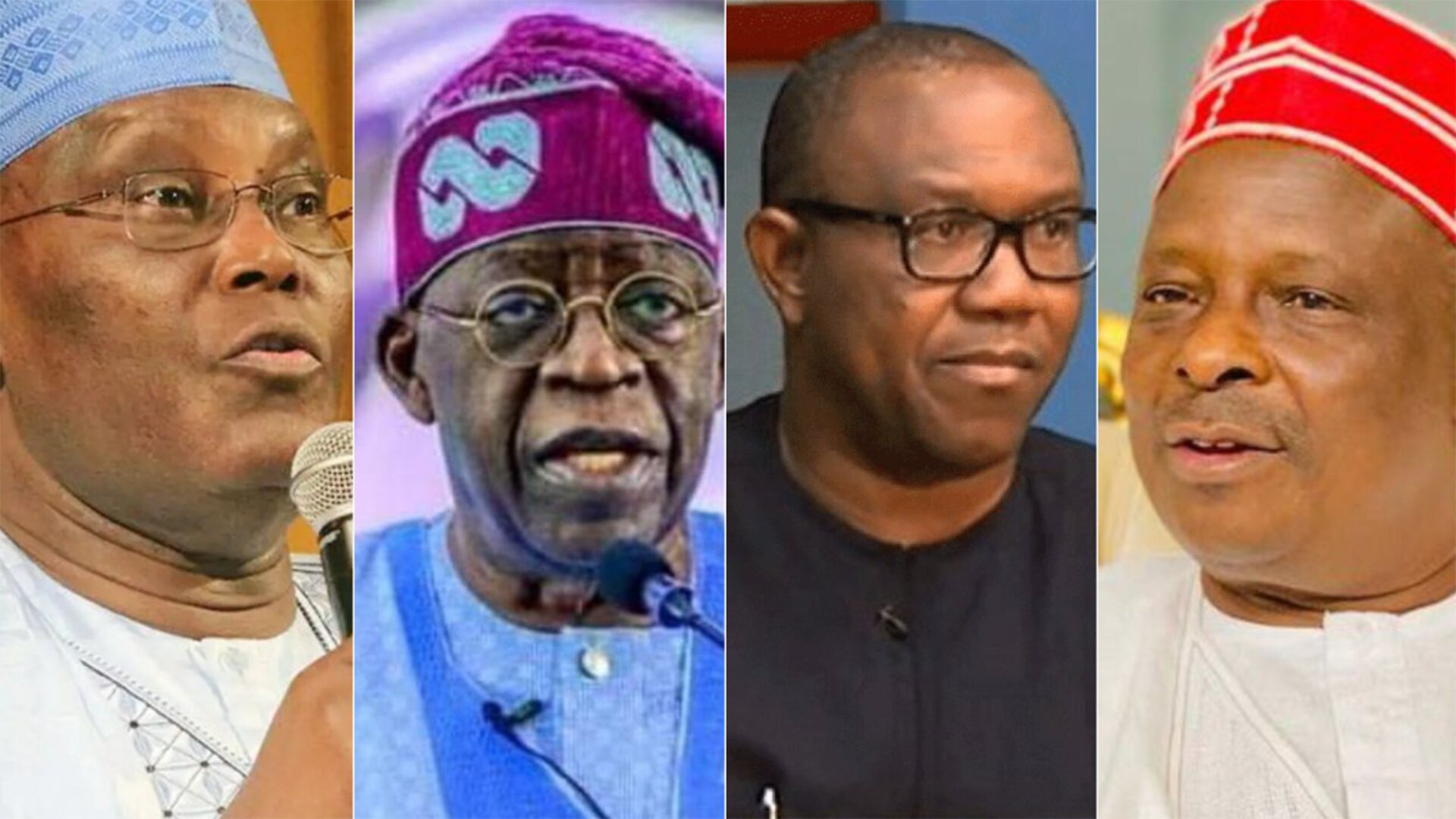
Nigeria is a generously blessed country. We have Muslim technocrats who can do well in politics, so there are intelligent Christian politicians. The late President Musa Yar’adua, during his brief time in the office, used Goodluck Jonathan while Jonathan partnered with Namadi Sambo. These running mates did all they could in the course of serving their principals. If not for a decision made in response to the threat posed by influential candidates such as Atiku Abubakar (PDP), Peter Obi (LP) and Rabiu Kwankwanso (NNDP), what else explains the hypocrisy of the APC Muslim-Muslim ticket? Whatever it means to you, this decision would negatively affect the country in the following ways.

There would be an ethnoreligious tension in the country. There is no denying that ethnicity is inevitably bound to religion here. Our politics is deeply situated in religion and ethnic affiliations. Hence, people vote for a party based on how much such attunes to their religious and ethnic sentiments. And any political decision that trivializes these fundamentals might be thrashed away, and the country journeyed into needless rancour.

Plus, the ticket will hamper the chances of the ruling party in 2023. Some have argued that it’s not a threat since most votes come from the North, a region that overwhelming installed Buhari’s regime. Those people need to be told that such a point is stale in the context of reality today. Is this nice for the country in the long run? 2023 isn’t far.

Finally, a Muslim-Muslim ticket in a country beset by systemic killings and other vices inspired by religious sentiments isn’t an excellent idea. If our politics continue to disregard the fundamental polarity of Nigeria in terms of region and religion, then I am afraid the result won’t be friendly at all. However, all this is a reflection of Nigeria’s political retrogression. We need a new order where people will be convinced by neither region nor religion as the basis to choose who should lead them. I hope we get there soonest.

Babatunde qodri wrote via babatundelaitan@gmail.com.

Why do people hate this regime?

By Lawi Auwal Yusuf

The unfortunate attack on the advance team ahead of President Buhari’s visit to his hometown, Dura, Katsina State, made the day of so many people. Indeed, it’s unarguable that, initially, the administration commanded deep respect. It was the most liked, revered and popular in this country’s history. But, of course, today, it’s the most loathed, and people solemnly disown it with an excessive feeling of hate. What stimulated such offensive aversion and malice? Why did this esteem veneration turn a disgust overnight? What made such immense support go swiftly on the wane? These are questions we need to ask ourselves.

For over a decade, people gave their lives, wealth and resources for the success of the assumed emancipator to wipe out the woes and salvage the country that came within the whisker of a failed nation come rain, come shine. People expected the saviour to be whiter than white, demonstrate ingenuity and were very optimistic that he would make life far better off than in the previous regimes. Instead, failure to create a framework for his success led to an embarrassing fallacy change, contrarily making life worst off. Moreover, forging policies behind the times really ravaged people’s lives, making the poor poorer.

Unfortunately, things went downhill after taking over the big office; life became an epic struggle for the masses to earn a living at a push. The economy is flat on its back, while markets are dead. We also witness a significant rise in unemployment, inflation, heinous crimes and terrorism. The security forces were overwhelmed and couldn’t check the horrific security threats, lest dancing to the tune of politicians and remain only specialised in molesting those that come out against the status quo or political opponents.

Moreover, to add insult to injury, tertiary institutions were closed for almost a year, whereas no society can develop unless its citizens are well educated. Regrettably, the country descends deeper into crisis. Hence, no one enjoys life at the moment, and hopes of a better life have faded.

As a result, the administration fell flat on its face, fell from favour due to corruption and mismanagement, disappointing even the most loyalist cohorts. They should have taken the great expectations, faithful confidence, and trust reposed on them seriously, not an indifferent attitude.

However, taking a leaf from the books of other dynamic leaders who made history was a good idea. They should have picked the brains of successful personalities like Lincoln, Mandela, Lee or Mao. But instead, they show a great zest for life, spend public funds like water, engage in swanky trips that break the bank and award lavish contracts for self-enrichment and kinsmen. Indeed, the damage done in those few years will surely take decades to repair. Today, people are not out of the woods yet and have realised that the wolf in sheep’s clothing and the past malignant regimes are but six of one and half a dozen of the other.

Not realising the long-lost potential of this nation and forging a global superpower blew their best chances of becoming great leaders without equality. This consequently irritates people and turns their back on them for achieving nothing important. It is so vexing that they cannot be courteous enough to return such favour, going down in history as the worst actors.

This abnegation has shown that people are in hot water. They are on the wrong side of the people and have pushed them too far. They are in their bad books for stabbing them in the back and no longer run the country’s affairs with their consent. However, it manifested the frustration, anxieties and disparagement that depict the lives of the citizens of this dystopian country. Thus, they are worn out of the cruelty and no longer anticipate any help. They are only anxious to survive to the end of this hardship.

As they are still blind to their faults, they will soon realise the error of their ways when given the push come 2023. The future of the party hangs in the balance, while history will always show them in an unfavourable light. However, we will never despair because we honestly believe that where there is life, there is hope.

Lawi Auwal Yusuf wrote from Kano, Nigeria. He can be reached via laymaikanawa@gmail.com.

On the JAMB cut-off Mark: A case for the board and call to us all

Usama Abdullah

Following the Joint Admission and Matriculation Board’s (JAMB) announcement of this year’s cut-off mark for joining Nigerian public universities, many people have taken to various media to poke fun at the board as well as disparage the entire country for the continued decay in its education sector.

Obviously, what informed the board to reduce the cut-off mark to a minimum of 140 is the terrible performance of the students in the University and Tertiary Education Matriculation Examination this year.

Even though the reduction calls for sympathy for the nation, those commentators have gotten it wrong by deriding the board and gloating over the students’ poor performance. 

We cannot get it right when we only decide to laugh off this dysfunctional system. We are clearly, experiencing the outcome of an embarrassing failure in our education sector, and this will take us a long time before recovering.

Some people believe that students nowadays don’t read hard. And that they usually “cheat” their way to tertiary institutions. This could be true to a certain extent, and I agree with them. However, I also agree that the teachers are also quite blameworthy. 

It would be a grave injustice to attribute the failures of the students to their teachers. But there’s a point we all must consider before leaping to conclude that the blame lies with the students alone.

Like I have said earlier, students may have been faring below the expectations of their parents and teachers today, thanks to the advent of TikTok, Snapchat, and Facebook Reel, among other online and offline distractions.

Yet the parents and teachers are partly the causes of such poor performances. The reason is that some teachers don’t deserve to teach because they are either not properly trained or unfit for the teaching profession.

Many of them lack teaching methods. While some of them just got themselves into the profession accidentally. You often hear of accidental teachers; we happen to be in large number at our public and some private schools.

No thanks to our politicians who have fouled up the recruitment system. This kind of teachers don’t teach to transform the students, but to get the chicken feed they usually take home as salaries.

When you go to those schools in which those unqualified teachers work, you will find them wearing fancy clothes and flaunting expensive phones in front of their students, and that nonchalance promotes unlawful student-teacher relationships.

Unknowingly, such a prodigal and nasty attitude help compromise the young impressionable students. The problem associated with this is that the students would be seen emulating what they saw those teachers doing. Within the blink of an eye, the students would be wild and tough to tame. 

On the other hand, many parents seem to exhibit a kind of devil-may-care attitude toward the upbringing of their children.

They mollycoddle their children to the extent that they begin to forgive and forget all that the children do, be it good or bad.

Well, this type of parental neglect is another major cause of the backwardness of the children at school and in society. Because when they get home, the parents won’t care to ask them about their studies, nor find out how they’re really performing.

When some parents are invited to PTA meetings to discuss important things and chart the way out to help improve their children’s educational standards, they barely attend or give out frivolous excuses for their irresponsibility.

These are the things parents need to correct in order to prevent their children from descending so low or getting petty scores in their results. 

In the same vein, the government too contribute hugely to the retrogradation of our education sector. It’s sad and painful that we’re cruelly ruled by people who are apparently unconcerned about what has become of the nation.

The leaders are only good at forcing half-baked policies on the regular citizens, which will only favour them and their families. 

Looking at the precarious state of our public educational institutions and the prolonged but unresolved ASUU-FG debacle, you will understand that the government is doing nothing to refine our rotten education sector.

Instead of making noise or taunting the students for their low performances, we should assist in our own little ways and hope for the best.

Usama Abdullahi writes from Abuja. He can be reached at usamagayyi@gmail.com.