Politics

You can add some category description here.

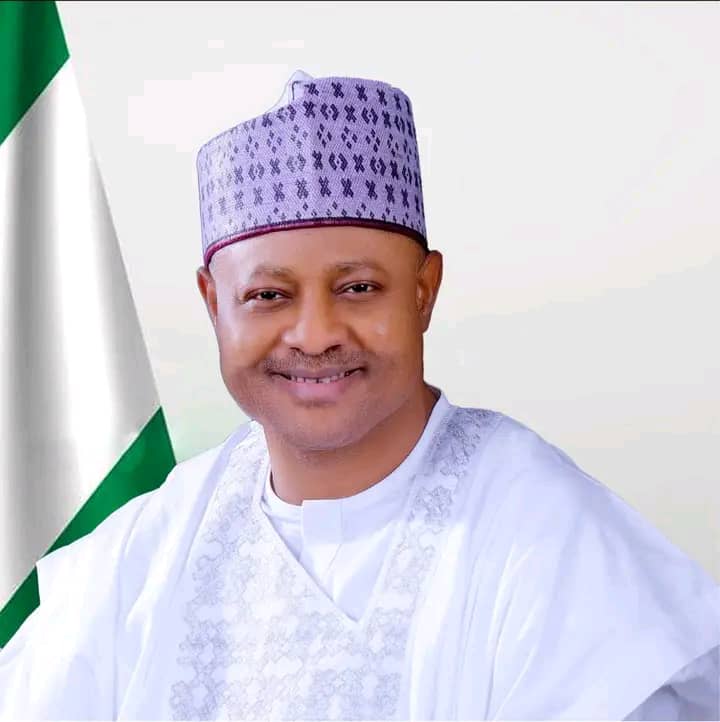
Gov Uba Sani’s 100 days in office

By Uzair Adam Imam

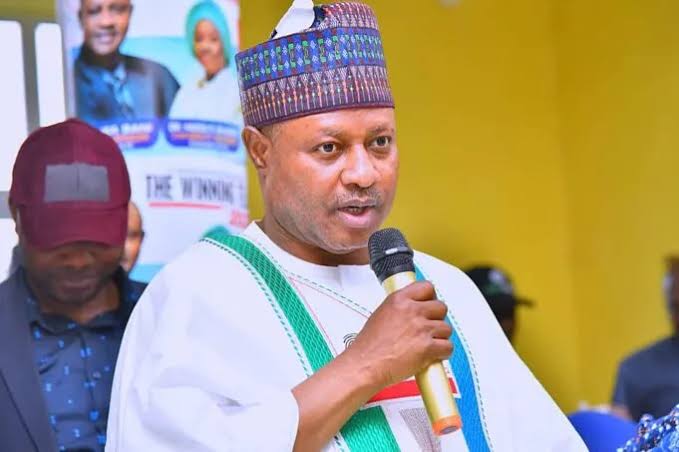
Governor Uba Sani of Kaduna State has expressed gratitude to Allah and the Kaduna state people for their enormous supports and confidence reposed on the administration in the crucial first 100 days in office.

Govenor Sani’s first 100 days in office has taken several key interventions across security, health, education, infrastructure and rural development.

The Chief Press Secretary to the Governor, Muhammad Lawal Shehu, disclosed this in a statement he issued on Wednesday.

The statement reads, “To mark this milestone,several activities were lined up and several projects cutting across the 7 pillars of the SUSTAIN manifesto were announced and commissioned.

“With safety and security as the first pillar of the SUSTAIN manifesto, the Kaduna State Government in partnership with other security agencies commenced the training of 7,000 recruits of the Kaduna Vigilance Service (KADVS).

“The recruits were drawn from the 23 Local Government Areas of Kaduna State. This move to strengthen the Kaduna Vigilance Service to assist the police and other security agencies in the state in combating crime has been welcomed by all well-meaning citizens.

“In efforts to upgrade infrastructure, the construction of 32 rural roads covering about 406km across our 23 Local Government Areas has commenced as part of efforts to transform our rural areas, a main policy thrust of this administration.

“In health, state-of-the-art-mobile diagnostic trucks purchased by Kaduna State Government were commissioned and essential medical equipment are currently being distributed to our 290 Primary HealthCare Centres. The mobile trucks come fully-fitted with medical diagnostic equipment to render integrated health services in hard-to-reach and underserved communities across Kaduna state.

“Similarly, a fully-equipped Women and Child Shelter at Katuru Road was commissioned ,to serve as a transit home for children and women who are subjected to violence abuse by offering them medical, psychosocial and legal support.

“In continuation of activities marking the first 100 days in office, and as evidence of his commitment to education especially girl-child education, Governor Uba Sani commissioned a constructed/renovated 200-bed capacity hostel block, 16 classrooms, and a sickbay at the Government Girls Secondary School, Kawo, Kaduna North LGA.

“The Governor to the delight of parents state-wide also performed the groundbreaking for the construction of 62 Junior and Secondary Schools across the state, where he used the opportunity to reiterate that in Kaduna state,primary and secondary education in state-owned schools is free,” the statement added.
Tribunal court dismisses APM’s petition to disqualify Tinubu, Shettima

By Muhammadu Sabiu 

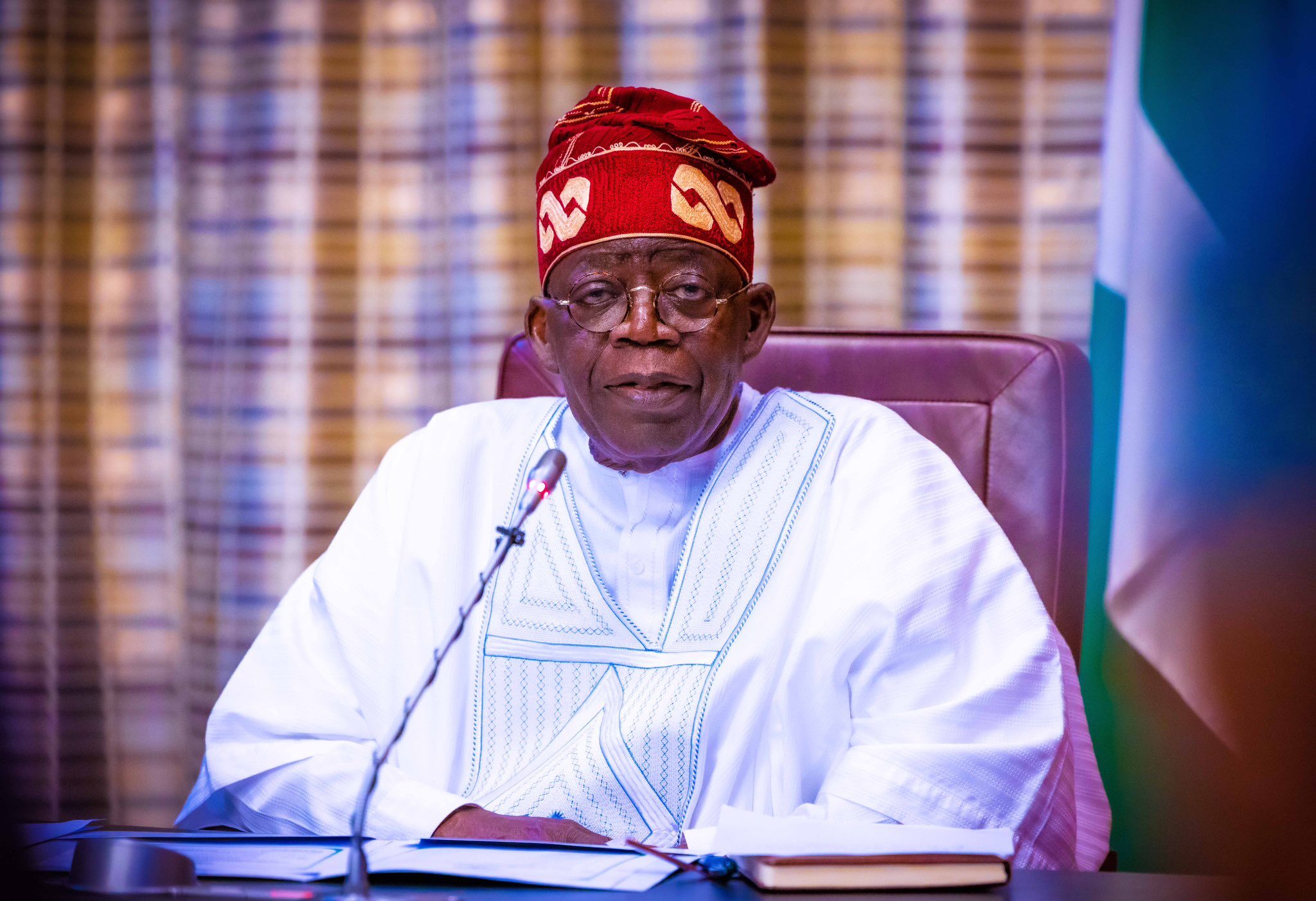
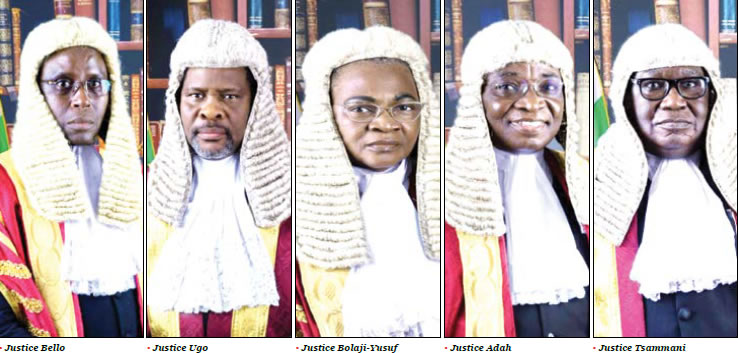
The Presidential Election Petitions Court has rendered its decision on the petition filed by the Allied Peoples Movement (APM), challenging the eligibility of President Bola Tinubu and Kashim Shettima to run for office. 

In a ruling delivered on Wednesday, the court announced that it lacked the jurisdiction to hear the case, deeming it a pre-election matter that should have been addressed in a high court. 

Justice Haruna Tsammani, who read the lead judgement, clarified that the issues raised by APM were indeed pre-election matters and fell outside the purview of the Presidential Election Petitions Court. 

He emphasised that the 180-day timeframe stipulated for addressing such issues had already passed. Citing legal precedent in the case of Alhassan and others versus Ishaku and others, Justice Tsammani underscored that election tribunals do not have the authority to delve into the internal affairs of a political party, including issues related to primary elections. 

Instead, matters of qualification and disqualification are governed by the provisions of Sections 131 and 137(1)(a)(j) of the Nigerian Constitution. The crux of APM’s argument revolved around their contention that Tinubu and Shettima had not been validly nominated to contest the February 25 election. 

They argued that a combination of constitutional provisions and the Electoral Act rendered their nominations invalid. Specifically, APM claimed that the period between Kabiru Masari’s announcement of withdrawal as an APC placeholder on June 24, 2022, and the date Shettima’s name was forwarded to INEC on July 14, 2022, exceeded the 14-day limit stipulated in Section 33 of the Electoral Act for the replacement of a candidate.

However, the court’s ruling ultimately found that these issues should have been raised in a high court, not within the jurisdiction of the Presidential Election Petitions Court. 

This decision marks a pivotal moment in the legal battle surrounding the qualifications of President Bola Tinubu and Kashim Shettima, effectively concluding that the matter remains an internal concern of a political party and beyond the court’s authority to adjudicate.

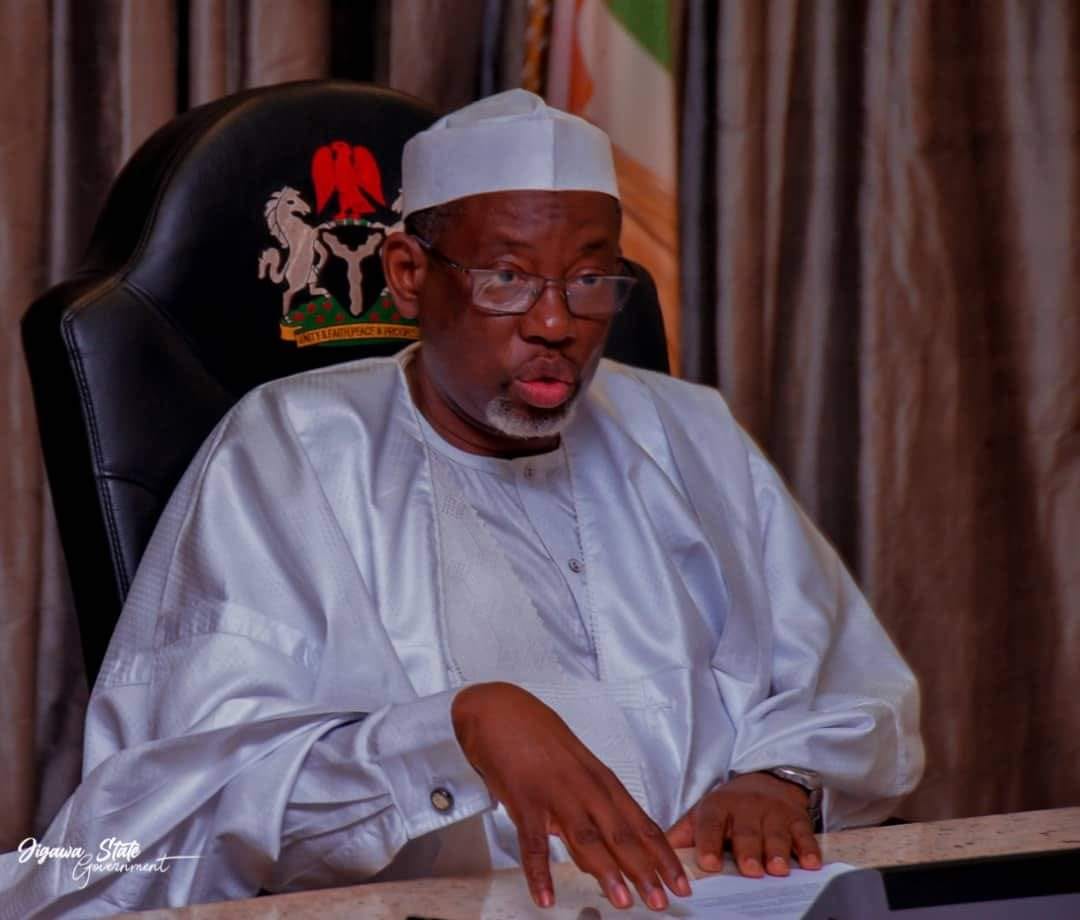
Governor Namadi (Danmodi): An epitome of change in Jigawa State

Your Excellency Sir,

I hope this letter will find you in sound health and high spirit. I am writing to express my heartfelt solidarity and appreciation for your recent appointments in Jigawa State, specifically your decision to appoint individuals of high repute and strong academic backgrounds.

Your recognition and value of the expertise of a highly educated professional of Jigawa State extraction is that of a leader with a progressive vision to put heads together and develop our dear State. By appointing well-meaning sons of the land into key positions to steer the affairs of our dear State, indicate your commitment to an open and all-inclusive government. It is indeed a commendable gesture. By this, you are not all promoting meritocracy but also ensuring that our government benefits from the knowledge and skills of these accomplished individuals.

This move not only showcases your dedication to improving the quality of governance but also sets a precedent for other States to follow. It sends a strong message that education and expertise are vital components of effective leadership.

I am confident that these appointments will lead to innovative policies and solutions that will benefit the people of Jigawa State. As a resident and citizen, I feel proud to have a visionary leader like you who places a premium on competency and excellence. Indeed, Jigawa will be higher than it is under your leadership.

Once again, thank you for your visionary leadership and for recognizing the value of this knowledgeable personality in shaping the future of Jigawa State. Your actions inspire hope and confidence in the direction our state is headed.

Please accept my best wishes for continued success in your tenure as our esteemed Governor.

Sincerely,

Engr. Abubakar Abbas Adamu (R. Engr COREN, MNSE, CIPMA)

Kofar Fada Sabon Garin Ya’’Ya’’ Town, Taura Local Government Area, Jigawa State

Ganduje’s APC announces ambitious expansion, progressive institute plans

By Muhammadu Sabiu 

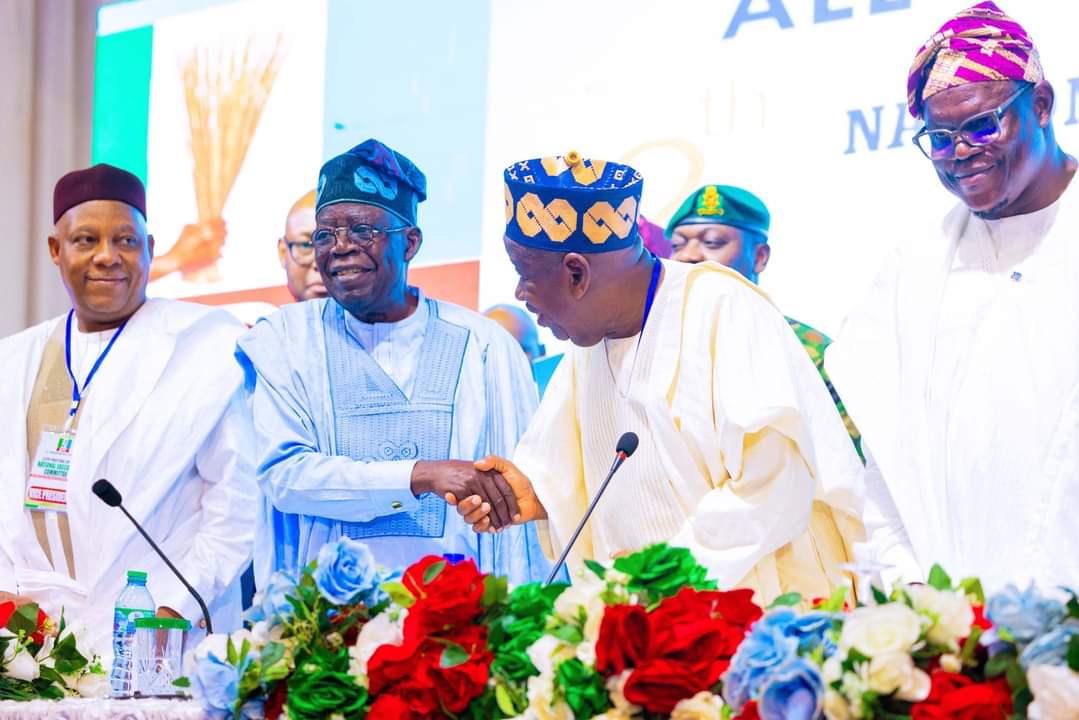
In a significant development for Nigeria’s ruling All Progressives Congress (APC), the National Chairman, Dr. Abdullahi Umar Ganduje, unveiled ambitious plans during the inauguration of the party’s national campaign council for the upcoming Kogi State governorship election. 

During his address, Ganduje announced the party’s commitment to extending its reach to the grassroots level, stating, “It is pertinent to also note that we have initiated and concluded plans to structure our party into a truly grassroots progressive party by opening full-fledged and functional offices in all the 8,813 wards in Nigeria.”  

This move aims to provide party members across the nation with symbolic representation in their neighbourhoods, fostering active interaction between members and leadership at various government tiers. 

Furthermore, Ganduje emphasised the APC’s vision to institutionalise progressive ideology within Nigeria’s political landscape. 

This ideology centres on leveraging political action and social reform based on advancements in science, technology, economic development, and social organisation to enhance the lives of Nigerians. 

To realise this vision, the APC is in the concluding stages of establishing a “National Institute of Progressive Study.”  

This institution is poised to become a centre for promoting progressive ideas and policies that can positively impact the nation’s development. 

The inauguration ceremony held on Saturday drew substantial attendance, with six governors from Kogi, Ogun, Lagos, Niger, Benue, and Kwara States present, along with former governors, senators, and numerous party stalwarts from across the country.

Atiku on Tinubu’s neck over alleged false school certificates

By Uzair Adam Imam

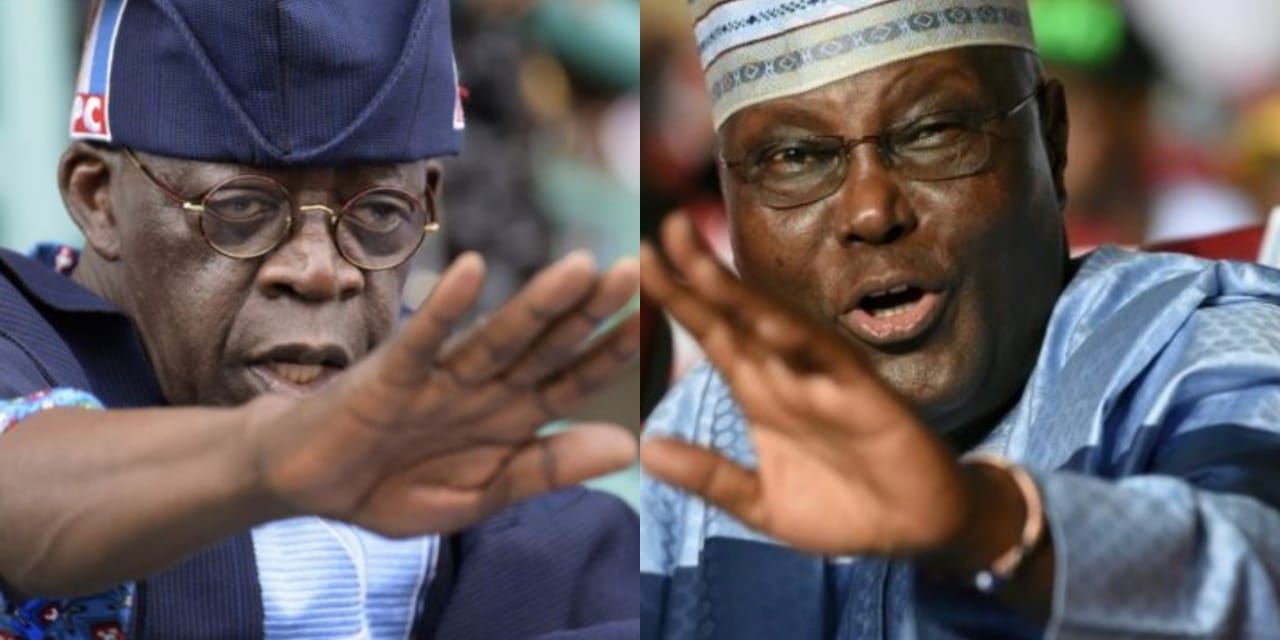
Atiku Abubakar, the presidential candidate of the Peoples Democratic Party (PDP) in the 2023 election, has lambasted President Bola Ahmed Tinubu over alleged false academic records.

Our reporters gathered that Tinubu’s credentials show that he graduated from Chicago State University (CSU) in 1979 with a bachelor’s degree in business administration, accounting and management.

However, Abubakar, who was the former Vice President of Nigeria, challenged Tinubu for not attending primary and secondary schools.

The Daily Reality learned that Abubakar had recently approached a U.S. court for an order compelling CSU to release the academic records of Tinubu.

Taking to his Twitter account on Sunday, Abubakar wondered how President Tinubu attended Chicago State University without primary and secondary education.

Atiku wrote, “I woke up this morning wondering how we got to this cul de sac. In 1999, Asiwaju Bola Ahmed Tinubu claimed he attended St. John’s Primary School, Aroloya, Lagos, before proceeding to Children Home School in Ibadan.

“According to him, his next port of call in his educational journey was Government College Ibadan and, Richard Daley College and Chicago State University in the United States.

“Curiously, in 2023, Tinubu settled with attending only Chicago State University. I am scratching my head. How is that possible?

“Methinks that all well-meaning Nigerians should be as confused as I am with Tinubu’s declaration that he had no primary and secondary education, yet he has a university degree.

“You may wish to #AskTinubu how he attained this feat so that we can learn from his ingenuity,” he added.

Attack by Army: Fish out killers of my aide for prosecution – Senator Adeola

By Uzair Adam Imam

Senator Olamilekan Adeola, the Chairman Senate Committee on Appropriations, raised alarm and demanded justice over the alleged atrocious killing of his senior aide, Adeniyi Oluwatosin Sanni, by the Nigerian Army on Saturday.

Senator Adeola alleged that the soldiers operating at checkpoints around Ikeja axis of Lagos State robbed and killed Mr. Sanni in the early hours of Saturday.

In a statement he personally signed yesterday, Adeola stated that information available to him on the circumstances indicates that Mr. Sanni was stopped at a checking point around Ojodu- Berger Area of Lagos on his way to his home at Isheri by ‘security agents’ who asked him to provide the documents of the car he was driving, which he did through a call to his wife who sent all the documents to his phone WhatsApp.

He added, ”It was gathered that the wife called a while later and the late Mr. Sanni told him that soldiers are still checking the vehicle’s paper. That was the last she heard from her husband and the body of Mr. Sanni, ridden with bullets, was later discovered at Toyota Bus Stop area of Oshodi, close to a military barrack.

“In an update about the investigation of the murder and armed robbery by the Nigerian Police Force, through a statement issued in Abuja, Senator Adeola stated that he is of the firm believe, based on available facts at the disposal of the Police, that his aide was killed by a syndicate of soldiers operating under the newly deployed Commander of 9 Brigade, Ikeja Cantonment of the Nigeria Army, Brigadier General Nsikan John Edet, through mounting of checkpoints and robbing of lone occupants of cars.”

Senator Adeola called on the Chief of Army Staff, Major General Taoreed Lagbaja, to direct the fishing out of the killers of his aide for further investigation, prosecution and justice for the deceased as a pattern of killings and armed robbery has been established against soldiers mounting late night checkpoints around Ikeja with similar unreported incidences in recent times.

“Till date, the black Toyota Camry of Mr. Sanni, his phones and other valuables are yet to be recovered,” he added.

Governor Uba Sani reduces school fees of state-owned higher institutions

By Ahmad Deedat Zakari

The Governor of Kaduna State, Uba Sani, has reduced the school fees of higher institutions in the state.

The Chief Press Secretary to the Governor, Muhammad Shehu Molash, made the development known in a press release on Monday.

According to the CPS, the governor has announced the downward review of the current fees in state-owned tertiary institutions .

The spokesperson cited welfarism and the interest of the populace as the reason for the governor’s decision.

The administration of the former Governor of the State, Mal. Nasir El-rufai, had hiked school feels of state-owned institutions.

The new administration of Governor Uba Sani has decreased the school feels by 30%.

Below is the new school fees of higher institutions in the state:

a) Kaduna State University – Current Fee: N150,000 – Reduction (%): 30% – New Fee: N105,000

b) Nuhu Bamalli Polytechnic – Current Fee: N100,000 – Reduction (%): 50% – New Fee: N50,000

c) College of Education, Gidan Waya – Current Fee: N75,000 – Reduction (%): 50% – New Fee: N37,500

d) Shehu Idris College of Health Sciences & Technology, Makarfi •HND Courses – Current Fee: N100,000 – Reduction (%): 30% -New Fee: N70.000 •ND Courses – Current Fee: N75,000 – Reduction (%): 30% – New Fee: N52,000

e) Kaduna State College of Nursing – Current Fee: N100,000 – Reduction (%): 30% – New Fee: N70,000

Tinubu’s ministers and APC’s new faces

By Zayyad I. Muhammad

President Bola Ahmed Tinubu has assigned portfolios to his Ministers-designate, bringing an end to weeks-long speculation but also bringing to the fore new discussions and analyses on the ministers’ portfolios and the new ministries created. A journalist and an editor, Jaafar Jaafar, said, ‘The Northwest has many ministers but no weight’.

While a chieftain of the All Progressive Congress (APC), Adamu Garba, said, “It is one of the most balanced ministerial portfolio allocations of recent history. Adamu also pointed out that “President Tinubu – dedicated Infrastructure and Finance to the South. While Agriculture and security are to the North. Soft infrastructure like health and education to the North, and Humanitarian and Innovation to the South. Productivity and Job creation in the North- The North needs more security and agricultural productivity to grow and industrialise, while the South is good with services and infrastructure.”

 In Tinubu’s ministerial portfolios, there were surprises, and there were no surprises, so to speak.

In most democracies, ministers are selected from politicians who contributed to victory at the polls and from technocrats with strong professional track records. Cabinet ministers are not just a team but a collection of great thinkers—silicon valley-thinkers—men and women who can move the government with the speed of the imagination of most Nigerians, and their sense of judgment must be centred on the challenges of unlocking the future for ordinary Nigerians. and also bring new thinking and synergy to the public sector’s role in providing for the needs of all Nigerians.

Most Nigerians expect Tinubu’s ministers to be not just members of the cabinet but to add value to governance; they must be propellers for greater equality of opportunity for all Nigerians. They must be able to build a system that will swing the government away from the traditional methodology of concentrating on only the ‘off-the-shelf way of improving society. 

Some Nigerians are complaining that Tinubu’s cabinet has too many politicians. However, the truth is a right-thinking President brings on board top-notch grassroots politicians to hold the political front for him when the need arises. President Tinubu and the Dr Abdullahi Ganduje-led APC should, as a matter of ‘need’ maintain and ‘oil’ that area. This is where the synergy between the Executive and party supremacy comes into play.

President Tinubu and the APC, as a matter of policy and politics, should make sure that those appointed as ministers know what is expected of them. A ministerial appointment is a call for a national assignment. Nigerians expect ministers not only to saddle themselves with the responsibilities within their respective portfolios but also to be team players that will bring feasible ideas and be at par with local and global realities. Nigeria will be keen to see new ideas for fighting poverty, tackling the skyrocketing prices of food commodities, improving electricity supply, and finding new ways to fight insecurity in the north and southeast, etc.

On the political side, apart from supporting the president, ministers should see themselves as the ‘faces’ of the APC in their respective communities; their political presence and contact with locals are very important. For example, during the 2019 presidential elections, most of Buhari’s first-term appointees, especially from the north, became mere spectators in their states due to their weak link with the grassroots. Tinubu’s ministers may find themselves in such situations if they operate with weak links with the grassroots and poor rapport with the public. In this regard, in the weeks to come, many eyes will be on Nyesom Wike, FCT, and Ministers, whether he will remain ‘a PDP’ or crossover to the APC.

On the other hand, there are some young people in Tinubu’s cabinet, so many eyes will be on them. Their performance or underperformance will greatly impact youths’ participation in governance and politics, as well as give the Tinubu government the ‘strength’ to boast that youths are adequately represented in the government. This will also create a strong link between the government and the youth, who form more than half of Nigerian voters. This would also serve as an impetus for a good image and a sound political strategy for the All Progressive Congress (APC) because young people’s political participation and engagement in governance are essential at this moment.

Lastly, President Tinubu should, as a matter of importance, be firm in assessing every member of his cabinet. Non-performing ministers should be replaced quickly so as not to lose time and also keep others on their toes.

Zayyad I. Muhammad writes from Abuja via zaymohd@yahoo.com.

Can Tinubu do like Abacha?

By Malam MB

On May 25th, 1997, the democratically elected of Sierra Leon, President Ahmad Tejan Kabbah, was toppled by Major Johnny Paul Koroma. The development in Sierra Leone disrupted the plans of the Economic Community of West African States (ECOWAS) under the leadership of Nigerian Head of State, General Sani Abacha.

ECOWAS pleaded with the Koroma junta to step down but it didn’t budge. General Abacha didn’t shilly-shally, he directed the Nigerian troops under the Economic Community of West African States’ Ceasefire Monitoring Group (ECOMOG) to station themselves in and around Freetown (the Sierra Leone’s capital).

Major Johnny Koroma instantly became scared and sought dialogue which gave birth to Conakry Peace Accord on October 23rd, 1997. This Accord called for reinstatement of the legitimate government of President Tejan Kabbah within a period of 6 months.

Major Koroma who expressed his commitment to the Conakry Peace Accord dilly-dallied and that prompted General Abacha to oust him on February 6th, 1998 and reinstate President Tejan Kabbah.

When General Sani Abacha ousted Major Koroma, Nigeria didn’t experience collateral damage or negative implication because it doesn’t share any border with Sierra Leone and it didn’t have Boko Haram and Banditry then.

Today, Nigeria shares border with Niger Republic and our Nigeria that grapples with Boko Haram, Banditry and so much corruption, wants to militarily oust the Nigerien Dictator Abdurramane Omar Tchiani and reinstate the democratically elected President Mohammed Bazoum. Yes! Nigeria has the military strength to defeat Niger, Mali and Burkina Faso but how can President Tinubu contend with collateral damages and proliferation of Boko Haram and Bandits’ activities? I advise that Niger Republic should be sanctioned until the Nigerien people ask Dictator Tchiani to step down. Ah! I ought to ask again, can Tinubu do it like Abacha did?

Malam MB is a Senior Advocate of the Commoners (SAC) and can be reached via: malammb16@gmail.com

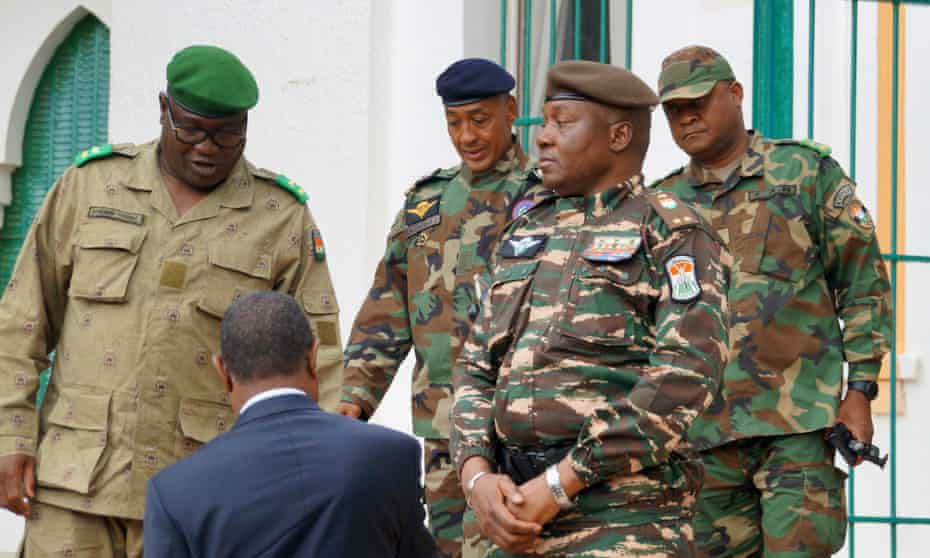
We’re Ready for Dialogue—Niger Junta 

By Muhammadu Sabiu
 
General Abdourahmane Tchiani, the head of the Niger Junta, has consented to look into diplomatic dialogue to break the country’s political deadlock.
 
Tchiani addressed the Nigerian intervention team comprising Nigerian Islamic scholars, which was led by Bala Lau, the national leader of Jamatul Izalatu Bida Waikamatu Sunnah.
 
In a statement signed by Lau on Sunday, he told Tchiani that “the visit to Niger was to engage in constructive dialogue to encourage him and other military leaders behind the coup to embrace dialogue instead of war to resolve the crisis.”
 
Responding, Tchiani said, “Their doors were open to explore diplomacy and peace in resolving the matter.”
 
Tchiani voiced concern about the Economic Community of West African States’ ultimatums being given without the junta’s point of view being heard.
 
According to the Prime Minister of the Niger Republic, Ali Zeine, it was learned that Tchiani was prepared for a conversation and expressed the hope that the discussions with ECOWAS would happen soon.
 
Zeine noted, ‘’We have agreed and the leader of our country has given the green light for dialogue. They will now go back and inform the Nigerian President what they have heard from us. We hope in the coming days, they (ECOWAS) will come here to meet us to discuss how the sanctions imposed against us will be lifted.”
 
West African leaders ratcheted up their criticism of the coup leaders in Niger on Thursday, ordering the deployment of a regional standby army to reestablish democracy there.
 
Since late last month, when the presidential guard overthrew President Mohamed Bazoum in a coup d’état, the Niger Republic has been mired in political upheaval.
 
Days later, ECOWAS responded by imposing sanctions and giving the military junta in power one week to disband or risk military intervention.
 
On Sunday, August 6, that deadline passed without causing the political climate to change. The leaders of ECOWAS have stated that they will only send soldiers in a last-ditch effort to resolve the problem diplomatically.