Politics

You can add some category description here.

Group lambasts Governor Yusuf for alleged cover-up amidst governance failures

By Uzair Adam Imam

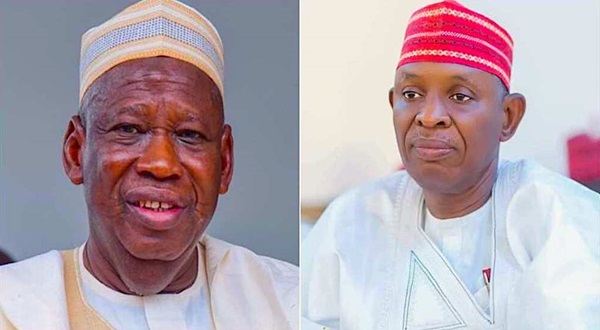
A political movement based in Kano, Arewa Renaissance Front (ARF), has criticized Governor Abba Yusuf for levying what they term as unfounded accusations against Dr. Abdullahi Umar Ganduje, the National Chairman of the All Progressives Congress (APC).

ARF accused Yusuf of using unsubstantiated claims against the former governor as a shield to conceal his own failure in meeting the expectations of the people.

In a statement released by Aminu Gawama, the Secretary-General of ARF, the group alleged that Yusuf, along with his political mentor, former governor Rabiu Musa Kwankwaso, are engaged in a vendetta against Ganduje.

According to the statement, these allegations were merely propaganda orchestrated by state-owned entities to divert attention away from the glaring inefficiencies and lack of direction in Yusuf’s administration.

The statement further highlights the public’s growing frustration with Yusuf’s tenure, questioning his accomplishments despite the ample fiscal resources available to the state. ARF denounced the judicial commissions of inquiry initiated by Yusuf to probe Ganduje’s tenure, labeling them as biased and aimed solely at depleting state resources.

ARF also condemned Yusuf’s selective targeting of Ganduje’s administration while absolving Kwankwaso’s tenure from scrutiny, characterizing it as a futile attempt to mislead the populace.

Eid al-Fitr: President Tinubu urges national unity, dedication

By Uzair Adam Imam

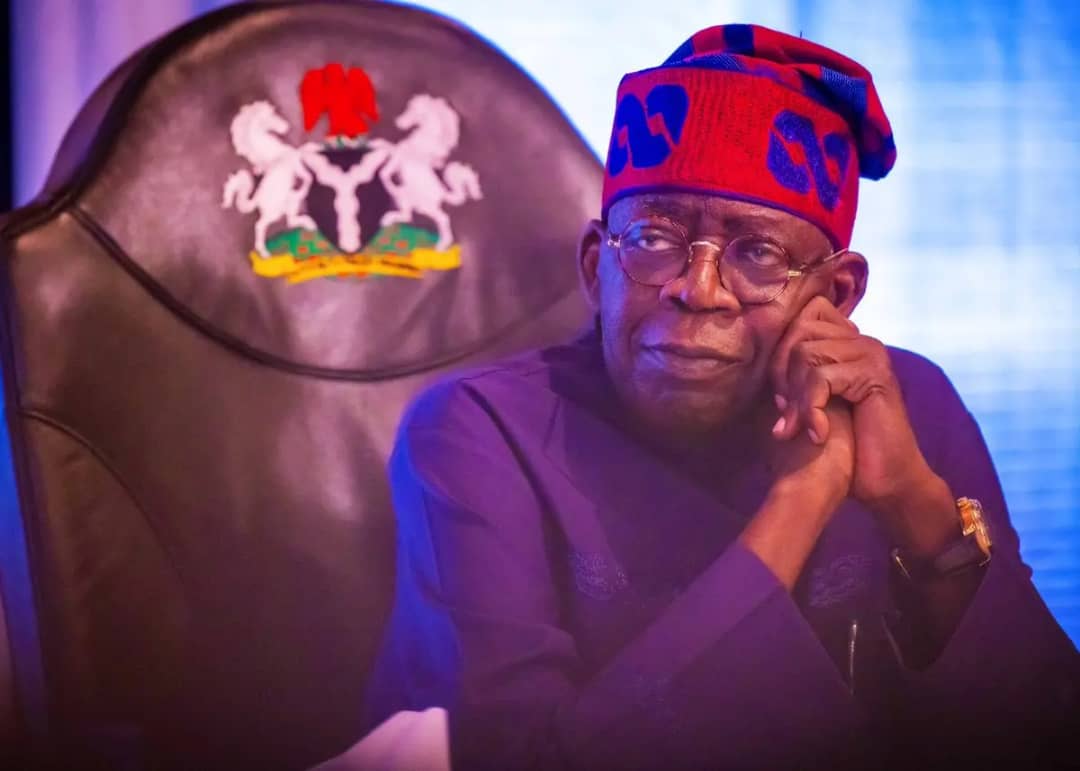
In a heartfelt address marking the conclusion of Ramadan, President Bola Ahmed Tinubu called upon all citizens to unite and recommit themselves to the profound task of nation-building.

Emphasizing the collective responsibility of shaping Nigeria’s future, President Tinubu likened the nation to clay, sculpted by the hands of its people.

“We are the sculptor, and Nigeria is the clay; we build it the way we desire,” he affirmed.

Speaking specifically to the Muslim community on the occasion of Eid al-Fitr, President Tinubu stressed the importance of unity in action. He described the holy season as a time of “total submission to God Almighty and to His command of sacrifice and service to humankind.”

Extending his greetings to Muslims both within Nigeria and across the globe, President Tinubu offered prayers for the acceptance of their supplications and sacrifices by Almighty Allah.

Through a statement issued by his spokesperson, Chief Ajuri Ngelale, the president expressed his hope that the lessons, blessings, and joys of Eid al-Fitr would endure beyond the festivities, shaping the nation’s path forward.

As the nation celebrated Eid al-Fitr, President Tinubu concluded his message by extending warm wishes to all Nigerians, invoking a spirit of unity and prosperity for the nation.

Protests erupt in Abuja as LP supporters rally behind National Chairman

By Uzair Adam Imam

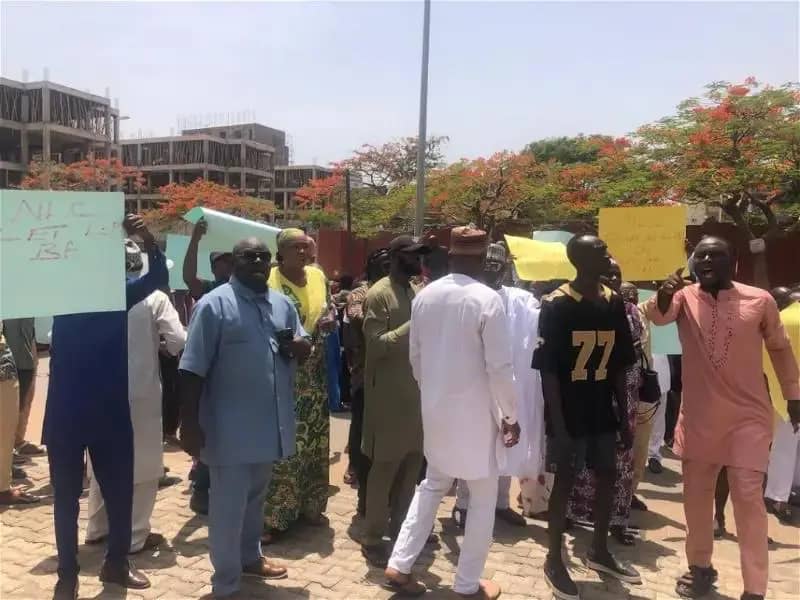
Supporters of Comrade Julious Abure, the National Chairman of the Labour Party (LP), took to the streets of Gudu, Abuja, today to voice their grievances against what they perceive as unwarranted interference by the Nigeria Labour Congress (NLC) in the affairs of their party.

Dozens of protesters, brandishing placards emblazoned with messages such as “On Abure’s mandate we stand,” “NLC leave Abure alone,” and “Nnawi’ National Convention is valid,” commenced their march from the new Abuja chapter secretariat.

The demonstration follows a recent escalation in tensions between the Nigerian Labour Congress and the leadership of the Labour Party, with the NLC accusing Abure of operating as a sole administrator within the LP. This accusation culminated in the NLC passing a vote of no confidence in Abure’s leadership and demanding his resignation.

The conflict between the two organizations has captured widespread attention and sparked debates regarding the NLC’s authority to intervene in LP’s affairs, as well as the underlying reasons behind their dispute.

Investigations by Vanguard have revealed that the ongoing power struggle between the Julius Abure-led National Working Committee of the Labour Party and the Comrade Joe Ajaero-led Nigeria Labour Congress is jeopardizing the future of the Labour Party itself.

Central to the conflict is the battle for control over the party’s structure, with major stakeholders accusing Abure of treating the LP as his personal fiefdom, an allegation vehemently denied by Abure.

Trouble began brewing for Abure shortly after the 2023 general elections, when some party members, led by Alhaji Lamidi Apapa and Abayomi Arabambi, accused him of financial mismanagement. Subsequent court battles resulted in Abure’s leadership being upheld by the Court of Appeal.

However, fresh turmoil erupted when the party’s former National Treasurer, Ms. Oluchi Oparah, publicly alleged that Abure must be held accountable for over N3.5 billion, purportedly received by the party from the sale of forms and donations during the 2023 elections. Oparah’s outspokenness led to her suspension for six months on grounds of bringing the party’s reputation into disrepute.

Currently, the Abure-led NWC of the LP finds itself at odds not only with the NLC but also with the House of Representatives caucus of the party. This discord stems from Abure’s unilateral decision to proceed with plans for a national convention without soliciting input from party stakeholders.

As tensions continue to mount, the future trajectory of the Labour Party remains uncertain, with the specter of internal strife casting a shadow over its viability as a political entity.

El-Rufai gears up for legal, political battle against Tinubu

By Uzair Adam Imam

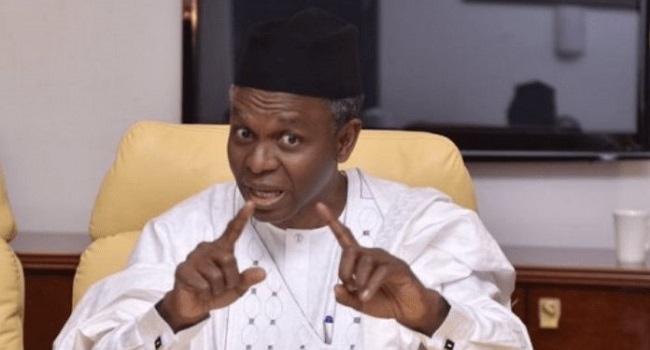
The former governor of Kaduna State, Mallam Nasir El-Rufai, is bracing himself for a multifaceted showdown with President Bola Tinubu, poised to unfold in both courtrooms and the court of public opinion.

El-Rufai’s legal offensive is aimed at vindicating himself from allegations of being a security risk, which have tarnished his reputation and dashed his ministerial aspirations.

Despite his instrumental support in Tinubu’s rise to power, El-Rufai was abruptly dropped during Senate ministerial screenings, citing purported security clearance failures.

This stunning turn of events has spurred El-Rufai to action, with plans underway to challenge the accusations in court. Sources close to him have affirmed his resolve to clear his name and restore his integrity, leveraging his extensive international connections and legal resources.

Simultaneously, El-Rufai is mobilizing politically to challenge Tinubu’s influence in the court of public opinion, setting the stage for a potentially contentious lead-up to the 2027 elections.

While his exact role in the upcoming political landscape remains uncertain, El-Rufai’s strategic maneuvering against Tinubu underscores a rift that has emerged despite their past collaboration.

El-Rufai’s journey from a key ally to a formidable opponent of Tinubu reflects a complex dynamic within Nigerian politics, where alliances can shift rapidly, driven by personal ambitions and ideological differences.

As the battle lines are drawn, the nation watches with bated breath to see how this clash of titans will reshape the political landscape in the years to come.

El-Rufa’i loan procurement burden on my gov’t—Uba Sani

By Uzair Adam Imam

Governor Uba Sani of Kaduna State recently spoke at a town hall meeting, shedding light on the hurdles impeding his administration’s ability to pay workers’ salaries.

Sani attributed this predicament to the substantial debts inherited from his predecessor, Nasir El-Rufai.

During the meeting, Sani revealed that his administration inherited a colossal debt burden totaling $587 million, N85 billion, and 115 contractual liabilities from the previous government.

He disclosed that a significant portion of the federal allocation for Kaduna State in March, amounting to N7 billion out of N10 billion, was diverted to service the state’s debt.

Consequently, only N3 billion remained to cover expenses, falling short of the state’s monthly salary bill of N5.2 billion.

Sani emphasized the adverse effects of the exchange rate fluctuations, resulting in the state paying back nearly triple the amount borrowed by the previous administration.

Despite these challenges, he asserted that his administration had refrained from borrowing any funds in the past nine months.

The governor underscored his commitment to steering Kaduna State towards progress and sustainable development despite the inherited debt burden.

He highlighted key priority areas for his government, including safety and security, housing, education, healthcare, and support for micro, small, and medium enterprises.

Additionally, he pledged to prioritize inclusive development by investing in human capital, stimulating the economy, and providing affordable housing.

Nepotism in Nigerian politics: A tale of two governors

By Umar Sani

In the intricate tapestry of Nigerian politics, nepotism is often woven deep into the fabric of governance. Recent events surrounding Engr. Abba Kabir Yusuf, popularly known as “Abba Gida Gida,” and Dr Abdullahi Umar Ganduje illuminate a troubling pattern of favouritism and cronyism that continues to plague the nation’s political landscape.

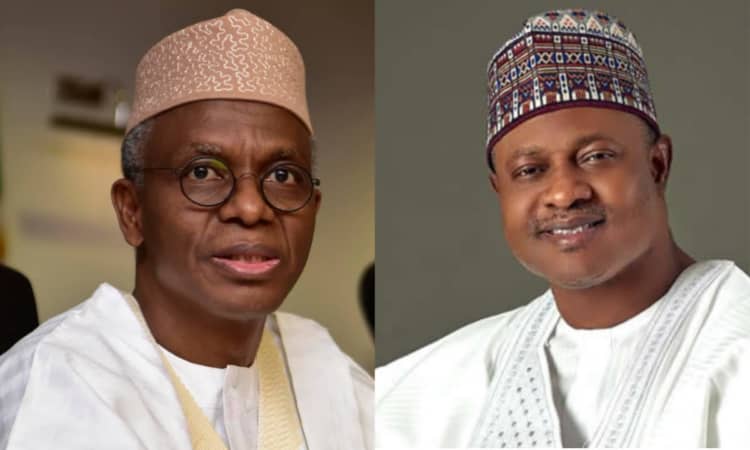
In a move reminiscent of his predecessor, Abba Kabir Yusuf has nominated Mustapha Kwankwaso, the son of his godfather Engr. Rabiu Kwankwaso, for a commissioner position. This decision raises eyebrows, echoing past criticisms of Ganduje’s administration, where appointments seemed to prioritise personal connections over merit.

Such actions underscore a disturbing reality: the entrenched culture of nepotism in Nigerian politics, where loyalty to political dynasties often outweighs competence and merit. While the faces may change, the playbook remains eerily similar, perpetuating a cycle of patronage that undermines the principles of accountability and good governance.

The parallels between Abba Kabir Yusuf and Abdullahi Umar Ganduje serve as a sobering reminder of the challenges facing Nigeria’s democracy. Despite differing affiliations, both governors have succumbed to the temptation of nepotism, prioritising the interests of elites and families over the welfare of the broader populace.

This nepotistic trend erodes public trust in the political system and exacerbates social and economic inequalities. When positions of power are monopolised by a select few, talented individuals from marginalised communities are denied opportunities for advancement, further entrenching the status quo of privilege and exclusion.

As the nation navigates its democratic journey, it is imperative to confront and address the scourge of nepotism head-on. Transparent and merit-based governance systems must be championed, where appointments are made based on qualifications rather than personal relationships.

Moreover, robust mechanisms for accountability and oversight are essential to ensure public officials are held accountable for their actions. Civil society organisations, independent media, and vigilant citizens play a crucial role in exposing and challenging instances of nepotism and corruption, fostering a culture of transparency and accountability in governance.

Ultimately, the fate of Nigerian politics rests in the hands of its citizens. By demanding accountability, transparency, and a commitment to the common good, Nigerians can pave the way for a brighter and more equitable future, free from the shackles of nepotism that have privileged few.

Umar Sani Adamu (Kawun Baba) wrote via umarhashidu1994@gmail.com.

Re: Dump your Dollars to avoid tears, Naira appreciates – Presidency warns

Baffa Kabiru Gwadabe, PhD

When I first saw the news, I was overwhelmed by the efforts of Mr. Cardoso as the apex Bank Governor trying to stabilize the Naira. In the news cover, it was reported that “the Presidency has warned Forex speculators to discard their Dollars, saying that the Naira will soon appreciate”. But the above statement was said to be made by the President Bola Tinubu’s Special Adviser on Information and Strategy, Mr. Bayo Onanuga, through his Twitter (now X) handle on Thursday 21 March, 2024.

Mr. Onanuga urged Dollar speculators to quickly dump their Dollars to avoid ‘tears’ that may ensue after continued appreciation of the Naira. Mr. Onanuga was reacting to the recent disclosure by the CBN that it had cleared $7 billion foreign exchange backlog inherited by the Bank.

The development was confirmed by the CBN’s Acting Director, Corporate Communications, Mrs. Hakama Sidi Ali. According to her, the CBN had employed the services of Deloitte consult as an independent audit company to judiciously assess the forex backlog claims and all valid claims based on the recommendations of the company were settled by the Bank. She further indicated that all invalid claims or transactions were referred to the relevant authorities for further investigation.

Similarly, the above efforts, coupled with others such as the seeming ‘credibility of the CBN’ in keeping to its policies have made the Naira to appreciate to some levels and also to the rise in Nigeria’s foreign reserve to $34.11 billion early this month, which is almost the highest recorded since the last 8 months. This is welcoming for Nigeria as import-dependent economy and led Mr. Onanuga to talk to speculators in his tone of ‘Dump Your Dollars’. The ‘dumping of the Dollars’ is my point of entry from which I want to make some remarks.

Let me start by saying or informing Mr. Onanuga that the Dollar crisis in Nigeria is beyond speculations. To a greater extent, it is an issue of ‘store of wealth or value’ using the Forex, specifically the US Dollar. Many Nigerians that had the opportunity of accumulation of ‘large wealth’, try their ways in ‘safe-keeping’ same by converting certain amounts of Naira to the Dollar or other major currencies like the Euro, the Sterling Pounds etc. This has remained the practice in the country and has reached the extent of what I called the ‘unconscious journey’ or the ‘hardened behaviour’ of not seeing the Naira as any promising currency that is stable. In other words, the Naira will always keep depreciating.

With the kinds of policy efforts by the CBN and the Federal Government, this behaviour or trend may have its last gate. What I am saying, in short, is that the practice of scouting and safe-keeping of the Dollar at whatever rate to keep in ‘graveyards’, ‘underground safe-tanks’, ‘security safes’, ‘travelling bags or brief cases’, ‘laundering overseas’ and ‘deposits in commercial banks’ to mention but a few storage strategies of the Dollars may be curtailed.

I now ask some questions regarding the calls for ‘dumping’ by Mr. Onanuga. If Nigerians that had scouted and stored the Dollars were to repent and bring out some or all of their stored Dollars, where should they dump them? Is the dumping ground ‘safe’ without creating a new round of speculations and corruption? Are the dumpers ‘safe’ from stigmatization and punishment? Are the dumping sites going to be the CBN like during the New-Old Naira notes swap, the commercial banks or the BDCs or new hubs? Will the Dollar holders be allowed to spend the Dollars domestically for their transactions? The questions are many and could go on and on, but I stopped at just number 5, as other people may ask some more questions.

For some of the questions asked above, the answers may be very clear, just like the water colour in the day time. All that is needed in answering those questions is for the CBN and the Presidency to be more proactive and strategic enough in handling the long-standing crisis of the Dollar. This is just to say that there is a better need for change of strategies and operations.

The duo should greatly be reminded of the popular saying that ‘once-beaten, twice shy’. I hope to focus specifically on providing only 2 answers based on my little understanding and focus of the rejoinder, the ‘dumping of the Dollar’ and the ‘domestic spending of the Dollar (dollarization)’.

The dumping should strictly be accommodated by the CBN and new accredited dealers or service providers that are trustworthy other than commercial banks or the BDCs. The commercial banks and the BDCs had been tried and tested at different times and different exchange rate regimes but have failed in their own domains. For instance, most commercial banks hoard, receive bribes, kick-backs, brokering or profit from the CBN official Dollar allocations, thereby further widening the gap between the official rate and the black-market rates.

For the BDCs, they are the agents, on many occasions, that served as the foot-soldiers in scouting and mopping-off all the available Dollars in the market with huge Naira for their clients and launder same in some instances.

Additionally, the Binance crypto market speculations of the rates appeared to be new in the perpetuation of Dollar atrocities in the country but still cannot be ignored.

On the answer to the question of spending the stored Dollar domestically, the answer is a resounding yes. Those with Dollar currencies in their possession should be allowed to transact at accredited points and this will ensure more liquidity of the Dollar domestically and reduce demand pressure to squash undue speculations and arbitraging. Allowing the Dollar to co-exist with the Naira in the domestic economy at reasonable scale is called ‘partial dollarization’. This is important because the Dollar in Nigeria based on the recent happenings and the CBN’s approaches is ‘strangled’, ‘suffocated’, ‘compressed’, and ‘thirsted’ for the Naira. So, what the Dollar now needs the most include but not limited to ‘some breath’, ‘exit-doors’, ‘chimneys’, ‘exhausts’ and ‘water’. So, Mr. Onanuga, the issue is not only about the ‘dumping’ but the provision of ‘sustainable dumping sites or exit-doors or chimneys for the strangulated Dollar’.

Moreover, I know some economists and others will question the very proposal of ‘partial dollarization’ of Nigeria, where Dollar will be used as a medium of exchange in addition to the Naira. Their major argument will be that the ‘partial dollarization’ will jeopardize Nigeria’s CBN monetary policy autonomy, because the CBN has no control over the Dollars that will be in circulation in the country. This is very true but with proper monitoring of the inflationary trends, this can be dealt with but it is good that I remind my colleagues in Economics of the concept of ‘unholy trinity’; where it is practically not possible to control the trinity at the same time. The unholy trinity is made up of the fixed exchange rate regime, independent monetary policy and free capital movement (see Figueredo et al., 2023).

Therefore, dollarization is necessary for Nigeria as it has already been practiced in many countries in the World and is one of the hidden secrets for their stable exchange rate systems or regimes. For those that visit countries such as the UK, US, Turkey, UAE, China, Germany, Saudi, Japan etc, they find at the airports currency exchange boots to convert currencies at ease and also realize at some hotels and malls or restaurants, price menus being quoted in 2 or more currencies for one to choose. Therefore, Nigeria should start its own journey.

On a final note, let me make little summary in bullet points to fine-tune the statement by Mr Onanuga that says ‘Dump Your Dollars’ but the ‘dump’ should be in this order:

  • Dump your Dollars with the CBN at its various State offices and Headquarters;
  • Dump with new aggregators to be approved by the CBN for onward submission to the CBN at a much regulated and controlled service charges;
  • Dumpers or depositors of the Dollars must not have domiciliary accounts but for those that have one, part of the amounts could be lodged into the accounts;
  • Domiciliary accounts in Nigeria need to be reviewed with a view to embracing the best global practice for the stability of the Naira;
  • There should be authorized currency exchange boots at major International airports in the country for small exchanges, like buying and selling of not more than $1,000 or so for travelers in and out of the country.
    For the case of ‘partial dollarization’, the following are recommended:
  • Real estate or physical assets and automobile dealings could be accredited to receive Dollars under stipulated guidelines and this will ease their trouble scouting for Dollars for their imports;
  • Major shopping malls and stores, restaurants, hotels/suites, hospitals (private), pharmacies, schools (private and all categories) should be accredited to receive Dollars under the CBN stipulated guidelines;
  • Entertainment industry and certain concerts in major cities of Nigeria such as Lagos, Kaduna, Abuja, Portharcourt, Benin, Kano, etc should be allowed to receive Dollars for their gate fee charges under the CBN stipulated guidelines.

Thank you and see you next time.

Dr. Gwadabe (Baffa) is an academic staff of Bayero University Kano, Nigeria, from the Department of Economics. He can be reached at: bkabirugwadabe@gmail.com
NANS demands investigation after stampede at NSUK claims lives of students

By Uzair Adam Imam

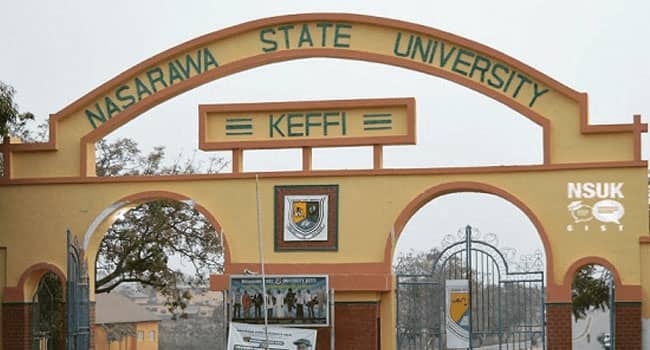
The National Association of Nigerian Students (NANS) expressed outrage over the deaths of two students at Nasarawa State University, Keffi (NSUK) during a stampede caused by the distribution of palliatives.

NANS President, Comrade Lucky Emonefe, called for a “thorough investigation” into the incident.

“The tragic event at Nasarawa State University, Keffi, which resulted in the loss of two lives and numerous injuries, is vehemently condemned,” Emonefe said in a statement.

He offered condolences to the bereaved families and demanded that “those responsible for the mishandling of the distribution of palliatives be held accountable.”

NANS urged authorities to adopt “modern distribution methods” to prioritize safety during aid distribution.

They also called on the university to provide counseling and support services to the affected students.
 

Gandu’s “Sakona” is a definition of humility and morality in the Kwankwasiyya movement

By Salihi Adamu Takai

Contemporary political singers are known for the satirical content of most of their songs. Political songs are very descriptive of invective barbs, innuendos, and allusions. They are primarily meant to satirise opponents. Rarara’s invective style in his music can be the worst political song depicting invective barbs nowadays.

Tijjani Gandu is an exceptional political singer who uses minimal invective barbs. His songs are mostly for a one-sided party or his godfathers. Gandu is known for the centralised theme of his songs. He mostly only focuses on the party and the esteemed quality of his beloved and favourite politician.

“Abba Gida Gida” was the first song in 2019 to elevate Gandu’s reputation as a talented political singer. The song was accepted and spread to every nook and cranny. It was very stylish with its theme of mobilising for the then PDP gubernatorial flag bearer in Kano State (Engr. Abba Kabir Yusuf). The candidate was challenged for not being famous. So, Gandu released the song “Abba Gida Gida”, which made the candidate very well-known.

Gandu is always ready to challenge any chaos in Kano politics to protect the governor’s dignity. It has been known for the whole week that Kano State Governor Abba was criticised for his open statement against the inappropriate action of the Kano Hisba. The statement was misconstrued. The people’s opinions were very different. Some supported the Governor’s statement, and some opposed it.

Amid the chaos, Tijjani Gandu released a song recently titled “Saƙona,” my message. In the song, the singer, Gandu, sends sympathetic messages that make thousands of people weep while listening to the music. The song has some words of mercy and humility. The saying “Abba ya san girman malamai, shi ya sa ya ɗau Hisbah ya ba ta kullalle” means Abba respects Islamic clerics, so he appointed the most deserving person to head the Hisbah.

The singer tried to maintain his dignity of not being an abuser – he doesn’t abuse anyone in the song – he only calls the attention of the entire public to discard any misconceptions from any political opponents of the Hisba saga.

Nigerian Senators’ diatribe and their corrupt national budget opprobrium

By Nura Jibo

Senator Abdul Ningi remains a hero of Nigeria’s democracy. His revelations, as the senator from Edo North implied, will haunt their reputation, causing them to receive years of contempt and opprobrium from the Nigerian people.

No one takes any of the current Nigerian senators seriously.

The entire country and world leaders view their tongue-lashing as an overt confession to the national budget’s animadversion. What irony!

Indeed, the mentality of Nigerian politicians, both young and old, is the same. To enter politics, contest, “win” either fairly or by crooked means, and serve the 1st, 2nd, 3rd, and 4th terms.

This could be easily spotted in the Senate chamber. It is full of geriatrics who served eight years as governors in their respective states and have now become senators to take cover in the Senate and hide their political obloquy.

In the past two days, Nigerians have been left in no doubt that the Nigerian senators, including their Senate President, are already in a state of disgrace resulting from public opprobrium. And this is quite understandable.

There is no way a Nigerian citizen could trust any senator with his hard-earned electoral vote. Unless the senator steals it by fabricating figures the way they surreptitiously did in the 2023 national budget, where some of them were allocated ₦500 million as publicly confessed by one of their own!

For one of their own to call all of them culpable, or better yet, culprits, is certainly an obloquy and political hara-kiri—an indelible series of political somersaults.

What Senator Ningi presented was a testament to the fact that the entire Senate is now embroiled in a disturbing saga of corruption and self-incrimination, demonstrating a reckless disregard and disrespect for the public good.

Indeed, this Senate’s attitude is certainly an intentional breach of decorum that exposes them to the vagueness, vagaries, verbosity, and waffle of their statutory unconscionability!

May Allah SWT save Nigeria and its people from this kind of Senate’s malicious misrepresentation(s) of the people under the tutelage of budget padding.